Shopping in Coimbra, Portugal: What to Buy and Where to Find It
Coimbra, Portugal, the university city on the River Mondego, is a small place to shop and a good one: pottery with a long local pedigree, student traditions you can carry home, and food from the Bairrada plain an hour south.
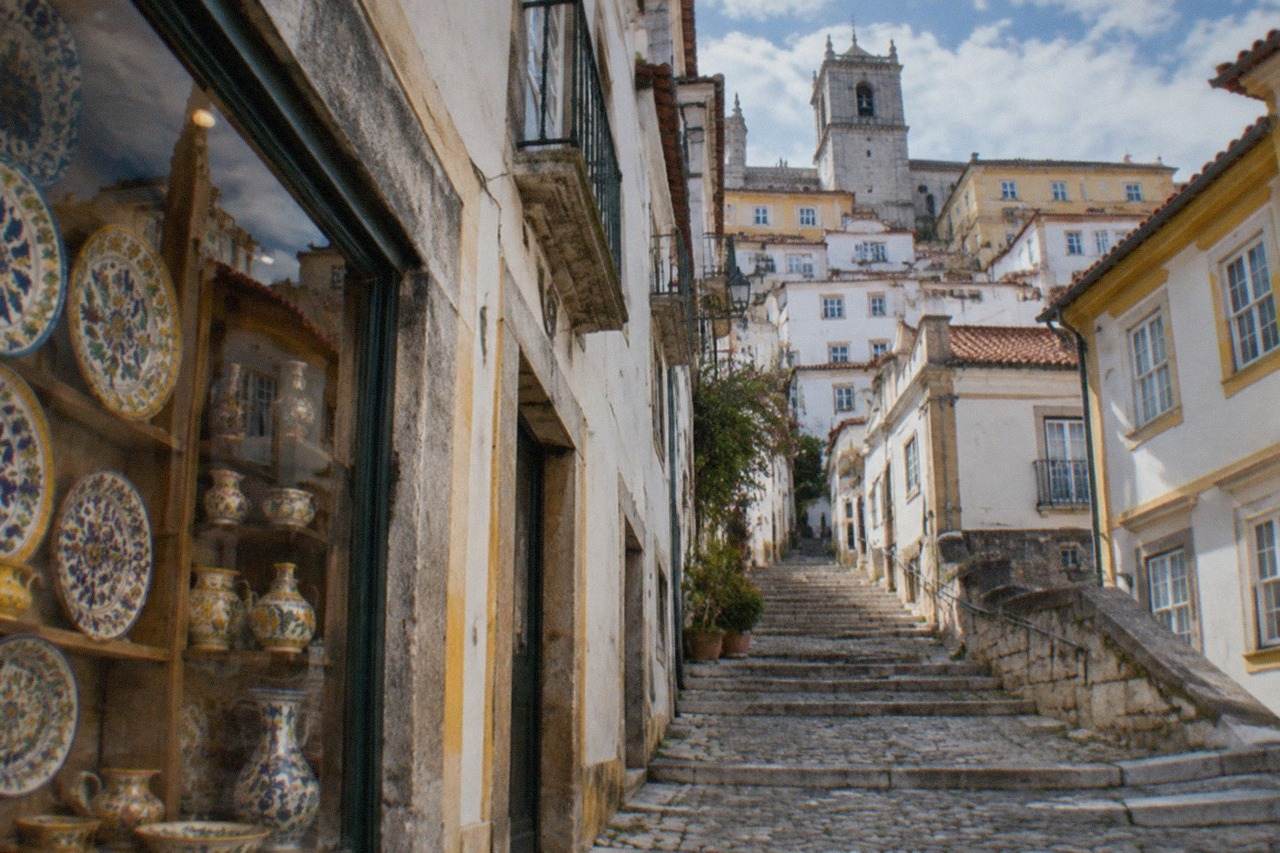
Short answer
Coimbra's best buys are hand-painted Coimbra pottery, black-caped student souvenirs tied to the university's living traditions, books and prints from the old town, and food: leitão da Bairrada, Bairrada wine, and convent sweets. Most shopping happens in the Baixa downtown grid, the Alta around the university, and the Santa Clara side of the river.
Coimbra, Portugal, the university city on the River Mondego, is not a shopping capital, and that is exactly why it shops well. The city that holds a university of about 31,000 students, a figure the University publishes on its own homepage, has spent generations producing things people actually carry away: hand-painted pottery in a style the city has made its own, the black capes and ribbons of a student tradition that is still alive rather than staged, and food from the Bairrada plain that travels well. The municipality's own figures for 2025 record 698,151 overnight stays, which tells you the shops here are used to visitors without being rebuilt for them.
This page lays out what is worth buying in Coimbra, which streets and districts to buy it on, what things should cost where a verified price exists, and how to get your purchases home intact. Where a price or an opening hour was not verified on this build, it says so plainly and points you to the venue or operator that holds the current number. The full city picture, including the sights you will walk past between shops, is in the Coimbra travel guide, and the map of Coimbra is worth a look before you plan a route.
What Should You Buy in Coimbra?
The four things Coimbra itself makes and that you cannot buy the same anywhere else are hand-painted Coimbra pottery, the black capa e batina student wear and faculty ribbons, university-themed books and prints, and food from the surrounding region: leitão da Bairrada, Bairrada wine and the city's convent-style sweets. Pottery is the signature purchase, painted in the city's own historical style rather than the Algarve patterns sold everywhere else in Portugal. The student items matter because the university is a living institution, not a museum set, so what you buy connects to a tradition still worn in the streets. Regional food is the third pillar, and it is the cheapest of the three. Everything else on sale in the old town, the magnets, the cork wallets, the generic ceramics, is available in every Portuguese tourist city at similar prices.
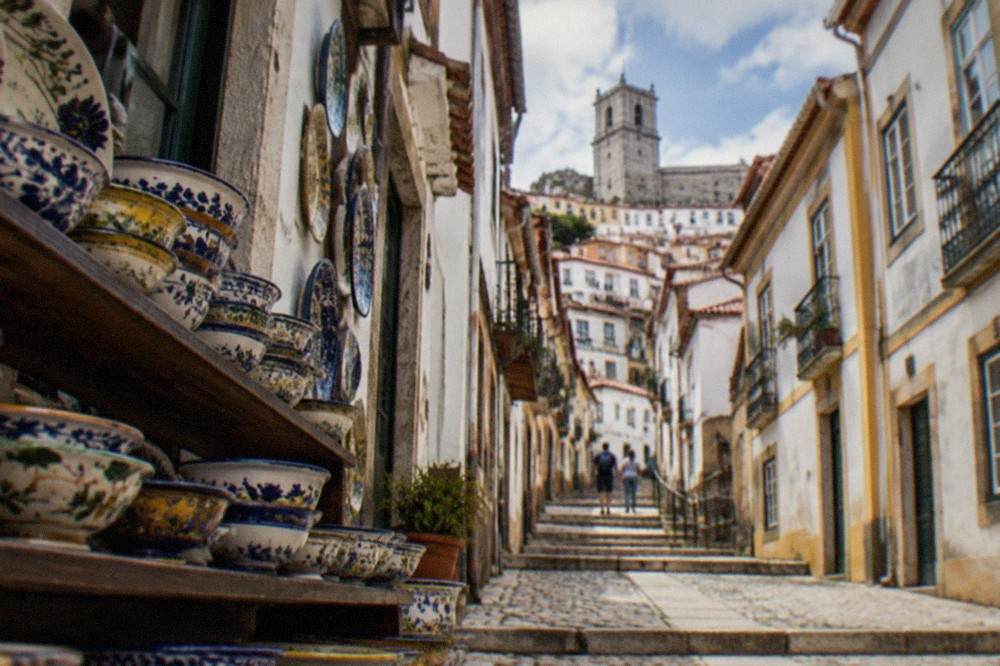
Pottery deserves the first paragraph because it is the one purchase that is genuinely local. Coimbra's ceramics tradition runs from historical patterns to contemporary pieces, with workshops reproducing the city's own decorative style alongside new work, and the whole story, the styles, the marks, what distinguishes a real Coimbra piece from an import, is covered in the site's dedicated Coimbra pottery and ceramics guide. Read that before you spend serious money. A plate is a plate until you know why one costs three times another.
The student items are the emotional purchase. The black capa e batina, the cape and gown worn by Coimbra's students for generations, is the city's most recognisable image, and the eight-pointed ribbon in each faculty's colour is the small, cheap, authentic version of it. The traditions behind both are explained in the site's guide to student traditions, and the festival that floods the streets with them, Queima das Fitas, falls in May, a month the University itself marks by closing its visitor circuit on 24 May.

Food is the purchase people regret skipping. Leitão da Bairrada, the suckling pig of the region south of the city, is sold vacuum-packed by producers precisely so it survives a journey, and the Bairrada wine route that surrounds it is close enough that a bottle in your luggage is a bottle from twenty minutes away. The leitão and Bairrada guide and the Bairrada wine route cover both in detail.
| Purchase | Why it is a Coimbra buy | Rough character of the price | What to check before buying |
|---|---|---|---|
| Coimbra pottery | Painted in the city's own historical style | Varies widely by size and workshop | Workshop mark on the base, see the pottery guide |
| Faculty ribbon | Eight points, faculty colour, worn by real students | Small, a few euros | The faculty colour matches the person you are buying for |
| Capa e batina | The student cape, the city's signature garment | A real one costs real money, on the listing | Whether it is a costume piece or a tailor's item |
| Leitão da Bairrada | Regional dish, sold vacuum-packed for travel | Set by the producer | Sealed packaging for travel |
| Bairrada wine | The wine region begins south of the city | Set by the producer | How you will carry it home |
| University books and prints | The university is the reason the city looks as it does | Set by the shop | Nothing, they are low-risk buys |
A walking tour is a good way to see the old town's shopping streets in context before you spend anything, and the budget option is excellent: the Coimbra Top Attractions Walking Tour runs two and a half hours, is rated 5 from 151 reviews and costs from $5.85 per person. You can Check availability on the operator's live listing, and the full description is on the Coimbra Top Attractions Walking Tour page.
Where Are the Best Shopping Streets in Coimbra?
Shopping in Coimbra splits across three zones: the Baixa, the downtown grid between the river and the university hill, where most shops are; the Alta, the upper town around the Paço das Escolas, where the souvenir and book shops cluster; and the Santa Clara side of the River Mondego, where the larger retail and the Portugal dos Pequenitos park sit. The Baixa is the working shopping city, the streets visitors walk between the Arco de Almedina and the river, and it mixes chain retail with the old shops. The Alta is steep, small and student-facing. Santa Clara is the flat side, reached across the river, and it holds the big-ticket family attraction.
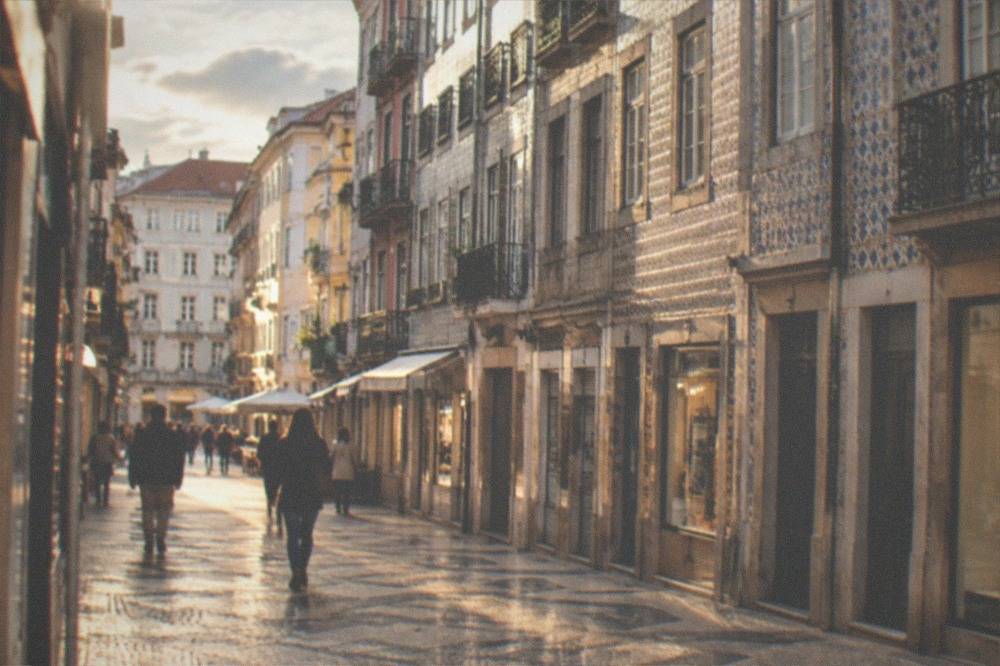
The Baixa's grid is compact enough that you will cross it repeatedly without trying. The practical geography is simple: the Alta is reached on foot up a steep hill from the Baixa, and every route between the two is a walk up or a walk down. The Baixa downtown guide and the old town guide map the streets shop by shop, and the Alta upper town guide does the same for the hill.
The Alta is where the student economy lives. Shops here sell to the university's own community first and to visitors second, which is why the ribbons, the capes and the second-hand academic books here are the real thing. The university hill itself, the Paço das Escolas, is the city's headline sight and the reason the shops around it exist; the university hill guide covers the visit, and the university tickets guide covers what entry costs, which is 16.50 EUR for the adult combined ticket that includes the Biblioteca Joanina, or 12.50 EUR without it, prices stamped on the University's own visit site as valid through 2026.
Santa Clara, across the river, is the flat side, and it holds Portugal dos Pequenitos, the miniature-park built in 1940 to a design by the architect Cassiano Branco. Its hours are published by the Fundação Bissaya Barreto: 10:00 to 17:00 in the winter stretch and 10:00 to 19:00 from 1 March to 15 October, closed Christmas Day. Its ticket prices render on the venue's own site rather than in any listing this build could verify, so buy from the venue's own ticket page; the Portugal dos Pequenitos guide has the full detail, and there is also an entry-ticket tour on the roster, from $17 per person, rated 4.1 from 226 reviews.
| Zone | Character | What you buy there | Terrain |
|---|---|---|---|
| Baixa | Working downtown, mixed retail | Food, everyday goods, some souvenirs | Flat, grid streets |
| Alta | University quarter | Student wear, ribbons, books, prints | Steep hill, small streets |
| Santa Clara | Flat riverside side | Family attraction, larger retail | Flat, across the river |
How Much Does Shopping in Coimbra Cost?
Entry-level souvenirs in Coimbra cost a few euros, a faculty ribbon is the cheapest authentic student item, a hand-painted pottery piece ranges from a small tens-of-euros item to a serious investment depending on size and workshop, and the verified fixed prices in the pack are the sightseeing ones: 16.50 EUR for the University's combined ticket, 3.00 EUR for the Sé Velha, 5.00 EUR for Mosteiro de Santa Cruz and 10.00 EUR for Conímbriga. No individual shop price in Coimbra was verified on this build, so treat any specific shop figure you read anywhere, including in other guides, as unconfirmed until you see it in the shop. What the pack does verify is the price of the experiences around the shopping, and those are worth knowing because they compete for the same wallet.
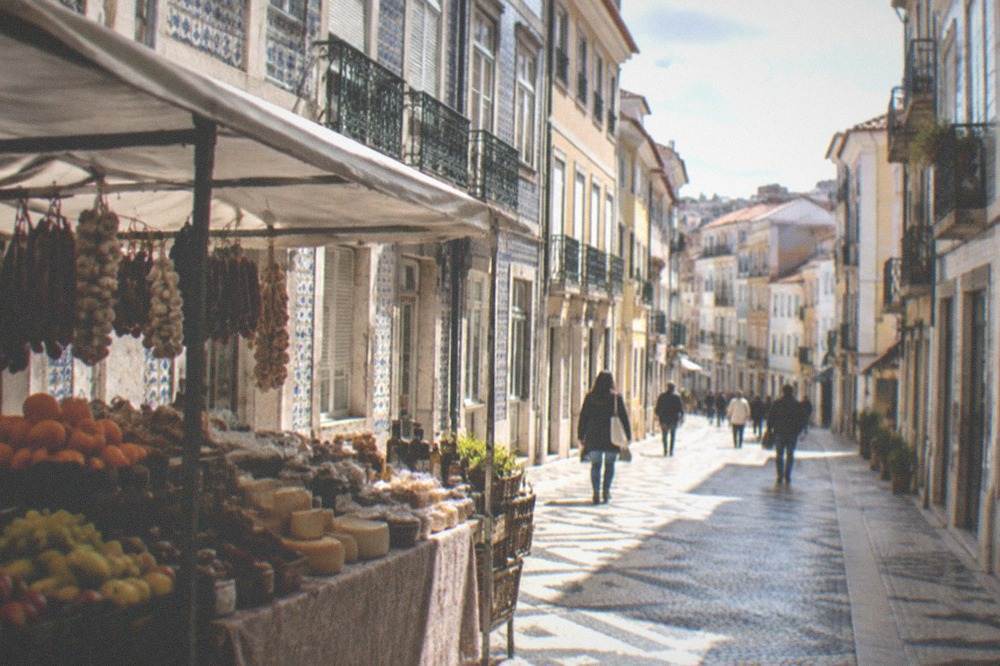
The honest framing is that Coimbra is a mid-priced Portuguese city for a visitor, and the big fixed costs are published. The city charges a municipal tourist tax of 1.00 EUR per guest per overnight stay, capped at three consecutive nights, from age 16, paid to the accommodation at check-in or check-out, in force since 5 April 2023. The municipality reported in July 2026 that its executive approved a proposal to double that to two euros, but the published rate on the municipality's own service pages remains one euro, so budget one euro and expect the accommodation to collect it.
Getting around to shop is cheap if you buy tickets the way locals do. The 2026 SMTUC tariff, in force since 1 April 2026, lists a driver ticket bought on board at 2.00 EUR, and pre-purchased tickets in packs of three or more at 0.90 EUR per trip, with one trip valid 90 minutes on the urban network including transfers. The same tariff is explicitly intermodal: SMTUC tickets are valid on the Metro Mondego network too, which is the one verified fact about the city's new BRT system, so a bus ticket is a bus-or-metrobus ticket.
| Item | Verified figure | Source in the pack |
|---|---|---|
| University combined ticket, adult, with Joanina | 16.50 EUR | University's own visit site, valid through 2026 |
| University ticket without Joanina | 12.50 EUR | University's own visit site |
| Sé Velha individual ticket | 3.00 EUR | Unidade Pastoral Aeminium |
| Mosteiro de Santa Cruz individual ticket | 5.00 EUR | Unidade Pastoral Aeminium |
| Conímbriga, museum and ruins, one ticket | 10.00 EUR | Museu Nacional de Conímbriga |
| Tourist tax | 1.00 EUR per night, max 3 nights, age 16+ | Municipality's own tax page |
| SMTUC driver ticket | 2.00 EUR | 2026 SMTUC tariff |
| SMTUC pre-purchased, 3+ trips | 0.90 EUR per trip | 2026 SMTUC tariff |
One warning that belongs on a shopping page: the Biblioteca Joanina cannot be bought on its own, and the University caps entry at 50 people every 20 minutes, with the time printed on your ticket being the library slot specifically and entry outside it refused. If a day of shopping in the old town is on your itinerary, book that slot before you plan anything else around it. The Joanina Library tickets guide has the full mechanics.
What Food and Drink Should You Take Home from Coimbra?
The food purchases that travel well from Coimbra are vacuum-packed leitão da Bairrada, bottles from the Bairrada wine region immediately south, regional sweets and conserves sold in sealed packaging, and the city's own café culture consumed on the spot rather than carried. Leitão is the one to plan around: the roast suckling pig of the Bairrada is sold by producers in sealed packs specifically for the journey home, and it is the region's signature dish, protected, celebrated and eaten in the restaurants covered in the leitão and Bairrada guide. Wine is the second: Bairrada is a named wine region whose route begins within easy reach of the city, and a bottle bought here is bought at the source.
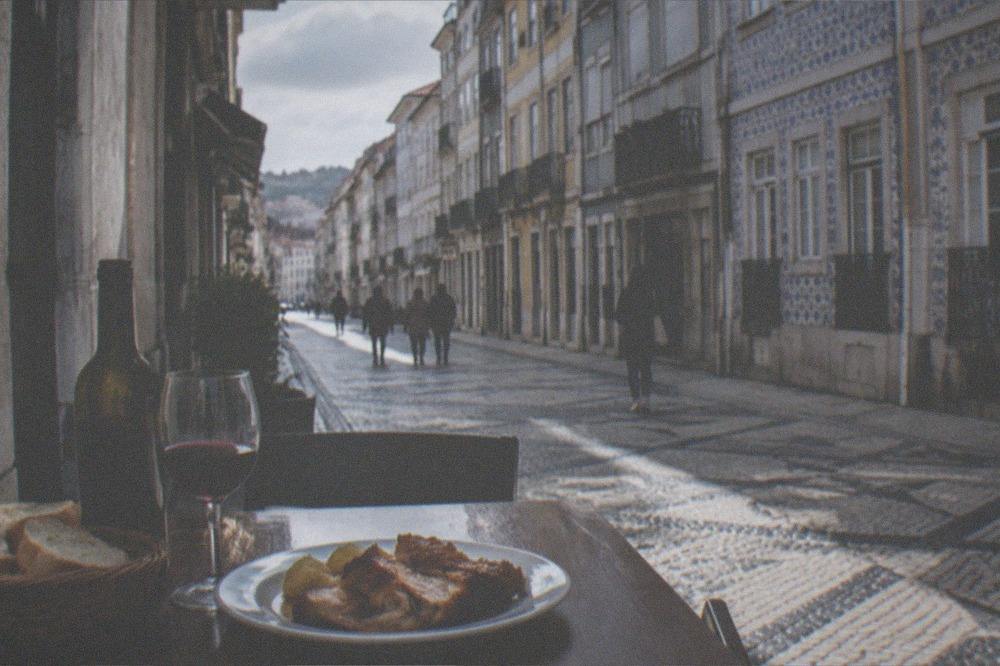
For eating rather than carrying, the choices are in the restaurants guide and the best restaurants guide, and the shopping-adjacent pleasure is the historic café, several of which survive in the old town and are covered in the historic cafés guide. No café's address, hours or prices were verified on this build, so the guide rather than this page is where the detail lives.
The sweets are worth a paragraph. Coimbra's convent-style pastry tradition, the arrufadas among them, is a real local thing with its own guide in the pastries and arrufadas page, and while fresh pastry does not travel, the sealed conserves, honeys and liqueurs sold alongside it in the same shops generally do. Check the packaging is factory-sealed if it is going in a suitcase.
| Food buy | Travels? | Where it comes from | Guide on this site |
|---|---|---|---|
| Leitão da Bairrada, vacuum-packed | Yes, sealed | Bairrada region south of the city | Leitão and Bairrada |
| Bairrada wine | Yes, protect the bottle | The wine region south of the city | Bairrada wine route |
| Sweets and arrufadas | Fresh, eat there | Coimbra's convent tradition | Pastries and arrufadas |
| Conserves and honeys | Yes, if factory-sealed | Regional producers | Traditional dishes |
When Is the Best Time of Year to Shop in Coimbra?
The best months to shop comfortably in Coimbra are May, June, September and October: IPMA's 1991 to 2020 normals for the Coimbra / Bencanta station show July and August as the hottest pair, with August the hotter of the two at a 29.1 C mean maximum and 10.9 days above 30 C, while September still averages 27.4 C with only 49.9 mm of rain and the heavy rain does not arrive until October, when the monthly total jumps to 114.5 mm. The shopping-specific point is that Coimbra's old town is steep, the Alta is a hill, and a 29 C afternoon spent climbing it is a different errand from a 23 C one. November is the wettest month at 121.5 mm, marginally ahead of October and January, and July, at 8.9 mm, is effectively dry.

The crowd question matters too. The municipality's own figures record 698,151 overnight stays in 2025, and the peak pressure on the old town's small shops comes with the summer and with the student calendar. May is the month of Queima das Fitas, the student festival whose exact dates are not published on an official page this build could read, but whose reality is corroborated by two verified closures: the University shuts its visitor circuit on 24 May, and Mosteiro de Santa Cruz suspends visits on the Cortejo, a moveable Sunday. If shopping in May, expect the old town to be full of students in capes, which is either a reason to come or a reason to wait.
The full month-by-month breakdown, including what to pack for each, is in the best time to visit guide and the weather guide. The one-line version: spring and early autumn give you the walkable weather the hill demands.
How do You Get Purchases Home from Coimbra?
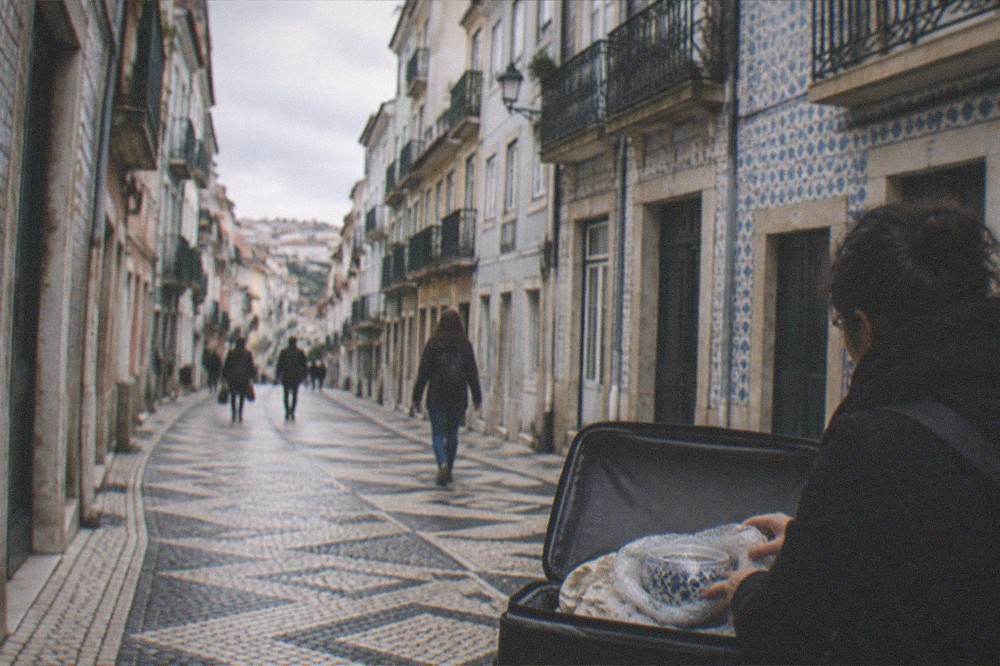
Plan the journey home around two things: the mode, and the packing. Coimbra has two train stations with confusingly similar names, Coimbra-B and Coimbra-A, in different places, and CP, the national operator, is where the stopping pattern for your specific train must be checked, because this build could not verify which trains call where, or whether the shuttle between them is free with a long-distance ticket. That last point is the one visitors most need and the one most often stated wrongly, so get it from CP's own site rather than from any guide. For packing, pottery should be carried in hand luggage wrapped in clothing, wine and sealed food in a padded case, and everything breakable assumed to be dropped at least once.
The station question has its own guide, the train stations A and B guide, and the journeys from the two big cities are covered in the Porto to Coimbra guide and the Lisbon to Coimbra guide. If you are flying out of Porto or Lisbon rather than training it home, the nearest airport guide lays out the options; no road distance or driving time from either airport was verified on this build, so plan that leg from the operator's own timetable rather than an estimate.
Within the city, the practical facts that are verified: the SMTUC 2026 tariff puts a driver ticket at 2.00 EUR and pre-purchased trips at 0.90 EUR in packs of three or more, one trip is valid 90 minutes with transfers, and SMTUC tickets are valid on the Metro Mondego network as well, because the tariff is explicitly intermodal. That is the whole verified transport story; the getting around guide fills in the rest.
If a day of shopping has earned a day of something else, two of the roster's strongest regional tours make good companions. The Schist Villages and medieval castles tour with natural pool swim and hotel pickup runs four and a half hours from $126 per person, rated 4.9 from 56 reviews, and the Conímbriga ruins plus Sicó caves tour runs four hours from $87.81 per person, rated 5 from 32 reviews, visiting the Roman site whose own combined ticket is a verified 10.00 EUR.
Common Questions About Shopping in Coimbra
What should I buy in Coimbra, Portugal?
Hand-painted Coimbra pottery, a faculty ribbon or student cape tied to the university's living traditions, books and prints from the old town, and regional food: vacuum-packed leitão da Bairrada, Bairrada wine and sealed conserves. The pottery is the signature purchase, and the site's Coimbra pottery and ceramics guide explains what distinguishes a genuine piece.
Where is the best shopping in Coimbra?
Three zones: the Baixa, the downtown grid between the river and the university hill, where most shops are; the Alta, the steep upper town around the Paço das Escolas, where student wear, ribbons and book shops cluster; and the Santa Clara side of the River Mondego, which is flat and holds Portugal dos Pequenitos.
Is shopping in Coimbra expensive?
No individual shop price was verified on this build, so treat specific figures as unconfirmed. The verified fixed costs around a shopping trip are modest: a 3.00 EUR ticket for the Sé Velha, 5.00 EUR for Mosteiro de Santa Cruz, a 2.00 EUR SMTUC driver ticket, 0.90 EUR pre-purchased, and a 1.00 EUR per night tourist tax capped at three nights.
Can you buy Coimbra pottery in Coimbra?
Yes, and Coimbra is the right place to buy it, because the city has its own ceramics tradition, with workshops painting in the local historical style rather than the Algarve patterns sold across Portugal. Check the workshop mark on the base and read the pottery guide before spending serious money.
What food can you take home from Coimbra?
Vacuum-packed leitão da Bairrada travels well and is sold sealed for exactly that purpose, Bairrada wine is bought at the source of the region, and conserves and honeys travel if factory-sealed. Fresh sweets such as arrufadas are eaten on the spot.
When is the best time to shop in Coimbra?
May, June, September and October. IPMA's 1991 to 2020 normals for the Coimbra / Bencanta station show August as the hottest month at a 29.1 C mean maximum, while September still averages 27.4 C with only 49.9 mm of rain. The heavy rain holds off until October, when the monthly total jumps to 114.5 mm.
A final word on how to use this page: shop the Baixa for food, climb to the Alta for the student things, cross to Santa Clara for the park, and let the Coimbra Travel Guide home page tie the whole visit together, because the best purchase in this city is still a day spent walking it.