Coimbra Pottery and Ceramics: Where to See, Learn About and Buy Terracotta and Tiles in Coimbra, Portugal
Coimbra, Portugal, the university city on the River Mondego, is one of the better places in central Portugal to build a trip around ceramics: Roman ruins at Conímbriga, tiled church interiors in the old town, and schist-village craft traditions all sit within a short radius.

Short answer
Coimbra pottery and ceramics are best approached as a circuit rather than a single shop: the Roman ruins and museum at Conímbriga about 16 km south, the tiled interiors of the Sé Velha and Mosteiro de Santa Cruz in the old town, and the schist villages of the Lousã mountain on a day trip. This guide sets out what each costs, what is currently closed, and how to plan the trip around them.
Coimbra, Portugal, the university city on the River Mondego, rewards visitors who arrive with a theme, and ceramics is one of the best themes available. The city's old town is faced in tile work, its churches hold some of the most striking interior ceramics in central Portugal, and the surrounding region puts two very different ceramic stories within day-trip range: the Roman town of Conímbriga about 16 km south in Condeixa-a-Velha, and the schist villages of the Lousã mountain, where building craft in local stone and clay traditions shaped whole settlements. This guide lays out what a pottery-and-ceramics trip to Coimbra actually looks like: what to see in the city, what to check before you go, what things cost from verified sources, and where the honest gaps are, because no shop, studio or market stall in Coimbra had its opening hours or prices verified for this site, and this guide will not pretend otherwise.
What Is Coimbra Pottery, and Why Does the City Matter for Ceramics?
Coimbra's ceramics story is really three stories in one place: the tile-faced architecture of the old town, the Roman material excavated at Conímbriga about 16 km south in the parish of Condeixa-a-Velha, and the building and craft traditions of the schist villages in the nearby Lousã mountain. Coimbra, Portugal, sits at the centre of all three, which is why a ceramics-focused visit works better here than in most central Portuguese cities of similar size.
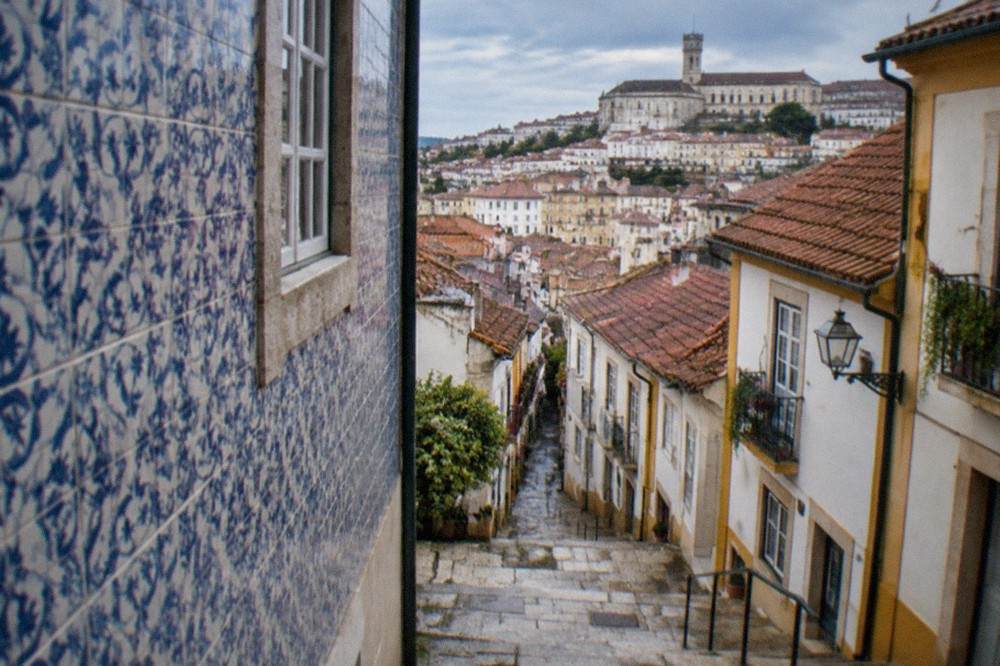
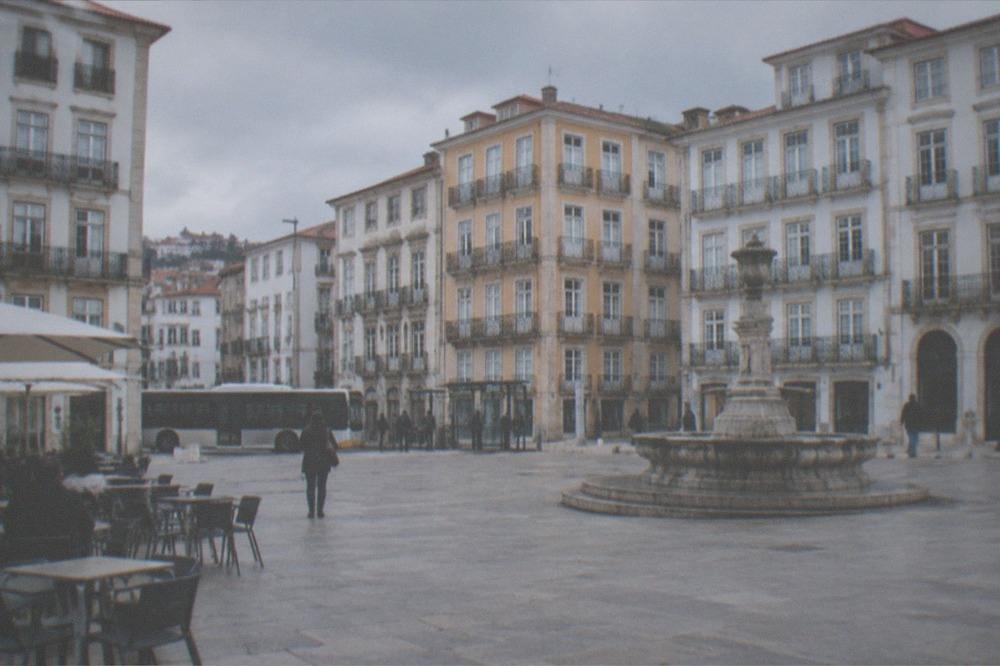
The first story is the one visitors walk through without always naming it. The Alta, the university hill inscribed by UNESCO in 2013 as part of "University of Coimbra – Alta and Sofia" together with the college street of Rua da Sofia, is a dense display of faced and tiled surfaces, and the streets below it in the Baixa continue the same language. UNESCO's inscription covers those two components of the old town, not the whole city, which matters here because the tile work that gives the old town its character is concentrated exactly inside the inscribed area and the streets immediately around it.
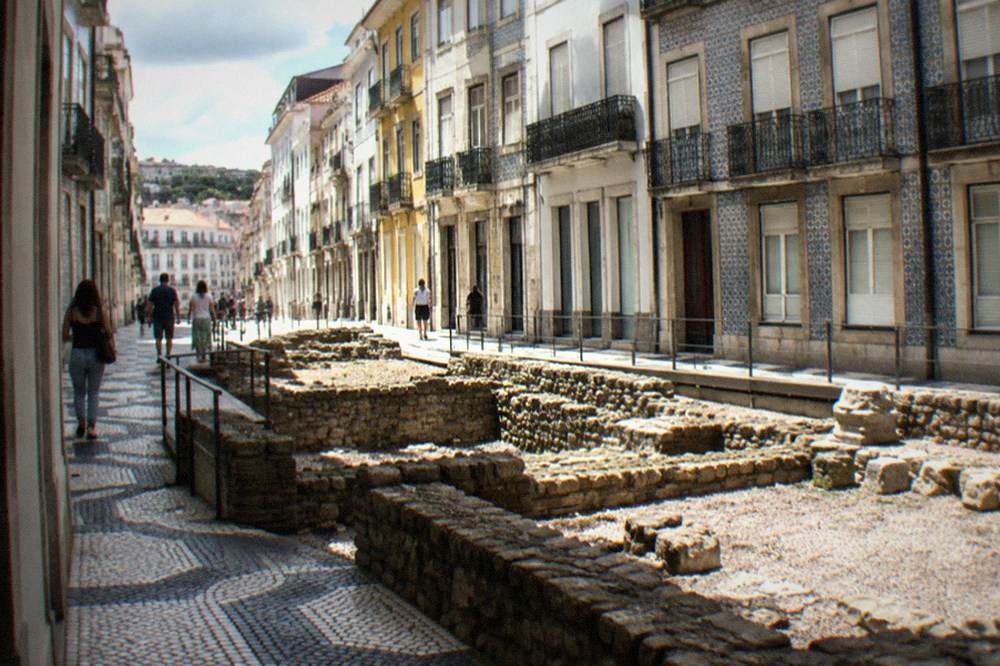
The second story is older by nearly two millennia. Conímbriga is a Roman town about 16 km south of Coimbra, in the municipality of Condeixa-a-Nova, and it is the region's headline Roman site, with house foundations, wall sections and museum material on show under a single combined ticket. The third story is a craft-and-landscape one: the schist villages of the Lousã mountain, reachable on organized day trips from Coimbra, represent a regional building tradition in local stone that sits alongside the region's clay and tile work, and several tours from Coimbra combine the villages with stops suited to visitors who travel with craft interests.
Where Can You See Historic Ceramics Inside Coimbra Itself?
The two most reliable in-city stops are the Sé Velha de Coimbra, at 3.00 EUR per person for an individual ticket, and the Mosteiro de Santa Cruz, at 5.00 EUR per person, both managed by the Unidade Pastoral Aeminium, which publishes those prices and the visiting hours on its own pages. The Museu Nacional de Machado de Castro, the city's national archaeology museum, is closed for conservation work as of September 2026, so it cannot be counted in a current itinerary.
The Sé Velha, the Old Cathedral, is the more atmospheric of the two for a ceramics-minded visitor, because its interior surfaces and its cloister reward slow looking, and its individual ticket price of 3.00 EUR, dropping to 2.50 EUR per person for groups of more than ten, is published by the parish authority that runs it. Summer visiting runs 09:30 to 18:30 with Sundays on an 11:00 start, and winter visiting runs 09:30 to 17:30. The Mosteiro de Santa Cruz costs 5.00 EUR individually, or 3.50 EUR per person for groups of twelve or more, and 09:30 to 16:30 is the published weekday visiting window, with Sundays and religious holidays on a separate schedule. One planning detail matters: Santa Cruz suspends visits on the Cortejo da Queima das Fitas, a moveable Sunday in May, so a ceramics itinerary in that month should be checked against the monastery's own calendar.
The Machado de Castro situation deserves plain wording. The museum's own page on the national Museus e Monumentos portal states it is closed for conservation work, and although the same page prints a normal-looking hours table beneath the closure line, that table describes the museum when open, not its current state. The museum is built over a Roman cryptoporticus of the mid-1st century, which is normally part of the visit route, and it is the single most important ceramics and archaeology collection in the city, so its reopening will change this itinerary. Until then, the University's own ticketed spaces carry part of the load: the 16.50 EUR combined ticket covers the Joanina Library, the Royal Palace, St Michael's Chapel, the Chemistry Laboratory, the Academic Museum, the Cabinet of Curiosities and the Mineral Gallery, and the 12.50 EUR version covers the same list without the Joanina.
| Stop in Coimbra | What a ceramics visitor sees | Individual price | Status as of September 2026 |
|---|---|---|---|
| Sé Velha de Coimbra | Tiled and faced interior surfaces, cloister | 3.00 EUR | Open, parish-published hours |
| Mosteiro de Santa Cruz | Interior work, tombs of Portugal's first two kings | 5.00 EUR | Open, closed on the Cortejo Sunday in May |
| Museu Nacional de Machado de Castro | National archaeology collection, Roman cryptoporticus | No price published while closed | Closed for conservation work |
| University of Coimbra combined ticket | Joanina Library, St Michael's Chapel, Royal Palace and more | 16.50 EUR with Joanina, 12.50 EUR without | Open, summer hours 09:00 to 20:00 |
For visitors who want the old town's tiled streets explained rather than just walked, the Coimbra top attractions walking tour runs from $5.85 per person, is rated 5 from 151 reviews on the operator's live listing, and covers the historic center in about two and a half hours, which pairs well with a morning spent looking at facades on your own. A second option with more depth is the guided tour of the University and city of Coimbra, from $84.29 per person and rated 4.9 from 399 reviews, which links the university hill to the streets below it.
Which Day Trips from Coimbra Fit a Ceramics-Led Itinerary?
Two day trips stand out for a pottery-focused visitor: Conímbriga, the Roman town about 16 km south in Condeixa-a-Velha in the municipality of Condeixa-a-Nova, where a single 10.00 EUR adult ticket covers both the museum and the ruins, open daily 10:00 to 18:00 with the ticket office closing at 17:15; and the schist villages of the Lousã mountain, which several organized tours from Coimbra reach in four hours or so.
Conímbriga is the anchor. The site is open seven days a week, which makes it the reliable Monday option when monuments that close on Mondays are shut, and its closure list is short: 1 January, Easter Sunday, 1 May, 24 July and 25 December. For a visitor whose interest is ceramics, the draw is the Roman domestic material and the museum that interprets it, and the fact that one ticket covers both halves of the site removes any planning friction. The address is Rua Professor Vergílio Correia, Condeixa-a-Velha, and the geography is worth getting right: the site is not in Coimbra the municipality, it is in Condeixa-a-Nova, roughly 16 km south.
The schist villages are the second trip, and they reward a different kind of looking. These are settlements built in local schist stone on the Lousã mountain, and tours from Coimbra reach them in half a day. The adventure through the Schist Villages of Lousã runs from $87.81 per person, is rated 5 from 105 reviews, and includes a coffee stop; the longer tour between Cascades and Schist Villages, Piodão runs a full eight hours and is rated 5 from 48 reviews. Neither is a pottery studio visit, but both put the region's building and craft traditions in front of you in their original setting, which is the honest way to encounter them.
| Day trip from Coimbra | Kind of ceramics or craft interest | Tour option from this site's roster | Duration |
|---|---|---|---|
| Conímbriga Roman ruins and museum | Roman material, one 10.00 EUR combined ticket | Conimbriga and The Roman Tour, from $105.37 per person, rated 4.8 from 136 reviews | 4 hours |
| Conímbriga plus the Sicó caves | Roman ruins plus a landscape stop | Discovering the Roman Ruins of Conímbriga and the Caves of Sicó, from $87.81 per person, rated 5 from 32 reviews | 4 hours |
| Schist villages of the Lousã mountain | Regional building craft in stone and clay traditions | Schist Villages at Lousa Mountain, from $105.37 per person, rated 4.9 from 133 reviews | 4 hours |
| Schist villages, private half-day | Villages with a coffee stop, private format | An adventure through the Schist Villages of Lousã, from $87.81 per person | 3 to 4 hours |
Can You Buy Pottery in Coimbra, and What Should You Expect to Pay?
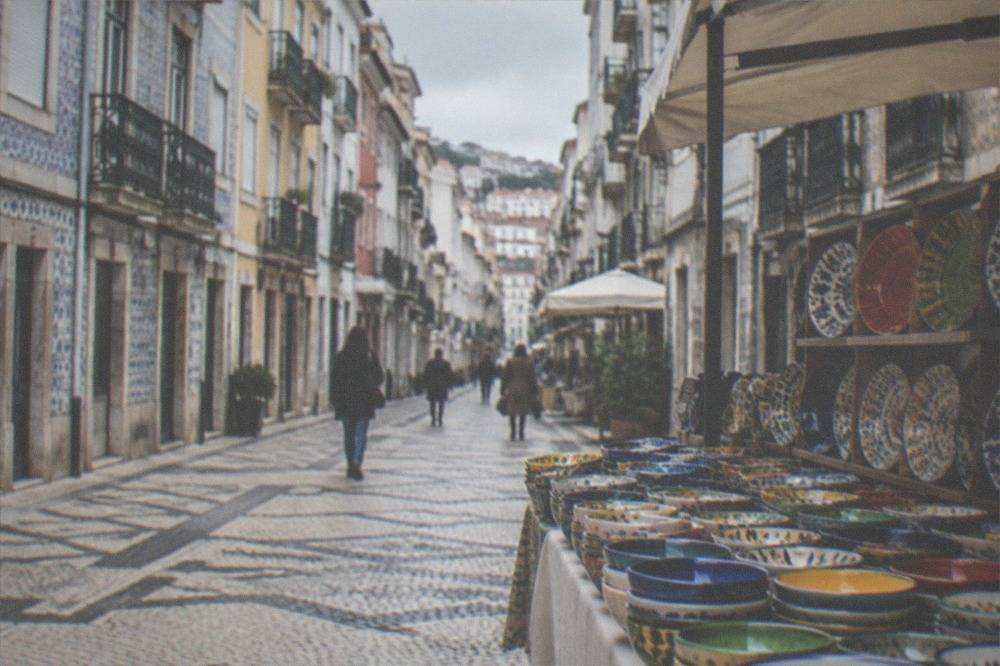
No pottery shop, studio or ceramics market in Coimbra had its address, opening hours or prices verified for this site, so this guide publishes none of them, and any specific price you read for a Coimbra ceramics purchase should be checked with the shop or studio itself before you travel. What can be said honestly is that the old town and the Baixa are where most retail sits, and that buying well in Coimbra means asking three questions of any piece.
Those three questions are the ones that travel anywhere with you. First, ask whether the piece is made in Portugal, because a large share of souvenir ceramics sold in tourist streets across the country is imported, and a shop that stocks regional work will normally say so plainly. Second, ask about the maker: a named studio, a potter's mark on the base, or a place of origin you can point to on a map all raise the odds that the piece is what the label implies. Third, ask about use, because decorative ceramics and food-safe ceramics are different products, and glaze suitability for food contact is a technical question a reputable seller can answer on the spot.
For budgeting, the honest answer is a range rather than a figure, since no Coimbra ceramics retailer was price-checked on this build. Small decorative pieces in Portuguese tourist retail typically sit in the low tens of euros, and larger hand-finished work can run well beyond that, but those are planning instincts, not verified Coimbra prices, and the shop or the studio is where the number becomes real. What this site can verify is everything around the purchase: the 1.00 EUR per-night municipal tourist tax, capped at three consecutive nights per person and payable to your accommodation, and the transport costs of getting your purchases home safely, which brings packing into the plan.
Packing is a real constraint on a ceramics trip. Terracotta and glazed ware travel badly in soft bags, so the practical sequence is to buy on a day when you can return to your accommodation before moving on, or to ask the seller about shipping, which many Portuguese ceramics retailers offer and which this site has not verified for any specific Coimbra shop. If you are driving, the car rental guide covers the rental side of a regional trip that ends with a loaded boot; if you are arriving by rail, the train stations A and B guide explains the two-station arrangement, with the honest caveat that which trains call where should be checked with CP directly, because this site could not verify the stopping patterns or the shuttle rules from official sources.
When Is the Best Time to Visit Coimbra for a Ceramics-Focused Trip?
September is the best-kept secret for a Coimbra ceramics trip: IPMA's 1991 to 2020 normals for the Coimbra / Bencanta station show a September mean maximum of 27.4 C, higher than June's 26.3 C, with only 49.9 mm of rain against June's 26.0 mm, and the real jump in rain does not arrive until October, when the monthly total leaps to 114.5 mm.
That September figure surprises people who assume summer peaks in July, but the same table shows August, not July, as the hottest month, with a mean maximum of 29.1 C and 10.9 days above 30 C. July is effectively dry at 8.9 mm of rain, and November is the wettest month of the year at 121.5 mm, marginally ahead of October and January. For a trip built around walking old-town streets, standing in ruins at Conímbriga and carrying ceramics purchases, the shoulder arithmetic matters more than the peak-season instinct: June through September gives you warm, comparatively dry days, and May at 64.7 mm is also workable if you plan around the Queima das Fitas closures.
| Month | Mean max C | Rain mm | Days with 1 mm+ rain | What it means for a ceramics trip |
|---|---|---|---|---|
| May | 23.3 | 64.7 | 8.5 | Pleasant, but the Cortejo Sunday closes Santa Cruz and the UC circuit closes 24 May |
| June | 26.3 | 26.0 | 3.7 | Dry and warm, good for ruins and villages |
| July | 28.5 | 8.9 | 1.7 | Effectively dry, hot afternoons |
| August | 29.1 | 14.8 | 2.2 | Hottest month, 10.9 days above 30 C |
| September | 27.4 | 49.9 | 5.2 | Warmer than June, crowds thinner, rain still low |
| October | 23.2 | 114.5 | 10.3 | The rain arrives in earnest, plan indoor stops |
| November | 18.0 | 121.5 | 11.5 | Wettest month, best for indoor ceramics |
The full month-by-month picture, including the record extremes of 41.2 C on 7 August 2016 and -4.3 C on 20 January 2017 at the same station, is in the weather guide, and the broader timing arguments are laid out in the best time to visit guide. One timing fact specific to this itinerary: the University of Coimbra closes its visitor circuit on 24 May and on 4 October, and warns that religious, official and academic ceremonies interrupt the normal tourist circuit, so the 16.50 EUR combined ticket's Joanina slot should be booked with those dates in mind.
How Does a Ceramics Day Fit Into a Two-Day Coimbra Itinerary?
A workable split is day one in the city, morning at the university hill on the 16.50 EUR combined ticket with a pre-booked Joanina slot, afternoon between the Sé Velha at 3.00 EUR and Santa Cruz at 5.00 EUR, and day two out to Conímbriga on the 10.00 EUR combined ticket or to the schist villages on an organized tour, returning to the Baixa for any purchases while your luggage is still stable.
The reason the sequence runs city-first is the Joanina Library's entry rule, which is the single most practical fact on this site. The library admits 50 people every 20 minutes, it cannot be bought on its own, it exists only inside the 16.50 EUR combined ticket, and the time printed on the ticket is the library slot specifically. Entry outside the printed slot is refused, the University's own page states this, and online purchase closes 20 minutes before the visit time. The rest of the ticket is valid for two days, so a ceramics visitor can book a morning Joanina slot, spend that day on the hill and the churches, and use the second day's validity for any university spaces missed, before heading out to Conímbriga or the Lousã mountain.
The Conímbriga half-day deserves its own morning. The site opens at 10:00 daily, the ticket office closes at 17:15, and the museum-and-ruins ticket is a single 10.00 EUR adult purchase, so there is no ticket arithmetic to do on arrival. Tours cover the transport question, which matters because this site has not verified a bus route or frequency to Condeixa-a-Velha, and an organized option such as Conimbriga and The Roman Tour, from $105.37 per person and rated 4.8 from 136 reviews, removes that uncertainty entirely. The Conímbriga Roman ruins guide covers the site itself in more depth.
| Itinerary block | Ticket or tour cost | Verified source | Timing note |
|---|---|---|---|
| University combined ticket with Joanina | 16.50 EUR adult | visit.uc.pt, valid 01.01.2026 to 31.12.2026 | Joanina slot fixed, rest valid 2 days |
| University ticket without Joanina | 12.50 EUR adult | visit.uc.pt | Same spaces minus the library |
| Sé Velha individual entry | 3.00 EUR | Unidade Pastoral Aeminium | Summer 09:30 to 18:30, Sundays 11:00 start |
| Mosteiro de Santa Cruz individual entry | 5.00 EUR | Unidade Pastoral Aeminium | 09:30 to 16:30, closed on the Cortejo Sunday |
| Conímbriga museum and ruins | 10.00 EUR adult | Museu Nacional de Conímbriga | Daily 10:00 to 18:00, ticket office to 17:15 |
| Guided UC Palace of Schools tour | 25.00 EUR adult | visit.uc.pt | 1h30, science spaces not included |
What Practical Facts Change a Pottery-Focused Trip to Coimbra?
Three verified practical facts shape the budget: the municipal tourist tax is 1.00 EUR per guest per overnight stay, capped at three consecutive nights and applying from age 16, payable to the accommodation; an SMTUC bus ticket bought on board costs 2.00 EUR, with pre-purchased trips at 0.90 EUR each for packs of three or more; and SMTUC tickets are valid on the Metro Mondego network too, per the 2026 tariff in force since 1 April 2026.
The tourist tax detail is worth stating precisely, because a two-euro figure circulates and is not the current rate. The municipality's own service page confirms 1.00 EUR per guest per overnight stay in all tourist developments and local accommodation, a maximum of three consecutive overnight stays per person, application from age 16, payment directly to the accommodation at check-in or check-out, and no low-season exemption. The municipality's worked example is a couple staying seven nights paying 3.00 EUR each. A rise to two euros was approved as a proposal in July 2026, but the published rate on the municipality's own tax pages remains 1.00 EUR until those pages say otherwise.
The transport picture is genuinely useful for a ceramics trip, because a visitor moving between the Baixa, the Alta and a bus stop with a bag of bowls wants simple fares. The 2026 SMTUC tariff lists a driver ticket at 2.00 EUR, pre-purchased trips at 0.90 EUR each when bought in packs of three or more, and a single journey valid 90 minutes on the urban network with transfers included within that window. The same tariff is explicitly headed for intermodal use across SMTUC and Metro Mondego, so a bus ticket works on the new BRT network that has been opening in stages, though this site has not verified the Metro Mondego line map or station list, and the honest instruction is to check the operator's own material for routes. Day passes exist for one, three and seven days, but the per-day price mapping in the tariff PDF was not confirmed, so no figure is published here.
One more verified number gives the trip context that almost no competing guide carries. The municipality's own economic justification for the tax rise, published on coimbra.pt in July 2026, records 698,151 overnight stays in Coimbra in 2025, a municipal figure and not a district one, and estimates the municipal cost per overnight stay at 3.49 EUR, against which the one-euro tax sits below cost. For a visitor, that is background, but it explains why the city invests in the events and maintenance that keep the old town's tiled facades worth visiting.
What Should a Ceramics Visitor Know About Coimbra's Closures and Cautions?
The closures that matter as of September 2026 are the Museu Nacional de Machado de Castro, closed for conservation work, the Torre da Universidade, which the University's own page states is closed, and the Mosteiro de Santa Clara-a-Velha, which has no page at all on the national museums portal and should be treated as closed for requalification works, with no price or opening time published for it on this site.
Each of those closures removes something a ceramics visitor might otherwise plan around. Machado de Castro is the city's national archaeology museum, and its collection would normally be the single best in-city stop for historic ceramics; its own page confirms the closure, and a phased reopening has been reported in dated Portuguese press, but no reopening date or ticket price is published on an official page, so neither appears here. The tower closure is simpler: the University's information page states the facility is closed, so no climb, no price, no hours. Santa Clara-a-Velha is the trickiest, because figures of 4.00 EUR and Tuesday-to-Sunday hours circulate for it, but this site could not confirm them on an official page, and the monument's absence from the national portal is itself evidence it is not currently listed as visitable. The instruction that respects the reader is to check before going.
The Queima das Fitas timing is the last caution, and it is one where this site is deliberately conservative. Precise festival dates could not be verified from the Associação Académica's own site, so none are published here. What is official and usable: the University closes its visitor circuit on 24 May, and Mosteiro de Santa Cruz suspends visits on the Cortejo da Queima das Fitas, a moveable Sunday. A ceramics itinerary in May should therefore be checked against both closures, and the Queima das Fitas guide explains the festival's shape around those two verified facts.

Common Questions About Coimbra Pottery and Ceramics
Where Can I See Historic Ceramics in Coimbra, Portugal?
The reliable in-city stops are the Sé Velha de Coimbra at 3.00 EUR and the Mosteiro de Santa Cruz at 5.00 EUR, both with prices published by the Unidade Pastoral Aeminium, plus the University's ticketed spaces on the 16.50 EUR combined ticket. The Museu Nacional de Machado de Castro, the national archaeology museum, is closed for conservation work as of September 2026, so it cannot currently be part of the plan.
Is Conímbriga Worth Visiting for a Ceramics Trip?
Yes, and it is the anchor day trip: one 10.00 EUR adult ticket covers both the museum and the Roman ruins, the site opens daily 10:00 to 18:00 with the ticket office closing at 17:15, and it is open seven days a week, which makes it the reliable Monday option when monuments that close on Mondays are shut. It sits about 16 km south in Condeixa-a-Velha, in the municipality of Condeixa-a-Nova, not in Coimbra itself.
Can I Buy Pottery in Coimbra's Old Town?
Probably, but no shop, studio or market in Coimbra had its address, hours or prices verified for this site, so this guide publishes none of them. The honest approach is to treat the Baixa and old-town streets as where most retail sits, ask any seller whether a piece is made in Portugal, who the maker is, and whether the glaze is food-safe, and check current prices and shipping options with the shop itself.
How Much Does a Ceramics-focused Coimbra Trip Cost in Tickets?
The verified core is 16.50 EUR for the University combined ticket with the Joanina Library, 3.00 EUR for the Sé Velha, 5.00 EUR for Santa Cruz, and 10.00 EUR for Conímbriga's museum and ruins, so the four headline monument tickets are all individually priced and published by the venues themselves, with the 1.00 EUR per-night tourist tax, capped at three nights per person, payable to your accommodation on top.
When Should I Visit Coimbra for Pottery Shopping and Studio Visits?
September, on the climate numbers: IPMA's 1991 to 2020 normals for the Coimbra / Bencanta station show a September mean maximum of 27.4 C against June's 26.3 C, with 49.9 mm of rain, and the real rain jump waits until October at 114.5 mm. Avoid late May around the Queima das Fitas closures if the university circuit and Santa Cruz matter to your plan.
Do the Bats in the Joanina Library Relate to Ceramics?
Only indirectly, but it is a genuine fact of the building: the Joanina Library houses a bat colony that eats book-damaging insects, confirmed on the University's own space page, which is one reason the library's 50-people-per-20-minutes entry rule and strict slots exist alongside its conservation needs. Book the 16.50 EUR combined ticket's Joanina slot in advance, because entry outside the printed time is refused.

A ceramics-led visit to Coimbra, Portugal works because the city holds one layer of the story and the region holds two more, and every price in this plan comes from a venue's own published page rather than from a souvenir stall's guess. Start with the Coimbra Travel Guide overview if you are building a wider itinerary, and treat the Joanina slot, the Conímbriga ticket and a September date as the three fixed points around which everything else, tiles, terracotta and the schist villages included, can be arranged.