Queima das Fitas in Coimbra, Portugal: The Student Festival That Takes Over the City
Queima das Fitas is Coimbra's great student festival, a week each May in which the University of Coimbra's roughly 31,000 students take over the old town. Here is what is officially confirmed about the festival, which monuments close, and how to plan around it.
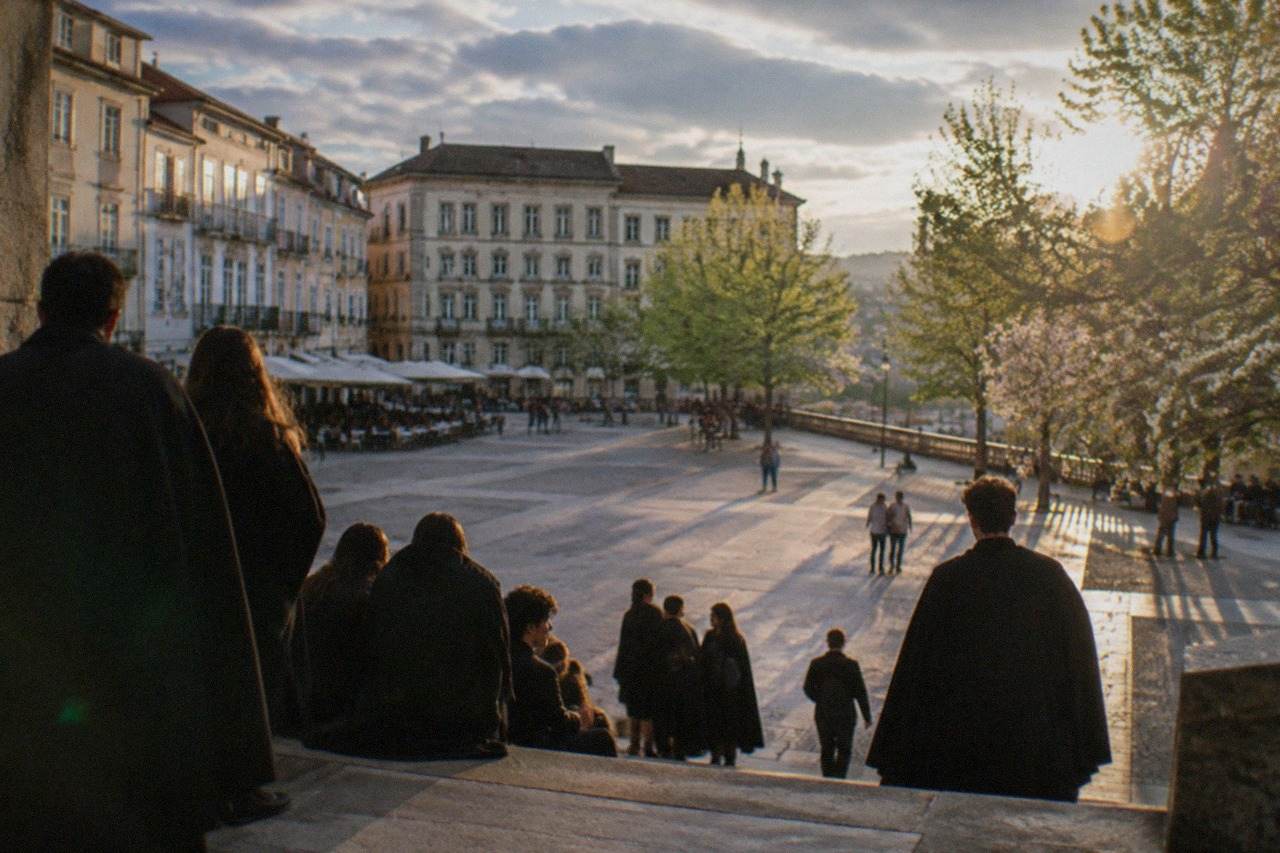
Short answer
Queima das Fitas is Coimbra's annual student festival, held in May. The University of Coimbra closes its visitor circuit on 24 May, and Mosteiro de Santa Cruz suspends visits on the Cortejo, a moveable Sunday. Exact dates come from the Associação Académica.
Queima das Fitas in Coimbra, Portugal, the university city on the River Mondego, is the high point of the academic year: a week each May in which the students of one of the world's oldest universities turn the entire old town into a festival ground. The University of Coimbra publishes a figure of about 31,000 students on its own homepage, and for one week a meaningful share of them is in the streets in black capes, singing, parading and burning ribbons. This guide explains what is officially confirmed about the festival, what actually happens during it, which monuments close, and how a visitor should plan around it. It is written from verified sources rather than visits, because everything below can be checked.
The name itself needs a translation before anything else. "Queima das Fitas" means "the burning of the ribbons": each faculty of the university has its own coloured ribbon, and the burning of those ribbons marks the end of the academic year and the farewell of final-year students. The festival is organised by the Associação Académica de Coimbra, the students' association, and it is the largest student festival in Portugal. For more on the city that hosts it, start with the Coimbra travel guide or the broader things to do in Coimbra overview.
What Is Queima das Fitas in Coimbra?
Queima das Fitas is the annual student festival of the University of Coimbra, held in May, in which final-year students burn their faculty ribbons to mark the end of their studies. The programme is built around a solemn opening serenade, a parade through the city, concerts and student traditions that date back generations. The Associação Académica de Coimbra organises it, and the whole city, not just the campus, becomes the venue. It is the biggest event in Coimbra's calendar.
The festival belongs to a specific institution in a specific city: the University of Coimbra, whose hilltop core, the Paço das Escolas and the Rua da Sofia colleges, was inscribed by UNESCO in 2013 as "University of Coimbra – Alta and Sofia" under criteria (ii), (iv) and (vi). That inscription covers the university hill and the college street, not the whole city, which matters here because the festival's geography is exactly that of the inscription: the ceremonies cluster on the university hill and in the streets below it.
The burning of the ribbons is the symbolic heart. Students wear the capa e batina, the black cape and cassock of Coimbra's academic dress, and the week is as much about that dress and its rituals as about the concerts. The traditions around the capa are old and specific to this university, and they are worth reading about in their own right on the student traditions and capa e batina pages of this site, which also cover the Repúblicas, the student houses that are the social backbone of the festival.
What makes the week unusual for a visitor is that it is not staged for tourists. The parades and the serenade are student rituals that happen in public, and the city adjusts around them. Hotels fill, streets close, and two of the city's major monuments shut their doors for the day. That is the practical core of planning a trip around Queima das Fitas, and it is where the verified facts matter most.
When Does Queima das Fitas Take Place in Coimbra?
Queima das Fitas falls in May each year, but the exact dates are set by the Associação Académica de Coimbra and this site does not publish them, because the students' association's own site could not be read during this site's research. Two closures are officially confirmed: the University of Coimbra closes its visitor circuit on 24 May, and Mosteiro de Santa Cruz suspends visits on the Cortejo, a moveable Sunday. Check the Associação Académica for the current year's dates.
That is a deliberately cautious answer, and it is the honest one. Many guides print festival dates confidently, but the only official, checkable facts this site's research could confirm are the two closures. The University's own visitor information page lists 24 May among the dates its tourist circuit is closed, and the parish body that runs Mosteiro de Santa Cruz states that visits are suspended on Easter Sunday and on the Cortejo da Queima das Fitas, which it describes as a moveable Sunday.
The corroboration is strong even where the dates are not. A festival that closes the university's visitor circuit and a major monastery on a Sunday in May is clearly a festival of a scale that reshapes a visit. The Cortejo, the parade that gives Santa Cruz its closure day, is the centrepiece procession, and the monastery shuts because the parade route and the crowds make ordinary visiting impossible.
For planning purposes, the practical rule is simple: if a trip falls in the second half of May, assume the festival may be on, book accommodation early, and check the Associação Académica's channels for the dates before committing to an itinerary. May in general is one of the city's most pleasant months, and the broader case for it is set out in the best time to visit Coimbra guide.
What Happens During Queima das Fitas Week?
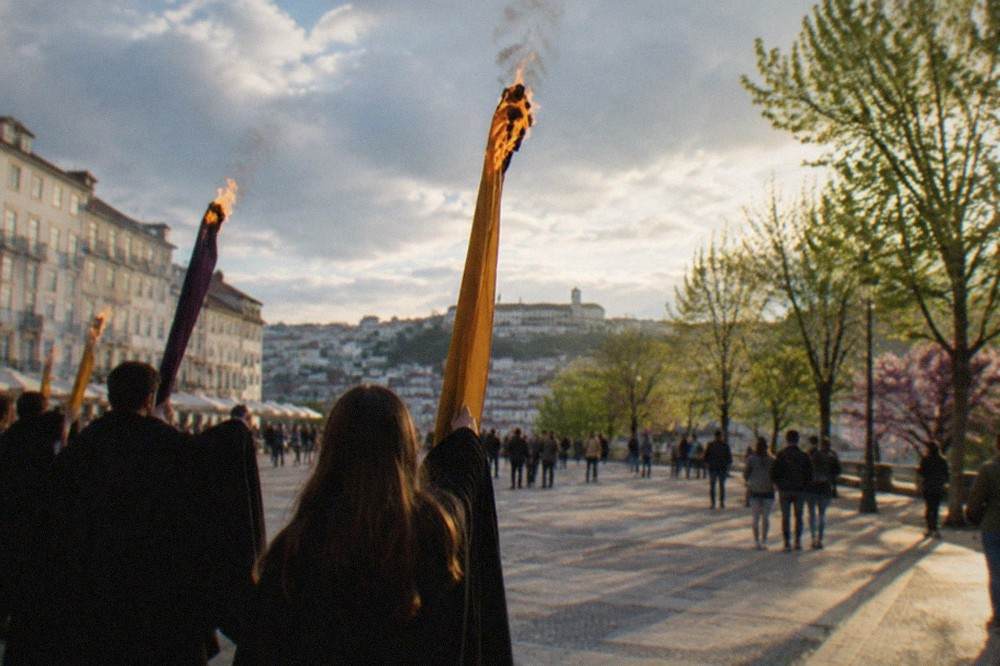
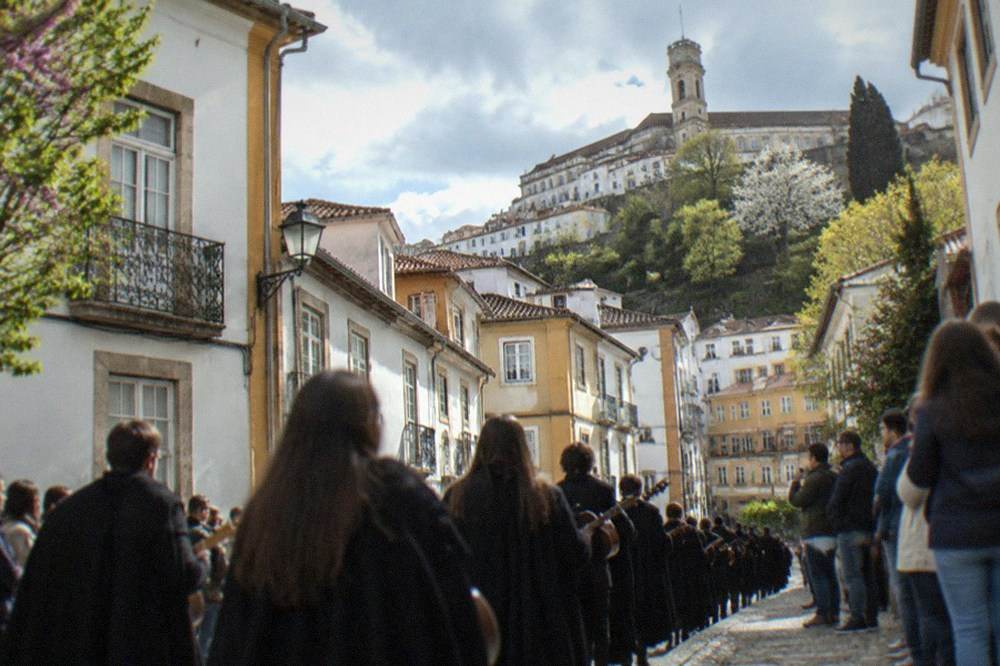
The festival week is built around a few fixed rituals: a serenade that opens the celebrations in the old town, the Cortejo, a costumed parade through the city streets that is the single biggest event, the burning of the faculty ribbons, and a programme of concerts and student balls run by the Associação Académica. The serenade and the Cortejo are the two events a visitor is most likely to see by accident. Everything happens in public streets, not behind ticketed fences.
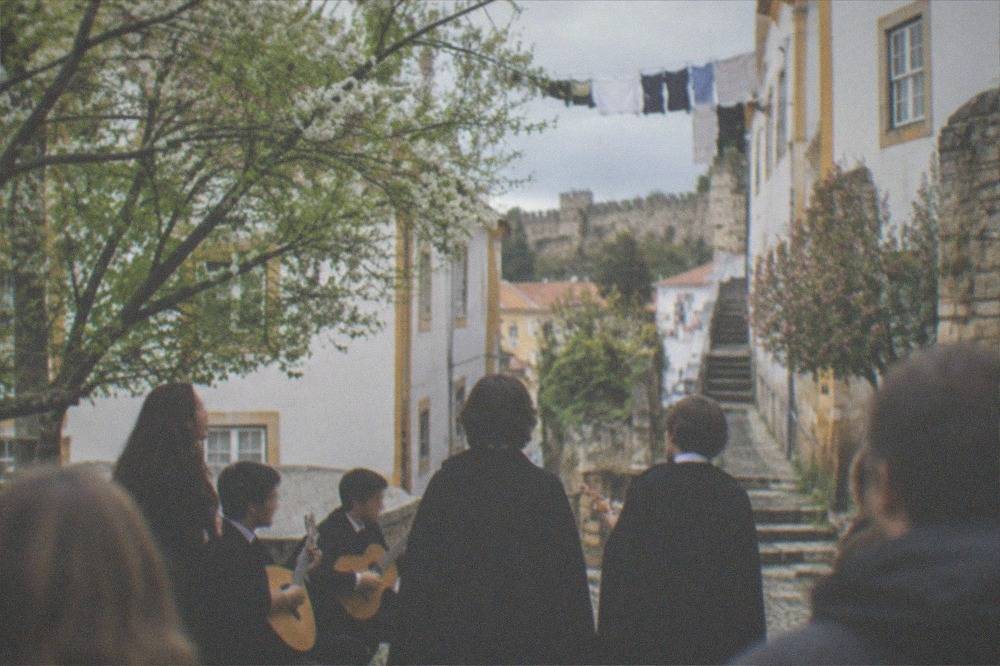
The Serenata Monumental is the traditional opening, sung by students in academic dress, and Coimbra's fado is inseparable from it. Coimbra's fado is a distinct tradition from Lisbon's, sung historically by male students in capes, and the festival week is one of the times the city's singing tradition is most audible. The background to that tradition, and where to hear it in the rest of the year, is covered in the fado de Coimbra and where to hear fado guides.
The Cortejo is the parade: floats, faculty groups in their colours, and the city lined with spectators along the route. It is the Cortejo that closes Santa Cruz for the day, which tells a visitor everything about its scale. The burning of the ribbons follows, and the week continues with concerts and student events organised by the Associação Académica.
A visitor does not need a ticket to any of the street events. What a visitor does need is a plan for the parts of the city that stop working that week, which is the next section. For travellers who want a structured introduction to the city in the days around the festival, a guided walk is one option, and the listing for the Coimbra Top Attractions Walking Tour covers the main sights in two and a half hours.
The festival is loud, crowded and joyful, and it is concentrated in the old town, on the hill and along the river. The streets of the Baixa and the university hill are where the parades and the singing happen, and the old town and Baixa downtown guides describe that geography in detail for anyone planning where to base themselves.
How Does Queima das Fitas Affect Sightseeing in Coimbra?
Two confirmed closures reshape a festival-week itinerary: the University of Coimbra's visitor circuit is closed on 24 May, and Mosteiro de Santa Cruz suspends visits on the Cortejo Sunday, so neither the Joanina Library nor the monastery can be visited on those days. Crowding, street closures and accommodation pressure affect the rest. Everything else in the city remains open on its normal published hours, and the closures are a matter of dates, not damage.
The university closure is the bigger loss for most visitors, because the Paço das Escolas circuit includes the Biblioteca Joanina, the Royal Palace, the Capela de São Miguel and the Science Museum spaces. The Joanina in particular is the city's most constrained sight at the best of times: the University's own programme page states that entries are limited to 50 people every 20 minutes, that the library can only be visited on the 16.50 EUR combined ticket, and that the time printed on the ticket is the library slot, with entry outside the slot refused. During festival week that scarcity is compounded by a full closure day. The mechanics of the ticket are covered in detail in the Joanina Library tickets and university tickets guides.
Santa Cruz is the second closure, and it is stated on the parish's own page: visits are suspended on Easter Sunday and on the Cortejo da Queima das Fitas. The monastery is the burial church of Portugal's first two kings and one of the city's essential sights, with an individual ticket of 5.00 EUR and hours of 09:30 to 16:30 on ordinary days. On the Cortejo Sunday, none of that applies.
The table below sets out what is confirmed about the main ticketed sights during a festival-week visit, using each venue's own published prices and hours.
| Sight | Ordinary adult price | Ordinary hours | Festival-week effect |
|---|---|---|---|
| University of Coimbra visitor circuit (Paço das Escolas, includes Joanina Library) | 16.50 EUR combined ticket | 09:00 to 20:00 in summer | Visitor circuit closed 24 May; religious, official and academic ceremonies also interrupt the circuit through the year |
| Biblioteca Joanina | No standalone ticket, only inside the 16.50 EUR combined ticket | Timed slots, 50 people every 20 minutes | Closed with the circuit on 24 May; slots sell out in any week |
| Mosteiro de Santa Cruz | 5.00 EUR individual | 09:30 to 16:30 | Visits suspended on the Cortejo da Queima das Fitas and on Easter Sunday |
| Sé Velha de Coimbra | 3.00 EUR individual | 09:30 to 18:30 summer, 09:30 to 17:30 winter, Sundays 11:00 to 17:30 | No festival closure confirmed by its own published page |
| Museu Nacional de Machado de Castro | No current price published | Closed for conservation work | Already closed; not a festival-week factor |
The practical conclusion is to front-load the university visit. Book the Joanina slot for a day either side of the closures, treat the Cortejo Sunday as a parade-watching day rather than a monument day, and use the closures as the day to walk the streets where the festival actually is. The one day itinerary and two day itinerary guides give the sequencing for an ordinary visit, which festival week simply reorders.
Where Can You Hear Coimbra's Fado During the Festival?
Coimbra's fado is the city's own tradition, sung in the academic dress of its students, and festival week is when it is most present in the streets. For a guaranteed seat, a live fado show with a glass of port wine runs from 18 USD per person, is rated 4.7 from 1,234 reviews on the operator's listing, and lasts 50 minutes. It is the reliable option in a week when street singing depends on schedules no visitor controls.
The distinction between Coimbra's fado and Lisbon's is real and matters. Coimbra's tradition grew out of the university's male student culture, and its songs, its guitars and its performance dress are its own. The serenade that opens Queima das Fitas is that tradition at its most formal, and the festival week puts it in the streets. But the street events run on the students' schedule, not a visitor's, and a booked show removes the uncertainty. The listing for the Coimbra live fado show with a glass of port wine is the direct way to do it, and the operator's live listing carries the current times.
For the rest of the year, the city's fado houses and the traditions around them are covered in the dedicated guides, and the same singing culture that fills festival week can be found in smaller rooms through the calendar. What festival week adds is scale: more voices, more capes, and the serenade as the formal opening act. Everything else covered here is indexed on Coimbra Travel Guide.
Where Should You Stay for Queima das Fitas in Coimbra?
Stay in the old town or the Baixa if the festival itself is the point, because the parades and the singing happen on the hill and in the streets between the hill and the river, and staying inside that zone puts a visitor inside the festival at no cost. Book early: the municipality recorded 698,151 overnight stays in 2025, its own municipal figure, and festival week is the tightest demand of the year. Across the river in Santa Clara is the quieter alternative.
The accommodation pressure is not a guess. The municipality's own 2025 management reporting, published in its justification for updating the tourist tax, records 698,151 overnight stays in Coimbra for 2025 and estimates its cost per overnight stay at 3.49 EUR, which is the context for the one-euro nightly tourist tax that has been in force since 5 April 2023. A festival that closes monuments is a festival that fills beds, and the travellers who book months ahead get the locations.
The tourist tax itself is worth knowing before arrival: 1.00 EUR per guest per overnight stay, capped at three consecutive nights per person, from age 16, paid to the accommodation at check-in or check-out, with no low-season exemption. A couple staying seven nights pays 3.00 EUR each. The municipality has approved a proposal to raise the tax to two euros, but the published rate remains one euro until the municipality's own tax pages change it.
For the neighbourhood-by-neighbourhood case, including the riverside and the hill, the where to stay and best hotels guides carry the detail, and the map guide gives the geography that decides it.
| Neighbourhood | Character during festival week | Best for |
|---|---|---|
| Alta, the university hill | Centre of the ceremonies, loudest, most crowded | Visitors whose whole trip is the festival |
| Baixa, downtown | Parade routes, restaurants, the working heart of the week | First-time visitors who want everything walkable |
| Riverside, near the Mondego | Views of the hill, a short walk to the action | A balance of access and sleep |
| Santa Clara, across the river | Quietest, with the festival visible across the water | Light sleepers and families |
What Is the Weather Like in Coimbra in May?
May in Coimbra averages a mean maximum of 23.3 C with a mean minimum of 11.8 C and 64.7 mm of rain over about 8.5 days, according to IPMA's 1991 to 2020 normals for the Coimbra / Bencanta station, the city's own station 3 km from the centre. That is warm, mostly dry weather with cool evenings, and a light layer for the night-time serenade is the one packing essential.
The normals are worth reading closely because they describe a genuinely good month. May sits between April, which averages 84.6 mm of rain, and June, which averages 26.0 mm, so the month is on the drying trend but not yet at the summer minimum. The mean maximum of 23.3 C means parade-watching is comfortable, and the mean minimum of 11.8 C means the evening events want a jacket.
| Month | Mean max C | Mean min C | Rain mm | Days with 1 mm+ rain |
|---|---|---|---|---|
| April | 20.5 | 9.4 | 84.6 | 10.6 |
| May | 23.3 | 11.8 | 64.7 | 8.5 |
| June | 26.3 | 14.2 | 26.0 | 3.7 |
| July | 28.5 | 15.6 | 8.9 | 1.7 |
The full monthly picture, including the September surprise that most guides get wrong, is in the Coimbra weather guide. For the festival week specifically, the practical reading is: expect warm afternoons, cool nights, and the possibility of a shower, in a month that averages fewer than nine wet days.
What Else Can You do Around Coimbra During Festival Week?
The festival occupies the old town, but the region around Coimbra fills the rest of a week easily: the Roman ruins of Conímbriga about 16 km south in Condeixa-a-Velha, the schist villages of the Lousã mountain, the Bussaco forest and the shrine at Fátima are all established day trips. A four-hour nature tour in the Serra da Lousã runs from 81.95 USD per person, rated 4.9 from 39 reviews, and it is the natural escape valve when the city is too full.
Conímbriga deserves its own note because it is the reliable Monday-style option in a festival week: the national museum and ruins are open seven days a week, 10:00 to 18:00, with a 10.00 EUR combined ticket, and they sit far enough from the old town that the festival simply does not reach them. The site is in the parish of Condeixa-a-Velha, in the municipality of Condeixa-a-Nova, and the Conímbriga Roman ruins guide covers it in full.
The schist villages of the Lousã mountain are the other natural counterweight: stone villages in a forested range east of the city, reachable on organised tours, and quiet in a way the old town will not be during Queima week. The listing for Discovering Nature in Serra da Lousã gives the shape of that trip, and the schist villages and Lousã day trip guides give the background.
The wider menu of escapes, from Tomar's Convent of Christ to the Bussaco forest, is in the day trips guide, and the practical mechanics of reaching the city in the first place are covered in the Porto to Coimbra and Lisbon to Coimbra guides, including the two-station trap that catches so many rail travellers.
How Should You Plan a Queima das Fitas Trip?
Plan the trip in this order: fix the dates from the Associação Académica before anything else, book accommodation immediately after, book the Joanina Library slot for a day either side of the 24 May university closure, treat the Cortejo Sunday as a street day rather than a monument day, and hold one or two days for the region outside the city. Travellers who do that see both the festival and the Coimbra the festival interrupts.
The single most common mistake is the opposite order: visitors arrive in festival week expecting the Joanina and Santa Cruz to be open on parade day, and find both shut. The University's own page is explicit that its circuit closes on 24 May and that academic ceremonies interrupt the tourist circuit through the year, and Santa Cruz's own page is explicit about the Cortejo suspension. Neither is a surprise to anyone who reads them, and both are a hard loss to anyone who does not.
The second mistake is underestimating the accommodation market. With 698,151 municipal overnight stays recorded in 2025 and a festival that draws students' families and returning alumni on top of ordinary May demand, the good rooms inside the old town go first. The where to stay guide is the companion piece to this section.
The third is treating the festival as a spectator event only. The week works best for visitors who join it: watch the Cortejo, listen to the serenade, book a fado show for a guaranteed seat, and use the closures as the day to walk out of the old town entirely. That is a week that has both the party and the city in it.
Common Questions About Queima das Fitas in Coimbra
What is Queima das Fitas in Coimbra?
It is the University of Coimbra's annual student festival, held in May, in which final-year students burn their faculty ribbons to mark the end of the academic year. The Associação Académica de Coimbra organises it, and the week includes a serenade, the Cortejo parade, concerts and student traditions.
When is Queima das Fitas held?
Every May. The exact dates are set by the Associação Académica de Coimbra, and this site does not publish them because the students' association's own site could not be read during this site's research. Two closures are officially confirmed: the University closes its visitor circuit on 24 May, and Santa Cruz suspends visits on the Cortejo, a moveable Sunday.
Does the University of Coimbra close during Queima das Fitas?
Yes, on 24 May the University's visitor circuit is closed, which includes the Biblioteca Joanina, the Royal Palace, the Capela de São Miguel and the Science Museum spaces. On other days of the week the circuit runs on its normal schedule, but the Joanina's 50-people-per-20-minutes slot ceiling makes advance booking essential.
Is Mosteiro de Santa Cruz open during the festival?
Not on the Cortejo day. The parish body that runs the monastery states that visits are suspended on Easter Sunday and on the Cortejo da Queima das Fitas, a moveable Sunday. On ordinary days it charges 5.00 EUR individual admission and opens 09:30 to 16:30.
Can visitors watch the Queima das Fitas events?
Yes. The serenade, the Cortejo parade and the street celebrations happen in public streets and need no ticket. The concerts and student balls are ticketed and organised by the Associação Académica, whose channels carry the programme.
Is May a good time to visit Coimbra outside the festival?
Yes. IPMA's 1991 to 2020 normals for the Coimbra / Bencanta station show May averaging a mean maximum of 23.3 C, a mean minimum of 11.8 C and 64.7 mm of rain over about 8.5 days, warm afternoons and cool evenings with the summer dry season approaching.
Queima das Fitas is the one week of the year when Coimbra's identity as a university city is visible from every street, and a visitor who books the Joanina slot early, respects the two confirmed closures and gives the parade day to the streets gets both the festival and the city at their fullest.