The Alta: Coimbra's Upper Town
The Alta de Coimbra is the upper town of Coimbra, Portugal, crowned by one of the world's oldest universities and inscribed by UNESCO in 2013. Here is what to see, what it costs and how to get up the hill.
Short answer
The Alta is Coimbra's upper town, the university hill above the River Mondego. UNESCO inscribed it in 2013 as part of the University of Coimbra - Alta and Sofia. The combined ticket costs 16.50 EUR and the Joanina Library admits 50 people every 20 minutes, so book a slot in advance.
The Alta de Coimbra is the upper town of Coimbra, Portugal, the university city on the River Mondego, and it is the part of the city that almost every visitor comes for. The hill rises steeply above the Baixa, the downtown grid of the lower town, and its crown is the Paço das Escolas, the historic core of the University of Coimbra, a university with about 31,000 students according to its own published figures. The United Nations Educational, Scientific and Cultural Organization inscribed the hill in 2013, but the inscription is narrower than most guides claim, and getting that scope right is the difference between an accurate visit plan and a disappointed one. This page from Coimbra Travel Guide covers what the Alta actually is, what it costs, how to climb it, where to eat on it and when to go.
What Is the Alta de Coimbra?
The Alta de Coimbra is the upper town of Coimbra, Portugal: the hillside district that climbs from the Baixa up to the Paço das Escolas, the Royal Palace that has housed the University of Coimbra since 1537. UNESCO inscribed it in 2013 as one of the two components of "University of Coimbra - Alta and Sofia", list reference 1387, under criteria (ii), (iv) and (vi). The inscription covers the university hill and the Rua da Sofia college street, not the whole city.
That scope matters, because "Coimbra is a UNESCO World Heritage city" is the single most common error in guides to this city and it is false. The inscribed property is two components inside the old town. The Alta component includes the Royal Palace of Alcáçova, St Michael's Chapel, the Joanina Library, the 18th-century Chemistry Laboratory, the Botanical Garden and the University Press. The Sofia component is the college street below, Rua da Sofia, with its own set of historic college buildings. The Baixa, the riverside and the Santa Clara district across the river are not inscribed, however much they deserve a visit. The site is managed by the association RUAS.
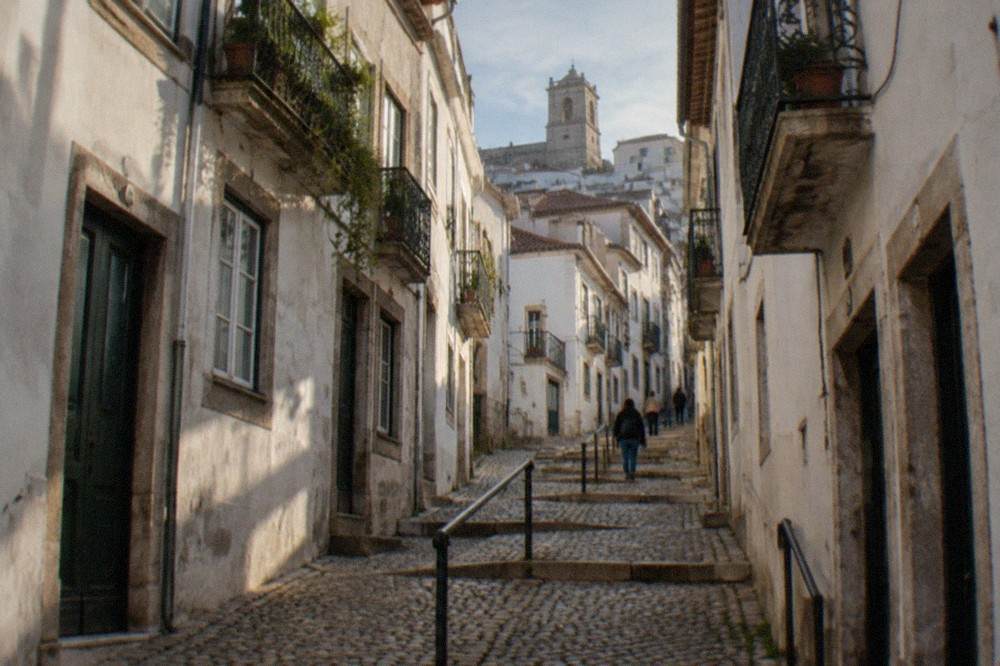
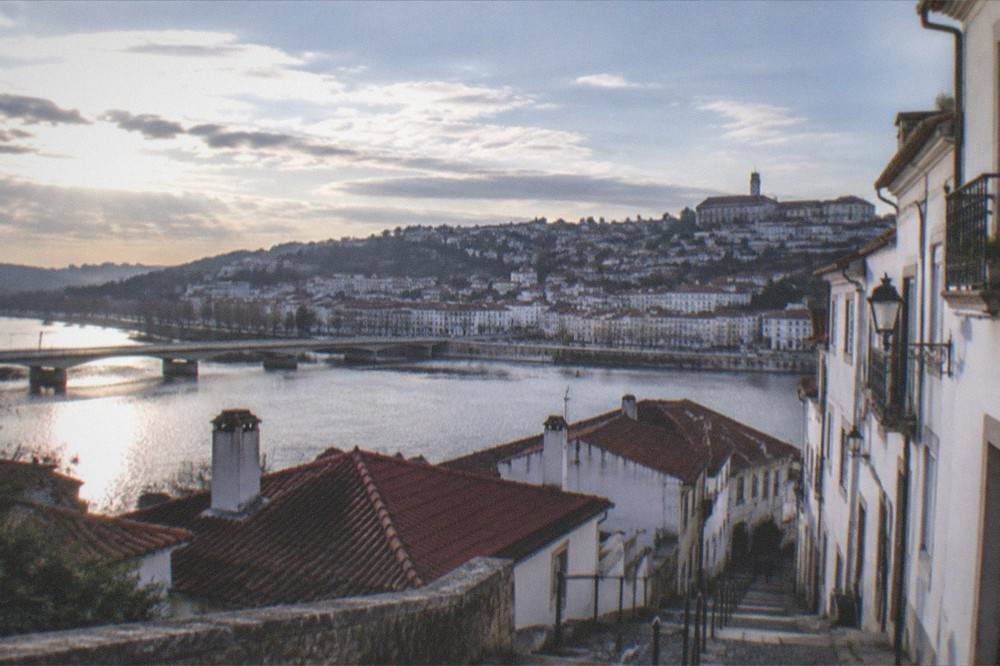
Geographically the Alta is a hill, and that single fact organises everything about visiting it. The streets are steep, stepped in places, and the climb from the Baixa to the Paço das Escolas is the reason the city installed a public funicular, the Elevador do Mercado, to spare visitors the worst of it. The upper town is also a living district rather than a museum piece: the university's student traditions survive here in the Repúblicas, the historic student houses that line several Alta streets, and the academic year still closes monuments for ceremonies.
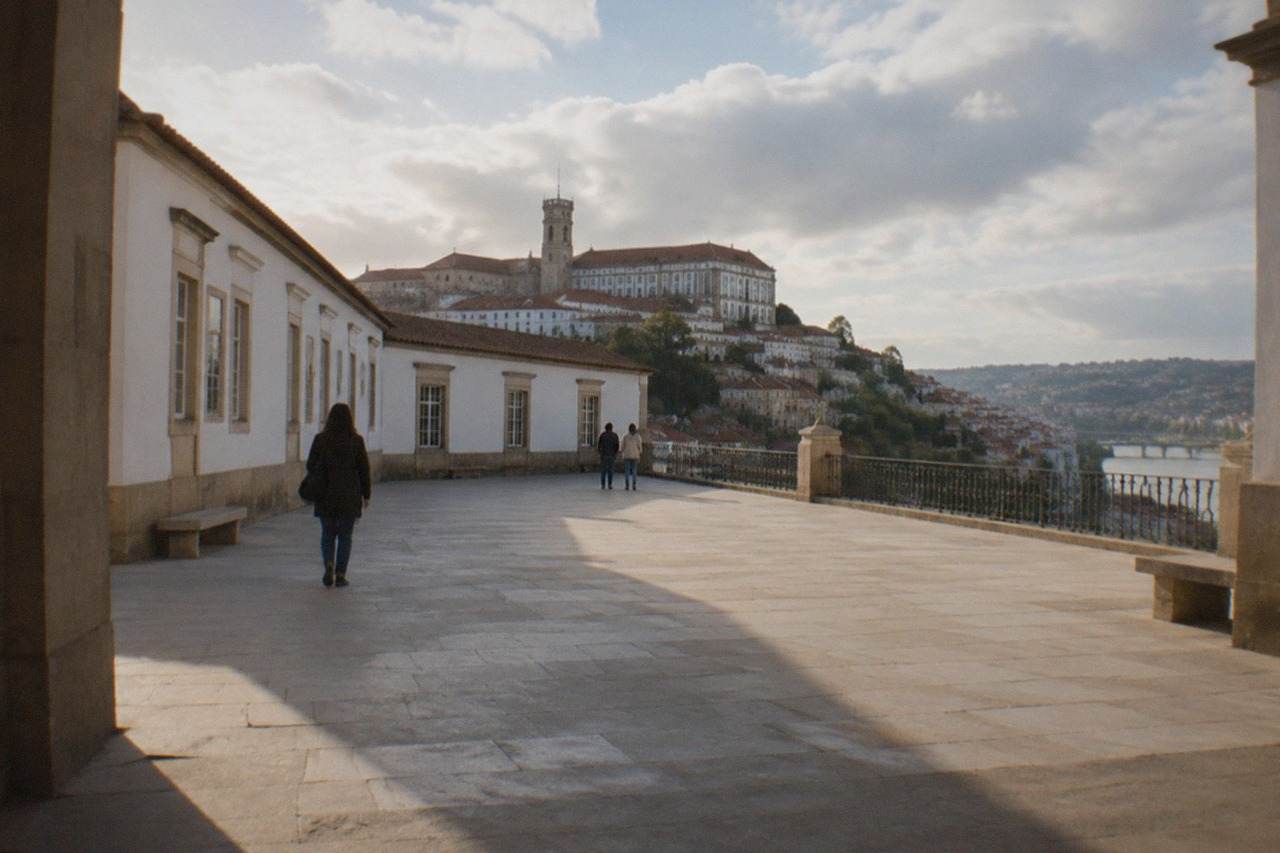
The neighborhood divides naturally into three bands. At the top sits the Paço das Escolas itself, the walled ceremonial platform with the Joanina Library, St Michael's Chapel and the clock tower. Below it spreads the web of medieval streets around the Sé Velha and the Arco de Almedina, the old gate through the city wall. And at the Alta's edges, terraces like the Penedo da Saudade look out over the River Mondego and the Santa Clara district on the far bank.
What Should You See on the University Hill in Coimbra?
The core sights of the Alta are the Paço das Escolas, the Biblioteca Joanina, the Capela de São Miguel and the view over the Mondego from the terrace platform, all covered by the University's combined ticket. The Joanina Library is the headline: a baroque book palace that admits 50 people every 20 minutes and cannot be visited on any other ticket. The clock tower, the Torre da Universidade, is closed, and the University's own page states plainly that this facility is closed.
The Paço das Escolas is the ceremonial square at the very top of the hill, built around the former Royal Palace. The University's visit programme covers the Royal Palace, the Capela de São Miguel with its gilded interior, the Chemistry Laboratory, the Academic Museum, the Cabinet of Curiosities and the Mineral Gallery. The University's own pages state that the ticket is valid for two days, except the Joanina slot, which is fixed to the time printed on the ticket.
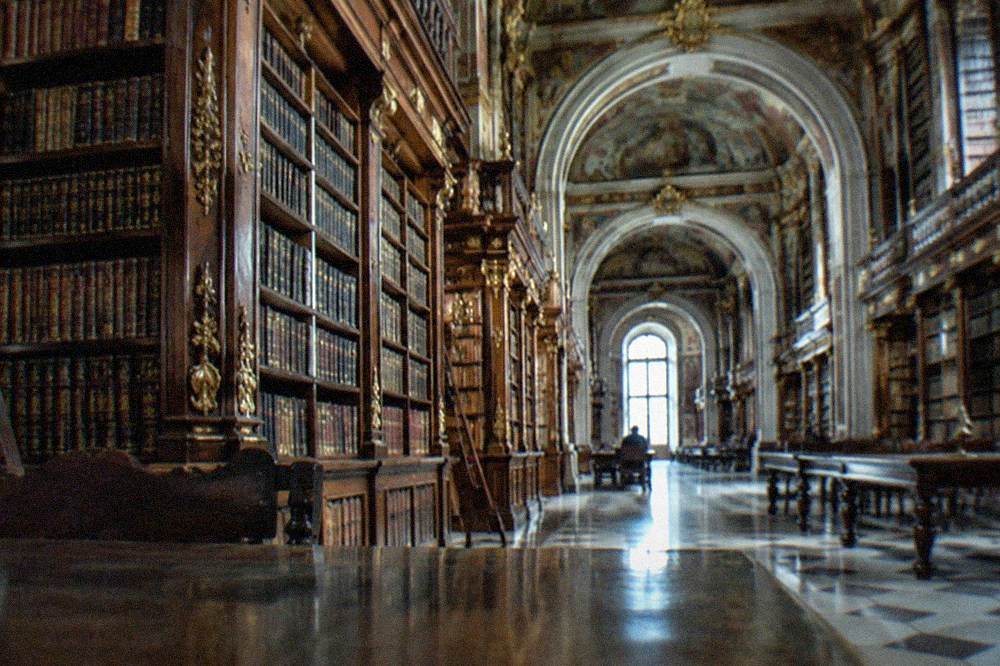
The Biblioteca Joanina deserves its own planning. The University's own program page limits entries to 50 people every 20 minutes, online purchase closes 20 minutes before the visit time, and entry outside the printed slot is refused. The library also houses a colony of bats that patrol the bookshelves at night and eat the insects that would otherwise damage the volumes, a detail the University itself confirms. Photography on the noble floor is not permitted. This is the one genuine scarcity fact in Coimbra: the slots sell out, and a visitor who arrives in summer without a booked slot can be turned away.
Below the Paço das Escolas, the Alta's second act is the medieval street network. The Sé Velha, the Old Cathedral, sits a few streets down, a fortress-like Romanesque building with an individual ticket of 3.00 EUR according to the parish body that manages it. The Arco de Almedina, the Moorish-era gate, funnels walkers between the upper and lower towns. And the Mosteiro de Santa Cruz, the burial church of Portugal's first two kings, sits at the hill's foot on the edge of the Baixa, with an individual ticket of 5.00 EUR.
Two Alta institutions need a caution rather than a recommendation. The Museu Nacional de Machado de Castro, the national museum built above a Roman cryptoporticus of the mid-1st century, is closed for conservation work according to its own page on the national museums portal, so plan around it rather than around a reopening date nobody has published. The Mosteiro de Santa Clara-a-Velha, across the river, has been closed for requalification works since October 2025, and this site publishes no price or hours for it until an official page exists.
A guided walk is a sensible way to absorb the hill, because the Alta's story is layered and the layers are not signposted. The Coimbra Top Attractions Walking Tour is the budget option at from $5.85 per person, rated 5 from 151 reviews, running two and a half hours. The related tour on this page, Coimbra: A Local's Tour of the University + Skip-the-Line, pairs a local guide with pre-handled tickets, and its listing shows from $86 per person, rated 4.9 from 87 reviews. If the hill's monuments are the whole point of your trip, the guided tours overview compares every option side by side.
How Much do Tickets Cost for the Alta's Monuments in Coimbra?
The University of Coimbra's combined ticket, covering the Joanina Library, the Royal Palace, St Michael's Chapel and the Science Museum spaces, costs 16.50 EUR for an adult for the 2026 season; the same circuit without the Joanina Library costs 12.50 EUR. The Sé Velha charges 3.00 EUR and the Mosteiro de Santa Cruz 5.00 EUR individually. The tourist tax adds 1.00 EUR per night, capped at three nights, from age 16, paid at the accommodation.
The University's prices are stamped on its visit site as valid from 1 January to 31 December 2026, and it sells several programmes beyond the two headline tickets, which is worth knowing before you buy.
| University of Coimbra ticket (2026 season) | Adult price | What it includes |
|---|---|---|
| Joanina Library + University + Science Museum | 16.50 EUR | Baroque Library, Royal Palace, St Michael's Chapel, Chemistry Laboratory, Academic Museum, Cabinet of Curiosities, Mineral Gallery |
| University + Science Museum | 12.50 EUR | The same circuit without the Joanina Library |
| Guided tour, Palace of Schools | 25.00 EUR | Guide-led visit, 1h30, Science Museum spaces not included |
| Science Museum + UC Exploratório | 16.00 EUR | Science spaces only, explicitly no Palace of Schools spaces |
| Guided tour, Botanical Garden | 10.00 EUR | Guide-led garden visit, 1h30 |
Opening hours follow the University's summer and winter schedules: 09:00 to 20:00 from 1 April to 30 September, and 09:00 to 17:30 from 1 October to 31 March. The University closes the visitor circuit on 24 and 25 December, 31 December and 1 January, on 24 May and on 4 October, and it warns that religious, official and academic ceremonies interrupt the normal circuit at other times. The Cabinet of Curiosities and the Physics Cabinet also close for two days every three months for disinfestation.
The other Alta monuments price out as follows, from the bodies that actually operate them.
| Monument | Individual adult | Notes |
|---|---|---|
| Sé Velha de Coimbra | 3.00 EUR | Groups over 10 pay 2.50 EUR each; managed by the Unidade Pastoral Aeminium |
| Mosteiro de Santa Cruz | 5.00 EUR | Burial church of Portugal's first two kings; visits suspended on the Cortejo da Queima das Fitas |
| Museu Nacional de Machado de Castro | No current price | Closed for conservation work; no official reopening price published |
| Mosteiro de Santa Clara-a-Velha | No current price | Closed for works since October 2025 |
| Torre da Universidade | No ticket | Closed; the University's own page states the facility is closed |
The reason a guided option earns its price on this hill is the Joanina slot. The library's 50-people-per-20-minutes ceiling is the one hard constraint in an otherwise flexible visit, and a tour that includes tickets means someone else has already solved it.
If you would rather not manage the timed Joanina slot yourself, a guided tour with tickets included removes the single most failure-prone step of an Alta visit. The University of Coimbra guided tours without queue option runs 1 hour 30 minutes, from $70.24 per person, rated 4.9 from 576 reviews, with tickets included and a group of eight. Check availability on the operator's live listing, and read the companion page on university tickets for the full self-guided alternative.
How do You Get Up to the Alta de Coimbra?
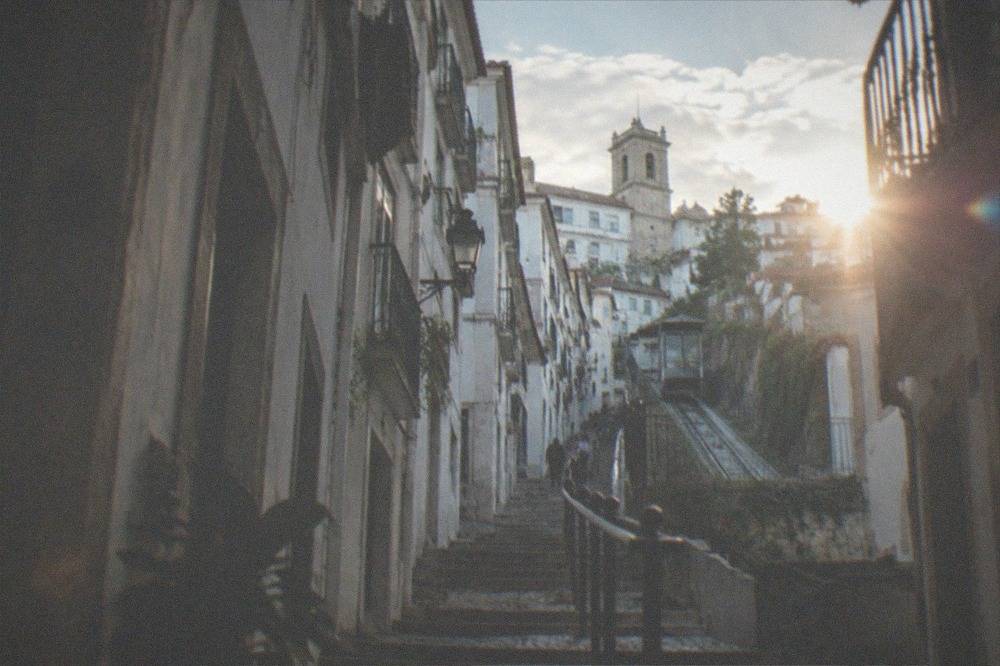
You reach the Alta on foot, by city bus or by the Elevador do Mercado, the public funicular that links the Baixa's market area with the upper town, and the hill's steepness is the deciding factor between them. A driver ticket on the SMTUC city network costs 2.00 EUR from the 2026 tariff, and pre-purchased trips in packs of three or more cost 0.90 EUR each, valid 90 minutes on the urban network with transfers included. SMTUC tickets are also valid on the new Metro Mondego network.
Walking is free and, on the way down, genuinely pleasant. On the way up, the gradient is the thing. The classic pedestrian route runs from the Baixa through the Arco de Almedina and up the stepped lanes to the Paço das Escolas, and the hill lift guide explains the funicular option for anyone who would rather save their knees for the cathedral steps. The tariff PDF that governs SMTUC lists the Elevador do Mercado under a combined pass line but publishes no standalone single-ride price for it, so this site does not print one.
The bus network matters for two reasons. First, the 2026 SMTUC tariff, in force since 1 April 2026, prices a driver ticket at 2.00 EUR and pre-purchased trips at 0.90 EUR, with one trip valid 90 minutes on the urban network, all transfers included within the window. Second, the same tariff is explicitly intermodal: its titles are marked valid on both the SMTUC and Metro Mondego networks, so a city bus ticket also works on the new bus rapid transit system that is opening in stages across the municipality.
| SMTUC fare (tariff in force from 1 April 2026) | Price |
|---|---|
| Driver ticket, bought on board | 2.00 EUR |
| Pre-purchased, packs of 3 or more trips | 0.90 EUR per trip |
| Trip validity, urban network | 90 minutes, transfers included |
| Viagem ConVIDA support card | 0.50 EUR |
| Fare evasion fine | 120.00 to 350.00 EUR |
For visitors arriving by train, Coimbra has two stations with confusingly similar names, Coimbra-B and Coimbra-A, in different places, and CP, the national operator, is where to confirm which services call where; this site publishes no stopping pattern CP has not confirmed. The getting around guide covers the whole network.
Where do You Eat and Drink in the Alta?
The Alta's eating scene runs from historic cafés around the Praça da República to student taverns and viewpoint terraces along the hill's edges, and its signature night out is fado de Coimbra, the city's own male-voiced fado tradition, performed in venues up and down the upper town. A live fado show with a glass of port wine runs from $18 per person, rated 4.7 from 1,234 reviews. No restaurant hours or prices on this page are verified, so treat names as leads.
The Praça da República, the student square at the top of the funicular's catchment, is the Alta's social hub, and the historic cafés guide covers the old pastry houses that anchor it. Below, the lanes toward the Sé Velha hold small taverns serving the region's cooking, and the restaurants guide maps the wider city, including leitão da Bairrada, the roast suckling pig the region is known for.
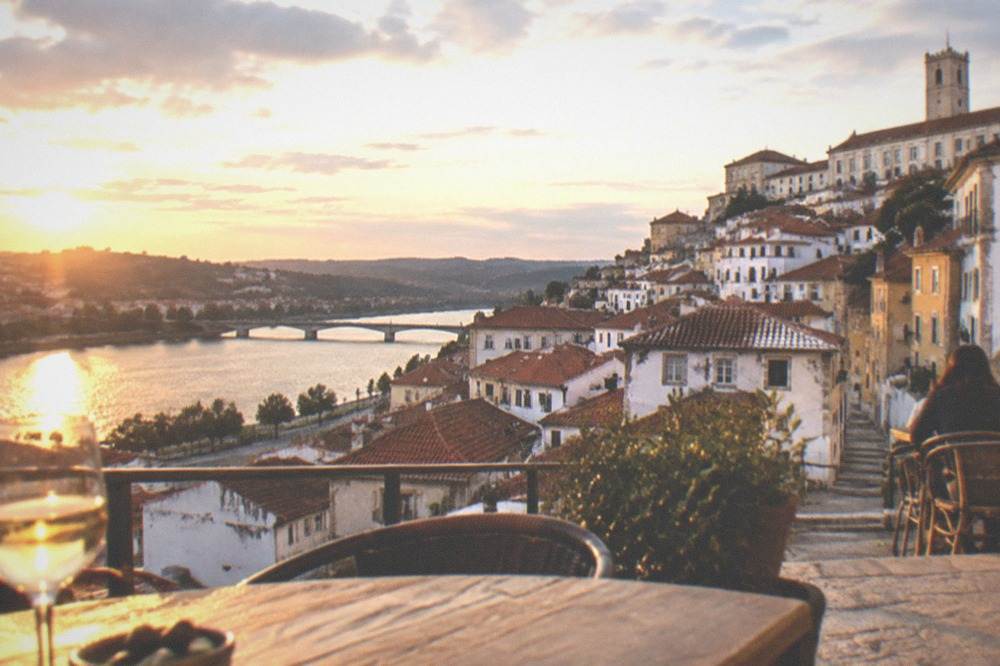
Fado de Coimbra is the Alta's evening reason to stay past dinner. It is a distinct tradition from Lisbon fado, historically sung by male students in the black caped academic dress, and it is sung in the upper town's small rooms rather than concert halls. The fado guide explains the tradition and lists where to hear it, and the ticketed show above is the reliable option for a first visit.
A walking tour is also an eating-and-drinking-adjacent decision, because a good guide points at the doors worth entering. The Coimbra Top Attractions Walking Tour covers the hill's headline sights in two and a half hours, from $5.85 per person, rated 5 from 151 reviews, and current availability is on the operator's live listing.
What Is Student Life Like in the Alta de Coimbra?
Student life is the Alta's operating system: the University of Coimbra publishes a figure of about 31,000 students, the Repúblicas, the historic student houses, line the upper town's streets, and the academic calendar visibly interrupts tourism, closing the University's visitor circuit on 24 May and suspending visits at the Mosteiro de Santa Cruz on the Cortejo da Queima das Fitas, a moveable Sunday. The Queima das Fitas festival falls in May, and exact dates should be confirmed with the Associação Académica.
The Repúblicas are the physical evidence. These are the centuries-old communal student houses, some occupying whole buildings on the Alta's slopes, and they are the subject of their own story on this site. The students in black capes who cross the Paço das Escolas are not costumed performers; the capa e batina is the living academic dress of a university that has been on this hill since 1537.
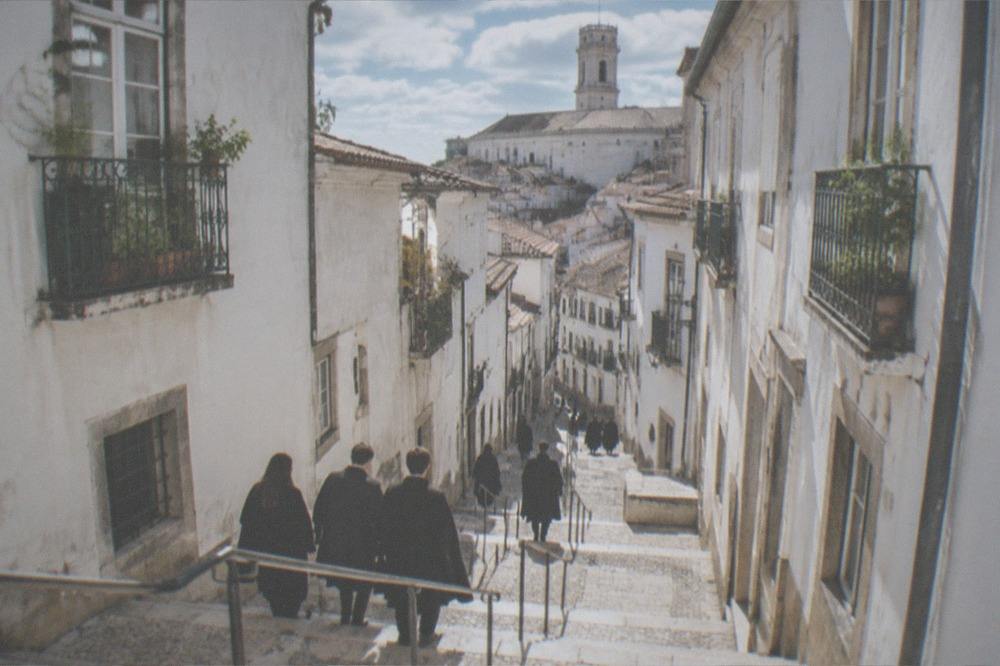
The academic year has practical consequences for visitors, and the University states them itself. The visitor circuit closes on 24 May, and the Mosteiro de Santa Cruz, at the hill's foot, suspends visits on the Cortejo da Queima das Fitas, the parade Sunday of the May festival. The verified, published fact is the closures, not the exact festival dates, which no official page this site could read confirms.
The scale of the student population also explains the Alta's economy. About 31,000 students support a café, bar and bookshop ecosystem that a purely touristic hill of this size could not, and it is why the upper town stays lively through the winter months when the coach tours thin out. The municipality's own figures put 698,151 overnight stays in Coimbra in 2025, which is a real volume, but the students are the year-round population that keeps the lights on.
What Is the Best Time of Day to Visit the Alta?
The best time of day on the Alta is late afternoon into evening, when the summer schedule keeps the Paço das Escolas open to 20:00 and the hill's west-facing terraces get the low light over the River Mondego. By the numbers, IPMA's 1991 to 2020 normals for the Coimbra / Bencanta station show August as the hottest month, with a mean maximum of 29.1 C and 10.9 days above 30 C, and July the driest at 8.9 mm of rain.
Morning is the practical second choice, and the one to pick if you hold a timed Joanina slot, because the 50-people-per-20-minutes ceiling is easiest to satisfy early. The University's summer schedule runs 09:00 to 20:00 from April to September and the winter schedule 09:00 to 17:30, so the evening option exists only in the warmer half of the year.
| Month | Mean max (C) | Rain (mm) | Days 1 mm+ rain |
|---|---|---|---|
| May | 23.3 | 64.7 | 8.5 |
| June | 26.3 | 26.0 | 3.7 |
| July | 28.5 | 8.9 | 1.7 |
| August | 29.1 | 14.8 | 2.2 |
| September | 27.4 | 49.9 | 5.2 |
| October | 23.2 | 114.5 | 10.3 |
The table carries a surprise worth planning around. September is hotter than June, 27.4 C against 26.3 C on the mean maximum, and wetter too, 49.9 mm against 26.0 mm, so the "September is drier" line that circulates in guides is inverted. What is true is that the autumn rain holds off until October, when the monthly total jumps to 114.5 mm, and November is the wettest month of all at 121.5 mm.
For the hill itself, heat matters more than rain. The climb from the Baixa is exposed in places, and the IPMA normals show 39.9 days a year reaching 30 C at this station, concentrated in June to September. Carry water, take the funicular up and walk down, and treat a July afternoon on the Paço das Escolas terrace as a sun trap rather than a viewpoint.
What Lies Just Beyond the Alta de Coimbra?
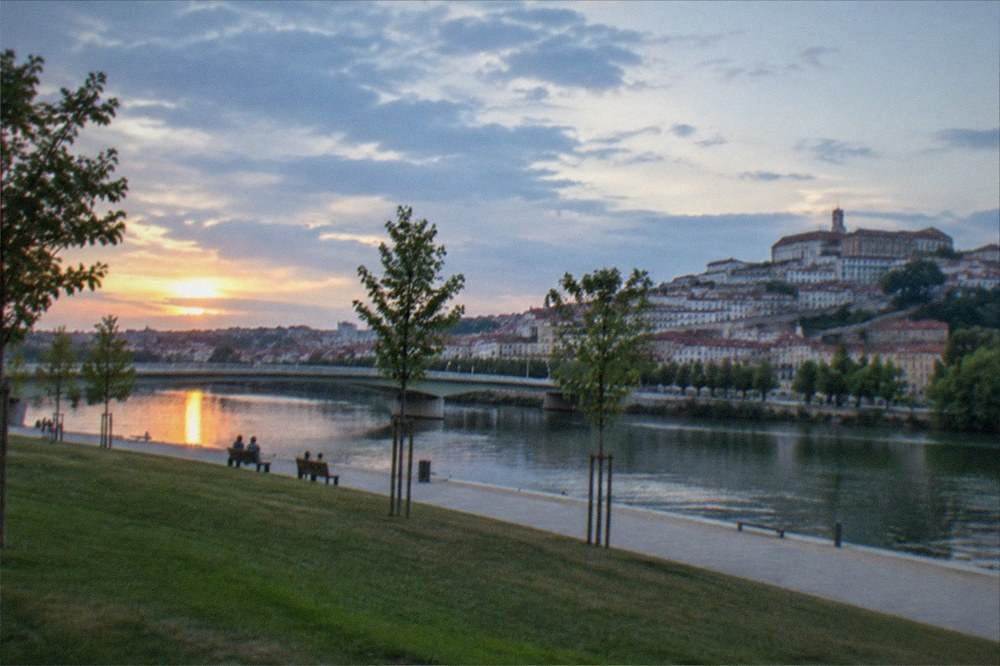
Beyond the Alta, the immediate neighbours are the Baixa, the downtown grid below the hill, the Santa Clara district across the River Mondego, and the green corridor of the Choupal forest upstream; further out, day trips reach the Roman ruins of Conímbriga about 16 km south in Condeixa-a-Nova, the schist villages of the Lousã mountain, the Bussaco forest and the pilgrimage city of Fátima. Conímbriga's combined museum and ruins ticket costs 10.00 EUR and the site opens daily from 10:00 to 18:00.
Downhill, the Baixa holds the commercial city, the Santa Cruz monastery at its edge, and the riverside parks. Across the bridge, Santa Clara holds the Quinta das Lágrimas park and the closed Santa Clara-a-Velha. The university hill page zooms into the very top of the Alta, and the wider old town ties the whole historic core together.
Outward, the day trip menu is unusually strong for a city this size. The Schist Villages and Medieval Castles tour runs four and a half hours with lunch included, from $128.78 per person, rated 5 from 40 reviews, into the Lousã mountain villages. The Conimbriga and the Roman Tour covers the ruins in four hours, from $105.37 per person, rated 4.8 from 136 reviews. The day trips guide compares every option, including Tomar, Fátima and the Bussaco forest.
The trio above is the shortlist for pairing a day trip with your days on the hill: the local university tour for the monuments, the budget walk for the layout, and the castles tour for the mountains.
The castles-and-villages tour is the strongest full-day pairing with an Alta morning: hill in the morning, mountains in the afternoon, lunch covered, with current dates on the operator's live listing.
Common Questions About the Alta de Coimbra
Is the Alta de Coimbra the same as the University of Coimbra?
Not quite. The Alta is the whole upper town, a hillside district of streets, churches and student houses. The University of Coimbra occupies the Paço das Escolas at its summit, along with other buildings. The UNESCO inscription, "University of Coimbra - Alta and Sofia", covers the university hill and the Rua da Sofia colleges, not the city.
Can you climb the university clock tower in Coimbra?
No. The Torre da Universidade is closed, and the University's own visitor information page states plainly that this facility is closed. The page mentions the tower's 184 steps and narrow passage, which explains why reopening it is not straightforward, but there is no ticket, no price and no climb to buy today.
Do you need tickets for the Biblioteca Joanina?
Yes, and they cannot be bought alone. The Joanina Library exists only inside the University's 16.50 EUR combined ticket for the 2026 season, which fixes a 20-minute entry slot for the library. The University limits entries to 50 people every 20 minutes, refuses entry outside the printed slot, and closes online sales 20 minutes before the visit time.
How hard is the walk up to the Alta?
The hill is steep, with stepped lanes and exposed sections, and the climb from the Baixa to the Paço das Escolas is a genuine effort in summer heat. The Elevador do Mercado funicular links the lower and upper towns, and SMTUC buses serve the hill, with a driver ticket at 2.00 EUR and pre-purchased trips at 0.90 EUR under the 2026 tariff.
Is the Museu Nacional de Machado de Castro open?
No. The museum is closed for conservation work, according to its own page on the national Museus e Monumentos portal, with a phased reopening targeted after summer 2026. No official reopening date or current ticket price is published, so this site prints neither.
When does the Queima das Fitas affect the Alta?
The festival falls in May. The verified, published consequences are that the University closes its visitor circuit on 24 May and the Mosteiro de Santa Cruz suspends visits on the Cortejo da Queima das Fitas, a moveable Sunday. Exact festival dates should be confirmed with the Associação Académica before you plan around them.
The Alta de Coimbra rewards exactly the kind of planning this page exists for: a pre-booked Joanina slot, a funicular up and a walk down, an afternoon that starts on the Paço das Escolas terrace and ends with fado in a small room, and an honest map of what is closed, because a hill with a closed tower, a closed museum and a timed library is still, on the University's own published numbers, one of the most remarkable urban landscapes in Portugal.