Leitão da Bairrada Near Coimbra, Portugal: Where to Eat Portugal's Famous Suckling Pig
Leitão da Bairrada is the roast suckling pig of the Bairrada wine country south of Coimbra, Portugal, and this guide covers what the dish is, how it is served, and how to build a food-focused day around it from the university city on the River Mondego.
Short answer
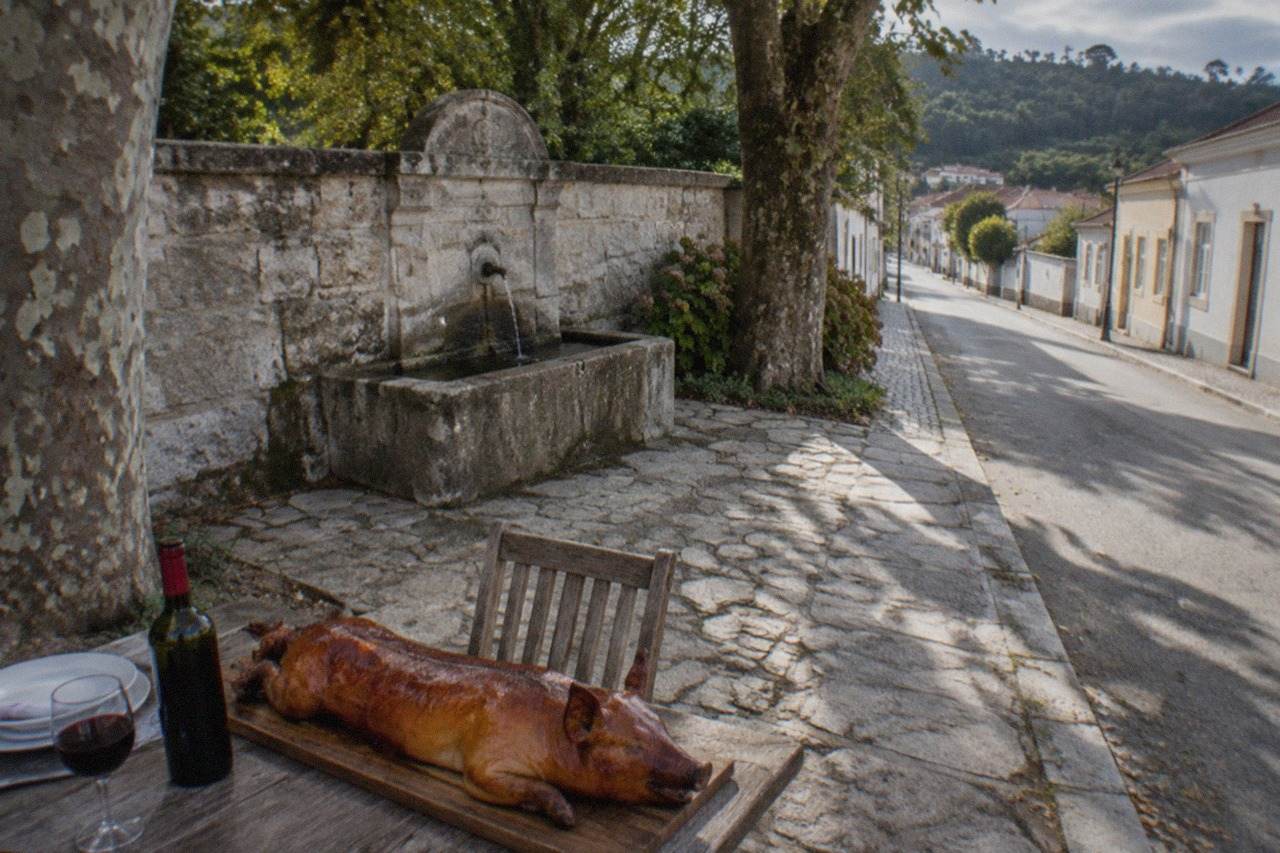
Leitão da Bairrada is a whole suckling pig, roasted over wood with a wet salt and garlic rub until the skin shatters, served in slabs with potato chips, orange slices and the local Baga red wine. It comes from the Bairrada region south of Coimbra, and the best way to eat it is as a long lunch, either at a specialist restaurant in the wine country or at a traditional house in the city.
Coimbra, Portugal, the university city on the River Mondego, sits at the northern edge of a wine region called the Bairrada, and the Bairrada's gift to Portuguese cooking is leitão, a whole suckling pig roasted until its skin cracks like glass. This guide explains the dish, the region behind it, and how to plan a day around eating it well, without inventing a single opening hour or menu price, because none of those was verified for any individual restaurant on this build. What is verified is verified, and everything else is described as tradition rather than as a timetable.
What Is Leitão da Bairrada?
Leitão da Bairrada is a suckling pig, usually between five and eight weeks old and still milk-fed, roasted whole over an open wood fire after a marinade of wet salt, garlic, pepper and lard, until the skin blisters into hard crackling and the meat underneath stays faintly pink and juicy. It is served cut into slabs with thick-cut potato chips, orange slices and salad, and the local Baga red wine is considered the only correct drink beside it.
The dish is a festival food that became an everyday one. Families in the Bairrada traditionally roasted a pig for baptisms and weddings, and the skill of turning a whole animal over coals for hours passed down through the same houses that made the region's wine. What separates leitão from ordinary roast pork is the age of the animal and the fire. A milk-fed pig has delicate fat that renders differently from an adult's, and the wood fire, never an oven alone, is what produces the blistered skin that locals judge a restaurant by. Crack the skin with the side of a fork and it should audibly snap.
The serving style is deliberately plain. The meat arrives already cut, often on a wooden board, with the chips fried in the same style as everywhere in central Portugal, and the orange slices are not decoration: the acidity cuts the fat between mouthfuls. Nobody sauces it. A good leitão needs nothing but salt that has already been rubbed in, and if the skin is soft, the kitchen has failed the one test that matters.
Where Is the Bairrada, and How Does It Reach a Coimbra Trip?
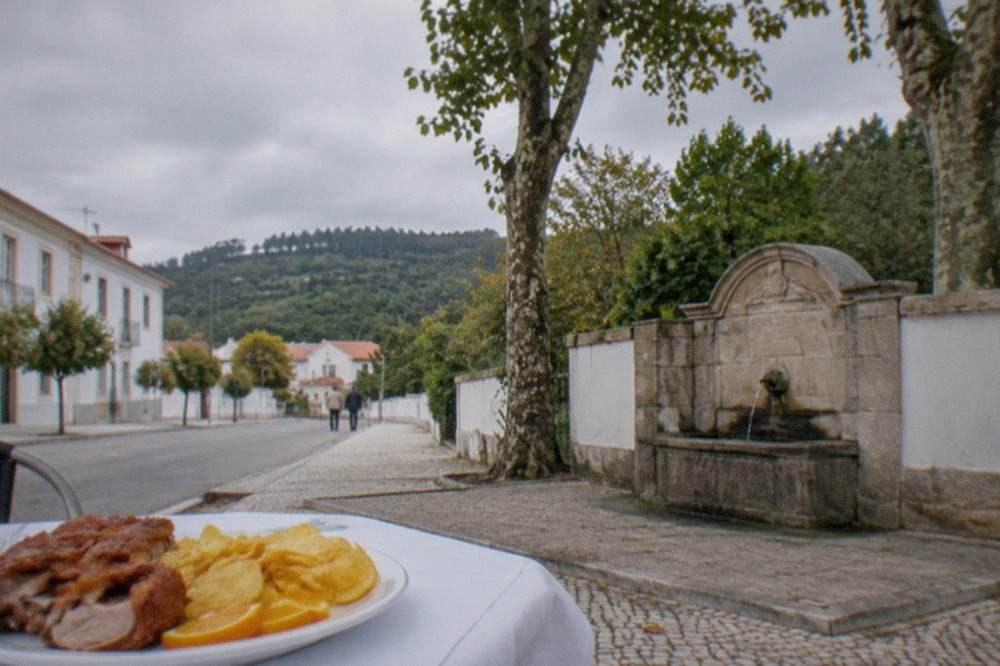
The Bairrada is the wine region immediately south of Coimbra, taking in the rolling country around the town of Mealhada on the main road and rail line between Coimbra and Aveiro, and it is close enough to the city that eating leitão there is a half-day excursion rather than a journey. The region gives the dish its protected name, and pigs roasted in the Bairrada style anywhere in the country still advertise themselves by the region they imitate.
The geography matters more than it sounds. Coimbra is a city, a municipality and a district, and the three are different things, but the Bairrada is none of them: it is a historical wine region whose boundaries follow soil and grape rather than administrative lines. It begins a short way south of the city and runs north towards Aveiro, which is why visitors travelling between Porto and Coimbra, or between Coimbra and the coast, pass directly through it. The train line and the old main road both cut through leitão country.
This site's guide to the Bairrada wine route covers the wineries and the drive in detail, and the practical point for this page is simpler: you do not have to leave Coimbra to eat well. The city has its own traditional houses serving leitão da Bairrada, because a university city of about 31,000 students, the University's own published figure, feeds a lot of people on a lot of Sundays. Eating in the city and eating in the region are both legitimate versions of the same tradition.
For orientation once you are back in town, the Coimbra map guide shows how the food streets of the Baixa sit against the river and the university hill, which is useful when a long lunch turns into a longer afternoon.
How Is a Traditional Leitão Meal Served?
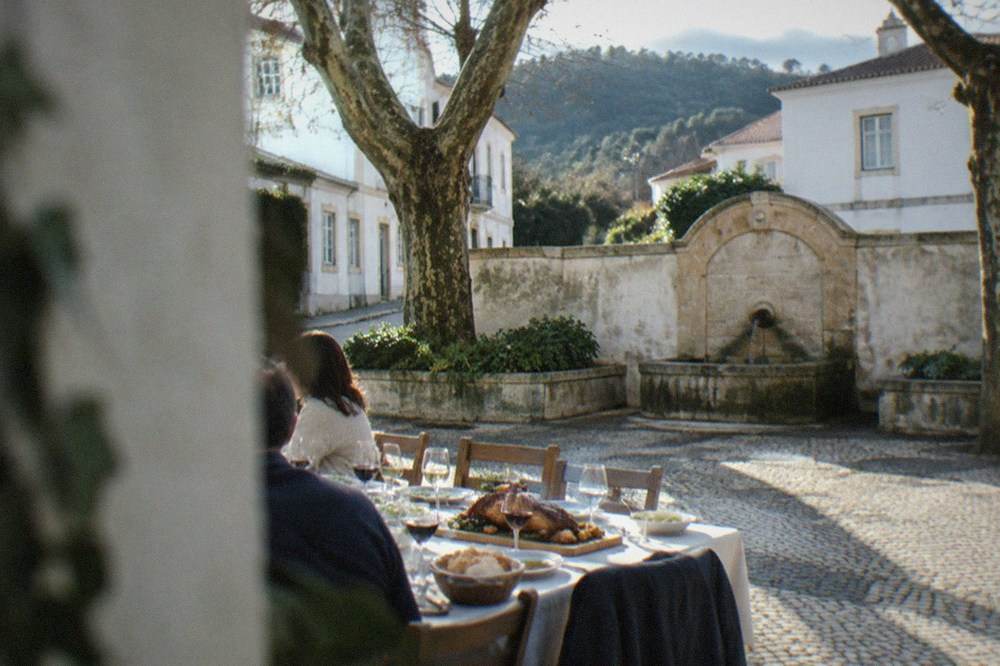
A traditional leitão meal is a lunch, not a dinner, and it runs in a fixed order: olives, bread and cheese or cured meats arrive first, then the pig itself on a board with chips, orange and salad, then a light dessert and coffee, with Baga red wine or the local sparkling throughout. Portions are ordered by weight or by the half pig, and the meal is built to stretch across two or three unhurried hours.
The lunch timing is not nostalgia. The dish is heavy, and the Bairrada's sparkling wines, which the region is at least as famous for as its reds, are drunk with the meal rather than after it. A family orders a slice of pig per person, checks the skin before anything else, and eats with hands as much as with cutlery. The chips are not a garnish in the local mind; they are structural, soaked in the fat that runs off the carving board.
What follows is a summary of the plate as the tradition serves it:
| Element | What it is | Role in the meal |
|---|---|---|
| Leitão | Whole roast suckling pig, cut into slabs | The centre of the meal, judged by the crackling |
| Batatas fritas | Thick-cut potato chips | Soaks up the rendered fat |
| Laranja | Orange slices in the skin | Acid to cut the richness between bites |
| Azeitonas | Local olives, often marinated | Opening the appetite before the pig |
| Salada | Lettuce, onion, tomato, oil and vinegar | Freshness against the fat |
| Baga tinto | The region's red wine, tannic and dark | The classic pairing |
| Espumante | Bairrada sparkling wine, often Baga-based | The alternative pour, including rosé |
No individual restaurant's prices, hours or address were verified on this build, so this page will not print them. What can be said honestly is how to choose: a specialist leitão house roasts its own pigs over wood, carves to order and will tell you the roasting schedule if asked, while a general restaurant serving leitão as one dish among many is more likely to buy it in. Ask whether the pig is roasted on the premises. The answer sorts the serious places from the rest faster than any review score.
What Is Baga, the Wine That Belongs Beside It?
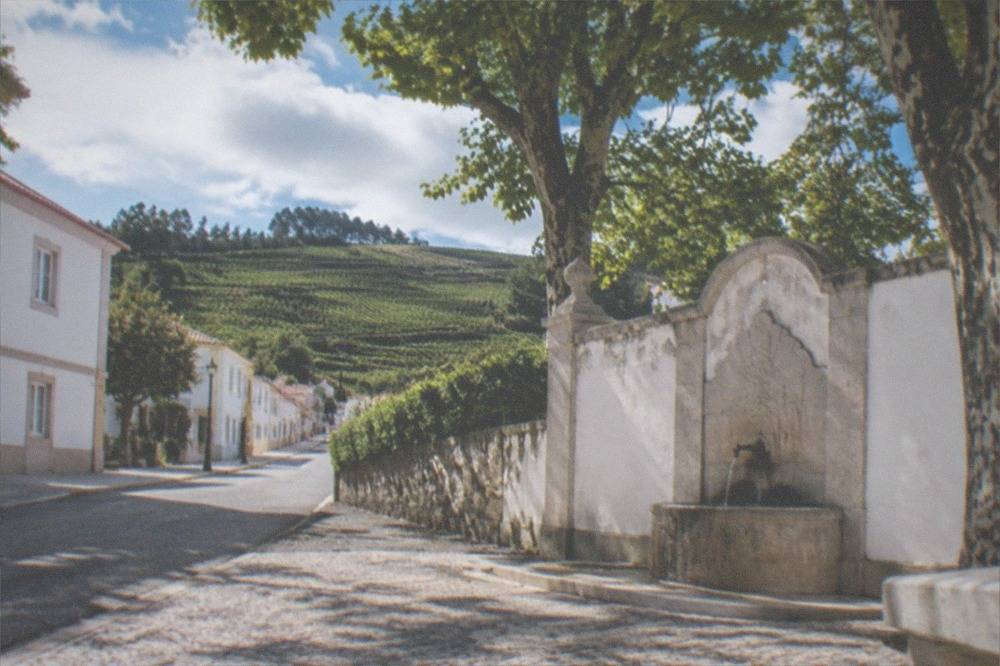
Baga is a dark-skinned, thick-skinned red grape that dominates Bairrada vineyards and produces tannic, acidic red wines built to age, along with the sparkling wines the region has made longest, and its firm structure is exactly what a mouthful of fatty roast pig needs. Where a soft, fruity red would collapse against the crackling and the fat, Baga's tannins and acidity cut through and reset the palate between bites.
The grape is demanding in the vineyard and unforgiving in bad hands, which is why older Bairrada reds had a reputation for toughness that modern winemaking has softened. The traditional style is deep, dry and structured; the newer styles riper and earlier-drinking; and the sparkling wines, made by the traditional method, range from white to the deep rosé that Baga's skin colour produces naturally. All of them belong on a leitão table.
| Style | Character | With leitão |
|---|---|---|
| Traditional Baga red | Dark fruit, firm tannin, high acidity | The classic match, especially with a few years of age |
| Modern Baga red | Riper, softer, earlier drinking | Easier for visitors new to the grape |
| Bairrada espumante white | Dry, fine-bubbled, often Arinto or Bical based | Refreshing against the fat |
| Baga rosé espumante | Deep pink, dry, berry-scented | The regional festive pour |
| Bical or Maria Gomes white | Fresh, citrus and stone fruit | For those who want white with pork |
Tasting fees and bottle prices vary from producer to producer and none was verified for any named winery on this build, so the honest advice is to check with each producer before visiting. The Bairrada wine route guide describes how the route works and what a cellar visit involves.
When Is the Best Time of Year for a Leitão and Bairrada Day?
The best months for a Bairrada food day are May, June and September, because IPMA's 1991 to 2020 normals for the Coimbra / Bencanta station show June at a mean maximum of 26.3 C with only 26.0 mm of rain, September at 27.4 C with 49.9 mm, and May at 23.3 C with 64.7 mm, so the sweet spot combines warmth with thin crowds. July and August are hotter still, 28.5 C and 29.1 C mean maximum.
The counterintuitive fact in that table is September. Its mean maximum of 27.4 C is higher than June's 26.3 C, and it is wetter than June too, 49.9 mm against 26.0 mm, which inverts the common assumption that early autumn is already cool and dry. What is actually true is that the autumn rain holds off until October, when the monthly total jumps to 114.5 mm, and November is the wettest month of all at 121.5 mm. A September lunch on a Bairrada terrace is therefore a summer experience at a quieter time of year, and an October one is a gamble with the sky.
Winter has its own case. A heavy, fatty, wood-roasted meal is arguably at its best when the mean maximum is 15 C, as it is in January, and the region's espumante turns a cold Sunday lunch into something festive. The trade-off is the rain: January averages 113.5 mm and 11.3 days with a millimetre or more, so book indoors. The full picture is in the Coimbra weather guide.
| Month | Mean max C | Rain mm | Rain days 1mm+ | Verdict for a Bairrada lunch |
|---|---|---|---|---|
| Mar | 19.1 | 75.4 | 9.4 | Changeable, green hills |
| May | 23.3 | 64.7 | 8.5 | Excellent, festival season |
| Jun | 26.3 | 26.0 | 3.7 | Hot and dry, prime terrace weather |
| Jul | 28.5 | 8.9 | 1.7 | Hottest dry stretch, go early |
| Aug | 29.1 | 14.8 | 2.2 | Hottest month, 10.9 days over 30 C |
| Sep | 27.4 | 49.9 | 5.2 | Warm, quieter, best overall |
| Oct | 23.2 | 114.5 | 10.3 | Harvest time, wet |
| Nov | 18.0 | 121.5 | 11.5 | Wettest month, eat indoors |
How do You Build a Leitão Day Around Coimbra?
A realistic leitão day from Coimbra runs south into the Bairrada for a long lunch, returns through the wine country in the mid-afternoon, and finishes in the city with a walk along the Mondego or a fado evening, and the planning constraint that matters most is that the lunch is the anchor: everything else is scheduled around it, because a proper leitão meal is not a stop, it is the event.
The morning belongs to the city. Work the university hill first, and note the one genuinely scarce ticket in the region: the Biblioteca Joanina admits 50 people every 20 minutes, cannot be bought on its own, exists only inside the 16.50 EUR combined University ticket, and the time printed on that ticket is the library slot itself, so book it before you plan anything else. The details are in the Joanina Library tickets guide. Then walk down into the Baixa, cross towards the river, and let the morning end there before driving or riding south.
Lunch in the Bairrada should start early by northern European standards, because the serious roasting houses sell out and because a meal this heavy wants the whole afternoon behind it. Order by weight, take the sparkling wine as well as the red if the table splits, and do not plan a museum for two hours after the last orange slice. The afternoon return can pass through cellar country, remembering that no individual winery's hours were verified here, or simply come back along the river into the city.
The evening is Coimbra's own. Fado de Coimbra, the city's male-voiced, guitar-driven variant of the national song, is covered in the Coimbra fado guide, and a fado house after a leitão lunch is the classic regional double. If the day has been long, the where to stay in Coimbra guide sorts the riverside from the hilltop options.
If you would rather have a local shape the day for you, the three-hour Coimbra: Adventure, Discovery & Learning with a Local tour, rated 4.9 from 55 reviews and from 40 dollars per person on the operator's live listing, is the closest fit: a certified local guide, city traditions included, and the kind of conversation where you can ask where Coimbra itself eats. Check availability.
What Should You Pair the Trip with: City, Hills or Ruins?
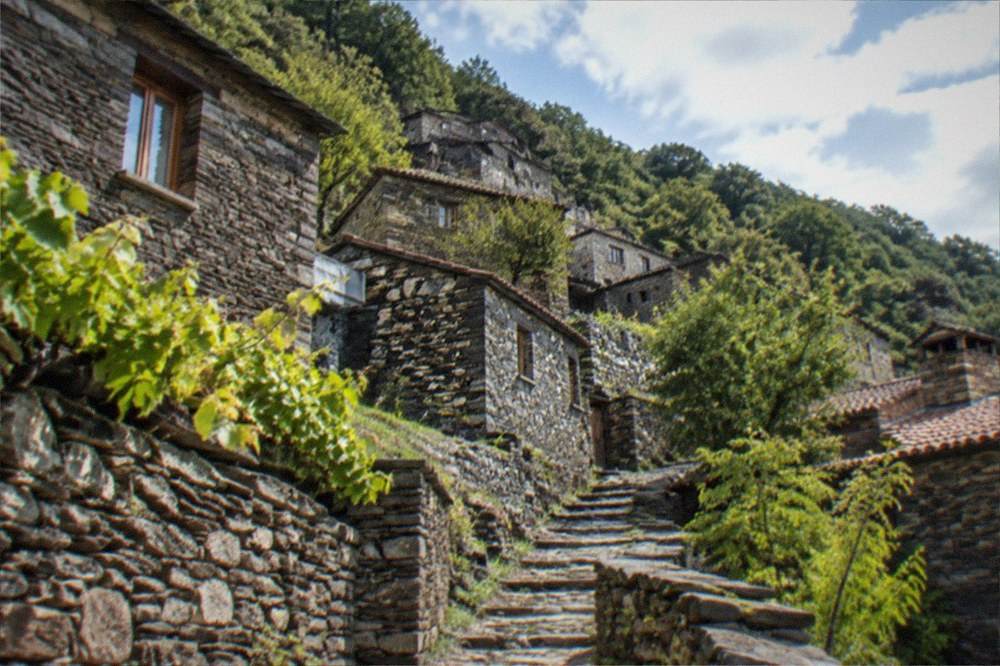
The strongest pairings for a Bairrada food day are, first, a morning at the University of Coimbra's Paço das Escolas, where the 16.50 EUR combined ticket covers the Joanina Library, the Royal Palace and the Capela de São Miguel, second, the Conímbriga Roman ruins about 16 km south in Condeixa-a-Nova, where a 10.00 EUR ticket covers museum and ruins together and opens seven days a week, and third, the schist villages of the Lousã mountain.
The choice is really about appetite. Conímbriga is the reliable Monday option, because it opens daily while the DGPC monuments that close on Mondays do not, and the Conímbriga Roman ruins guide covers what the mosaics and the museum hold. The Lousã mountain is the opposite direction from the Bairrada, east and up rather than south, so it belongs to a second day rather than the same one. The city's own sights, the Sé Velha at 3.00 EUR and Mosteiro de Santa Cruz at 5.00 EUR, are close enough to fold into any morning.
| Option | Verified entry cost | What it adds to a food day |
|---|---|---|
| University combined ticket | 16.50 EUR adult, includes timed Joanina slot | The city's headline sights before lunch |
| University without Joanina | 12.50 EUR adult | Same spaces, no library slot |
| Conímbriga museum and ruins | 10.00 EUR adult, one ticket for both | Roman mosaics, open seven days |
| Sé Velha de Coimbra | 3.00 EUR individual | Romanesque cathedral, quick visit |
| Mosteiro de Santa Cruz | 5.00 EUR individual | Tombs of Portugal's first two kings |
| Lousã schist villages | Tours from 87.81 to 105.37 dollars per person | A second day, slate villages and forest |
For the second day in the hills, the Lousa Mountain Private Tour, from 105.37 dollars per person and rated 5 from 88 reviews, runs four hours into the schist villages with wild deer watching, and it pairs with a Bairrada dinner back in the city rather than a second lunch.
What Does a Leitão Day Cost, Using Only Verified Figures?
A leitão day from Coimbra costs, in verified figures only, 16.50 EUR per adult for the University combined ticket including the Joanina Library slot, 3.00 EUR for the Sé Velha and 5.00 EUR for Mosteiro de Santa Cruz in the city, 10.00 EUR for Conímbriga if you extend south, plus the 1.00 EUR per night municipal tourist tax, capped at three nights.
The food and wine themselves are not priced on this page because no restaurant or winery price was verified on this build.
That last clause is not evasion, it is the honest position. This site's research verified monument and transport prices from official sources and could not verify a single restaurant menu, so the food budget is described rather than numbered: a whole leitão is priced by weight, a slice per person is the normal order, and the wine runs from house espumante to aged Baga, a spread wide enough that any single figure printed here would be fiction. The Coimbra trip costs guide assembles the verified side of the budget in full.
Can You Explore Coimbra's Food Culture with a Guide Instead?
Yes, and for a first visit it is often the better half-day: the Coimbra Top Attractions Walking Tour runs two and a half hours from 5.85 per person with a 5 rating from 151 reviews, the Coimbra: Adventure, Discovery & Learning with a Local runs three hours from 40 per person rated 4.9 from 55 reviews, and the free, tip-based walks on GuruWalk, including the downtown, historic center, university and botanic garden walk, rated 4.91 from 662 reviews, cover the city's traditions at no fixed price at all.
The GuruWalk walks deserve the specific mention because they are genuinely free or pay what you want, and honesty requires naming the platform and the guru rather than hiding them. The downtown, historic center, university and botanic garden walk is the most reviewed of the city's free options and spends its three hours on exactly the streets where Coimbra's food life happens. A paid walk buys a smaller group and a fixed structure; a free one buys flexibility and the chance to tip what the walk was worth to you.
Between the guided and the self-guided, this Coimbra Travel Guide site's self-guided walking tour page lays out the same ground at your own pace, and the best restaurants guide describes how the city's dining rooms differ without pretending to know any of their prices. Whichever way you choose, the food culture of the city rewards curiosity more than it rewards a fixed itinerary, and the guides above are simply the fastest route into it.
Common Questions About Leitão da Bairrada
What is leitão da Bairrada?
A whole milk-fed suckling pig roasted over a wood fire with wet salt, garlic, pepper and lard until the skin forms hard crackling, served cut into slabs with thick-cut potato chips, orange slices, olives and salad, and traditionally drunk with the Bairrada's own Baga red or sparkling wine.
Where does leitão da Bairrada come from?
From the Bairrada, the wine region immediately south of Coimbra, Portugal, around the country between the city and the Aveiro direction. The region gives the dish its protected name, and the roasting tradition grew out of family feasts such as baptisms and weddings.
How is leitão served?
On a board, already carved, with potato chips, orange slices, olives and a simple salad, ordered by weight or as a half or whole pig. The skin is the test of the kitchen: it should snap audibly under a fork.
What wine goes with leitão da Bairrada?
Baga, the region's dark, tannic red grape, is the classic pairing because its acidity and tannin cut the fat. Bairrada sparkling wine, white or the deep Baga rosé, is the equally traditional alternative and is often preferred at long lunches.
Can you eat leitão da Bairrada in Coimbra itself?
Yes. The city has traditional houses serving the dish, and a university city of about 31,000 students, the University's own published figure, sustains them. The difference is atmosphere: the region's specialist roasting houses roast over wood on the premises and build the day around the meal.
When is the best time of year for a Bairrada food day?
May, June and September, using the official IPMA normals for the city's own station: June averages a 26.3 C mean maximum with just 26.0 mm of rain and September 27.4 C with 49.9 mm, while the heavy autumn rain does not arrive until October, when the monthly total jumps to 114.5 mm.
A leitão da Bairrada lunch is the rare regional dish that is both the reason to make the trip and the reward for arriving, and planned around a Joanina slot, a Baga bottle and a slow afternoon, it is the best food day central Portugal offers.