The Best Restaurants in Coimbra
Coimbra, Portugal, the university city on the River Mondego, eats differently from Lisbon and Porto: student-priced tasca cooking, the leitão da Bairrada tradition at its doorstep, and pastries born in monastery kitchens. Here is how to find the best of it.
Short answer
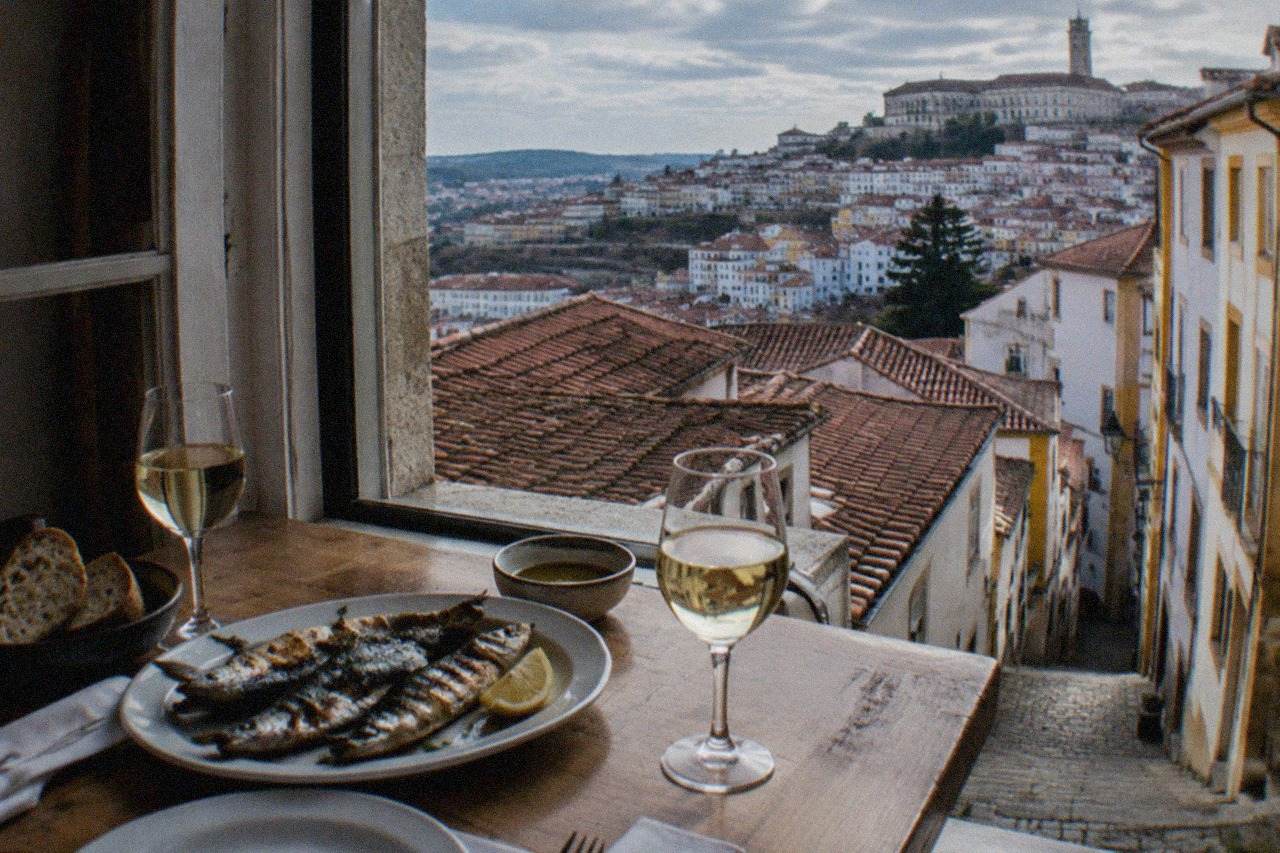
Coimbra's restaurant scene runs on traditional tasca cooking, chanfana and other Bairrada-region dishes, leitão roast suckling pig, and monastery pastries. Eat in the Baixa for everyday cooking, the Alta for views, and plan around the university calendar, because the city serves about 31,000 students and the dining rhythm follows them.
Coimbra, the university city on the River Mondego in central Portugal, is one of the country's most rewarding places to eat, and the reason is structural rather than glamorous. The University publishes a figure of about 31,000 students on its own "University in Numbers" block, and a city that feeds that many students on student budgets has to keep honest, traditional, inexpensive cooking alive in its Baixa, the low-lying downtown between the river and the university hill. The municipality's own figures reported in July 2026 counted 698,151 overnight stays in Coimbra in 2025, so the visitor trade is real too, but it has never displaced the local one. The result is a restaurant landscape where the dishes, the traditions and the rhythms matter more than any single venue name.
One honest note before anything else: no individual restaurant, café, bakery or market in Coimbra had its prices, hours or address verified for this guide, so this page deliberately does not publish an opening time, a menu price or a "book ahead" instruction for any named business. What it does instead is explain what the food is, where each kind of eating happens, and how to recognise a good example of it. For a deeper look at the city's food traditions overall, our companion guide to eating in Coimbra covers the background, and readers deciding between neighbourhoods can start from the Coimbra map.
What Food Is Coimbra, Portugal Famous For?
Coimbra's table is defined by four things: Bairrada-region meat traditions including leitão roast suckling pig and chanfana, river fish from the Mondego, student-priced tasca cooking that has survived because the city feeds about 31,000 students, and monastery-rooted pastries such as arrufadas and the egg-and-sugar convent sweets found across central Portugal. None of these are tourist inventions; each is a documented regional tradition that predates the visitor boom.
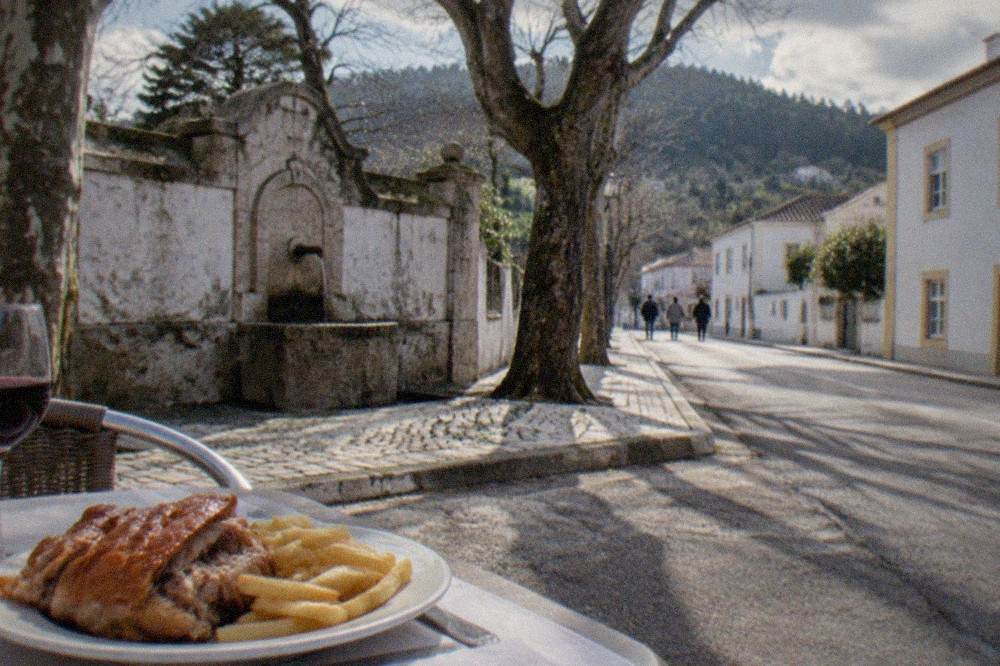
The Bairrada connection is the one that surprises people. Coimbra sits at the northern edge of the Bairrada region, a wine and pig-farming country, and the region's most famous dish, leitão da Bairrada, roast suckling pig with crisp skin, is as much a Coimbra institution as a Lisbon one. Our full leitão da Bairrada guide covers the dish and the day trips built around it.
Chanfana, a slow stew of goat or lamb cooked in red wine, often in a clay pot, comes from the same broad region and appears on traditional Coimbra menus alongside roast kid and grilled bairrada pork. River fish, particularly lamprey in season and the smaller Mondego species, form the older, humbler side of the same tradition. Then there is the pastry layer: Portugal's convent sweets, the egg-yolk-and-sugar desserts created in monastery kitchens, are everywhere in Coimbra, and the city has its own arrufada, a soft, sugar-dusted roll with a documented local history. None of this needs a celebrity chef to be worth crossing town for.
| Tradition | What it actually is | Where it fits a Coimbra trip |
|---|---|---|
| Leitão da Bairrada | Whole roast suckling pig, crisp skin, served in slices, often with orange and sparkling Bairrada wine | A signature splurge or a dedicated food day trip south |
| Chanfana | Goat or lamb stewed long in red wine, traditionally in clay | Cold-weather comfort food on traditional menus |
| Convent sweets | Egg yolk, sugar and almond desserts from monastery kitchens | Any café or pastry counter, all year |
| Arrufadas | Soft, round, sugar-topped local roll | Breakfast and merenda, the afternoon snack |
| Tasca cooking | Small, informal restaurants serving daily changing traditional plates | The everyday backbone of the Baixa |
| Fado de Coimbra | The city's own male, academic fado tradition, performed in the Alta and Baixa | An evening out that pairs naturally with dinner |
Which Traditional Dishes Should You Order in Coimbra?
Order leitão da Bairrada if you want the region's signature dish, chanfana if you want the oldest comfort food, grilled river fish or bacalhau preparations if you want the everyday tasca plate, and an egg-yolk convent sweet with coffee if you want the way Coimbra actually finishes a meal. Order what is written on the daily board rather than the laminated tourist menu, because the daily board is where the kitchen's real cooking happens.
The daily board point deserves its own paragraph. A traditional Coimbra kitchen runs on what the market and the season gave it that morning, and the printed menu is often the least interesting thing in the room. Dishes like arroz de lampreia in season, roast kid, or a simple grilled fish with good olive oil are the plates that repeat because they work, and they are rarely the ones with photographs. This is also the honest answer to the question of which "traditional Coimbra restaurants" to pick: choose the place whose board changes, whose room fills with students and locals at lunch, and whose specialities match the traditions above. Our companion answer page on traditional Coimbra restaurants goes deeper on how to recognise one.
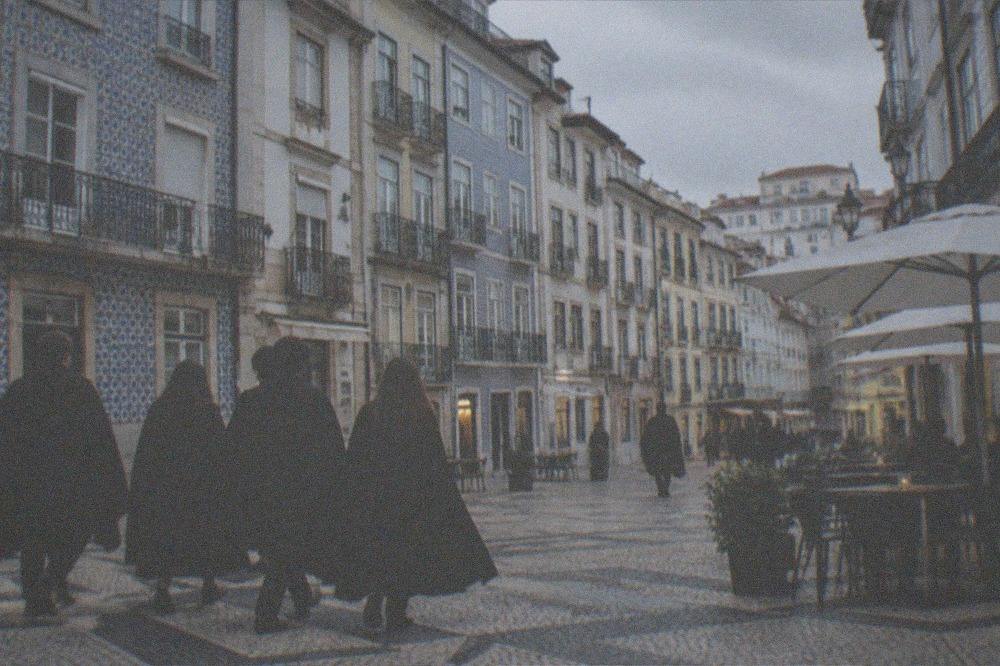
Timing matters more in Coimbra than in most Portuguese cities, because the university calendar moves the whole town. Lunch is the big meal of the day, served from around midday, and the traditional kitchens are at their best then. In May, the Queima das Fitas student festival takes over the city centre; the University closes its visitor circuit on 24 May and Mosteiro de Santa Cruz suspends visits on the Cortejo parade day, a moveable Sunday, and the Baixa's eating rhythm shifts with tens of thousands of celebrating students. Plan around it, or plan for it deliberately.
A guided walk is a genuinely good way to eat well here, and not only for the sightseeing. The Discovering the charms and places of Coimbra tour is a three to four hour city walk rated 5 from 79 reviews, from $52.68 per person on the operator's live listing, and because it runs through the Baixa and the old town, it ends you in the right streets at the right time for lunch. Check availability
| Order this | When it is at its best | What to expect on the plate |
|---|---|---|
| Leitão da Bairrada | Any celebratory meal; the dish is served year round | Sliced suckling pig, crackling skin, often with potato chips and orange |
| Chanfana | Autumn and winter, when slow stews make sense | Dark, wine-rich goat or lamb stew from a clay pot |
| Bacalhau, dried cod preparations | Always; the daily board decides the recipe | Grilled, baked with cream, or with chickpeas, by the kitchen's habit |
| Grilled river fish | Seasonally, when the Mondego catch allows | Simple fish, olive oil, boiled potatoes |
| Convent sweets, such as ovos moles style egg sweets | Any time, with coffee | Dense egg yolk and sugar confections, often in small portions |
Where Should You Eat in Coimbra: Neighbourhood by Neighbourhood?
Eat in the Baixa, the downtown between the river and the hill, for the densest concentration of traditional tascas and student-priced cooking; eat in the Alta, the upper town around the university, for smaller rooms, views and the fado houses; eat along the Santa Clara side of the river for quieter, more local rooms; and eat on the city's edge or in the surrounding region for leitão, because the roast pig tradition is strongest in the villages just outside town.
The Baixa is where the city's everyday appetite lives. Streets like the ones around Praça do Comércio and the Baixa's grid hold the tascas, the old cafés and the pastry shops, and lunch here is the working city's lunch. The Alta, uphill around the Paço das Escolas and the Sé Velha, has fewer rooms and more atmosphere: this is where fado de Coimbra is performed, a distinct, male, academic tradition sung in the city's own style, and an evening performance pairs naturally with dinner nearby. Our fado de Coimbra guide covers that tradition properly.
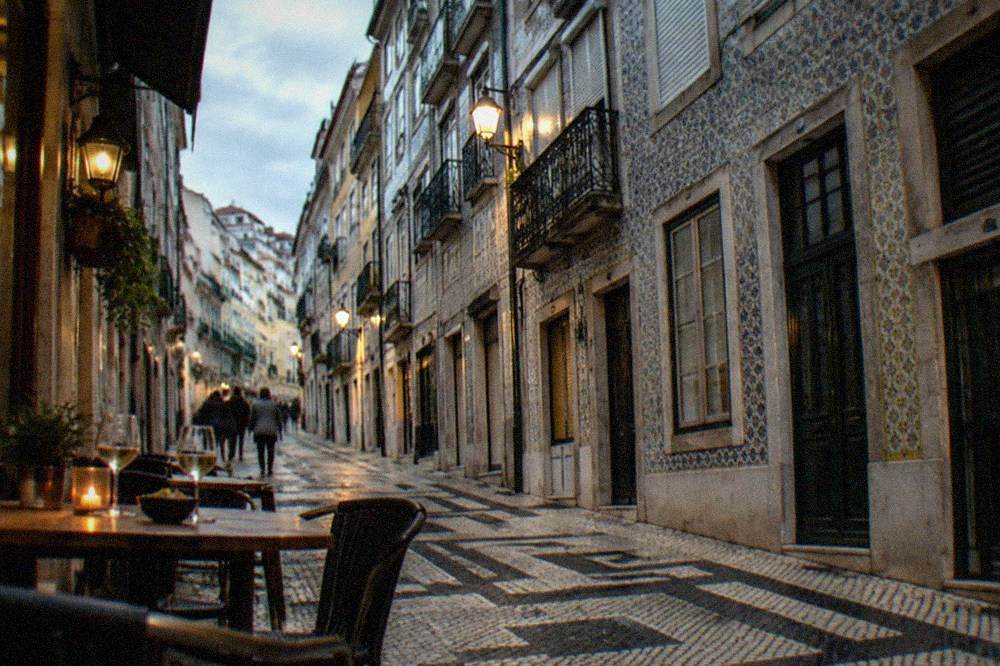
The Santa Clara side, across the Mondego below the old monastery quarter, is the calmer, more residential eating landscape, and the green park along the river is where the city picnics. For leitão, the honest advice is that the strongest examples sit in the small towns of the Bairrada to the south rather than in the city centre, which makes the dish as much a day trip as a dinner. The leitão and Bairrada guide and the Bairrada wine route guide map that out.
A local guide also solves the hill problem. Coimbra is a steep city, the Alta sits well above the Baixa, and a guided walk that starts at the top and works down, or that times the climb, saves the legs that dinner will need. The Coimbra Top Attractions Walking Tour is the budget option in this category, from $5.85 per person, rated 5 from 151 reviews, 2 hours 30 minutes on the listing, and it covers the top-attraction core of the city in a walk that ends near the eating streets.
| Neighbourhood | Character of the eating | Best time of day | What kind of meal |
|---|---|---|---|
| Baixa, downtown | Tascas, old cafés, pastry counters, student prices | Lunch and merenda | The everyday traditional plate |
| Alta, upper town | Small rooms, views, fado houses | Evening | Dinner plus a fado performance |
| Santa Clara, across the river | Quieter, more residential, riverside green nearby | Lunch or a long dinner | Local, unhurried cooking |
| Bairrada villages to the south | Leitão specialists and wine country | Weekend lunch | The roast pig splurge, as a day trip |
Is Coimbra Good for Vegetarians and Vegans?
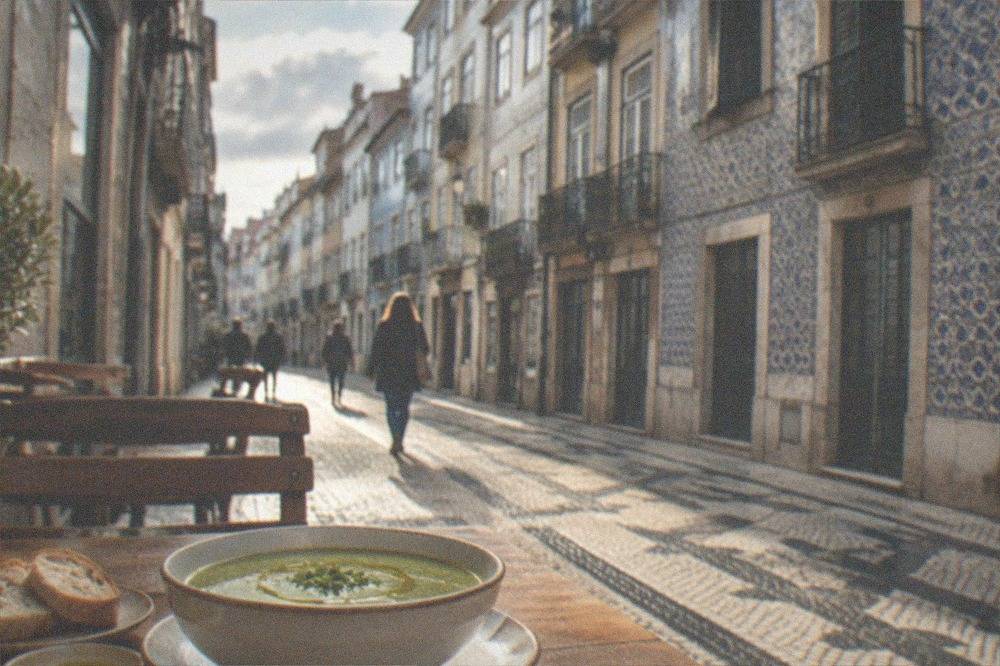
Yes, and better than its meat-heavy reputation suggests, because the Portuguese kitchen's vegetable layer is deep: soups like caldo verde and the lighter vegetable soups that open most traditional lunches, the couve and bean dishes, grilled vegetables with olive oil, the egg-and-cheese plates, and the pastry counters, which lean heavily on egg and almond rather than cream. Vegans will eat well in the dedicated vegetarian rooms and less well in the old tascas, where the daily board is usually built around fish and meat.
The honest split is that vegetarians are served everywhere, because soup, bread, olive oil, cheese, eggs and vegetable sides are the base layer of every traditional kitchen, while vegans should head for the dedicated vegetarian and vegan rooms the city has grown in the last decade. Our full vegetarian and vegan guide to Coimbra covers that side of the city in detail, including how to read a tasca menu for the vegetable dishes that never make the English translation.
Two practical notes. First, the convent sweets tradition is egg-based, so the pastry counter is a vegetarian's paradise but rarely a vegan's. Second, the Bairrada dishes, leitão and chanfana, are the hardest thing to substitute, so a mixed group should pick a kitchen that does both the roast traditions and the vegetable plates well, and the Baixa is where those kitchens are.
What About Pastries, Arrufadas and Coimbra's Historic Cafés?
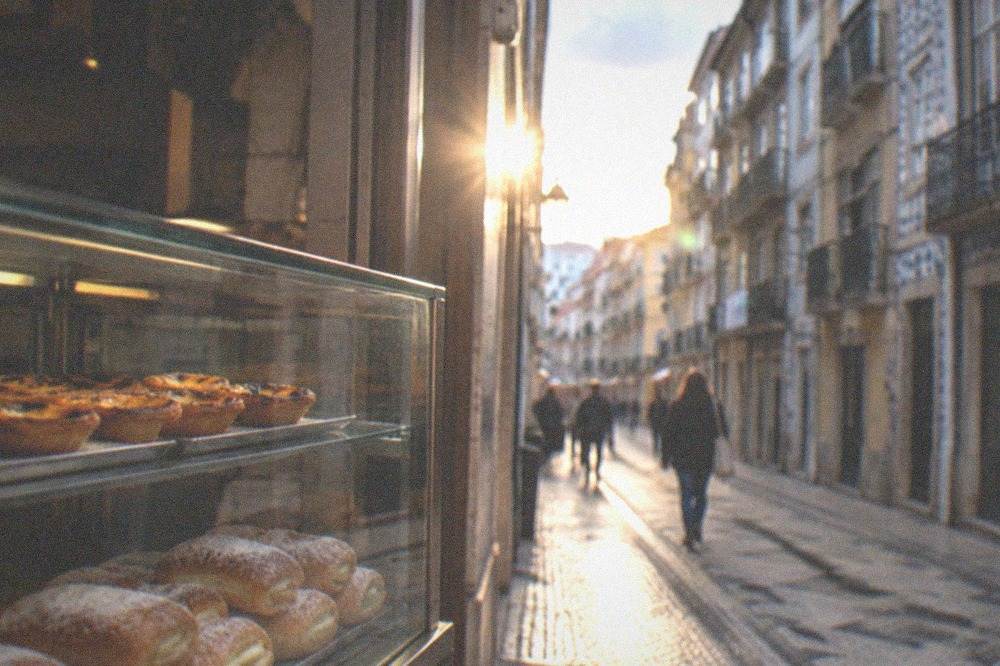
Coimbra's pastry identity is the arrufada, a soft, sugar-dusted roll with a local history, plus the wider central-Portuguese convent sweets tradition of egg yolk, sugar and almond, and the city's historic cafés, which function as living rooms for students, professors and visitors alike. The morning ritual is coffee plus a pastry standing at the counter, the afternoon ritual is the merenda snack, and both are cheaper and faster than any sit-down meal.
The historic cafés deserve their own paragraph, because in a university city they are institutions rather than businesses. Coimbra's café culture grew around the university's academic life, and the old rooms downtown carry that atmosphere in their mirrors, marble and chatter. Our historic cafés guide is the companion page, and the wider pastries and arrufadas tradition is covered on the same food pages.
| Pastry or ritual | What it is | When Coimbra eats it |
|---|---|---|
| Arrufada | Soft round roll, sugar-topped, a local institution | Breakfast, and after school |
| Convent sweets | Egg yolk, sugar, almond confections from the monastery tradition | With coffee, any hour |
| Counter coffee | Espresso standing at the balcão | Morning and after meals |
| Merenda | The afternoon snack break | Late afternoon, between lunch and dinner |
How Does the University Calendar Change Where You Should Eat?
The university calendar moves Coimbra's restaurant rhythm more than the tourist season does: term time fills the Baixa's tascas with about 31,000 students at lunch, the May Queima das Fitas festival floods the city centre and closes two major monuments on parade days, and the summer and holiday breaks thin the student rooms while the visitor trade takes over, so the same street can feel like two different cities depending on the week you arrive.
The verified anchors are these: the University closes its visitor circuit on 24 May, and Mosteiro de Santa Cruz, the burial church of Portugal's first two kings, suspends visits on the Cortejo da Queima das Fitas, a moveable Sunday. Those two closures are the fixed signals of the festival week, and they tell you what the streets will be like: full, festive and loud. Outside that week, the rhythm is simpler, lunch is the meal the city takes seriously and dinner starts late, in the Portuguese manner. Our Queima das Fitas guide covers the festival in full.
One seasonal note worth having, because almost nobody else prints it correctly: IPMA's 1991 to 2020 normals for the Coimbra / Bencanta station show September is hotter than June, a mean maximum of 27.4 C against 26.3 C, and wetter, 49.9 mm against 26.0 mm, but the real rain holds off until October, when the monthly total jumps to 114.5 mm. In food terms: September is terrace-and-grill weather with the students back, October is when the chanfana season starts to make sense.
Should You Combine Eating with a Day Trip from Coimbra?
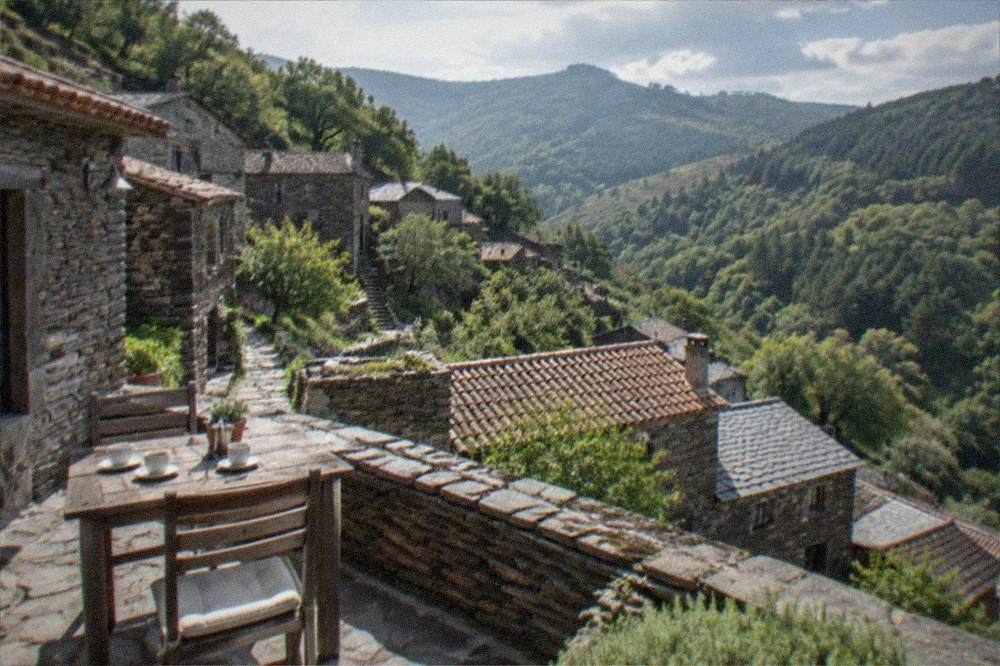
Yes, and the two best food-adjacent day trips are the Bairrada leitão and wine country to the south, and the schist villages of the Lousã mountain to the southeast, where the mountain villages hold small regional kitchens and the landscape is the reason to go. Conímbriga, the Roman town about 16 km south in Condeixa-a-Nova, is the sightseeing anchor of the southern route, and its museum and ruins open seven days a week, which makes it the reliable Monday option when other monuments close.
The Lousã route is the underrated one. The schist villages are stone hamlets on the mountain, and tours there combine short walks, village kitchens and, on some departures, wild deer watching. The Lousa Mountain Private Tour is from $105.37 per person, rated 5 from 88 reviews, four hours on the listing, and it is the tour that most reliably puts a food stop in landscape worth the drive.
The southern route pairs differently: Conímbriga's ruins and museum first, then the Bairrada wine country, where the sparkling whites and the roast pig belong to the same tradition. The Conimbriga and the Roman Tour is from $105.37 per person, rated 4.8 from 136 reviews, four hours, and our Conímbriga Roman ruins guide covers the site itself.
| Food day trip from Coimbra | What the food is | What else the trip gives you |
|---|---|---|
| Bairrada wine country, south | Leitão da Bairrada and sparkling Bairrada whites | The region's wine estates and small towns |
| Lousã schist villages, southeast | Mountain village kitchens, regional plates | Stone hamlets, forest, wild deer on some tours |
| Conímbriga and Condeixa, south | Everyday restaurants around a small town | Roman ruins and a national museum, open daily |
| Buçaco forest, west | Hotel and forest-country cooking traditions | The Buçaco wooded park and its walks |
How do You Plan a Full Food Day in Coimbra?
Start with a counter coffee and an arrufada in a Baixa café in the morning, book a timed slot at the Biblioteca Joanina for late morning, eat the day's main traditional lunch in the Baixa when the tascas are at their busiest, walk off the meal through the Alta or the Botanical Garden in the afternoon, take a merenda pastry break, and finish with dinner plus fado de Coimbra in the upper town, in that order, because the city's own rhythms make that sequence the one that works.
The Joanina slot is the one fixed point worth building a day around, because the University's own visit pages state the library admits 50 people every 20 minutes and the time printed on the ticket is the library slot specifically, with the other ticketed spaces visitable over two days. A late-morning slot leaves the lunch hour free, and lunch in Coimbra is not a meal to skip or to rush. The Joanina Library tickets guide and the university tickets guide cover the booking mechanics.
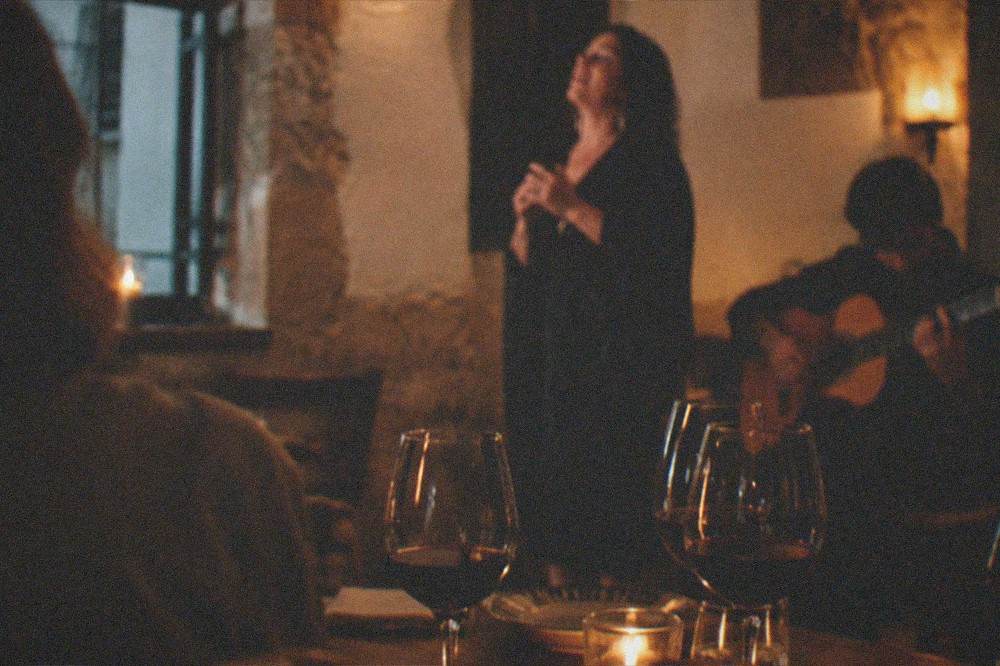
For the evening, the pairing of dinner and fado is the city's own, not a visitor invention: fado de Coimbra is sung by men in the academic tradition, often in rooms where dinner and the performance share the same space. Tipping is a common question and the answer is on our tipping in Coimbra restaurants page; the short version is that service is included by law in Portugal and rounding up is a gesture, not an obligation.
| Time of day | What to do | Where it happens |
|---|---|---|
| Morning | Counter coffee and an arrufada | A Baixa café |
| Late morning | Timed Biblioteca Joanina slot, booked in advance | The university hill, the Alta |
| Midday | The main traditional lunch, from the daily board | A Baixa tasca |
| Afternoon | Walk the Alta or the Botanical Garden, then a merenda pastry | The upper town and gardens |
| Evening | Dinner, then fado de Coimbra | The Alta or the Baixa fado rooms |
Common Questions About Restaurants in Coimbra
What food is Coimbra, Portugal famous for?
Leitão da Bairrada roast suckling pig, chanfana goat stew, Mondego river fish, student-priced tasca cooking, and monastery-rooted pastries including the local arrufada.
Where should I eat in Coimbra?
Eat in the Baixa for traditional tascas and student-priced cooking, the Alta for views and fado houses, the Santa Clara side for quieter local rooms, and the Bairrada villages south of the city for leitão.
What is leitão da Bairrada?
Whole roast suckling pig with crisp skin, the signature dish of the Bairrada region at Coimbra's doorstep, traditionally served in slices with orange and the region's sparkling white wine.
Is Coimbra good for vegetarians?
Yes. Soup, bread, olive oil, cheese, eggs, grilled vegetables and the egg-and-almond pastry tradition make the traditional kitchens very workable for vegetarians; vegans should head for the city's dedicated vegetarian rooms.
When should I avoid eating in Coimbra city centre?
The May Queima das Fitas week floods the centre with students; the University closes its visitor circuit on 24 May and Santa Cruz suspends visits on the Cortejo parade day. Outside that week, the normal lunch-and-late-dinner rhythm holds.
Should I book restaurants in Coimbra in advance?
For a traditional lunch tasca, no, they run on walk-ins and the daily board. For a small Alta fado room or a weekend leitão table in the Bairrada, checking ahead with the venue directly is sensible, and no specific booking policy for any named business is verified on this page.
Whether you build the trip around a single great plate of leitão or around a week of daily-board lunches in the Baixa, the Coimbra Travel Guide food pages, from the Bairrada wine route to the vegetarian and vegan guide, exist to keep you eating what this city actually cooks rather than what a brochure says it does.