The Best Bars in Coimbra, Portugal: Where to Drink in the University City
Coimbra, Portugal's university city on the River Mondego, drinks late, drinks cheaply by northern European standards and drinks to a student calendar that is older than most countries. This guide covers where the bars actually are, what to order, and how fado fits into the night.
Short answer
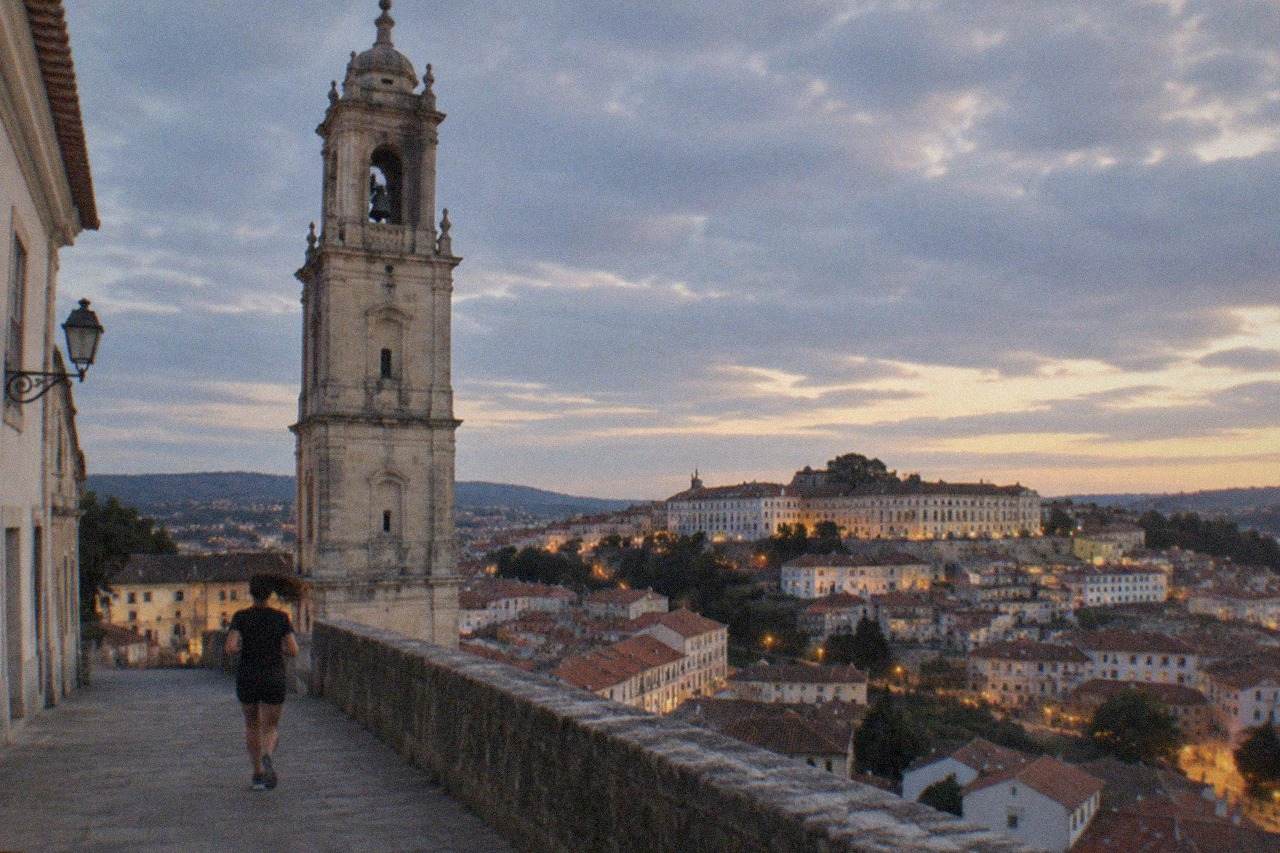
Coimbra's bar scene clusters in three zones: the Baixa downtown around Praça do Comércio, the steep lanes of the Alta below the university, and the riverside along the Mondego. The scene is student-driven, fado is the city's signature night out, and a live fado show with a glass of port wine costs from $18 per person on the operator's live listing.
Coimbra, Portugal, the university city on the River Mondego, runs its nightlife on a student calendar that has been ticking for centuries, and the bar scene grows directly out of it. With about 31,000 students published by the University on its own "University in Numbers" block, the city supports a density of bars, cafés and fado houses far beyond what its size suggests, and the whole thing spills downhill from the university hill to the river. This guide walks through the neighbourhoods where the bars actually sit, the drinks the region is known for, the fado tradition that makes a Coimbra night different from a night anywhere else in Portugal, and the verified prices for the tours and tickets that frame an evening out. One honest note up front, stated plainly on the About page of this site: nobody writing this has been to Coimbra, so nothing below rests on a remembered evening. Where a competing guide would say "we found", this one says what a primary source states.
What Kind of Bar Scene Does Coimbra Have?
Coimbra's bar scene is a student scene first and a tourist scene second, built on small rooms, low prices and late hours, concentrated in the Baixa downtown and the lanes of the Alta, and shaped by the academic calendar so completely that the city's own monuments close around it. The University of Coimbra publishes an enrolment of about 31,000 students, and those students are the economic engine of every bar in the old town. The municipality's own tourism study recorded 698,151 overnight stays in Coimbra in 2025, which is a healthy visitor economy, but the bars live on locals nine months of the year.
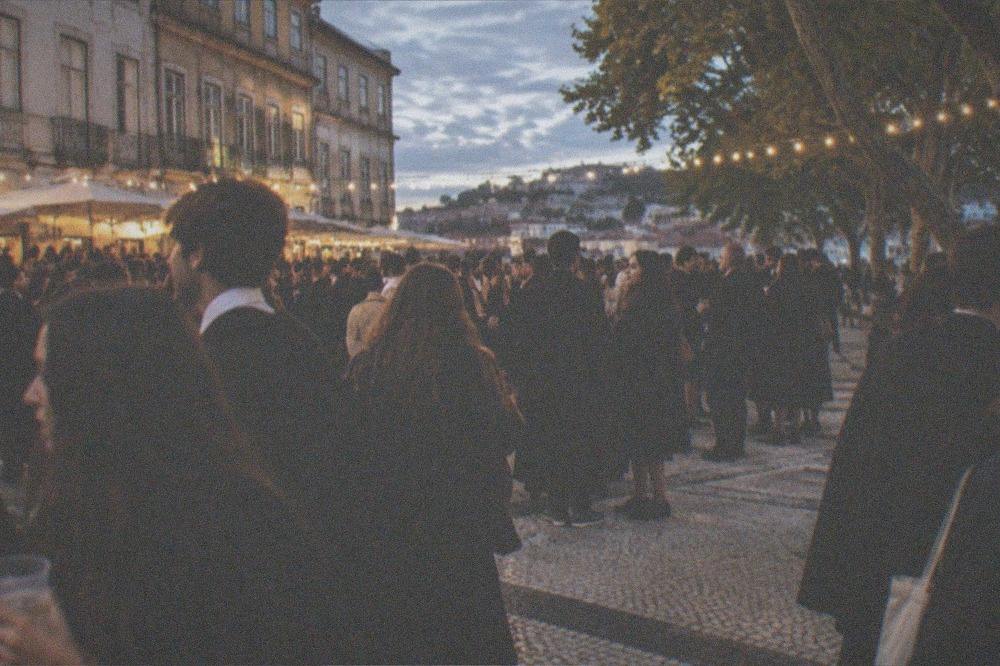
The calendar matters more here than in almost any other Portuguese city. The University closes its entire visitor circuit on 24 May, and Mosteiro de Santa Cruz suspends visits on the Cortejo da Queima das Fitas, a moveable Sunday in May, because the student festival takes over the streets. In the weeks around those dates the bars are at their fullest and their loudest. In August, by contrast, IPMA's 1991 to 2020 normals for the Coimbra / Bencanta station show a mean maximum of 29.1 C and 10.9 days above 30 C, and the student population largely goes home, so the scene thins to a quieter, more visitor-heavy rhythm.
What the scene is not: a strip of British-style pubs or a riverside club row. Coimbra's drinking culture runs through small tavernas, historic cafés, student repúblicas hosting parties, and above all fado houses, where the night is organised around listening rather than talking. The Coimbra Travel Guide nightlife coverage treats the evening as a progression: a drink in the Baixa, dinner, then fado, then whatever the night suggests.
Where Are the Best Bars in Coimbra Located?
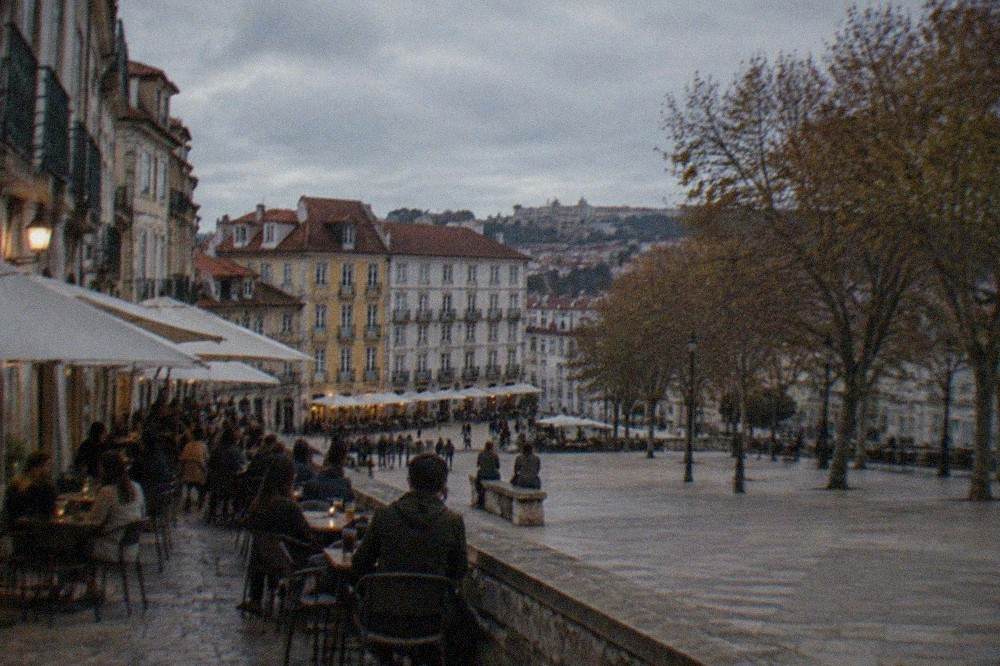
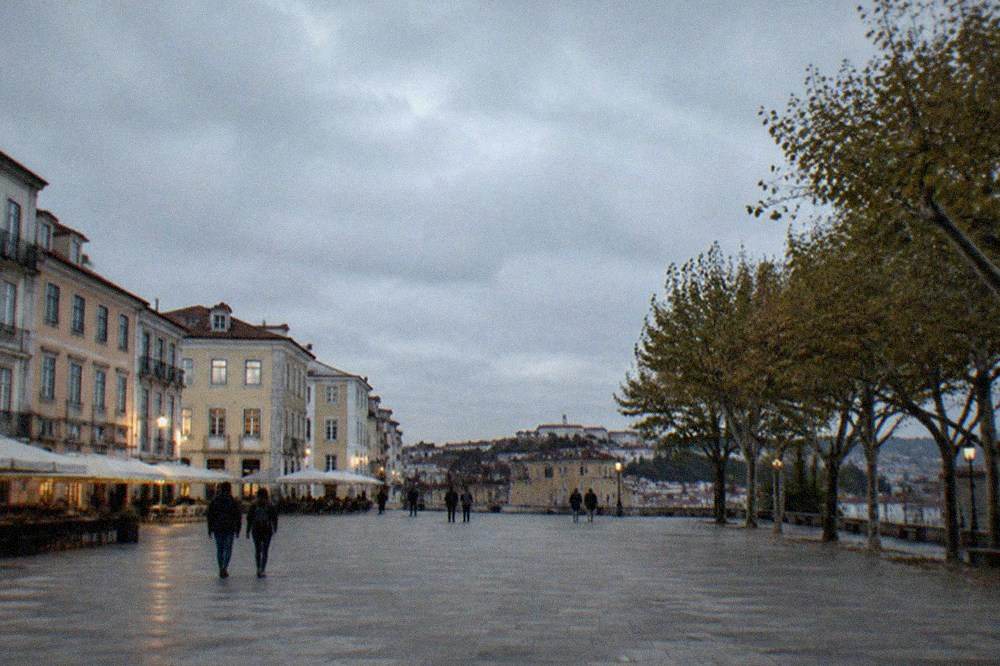
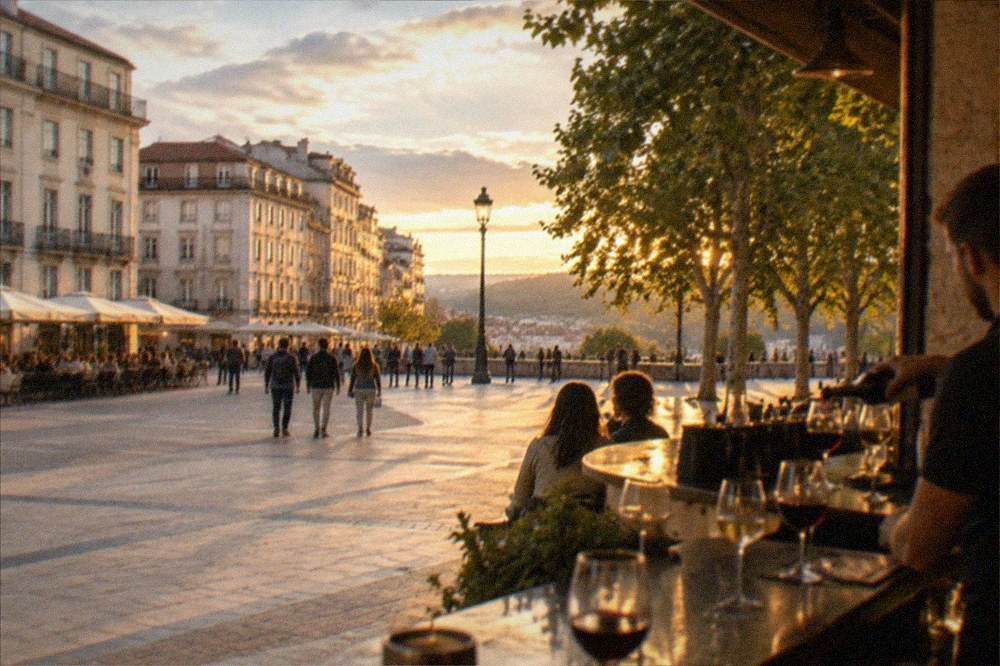
The best bars in Coimbra sit in three zones: the Baixa, the downtown grid between the Almedina arch and the Praça do Comércio, which holds the densest cluster; the Alta, the steep medieval lanes climbing to the university, where the rooms are smaller and older; and the left bank of the Mondego around the Santa Clara side, where the evening is quieter and the views are across the river to the city. Each zone has a different hour: the Baixa fills first, around the end of the working day, the Alta fills after dinner, and the riverside is more of a sunset-and-a-glass place than a late one.
The Baixa is the practical centre. Its grid of streets is flat, walkable and dense with cafés that turn into bars as the evening goes on. The Alta is the opposite experience: cobbled climbs, staircases between streets, and bars tucked into buildings that have held students for centuries. The Arco de Almedina, the old city gate, is the seam between the two, and the walk down from the university through it after dark is one of the city's small rituals. The self-guided walking tour route covers this ground in daylight, which is the right way to learn it before doing it at night.
For visitors who want the geography explained rather than discovered alone, a guided walk is a sound first-evening move, and the options below are the strongest on the roster.
The walking tour in that list is worth a sentence of its context. The Coimbra Top Attractions Walking Tour runs 2 hours 30 minutes, from $5.85 per person, rated 5 from 151 reviews, and it covers the city's headline sights with a guide, which makes it a cheap and efficient way to fix the old town's geography in mind on day one. The things to do in Coimbra roundup covers the same ground from a planning angle.
How Does Fado Fit Into a Night Out in Coimbra?
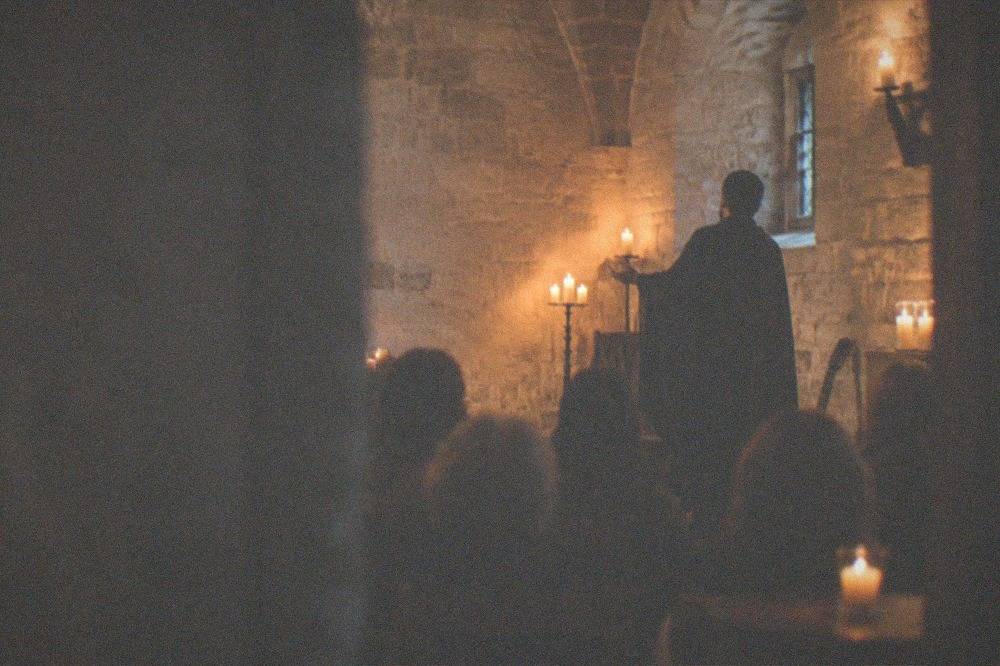
Fado is the spine of a proper Coimbra night: the city's own fado tradition is sung by men, grew out of the university's student culture rather than out of Lisbon's port houses, is tied to the black academic cape, and is performed both in dedicated venues and as street serenades, with a ticketed live show including a glass of port wine running from $18 per person, rated 4.7 from 1,234 reviews, for about 50 minutes. That tour is the most-reviewed evening product on this site's entire Coimbra roster by a wide margin, and it is the one to book if the night has room for exactly one planned thing.
The distinction between Coimbra fado and Lisbon fado is real and worth knowing before the first show. Coimbra fado is a student tradition: it is sung by men, historically in the academic cape, and its repertoire grew around the university, the Mondego and the separations of student life. Lisbon fado is the older, broader, urban form, sung by men and women, centred on the Alfama and the port. In Coimbra the music also lives outside the venues entirely, as serenades, which is a form Lisbon does not practise the same way. The fado de Coimbra guide covers the tradition in depth, and the where to hear fado page covers how to find it.
One boundary this site holds to honestly: nothing operational about any individual fado venue was verified on this build, so no show times, venue capacities, addresses or nightly schedules for any specific fado house appear here. Everything operational has to come from the venue itself or from the tour listing. What can be stated is the form, the tradition, and the price of the ticketed show on the operator's live listing, which is the table below.
| Evening tour | Decision name | From (per person) | Rating | Reviews | Duration |
|---|---|---|---|---|---|
| Coimbra: Live Fado Show with Glass of Port Wine | Fado Show, Port Wine Included | $18 | 4.7 | 1,234 | 50 minutes |
| Coimbra Top Attractions Walking Tour | Budget Walk, Top Attractions | $5.85 | 5 | 151 | 2 hours 30 minutes |
| Discovering the charms and places of Coimbra | 3 to 4 Hour City Walk | $52.68 | 5 | 79 | 3 to 4 hours |
The fado show is the evening anchor, and the port wine in the ticket is not a garnish: port is the traditional accompaniment to a Coimbra fado night, and a show that includes a glass removes the one decision the room would otherwise impose. Booking ahead is the sensible move in the May festival weeks and through the summer, when the visitor numbers the municipality itself tracks are at their highest, and the listing shows live availability for any given evening.
For anyone planning the whole evening around that show, the timing works cleanly: fifty minutes of fado leaves the rest of the night for the Baixa, and the walk between the two is short. The same tour also appears in the picks band earlier, because it genuinely is the default answer to the question of what to do after dark in this city.
What Should You Drink in Coimbra's Bars?
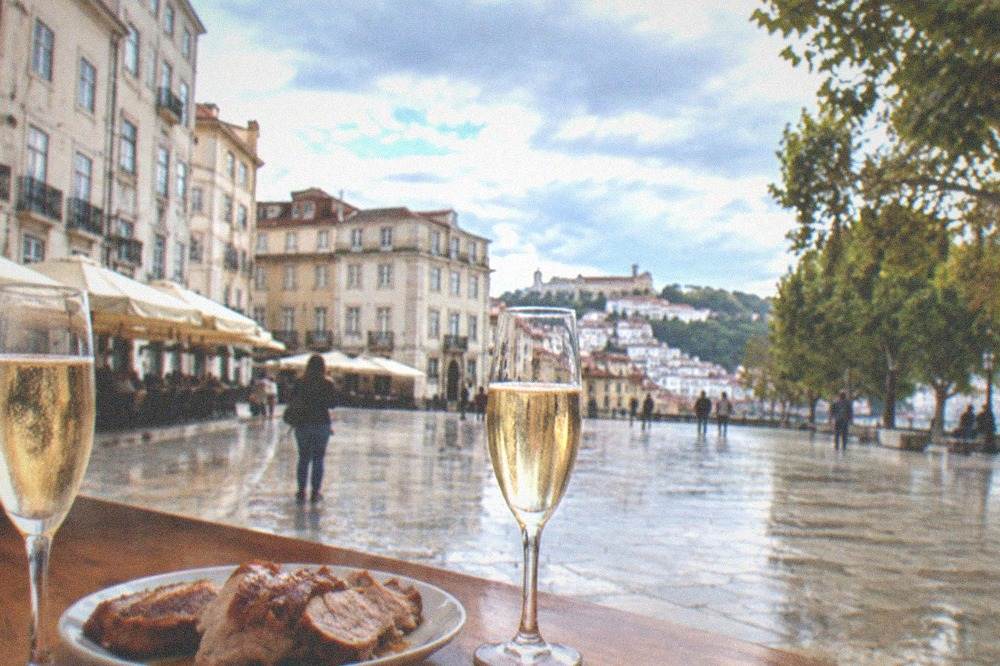
The drinks to order in Coimbra are the wines of the surrounding region, above all the sparkling and still wines of the Bairrada just to the west, drunk alongside the region's signature dish, leitão da Bairrada, suckling pig, plus port as the fado-night classic, and the beer of Portugal's national brands, with the deeper regional picture covered by the Bairrada wine route and the leitão tradition, both documented in this site's dedicated guides. The Bairrada is Coimbra's wine country, and its sparkling wines in particular are the local celebration drink.
The pairing that defines the region is leitão da Bairrada, the roast suckling pig with crisp skin that comes from the same strip of land as the wine. The leitão and Bairrada guide covers the dish and where to eat it, and the Bairrada wine route covers the wine country day trip. Neither needs to be a museum visit: the same wines appear by the glass in Coimbra's bars, and knowing that a Bairrada espumante is the local order is half of drinking well in this city.
Port is the other constant, and for a reason specific to Coimbra: it is what the fado houses pour. The ticketed fado show above includes a glass, which tells you what the room expects. Beyond wine and port, the standard Portuguese beers are everywhere, and the student bars of the Baixa run on them. What no honest guide can publish is a price list for any individual bar: no opening hour, price or address for any bar, café or taverna was verified on this build, so treat any drink price you read anywhere, here or elsewhere, with caution unless the bar itself states it.
When Is the Best Time of Year for Coimbra's Bar Scene?
The best months for Coimbra's bars are May and June and then September, for three verified reasons: May holds the Queima das Fitas student festival, the one week the student scene is at absolute full power; June is warm at a 26.3 C mean maximum with only 26.0 mm of rain; and September, the city's best-kept secret, is actually hotter than June at 27.4 C mean maximum, with 49.9 mm of rain, while the crowds have gone. July is the driest month at 8.9 mm, but the students are largely away and the scene thins.
The IPMA 1991 to 2020 normals for the Coimbra / Bencanta station, the city's own station 3 km from the centre, give the full picture, and the table below pulls the months that matter for evenings outdoors.
| Month | Mean max (C) | Mean min (C) | Rain (mm) | Days 1 mm+ rain | Days max 30 C+ |
|---|---|---|---|---|---|
| May | 23.3 | 11.8 | 64.7 | 8.5 | 3.5 |
| Jun | 26.3 | 14.2 | 26.0 | 3.7 | 6.2 |
| Jul | 28.5 | 15.6 | 8.9 | 1.7 | 8.9 |
| Aug | 29.1 | 15.7 | 14.8 | 2.2 | 10.9 |
| Sep | 27.4 | 14.1 | 49.9 | 5.2 | 7.8 |
| Oct | 23.2 | 11.9 | 114.5 | 10.3 | 2.0 |
Two readings of that table are worth spelling out, because an earlier draft of this build got one of them backwards. September is hotter than June, 27.4 C against 26.3 C, and wetter too, 49.9 mm against 26.0 mm, so anyone selling September as "drier than June" is wrong on both counts. What is true is that the autumn rain holds off until October, when the monthly total jumps from 49.9 mm to 114.5 mm, so September evenings still work outdoors. August is the hottest month, not July, on both mean and mean maximum, and it averages 10.9 days above 30 C, which pushes the drinking hours later. The full month-by-month breakdown lives in the weather guide and the best time to visit guide.
May deserves its own paragraph because of Queima das Fitas. The festival's exact dates are not published on an official page this build could verify, and the Associação Académica's site refuses automated requests, so this site does not print them. What is official: the University closes its visitor circuit on 24 May, and Santa Cruz suspends visits on the Cortejo, a moveable Sunday. The Queima das Fitas guide explains the festival and what those closures mean for a visit.
How Much Does a Night Out in Coimbra Cost?
The fixed, verified costs that frame a Coimbra night are modest: the municipal tourist tax is 1.00 EUR per guest per overnight stay, capped at three consecutive nights, from age 16, paid at the accommodation; the fado show with port wine runs from $18 per person; a budget walking tour from $5.85; and the University's combined ticket with the Joanina Library, for the daytime side of the trip, is 16.50 EUR adult. What no source on this build verifies is the price of a beer or a glass of wine in any individual bar, so drink prices below are planning ranges to check in the room, not promises.
The tourist tax is the one cost every visitor pays, and it is widely misstated. The rate is 1.00 EUR per guest per night, capped at three consecutive nights per person, from age 16, payable directly to the accommodation at check-in or check-out, charged all year with no low-season exclusion, and in force since 5 April 2023. The municipality's own worked example: a couple staying seven nights pays 3.00 EUR each, 6.00 EUR total. A rise to 2.00 EUR was approved as a proposal in July 2026, but the municipality's own tax pages still state one euro, so one euro is what this site prints. The tax sits well below the municipality's own estimated cost of tourism, 3.49 EUR per overnight stay, a figure from its 2025 justification study that almost no other guide carries.
| Cost item | Amount | Source basis |
|---|---|---|
| Tourist tax, per guest per night | 1.00 EUR, max 3 nights | Municipal tax page, in force since 5 April 2023 |
| Fado show with port wine, from | $18 per person | Operator listing, 4.7 from 1,234 reviews |
| Top Attractions walking tour, from | $5.85 per person | Operator listing, 5 from 151 reviews |
| UC combined ticket with Joanina | 16.50 EUR adult | visit.uc.pt, valid 01.01.2026 to 31.12.2026 |
| UC ticket without Joanina | 12.50 EUR adult | visit.uc.pt, same validity |
| SMTUC bus ticket bought on board | 2.00 EUR | 2026 SMTUC tariff, in force 01/04/2026 |
Two of those rows deserve a warning, because they are the city's two most-abused facts. The Joanina Library cannot be bought on its own: it exists only inside the 16.50 EUR combined ticket, the time printed on the ticket is the library entry slot specifically, and the library admits 50 people every 20 minutes, which is the one genuine scarcity fact in Coimbra and the reason advance booking matters. And the SMTUC ticket is worth knowing for the ride home: a ticket bought on board costs 2.00 EUR per the 2026 tariff, pre-purchased trips in packs of three or more work out at 0.90 EUR each, and SMTUC titles are valid on the Metro Mondego network too. The university tickets and Joanina Library tickets guides carry the full detail.
Can You Turn a Coimbra Bar Night Into a Day Trip?
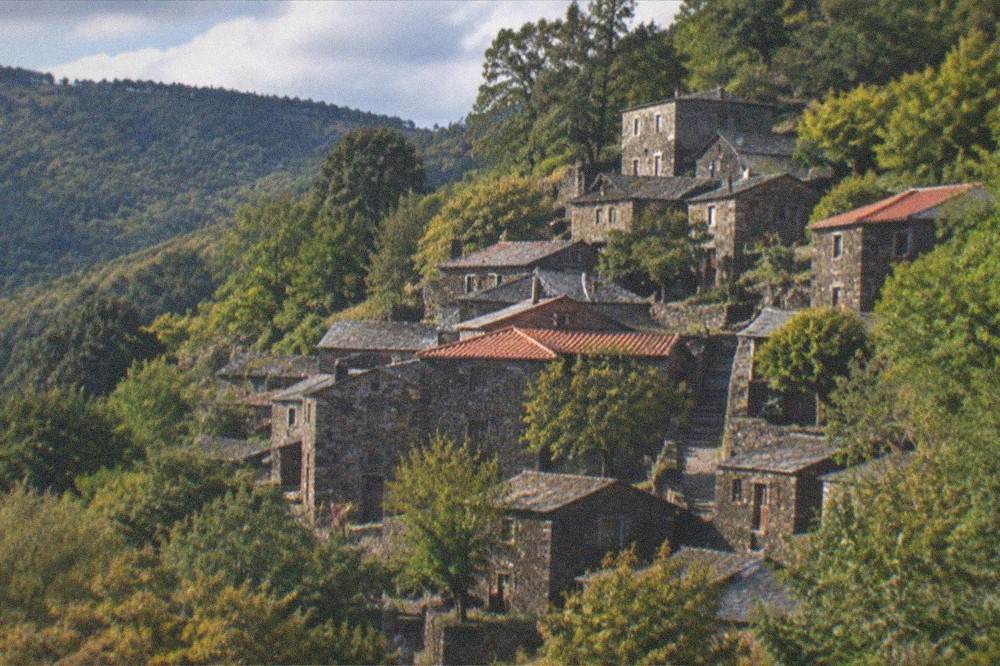
Yes, and the strongest day trips from Coimbra are the schist villages of the Lousã mountain, from $105.37 per person for four hours with a 4.9 rating from 133 reviews, the Roman ruins of Conímbriga, and the Bussaco forest, all reachable as half-day or full-day tours that pair naturally with evenings back in the city, so the honest structure of a good Coimbra day is a morning in the hills or the ruins and a night in the fado houses. The Lousã schist villages are the signature option: stone villages on the mountain south of the city, and the most-reviewed tour there is the strongest of the three in that band below.
The pairing logic is simple. Coimbra's old town is compact and its evenings are its best hours in summer, so the daylight gap is best filled out of town. The schist villages tours run about four hours, which leaves the late afternoon free for the climb up to the university, the 16.50 EUR combined ticket if the Joanina slot is booked, and dinner before fado. The day trips guide covers the full menu, including Conímbriga, the Roman town about 16 km south in the parish of Condeixa-a-Velha, in the municipality of Condeixa-a-Nova, whose museum and ruins cost a combined 10.00 EUR adult and open seven days a week, 10:00 to 18:00, which makes it the reliable Monday option when other monuments shut.
| Day-trip tour from Coimbra | Kind | From (per person) | Rating | Reviews | Duration |
|---|---|---|---|---|---|
| Schist Villages at Lousa Mountain | Schist villages | $105.37 | 4.9 | 133 | 4 hours |
| An adventure through the Schist Villages of Lousã | Schist villages, private | $87.81 | 5 | 105 | 3 to 4 hours |
| Conimbriga and The Roman Tour | Roman Conímbriga | $105.37 | 4.8 | 136 | 4 hours |
| An adventure through the Forest and Palace of Bussaco | Bussaco forest | $87.81 | 5 | 50 | 4 hours |
The choice among those four is mostly a choice of pace. The Schist Villages at Lousa Mountain tour is the most-reviewed of the schist options, and the private version suits anyone who wants the same mountain without a shared schedule. The Conímbriga and Bussaco tours cover the other two big half-day stories from the city, and all of them return in time for the evening, which is the point of pairing them with a fado night.
Between the two schist options in that band, the headline tour is the one this site would point most visitors toward first, on the strength of its review count and its four-hour shape, and the listing carries the live availability for any given date.
Where Should You Stay to Be Near the Bars?
The best place to stay for the bar scene is the Baixa and the streets just below the university hill, because the walk from the densest bar cluster to the accommodation is short and flat or downhill, and the practical planning facts are that the tourist tax applies everywhere in the municipality at 1.00 EUR per night capped at three, and that the old town's steepness is the real constraint on a late walk home. The Alta is atmospheric and puts you beside the university, but every night ends with a climb.
The left bank, the Santa Clara side, is the quiet option: views across the Mondego to the lit city, and a short bridge walk to the Baixa. It suits visitors who want the evening without the noise under the window. The riverside along the Parque Verde do Mondego is where the sunset drink happens, and the where to stay guide breaks the neighbourhoods down properly, including the accessibility-and-hills question that Coimbra poses more sharply than almost any Portuguese city its size. The best hotels guide carries the specific properties.
One practical note on getting home: Coimbra has two railway stations with confusingly similar names, in different places, and CP, Comboios de Portugal, is the operator whose passenger site is the place to check the stopping pattern and any shuttle between them. This build could not verify which trains call at which station or whether a connection is free with a long-distance ticket, so this site says nothing beyond that, and the train stations A and B guide holds the same honest line. For late nights in the old town, the walk is the plan; the SMTUC night coverage is not something the pack verifies.
Common Questions About Bars in Coimbra
What are the best bars in Coimbra, Portugal?
The best bar nights in Coimbra cluster in the Baixa downtown, the steep lanes of the Alta below the university, and the riverside along the Mondego. No individual bar's hours, prices or address were verified for this site, so this guide names the districts, the drinks and the traditions rather than ranking rooms it cannot stand behind.
Is Coimbra good for nightlife?
Yes, because the city runs on about 31,000 students, the University's own published figure, which supports a dense bar and fado scene for a city of this size. The calendar is student-driven: May's Queima das Fitas festival is the peak, and summer evenings run quieter once the students leave.
How much does a fado show cost in Coimbra?
The ticketed live fado show with a glass of port wine included runs from $18 per person on the operator's live listing, rated 4.7 from 1,234 reviews, lasting about 50 minutes. No individual fado house's own schedule or door price was verified on this build, so the listing price is the only figure this site prints.
What should I drink in Coimbra?
Bairrada sparkling and still wines from the region just west of the city, port alongside fado, which is the traditional pairing, and the standard Portuguese beers in the student bars. The leitão da Bairrada, roast suckling pig, is the dish the wine goes with.
Is there a tourist tax in Coimbra?
Yes: 1.00 EUR per guest per overnight stay, capped at three consecutive nights, from age 16, paid directly to the accommodation, in force since 5 April 2023. A rise to 2.00 EUR was approved as a proposal in July 2026, but the municipality's own tax pages still state one euro.
When do bars close in Coimbra?
No bar's closing hour was verified on this build, so this site does not print one. As a planning matter, the student scene runs late, and the fado show listed above runs about 50 minutes, which anchors the earlier part of the evening.
The honest summary of drinking in Coimbra is that the city gives you a tradition, a wine region and a student engine, and lets you assemble the night yourself: a Bairrada espumante in the Baixa, dinner somewhere that serves leitão, a fado show with a glass of port, and the walk down through the Arco de Almedina to the river, with the whole thing costing less than the tourist tax cap would suggest a city this proud of its evenings should charge.