Fado de Coimbra: The Student Song Tradition of Portugal's University City
Fado de Coimbra is the university city's own branch of Portugal's sung tradition, carried by men in black academic capes and bound to the student life of the country's oldest university. This guide explains what the form is, how it differs from the Lisbon style, where to hear it, and how to plan an evening around it.
Short answer
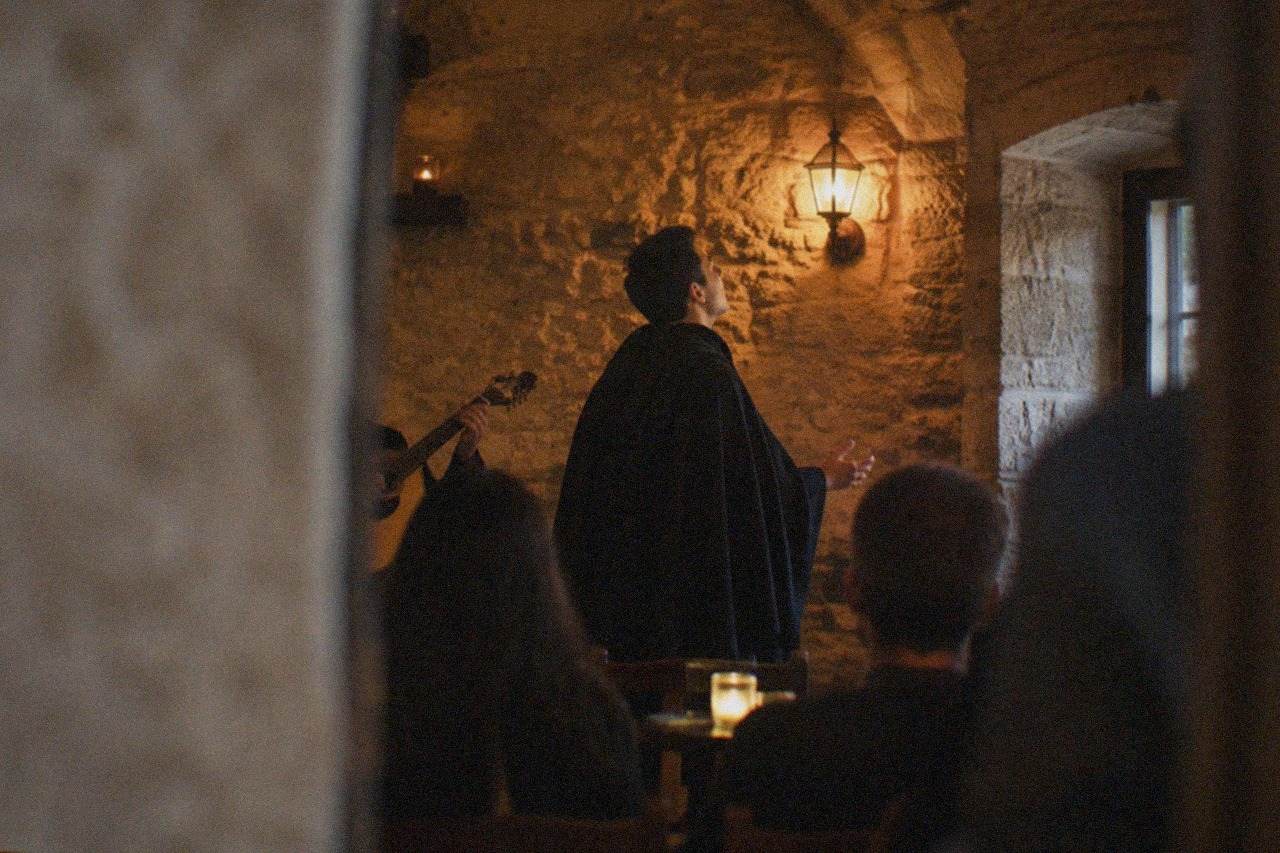
Fado de Coimbra is the Coimbra variant of Portuguese fado, sung almost exclusively by men, grown out of the student traditions of the University of Coimbra and performed in the black academic cape. It differs from Lisbon fado in voice, posture, repertoire and setting, and it is heard both in venues and as street serenades.
Fado de Coimbra is the branch of Portugal's sung tradition that belongs to the university city on the River Mondego, and it is a different creature from the fado most visitors first meet in Lisbon. It is sung almost exclusively by men, it grew out of the student life of the University of Coimbra rather than out of the waterfront taverns of the capital, and its signature garment is the black academic cape worn by generations of Coimbra students. The tradition is performed in venues with a guitar-led ensemble, and it also lives outdoors, as serenades sung at night beneath windows and in the old town's squares. This Coimbra Travel Guide page covers what the form is, how it differs from the Lisbon style, what an evening around it involves, and how to plan one during a stay in Coimbra, Portugal.
What Is Fado de Coimbra and How Does It Differ from Lisbon Fado?
Fado de Coimbra is the Coimbra variant of Portuguese fado, sung overwhelmingly by men, tied to the student tradition of the University of Coimbra and performed in the black academic cape, the capa e batina. It differs from Lisbon fado in almost every practical detail: the singing posture is upright and formal rather than seated and intimate, the voice is trained and placed high, the repertoire is built on student life rather than the sea, and the audience claps only when the song ends, never during it.
The Lisbon style grew up around the port districts of the capital and is associated with saudade, the tavern, the shawl and the seated singer. Coimbra's version grew up around the university. Its classic themes are student life itself: the city, the farewell to student days, the serenade beneath a window, the parting from Coimbra after graduation. The most famous farewell song of the tradition, "Coimbra tem mais encanto", is known far beyond Portugal under the title "April in Portugal", and it is the closest thing the city has to an anthem.
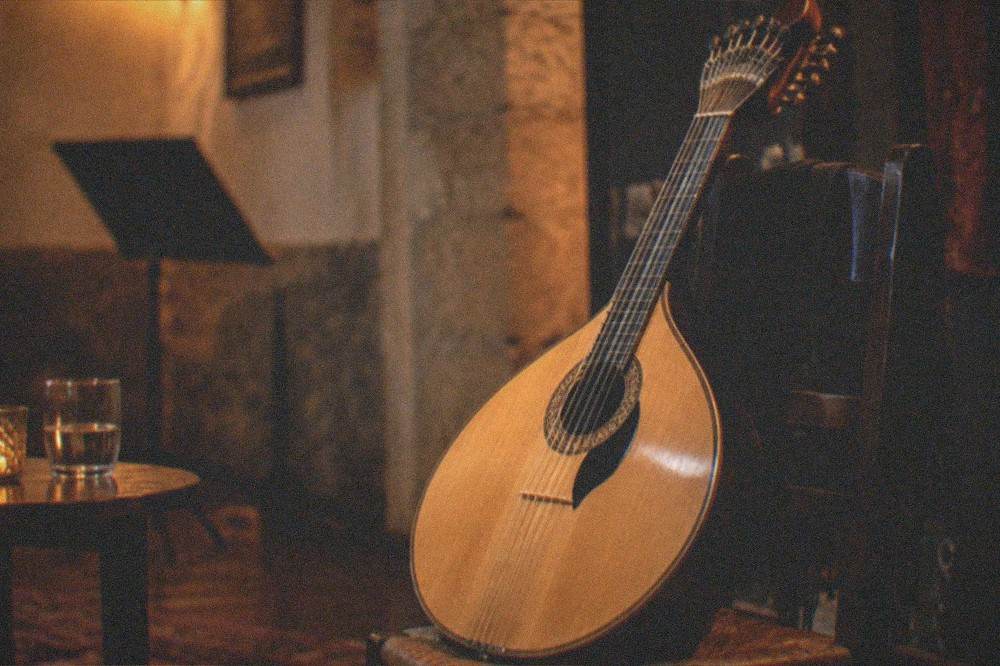
The performance convention is striking to first-time visitors. A Coimbra fadista typically stands, often with one hand at his cape or behind his back, and the room falls silent before the first note. The instrumental core is the Portuguese guitar, the pear-shaped twelve-string instrument, paired with a classical or viola guitar. The answers/what-is-a-portuguese-fado/ page on this site covers the wider tradition, and the answers/is-fado-portuguese-or-spanish/ question settles the common confusion: fado is Portuguese, with no Spanish equivalent.
The table below sets the two styles side by side, and it is the single fastest way to understand why people who know both insist they are different arts.
| Aspect | Fado de Coimbra | Lisbon fado |
|---|---|---|
| Typical performers | Men, historically students or former students of the University of Coimbra | Men and women, professional singers |
| Signature garment | Black academic cape, the capa e batina | Black shawl for female singers |
| Posture | Standing, formal, cape draped | Often seated, close to the audience |
| Core themes | Student life, farewell, serenade, the city of Coimbra | Saudade, the sea, the Alfama and Mouraria districts |
| Clapping convention | Applause only after the song ends | Applause and vocal encouragement during the song |
| Setting | Venues and street serenades in the old town | Dedicated fado houses and taverns |
Where Can You Hear Fado de Coimbra?
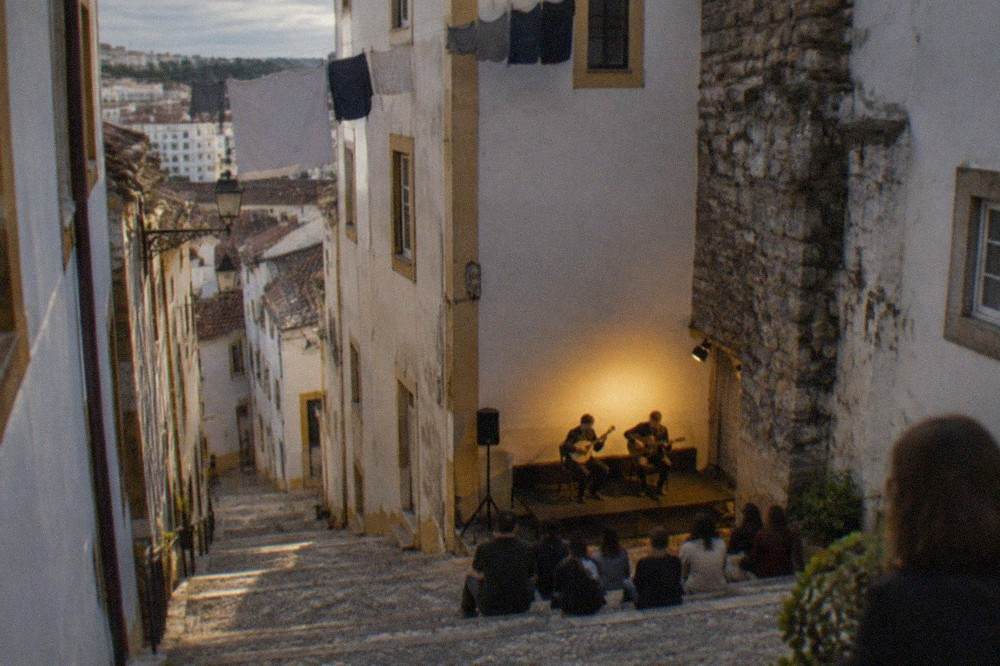
You can hear fado de Coimbra in three settings: ticketed evening shows in dedicated venues, fado nights held in restaurants and bars across the old town and Baixa, and street serenades, the traditional outdoor performances that students give at night in the city's squares and beneath windows. Nothing about specific venues on this site is verified, so show times, prices and capacities must come from each venue itself, but the three settings are constant and any visit can be built around them.
The ticketed show is the most reliable option for a visitor with limited time. A booked evening guarantees a seat, a set programme and a start time, which matters when the rest of the night depends on it. The best-known ticketed option on this site's roster is a 50-minute live fado show with a glass of port wine included, rated 4.7 from 1,234 reviews and priced from $18 per person on the operator's live listing. The port wine is part of the tradition's etiquette: it is what the audience drinks while the singer performs.
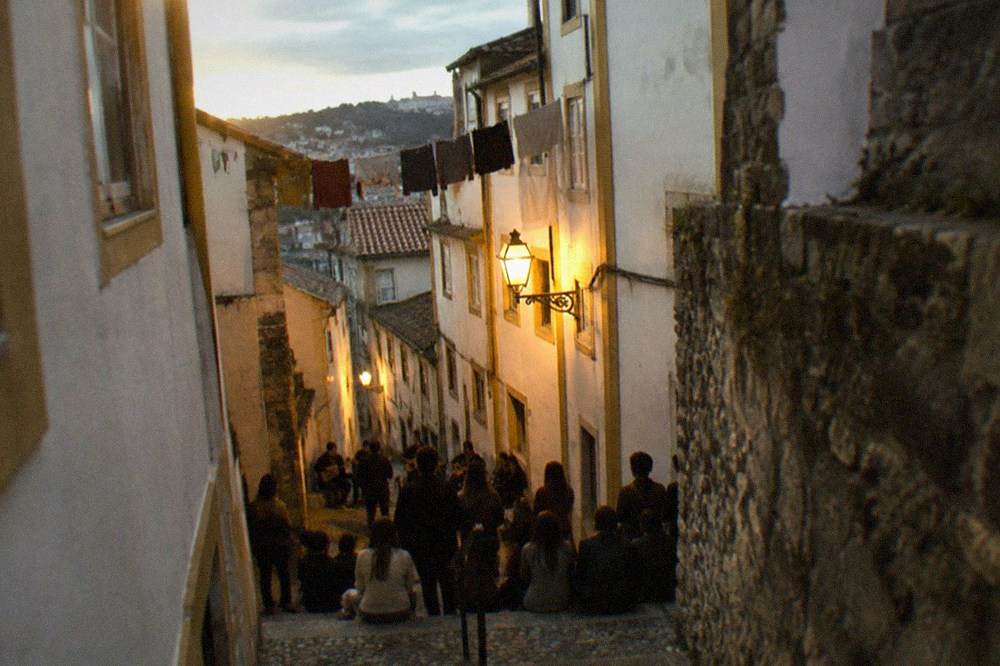
The second setting is the restaurant or bar fado night, where the music is part of an evening of food and drink rather than the whole event. These are less predictable and more atmospheric, and the guides/restaurants/ guide on this site covers the city's dining landscape for planning the meal around them. The third setting is the serenade, and it is the one that belongs uniquely to Coimbra. A serenade is an outdoor performance, traditionally given by students at night, and it still happens around the city's academic calendar and festival moments. You cannot book a serenade. You encounter one, and the encounter is the point.
For orientation, the guides/where-to-hear-fado/ guide maps the city's fado landscape in more depth, and the things-to-do-in-coimbra/ overview places an evening of fado among the city's other evening options.
What Should You Expect at a Coimbra Fado Show?
Expect a short, formal, seated performance, typically under an hour, built around a small male singing ensemble and two guitars, with silence requested during each song and applause only between numbers. The etiquette is stricter than a pub gig and looser than an opera: arrive before the start, keep conversation to the gaps, never use a flash, and let the singer finish before making any sound at all. A glass of port wine is commonly served, and drinking it slowly through the set is part of the form.
The structure of a typical ticketed evening is simple, and knowing it in advance removes the awkwardness of a first visit. The show on this site's roster runs 50 minutes, which is standard: long enough for a full set of the classic repertoire, short enough to leave the rest of the evening free for dinner or a walk through the areas/alta-upper-town/ lanes afterwards.
| Moment of the evening | What happens | What you do |
|---|---|---|
| Arrival | Seating, drinks served, room settles | Arrive early, silence phones |
| Opening number | Guitar introduction, first song | Listen, no applause yet |
| Between songs | Brief pause, singer speaks or moves | Applaud, sip, talk quietly |
| Mid-set | Classic student repertoire and serenade songs | Same rhythm of silence and applause |
| Close | Final song, often the farewell standard | Applaud fully, stay for a moment |
Two rules matter more than the rest. The first is the silence rule: a Coimbra fado room goes quiet for the song, and the silence is not a formality but part of the performance, the way the singer's stillness is. The second is the camera rule: a photo without flash at the end of a set is tolerated in most rooms, but filming a whole song is unwelcome everywhere. The answers/what-to-wear-to-a-fado-show/ page covers dress, and the short version is that smart casual fits every venue in the city.
Do You Need to Book Fado Tickets in Advance in Coimbra?
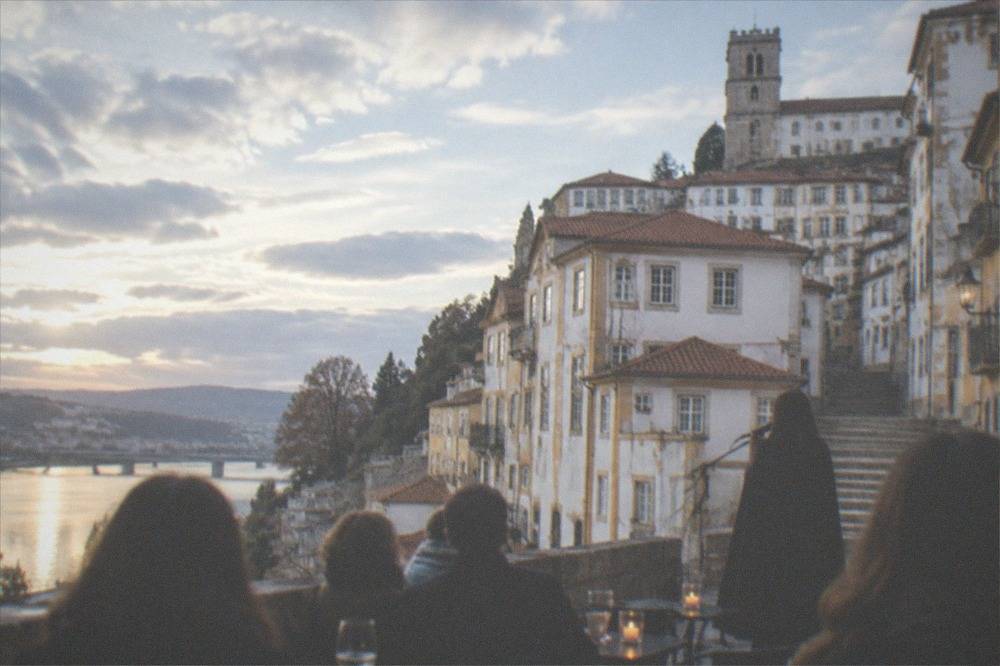
For a ticketed show, yes, book ahead: the venues are small, the evenings are popular in the tourist season, and a pre-booked seat is the only guarantee of hearing fado on a specific night. For restaurant fado nights, booking the table rather than the music is the practical move, since the music comes with the room. For street serenades there is nothing to book at all, because they are unscheduled by nature and tied to the academic calendar rather than to a box office.
The ticketed show on this site's roster, from $18 per person with a glass of port wine included, is the kind of evening that sells out first in summer and around the university's festival periods, and the operator's live listing shows current availability. A walking tour earlier in the day pairs naturally with a fado evening: the coimbra-top-attractions-walking-tour option, from $5.85 per person and rated 5 from 151 reviews over two and a half hours, covers the old town's landmarks and ends with time to spare before a night show.
Visitors travelling on a thinner budget should also know about the free, tip-based walking tours that several local guides run on the GuruWalk platform. The Essential Free Tour with the Coimbra Guide, rated 4.99 from 168 reviews over two hours, is one example, and on GuruWalk the walk itself is free with tips at the end. It is not this site's product and carries no price, which is exactly why it can be recommended without a number.
| Way to hear fado | Booking needed | Best for | Typical commitment |
|---|---|---|---|
| Ticketed fado show with port wine | Yes, book ahead | First-time visitors, guaranteed evening | 50 minutes |
| Restaurant or bar fado night | Book the table | A long dinner with music | An evening |
| Street serenade | Nothing to book | Lucky encounters, atmosphere | As long as it lasts |
| Free tip-based walking tour with fado context | Reserve a spot on GuruWalk | Budget travellers, daytime orientation | About 2 hours |
When Is the Best Time of Year to Hear Fado in Coimbra?
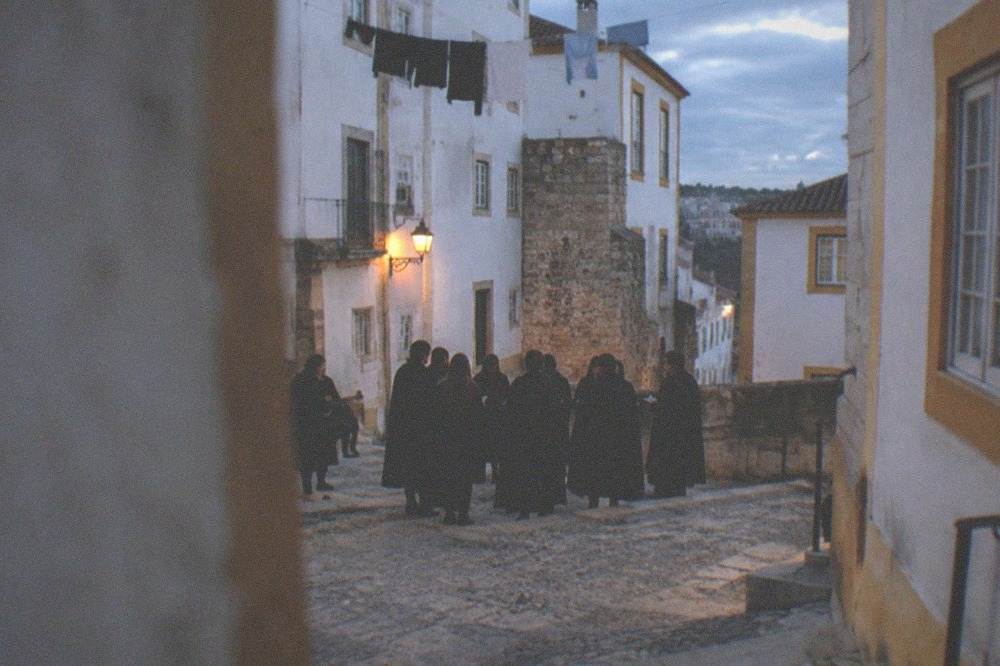
The best time to hear fado de Coimbra is May, when the student traditions that produced the form are at their most visible, and the shoulder months of late spring and early autumn, when the weather still allows the outdoor serenades that make Coimbra's version distinctive. Summer delivers the most ticketed shows but the thinnest student presence, since the university's about 31,000 students are largely away, and winter offers the quietest, most local rooms.
The calendar matters here more than in most cities, because fado de Coimbra is a student tradition and the students are seasonal. May is the month of the academic festivals, when the city fills with capes and the serenade tradition is at its most alive. The University itself closes its visitor circuit on 24 May, and Mosteiro de Santa Cruz suspends visits on the Cortejo da Queima das Fitas, a moveable Sunday, which tells a visitor exactly when the student calendar peaks. The guides/weather/ guide covers the climate in detail.
The official IPMA climate normals for the Coimbra / Bencanta station, the city's own station, show why the shoulder months work for outdoor music. September's mean maximum of 27.4 C is actually higher than June's 26.3 C, and September still only averages 49.9 mm of rain against October's 114.5 mm, so the evenings stay warm and dry after the summer crowds have gone. July, at 8.9 mm of rain, is effectively dry but hot, with a mean maximum of 28.5 C.
| Month | Mean max C | Rain mm | What it means for a fado evening |
|---|---|---|---|
| May | 23.3 | 64.7 | Student festivals, serenades at their peak |
| June | 26.3 | 26.0 | Warm nights, thinning student presence |
| July | 28.5 | 8.9 | Hot and dry, most ticketed shows running |
| September | 27.4 | 49.9 | Warm evenings, crowds gone, serenade weather |
| October | 23.2 | 114.5 | The autumn rain arrives, indoor venues |
| December | 15.6 | 111.3 | Quiet, local, indoor rooms |
How Does Fado Fit Into a Day in Coimbra?
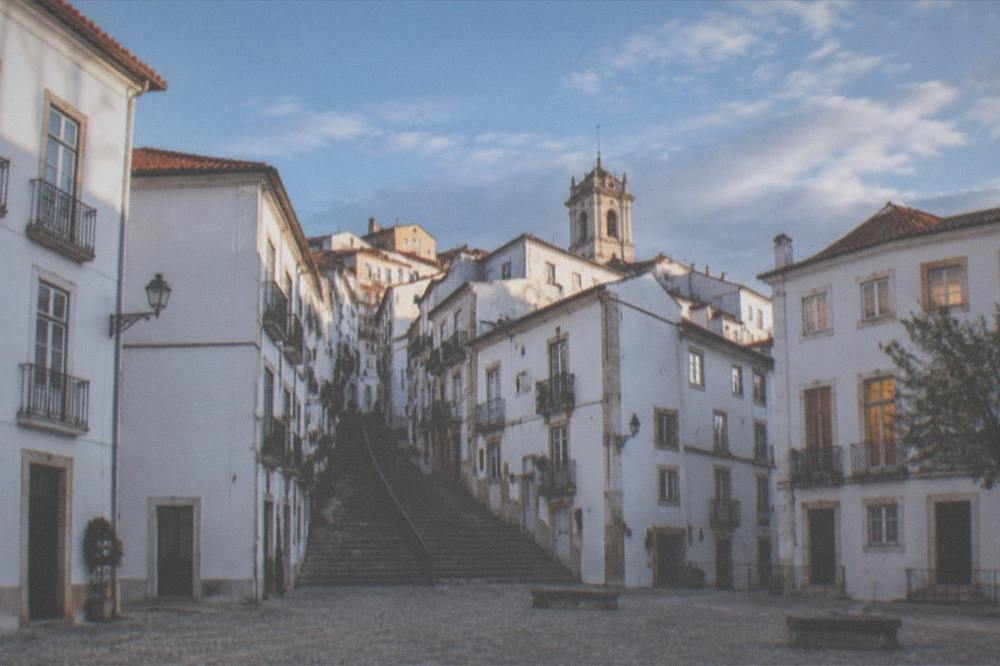
Fado fits best as the closing act of a full day: the university hill and its monuments in the morning, the Baixa and the riverside through the afternoon, dinner in the old town, and a 50-minute show as the evening's final event. Because the classic ticketed show is short, it leaves room for a walk afterwards through the lamplit lanes of the Alta, and because serenades are unscheduled, a visitor who spends the evening outdoors in the old town sometimes gets one for nothing.
A practical day built this way is covered in detail by the things-to-do-in-coimbra/ overview, but the shape is simple. The morning belongs to the University of Coimbra's hill, the Paço das Escolas, and the monuments around it, including the attractions/sao-miguel-chapel/ and the attractions/arco-de-almedina/ gate that leads down into the lower town. The afternoon belongs to the Baixa, the attractions/santa-cruz-monastery/, the burial church of Portugal's first two kings, and the riverside.
The evening then closes with music. A visitor who wants the guaranteed version books the ticketed show; a visitor who wants the atmospheric version dines slowly in the old town and keeps an ear out. The two are not exclusive, and the best-planned evenings use the show as the anchor and the walk afterwards as the bonus.
| Time of day | Where | What it adds to the fado evening |
|---|---|---|
| Morning | Paço das Escolas and the university hill | The setting the songs are about |
| Afternoon | Baixa, Santa Cruz, the riverside | The streets the serenades pass through |
| Early evening | Dinner in the old town | The port wine appetite |
| Night | Ticketed fado show or serenade hunt | The tradition itself |
| Late | A walk through the lamplit lanes | The city the songs name |
What Should You Wear, and Do You Tip at a Fado Show?
Wear smart casual clothes and dark colours if you want to blend in, since a Coimbra fado room is a formal space by bar standards, and tip modestly if the show is tip-based, while a fully ticketed show needs no tip beyond rounding a drinks bill. There is no dress code enforced anywhere, but shorts and beachwear read as a misunderstanding of the room, and the singer's black cape sets the tone the audience is expected to respect.
The detail behind both answers lives on this site's dedicated pages. The answers/what-to-wear-to-a-fado-show/ page covers dress in full, and the answers/do-you-tip-at-a-fado-show/ page settles the money question. The short practical version: for a ticketed show such as the 50-minute evening with port wine included, the ticket is the payment and nothing more is expected. For a free, tip-based walk on GuruWalk, where the guide explains the tradition rather than performs it, a tip at the end is the entire economy of the exchange.
One more convention is worth carrying into the room: the silence. A visitor who knows that a Coimbra fado audience does not clap mid-song, does not sing along and does not talk over the guitars will fit any venue in the city without a single word of instruction.
A Coimbra Evening Beyond the Fado Rooms
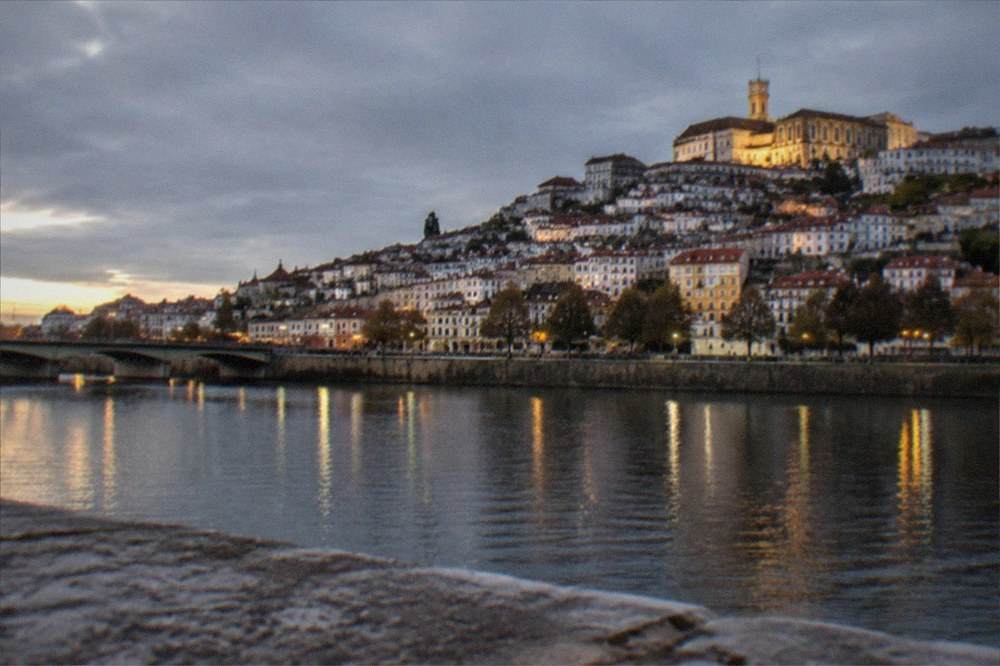
An evening of fado does not have to be the whole night, and the city's small size makes it easy to extend in either direction. The schist villages of the Lousã mountain make a striking daytime contrast to the black-cape formality of the show, and the river offers a water-level view of the city the songs are written about, so a well-planned Coimbra day can end with the fado room and still have room for both.
The roster of tours on this site covers the pieces, and the evening itself stays the anchor.
The schist villages of the Lousã mountain, about which this site keeps a full day-trip guide, are the roster's most popular countryside contrast, and a jeep tour through Talasnal and Gondramaz, from $98 per person and rated 5 from 47 reviews over four hours, is the best-reviewed way to see them. It is a daytime commitment, but it returns visitors to the city in time for a show.
The river is the other evening anchor. A traditional Barca Serrana boat trip on the Mondego, from $15 per person and rated 4.6 from 171 reviews over 50 minutes, gives a water-level view of the city the songs are written about, and the timing of a dusk sailing followed by a night show is one of the more complete Coimbra evenings a visitor can assemble from this site's roster.
The guides/map/ guide ties the geography together for anyone planning the walk between venues, and the answers/where-is-the-best-place-to-see-fado-in-portugal/ page answers the country-wide version of the question this page answers for one city.
Common Questions About Fado de Coimbra
What is fado de Coimbra?
Fado de Coimbra is the Coimbra, Portugal variant of Portuguese fado, sung almost exclusively by men, grown out of the student tradition of the University of Coimbra and performed in the black academic cape. It differs from Lisbon fado in posture, voice, repertoire and audience etiquette, and it is heard both in venues and as outdoor street serenades.
What is the most famous fado song?
The most famous song of the Coimbra tradition is "Coimbra tem mais encanto", known internationally as "April in Portugal". The wider question, including the Lisbon repertoire, is answered on this site's dedicated page about the most famous fado song.
Is fado Portuguese or Brazilian?
Fado is Portuguese. The Coimbra and Lisbon styles are both Portuguese traditions, and the question is settled in full on this site's page on whether fado is Portuguese or Brazilian.
Do you tip at a fado show?
For a fully ticketed show, no tip is expected beyond rounding a drinks bill. For a free, tip-based event, a tip at the end is the whole economy of the exchange. The detail is on this site's page about tipping at a fado show.
What does fado mean in Portugal?
The word is bound up with saudade, the Portuguese sense of longing, and the Coimbra version adds its own layer: the student's farewell to the city and to student days. This site's page on what fado means in Portugal covers the word in depth.
Can you hear fado in Coimbra without a ticket?
Yes. Street serenades are unscheduled outdoor performances tied to the student calendar, and restaurant fado nights come with the table rather than a separate ticket. A ticketed show remains the only guaranteed option on a specific night, and venue details must come from each venue itself since none were verified for this guide.
Fado de Coimbra is a tradition you can plan for but never fully schedule, and that balance is its charm: book the show for the certainty, then leave the rest of the evening open for the lamplit lanes of the old town, where the city's student singers have carried the same songs for generations.