Coimbra Train Stations: A and B
Coimbra, the university city on the River Mondego in central Portugal, has two railway stations with confusingly similar names. This guide explains what is officially confirmed about each, how to get from them into the old town, and what your bus ticket costs once you arrive.
Short answer
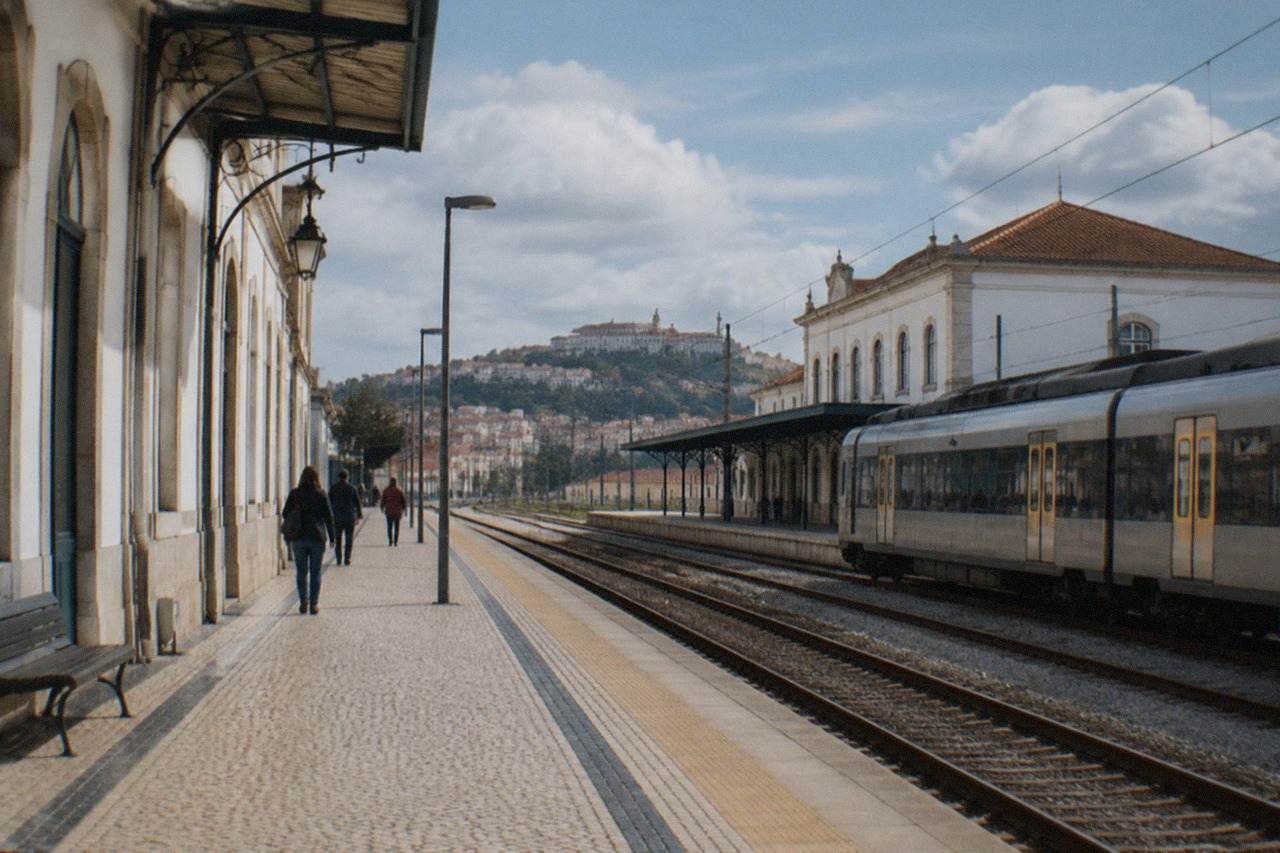
Coimbra has two stations, Coimbra-A and Coimbra-B, in different parts of the city and run by CP, Comboios de Portugal. The two names are not interchangeable, and the stopping pattern of each service is published by CP itself, which is the only place to confirm which train calls where and how the two stations connect.
Coimbra, the university city on the River Mondego in central Portugal, is a stop on the country's main north-south railway line, and it has two stations whose names differ by a single letter. That letter causes more confusion for arriving visitors than almost anything else about transport in this city, and a good deal of what is written about it online is either outdated or invented. This page sticks to what is confirmed: the two stations exist, they are in different places, the operator is CP, Comboios de Portugal, and CP's own passenger site is where the stopping pattern of any given train, and the connection between the two stations, has to be checked. Everything else here, the bus fares from the 2026 SMTUC tariff, the climate from IPMA's 1991 to 2020 normals, the ticket prices of the sights you will walk to, comes from primary sources, and where something is not confirmed, this guide says so instead of guessing.
Which Coimbra Train Station Should You Arrive At?
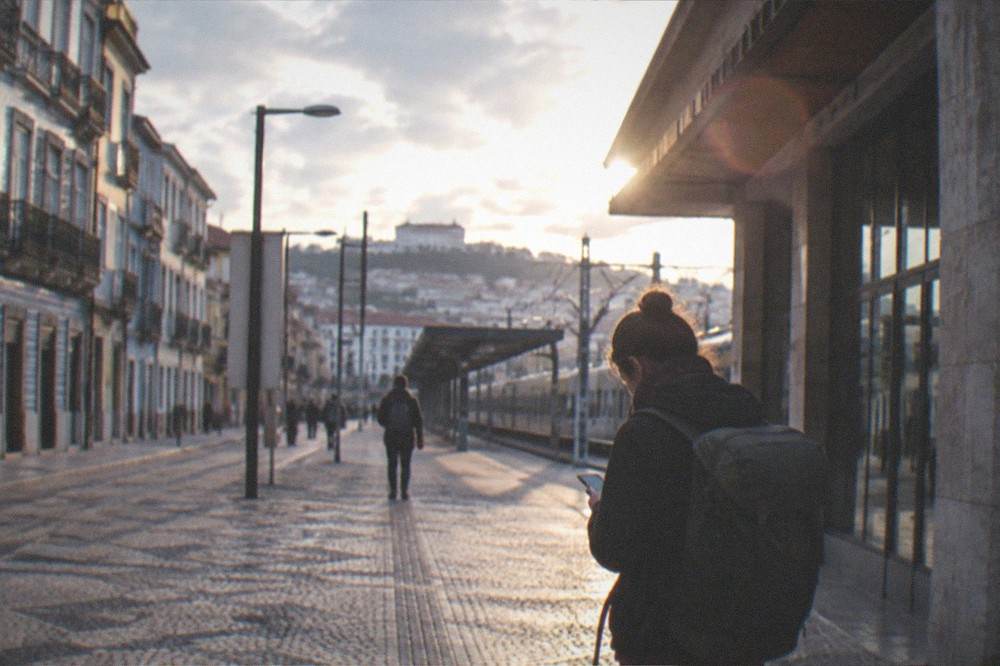
Coimbra has two railway stations, Coimbra-A and Coimbra-B, run by the national operator CP, Comboios de Portugal, and they are in different parts of the city, so which one you arrive at depends on which train you are on, not on which one you prefer. CP publishes the stopping pattern of every service on its own passenger site, and that is the only reliable place to confirm whether your train calls at Coimbra-A, Coimbra-B, or both, because no other source is kept current.
The honest starting point is this: a great deal of confident detail circulates about these two stations, and most of it cannot be verified. Writers routinely state which categories of train call at which station, how far apart the two are, and, the single most repeated claim, whether the shuttle between them is free for holders of a long-distance ticket. None of that is confirmed on CP's own pages in a form this site could verify, and a claim about a fare or a timetable that cannot be traced to the operator is a claim that will eventually be wrong on the page carrying it. The difference between Coimbra and Coimbra-B train stations is real, but the details belong to CP.
What can be said with certainty is structural. Two stations exist. They are in different places, and the difference matters because Coimbra is a city of hills: the university sits high above the river, the Baixa, the low town, sits between the two, and arriving at one station rather than the other changes the first twenty minutes of your visit. CP's passenger site is the place to check your specific service, and the general advice is simple and safe: before travelling, look up your own train, on the day, on the operator's own pages.

How do You Get from Coimbra's Stations Into the City Centre?
Coimbra's city buses, run by the municipal operator SMTUC, connect the stations with the centre, and the 2026 tariff in force since 1 April 2026 lists a driver-bought single at 2.00 EUR, a pre-purchased trip in a pack of three or more at 0.90 EUR, and each single valid for 90 minutes on the urban network with transfers included within that window from first validation. The same tariff confirms SMTUC tickets are valid on the Metro Mondego network as well.
That 90-minute validity is the practical gem of the whole tariff. It means a single ticket bought at a station is not a single ride: it is a window. Board, transfer to a second line that climbs toward the university hill, and the whole journey is one ticket, provided the transfers happen inside the validity period counted from first validation. The tariff document itself is headed with intermodal titles and repeatedly marks them as valid on both the SMTUC and Metro Mondego networks, which reflects a real change in this city: a new bus rapid transit network has been opening in stages since 2025, and your ordinary city bus ticket works on it.
The pre-purchase saving is worth planning around. At 2.00 EUR from the driver against 0.90 EUR pre-purchased in a pack of three or more, the difference is more than half, and the tariff also lists a support card, the Viagem ConVIDA, at 0.50 EUR for occasional and pre-purchased tickets, and a large-family one-day ticket covering seven trips at 1.00 EUR. For a visitor making one or two journeys the driver ticket is the realistic option; for anyone staying a few days and moving around, the arithmetic changes quickly.
| SMTUC ticket type | Price (2026 tariff) | Validity |
|---|---|---|
| Single, bought from the driver | 2.00 EUR | 90 minutes on the urban network, transfers included from first validation |
| Pre-purchased single, pack of 3 or more | 0.90 EUR per trip | Same 90-minute network validity |
| Viagem ConVIDA support card | 0.50 EUR | Required for occasional and pre-purchased tickets |
| Large-family 1-day ticket | 1.00 EUR | Seven trips |
| MOVE-C support card | 3.00 EUR youth, 6.00 EUR others | Card for concessionary travel |
| Fare evasion fine | 120.00 to 350.00 EUR | Penalty range set in the tariff |
One warning that belongs on any transport page about this city: the funicular lift between the Baixa and the upper town, the Elevador do Mercado, appears in the 2026 tariff under a combined pass line, but the tariff gives it no standalone single-ride price, so this site does not print one. The getting around guide covers the lift in the wider context of the city's hills.
Once you are in the centre, the walking begins, and Coimbra rewards it. The top attractions walking tour is the low-commitment way to convert an arrival into an orientation: two and a half hours, from 5.85 per person, rated 5 from 151 reviews on the operator's live listing, and it covers the ground between the river and the university hill that a station arrival dumps you at the edge of.
Is Coimbra, Portugal, Walkable Once You Leave the Station?
Coimbra's historic core is compact and genuinely walkable, but it is a city of two levels: the Baixa, the low town along the River Mondego, is flat and dense, while the Alta, the upper town around the University, sits on a hill reached by steep lanes and stairways, so a visit on foot means planning the climb once rather than repeatedly. The University's own visitor pages state the Paço das Escolas circuit opens daily from 09:00, to 20:00 in summer and 17:30 in winter.
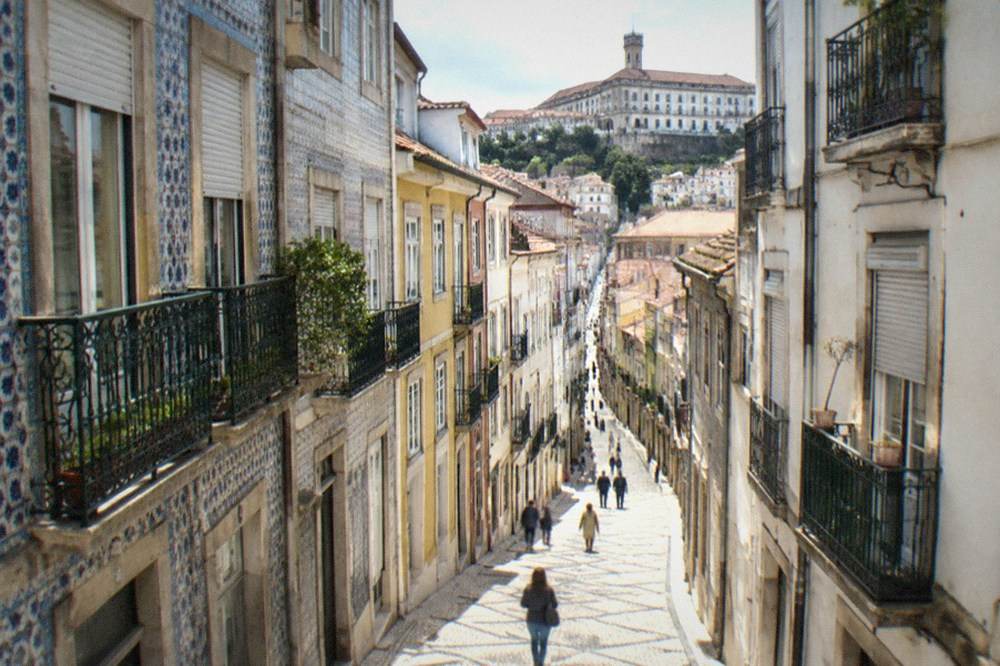
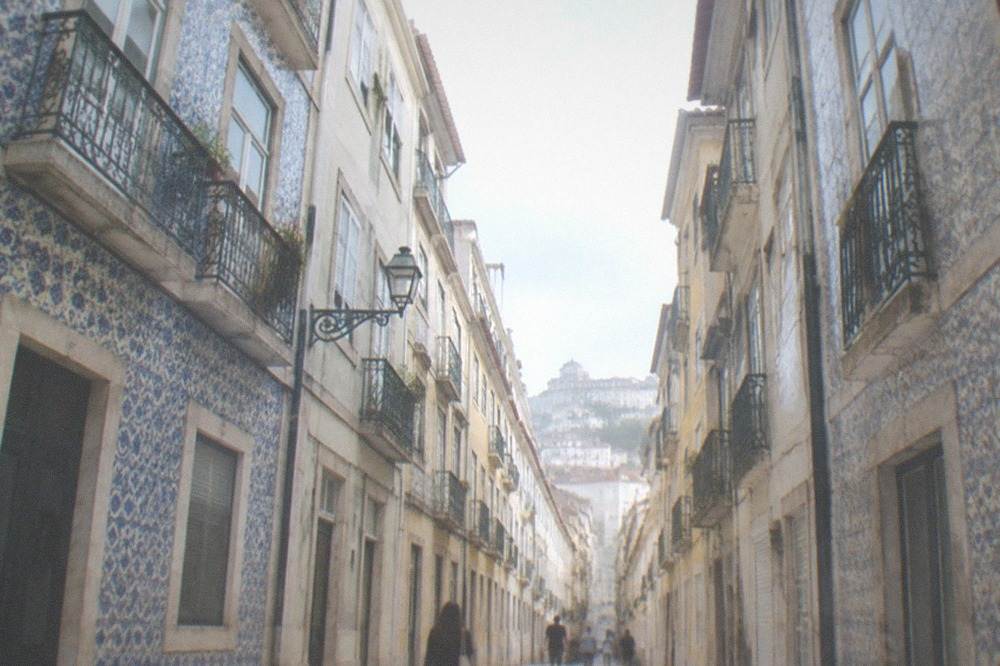
The geography is the whole story of a Coimbra visit. Arrive, drop luggage, and the flat Baixa, with the Praça do Comércio, the old cathedral district below the hill and the riverside park along the Mondego, is all within an easy stroll of the centre. The Alta is the reward and the effort: the university's Paço das Escolas, the Joanina Library and the Sé Velha all sit at or near the top, and the lanes that connect the levels, like the historic Arco de Almedina gate, are steep, cobbled and, in the wet months, slick. A self-guided walking route that does the climb in one deliberate push is the pattern most walkers settle on.
For visitors who would rather not navigate the hill and the ticketing rules at the same time, a guided option makes sense. The Best of Coimbra private walking tour with a late university visit pairs the old town with a university visit timed for the end of the day, from 81.95 per person, rated 4.8 from 72 reviews on the operator's listing, running two to three hours. Because it is private, the pace up the hill is yours.
What Do the Sights Near Coimbra's Stations Cost to Enter?
The headline sights within walking reach of Coimbra's centre publish their own prices, and the 2026 figures are: the University of Coimbra's combined ticket with the Joanina Library at 16.50 EUR adult, the University and Science Museum ticket without the library at 12.50 EUR, the Sé Velha at 3.00 EUR individual, and Mosteiro de Santa Cruz at 5.00 EUR individual, all per the venues' own published pages for the current season.
The University ticket deserves a moment of attention before any arrival, because of a rule that catches visitors out. The Joanina Library cannot be bought on its own: it exists only inside the 16.50 EUR combined ticket, and the University's own program page states that entries to the library are limited to 50 people every 20 minutes. The date and time printed on the ticket is the library slot specifically, entry outside that slot is refused, and the other spaces on the ticket remain valid for two days. Online purchase closes 20 minutes before the visit time. In summer, a traveller arriving at a station with no booked slot can genuinely be turned away at the library door, which is why the Joanina Library tickets guide exists.
One closure matters to anyone building an itinerary from a station arrival. The Museu Nacional de Machado de Castro, the national museum that sits above a Roman cryptoporticus of the mid-1st century, is closed for conservation work, and its own page on the national museums portal says so twice. No reopening date is published, and no current admission price is either, so it cannot be planned around.
| Sight | Adult price | Source detail |
|---|---|---|
| University of Coimbra combined ticket, with Joanina Library | 16.50 EUR | Valid 2 days except the fixed library slot; library entries capped at 50 people every 20 minutes |
| University of Coimbra ticket, without Joanina Library | 12.50 EUR | Royal Palace, St Michael's Chapel, Chemistry Laboratory, Academic Museum, valid 2 days |
| Sé Velha de Coimbra | 3.00 EUR individual | Groups over 10 pay 2.50 EUR per person |
| Mosteiro de Santa Cruz | 5.00 EUR individual | Groups of 12 or more 3.50 EUR; visits suspended on the Cortejo da Queima das Fitas Sunday |
| Torre da Universidade | Closed | The University's own info page states the facility is closed |
| Museu Nacional de Machado de Castro | Closed for conservation work | No reopening date or current price published |
The Sé Velha, the Romanesque old cathedral, publishes summer hours of 09:30 to 18:30 and winter hours of 09:30 to 17:30, Sundays from 11:00, through the Unidade Pastoral Aeminium, which manages it. Mosteiro de Santa Cruz, the burial church of Portugal's first two kings, runs 09:30 to 16:30 with a separate Sunday schedule. Both are inside the walkable core, no bus needed from the centre.

Can You Day Trip by Train from Coimbra?
Yes, Coimbra sits on the main railway line through central Portugal, which makes it a practical base for day trips by train, and this site's own guides cover the routes to Porto and Lisbon in detail, but the specific journey times, fares and stopping patterns for any service must be checked with CP, Comboios de Portugal, because this build could not verify them from the operator's own pages.
The routes are real and well-trodden. The Porto to Coimbra guide and the Lisbon to Coimbra guide cover the two arrivals most visitors make, and the most popular short hop north is the run to Aveiro, the lagoon city on the coast. For travel onward out of Portugal entirely, the options east and north into Spain are covered in this site's onward travel pages. What none of these pages will do, and what no page on this site does, is print a CP timetable figure that the operator's own site has not confirmed in a verifiable form.
The reason is worth being transparent about, because it is exactly the kind of detail a traveller most wants. CP's website serves soft error pages: a station URL can answer with a normal status code while the page body says "Page not found", which means an automated check reports a live page where there is none. Any journey time, fare or platform detail that a writer pulls from a page like that is invented by the writer, not published by the operator. So the standing advice on this site is: the two stations exist, CP runs them, and CP's own passenger site is where your specific train's stopping pattern and the connection between Coimbra-A and Coimbra-B must be confirmed, on the day you travel.
For day trips that leave the rails behind, guided tours fill the gap, and Coimbra's roster is unusually strong for a city of this size. The Conímbriga and the Roman Tour runs four hours from 105.37 per person, rated 4.8 from 136 reviews, to the Roman town of Conímbriga about 16 km south in the parish of Condeixa-a-Velha, in the municipality of Condeixa-a-Nova, where the national museum's own page lists a combined ticket of 10.00 EUR covering the museum and the ruins together, open daily 10:00 to 18:00. Conímbriga is open seven days a week, which makes it the reliable Monday option when the national monuments that close on Mondays are shut.
When Is the Best Month to Arrive in Coimbra by Train?
IPMA's 1991 to 2020 climate normals for the Coimbra / Bencanta station, the city's own station 3 km from the centre, show that September is the quiet recommendation: its mean maximum of 27.4 C is actually higher than June's 26.3 C, it carries only 49.9 mm of rain, and the autumn rains do not arrive properly until October, when the monthly total jumps to 114.5 mm. August, not July, is the hottest month, averaging 10.9 days above 30 C.
The table below is the full monthly picture from the official normals, version 1.0 of 2024, and it rewards a careful read, because two of the things people assume about Portuguese weather are backwards here. September is both hotter and wetter than June on these figures, 27.4 C against 26.3 C on the mean maximum and 49.9 mm against 26.0 mm of rain, so any guide calling September "drier than June" is publishing an inversion. What makes September the good month is different: the crowds have gone, the temperatures hold, and the genuinely wet season, October at 114.5 mm and November at 121.5 mm, has not started. November is the wettest month of the year, marginally ahead of October and January.
| Month | Mean max C | Mean min C | Rain mm | Days 1mm+ rain | Days max 30C+ |
|---|---|---|---|---|---|
| Jan | 15.0 | 5.2 | 113.5 | 11.3 | 0 |
| Feb | 16.4 | 5.5 | 81.0 | 8.6 | 0 |
| Mar | 19.1 | 7.8 | 75.4 | 9.4 | 0 |
| Apr | 20.5 | 9.4 | 84.6 | 10.6 | 0.7 |
| May | 23.3 | 11.8 | 64.7 | 8.5 | 3.5 |
| Jun | 26.3 | 14.2 | 26.0 | 3.7 | 6.2 |
| Jul | 28.5 | 15.6 | 8.9 | 1.7 | 8.9 |
| Aug | 29.1 | 15.7 | 14.8 | 2.2 | 10.9 |
| Sep | 27.4 | 14.1 | 49.9 | 5.2 | 7.8 |
| Oct | 23.2 | 11.9 | 114.5 | 10.3 | 2.0 |
| Nov | 18.0 | 8.3 | 121.5 | 11.5 | 0 |
| Dec | 15.6 | 6.2 | 111.3 | 11.1 | 0 |
July, at 8.9 mm of rain across the whole month, is effectively dry, and the record extremes at the same station run from 41.2 C on 7 August 2016 down to -4.3 C on 20 January 2017. For what the weather means for the rest of the year, the Coimbra weather guide breaks it down month by month.
One scheduling fact belongs beside the climate table, because it intersects with the University ticketing described above. The University closes its visitor circuit on 24 May, and Mosteiro de Santa Cruz suspends visits on the Cortejo da Queima das Fitas, a moveable Sunday, because the student festival parade passes through the city. May is otherwise a lovely month here, 23.3 C mean maximum and 64.7 mm of rain, but a late-May arrival can find the two most visited interiors shut for the day. The Queima das Fitas guide covers the festival and its verified closures.
Where Should You Stay After Arriving at a Coimbra Station?
The Baixa, the low town between the river and the university hill, is the practical choice for most visitors arriving by train, because it is flat, close to the centre, and the climb to the University becomes a deliberate outing rather than a daily commute, while the Alta suits travellers who want the views and do not mind the lanes. Both districts are covered in detail, with hotel picks, in this site's dedicated where-to-stay pages.
The trade-off is leg-shaped. Staying low means every station arrival, restaurant run and riverside walk starts flat, and the hill is climbed once per day at most, often by the Elevador do Mercado or a bus. Staying high means the opposite: the views over the Mondego and the red rooftops are yours every morning, and every dinner in the Baixa ends with a climb. Both districts are compared properly in the where to stay guide, and the hotel picks sit in the best hotels guide.
There is also a small, honest cost to factor into any stay. Coimbra charges a municipal tourist tax of 1.00 EUR per guest per overnight stay, capped at three consecutive nights per person, applying from age 16, paid directly to the accommodation at check-in or check-out, and charged all year with no low-season exclusion. The municipality's own worked example: a couple staying seven nights pays 3.00 EUR each, 6.00 EUR total. A proposal to raise the tax to 2.00 EUR was approved by the municipal executive in July 2026, but the published rate on the municipality's own tax pages remains 1.00 EUR, and this site prints the published rate, not the proposal.
What Should You Do on Your First Evening in Coimbra?
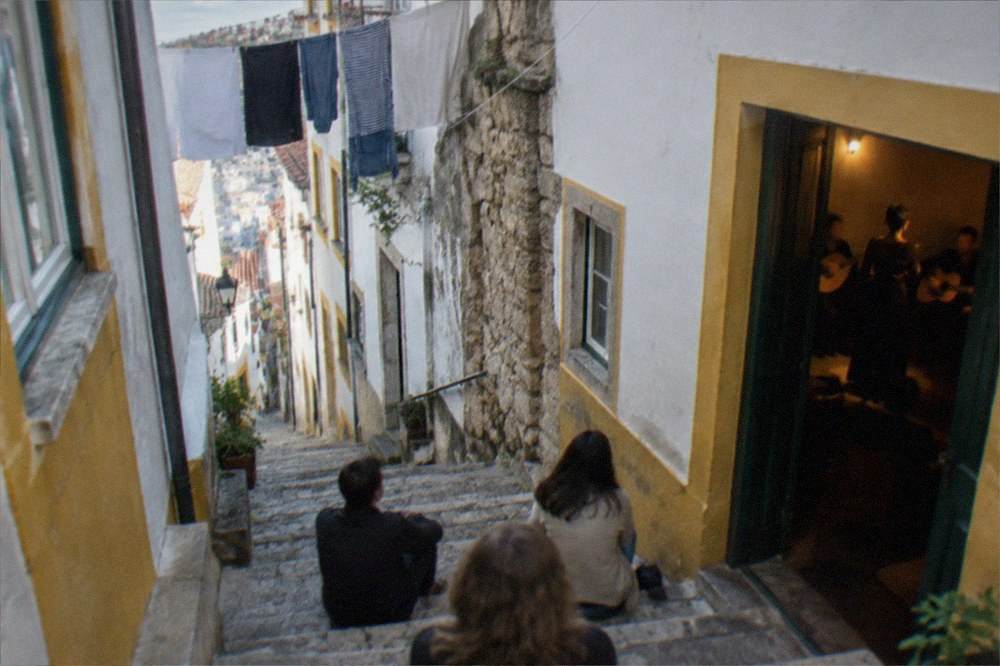
Two Coimbra experiences slot naturally into the hours after a train arrival: a live fado show, with the city's own distinct, male-led academic fado tradition, from 18 per person for a 50-minute show with a glass of port wine included, rated 4.7 from 1,234 reviews on the operator's listing, or a 50-minute Mondego river cruise with city views from 11 per person, rated 4.2 from 43 reviews, both bookable through the operator's live listings.
Coimbra's fado is not Lisbon's. The city's tradition grew out of the university, the singers perform in the dark academic capa and batina, and the fado de Coimbra guide explains where and how to hear it properly. A show is also the perfect station-arrival evening: it is short, central, indoors, and it does not depend on daylight or on your legs being fresh for a hill climb.
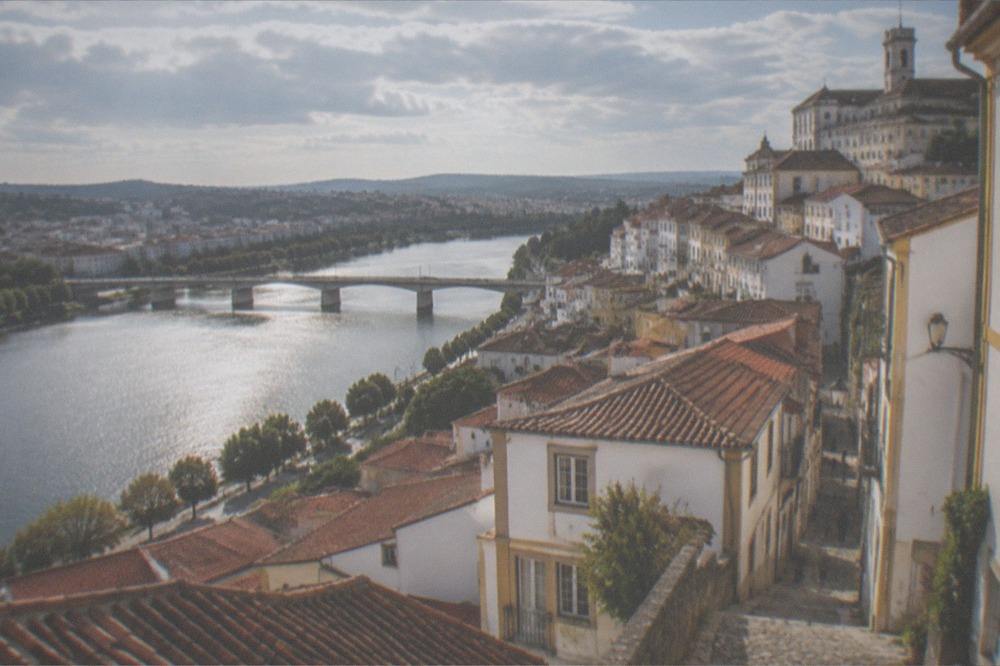
The river cruise is the gentler alternative, and it pairs well with a first evening because it puts the whole city profile in view at once: the university on its hill, the old town stacked below it, the Mondego running wide beneath. The Coimbra Mondego river cruise with city views runs 50 minutes from 11 per person. For the full menu of evenings, the things to do in Coimbra page collects the options, and the site's one-day itinerary sequences a first visit hour by hour.
For a stay of two or three days, the site's two-day and three-day itineraries build outward from the core, and the day trips pages cover what lies beyond the rail line: the schist villages of the Lousã mountain, the Bussaco forest, Tomar's Convent of Christ and Fátima, all of which have guided tours from Coimbra in the roster and none of which depend on you deciphering a rural bus timetable.
What Should You Check Before You Travel to Coimbra?
Three things decide the shape of a Coimbra arrival: your train's stopping pattern, checked on CP's own passenger site because the two stations are in different places; your Joanina Library slot, because the 16.50 EUR combined ticket prints a fixed 20-minute entry time capped at 50 people and refuses entry outside it; and the seasonal hours of the University circuit, 09:00 to 20:00 in summer and 09:00 to 17:30 in winter, per the University's own visitor pages.
The pattern generalises: in Coimbra, the official source is always worth the extra minute, because the confident secondary sources are where the errors live. The most common error in guides to this city is the claim that Coimbra is a UNESCO World Heritage city. It is not. UNESCO inscribed "University of Coimbra, Alta and Sofia" in 2013, under criteria (ii), (iv) and (vi), a property of two components inside the old town: the university hill and the college street below. The city as a whole carries no inscription, and a traveller who plans around "the heritage city" will be planning around a category that does not exist.
The second check is seasonal. The University's published closing dates in the current cycle include 24 and 25 December 2026, 31 December 2026 and 1 January 2027, 24 May and 4 October, and the University warns that religious, official and academic ceremonies can interrupt the normal tourist circuit. The third is the weather table above: an October arrival packs for 114.5 mm of rain, a July arrival for 8.9.
Common Questions About Coimbra Train Stations
What is the difference between Coimbra and Coimbra-B train stations?
Coimbra has two stations with confusingly similar names, Coimbra-A and Coimbra-B, and they are in different parts of the city. Which one your train calls at is published by CP, Comboios de Portugal, on its own passenger site, which is the only place to confirm the stopping pattern and the connection between the two for your specific service. This site does not print which trains call where, because that detail could not be verified from the operator's own pages.
Is the shuttle between Coimbra-B and Coimbra-A free with a long-distance ticket?
That is the question every visitor asks and the one this site cannot answer from a verified source. The claim circulates widely, but it has to come from CP itself, and CP's own station pages could not be confirmed during this site's research. Check the fare conditions of your specific ticket on CP's passenger site before assuming a free transfer.
How do I get from the station to Coimbra city centre?
Coimbra's municipal buses, SMTUC, serve the city, and the 2026 tariff lists a driver-bought single at 2.00 EUR or a pre-purchased trip at 0.90 EUR in a pack of three or more, each valid 90 minutes on the urban network with transfers included. The same tickets are valid on the Metro Mondego network. The historic centre is also walkable, with the flat Baixa along the river and the university hill above it.
Is Coimbra a day trip from Lisbon or Porto?
Coimbra sits on Portugal's main north-south railway line, and day trips from both Lisbon and Porto are common. The specific journey times and fares must be checked with CP, Comboios de Portugal, for the date of travel. This site's guides to the routes from Lisbon to Coimbra and Porto to Coimbra cover what to do with the day once you arrive.
Do I need to book the Joanina Library before arriving in Coimbra?
Yes, in practice. The Biblioteca Joanina exists only inside the University's 16.50 EUR combined ticket, it admits 50 people every 20 minutes, and the time printed on the ticket is the fixed library slot, with entry refused outside it. Online purchase closes 20 minutes before the visit time, and in summer a traveller arriving without a pre-booked slot can be turned away. The rest of the ticket stays valid for two days.
Does Coimbra charge a tourist tax?
Yes, 1.00 EUR per guest per overnight stay, capped at three consecutive nights per person, applying from age 16 and paid directly to the accommodation at check-in or check-out, charged all year. A proposal to raise the rate to 2.00 EUR was approved by the municipal executive in July 2026, but the published rate on the municipality's own tax pages remains 1.00 EUR.
Every journey into this city ends the same way: at one of two stations with one letter between them, on the edge of a hill city that repays a little planning. Check your train on CP's own pages, book the library slot before you travel, and let the Coimbra Travel Guide take it from there.