Where to Stay in Coimbra, Portugal: The Best Areas for Every Trip
Coimbra, Portugal's university city on the River Mondego, splits cleanly into a hill, a downtown and a riverside, and the right choice among them depends on legs, budget and what you came to see.
Short answer
Stay in the Baixa for walkability and food, on the university hill for the monuments, or across the river in Santa Clara for quiet and lower rates. The 1.00 EUR per night tourist tax applies everywhere.
Coimbra, the university city on the River Mondego in central Portugal, is a small city with a sharply divided geography: a steep hill crowned by the University, a flat downtown of commercial streets below it, and a quieter residential bank across the river. Where you sleep changes the trip more here than in most Portuguese cities, because the climb between the Baixa and the university hill is real, the tourist tax applies to every bed in the municipality, and the two train stations sit in different places with confusingly similar names. This guide works through each area with verified figures only: what the municipality publishes, what the University's own visit pages state, and what the 2026 SMTUC tariff lists.
Which Area of Coimbra Should You Stay In?
Most first-time visitors should stay in the Baixa, the flat downtown between the river and the university hill, because it puts restaurants, the municipal market, the fado houses and the bottom station of the climb in walking range without a single steep street outside the door. The second-best choice is the Alta around the Paço das Escolas if monuments matter more than food, and the third is Santa Clara across the river if quiet and lower room rates matter most.
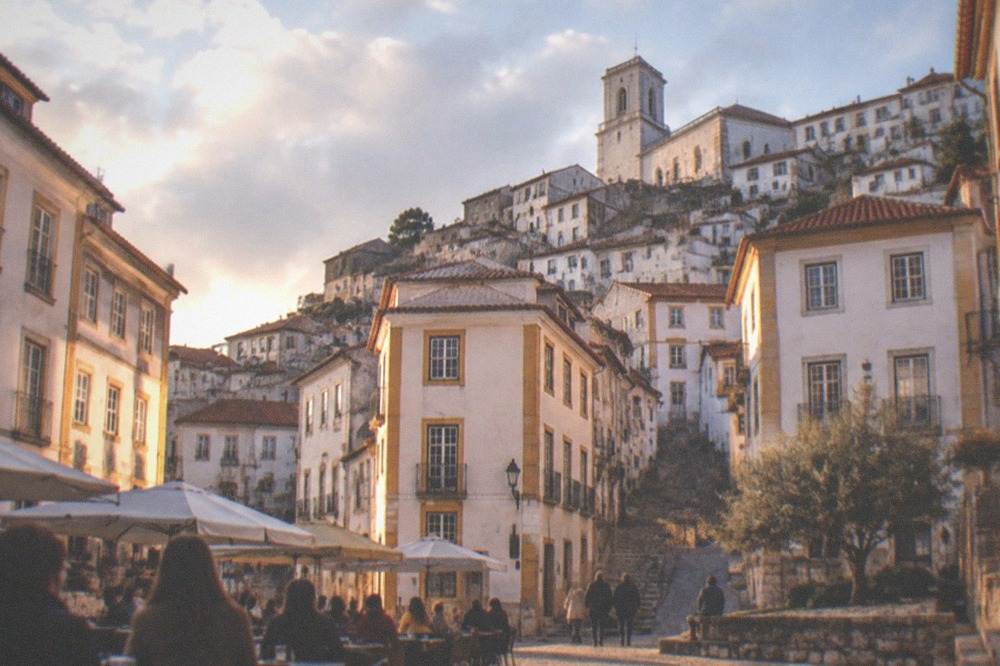
The Baixa is where the city's practical life happens. It is the flattest part of Coimbra, which matters: the old town climbs from the riverbank to the university in a series of staircased lanes, and a hotel at the top of that slope means climbing it several times a day. The Baixa also holds the commercial streets, the Praça do Comércio and the fado venues, and it sits between both rail stations rather than above only one of them.
The hill, the Alta, is the UNESCO-inscribed part. Strictly, the 2013 inscription covers "University of Coimbra, Alta and Sofia", the university hill and the college street, not the whole city, a distinction most guides get wrong. Sleeping up there puts you beside the Joanina Library, the Royal Palace and the Sé Velha, at the price of the climb.
| Area | Character | Best for | The trade-off |
|---|---|---|---|
| Baixa (downtown) | Flat commercial streets, restaurants, fado houses | First visits, food-led trips, anyone avoiding hills | A climb of several staircased lanes to reach the university monuments |
| Alta (university hill) | Monument core, the Paço das Escolas, the Joanina Library | Monument-led trips, photographers, short stays | Steep lanes in every direction; fewer dinner options up here |
| Santa Clara (across the river) | Quieter residential bank, the old Santa Clara monasteries | Longer stays, drivers, quiet sleepers | A river crossing for every sightseeing day; the funicular and bus lines serve it |
| Around Coimbra-B station | Practical transport hub north of the centre | One-night rail stopovers, early departures | Functional rather than charming; the historic core is a bus or taxi ride away |
| Outlying municipality | Suburban and hillside lodging, often with parking | Car-based itineraries, day trips to Conímbriga and the schist villages | A 2.00 EUR driver-bought SMTUC ticket or a pre-purchased 0.90 EUR trip for every journey in |
For a deeper look at the trade-offs, the companion piece on the best hotels in Coimbra covers properties by area, and the answers page on which neighborhood to choose works through the same decision for shorter stays.
Is the Baixa the Best Place to Stay in Coimbra for a First Visit?
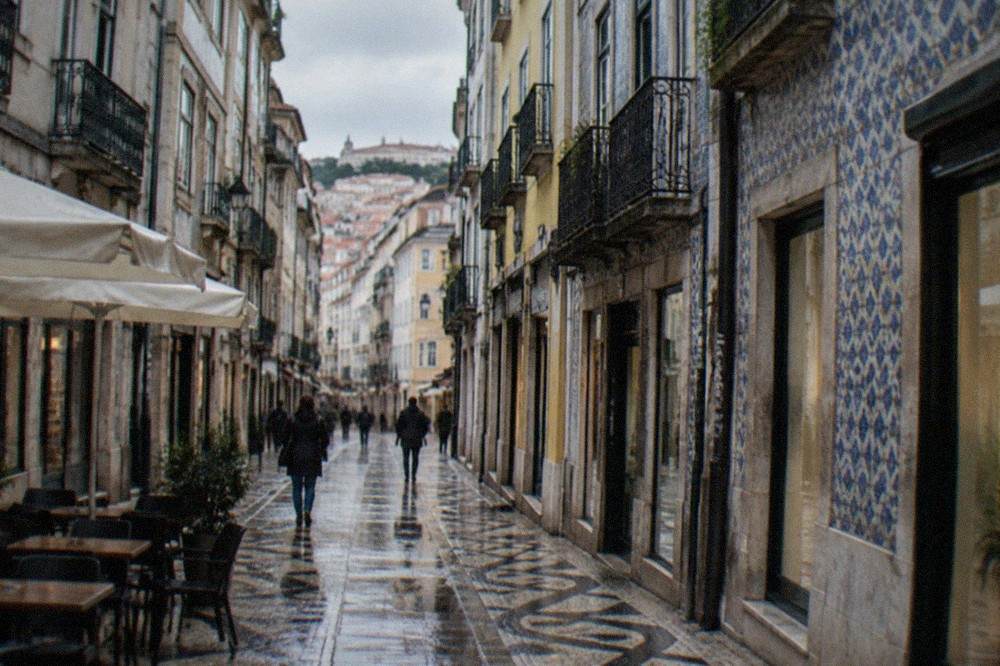
Yes, for most first visits the Baixa is the strongest base, because every part of a standard Coimbra day starts or ends there: the walk up to the Paço das Escolas begins at its lanes, the fado shows run in its venues, and the riverside park and the Santa Clara bank sit directly across the water. It is also the only main area where an entire day can pass without a serious hill.
The practical case is arithmetic. The University's own visit pages state that the combined ticket covering the Joanina Library, the Royal Palace, St Michael's Chapel and the science spaces costs 16.50 EUR for an adult and is valid for two days, with the Joanina slot fixed to a printed time. A Baixa base means you can walk up for your slot, come down for lunch, and go back up the next day for the rest of the two-day ticket without ever depending on a bus.
The Baixa is also where the city's food economy concentrates. The restaurant guide and the best restaurants roundup both centre on this district, and the fado venues covered in where to hear fado in Coimbra are a flat walk away rather than a descent. After a fado show ends late, the difference between a five-minute flat walk and a ten-minute downhill-and-uphill lane walk is the difference between a relaxed last drink and a chore.
One caution applies to the whole municipality wherever you book: the tourist tax. The municipality's own service portal publishes it as 1.00 EUR per guest per overnight stay, capped at three consecutive nights per person, from age 16, paid to the accommodation at check-in or check-out. It has been in force since 5 April 2023, it is charged all year, and it is never collected through a booking platform.
Should You Stay Up on the University Hill?
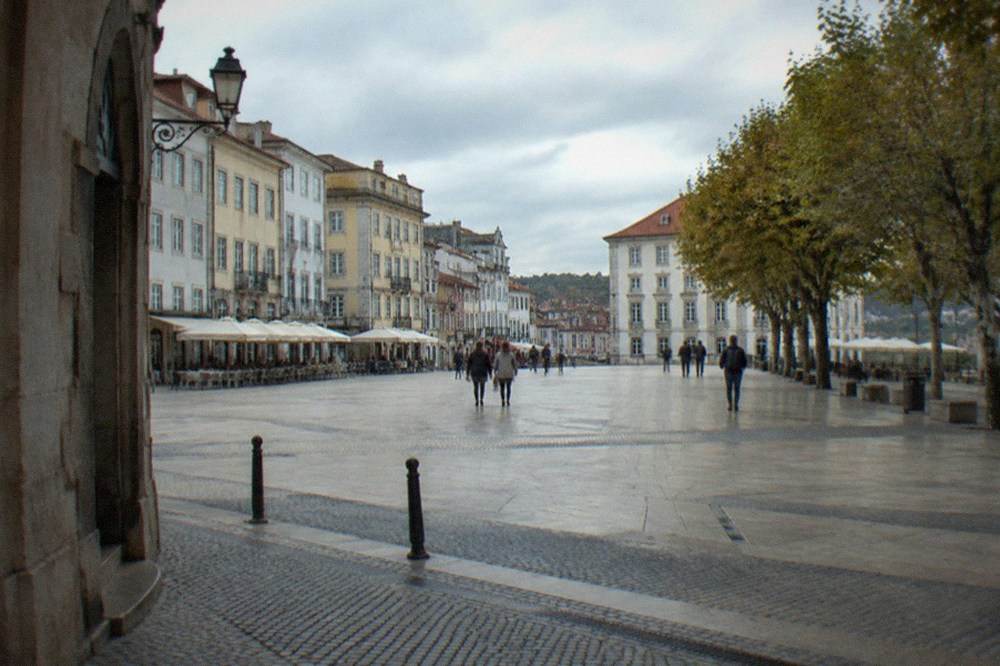
Staying on the Alta makes sense if the University itself is the reason for the trip, because the Paço das Escolas, the Joanina Library, the Capela de São Miguel and the Sé Velha are all within a few minutes' level walk of each other at the top of the hill, and the morning and evening light over the river from up there is the city's best-known view. The cost is the descent and the climb, every single time you want dinner.
The hill is the inscribed core. UNESCO's 2013 listing, reference 1387, covers two components: the Alta, the university hill with the Royal Palace of Alcáçova, the Joanine Library and the historic colleges, and Sofia, the college street below. The University publishes about 31,000 students on its own "University in Numbers" block, and during term the hill is a working campus, which means the atmosphere up here is genuinely academic rather than staged.
Two operational facts shape a hill stay. First, the University's own information page states that the clock tower, the Torre da Universidade, is closed; there is no ticket, no climb and no view from the top, so no hotel's "tower views" promise should be priced as access. Second, the University closes its visitor circuit entirely on 24 May and on 4 October, dates tied to academic ceremonies, and warns that religious, official and academic events interrupt the normal circuit at other times too.
If you do book on the hill, book the Joanina slot for the morning of your first full day. The University's own program page limits entries to 50 people every 20 minutes, the ticket cannot be bought without the full 16.50 EUR combined package, and entry outside the printed slot is refused. The Joanina Library tickets guide and the wider university tickets guide walk through the booking mechanics in detail.
Is Santa Clara, Across the River, a Good Place to Stay?
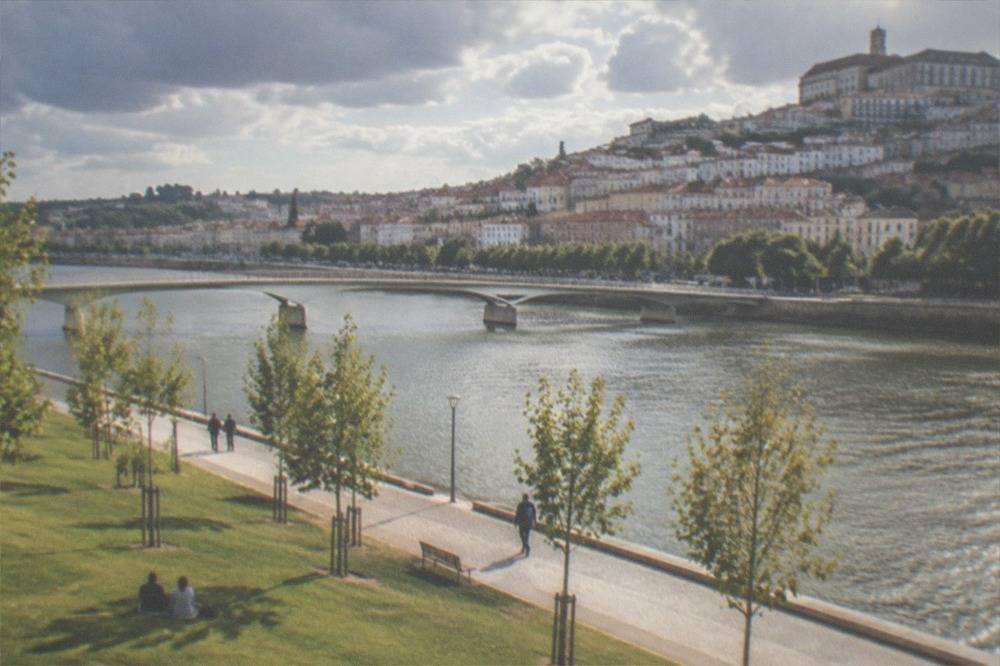
Santa Clara is the right choice for quieter, often cheaper lodging a river crossing away from the old town, and it suits longer stays, families with cars and anyone who wants to sleep in silence rather than at the foot of a student city's nightlife. The trade is structural: every sightseeing day starts with a bridge, a bus or the funicular, and the district's own headline monument has been closed for works.
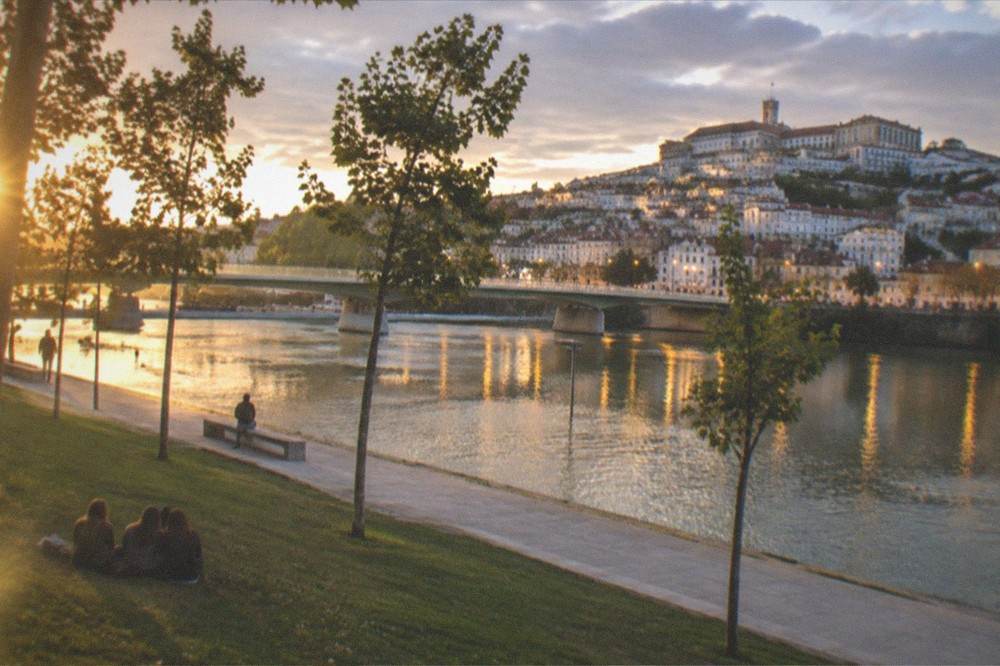
The bank holds the Santa Clara monasteries, the riverside parkland and the Portugal dos Pequenitos miniature park. On the monasteries, the honest position is caution: Mosteiro de Santa Clara-a-Velha has had no page at all on the national museums portal, consistent with a full temporary closure for requalification works from 20 October 2025, and this site publishes no price or hours for it until an official page returns. Check before you plan a day around it.
Portugal dos Pequenitos is the reliable family anchor on this bank. The venue's own horário page publishes 10:00 to 19:00 from 1 March to 15 October and 10:00 to 17:00 across the winter stretch, closed only on Christmas Day. Its price page renders client-side, so this guide publishes no euro figure for it; the venue's own ticket page is the place to check the current rate.
Getting across is cheap. The 2026 SMTUC tariff, in force since 1 April 2026, lists a driver-bought single at 2.00 EUR and pre-purchased trips at 0.90 EUR each when bought in packs of three or more, with one trip valid 90 minutes on the urban network including transfers. The same tariff is headed "intermodal titles, valid on the SMTUC and Metro Mondego networks", so those tickets also work on the new Metrobus system that has been opening in stages across the city.
Where to Stay in Coimbra on a Budget?
Budget stays cluster in two places: the outer Baixa streets and the Santa Clara bank, where room rates sit below the hill and the riverside core, and the savings compound because the city's fixed visitor costs are the same everywhere, so the only variable worth optimising is the bed. A pre-purchased SMTUC card at 0.90 EUR a trip keeps an outlying base connected for less than the 2.00 EUR on-board fare.
The fixed costs do not move with your address, and knowing them stops a cheap room from being undermined by surprise spending at the desk. The tourist tax is 1.00 EUR per night, capped at three nights. The University combined ticket is 16.50 EUR with the Joanina or 12.50 EUR without. The Sé Velha charges 3.00 EUR per person, Mosteiro de Santa Cruz 5.00 EUR, and the Conímbriga museum and ruins 10.00 EUR on one ticket. More of these guides are collected on Coimbra Travel Guide.
| Fixed cost, same wherever you sleep | Figure | Source detail |
|---|---|---|
| Tourist tax per guest per night | 1.00 EUR | Maximum 3 consecutive nights, from age 16, paid at the accommodation |
| University ticket with Joanina Library | 16.50 EUR | Timed slot, 50 people every 20 minutes, valid two days |
| University ticket without Joanina | 12.50 EUR | Same spaces, no library, valid two days |
| Sé Velha individual entry | 3.00 EUR | Group rate 2.50 EUR for more than 10 people |
| Mosteiro de Santa Cruz individual entry | 5.00 EUR | Burial church of Portugal's first two kings |
| Conímbriga museum plus ruins | 10.00 EUR | Open daily 10:00 to 18:00, closed 24 July among other dates |
| SMTUC single, bought on board | 2.00 EUR | Pre-purchased trips 0.90 EUR each, 90-minute validity |
The genuinely free layer is thick enough to build a budget day on. The free GuruWalk walks are the standout: Coimbra Highlights, History and Traditions by a certified guide, the Essential Free Tour of Coimbra, and Coimbra Tour: Downtown, Historic Center, University and Botanic Garden all run on a pay-what-you-want basis on the GuruWalk platform, and the free things to do guide lists the rest, from the riverside park to the old-town lanes.
How Does the Coimbra Tourist Tax Work?
Coimbra charges 1.00 EUR per guest per overnight stay, capped at three consecutive nights per person, from age 16, paid directly to the accommodation at check-in or check-out, never through a booking platform, and it has applied since 5 April 2023. A couple staying seven nights pays 3.00 EUR each, 6.00 EUR total, in the municipality's own worked example. A rise to 2.00 EUR was proposed by the municipal Executive on 21 July 2026 but is not the rate in force.
The details matter because they are unusual. The tax is charged all year, with no low-season exclusion, and it is not subject to VAT. The exemptions are narrow: stays for medical treatment, one companion of a medical traveller, and guests with a disability of 60% or more, each on production of a document. There is no exemption for business travel, internships, students or research fellows, which in a university city catches a lot of people out.
The municipality's own economics justify the tax with a figure few guides carry: 698,151 overnight stays recorded in Coimbra in 2025, against an estimated municipal cost of 3.49 EUR per overnight stay. The one-euro tax sits well below that cost, which is the stated basis for the two-euro proposal. Until the municipality's own tax pages say two euros, budget one.
When Is the Best Month to Book a Stay in Coimbra?
The best-value months to stay in Coimbra are September and early October, because IPMA's 1991 to 2020 normals for the Coimbra / Bencanta station show September with a mean maximum of 27.4 C, actually warmer than June's 26.3 C, on only 49.9 mm of rain, while the student crowds have thinned. The rain does not arrive in earnest until October, when the monthly total jumps to 114.5 mm, and November is the wettest month at 121.5 mm.
The table below is the planning spine for choosing dates. August is the hottest month, not July, averaging 10.9 days above 30 C, and July is effectively dry at 8.9 mm. Winter stays are perfectly workable, with January mean maxima of 15 C, but they come with 113.5 mm of rain and the shortest days.
| Month | Mean max C | Rain mm | Days with 1 mm+ rain | Verdict for a stay |
|---|---|---|---|---|
| March | 19.1 | 75.4 | 9.4 | Mild, green, changeable |
| May | 23.3 | 64.7 | 8.5 | Warm, but see the Queima warning below |
| June | 26.3 | 26.0 | 3.7 | Dry and bright, near peak rates |
| July | 28.5 | 8.9 | 1.7 | Effectively dry, hottest crowds |
| August | 29.1 | 14.8 | 2.2 | Hottest month, 10.9 days above 30 C |
| September | 27.4 | 49.9 | 5.2 | The best-kept window: warmer than June, post-quiet |
| October | 23.2 | 114.5 | 10.3 | The rain arrives; early October still good |
| November | 18.0 | 121.5 | 11.5 | Wettest month; museum weather |
One May caution belongs in any booking decision. The University closes its entire visitor circuit on 24 May, and Mosteiro de Santa Cruz suspends visits on the Cortejo da Queima das Fitas, a moveable Sunday parade that is the centrepiece of the student festival. The Queima das Fitas guide covers the festival, and the best time to visit guide extends this month-by-month logic across the year.
Where Should Families Stay in Coimbra?
Families should weigh the Santa Clara bank first, because it puts Portugal dos Pequenitos, the riverside park and the flatter walking within reach, and the 10:00 to 19:00 summer opening at Pequenitos means the day's headline attraction is a short walk from the bed rather than a hill climb with tired children. The Baixa is the strong runner-up for its flatness and food.
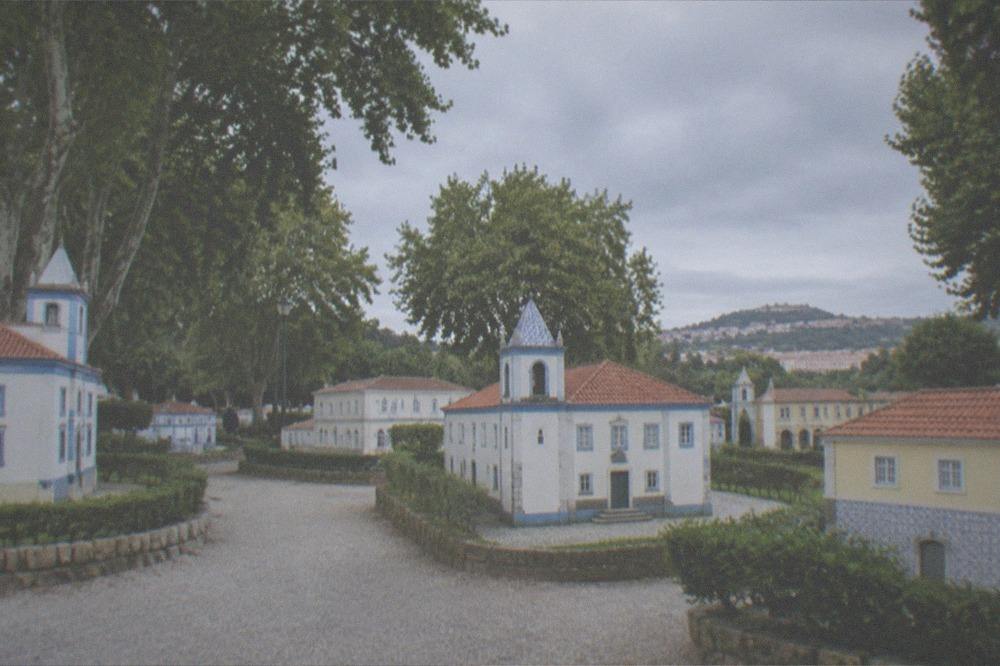
The children's case for Santa Clara is straightforward. Portugal dos Pequenitos, the miniature-park creation of the Fundação Bissaya Barreto, is on this bank, open 10:00 to 19:00 from 1 March to 15 October, and the riverside parkland along the Mondego gives children somewhere to run that the steep lanes of the Alta never can. Under-2s enter free, and the venue's own ticket page is the source for current prices, which this guide does not print.
The counter-case is the river crossing. Every trip to the university, the Sé Velha or the fado houses starts with a bridge or a bus. With the SMTUC pre-purchased ticket at 0.90 EUR a trip and 90-minute validity including transfers, a family of four crossing daily still spends less than a single hill-side dinner would cost, but it is a rhythm to plan rather than ignore.
The with kids guide and the itinerary guide build full days around these anchors, and the map guide is the reference for how the pieces sit relative to each other.
What Should You Check Before Booking Any Coimbra Stay?
Check four things in order: the hill between the bed and the Paço das Escolas, the walk to the nearer train station, whether the room's address is the city, the municipality or something else entirely, and the closure list, because the Machado de Castro museum, the university clock tower and Santa Clara-a-Velha are all closed in 2026 and a stay priced around any of them needs replanning.
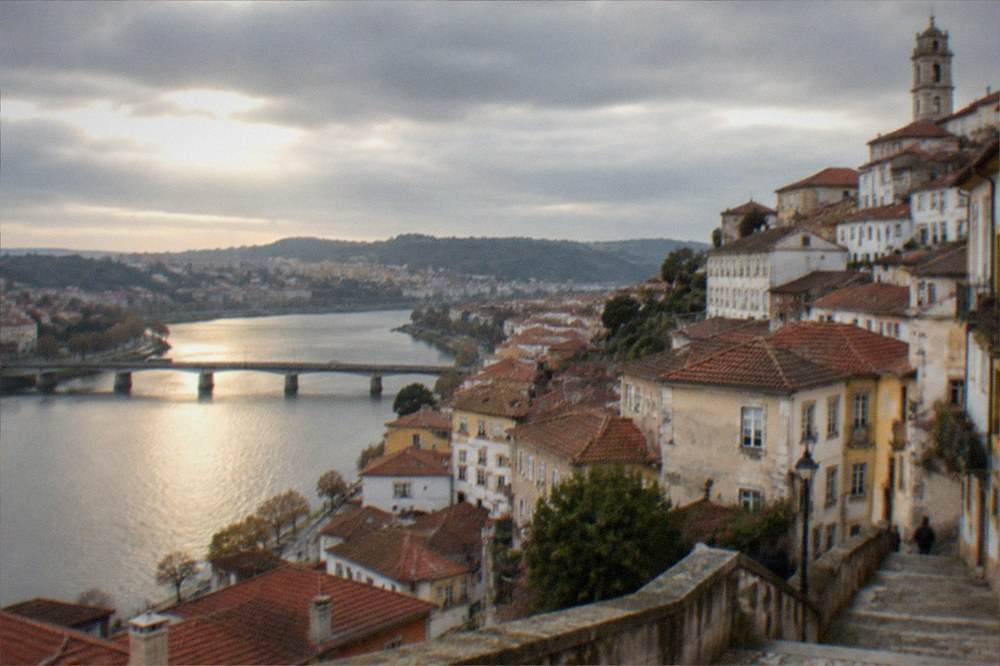
The hill question is the one that ruins trips. Coimbra's old town is a slope, and listings rarely say which side of it they sit on. A stay in the Baixa means the climb is a choice; a stay on the Alta means it is a certainty, several times a day.
The station question matters more here than in most cities. Coimbra has two stations, Coimbra-A and Coimbra-B, in different places, and which trains call at which is a detail this site directs to CP itself rather than asserts; the train stations A and B guide explains the trap for anyone arriving by rail.
| Closure or interruption, 2026 | Status | What it means for a booking |
|---|---|---|
| Museu Nacional de Machado de Castro | Closed for conservation work, per the museum's own page | Do not plan a visit; the Roman cryptoporticus beneath it is part of the closed route |
| Torre da Universidade | Closed, per the University's own info page | No tower climb exists at any price; ignore any listing implying one |
| Mosteiro de Santa Clara-a-Velha | No page on the national museums portal; closed for works since 20 October 2025 | Treat as closed until an official page returns |
| University visitor circuit, 24 May and 4 October | Full closure, per visit.uc.pt | Avoid those dates for a monument-led stay |
| Mosteiro de Santa Cruz on the Cortejo Sunday | Visits suspended, per the parish's own page | A moveable May Sunday; check against your dates |
The geography question is the quiet one. "Coimbra" names a city, a municipality and a district, and the district reaches the Atlantic, 37 km west at Figueira da Foz, while the city does not touch the sea. A listing that says only "Coimbra district" may be nowhere near the old town. Conímbriga, the Roman ruin site, is not even in this municipality: it sits about 16 km south in Condeixa-a-Nova, which is why this site treats it as an excursion rather than a suburb.
A final planning note for anyone whose stay doubles as a base for the region: the schist villages of the Lousã hills, the Buçaco forest and the Atlantic end of the district are all day trips, not neighborhoods, and each one eats a half-day of transport. Budget your nights in the city accordingly, and keep the bed central enough that a late return from the hills does not turn into a second journey.
One of the trio above is a full-day excursion to the cascades and schist villages around Piodão, which pairs naturally with a longer stay: it is the kind of itinerary that only makes sense from a bed you are keeping for three nights or more. For shorter visits, the city walks in the same band cover the ground you would otherwise be choosing a neighborhood to reach.
Common Questions About Where to Stay in Coimbra
Where to stay in Coimbra for a first visit?
The Baixa, the flat downtown between the river and the university hill, is the strongest base for a first visit: restaurants, fado houses and the start of the climb to the Paço das Escolas are all in walking range, and the 1.00 EUR per night tourist tax applies identically wherever you book.
Is it better to stay in the Baixa or on the university hill?
The Baixa for food, flatness and nightlife; the Alta only if the University monuments are the whole point of the trip. The hill means a steep descent and climb for every dinner, and the University's own pages confirm the clock tower is closed, so no hill stay buys a tower view.
How much is the tourist tax in Coimbra?
1.00 EUR per guest per overnight stay, capped at three consecutive nights per person, from age 16, paid to the accommodation at check-in or check-out. A couple staying seven nights pays 3.00 EUR each. A rise to 2.00 EUR was proposed on 21 July 2026 but is not yet the published rate.
Which side of the river is quieter?
Santa Clara, across the Mondego, is the quieter bank, with the riverside park and Portugal dos Pequenitos, open 10:00 to 19:00 from 1 March to 15 October. The trade is a bridge or a 0.90 EUR pre-purchased bus trip for every sightseeing day.
How many days should I stay in Coimbra?
Two nights covers the University circuit, the Joanina Library slot, the Baixa and one monastery; three lets you add Conímbriga or a schist-village day trip. The 16.50 EUR University ticket is valid two days, which pairs naturally with a two-night stay.
Do I need a car to stay in Coimbra?
No. The SMTUC network sells 2.00 EUR on-board singles and 0.90 EUR pre-purchased trips valid 90 minutes, and those tickets also work on the new Metro Mondego system. A car only earns its parking if your itinerary leans on day trips to Conímbriga, the schist villages or the Buçaco forest.
Whatever you choose, book the Joanina slot before you book the bed: 50 people every 20 minutes is a hard ceiling, the University's own page refuses entry outside the printed time, and the room can be moved far more easily than the library.