Arco de Almedina, Coimbra
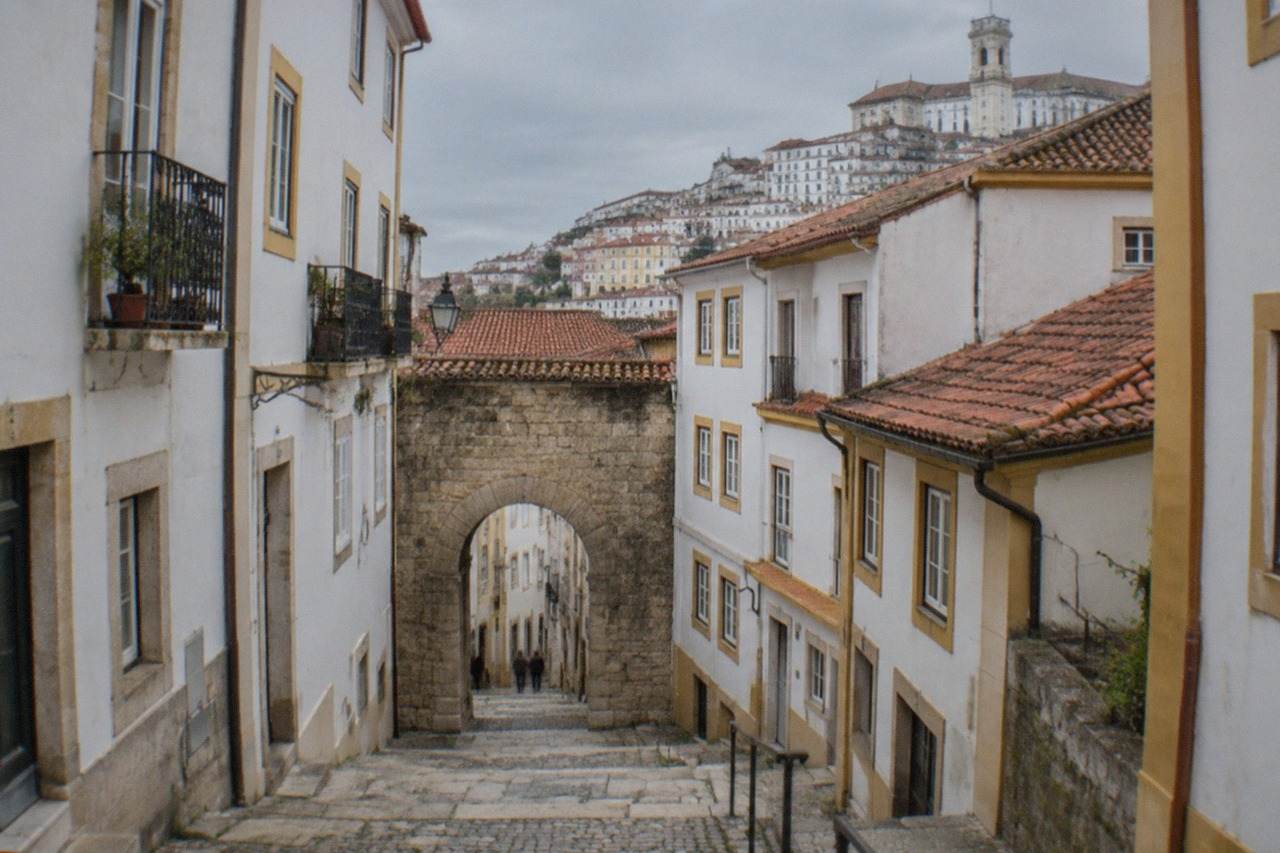
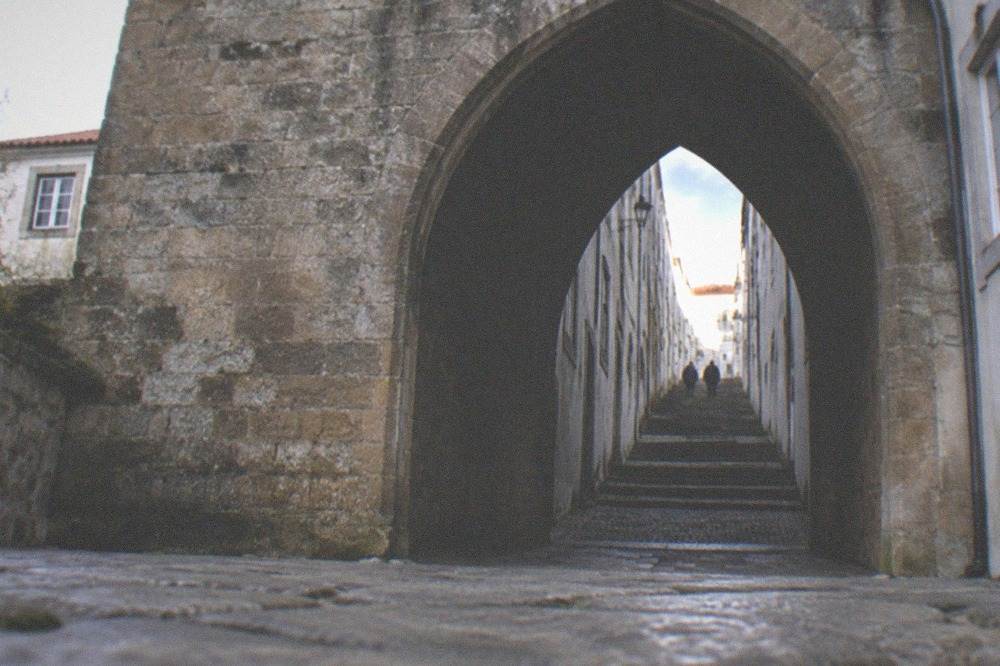
The Arco de Almedina is the stone gateway into Coimbra, Portugal's old town, the natural starting point for the climb from the Baixa to the university hill and the sights stacked along the way.
Short answer
The Arco de Almedina is the arched stone gate at the entrance to Coimbra's medieval old town in Portugal. It sits at the bottom of the climb to the University of Coimbra, minutes from the Sé Velha, and it is free to walk through at any hour, making it the natural first stop on any walking route through the Alta.
The Arco de Almedina is the stone arch that lets you into the old town of Coimbra, the university city on the River Mondego in central Portugal. Walk through it and you leave the flat commercial streets of the Baixa behind and start the climb toward the Sé Velha, the Paço das Escolas and the Joanina Library, in that order and up that hill. Almost every visitor to the city passes under this arch at least once, usually without knowing its name, because the route from the river to the university funnels through it. This guide from the Coimbra Travel Guide editorial desk covers what the arch is, how to reach it, what the sights around it cost, and which tours pass through it, using figures the venues and the municipality themselves publish.
What Is the Arco de Almedina in Coimbra, Portugal?
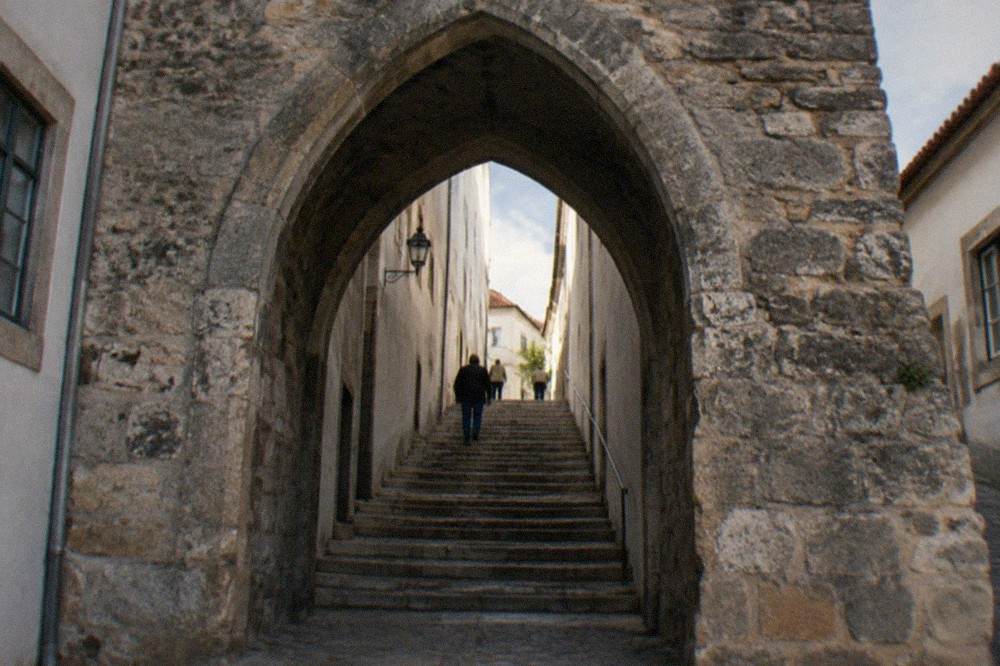
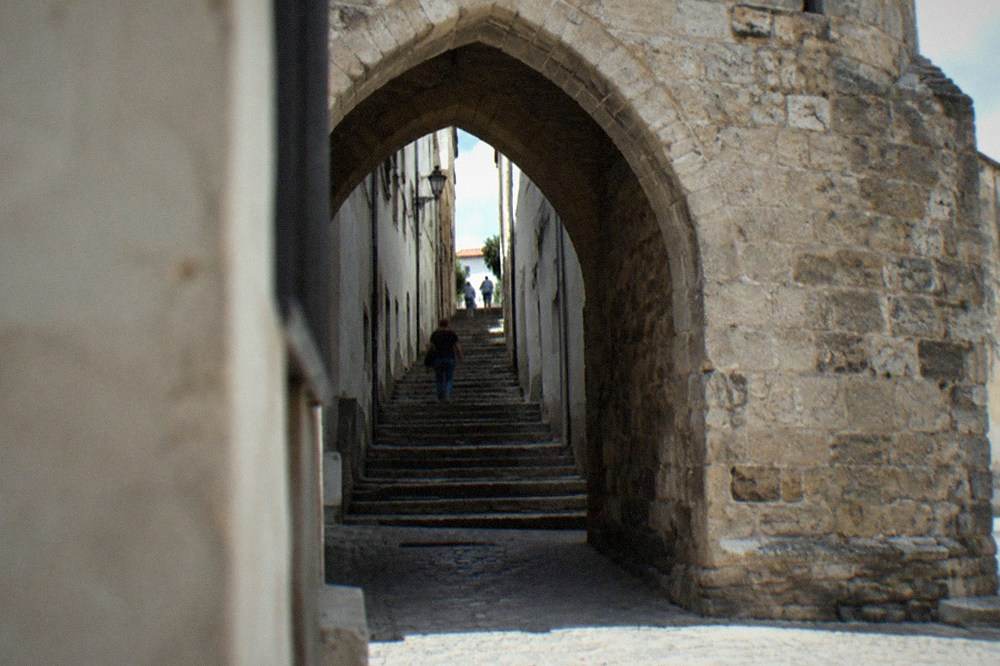
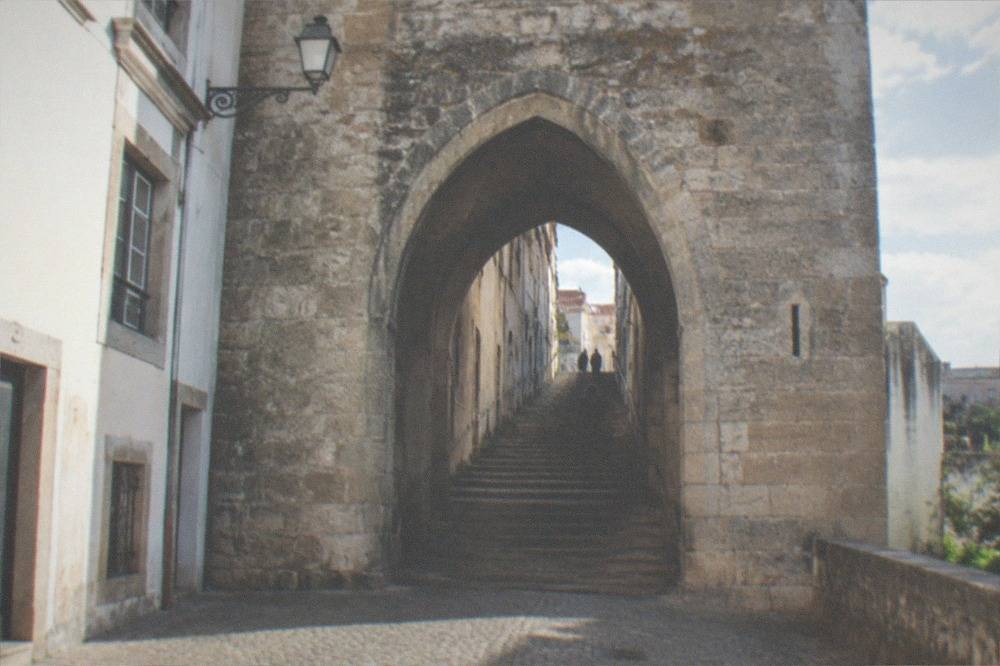
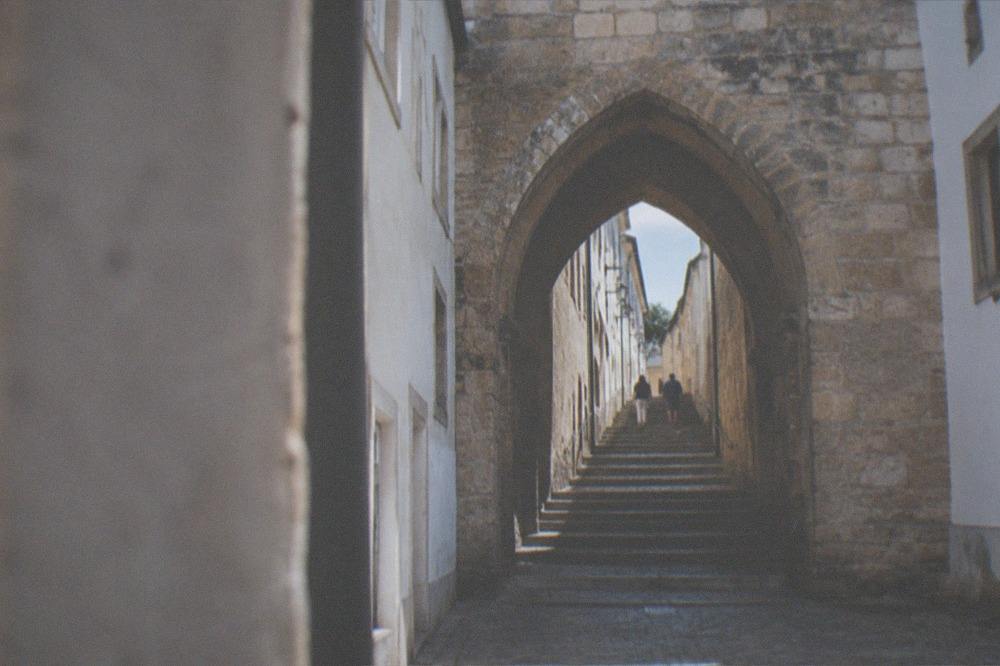
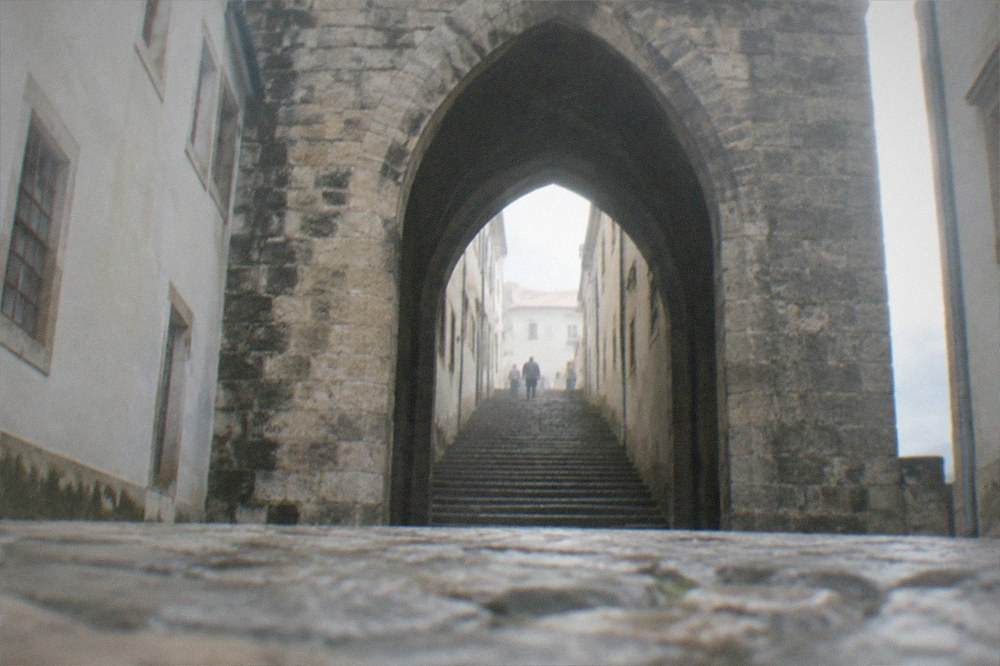
The Arco de Almedina is the surviving arched gateway into Coimbra's medieval walled town, in the city of Coimbra, Portugal, and it marks the point where the streets of the lower town give way to the steep lanes of the Alta, the upper town around the university. It is not a museum, it has no ticket desk, no queue and no opening hours, and it costs nothing to walk through. Its whole value is positional: it sits on the walking route between the Baixa and the cathedral, and nearly every sensible route through the old town goes under it. Treat it as a threshold rather than a destination, and give it five minutes on the way to bigger things.
The arch is a piece of the city's defensive past. Coimbra's old core grew up on the hill above the River Mondego, and the streets inside the wall were protected by gates of which the Arco de Almedina is the best known survivor. The name attaches it to the Almedina, the fortified core of the medieval town, a word of Arabic origin that survives in the city's street names and in this arch. The University of Coimbra's own visitor materials describe the old town as the Alta and Sofia, and the UNESCO World Heritage inscription of 2013, list reference 1387, covers exactly those two components: the university hill and the college street. The arch itself is not inside the inscribed property, but the walk it starts leads straight into it.
That UNESCO point matters, because it is the most commonly botched fact in guides to this city. Coimbra is not a UNESCO World Heritage city. The inscription is "University of Coimbra, Alta and Sofia", two components within the old town, recognised in 2013 under criteria (ii), (iv) and (vi). The Baixa, the riverside and the arch are not part of it. A visitor who understands that will understand the geography of the whole visit: the lower town is where you eat, sleep and shop, and the hill is where the listed heritage is.
The arch is also a natural orientation landmark. It is easier to find than to describe: the streets of the Baixa narrow as they climb, and the arch is where they visibly squeeze through the old wall line. From there the route to the top is a single continuous climb, with the Sé Velha partway up and the university at the summit. Anyone who can find the arch can navigate the old town without a map, because everything worth seeing on the hill is either above it or a short lane away from the street it stands on.
Where Is the Arco de Almedina and How do You Reach It?
The Arco de Almedina sits at the lower edge of Coimbra's old town, at the point where the commercial streets of the Baixa meet the steep lanes climbing to the Sé Velha and the university, and it is reached on foot from the city centre in a few minutes of uphill walking. There is no dedicated transport to it and none is needed: the whole point of the arch is that it is on the walking route. From the river side, the approach is uphill; from the university side, it is downhill. Most visitors arrive from the Baixa, walk through the arch, and continue up.
Coimbra has two train stations with confusingly similar names, Coimbra-B and Coimbra-A, and they are in different places. The operator is CP, Comboios de Portugal, and its passenger site is the place to check which services call at which station and how the connection between them works. That detail is deliberately left unstated here because it is not verified on this build, and a wrong version of it is worse than none. What is safe to say is that both stations exist, that neither is on the old town hill, and that the arch is reached from either by a further leg of city transport or walking.
For city transport, the SMTUC network covers the city, and the 2026 tariff, in force since 1 April 2026, publishes the fares a visitor actually pays. A ticket bought on board from the driver costs 2.00 EUR. Pre-purchased tickets, in packs of three or more trips, cost 0.90 EUR per trip. A single journey is valid 90 minutes on the urban network, transfers included within that window. The same tariff states that SMTUC titles are valid on the Metro Mondego network too, which matters because that new BRT system is opening in stages across the city.
| SMTUC ticket type (2026 tariff) | Price | Notes |
|---|---|---|
| Driver ticket, bought on board | 2.00 EUR | Single journey |
| Pre-purchased, 3 trips or more | 0.90 EUR per trip | Rechargeable card |
| Journey validity | 90 minutes | Urban network, transfers included |
| MOVE-C support card | 3.00 EUR youth / 6.00 EUR others | One-off card cost |
| Viagem ConVIDA support card | 0.50 EUR | For occasional and pre-purchased tickets |
| Large-family 1-day ticket, 7 trips | 1.00 EUR | Specific household scheme |
| Fare evasion fine | 120.00 to 350.00 EUR | Enforcement range |
The practical advice is simple: if you are staying anywhere in the Baixa or near the river, walk. The arch is part of the pedestrian fabric of the old town, and the streets around it are narrow, stepped and better on foot than on wheels. If you are coming from further out, a pre-purchased SMTUC card at 0.90 EUR a trip is cheaper than paying the driver 2.00 EUR, and the same titles work on the Metro Mondego. Luggage, hills and cobbles are the three things to plan around, and the Coimbra luggage and parking guide covers the first and third.
What Can You See Within a Short Walk of the Arco de Almedina?
The sights clustered around the Arco de Almedina are the Sé Velha, the Mosteiro de Santa Cruz, the Museu Nacional de Machado de Castro, the university's Paço das Escolas with the Joanina Library, and the Capela de São Miguel, and together they make up the heaviest concentration of heritage in Coimbra, Portugal. The arch sits at the bottom of this stack, the cathedral partway up, the university at the top, and the two closed-for-works monuments a lane or two away. A visitor who starts at the arch and walks upward will pass nearly everything the city is famous for.
Start with the Sé Velha, the Old Cathedral, which is close to the arch on the climb. The parish body that runs it, the Unidade Pastoral Aeminium, publishes an individual ticket at 3.00 EUR per person, with a group rate of 2.50 EUR for more than ten people. Summer visiting hours are 09:30 to 18:30, with Sundays at 11:00 to 17:30, and winter hours are 09:30 to 17:30. The full detail is in the Sé Velha guide.
The Mosteiro de Santa Cruz is the burial church of Portugal's first two kings, and it is one of the few monuments in the country that can be described that way. The same parish body publishes a 5.00 EUR individual ticket, a 3.50 EUR group rate for twelve or more, and visiting hours of 09:30 to 16:30, with a separate Sunday schedule. One warning worth having in advance: visits are suspended on Easter Sunday and on the Cortejo da Queima das Fitas, the moveable Sunday parade of the student festival. The Santa Cruz guide has the full price list.
The Museu Nacional de Machado de Castro is closed for conservation work. That is the current status published on the museum's own page on the national Museus e Monumentos portal, and no reopening date is published. The museum is built above a Roman cryptoporticus of the mid-1st century, which is part of the visit route whenever it reopens, but for now it cannot be planned into a visit. The trap is that the same official page prints a normal-looking opening-hours table below the closure line; those hours belong to some future reopening and are not current. Check the museum's own page before planning around it, and read the Machado de Castro guide for what is verified.
The same applies to the Mosteiro de Santa Clara-a-Velha across the river: it has been closed for requalification works, no price or opening time can be confirmed on an official page, and the Santa Clara-a-Velha guide says so plainly. Two closures out of a dozen monuments is the honest state of play in 2026, and any guide that lists opening hours for either is publishing something the venues themselves do not currently stand behind.
Above all of this, at the top of the hill, is the university itself: the Paço das Escolas, the Capela de São Miguel, the Joanina Library and the Science Museum spaces, all covered by the University of Coimbra guide and the Joanina Library guide. The Alta upper town area guide covers the streets between the arch and the summit, which are the ones most visitors actually remember.
How Much Does It Cost to See the Sights Around the Arco de Almedina?
Walking through the Arco de Almedina itself is free, and the verified admission prices around it are 3.00 EUR for the Sé Velha, 5.00 EUR for the Mosteiro de Santa Cruz, 16.50 EUR for the University of Coimbra combined ticket including the Joanina Library, and 12.50 EUR for the university ticket without the library, all published by the venues themselves for the 2026 season. Two nearby monuments, the Machado de Castro museum and Santa Clara-a-Velha, are closed for works and publish no current price at all. A full day taking in the cathedral, the monastery and the university with the library comes to 24.50 EUR per adult in tickets alone.
| Sight near the Arco de Almedina | Adult price | Status |
|---|---|---|
| Arco de Almedina itself | Free | Open at all hours |
| Sé Velha de Coimbra | 3.00 EUR individual, 2.50 EUR group 10+ | Open, parish-published hours |
| Mosteiro de Santa Cruz | 5.00 EUR individual, 3.50 EUR group 12+ | Open, suspended on the Cortejo Sunday |
| University of Coimbra, with Joanina Library | 16.50 EUR | Open, timed Joanina slot |
| University of Coimbra, without Joanina | 12.50 EUR | Open, valid two days |
| Museu Nacional de Machado de Castro | No current published price | Closed for conservation work |
| Mosteiro de Santa Clara-a-Velha | No current published price | Closed for works |
| Portugal dos Pequenitos | Price on the venue's own ticket page | Open, hours published |
| Conímbriga, museum and ruins | 10.00 EUR | Open daily, about 16 km south |
The university ticket deserves its own table, because the University's visit site publishes a full price card stamped valid from 1 January to 31 December 2026, and it is the most complicated ticket in the city.
| University of Coimbra ticket option (2026 season) | Adult price | Duration | Includes |
|---|---|---|---|
| Joanina Library + University + Science Museum | 16.50 EUR | 3 hours | Joanina, Royal Palace, São Miguel Chapel, Chemistry Laboratory, Academic Museum, Cabinet of Curiosities, Mineral Gallery |
| University + Science Museum | 12.50 EUR | 2 hours 30 | Same list without the Joanina |
| Guided tour, Palace of Schools | 25.00 EUR | 1 hour 30 | Guide-led, Science Museum spaces not included |
| Science Museum + UC Exploratório | 16.00 EUR | 3 hours | Science spaces only, no Palace of Schools |
| Guided tour, Botanical Garden | 10.00 EUR | 1 hour 30 | Meeting point at the garden's side entrance |
| Guided tour, Botanical Garden Great Greenhouse | 10.00 EUR | 1 hour | Same meeting point |
The single most important fact in that table is the Joanina rule. The library cannot be bought on its own. It exists only inside the 16.50 EUR combined ticket, entry is limited to 50 people every 20 minutes, and the time printed on the ticket is the library slot specifically. Entry outside the printed slot is refused, in the University's own published wording. Online purchase closes 20 minutes before the visit time. The rest of the ticket is valid for two days, but the library slot is fixed. That 50-per-20-minutes ceiling is the one genuine scarcity fact in Coimbra, and it is why a summer visitor who turns up without a pre-booked slot can be turned away.
There is also the municipal tourist tax to budget, because it applies to every overnight stay in the city. The current rate is 1.00 EUR per guest per night, capped at three consecutive nights, from age 16, paid directly to the accommodation at check-in or check-out, in force since 5 April 2023. The municipality's own worked example: a couple staying seven nights pays 3.00 EUR each, 6.00 EUR total. On 21 July 2026 the municipality's Executive approved a proposal to raise the tax to 2.00 EUR, but the published rate on the municipality's own tax pages remains 1.00 EUR until they say otherwise.
When Is the Best Time to Walk Through the Arco de Almedina?
The best months to walk the Arco de Almedina route in Coimbra, Portugal are May, June, September and early October, when IPMA's 1991 to 2020 normals for the Coimbra / Bencanta station show mean maximum temperatures between 23.3 and 27.4 C and monthly rainfall at or below 64.7 mm, with July and August hotter still at 28.5 and 29.1 C mean maximum. September is the standout: its mean maximum of 27.4 C is actually higher than June's 26.3 C, and its 49.9 mm of rain is still modest. The rain does not arrive properly until October, when the monthly total jumps to 114.5 mm.
| Month | Mean max C | Mean C | Rain mm | Days 1mm+ rain |
|---|---|---|---|---|
| Jan | 15.0 | 10.1 | 113.5 | 11.3 |
| Feb | 16.4 | 11.0 | 81.0 | 8.6 |
| Mar | 19.1 | 13.5 | 75.4 | 9.4 |
| Apr | 20.5 | 14.9 | 84.6 | 10.6 |
| May | 23.3 | 17.6 | 64.7 | 8.5 |
| Jun | 26.3 | 20.3 | 26.0 | 3.7 |
| Jul | 28.5 | 22.0 | 8.9 | 1.7 |
| Aug | 29.1 | 22.4 | 14.8 | 2.2 |
| Sep | 27.4 | 20.7 | 49.9 | 5.2 |
| Oct | 23.2 | 17.6 | 114.5 | 10.3 |
| Nov | 18.0 | 13.2 | 121.5 | 11.5 |
| Dec | 15.6 | 10.9 | 111.3 | 11.1 |
Two corrections to the folklore that circulates about this city's weather are worth pinning down, because this build has seen both published wrongly. September is not drier than June; it is both hotter and wetter than June, 27.4 C against 26.3 C and 49.9 mm against 26.0 mm. The true and sourced point is that the autumn rain holds off until October. And August is the hottest month, not July, on both mean and mean maximum, averaging 10.9 days above 30 C. November is the wettest month at 121.5 mm, marginally ahead of October and January. July, at 8.9 mm, is effectively dry.
Within the day, the arch itself is best early or late, and not because of the arch: because of the hill. The climb from the arch to the Paço das Escolas is steep, unshaded in stretches, and far pleasanter before the afternoon heat. The University's summer schedule runs 09:00 to 20:00 from 1 April to 30 September, and the winter schedule 09:00 to 17:30 from 1 October to 31 March, so early starters can be at the ticket kiosk near the opening time and into a morning Joanina slot before the crowds build. The University also publishes its closing dates for the current cycle: 24 and 25 December 2026, 31 December 2026 and 1 January 2027, 24 May and 4 October, and it warns that academic and religious ceremonies can interrupt the tourist circuit.
Late in the day has its own argument. The streets around the arch belong to the students, the University publishes about 31,000 of them, and the evening atmosphere of the old town is a real attraction. The Coimbra at night and fado guides cover what happens after the monuments close, and the best time to visit guide folds the weather table above into a planning summary.
Which Tours Pass the Arco de Almedina?
The tours that cover the Arco de Almedina are the Coimbra Top Attractions Walking Tour, a 2 hour 30 minute walk from 5.85 USD per person rated 5 from 151 reviews, and the city's free GuruWalk walking tours, which are tip-based and pass the gate as part of their old town routes, alongside university-focused tours that start their climbs nearby. The arch is on the standard walking route of the old town, so almost any guided walk in the city goes through or beside it. The choice is between a paid small-group walk, a free tip-based walk, or a university specialist tour that skips the gate and goes straight up the hill.
The Coimbra Top Attractions Walking Tour is the best fit for visitors whose main interest is exactly this route: the gate, the cathedral, the climb and the university hill, in two and a half hours. It runs from 5.85 USD per person and carries a perfect 5 rating from 151 reviews on the operator's live listing.
The free option deserves a proper explanation, because it is genuinely free and genuinely good. These are GuruWalk tours: free to book, pay what you want at the end, and the platform and the individual guru must be named because that is the honesty requirement. The strongest by review volume is the Coimbra tour covering downtown, the historic centre, the university and the botanic garden, rated 4.91 from 662 reviews over three hours, and the Essential Free Tour of Coimbra, History and Conflicts Art and Culture, rated 4.89 from 374 reviews over two and a half hours.
| GuruWalk free tour in Coimbra | Rating | Duration |
|---|---|---|
| Coimbra tour: downtown, historic center, university and botanic garden | 4.91 from 662 reviews | 3 hours |
| Essential Free Tour of Coimbra, History and Conflicts Art and Culture | 4.89 from 374 reviews | 2 hours 30 |
| History, legends and traditions of Coimbra | 4.44 from 560 reviews | 1 hour 30 |
| Coimbra Unlocked by a Local: History, Mystery & Hidden Corners | 4.81 from 112 reviews | 2 hours |
| Top 10 Must-See Coimbra, downhill tour | 4.96 from 141 reviews | 2 hours |
| Essential Free Tour with the Coimbra Guide | 4.99 from 168 reviews | 2 hours |
For visitors who want the university explained properly rather than just walked past, the paid university tours are the stronger choice. The University of Coimbra guided tours without queue option runs from 70.24 USD per person, rated 4.9 from 576 reviews over an hour and a half, and the Guided tour of the University and city of Coimbra combines both in one 2 to 3 hour walk from 84.29 USD, rated 4.9 from 399 reviews.
Visitors using the arch as a base for day trips have real options too. Conímbriga, the Roman town about 16 km south in Condeixa-a-Velha in the municipality of Condeixa-a-Nova, is covered by the Conímbriga Roman ruins guide, and its museum and ruins share a single 10.00 EUR adult ticket. The Tomar and Templar tours, the schist villages of the Lousã and the Bussaco forest all depart from or near the city, and the Coimbra day trips guide compares them. A private Templar tour of Tomar's sites runs from 134.63 USD per person, rated 5 from 47 reviews over 3 to 4 hours, for visitors who want the Templar story told at depth.
Is the Area Around the Arco de Almedina Good for Fado and Evenings?
The lanes around the Arco de Almedina are one of the two natural evening areas of Coimbra's old town, because the student city's fado tradition, its historic cafés and its bars cluster in the streets between the arch and the river, and the fado of Coimbra is a distinct, male-voiced, caped tradition separate from Lisbon's. The arch is on the walking line between the university hill, where the fado houses sit, and the Baixa, where most of the restaurants are, so an evening that starts at a fado show and ends with dinner downhill will pass under it in the dark, and the gate is arguably at its best then.
The most bookable introduction is the live fado show with a glass of port wine included, from 18 USD per person, rated 4.7 from 1,234 reviews over 50 minutes. It is the highest-reviewed evening product in the city on the operator's live listing, and the port wine is part of the ticket rather than an upsell.
The fuller picture, including where the student fado tradition is performed and how it differs from the Lisbon style, is in the fado de Coimbra guide and the where to hear fado guide. What matters for this page is the geography: the arch is the hinge between the evening's two halves. The university hill empties of tourists after the monuments close, the students take over the streets around the Sé Velha, and the Baixa fills for dinner. Walking down through the arch after dark is one of the city's small, free, reliable pleasures.
Two practical warnings complete the picture. First, the student calendar shapes the old town: the University closes its visitor circuit on 24 May, and Santa Cruz suspends visits on the Cortejo da Queima das Fitas, a moveable Sunday, so a visit in late May can collide with the festival whether planned or not. The exact festival dates should be taken from the Associação Académica, because they are not verified on an official page in this research. Second, the hill is genuinely steep and the paving is genuinely old: the accessibility and hills guide is honest about which routes avoid the worst of the climb, and the arch sits at the bottom of it, which is the best place to know that in advance.
Common Questions About the Arco de Almedina in Coimbra
Is the Arco de Almedina free to visit?
Yes. The arch is a public gateway in the street fabric of the old town, with no ticket, no desk and no opening hours. It can be walked through at any time of day or night, and it costs nothing.
What is the Arco de Almedina in Coimbra, Portugal?
It is the surviving arched stone gateway into Coimbra's medieval walled old town, marking the boundary between the lower town, the Baixa, and the steep lanes of the Alta that climb to the Sé Velha and the University of Coimbra. The name comes from the Almedina, the fortified core of the medieval town.
How far is the Arco de Almedina from the University of Coimbra?
The arch sits at the bottom of the continuous uphill route that ends at the Paço das Escolas, the university's palace square, with the Sé Velha partway up. It is a walk of a few streets, all uphill, and no verified journey time is published for it, so plan on it being the steepest part of a visit.
Which sights are closest to the Arco de Almedina?
The Sé Velha, the Old Cathedral, is nearest on the climb, at 3.00 EUR individual admission. The Mosteiro de Santa Cruz, at 5.00 EUR, is a short walk away in the lower town. The Museu Nacional de Machado de Castro is nearby but is closed for conservation work, with no reopening date published.
Do any tours pass through the Arco de Almedina?
Yes. The Coimbra Top Attractions Walking Tour covers the gate, the cathedral and the university hill in two and a half hours from 5.85 USD per person, and the city's free, tip-based GuruWalk tours pass it on their old town routes. University-focused tours start their climbs nearby.
When is the best time to walk the Arco de Almedina route?
May, June, September and early October, per IPMA's 1991 to 2020 normals for the Coimbra / Bencanta station: mean maximums of 23.3 to 27.4 C with modest rain. September is the standout, hotter than June on the mean maximum and still only 49.9 mm of rain, before the October jump to 114.5 mm.
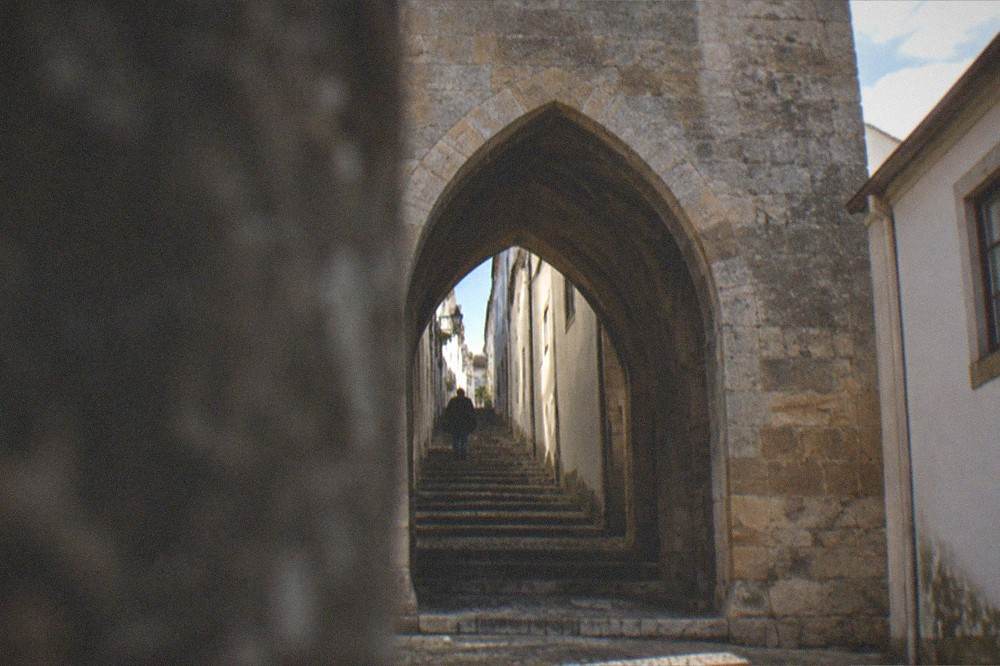
The Arco de Almedina is not the reason anyone comes to Coimbra, Portugal, but it is the reason the visit makes sense: one stone arch, one climb, and the cathedral, the monastery, the university and the Joanina Library strung out above it in the order you will actually walk them. Start early, book the Joanina slot before you leave home, and give the gate itself the five minutes of attention it quietly deserves.