Mosteiro de Santa Clara-a-Velha, Coimbra
The Mosteiro de Santa Clara-a-Velha in Coimbra, Portugal, is the drowned monastery: a medieval foundation on the left bank of the River Mondego, repeatedly flooded, abandoned for the newer convent on the hill, and now closed for requalification works. Here is what is verified, what is not, and how to plan around it.
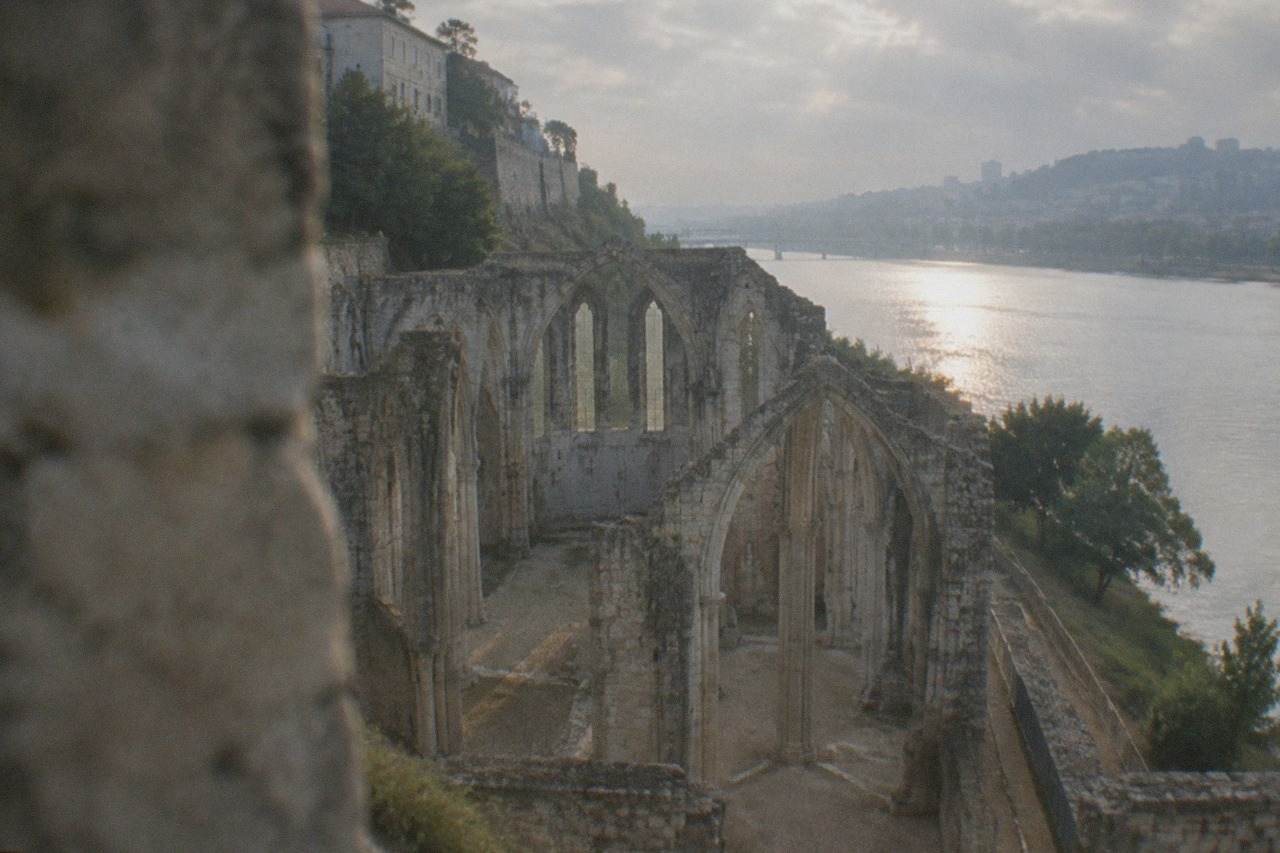
Short answer
The Mosteiro de Santa Clara-a-Velha in Coimbra, Portugal, is a medieval monastery on the left bank of the River Mondego, buried by centuries of flooding and excavated in the 20th century. It has been closed for PRR-funded requalification works since 20 October 2025, and no reopening date, ticket price or opening hours are published. Check the monument's official listing before planning a visit.
The Mosteiro de Santa Clara-a-Velha in Coimbra, Portugal, is the city's drowned monastery, a medieval foundation built too close to the River Mondego on the left bank, flooded again and again across its working life, and finally abandoned by its community for the drier hill above. The nuns who lived there eventually moved to what is now the Mosteiro de Santa Clara-a-Nova, a different and much later building that still stands on the hilltop, and the old monastery sank into silt until modern excavation recovered its church and cloister. Today the site is one of Coimbra's most photographed ruins and one of its most misunderstood, because two buildings with almost identical names sit a few hundred metres apart and visitors routinely plan for the wrong one. This guide sets out what is verified about the old monastery, what remains unsourced, and how the site fits into a visit to Coimbra in 2026.
Why Is the Santa Clara-a-Velha Monastery Half-Buried?
The Mosteiro de Santa Clara-a-Velha stands on the flood plain of the River Mondego, and repeated flooding buried its ground floor in silt over the centuries. The church and cloister were built close to the water on Coimbra's left bank, the river rose into them again and again, and each flood left sediment behind. The community eventually gave up the site for higher ground, and the abandoned lower church filled with earth until excavation dug it back out.
That is the story in outline, and every element of it is visible on the site itself once you know what you are looking at. The church floor sits well below the present ground level of the surrounding bank, because that ground level is flood sediment, not original terrain. The excavated walls still show the horizontal marks of standing water, and the lower courses of stone stayed damp for so long that the masonry survived in remarkably good condition under the mud that was smothering it. Flooding was the making and the unmaking of this monastery: the flat, watered land of the Mondego valley was good building ground, and the same river that made it fertile eventually made it unlivable.
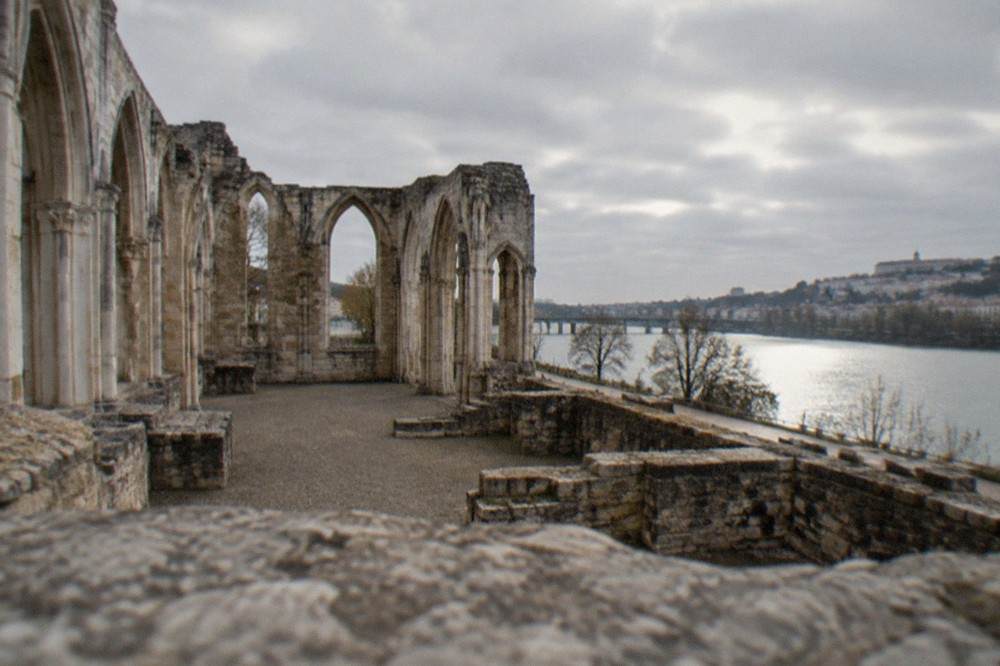
The abandonment that followed is the reason Coimbra has two Santa Claras. The community relocated to the hill above the old monastery, where the Mosteiro de Santa Clara-a-Nova stands today, and the old building was left to the river. Do not confuse the two: the Velha is the excavated ruin on the bank, the Nova is the later building on the hill, and they are separate monuments with separate visiting arrangements. The Santa Clara district that surrounds both is the left-bank quarter of the city, reached on foot across the river from the old town.
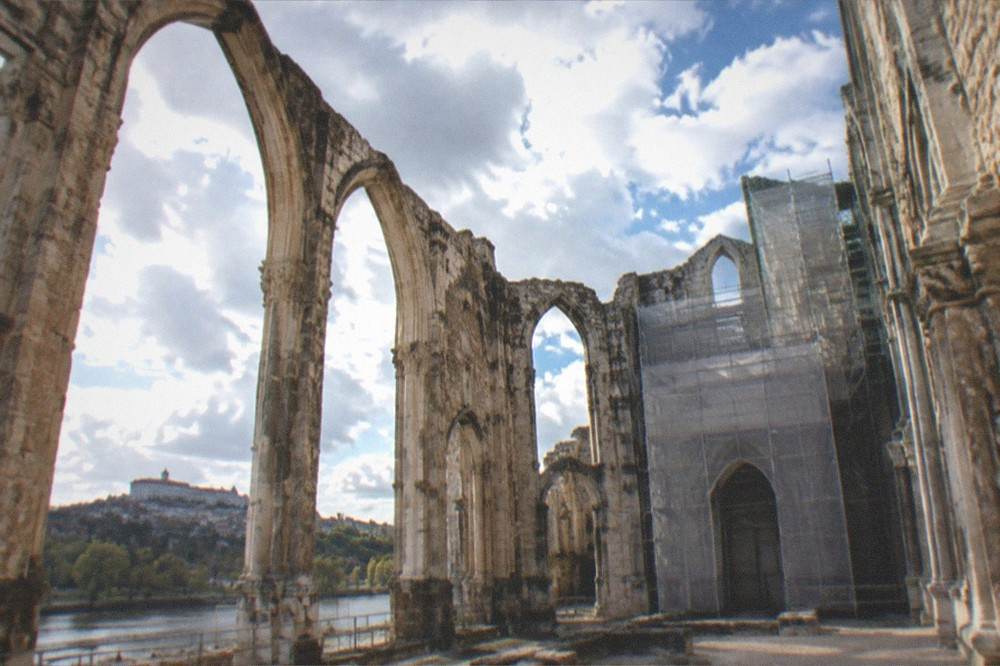
The excavation of the buried church is what turned the site from a mound into a monument. Once the silt was cleared, the recovered space included the church interior, the cloister and the outbuildings, and an interpretation centre was built to explain them. That recovered complex is what visitors came to see before the current closure, and it is what the requalification works now underway are meant to protect for the next round of visitors.
Is the Mosteiro de Santa Clara-a-Velha Open in 2026?
No. The Mosteiro de Santa Clara-a-Velha has been closed for requalification works since 20 October 2025, and no reopening date, ticket price or opening hours have been published. The monument currently has no listing page at all on the national Museus e Monumentos portal, which is consistent with a full temporary closure. Dated Portuguese tourism sources describe PRR-funded works to the interpretation centre, the Casa do Paço and the exteriors, but this site could not confirm the details on an official page.
That is the honest position, and it matters because figures for this monument circulate that must not be trusted. A 4.00 EUR ticket and a Tuesday to Sunday schedule appear in older guides and listings, and they describe a prior period, not the present. Nothing official publishes a price or a timetable while the monument is closed, so any number you see attached to Santa Clara-a-Velha today is either stale or invented. The correct planning instruction is simple: check the monument's official listing before you go, and do not build an itinerary around walking inside.
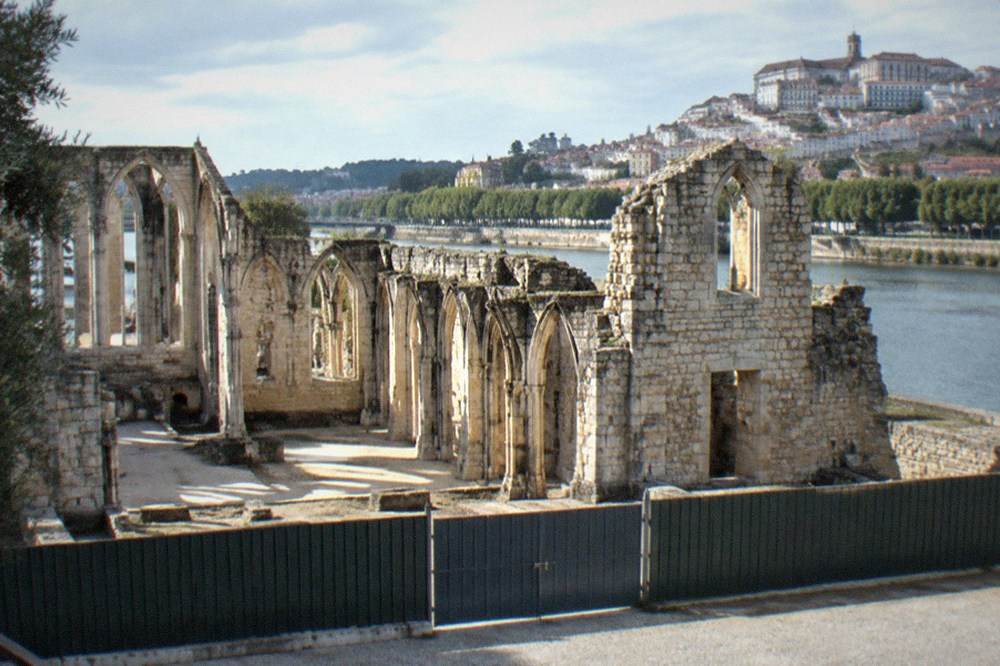
The closure is not unique on this bank of the city. The Machado de Castro Museum on the other side of the river is also closed for conservation work, with no reopening date published, and the University's clock tower is closed as well. Coimbra in 2026 has a cluster of major monuments in conservation, which is frustrating for visitors but is also the reason several of these sites will return in better condition. The works at Santa Clara-a-Velha are described in Portuguese sources as funded through the PRR, the European recovery programme, covering the interpretation centre, the Casa do Paço and the exterior spaces.
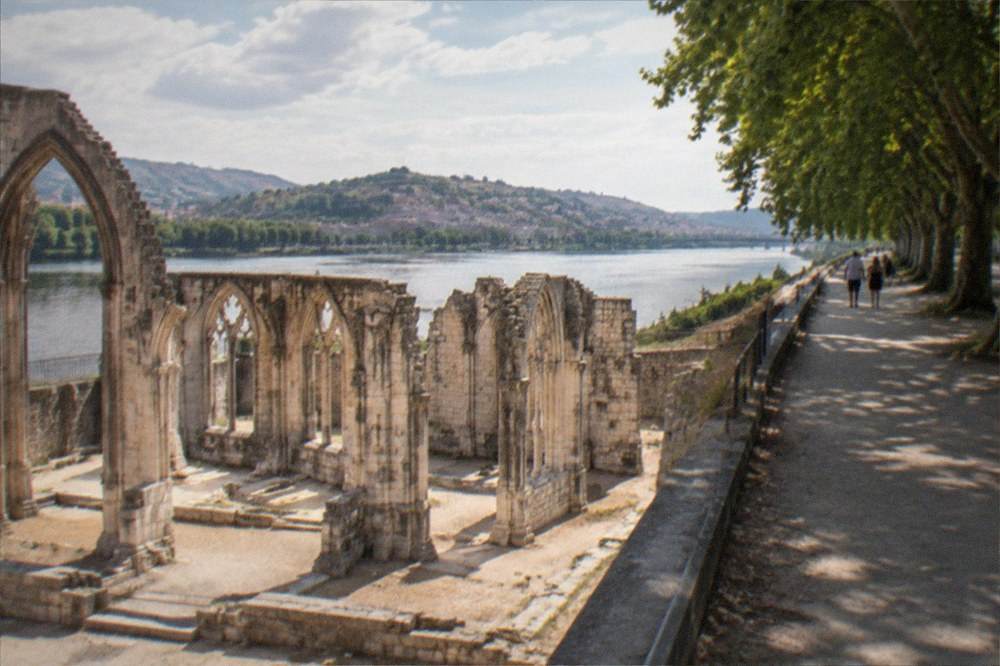
What you can still do, and what many visitors do, is see the monastery from outside. The riverside bank gives views across the water toward the excavated walls, and the Parque Verde do Mondego runs along both banks of the river through this stretch. The left bank and the hill above, with the Nova convent, remain fully accessible, so the district rewards a walk even while the ruin's interior is out of bounds.
How do You Plan a Visit While It Is Closed?
Plan around the closure, not against it: the Santa Clara district, the river park and the hilltop Nova convent are all open, and the excavated ruin can be viewed from the riverside. Check the monument's official listing for reopening news before you travel, because no date has been published and any timetable you find elsewhere is stale. Meanwhile, Coimbra's open monuments, including the Sé Velha at 3.00 EUR and the University's combined ticket at 16.50 EUR, are running normally.
The practical first step is to stop treating the old monastery as a walk-in attraction. Until an official listing returns with a price and hours, the site belongs in the "check before you go" category, and a day in Coimbra should be built on the monuments that are verifiably open. The table below is the current verified picture for the major sites, and it is worth reading in full because the pattern of closures is not obvious from a guidebook written two years ago.
| Monument | Status (Sept 2026) | Verified admission |
|---|---|---|
| Mosteiro de Santa Clara-a-Velha | Closed for works since 20 Oct 2025 | None published |
| Museu Nacional de Machado de Castro | Closed for conservation work | None published |
| Torre da Universidade | Closed | No access |
| Sé Velha de Coimbra | Open | 3.00 EUR individual |
| Mosteiro de Santa Cruz | Open | 5.00 EUR individual |
| University of Coimbra (with Joanina) | Open | 16.50 EUR combined |
| Museu Nacional de Conímbriga | Open daily 10:00 to 18:00 | 10.00 EUR |
A guided walk is one way to cover the open ground efficiently while the closed sites are out of play. The city's walking tours pass through the old town and the riverside, and a guide will tell you what the Santa Clara-a-Velha story is even when the gate is shut. The tours below are the ones this site has verified for the city centre.
If you would rather walk the left bank on your own, the route is straightforward: cross the river from the old town, follow the park along the bank, and climb to the Nova convent above the ruin. The view back across the Mondego toward the university hill is one of the recognised panoramas of the city, and it costs nothing.
What Is the Difference Between Santa Clara-a-Velha and Santa Clara-a-Nova?
Santa Clara-a-Velha is the excavated medieval monastery on the Mondego flood plain; Santa Clara-a-Nova is the later convent built on the hill above it, the building the community moved into when the floods made the old site unlivable. They are two separate monuments a few hundred metres apart, with different histories and different visiting arrangements. The Velha is the ruin, the Nova is the standing building on the hilltop, and confusing the two is the most common planning error on this side of Coimbra.
The names encode the story. "Velha" means old, "Nova" means new, and the pair exists because one community abandoned one building for the other. The old monastery went to the river; the new convent went to the hill, out of reach of the flood water that had buried the old one's ground floor. When you read a review or a listing that mentions Santa Clara without saying which, assume nothing: the two buildings are not interchangeable, and a visitor who plans a trip around the Nova while reading about the Velha, or the reverse, will get a different experience from the one they expected.
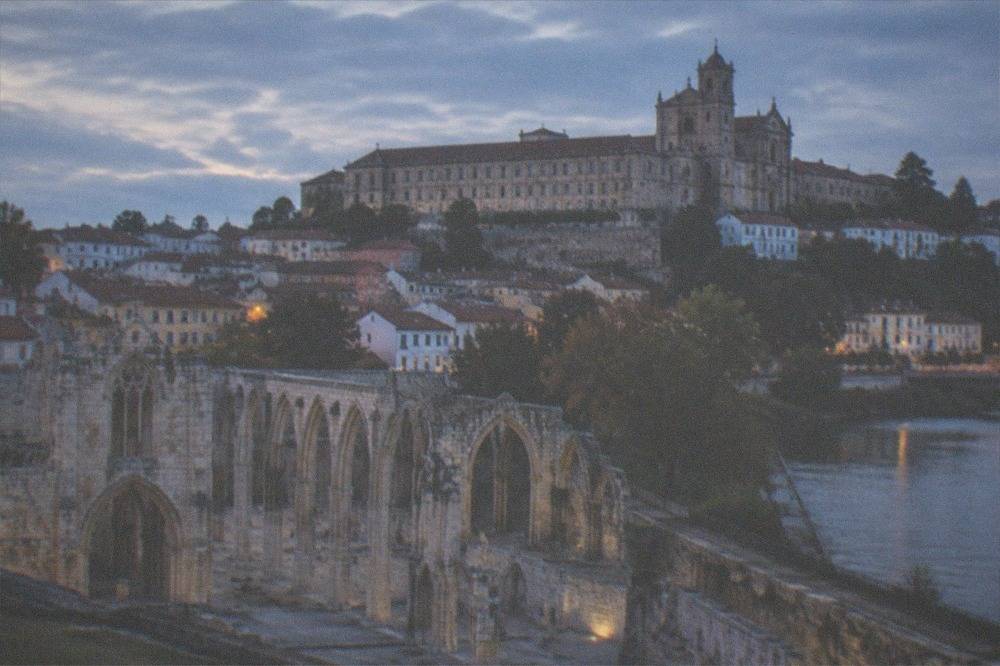
Geography keeps them distinct even when names fail. The Velha sits low, on the flat bank beside the water, with the excavated church walls rising from ground that the river laid down. The Nova sits high, on the shoulder of the hill, and its position is itself the point: it was placed there precisely because the water could not reach it. Between them runs the slope of the left-bank quarter, a residential district with its own character that most day visitors to Coimbra never cross the river to see.
For planning purposes, treat the Nova as the open hilltop stop and the Velha as the closed ruin you view from outside. The district walk that links them, along the river and up the hill, is described in the Santa Clara district guide, and it makes a good half-day loop from the old town.
What Was Life Like in the Old Monastery?
Life in the Mosteiro de Santa Clara-a-Velha revolved around a constant negotiation with the river: the community prayed, worked and farmed on a flood plain that periodically put water inside the church. The monastery was a working religious house, not a ruin, and the recovered buildings show kitchens, dormitories and chapter spaces around the church, all arranged for a community that expected the water to return.
Reading the ruin as a ruin is the mistake. The excavated complex was a functioning convent, and the features that look picturesque now, the low church, the buried arcade, the waterline stains, were practical problems when the nuns lived there. The sediment that preserved the stonework was, at the time, a disaster that cleaned itself up slowly and came back. A community that rebuilds after one flood and stays for the next is a community with reasons to stay: the site was close to the city, close to its patrons and close to the river traffic that carried goods and people along the Mondego valley. The wider set of guides lives on Coimbra Travel Guide.
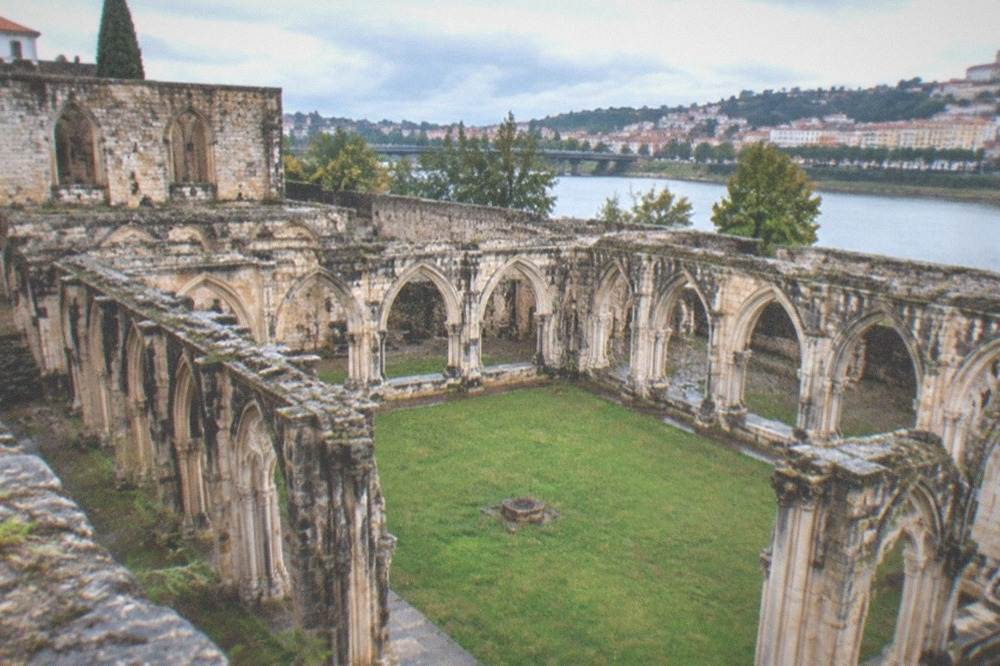
The interpretation centre that existed before the closure was built to explain exactly this, using the recovered spaces and the finds from the excavation. Its requalification is part of the current works, which Portuguese sources describe as covering the Casa do Paço and the exteriors as well. When the monument reopens, the visit will presumably run through the same recovered church, cloister and museum spaces, but nothing about the reopened arrangement is published yet, so treat that as expectation, not fact.
For the fuller context of monastic Coimbra, the city offers a rare concentration: the Santa Cruz Monastery in the lower town is the burial church of Portugal's first two kings, and the Sé Velha is one of the best-preserved Romanesque cathedrals in the country. Between the two Santa Claras, Santa Cruz and the cathedral, the city's religious architecture spans the whole medieval story of central Portugal, and a day spent walking between them covers more of it than most visitors realise.
How do You Get to the Left Bank of the Mondego?
Cross the River Mondego from Coimbra's old town on any of the bridges linking the city centre to the Santa Clara side, then follow the riverside park along the left bank to the excavated monastery and climb the hill to the Nova convent. The walk is flat along the bank and steep only on the final climb. City buses run on the SMTUC network, where an on-board ticket costs 2.00 EUR, and SMTUC tickets are also valid on the Metro Mondego network.
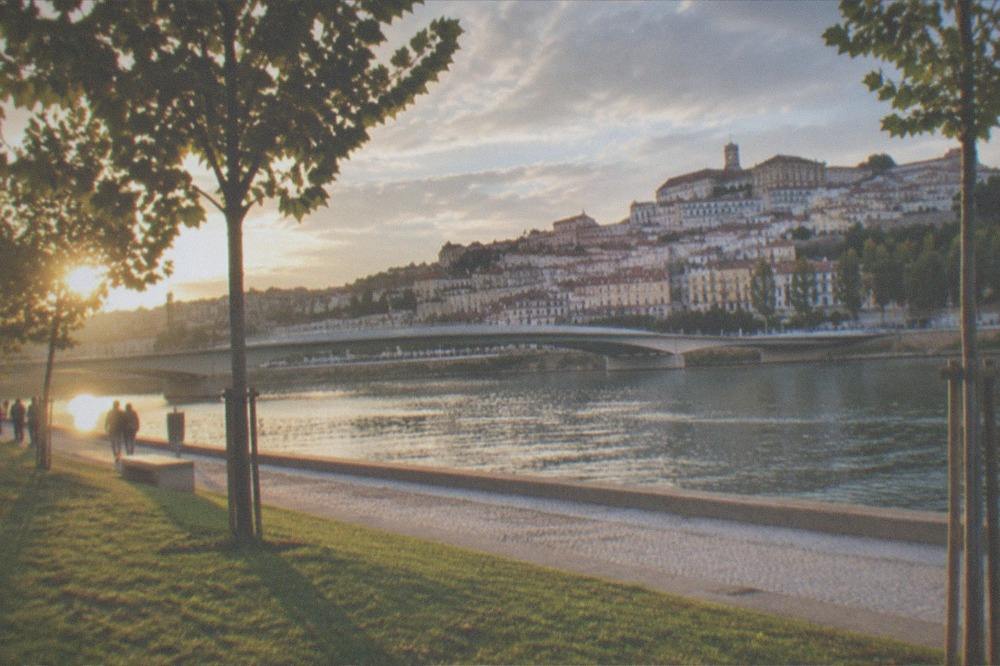
The river is Coimbra's most useful orientation tool. The old town, the university hill and the Baixa all sit on the right bank; the Santa Clara district, both convents and the river park's left-bank stretch sit on the left. Every bridge across the Mondego is a door between the two halves, and the left-bank walk is one of the few flat itineraries in a city otherwise famous for its hills. For a city whose upper town demands climbing, the bank of the Mondego is where you catch your breath.
Public transport on this side is run by SMTUC, and the 2026 tariff is published by the operator. The fares that matter to a visitor are the simple ones, summarised below, and the intermodal point is worth knowing: the tariff is explicitly headed for combined use on the SMTUC and Metro Mondego networks, so a bus ticket is valid on the new Metrobus system as well.
| SMTUC ticket type | Price | Notes |
|---|---|---|
| On-board single, bought from driver | 2.00 EUR | 2026 tariff |
| Pre-purchased, pack of 3+ trips | 0.90 EUR per trip | Rechargeable card |
| Ticket validity | 90 minutes | Urban network, transfers included |
| Viagem ConVIDA support card | 0.50 EUR | For occasional and pre-purchased tickets |
| Fare evasion fine | 120.00 to 350.00 EUR | Enforced on the network |
The left bank is also where the city's green space concentrates. The Parque Verde do Mondego runs along the river with paths on both banks, and it turns the walk between the two convents into a park stroll rather than a street march. Cyclists and runners use it year round, and in summer it is the coolest ground in the city, thanks to the water and the absence of the stone heat-island above.
When Is the Best Time of Year to See This Side of Coimbra?
Summer and early autumn are the best months for the left-bank walk: July averages a mean maximum of 28.5 C with just 8.9 mm of rain, August is hotter still at 29.1 C, and September stays warm at 27.4 C with only 49.9 mm of rain once the student crowds have gone. The wettest months are November at 121.5 mm, October at 114.5 mm and January at 113.5 mm, when the Mondego is at its highest.
Those figures come from IPMA's 1991 to 2020 climate normals for the Coimbra / Bencanta station, the city's own weather station, and they carry a twist worth knowing. September is both hotter and wetter than June on paper, with a higher mean maximum and nearly double the rainfall, but the real shift comes in October, when the monthly total jumps from 49.9 mm to 114.5 mm. The practical reading: the riverside walk is at its best from June through September, and by mid-October you should be checking forecasts rather than assuming dry ground.
| Month | Mean max (C) | Rain (mm) | Rain days 1 mm+ | Days 30 C+ |
|---|---|---|---|---|
| May | 23.3 | 64.7 | 8.5 | 3.5 |
| June | 26.3 | 26.0 | 3.7 | 6.2 |
| July | 28.5 | 8.9 | 1.7 | 8.9 |
| August | 29.1 | 14.8 | 2.2 | 10.9 |
| September | 27.4 | 49.9 | 5.2 | 7.8 |
| October | 23.2 | 114.5 | 10.3 | 2.0 |
There is a historical irony in this table. The monastery that flooded for centuries sits on the bank that is driest in exactly the months most visitors come. The Mondego that buried the church floor is, in July, a quiet river, and the flood plain that drove the community uphill is the city's pleasantest summer walking ground. The water that made the building's history is now the reason the district around it is worth an afternoon.
For the full month-by-month picture, including the winter numbers and the record extremes, the site's weather guides break the normals down in detail, and they are the right place to plan a trip around. The short version for this page: come between June and September for the bank walk, bring water in August, and expect the rain to arrive properly in October.
What Else Should You Combine with the Left Bank?
Combine the Santa Clara walk with the riverside park, the hilltop convent and one of the old town's open monuments for a full day: the left bank itself fills a relaxed half day, and the natural pairing is a cross-river loop that takes in the Sé Velha or the University's Paço das Escolas on the other side. The University's combined ticket, at 16.50 EUR, includes the Biblioteca Joanina with a fixed 20-minute entry slot, so book that around your river walk rather than after it.
The reason to plan the pairing is the Joanina's slot system, which is the one genuine scarcity fact in Coimbra. The University's own programme page states that entries to the Biblioteca Joanina are limited to 50 people every 20 minutes, that the time printed on your ticket is the library slot specifically, and that entry outside the slot is refused. The library cannot be bought on its own; it exists only inside the combined ticket. If you leave the Joanina until the end of the day and the slots are gone, the rest of the ticket's spaces are still valid for two days, but the library is not.
A sensible shape for a day looks like this: the left bank and the two convents in the morning, before the August heat builds on the exposed hillside; the river crossing and lunch in the Baixa; then the university hill in the afternoon with a pre-booked Joanina slot. The full itinerary, with timings and alternatives, is laid out in the one-day itinerary, and the old town side of the walk is covered in the self-guided walking tour.
For a guided version of the same ground, the city's walking tours are the reliable option. The budget walk below covers the top attractions in two and a half hours with a local guide, and it is the tour this page recommends for visitors who want the old town's story told properly while the left-bank monument is closed.
If you have a second day, the left bank is also the departure side for the Mondego valley, and the wider region holds some of central Portugal's strongest day trips. The Roman ruins of Conímbriga, about 16 km south in the parish of Condeixa-a-Velha in the municipality of Condeixa-a-Nova, are the standout: a national museum and ruin site open seven days a week, 10:00 to 18:00, with a single 10.00 EUR ticket covering both. That Monday-proof opening makes it the reliable day out in a region where several state monuments close on Mondays, and the Conímbriga guide covers it in full.
For travellers who want something more active than a walk, the region's outdoor options run from the schist villages of the Lousã hills to river activities on the Mondego's tributaries, and a local guide can turn a half day into something a self-guided visit cannot reach. The tour below is the site's verified pick for that kind of day.
What Will the Requalification Works Change?
The works closing the Mosteiro de Santa Clara-a-Velha are described in dated Portuguese sources as PRR-funded requalification of the interpretation centre, the Casa do Paço and the exterior spaces, with no reopening date published on any official page as of September 2026. What that should deliver is a restored visitor circuit through the recovered church and cloister with upgraded museum facilities, but every detail beyond the works themselves is expectation rather than fact.
It is worth being clear about why this page refuses to fill the gap. A normal travel guide would print a price and a timetable for the monument, because stale figures are easy to find and readers ask for them. But the figures in circulation, 4.00 EUR and a Tuesday to Sunday schedule, describe a period before the closure, and no official source currently publishes either. Printing them would be presenting a memory as a fact, and this site does not do that. The same discipline applies to the Machado de Castro Museum across the river, whose own page carries a closure notice above a normal-looking hours table that is not current either.
The pattern across Coimbra's closed monuments is worth reading as a whole, because it tells you what kind of city you are visiting in 2026. A cluster of major heritage sites in conservation, funded through a European recovery programme, is the signature of a city investing in its built legacy rather than one in decline. The municipality's own figures point the same way: its 2025 reporting records 698,151 overnight stays in the municipality, against an estimated municipal cost of 3.49 EUR per overnight stay, and the tourist tax that funds part of that work stands at 1.00 EUR per guest per night, capped at three consecutive nights, from age 16, payable at the accommodation. A two-euro rise was approved as a proposal in July 2026, but the published rate remains one euro until the municipality's own tax pages say otherwise.
| Coimbra tourist tax | Detail |
|---|---|
| Rate | 1.00 EUR per guest per overnight stay |
| Cap | Maximum 3 consecutive nights per person |
| Age | From 16, birthday excluded, ID on request |
| Payment | Directly to the accommodation, not a platform |
| In force since | 5 April 2023 |
| Pending change | Two-euro proposal approved July 2026, not yet the published rate |
So the honest closing advice for the Mosteiro de Santa Clara-a-Velha is this: go and see it from the bank, walk the district and the hill, and check the monument's official listing before you build a day around going inside. The ruin is visible, the story is legible from the riverside, and the Nova convent above is a destination in its own right. When the works finish and the listing returns, this page's picture of the site will be the one that needs updating, and that is exactly as it should be.
Common Questions About the Mosteiro de Santa Clara-a-Velha
Is the Mosteiro de Santa Clara-a-Velha open?
No. The monument has been closed for requalification works since 20 October 2025, and no reopening date is published. Check the monument's official listing before planning a visit, and ignore any ticket price or timetable you find in older guides.
Can I still see the Santa Clara-a-Velha monastery from outside?
Yes. The riverside bank of the River Mondego gives views of the excavated ruins, and the Parque Verde do Mondego runs along both banks through this stretch. The interior church, cloister and interpretation centre are closed, but the left-bank walk remains fully accessible.
What is the difference between Santa Clara-a-Velha and Santa Clara-a-Nova?
The Velha is the excavated medieval monastery on the Mondego flood plain, buried by centuries of flooding and later dug out. The Nova is the later convent on the hill above, built when the community abandoned the flooded site. They are two separate monuments a few hundred metres apart with different visiting arrangements.
How much does it cost to visit Santa Clara-a-Velha?
Nothing is published, because the monument is closed. The 4.00 EUR figure that circulates in older listings describes a prior period and is not current. Do not plan around any price until an official listing returns with one.
Why was the monastery abandoned?
Because the River Mondego flooded it repeatedly. The monastery was built on the flood plain, the river rose into the church and cloister again and again, and the community eventually relocated to the hill above, where the Mosteiro de Santa Clara-a-Nova stands today.
What else can I do on Coimbra's left bank?
Walk the Parque Verde do Mondego along the river, climb to the Nova convent on the hill, and take in the view back across the Mondego toward the university hill. The left-bank district is flat where the old town is steep, which makes it the easiest walking ground in the city.