What Neighborhood to Stay in Coimbra?
Where to stay in Coimbra, Portugal: the Baixa, the Alta, Santa Clara and the riverside compared, with verified ticket prices, the tourist tax explained and honest advice on hills and crowds.
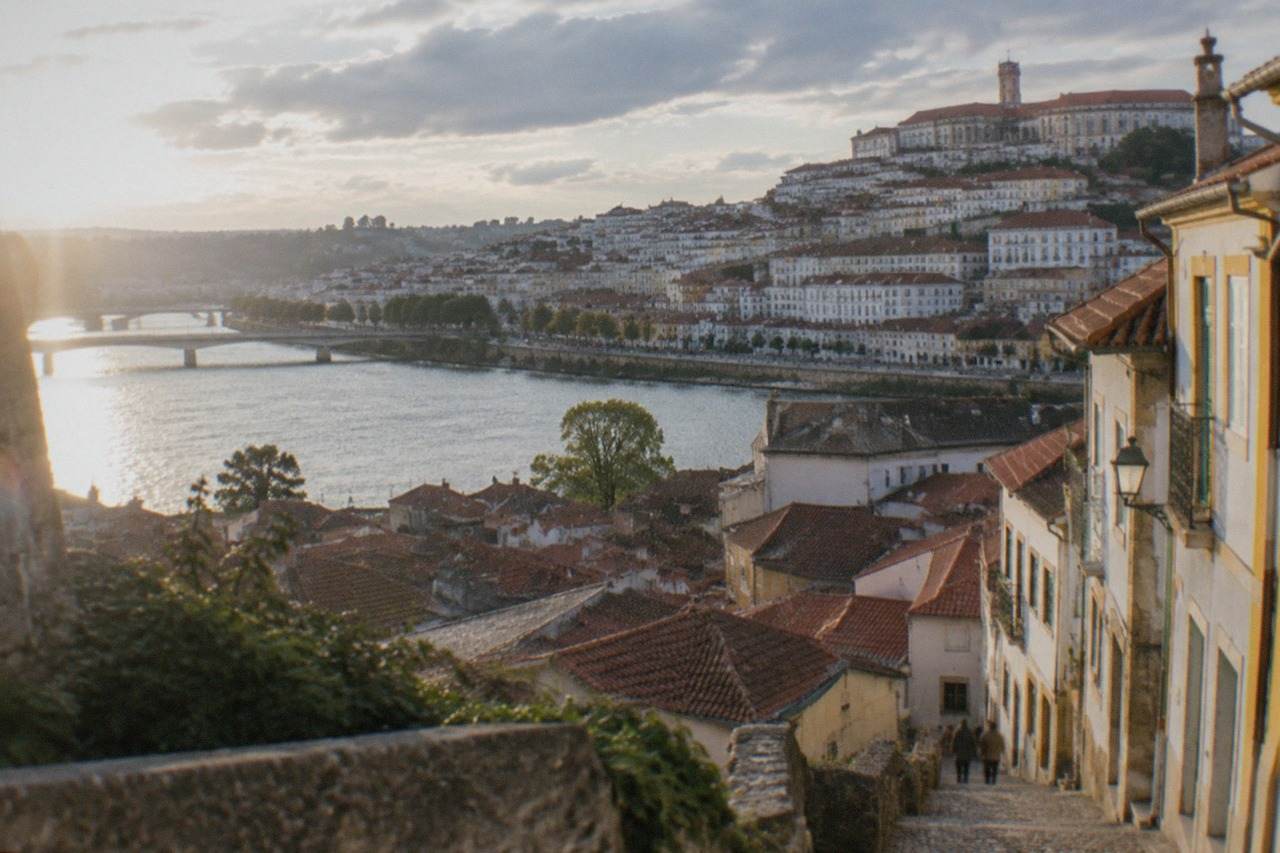
Coimbra, the university city on the River Mondego in central Portugal, is a small city with a stubborn vertical geography, and where you sleep determines how many hills you climb each day. The city that matters to a visitor is not the district of the same name, which reaches the Atlantic and contains Figueira da Foz, and it is not the Brazilian or Angolan places that share the name. It is a compact municipality of roughly 698,151 overnight stays recorded in 2025, according to the municipality's own figures, spread across an old town that rises from the river to the university hill in the space of a few minutes' walking.
The honest answer is that most first-time visitors should stay in the Baixa, the low-lying downtown between the river and the hill, and that the Alta above it suits travelers who want views and quiet and are willing to climb. This page walks through each area, what it costs to sleep in this city, and how the tourist tax works, using figures the municipality, the University and the transit operator publish themselves. The site behind this page, Coimbra Travel Guide, keeps a fuller area-by-area guide to where to stay if you want to go deeper.
What Neighborhood to Stay in Coimbra?
For a first visit, the Baixa, Coimbra's downtown between the River Mondego and the university hill, is the best neighborhood to stay in: it is flat, it holds most of the restaurants and the main square, and it sits below the Alta so every walk home is downhill. The Alta suits visitors who want the university, the views and the quiet at the cost of stairs, while Santa Clara across the river trades convenience for calm and lower prices.
That is the short version. The longer version starts with the geography, because Coimbra's old town is essentially a hill with a city wrapped around it. The UNESCO World Heritage inscription, list reference 1387, from 2013, covers "University of Coimbra, Alta and Sofia": two components inside the old town, the university hill and the college street. It does not cover the whole city, and guides that say Coimbra is a UNESCO World Heritage city are wrong, a point the UNESCO listing itself makes plain by naming only the Alta and Sofia.
The Baixa is where the daily life of the city happens: commerce, cafés, the market tradition, the streets that flood with students from the University's about 31,000-strong population published on its own homepage. The Alta is the university hill, the Paço das Escolas, the Biblioteca Joanina, and a set of lanes that climb steeply from the Arco de Almedina. Santa Clara sits across the river, around the Santa Clara-a-Velha monastery site, which has been closed for requalification works since October 2025 and should be checked before you plan a visit around it.
| Area | Character | Best for | Trade-off |
|---|---|---|---|
| Baixa (downtown) | Flat, commercial, lively, student-heavy | First visits, short stays, food and transport links | Can be noisy on weekend nights |
| Alta (upper town) | Monumental, steep, views over the river | The University, the Joanina, quiet evenings | Stairs and climbs every day |
| Santa Clara (across the river) | Calmer, greener, near the Parque Verde do Mondego | Longer stays, families, river walks | A bridge between you and the old town |
| Rua da Sofia fringe | Heritage street, colleges, closer to Coimtra-B side | Travelers arriving by long-distance train | Less atmosphere than the Baixa at night |
One thing worth deciding before the hotel: whether this city's hills are for you. The question is Coimbra a walkable city gets a yes, but with a vertical asterisk, and the neighborhood you choose is how you manage it.
Is the Baixa the Best Base for a First Visit to Coimbra?
Yes, for most first-time visitors the Baixa is the best base: it is the flat, low downtown between the river and the university hill, it puts the restaurants, the commercial streets and the riverfront within a short walk, and every return trip from the Alta is downhill rather than up. The trade is noise, because this is also where the student city goes out at night, so light sleepers should ask for a room facing away from the main streets.
The Baixa works because of geometry. The old town is a hill, and the Baixa is the bottom of it, which means the day starts flat and the climbing is optional and paid out in small instalments as you explore upward. The Arco de Almedina, the old gate in the medieval wall, marks the start of the climb toward the university, and the route from there is the spine of the whole visit.
It also works because of transport. The Baixa is where the city's buses concentrate, and the SMTUC network's 2026 tariff, in force since 1 April 2026, prices a driver-bought single at 2.00 EUR, a pre-purchased trip in packs of three or more at 0.90 EUR, with one trip valid 90 minutes on the urban network including transfers. The same tariff confirms SMTUC tickets are valid on the Metro Mondego network too, the new bus-rapid system that has been opening in stages since 2025, which matters if you pick a hotel near one of its stops.
The student presence cuts both ways. The University publishes a figure of about 31,000 students on its own homepage, and a large share of the city's evening life follows them downhill into the Baixa. That is atmosphere on a Friday and noise on a Saturday, and it is the single biggest reason some travelers prefer Santa Clara instead.
Where Should You Stay to Be Near the University of Coimbra?
Stay in the Alta, the upper town on the university hill, to be near the University of Coimbra: the Paço das Escolas, the Biblioteca Joanina and the Capela de São Miguel are all at the top of the hill, and a hotel in the Alta puts them minutes away on foot. The cost is stairs, because every trip down to the restaurants and back is a climb, and the reward is the quietest, most monumental quarter of the city after the day visitors leave.
The University's own visit pages state the practical constraints clearly. The combined ticket that includes the Biblioteca Joanina costs 16.50 EUR for an adult and is the only way into the library, which cannot be bought on its own; the version without the Joanina is 12.50 EUR; a guided Palace of Schools visit is 25.00 EUR. The Joanina admits 50 people every 20 minutes, the time printed on your ticket is the library slot specifically, and entry outside that slot is refused. Online purchase closes 20 minutes before the visit time. That ceiling of 50 people per 20-minute slot is the one genuine scarcity fact in this city, and it is the reason a hotel on the hill, close to the kiosk, is worth considering for anyone whose main goal is the Joanina.
| University ticket (visit.uc.pt, 2026 season) | Adult price | What it includes |
|---|---|---|
| Joanina Library + University + Science Museum | 16.50 EUR | Joanina with timed slot, Royal Palace, St Michael's Chapel, Chemistry Laboratory, Academic Museum, Cabinet of Curiosities, Mineral Gallery |
| University + Science Museum | 12.50 EUR | Same list, without the Joanina Library |
| Guided tour, Palace of Schools | 25.00 EUR | Guide-led, 1h30, science spaces not included |
| Guided tour, Botanical Garden | 10.00 EUR | 1h30, meeting point at the garden's side entrance |
Staying near the hill also changes the rhythm of the day. The University runs a summer schedule of 09:00 to 20:00 from 1 April to 30 September and a winter schedule of 09:00 to 17:30 from 1 October to 31 March, with the ticket valid two days except the fixed Joanina slot. A visitor based in the Alta can be at the door for a morning slot, spend the middle of the day downhill in the Baixa, and come back up for the evening light over the river, which is the view this hill exists for.
One thing not to plan around: the Torre da Universidade, the clock tower, is closed. The University's own information page states "we regret to inform you that this facility is closed", and it mentions the tower's 184 steps and narrow passage only as background. No tower climb belongs in any itinerary, whatever an older guide says.
Should you book a guide for the hill, or go alone? The University of Coimbra guided tour with tickets covers the ground with a former student in a group of ten, from $67 per person, rated 4.9 from 193 reviews, and it handles the ticketing so the Joanina slot is not your problem.
Is Santa Clara or the Riverside a Good Place to Stay in Coimbra?
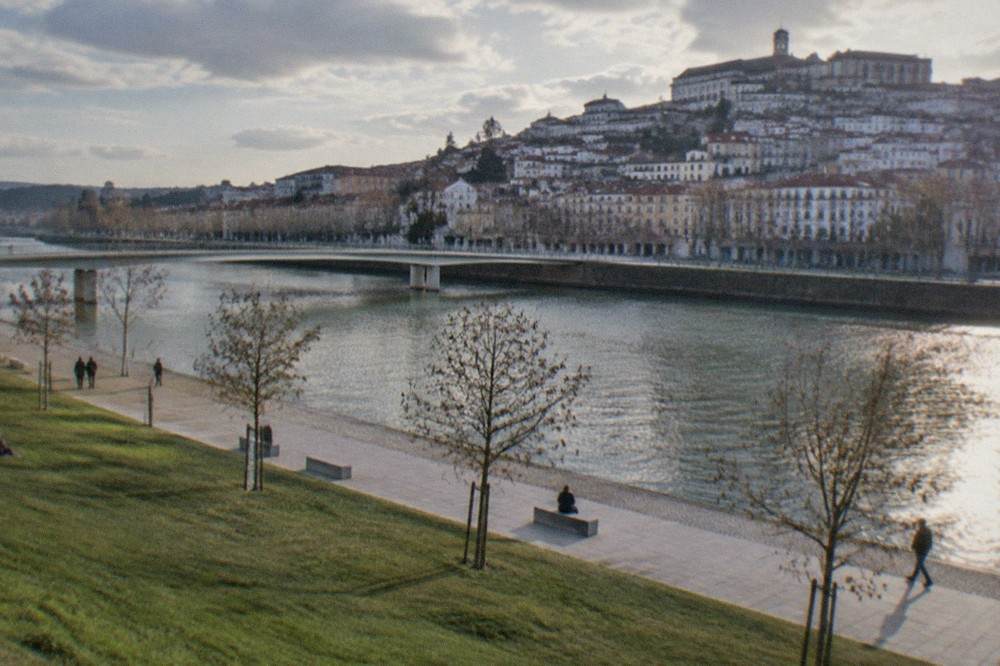
Santa Clara, the district across the River Mondego, is a good place to stay in Coimbra for longer visits, families and anyone who wants calm: it faces the old town across the water, it borders the Parque Verde do Mondego, and it is typically quieter and cheaper than the Baixa. The trade is the bridge, because everything on the hill side of the river then begins with a crossing, and the riverside walk is lovely at a leisurely pace but adds time to every single outing.
The riverside green space is the district's real asset. The Parque Verde do Mondego stretches along the water on the Santa Clara side, and it is the flat, stroller-friendly part of an otherwise vertical city, which is why families and runners end up here. The Mondego also carries river cruises: a 50-minute cruise with city views runs from $11 per person, rated 4.2 from 43 reviews, and a traditional Barca Serrana boat trip runs from $15, rated 4.6 from 171 reviews, both leaving from the city side of the water.
The one monument to be careful with on this side is Mosteiro de Santa Clara-a-Velha. It has been closed for requalification works since October 2025, it has no page on the national museums portal, and no price or opening time for it can be published because none is sourced. Check its status before booking a Santa Clara stay around it, and treat the monastery as a maybe rather than a plan.
Santa Clara also suits a different kind of day trip planning. The schist villages of the Lousã mountain, one of the region's best excursions, are reached by road heading inland, and being already on the south bank saves crossing the city center to start. For a taste of what that side of the region offers, the Lousã day trip guide covers the villages, and the eight-hour cascades and Piodão tour from the trio above is the full version.
How Much Does It Cost to Stay in Coimbra?
The one fixed, citywide cost every overnight visitor pays is Coimbra's municipal tourist tax: 1.00 EUR per guest per night, capped at three consecutive nights, charged from age 16, payable to the accommodation at check-in or check-out, in force since 5 April 2023. A couple staying seven nights pays 3.00 EUR each, 6.00 EUR total, per the municipality's own worked example. Room rates themselves vary by season, with the summer months and May's student festivals the tightest windows.
The tax is worth understanding because it is not collected through a booking platform, it is collected by the hotel or apartment, and guests who do not expect it sometimes mistake it for a surprise charge. The municipality's service page sets out the rules: no VAT applies, it is charged all year with no low-season exclusion, and the only exemptions are medical stays, one accompanying traveler, and guests with a disability of 60 percent or more on production of a document. There is no exemption for business travel, internships or students.
The municipality also publishes the numbers behind the tax, and they are more interesting than the tax itself. Coimbra recorded 698,151 overnight stays in 2025, and the municipal study accompanying the 2026 tax proposal estimates the annual municipal cost associated with tourism at 2.44 million EUR, or 3.49 EUR per overnight stay, against which the one-euro tax sits below cost. In July 2026 the municipality's executive approved a proposal to raise the tax to two euros per night, but until the municipal tax pages themselves state 2.00 EUR, the published current rate remains 1.00 EUR.
Timing matters more than neighborhood for price. IPMA's 1991 to 2020 normals for the Coimbra / Bencanta station show August as the hottest month, at a mean maximum of 29.1 C with 10.9 days above 30 C, and September as the quiet bargain: a mean maximum of 27.4 C, higher than June's 26.3 C, with only 49.9 mm of rain and the summer crowds gone. The autumn rain holds off until October, when the monthly total jumps to 114.5 mm, and November is the wettest month at 121.5 mm. If you are flexible, September is the month the climate table quietly recommends.
How Many Days do You Need, and Does the Neighborhood Change That?
Two nights is the honest minimum for Coimbra, and three lets the neighborhood choice matter less, because you can sleep in the Baixa, walk the Alta properly, and still cross to Santa Clara or take one inland excursion. With one night only, stay in the Baixa without exception, since every minute saved on logistics counts, and save the schist villages and Conímbriga for a return trip. The neighborhood you pick shapes the pace, but the number of days shapes what you can reach at all.
The answer to how many days should I stay in Coimbra is usually two or three, and the neighborhood logic follows from it. One night means the Baixa, because the flat downtown minimizes wasted movement. Two or three nights opens Santa Clara, the riverside, and the day trips: Conímbriga, the Roman town about 16 km south in Condeixa-a-Velha in the municipality of Condeixa-a-Nova, whose museum and ruins share a single 10.00 EUR adult ticket and, usefully, open seven days a week, which makes it the reliable Monday option when other monuments close.
For a first evening in any neighborhood, the walking tour in the cards above is the fastest way to learn the city's layout: Coimbra Top Attractions runs 2 hours 30 minutes from $5.85 per person, rated 5 from 151 reviews, and it covers the downtown, the historic center and the university hill in one loop. Doing it on day one means the rest of the stay is spent in places you already know how to reach.
If the choice is between Coimbra and somewhere else on a Portuguese itinerary, the comparisons collected under what is special about Coimbra, Portugal make the case this page has been assuming all along: a small, steep, student-scaled city where the right neighborhood turns a good trip into an easy one.
Common Questions About Staying in Coimbra
What neighborhood to stay in Coimbra?
The Baixa, the flat downtown between the river and the university hill, is the best base for most first-time visitors: restaurants and transport are on the doorstep and the walks home are downhill. The Alta suits travelers focused on the University who accept stairs, and Santa Clara across the river suits longer stays and families who prefer calm.
Is Coimbra too hilly to enjoy without a car?
No, but the hill is real. The Baixa is flat and the climb to the university is concentrated in one stretch through the Arco de Almedina. SMTUC buses cover the city, with a driver-bought single at 2.00 EUR and pre-purchased trips at 0.90 EUR under the 2026 tariff, and those tickets are also valid on the Metro Mondego network.
Does Coimbra charge a tourist tax?
Yes, 1.00 EUR per guest per night, capped at three consecutive nights, from age 16, paid directly to the accommodation at check-in or check-out, in force since 5 April 2023. A couple staying seven nights pays 3.00 EUR each. A two-euro rate was approved as a proposal in July 2026 but is not the published current rate.
Which side of the river is better, the old town or Santa Clara?
The old town side, the Baixa and the Alta, is better for short stays because everything monumental is within walking distance. Santa Clara is better for calm, green space along the Parque Verde do Mondego and typically lower prices, at the cost of a bridge crossing on every outing to the old town.
Is it better to stay near the University of Coimbra itself?
Only if the Joanina Library is the priority of the trip. The library admits 50 people every 20 minutes and the time printed on the 16.50 EUR combined ticket is the fixed entry slot, so staying on the hill makes early slots easy. Everyone else is better off in the Baixa and climbing up once.
When is the most expensive time to stay in Coimbra?
Summer, and May around the student festivals. The University closes its visitor circuit on 24 May and Mosteiro de Santa Cruz suspends visits on the Cortejo da Queima das Fitas, a moveable Sunday, which signals how busy that window is. September offers nearly August warmth, a 27.4 C mean maximum against August's 29.1 C, with far fewer visitors.
Pick the Baixa for a first visit, the Alta for the University and the views, Santa Clara for calm and green, and give the city at least two nights so the choice is a pleasure rather than a compromise.