Buses to Coimbra, Portugal: Coach Routes, City Bus Fares and What to Know Before You Ride
Coimbra, Portugal, the university city on the River Mondego, is reached by long-distance coach and explored by a municipal bus network whose 2026 tariff is published, checkable and cheaper than most visitors expect.
Short answer
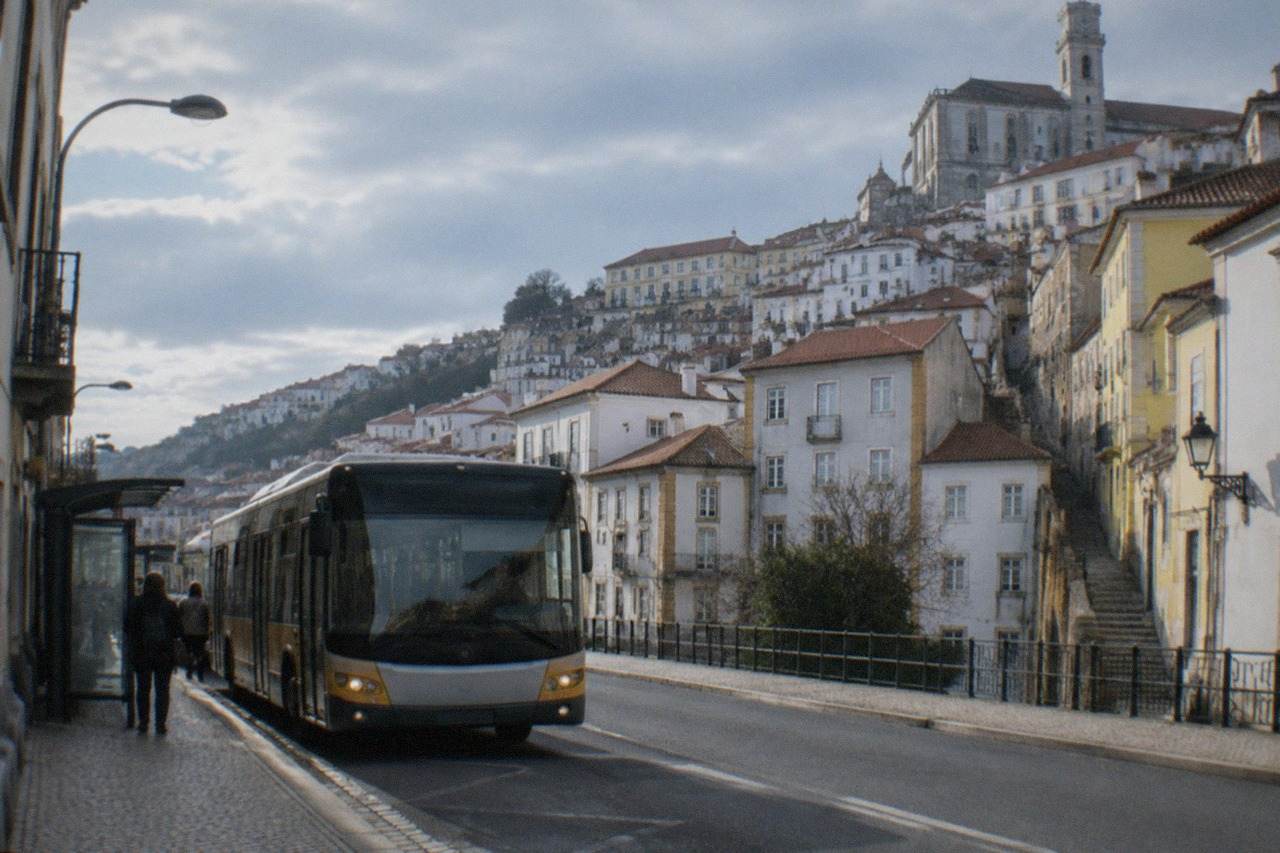
Long-distance coaches including FlixBus serve Coimbra, Portugal, and once you arrive the SMTUC city network charges 2.00 EUR for a ticket bought from the driver or 0.90 EUR per trip when pre-purchased, with each trip valid 90 minutes including transfers, and the same tickets are valid on the new Metro Mondego network.
Coimbra, Portugal, the university city on the River Mondego, sits halfway between Porto and Lisbon on the country's main north-south corridor, and that geography is why so many visitors arrive on a coach rather than a train. Long-distance buses, including FlixBus services on the Lisbon and Porto corridors, call here, and once you step off, the city's own SMTUC network takes over. This guide sets out what is verified about arriving by coach, what the 2026 SMTUC tariff actually charges, and how the same ticket now reaches the new Metro Mondego network. Nothing here is guesswork: every fare comes from the operator's own tariff document, and where a figure could not be confirmed, this page says so instead of inventing one.
Which Bus Operators Run Long-Distance Coaches to Coimbra, Portugal?
Coimbra, Portugal is served by long-distance coach operators on the main Portuguese corridors, with FlixBus among the carriers running services connecting the city to Lisbon, Porto and intermediate towns. Tickets are bought through each operator's own live listing rather than at a municipal desk, timetables and fares change by season, and this page prints no schedule for any carrier.
FlixBus is the name most international visitors search for, and it is a genuine option here: the operator runs a Portuguese domestic network along the corridor that Coimbra sits on. But it is not the only way to arrive on four wheels. Portuguese intercity operators have served this corridor for decades, and Rede Expressos is the domestic brand most locals would name first. The practical point for a visitor is not which logo is on the side of the bus, it is that the corridor is competitive, which keeps fares low and departures frequent compared with quieter parts of the country.

What no honest guide can do is print a journey time or a fare for these coaches. Those figures are set by the operators, vary by departure and sell dynamically, and nothing in this site's verified research attaches a specific time or price to a specific coach route. The operator's live listing is the only source that is current on the day you book. What can be said with confidence is the geography: Coimbra is on the axis between Portugal's two largest cities, so the number of daily departures across all operators is high, and the city is a scheduled stop rather than a request halt.
If you are weighing the coach against the train, the honest comparison is about where you land, not how fast you travel. The train discussion, including the two confusingly similar stations, is covered in detail on Coimbra's train stations A and B, and the two guides together cover every realistic way of arriving without a car.
Where do Long-Distance Buses Arrive in Coimbra?
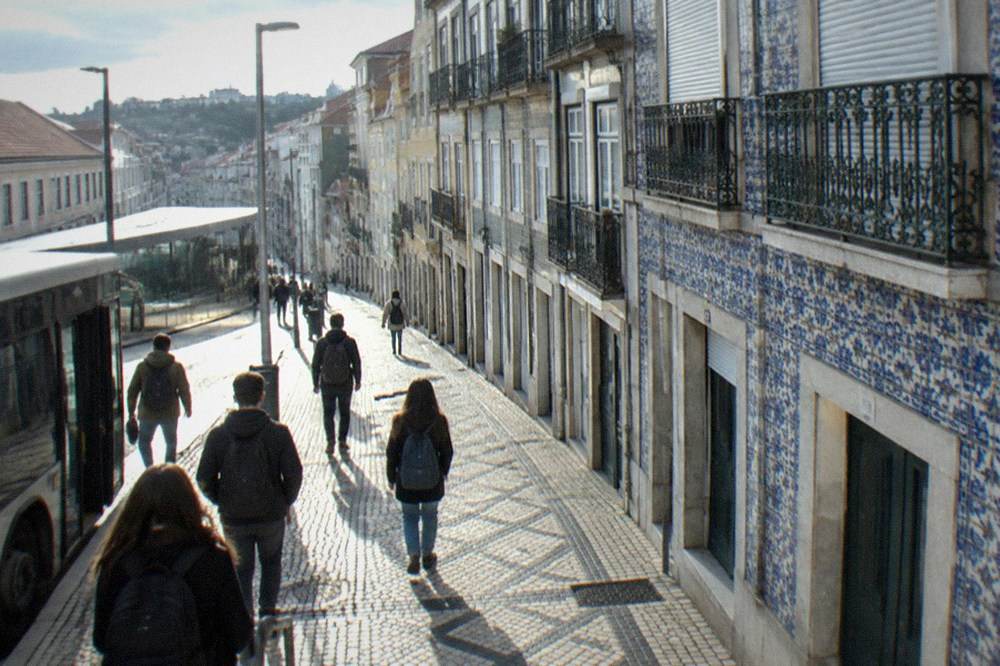
Long-distance coaches in Coimbra, Portugal arrive at the city's bus terminal and at central curbside stops in the Baixa, the low-lying downtown district, within a short walk of the River Mondego, the main shopping streets and the bottom of the climb to the university hill. The arrival point is central, unlike the two train stations, which sit in different places and confuse visitors regularly.
The geography matters more here than the operator. Coimbra is a city built on two levels: the Baixa along the river, and the Alta, the university hill above it, part of the UNESCO-inscribed "University of Coimbra - Alta and Sofia" property, list reference 1387, inscribed in 2013. Note the precise wording, because guides get it wrong constantly: the UNESCO inscription covers the university hill and the college street of Rua da Sofia, not the whole city. Arriving by bus puts you in the Baixa, which means the climb to the university is ahead of you, not behind you.
For luggage, timing and the practicalities of the first hour in the city, the Coimbra travel guide collects the basics in one place. If your coach arrives late in the day, the best time to visit Coimbra explains how the seasons change what is realistic in an evening, using the official IPMA climate normals rather than folklore. And if the climb from the river to the university is a concern, the page on accessibility and Coimbra's hills is honest about the gradient.
A guided walk is one way to skip the planning entirely on arrival day. The Coimbra guided visit with a certified local guide runs three hours with admission included and is rated 4.6 from 51 reviews on the operator's live listing, and it is aimed squarely at travellers who have just stepped off a bus or train and want the old town decoded by someone who lives in it. You can also Check availability alongside the tour page.
How Much do SMTUC City Buses Cost in Coimbra?
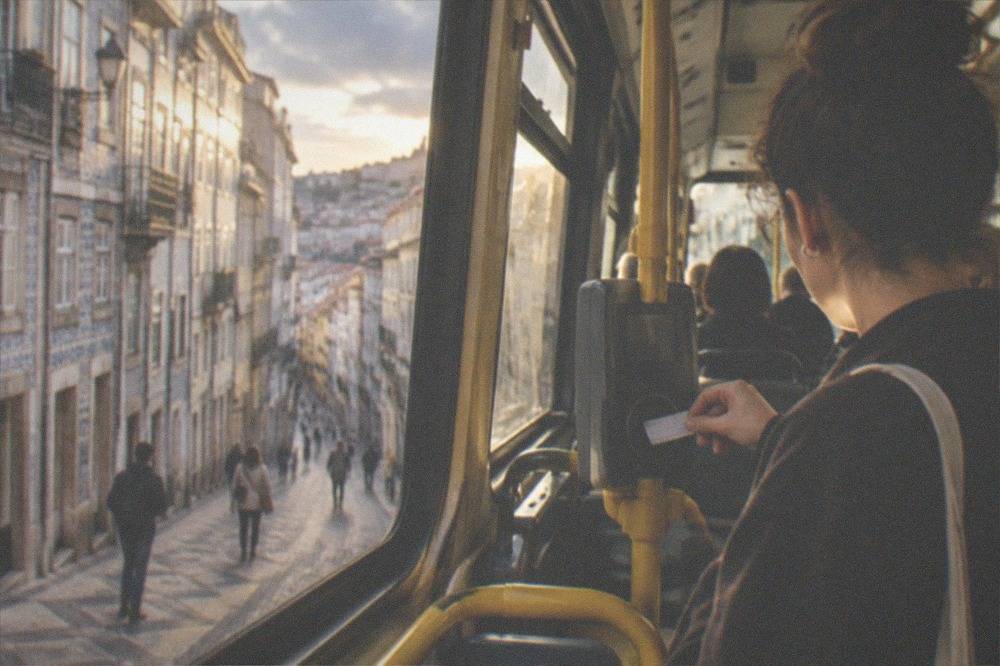
A single SMTUC ticket bought from the driver on board costs 2.00 EUR, while pre-purchased tickets in books of three or more work out at 0.90 EUR per trip, according to the operator's tariff in force since 1 April 2026. One trip is valid 90 minutes on the urban network, with 90, 120 or 150 minutes depending on the ring, all transfers included. Fare evasion is fined 120.00 to 350.00 EUR.
Those numbers come from the SMTUC's own 2026 tariff document, not from a forum or a memory, and the difference between the two single-ticket prices is the single most useful thing on this page. A visitor who buys from the driver every time pays more than double per journey compared with someone who walks to a kiosk or agent first and pre-purchases. For a stay of any length, the pre-purchase route is the obvious play.
| SMTUC ticket type | Price | Notes from the 2026 tariff |
|---|---|---|
| Single ticket from the driver | 2.00 EUR | Bought on board the vehicle |
| Pre-purchased ticket, 3 or more trips | 0.90 EUR per trip | Sold in books, validated on boarding |
| Large-family one-day ticket, 7 trips | 1.00 EUR | Requires eligible large-family status |
| MOVE-C support card | 3.00 EUR youth, 6.00 EUR others | Reusable card cost |
| Viagem ConVIDA support card | 0.50 EUR | For occasional and pre-purchased tickets |
| Fare evasion fine | 120.00 to 350.00 EUR | Enforced across the network |
Two things the tariff deliberately does not settle, and which this page will not invent. The one-day, three-day and seven-day passes exist, but their prices sit in a three-column grid in the PDF whose row-to-price mapping was inferred from column order rather than read, so no figure for them appears here. And the Elevador do Mercado, the funicular that saves the climb between the Baixa and the upper town, appears in the tariff only inside a combined-pass line, so its standalone single-ride price is unsourced and is not printed. Both are described honestly in the getting around Coimbra and Elevador do Mercado guides.
The bus is also the answer to a question visitors rarely think to ask before arriving: what happens on a rainy day? IPMA's 1991 to 2020 normals for the Coimbra / Bencanta station show November as the wettest month at 121.5 mm, with October at 114.5 mm and January at 113.5 mm, and the SMTUC network is what keeps those days usable. The rainy day guide to Coimbra pairs well with the fare table above.

Do SMTUC Bus Tickets Work on the Metro Mondego?
Yes. The SMTUC 2026 tariff is explicitly headed "Títulos de Transporte Intermodais - Utilização SMTUC e Metro Mondego" and marks its tickets as valid on both networks, so a pre-purchased SMTUC title carries you onto the Metro Mondego bus rapid transit network as well as the city buses. The tariff does not give a line map, a station list or an opening date, and this page publishes none of those.
The Metro Mondego is the biggest transport change in Coimbra in a generation, and the honest way to describe it is narrow. A bus rapid transit network is opening in stages; the SMTUC tariff, a primary and checkable source, confirms intermodality, which means your bus ticket works on it. That is verified. The route-by-route detail is not verified on this build, because the operator's own site refused automated access, so any station list or opening date printed here would be a guess dressed as a fact. Dated Portuguese press describes staged openings across 2025 and 2026, but press is not the operator, and this site does not promote a press figure to an operational fact. The rest of the planning pages sit on Coimbra Travel Guide.

For a visitor, the practical takeaway is simple: buy pre-purchased SMTUC tickets at 0.90 EUR per trip and treat them as the default currency of movement around the city, on whichever vehicle arrives first. The where to stay in Coimbra guide helps you pick a base that minimises the need for any of this, since much of the old town is better on foot anyway.
Bus or Train to Coimbra: Which Should You Take?
Both work, and the choice in Coimbra, Portugal usually comes down to price and where you want to surface: coaches stop centrally in the Baixa close to the river, while the railway has two stations with confusingly similar names, Coimbra-B and Coimbra-A, in different places, and which trains call at which station must be checked with CP, the national operator. The bus arrival is the simpler one for a first-time visitor.
The two-stations trap deserves its own warning. Coimbra-B and Coimbra-A exist, they are in different places, and visitors regularly confuse them. But the specifics, which services call where, and whether the short connecting run between them is included in a long-distance rail ticket, are unsourced on this build: CP's own site soft-404s on station pages, answering with an error document behind a healthy status code, which is exactly the kind of defect that ships confident nonsense. So the guidance here is deliberately plain: the two stations exist, they are different, and CP is where to check. The full honest treatment, with everything that is and is not verified, lives on Coimbra's train stations A and B, alongside the route guides from Porto to Coimbra and Lisbon to Coimbra.

The coach's advantage is predictability of arrival point. You surface in the centre, near the river, with the whole Baixa around you and the university hill in front of you. The train's advantage is the corridor itself and, for anyone continuing beyond Coimbra, the onward reach of the national network. If Coimbra is one stop on a longer Portuguese itinerary, the day trip from Porto and day trip from Lisbon pages compare the two arrival styles for short visits.
What Does It Cost Once You Are Off the Bus in Coimbra?
Once the coach fare is paid, Coimbra's entry costs are modest and verifiable: the University of Coimbra combined ticket including the Biblioteca Joanina is 16.50 EUR for adults, the version without the library 12.50 EUR, Sé Velha charges 3.00 EUR per person, Mosteiro de Santa Cruz 5.00 EUR, and the Conímbriga museum and ruins ticket, about 16 km south, is 10.00 EUR. The Biblioteca Joanina cannot be bought separately and admits 50 people every 20 minutes.
That table is the budget for the sightseeing day, and the Joanina rule is the one line that changes plans. The library exists only inside the 16.50 EUR combined ticket, the time printed on the ticket is the library slot specifically, entry outside that slot is refused, and the University caps entries at 50 people every 20 minutes. In summer that ceiling is the real scarcity in this city, and it is the one urgency fact on this site that is both genuine and official.
| Venue | Adult price | Source basis |
|---|---|---|
| University of Coimbra, combined ticket with Biblioteca Joanina | 16.50 EUR | University's own visit pages, valid 01.01.2026 to 31.12.2026 |
| University of Coimbra, ticket without the Joanina | 12.50 EUR | Same University price list |
| Sé Velha de Coimbra | 3.00 EUR individual, 2.50 EUR for groups over 10 | Parish visitor page |
| Mosteiro de Santa Cruz | 5.00 EUR individual, 3.50 EUR for groups of 12 or more | Parish visitor page |
| Museu Nacional de Conímbriga, museum and ruins | 10.00 EUR | National museum's own page |
Then there is the overnight cost that arrives with you. Coimbra charges a municipal tourist tax of 1.00 EUR per guest per overnight stay, capped at three consecutive nights, from age 16, paid to the accommodation at check-in or check-out, and in force since 5 April 2023. A two-euro rise was approved as a proposal by the municipality's Executive on 21 July 2026, but the published rate remains 1.00 EUR until the municipality's own tax pages say otherwise, so 1.00 EUR is what this site prints.
| Tourist tax rule | Detail |
|---|---|
| Rate | 1.00 EUR per guest per overnight stay |
| Cap | Maximum 3 consecutive nights per person |
| Minimum age | From age 16, birthday excluded, ID required |
| Where paid | Directly to the accommodation, not a platform |
| Exemptions | Medical stays, one medical companion, disability of 60% or more, with documents |
| In force since | 5 April 2023 |
What Is Closed or Different in Coimbra Right Now?
Three things a bus arrival should know about in 2026: the Torre da Universidade is closed, with the University's own page stating the facility is shut and no climb available; the Museu Nacional de Machado de Castro is closed for conservation work, with no reopening price published on an official page; and Mosteiro de Santa Clara-a-Velha has been closed for requalification works since October 2025. Sé Velha, Santa Cruz and the University circuit are operating normally.
This is where a lot of guides quietly lie, because the closed venues still have normal-looking hours and prices floating around the web, and in Machado de Castro's case the museum's own page prints a plausible opening table directly below the closure line. The rule this site follows is strict: if the official page says closed, the page says closed, and no price or timetable is published for a door that is shut. The Machado de Castro museum and Santa Clara-a-Velha guides carry the full treatment.
| Site | Status in 2026 | What this site prints |
|---|---|---|
| Torre da Universidade | Closed, per the University's own info page | No climb, no price, no hours |
| Museu Nacional de Machado de Castro | Closed for conservation work | Closure stated, no reopening price |
| Mosteiro de Santa Clara-a-Velha | Closed for requalification works since October 2025 | Closure stated, no price or hours |
| Paço das Escolas and Biblioteca Joanina | Open, timed Joanina slots | 16.50 EUR combined ticket, 50 people per 20 minutes |
| Sé Velha and Mosteiro de Santa Cruz | Open on published schedules | 3.00 EUR and 5.00 EUR individual entry |
One seasonal wrinkle worth planning a bus arrival around: the University closes its visitor circuit on 24 May, and Santa Cruz suspends visits on the Cortejo da Queima das Fitas, a moveable Sunday in the student festival season. The exact festival dates are not officially published in a form this site could verify, but the two closure facts are official, and a traveller arriving blind in late May can find the headline sights shut for the day. The Queima das Fitas guide explains the festival around those verified closures.
What Should You Do with Your First Hours After the Bus?
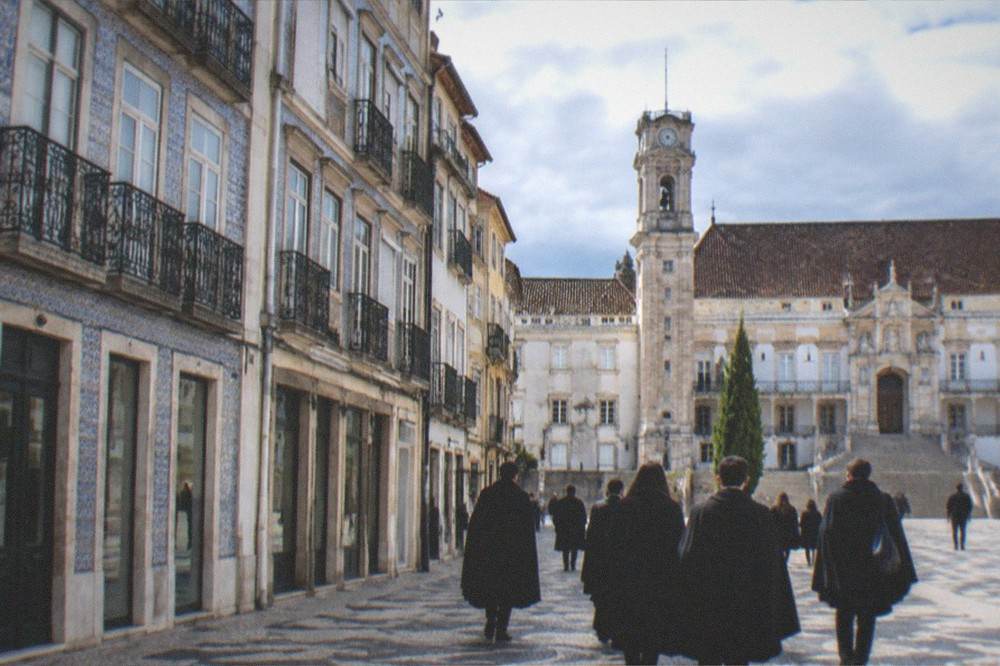
With a central arrival, the sensible first hours in Coimbra, Portugal run uphill: start in the Baixa by the River Mondego, climb to the Paço das Escolas on the university hill with a pre-booked Biblioteca Joanina slot, then descend past Sé Velha and finish at Mosteiro de Santa Cruz, the burial church of Portugal's first two kings, all within walking distance of where the coach drops you. A three-hour guided visit with admission included costs from 31 USD per person on the operator's live listing.
The walk is the point of this city. Coimbra's old town is compact, steep and rewarding, and the self-guided walking tour traces it step by step, while the one day itinerary sequences it for a coach-in, coach-out visit. For travellers who prefer company and context, the Coimbra Top Attractions Walking Tour covers the highlights in two and a half hours from 5.85 USD per person, rated 5 from 151 reviews, and the trio below compares the strongest options for an arrival day.
There is also a free option with a specific honesty rule attached. Coimbra has a set of GuruWalk free tours, tip-based walks where the platform and the guru must be named because the walk is not this site's product and never carries a price here. The Coimbra tour: downtown, historic center, university and botanic garden is one such GuruWalk walk, rated 4.91 from 662 reviews over three hours, and it can be a good first-evening orientation before a paid visit the next morning.
For visitors whose bus ride is only the first leg of a bigger day, the full-day trip from Porto to Coimbra and Aveiro with a boat ride bundles the city with the lagoon town to the north, from 114 USD per person, rated 4.7 from 106 reviews. It is a Porto-departure product, so it suits travellers basing themselves north of Coimbra rather than those already in the city, and the day trip from Porto guide frames the choice.
However you arrive, the pattern that works is the same: land in the Baixa, buy pre-purchased SMTUC tickets if the hills defeat you, book the Joanina slot before anything else because 50 people every 20 minutes is a hard ceiling, and let the rest of the old town arrange itself around that one fixed time. The bus got you here cheaply and centrally; the rest is a walk uphill.
Common Questions About Buses to Coimbra
Does FlixBus go to Coimbra, Portugal?
Yes, FlixBus operates services along the Portuguese corridor that Coimbra sits on, connecting the city with Lisbon, Porto and intermediate stops. Timetables and fares are set by the operator and change by season, so check the operator's live listing for current departures rather than any printed schedule.
How much does a city bus ticket cost in Coimbra?
According to the SMTUC tariff in force since 1 April 2026, a single ticket bought from the driver costs 2.00 EUR, while pre-purchased tickets in books of three or more work out at 0.90 EUR per trip. Each trip is valid 90 minutes on the urban network, with all transfers included.
Do Coimbra bus tickets work on the Metro Mondego?
Yes. The SMTUC 2026 tariff is explicitly an intermodal document, headed for use on both the SMTUC and Metro Mondego networks, and marks its titles valid on both. The same ticket works on the new bus rapid transit network.
Is there a day pass for Coimbra buses?
Day passes exist in the SMTUC tariff for one, three and seven days, but their prices sit in a grid whose row-to-price mapping could not be confirmed from the operator's PDF, so this site does not print a figure. Describe your needs at a SMTUC sales point, where the current prices are posted.
Where do long-distance buses stop in Coimbra?
Long-distance coaches arrive at the city's bus terminal and central stops in the Baixa, the downtown district by the River Mondego, within walking distance of the old town and the base of the climb to the university hill.
Is the bus better than the train for reaching Coimbra?
It depends on where you want to surface. Coaches arrive centrally in the Baixa, while the railway has two stations, Coimbra-B and Coimbra-A, in different places, and which trains call at which station must be checked with CP. The bus arrival is simpler for a first visit; the train is the faster option on the main corridor.