Coimbra Accessibility and the Hills: Getting Around Portugal's University City with Limited Mobility
Coimbra, Portugal, is built on a hill: the university sits high on the Alta, the commercial Baixa sits below it by the River Mondego, and almost every visit involves climbing between the two. This guide explains which slopes matter, how to skip them with public transport, and which sights ask the least of your legs.
Short answer
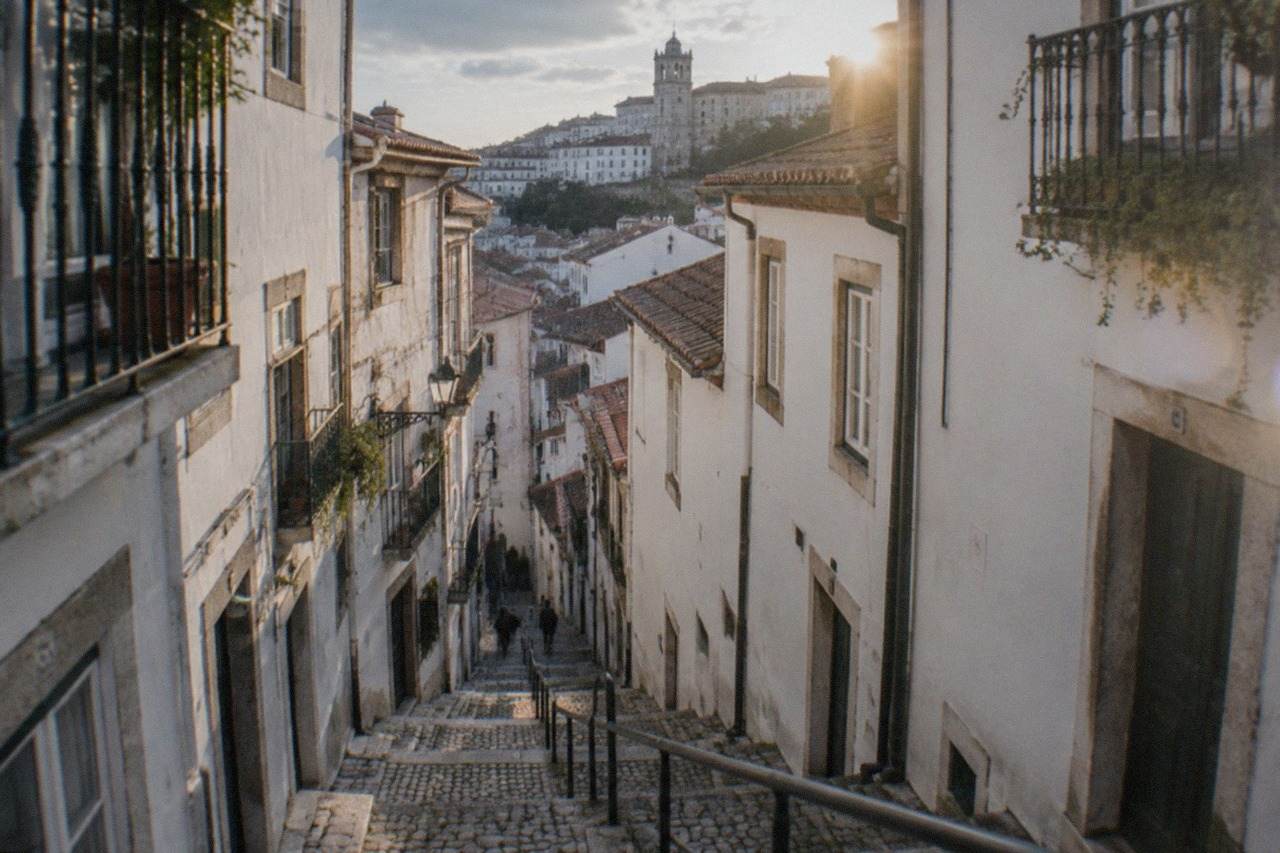
Coimbra is compact and mostly walkable, but the climb from the Baixa riverside up to the University's Paço das Escolas is steep and cobbled. SMTUC buses and the new Metro Mondego share one ticket and serve both levels, the 16.50 EUR combined university ticket covers the hilltop sights, and the flattest sightseeing is along the Mondego and in the Baixa. Plan around the hill rather than hoping to avoid it.
Coimbra, Portugal, is a city built in layers. The River Mondego runs along the bottom; the Baixa, the commercial downtown, spreads out above the water in a reasonably flat grid; and above the Baixa rises the Alta, the university hill whose Paço das Escolas and Joanina Library sit at the top of steep, cobbled medieval lanes. For most visitors this verticality is part of the charm. For anyone planning a trip with limited mobility, a wheelchair, a stroller, or simply tired knees, it is the single most important fact about the city, and almost no mainstream guide treats it as the planning problem it actually is. This one does, using the University's own published visitor information, the 2026 SMTUC tariff, and IPMA's climate normals for the Coimbra / Bencanta station, not vague impressions.
The honest starting point is that Coimbra cannot be made flat. The University of Coimbra, about 31,000 students strong on the institution's own published figures, has occupied the hill since long before accessibility was a planning concept, and the lanes that climb to it are narrow, stone-paved, and in places sharply inclined. What a visitor can control is how much of that climbing they do on foot, when they do it, and where they sleep. The sections below answer the questions that decide all three.
How Walkable Is Coimbra, Really?
Coimbra is genuinely walkable at each of its levels, but the connections between levels are steep: the Baixa riverside grid and the Mondego green park are flat and easy, the climb from the Baixa up to the Paço das Escolas is the hardest walking in the city, and the upper town's internal lanes are cobbled and irregular. A visitor who stays at one level per half-day, and uses buses or a taxi to change levels, can see almost everything without a punishing slope.
The practical way to think about the city is as three horizontal bands. The lowest is the riverside: the Parque Verde do Mondego and the Santa Clara bank across the river, all essentially level. The middle is the Baixa, the downtown shopping streets around the Praça do Comércio, gently sloping but manageable, and where most of the restaurants and hotels sit. The top is the Alta, the university quarter, reached from the Baixa by lanes that gain height fast; the University's own visitor pages describe the tourist circuit of the Paço das Escolas, St Michael's Chapel and the Joanina Library as a walking programme, and the lanes below it are medieval in width and surface.
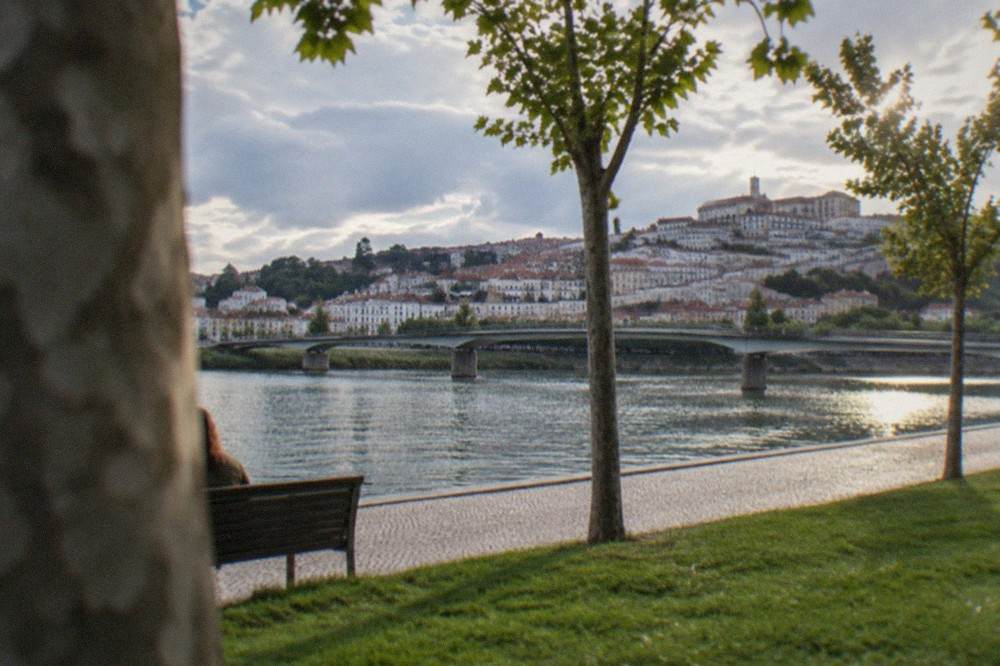
What this means for planning is sequencing. Doing the Alta first thing in the morning, before the day heats up and before the legs tire, then descending for lunch and spending the afternoon flat in the Baixa or by the river, is the pattern that works. Doing it in reverse, saving the university hill for late afternoon, is the pattern that breaks people. IPMA's 1991 to 2020 normals for the Coimbra / Bencanta station show July and August averaging 8.9 and 10.9 days per month above 30 C respectively, and August is the hottest month on both mean and mean maximum, so a midday climb in high summer is a genuinely bad idea for anyone whose mobility is already limited.
The city's compactness helps everywhere except the hill. Distances in the Baixa are short, and the riverside park connects the lower town to the Santa Clara side without any significant gradient. For orientation before arrival, the Coimbra map and area guide breaks the city into its districts, and the where to stay guide covers the neighbourhood question in depth, because for this city the hotel's altitude matters as much as its star rating.
Which Parts of Coimbra Are Steepest, and Which Are Flat?
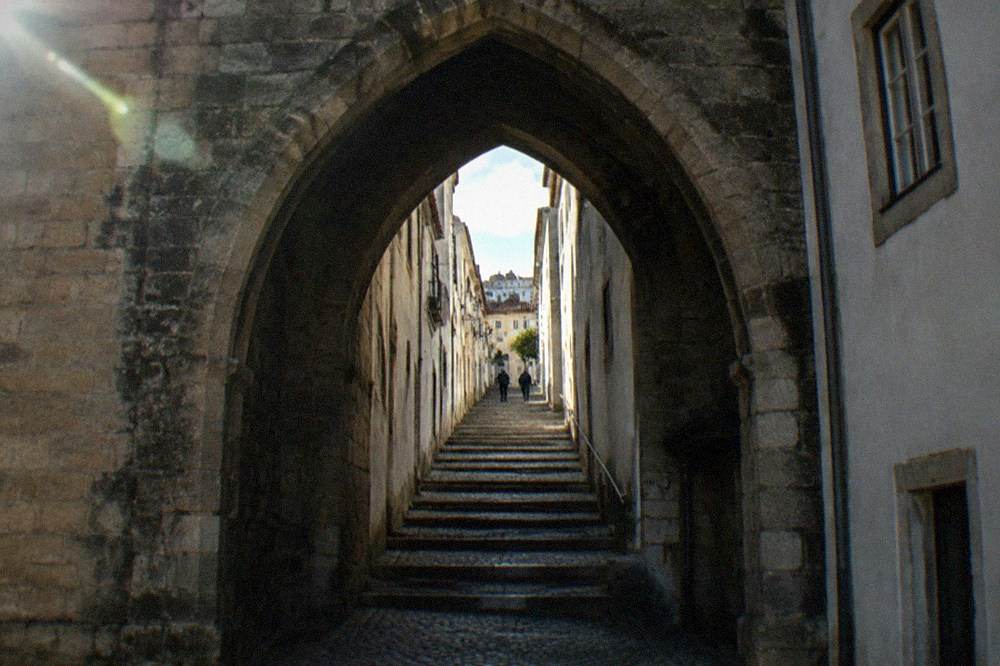
The steepest walking in Coimbra is the sequence of lanes climbing from the Baixa to the Paço das Escolas, including the approach through the Arco de Almedina into the old town, and the upper Alta's cobbled streets. The flattest ground is the Mondego riverside and green park, the Baixa's commercial grid, and the Santa Clara bank across the river. The Sé Velha and Sé Nova both sit partway up the hill, so they involve moderate climbs from below.
This table is the honest topography, band by band:
| Area of Coimbra | Terrain | What it means for visitors with limited mobility |
|---|---|---|
| Parque Verde do Mondego and riverside | Flat, paved promenade | Easiest walking in the city; level routes on both banks |
| Baixa (downtown grid) | Gentle slopes, paved streets | Manageable for most; some short ramps and kerbs |
| Lanes from Baixa to the Alta (via Arco de Almedina) | Steep, cobbled, narrow | The hardest climb in the city; avoid on foot if mobility is limited |
| Paço das Escolas and upper Alta | Cobbled, irregular surfaces, level plaza at top | Hard to reach, but reasonably level once you are there |
| Sé Velha and Sé Nova | Moderate climbs from the Baixa | Short but real ascents; rest on the way |
| Santa Clara bank (across the river) | Mostly flat | Good flat alternative sightseeing day |
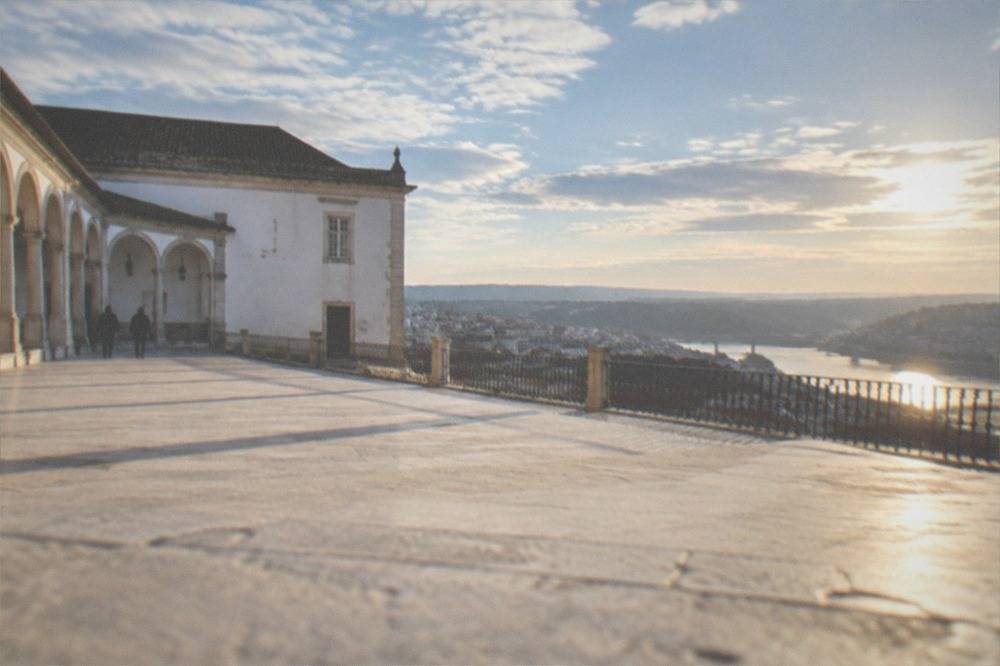
Two details are worth fixing in mind. First, the reward for the climb is a largely level plaza: once a visitor is up at the Paço das Escolas, the terrace, the views over the river and the entry to the university circuit are not themselves a further slope, so a single bus or taxi ride up can deliver the whole hilltop experience. Second, the descent is its own problem: steep cobbles downhill are harder on knees and balance than the way up, and in wet weather the stone is slick. IPMA's normals show November as the wettest month at 121.5 mm, with October at 114.5 mm and January at 113.5 mm, so autumn and winter visits should plan for wet stone on the descents.
For visitors who want the old town's atmosphere without the worst of the gradient, a guided walk is the most reliable way to get it, because a local guide knows which lanes zigzag gently and which go straight up. The Coimbra Top Attractions Walking Tour, from $5.85 per person and rated 5 from 151 reviews on the operator's live listing, runs two and a half hours and covers the city's headline sights with a guide who sets the pace. Check availability if that pace suits, or read more in the guided tours overview.
What Does the University Hill Ask of Visitors?
The University of Coimbra's visitor circuit is a hilltop programme with a hard timed-entry rule at its centre: the 16.50 EUR combined adult ticket covers the Joanina Library, the Royal Palace, St Michael's Chapel and the Science Museum spaces, is valid two days, and the Joanina admits only 50 people every 20 minutes, with the time printed on the ticket being the library slot itself. The tower is closed entirely, so no climb there is on offer, and the campus lanes below are the steep part.
The University's own visit pages are unusually clear about all of this, which makes planning easier than at most hilltop monuments. The 16.50 EUR ticket's two-day validity, for everything except the fixed Joanina slot, is the accessibility-friendly detail worth exploiting: a visitor can split the programme across two days, doing the palace and chapel one morning and the science spaces another, rather than cramming the whole hilltop into one long stint. The Joanina slot itself cannot be moved, and entry outside the printed time is refused, so the library visit should be booked for the time of day when energy and legs are at their best.
The tower deserves its own sentence, because guides still sell it. The Torre da Universidade is closed; the University's own information page states the facility is closed, and it also notes the 184 steps and narrow passage that made it a challenge even when it ran. No ticket, no climb, no view from the top: that is the current, official position, and it removes the single most physically demanding "attraction" on the hill from every plan.
The scheduling detail that matters most for the hill is the University's closing calendar. The visit circuit shuts on 24 May and on 4 October, and on 24 and 25 December, 31 December and 1 January, and the University warns that religious, official and academic ceremonies overlap with and interrupt the normal tourist circuit. The 24 May closure is the Queima das Fitas Cortejo weekend, when the student parade takes over the city; the Queima das Fitas guide covers what that week does to crowds and streets. Anyone with mobility limits should treat that weekend as a date to avoid entirely, not a spectacle to negotiate.
For the practical mechanics of tickets, the university tickets guide and the Joanina Library tickets guide carry the detail, including the 20-minute slot rule and the two-day validity.
Can You Skip the Hills Using Public Transport?
Yes, largely: SMTUC city buses climb to the Alta so your legs do not have to, a ticket bought from the driver costs 2.00 EUR, a pre-purchased ticket in books of three or more costs 0.90 EUR per trip, and every trip is valid 90 minutes on the urban network with transfers included. The same tickets are valid on the new Metro Mondego network too, which is opening in stages across the city and the valley.
The 2026 SMTUC tariff, in force since 1 April 2026, is the source for every figure in that answer, and it contains one detail that changes how a limited-mobility visitor should ride: the driver ticket at 2.00 EUR against the pre-purchased 0.90 EUR per trip. For anyone making more than a couple of journeys a day, pre-purchased tickets cut the cost by more than half. A single trip is valid 90 minutes on the urban network, 90 to 150 minutes depending on the ring, with all transfers included within that window from first validation, so one ticket can plausibly cover a bus up the hill, the hilltop itself, and a different route back down.
| SMTUC ticket (2026 tariff) | Price | Notes |
|---|---|---|
| Single ticket from the driver | 2.00 EUR | Bought on board |
| Pre-purchased ticket, books of 3+ | 0.90 EUR per trip | Loaded on a support card |
| Trip validity | 90 minutes urban (90/120/150 by ring) | All transfers included |
| MOVE-C support card | 3.00 EUR youth, 6.00 EUR others | Card itself |
| Viagem ConVIDA support card | 0.50 EUR | For occasional and pre-purchased tickets |
| Large-family 1-day ticket | 1.00 EUR | 7 trips |
| Fare evasion fine | 120.00 to 350.00 EUR | Reason to validate every trip |
Two cautions from the same tariff. Day passes exist in one, three and seven day forms, but this site does not publish their prices: the figures sit in a three-column grid in the operator's PDF whose row-to-price mapping was inferred rather than confirmed, so check current day-ticket prices with SMTUC directly. And the Elevador do Mercado, the hill lift that connects the Baixa to the upper town, appears in the tariff only inside a combined-pass line; its standalone single-ride price is unsourced, so treat the lift as a real option that exists and confirm its fare on the spot. The getting around guide and the Elevador do Mercado page cover both in planning terms.
The Metro Mondego is the newest piece of the picture, and the honest description is a careful one. It is a bus rapid transit network opening in stages, and the fact this site can state from the tariff itself is that SMTUC titles are marked valid on the SMTUC and Metro Mondego networks together. Its route-by-route detail, station lists and opening dates are unsourced on this build because the operator's site refused automated access, so no line map belongs here. What a visitor needs is simpler: the bus ticket works on it, and any question about a specific Metro Mondego stop should go to the operator.
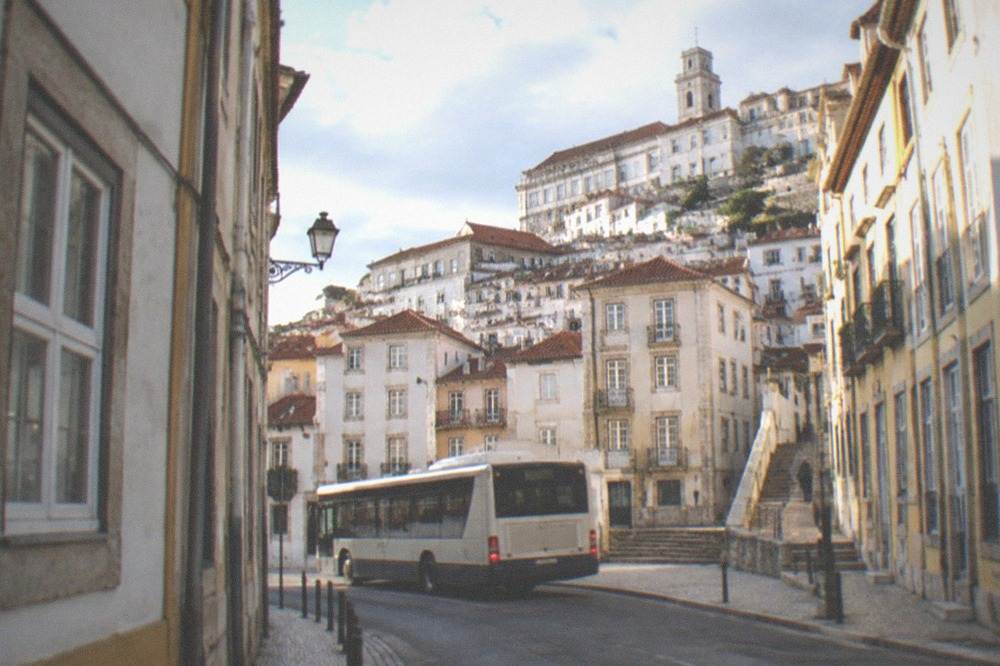
Taxis and ride services complete the picture, and for the hill they are not a luxury but a mobility tool. A taxi up to the Paço das Escolas area costs a few euros and removes the single hardest climb in the city; this site publishes no fare estimate because none was verified, so agree the fare or check the meter. For arrivals, the train stations A and B guide explains the two-station situation: Coimbra has two stations with confusingly similar names in different places, and CP, Comboios de Portugal, is where the stopping pattern and any connection between them must be checked, because this build could not verify those specifics and will not guess them.
Which Coimbra Sights Ask the Least of Your Legs?
The kindest sights to limited mobility are the flat ones: the Mondego riverside and its park, the Baixa's streets, and the Mondego river cruises, which run about 50 minutes from the water. The hilltop university circuit is reachable by bus or taxi and is largely level once you are up.
Conímbriga, about 16 km south in Condeixa-a-Velha, is a day trip whose ruins and museum share one 10.00 EUR ticket and open seven days a week, which makes it the reliable Monday option when other monuments shut. Other pages covering the same trip are gathered on Coimbra Travel Guide.
The table below gathers the sights this site has verified prices for, with the physical demand each one makes. Where a figure is missing, it is missing because it is unsourced, not because it was forgotten.
| Sight | Verified price | Physical demand |
|---|---|---|
| University combined ticket (Joanina, Palace, Chapel, Science Museum) | 16.50 EUR adult | Steep approach; bus or taxi up; timed Joanina slot, 50 people per 20 minutes |
| University + Science Museum (no Joanina) | 12.50 EUR adult | Same hill, lighter programme |
| Sé Velha de Coimbra | 3.00 EUR individual | Moderate climb from the Baixa |
| Mosteiro de Santa Cruz | 5.00 EUR individual | Central Baixa location; easiest major monument to reach |
| Conímbriga (museum + ruins, one ticket) | 10.00 EUR adult | Day trip; open Monday to Sunday, 10:00 to 18:00 |
| Portugal dos Pequenitos | Price on the venue's own ticket page | Flat riverside site in Santa Clara; hours 10:00 to 19:00 from 1 March to 15 October |
| Mondego river cruise | From 11.00 EUR on the listing | Flat boarding; about 50 minutes on the water |
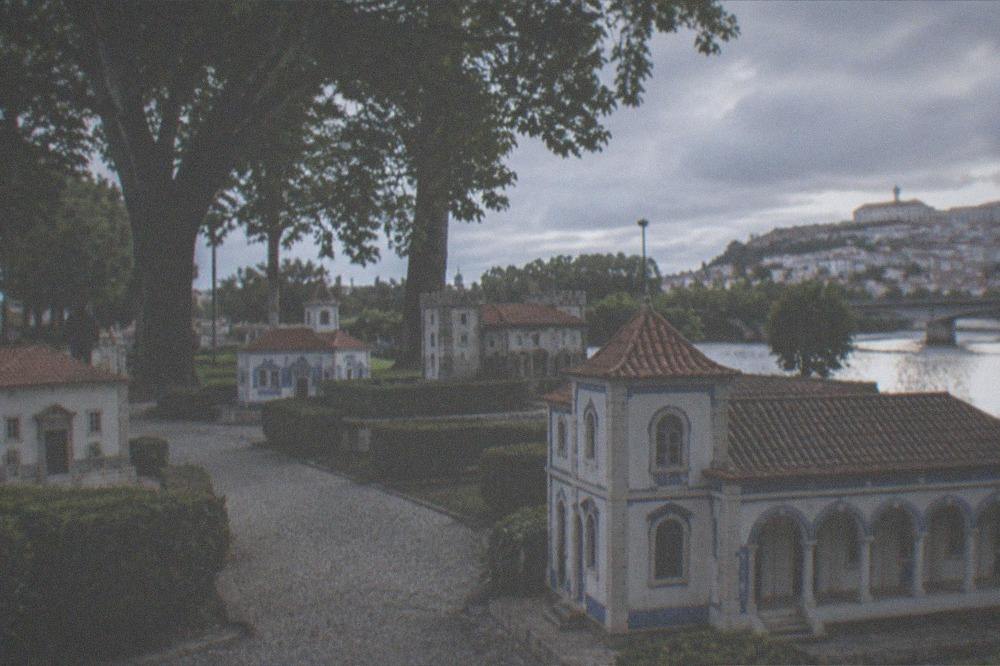
Two of these deserve their accessibility note. Mosteiro de Santa Cruz sits in the heart of the Baixa, making it the least demanding of the city's major monuments: the burial church of Portugal's first two kings, a 5.00 EUR individual ticket, and visiting hours of 9:30 to 16:30, with visits suspended on Easter Sunday and on the Cortejo da Queima das Fitas. Portugal dos Pequenitos, the miniature village across the river, is flat by design and family-built, but its price page renders in the browser rather than in served HTML, so the venue's own ticket page is the place to read the current figures; its hours are published and verified, 10:00 to 19:00 through the main season.
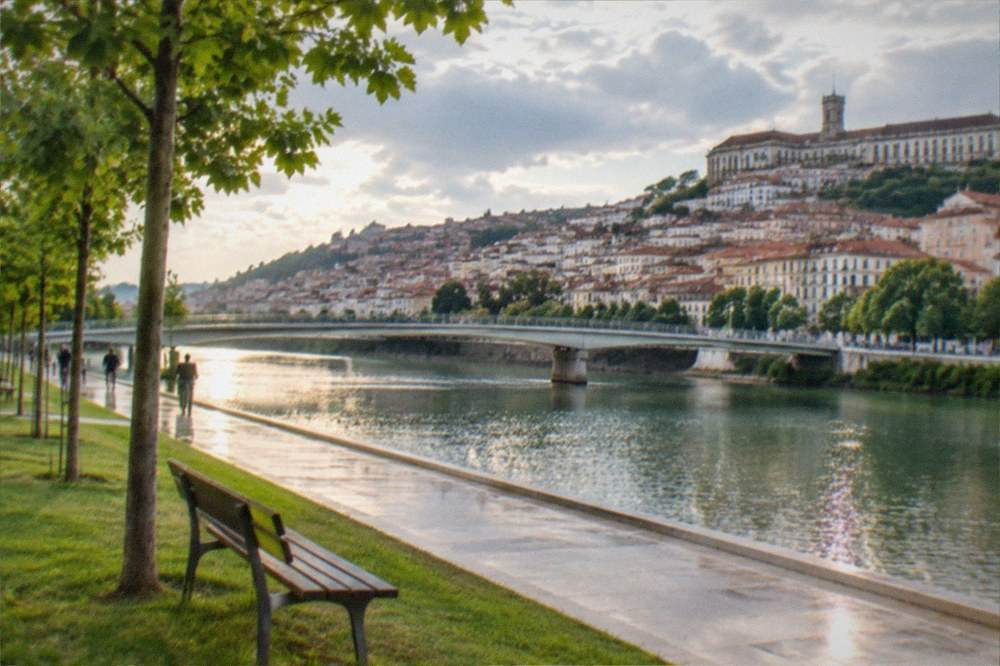
The river itself is the city's most underrated flat attraction. A traditional Barca Serrana boat trip runs about 50 minutes on the Mondego with city views, from 15.00 EUR per person and rated 4.6 from 171 reviews on the listing, and a Mondego cruise with city views runs from 11.00 EUR. Boarding is at river level, the ride is seated, and it delivers the postcard view of the stacked city, the university on its hill above the water, without a single step of the climb that view normally costs.
For the wider sightseeing picture, the attractions guide and the what to see guide rank the city's sights, and the one day itinerary guide sequences them, including the level order that saves the most climbing.
What Should Wheelchair Users and Reduced-Mobility Visitors Know Before Arriving?
Plan around three facts: the Alta's lanes are cobbled, stepped and narrow, so the upper old town is the hardest part of Coimbra for wheelchairs; the Baixa, the riverside and the Santa Clara bank are flat and largely modern-surfaced; and the two monuments this site can confirm are currently closed, the Machado de Castro museum and the Santa Clara-a-Velha monastery, both reduce the must-see list on the hill and across the river until they reopen.
The closures matter more here than on a general guide, because both were among the sights that involved less climbing than the university circuit. The Museu Nacional de Machado de Castro is closed for conservation work, per its own page on the national museums portal, with a phased reopening targeted after the summer of 2026; the museum is built over a mid-1st-century Roman cryptoporticus, and no reopening ticket price is published, so the 10.00 EUR figure in dated press must not be relied on. Mosteiro de Santa Clara-a-Velha, on the flat south bank, has been closed for requalification works since October 2025, and this build found no official page giving a price or hours, so the honest instruction is to check its status with the national monuments body before planning a visit.
What remains on the flat south bank is Portugal dos Pequenitos, and for families with strollers or wheelchair users travelling with children it is the best flat half-day in the region. Its entry ticket is sold through the operator's listing, from 17.00 EUR per person and rated 4.1 from 226 reviews, which spares the queue at the gate. The Portugal dos Pequenitos guide has the full picture of the site.
A few practical notes that no verified figure attaches to, stated as planning advice rather than specifics. Cobblestone is the default surface in the old town, so solid wheels and a companion beat self-propulsion on the upper lanes. Kerb heights and ramp locations in the Baixa were not surveyed on this build, and neither were accessible toilet locations, so the municipal tourist information service is the right place to ask for a current accessibility map; this site publishes no address or phone for it because none was verified. The old town guide and the rainy day guide are useful for the days when the cobbles are wet and the plan needs to be indoors and level.
Weather interacts with mobility more in Coimbra than in flatter cities, because rain makes the hill's stone genuinely hazardous. The wettest months are November at 121.5 mm, October at 114.5 mm and January at 113.5 mm, and the driest is July at 8.9 mm. The weather guide and the best time to visit guide work through the full calendar, and the table below is the mobility-relevant core of it.
| Month | Mean max C | Rain mm | Days with 1 mm+ rain | What it means for the hills |
|---|---|---|---|---|
| March | 19.1 | 75.4 | 9.4 | Mild, but wet stone on the descents |
| May | 23.3 | 64.7 | 8.5 | Warm and mostly dry; good climbing weather |
| July | 28.5 | 8.9 | 1.7 | Effectively dry; climb early, heat is the hazard |
| August | 29.1 | 14.8 | 2.2 | Hottest month, 10.9 days above 30 C; bus up, walk down |
| September | 27.4 | 49.9 | 5.2 | Hotter than June and still dry; crowds gone |
| October | 23.2 | 114.5 | 10.3 | Rain arrives in force; slick cobbles return |
| November | 18.0 | 121.5 | 11.5 | Wettest month; plan indoor and level days |
One correction worth making explicitly, because inverted versions circulate: September is not drier and cooler than June. IPMA's normals show September's mean maximum, 27.4 C, is higher than June's 26.3 C, and September is also wetter, 49.9 mm against 26.0 mm. The real and sourced point is that the autumn rain holds off until October, when the monthly total jumps to 114.5 mm, so September remains a fine month for the hill, just not a cool one.
Where Should You Stay to Minimise Climbing?
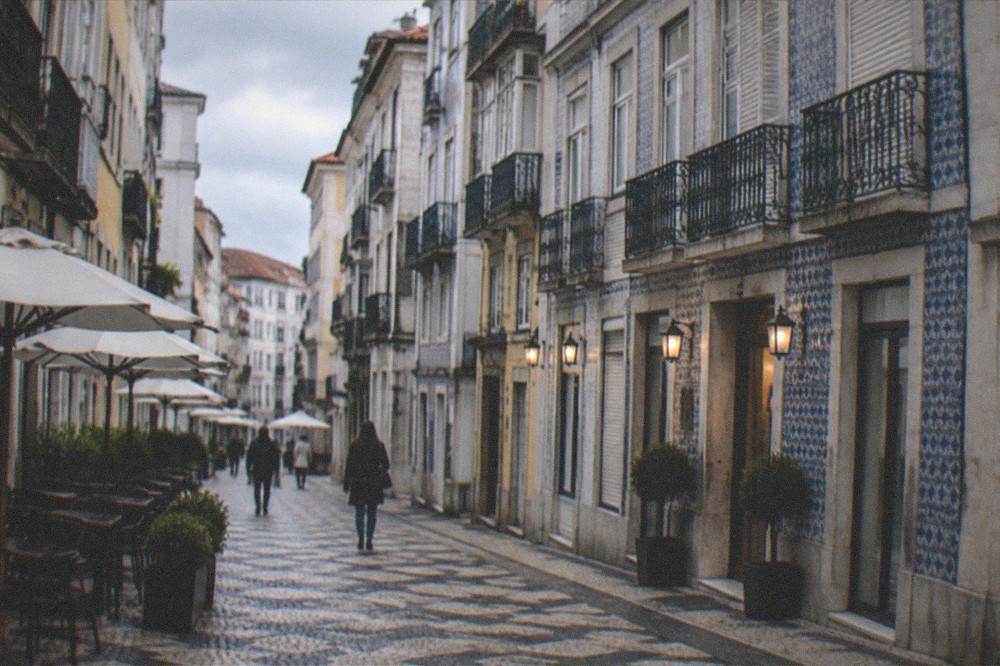
The Baixa is the answer for most limited-mobility visitors: it is the flat-to-gentle band between the river and the hill, it holds most of the city's hotels and restaurants, and every bus route up to the Alta passes through or near it. The Santa Clara bank across the river is flatter still and quieter, at the cost of crossing the river for the old town. The upper Alta is the one place to avoid: every return to the room is a descent and every departure a climb.
The trade-off is real and worth stating plainly. A hotel in the Baixa puts the restaurants, the flat riverside and the bus connections within a short, mostly level walk, and puts the hill off your agenda until you choose to take it on. A hotel up in the Alta buys the view and the atmosphere and then charges it back in gradient, twice a day, on cobbles. For the detailed neighbourhood and property analysis, the where to stay guide and the best hotels guide do that work; the accessibility question is simply which band, and the Baixa wins it for almost everyone with mobility constraints.
One cost to factor in, because it applies to every bed in the city. Coimbra charges a municipal tourist tax of 1.00 EUR per guest per overnight stay, capped at three consecutive nights, from age 16, payable to the accommodation at check-in or check-out; the municipality's own worked example is a couple staying seven nights paying 3.00 EUR each. A rise to 2.00 EUR was approved as a proposal by the municipal executive in July 2026, but the published rate on the municipality's own service pages remains 1.00 EUR, so budget one euro per night and confirm at the desk. The tax has been in force since 5 April 2023 and applies all year, with exemptions for medical stays and guests with a disability of 60 per cent or more on production of a document.
Are There Accessible Day Trips from Coimbra?
Yes, and the flattest of the big three is Conímbriga: the Roman ruins and museum sit about 16 km south in Condeixa-a-Velha, share one 10.00 EUR adult ticket, open Monday to Sunday 10:00 to 18:00, and are reached by vehicle rather than on foot, so the day's walking is on the site itself. The schist villages of the Lousã mountain are the opposite: beautiful, but built on mountainsides with stepped stone paths. Tomar's Convent of Christ is a large monument with extensive walking inside.
The contrast between the two mountain options and the Roman site is the whole decision. Conímbriga's ruins are spread across level ground, the museum and ruins are covered by a single ticket, and the site opens seven days a week, which makes it the reliable Monday option when the national monuments that close on Mondays are shut. The Conímbriga Roman ruins guide covers the site in full.
| Day trip from Coimbra | Duration | From (per person) | Rating on the listing | Physical demand |
|---|---|---|---|---|
| Conímbriga and the Roman Tour | 4 hours | $105.37 | 4.8 from 136 reviews | Level site walking; vehicle transfer |
| Conímbriga ruins and Sicó caves combo | 4 hours | $87.81 | 5 from 32 reviews | Ruins plus cave visit; uneven cave ground |
| Schist Villages at Lousã Mountain | 4 hours | $105.37 | 4.9 from 133 reviews | Stepped stone village paths; real demand |
| Lousã Mountain private tour, deer watching | 4 hours | $105.37 | 5 from 88 reviews | Mountain terrain, private pace |
| Convent of Christ, Tomar, local guide | 2 hours | $140.49 | 4.9 from 110 reviews | Large monument, extensive interior walking |
The schist villages are worth a word of honest warning, because photographs undersell the gradient. These are stone villages terraced into the Lousã mountain, and their charm is precisely their verticality: stepped alleys, uneven slabs, slopes between houses. A visitor who manages the Baixa easily may still find Talasnal or Gondramaz harder than anything in Coimbra itself, so the private and jeep-based versions, which handle the mountain road and let you choose how much village you walk, are the mobility-friendlier forms of this trip. The schist villages guide and the Lousã day trip guide give the full picture.
For the wider day-trip menu, the day trips guide ranks the options from the city, and the Fátima day trip guide and Tomar day trip guide cover the two most-asked-about destinations beyond the valley.
Common Questions About Coimbra Accessibility and Hills
Is Coimbra a walkable city for visitors with limited mobility?
Coimbra is walkable at each of its levels, but the connections between levels are steep. The Baixa and the Mondego riverside are flat to gentle; the lanes climbing from the Baixa to the university's Paço das Escolas are steep and cobbled. A visitor who stays at one level per half-day and uses SMTUC buses or a taxi to change levels can see the city comfortably.
Can you get to the University of Coimbra without climbing the hill?
Yes. SMTUC buses serve the upper town, a taxi up costs a few euros, and once at the top the Paço das Escolas terrace and the visitor circuit are largely level. The 16.50 EUR combined ticket is valid two days except for the fixed Joanina Library slot, so the programme can be split across two mornings rather than done in one long stint.
How much does a city bus cost in Coimbra?
Under the 2026 SMTUC tariff, a single ticket bought from the driver costs 2.00 EUR, and pre-purchased tickets in books of three or more cost 0.90 EUR per trip. One trip is valid 90 minutes on the urban network with all transfers included, and the same tickets are valid on the Metro Mondego network too.
Which parts of Coimbra are flat?
The Parque Verde do Mondego and both riverside banks, the Baixa's commercial grid around the Praça do Comércio, and the Santa Clara district across the river, which includes Portugal dos Pequenitos. These are the surfaces to plan flat days on, and the river cruises boarding at water level deliver the city's best views without any climbing.
Is the tourist tax in Coimbra charged per night?
Yes, 1.00 EUR per guest per overnight stay, capped at three consecutive nights, from age 16, paid to the accommodation at check-in or check-out. A rise to 2.00 EUR was approved as a proposal by the municipal executive in July 2026, but the published rate on the municipality's own pages remains 1.00 EUR, so confirm at the desk.
Are the schist villages accessible for wheelchair users?
Generally no. The schist villages of the Lousã mountain are terraced into the hillside with stepped stone paths and uneven slabs, and they are more physically demanding than anything in Coimbra itself. Conímbriga, by contrast, is a day trip reached by vehicle with ruins spread across level ground and a single 10.00 EUR ticket covering museum and ruins.
The hill is not a reason to skip Coimbra. It is a reason to plan it properly: sleep low in the Baixa, ride up, walk down when the stone is dry, and spend the flat afternoons by the river, and the city that punishes the unplanned becomes one of the most manageable in Portugal.