Things to See in Coimbra, Portugal: The Essential Sights Guide
Coimbra, Portugal's university city on the River Mondego, packs a World Heritage university hill, two cathedrals, a Roman ruin 16 km away and a riverside park into a walkable core. Here is what to see, what it costs and what is closed.
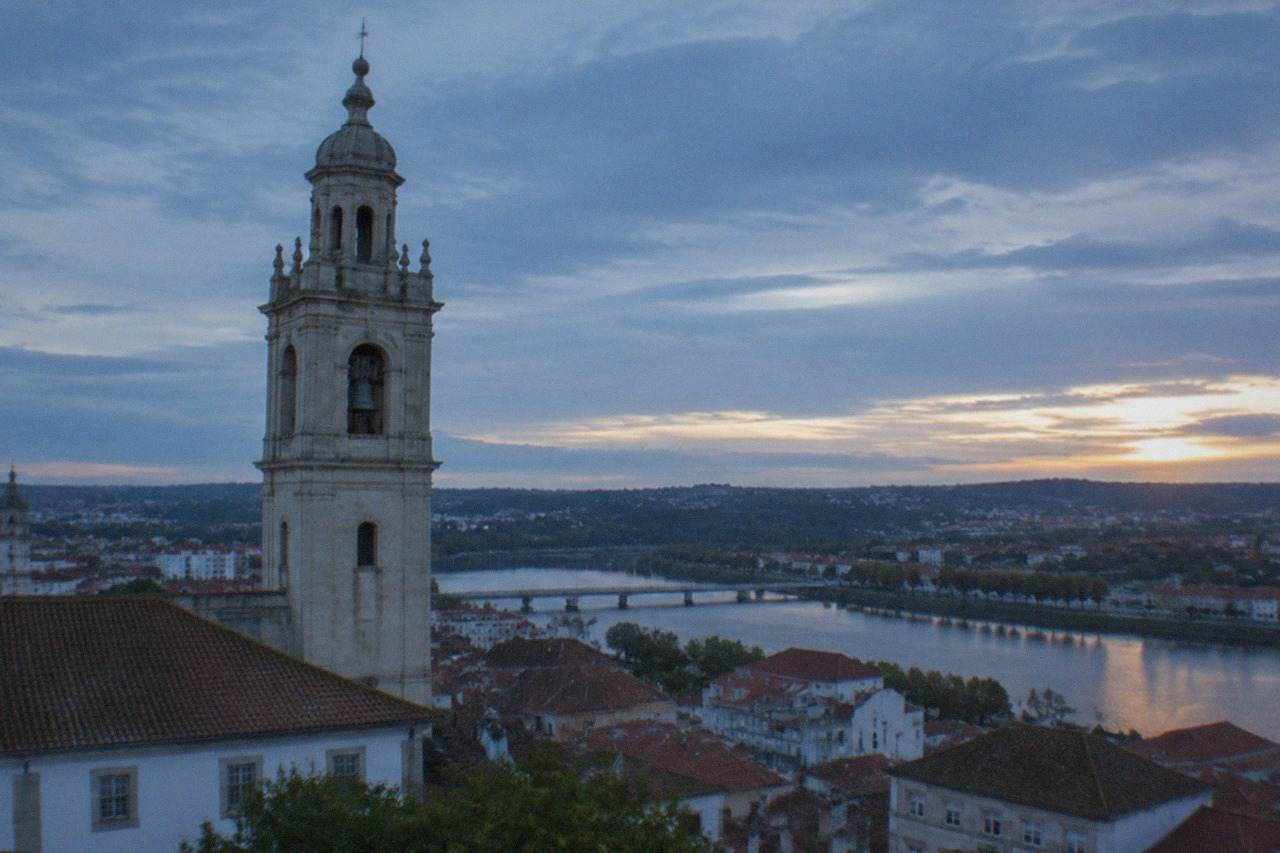
Short answer
The essential things to see in Coimbra, Portugal, are the University of Coimbra's Paço das Escolas with the Joanina Library, Sé Velha, Mosteiro de Santa Cruz, the Botanical Garden, Portugal dos Pequenitos and the Roman ruins of Conímbriga about 16 km south. The Museu Nacional de Machado de Castro and the university clock tower are closed right now.
Coimbra, Portugal, the university city on the River Mondego, is small enough to see on foot and dense enough to fill three days without padding. What makes it different from every other Portuguese city its size is the university: about 31,000 students, published by the University itself on its own numbers page, give the old town a population that swells and empties with the academic calendar. The UNESCO World Heritage inscription of 2013, list reference 1387, covers the University of Coimbra, Alta and Sofia, the university hill and the college street, and not the whole city, which is a distinction worth getting right before anything else.
This page from the Coimbra Travel Guide editorial desk walks through the things to see in Coimbra in the order a visitor actually encounters them: the university hill first, then the two great churches of the old town, the museums, the family park across the river, the Roman ruins to the south and the green spaces in between. Every price and hour below comes from the venue's own published pages, and every closure is stated as it stands.
What Are the Best Things to See in Coimbra, Portugal?
The best things to see in Coimbra, Portugal, are the Paço das Escolas and Joanina Library at the University, Sé Velha, the old cathedral, Mosteiro de Santa Cruz, where Portugal's first two kings are buried, the Botanical Garden, Portugal dos Pequenitos across the river, and the Roman ruins of Conímbriga about 16 km south. Two major sights are closed right now: the Machado de Castro museum and the university clock tower.
That list is not a ranking, because the city does not really have a weak quarter. The university hill is the headline and most visitors start there. The Baixa below it, the downtown, holds the churches, the arcaded streets and the fado houses. Across the Mondego, Santa Clara holds Portugal dos Pequenitos and the riverside park. And to the south, outside the city entirely, Conímbriga is one of the largest Roman sites on the Iberian Peninsula, in the parish of Condeixa-a-Velha in the municipality of Condeixa-a-Nova.
For a broader roll-up that includes food and nightlife alongside the monuments, see things to do in Coimbra. This page stays on the sights themselves, with the practical detail attached to each one.
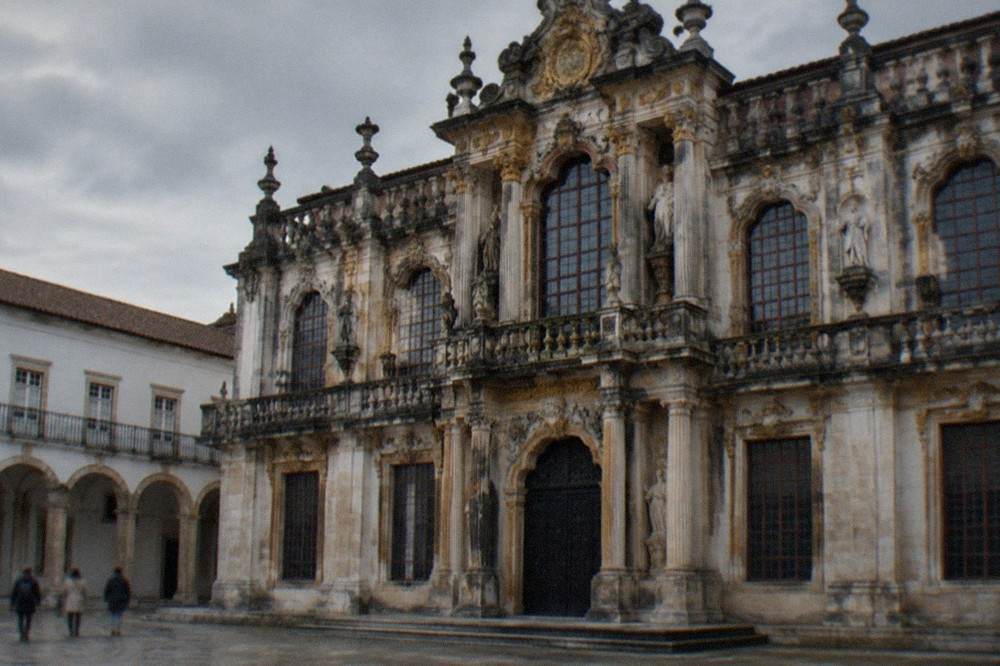
What Can You See at the University of Coimbra and the Joanina Library?
The University of Coimbra's visitor circuit covers the Royal Palace of Alcáçova, the Capela de São Miguel, the Chemistry Laboratory, the Academic Museum, the Cabinet of Curiosities and the Mineral Gallery, and the Joanina Library is the baroque centrepiece. A combined adult ticket with the Joanina Library costs 16.50 EUR, or 12.50 EUR without it, both valid for two days, and the Joanina admits only 50 people every 20 minutes.
The University sells its own tickets through its visit pages, and the prices are stamped as valid for the whole of 2026. The 16.50 EUR ticket is the one that includes the Joanina Library, and the Joanina cannot be bought on its own: it exists only inside that combined ticket. The time printed on the ticket is the Joanina entry slot specifically, and entry outside that slot is refused, in the University's own published wording. The other spaces on the ticket can be visited before or after the library slot, and the ticket is valid for two days except for that fixed slot.
The 50 people every 20 minutes ceiling is the single most useful practical fact on this page. It is published by the University itself, and it is why a visitor who turns up in summer without a pre-booked slot can be turned away even when the rest of the circuit is quiet. Online purchase closes 20 minutes before the visit time, and counter purchase is possible subject to slot availability. The library also houses a colony of bats that patrol the book stacks at night, a detail confirmed on the University's own library page and one that no other European library of this rank can match.
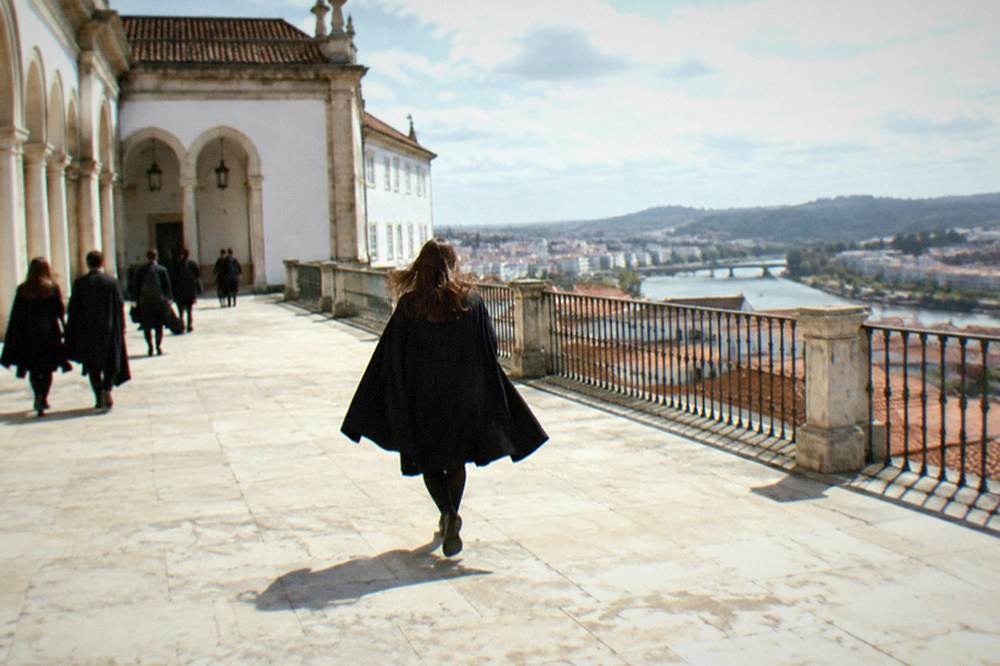
| University ticket (2026 season) | Adult price | What it includes |
|---|---|---|
| Joanina Library + University + Science Museum | 16.50 EUR | Joanina Library with timed slot, Royal Palace, St Michael's Chapel, Chemistry Laboratory, Academic Museum, Cabinet of Curiosities, Mineral Gallery |
| University + Science Museum | 12.50 EUR | The same spaces without the Joanina Library |
| Guided tour, Palace of Schools | 25.00 EUR | Guide-led visit of the palace spaces, 1 hour 30 minutes |
| Science Museum + UC Exploratório | 16.00 EUR | Science spaces and Exploratório, explicitly not the palace spaces |
| Guided tour, Botanical Garden | 10.00 EUR | 1 hour 30 minutes, from the side entrance by the Garden Arches |
The opening hours follow the academic year's rhythm: 09:00 to 20:00 from 1 April to 30 September, and 09:00 to 17:30 from 1 October to 31 March. The University closes its visitor circuit on 24 and 25 December, on 31 December and 1 January, and on 24 May and 4 October, dates that collide with academic ceremonies, and it warns that religious, official and academic ceremonies can interrupt the normal circuit at other times too. The Cabinet of Curiosities and the Physics Cabinet also close for two days every three months for disinfestation.
One thing you cannot see: the Torre da Universidade, the clock tower, is closed. The University's own information page states "We regret to inform you that this facility is closed", so there is no tower climb, no ticket and no view from the top, however many older guides promise the 184 steps. The full monument detail is on the University of Coimbra page, and the library gets its own deep dive at Joanina Library.
A guided visit removes the one real failure mode of the university hill, which is arriving with a ticket whose Joanina slot has passed or sold out. The University of Coimbra Guided Tour with Tickets, led by a former student in groups of up to ten, includes the admission and runs about an hour and a half, and it is the related tour for this page. Check availability if the timed-slot logistics look like something you would rather hand to someone who does them daily.
What Can You See at Sé Velha and Mosteiro de Santa Cruz?
Sé Velha, Coimbra's Romanesque old cathedral, charges 3.00 EUR per person for an individual ticket, and Mosteiro de Santa Cruz, the burial church of Portugal's first two kings, charges 5.00 EUR for its visitable parts. Both are managed by the same pastoral unit, which publishes the prices and the hours, and both sit within a few minutes' walk of each other in the old town.
Sé Velha is one of the best-preserved Romanesque cathedrals in Portugal, a fortress-church whose dark interior survives almost untouched. The published individual ticket is 3.00 EUR, dropping to 2.50 EUR for groups of more than ten. Summer visiting runs 09:30 to 18:30 with Sundays from 11:00, and winter runs 09:30 to 17:30 with the same Sunday pattern. There is no visiting during services. The full detail, including the cloister, is on the Sé Velha old cathedral page.
Santa Cruz is the other order of experience entirely: a gilded, tiled, royal mausoleum in the middle of the Baixa. The 5.00 EUR individual ticket covers the sacristy, the cloisters, the chapter room and the royal tombs, with group rates from 3.50 EUR for twelve or more and school groups at 2.00 EUR per student. Visiting hours are 09:30 to 16:30, with Sundays and religious holidays on a separate schedule. Two closures matter: visits are suspended on Easter Sunday and on the Cortejo da Queima das Fitas, the moveable Sunday parade of the student festival, which closes the monument for that day. The detail is on the Santa Cruz monastery page.
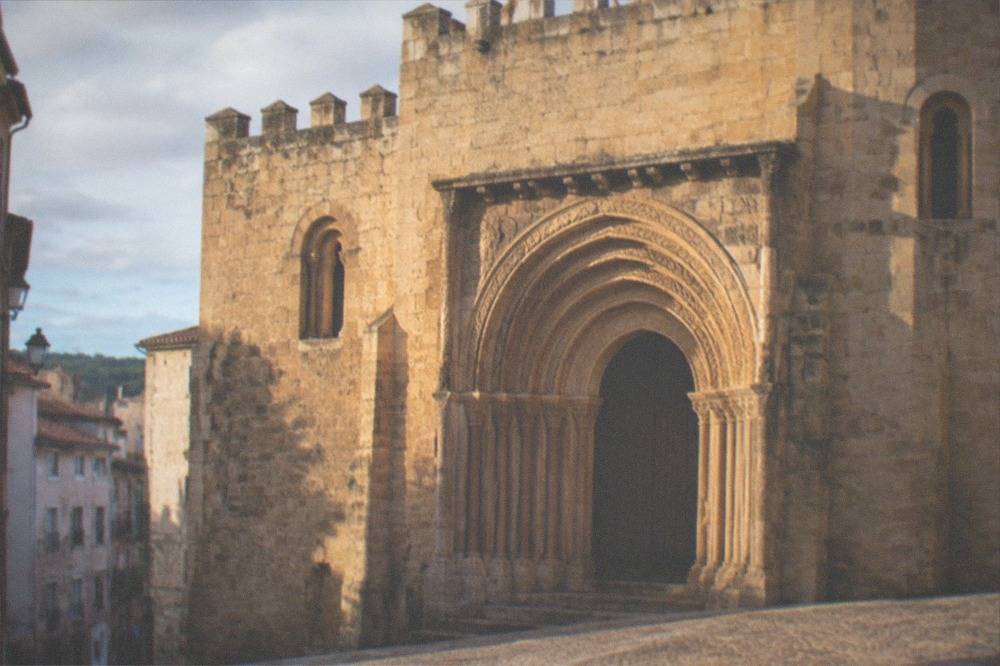
| Old-town monument | Individual ticket | Group ticket | Published hours |
|---|---|---|---|
| Sé Velha de Coimbra | 3.00 EUR | 2.50 EUR (over 10 people) | 09:30 to 18:30 summer, 09:30 to 17:30 winter |
| Mosteiro de Santa Cruz | 5.00 EUR | 3.50 EUR (12 or more) | 09:30 to 16:30, Sundays separate |
| Santa Cruz with audioguide, group of 12+ | 4.00 EUR per person | school groups 2.00 EUR | as above |
| Capela de São Miguel (via UC ticket) | inside 16.50 / 12.50 EUR | guided palace tour 25.00 EUR | 09:00 to 20:00 summer, 09:00 to 17:30 winter |
Between the two churches, the Arco de Almedina, the old city gate, threads the upper and lower town, and the streets around it carry most of the fado venues, the student repúblicas and the cafes. If walking the whole spine of the city with a guide appeals, the Coimbra Top Attractions Walking Tour covers the main sights in about two and a half hours at a budget price, and it pairs well with a day in which the university hill gets its own separate slot.
For visitors who would rather lock in the university visit with a guide and tickets handled, the same former-student-led tour that appears above is the one to compare against, and the box below is the fastest way to check its live availability.
Is the Machado de Castro Museum Open, and What About the Clock Tower?
No, the Museu Nacional de Machado de Castro is closed for conservation work, and the university clock tower is closed too, so neither can be visited, per the museum's own page. No reopening date and no current ticket price are published, and any hours or prices circulating for either are out of date. The museum's Roman cryptoporticus, a mid-1st-century structure beneath the building, is part of its visit route for whenever it reopens.
This is the trap section of any Coimbra sights list, so it deserves its own heading. The museum's page on the national Museus e Monumentos portal carries the closure line twice, and then, directly below it, prints a normal-looking opening table of Tuesday to Sunday, 10:00 to 18:00. Those hours describe the museum whenever it reopens; they are not current. The same page publishes no price while it is closed, and a 10.00 EUR figure that circulates in dated Portuguese press is not on an official page, so it does not appear here.
What is true and worth knowing: the museum sits above a Roman cryptoporticus of the mid-1st century, at Largo Dr. José Rodrigues, and it is the city's national museum, so its reopening will be an event. Until then, plan around it. The Sé Nova, the new cathedral a short walk up the hill, remains a working church and a common substitute stop, and the Machado de Castro museum page carries the full status detail.
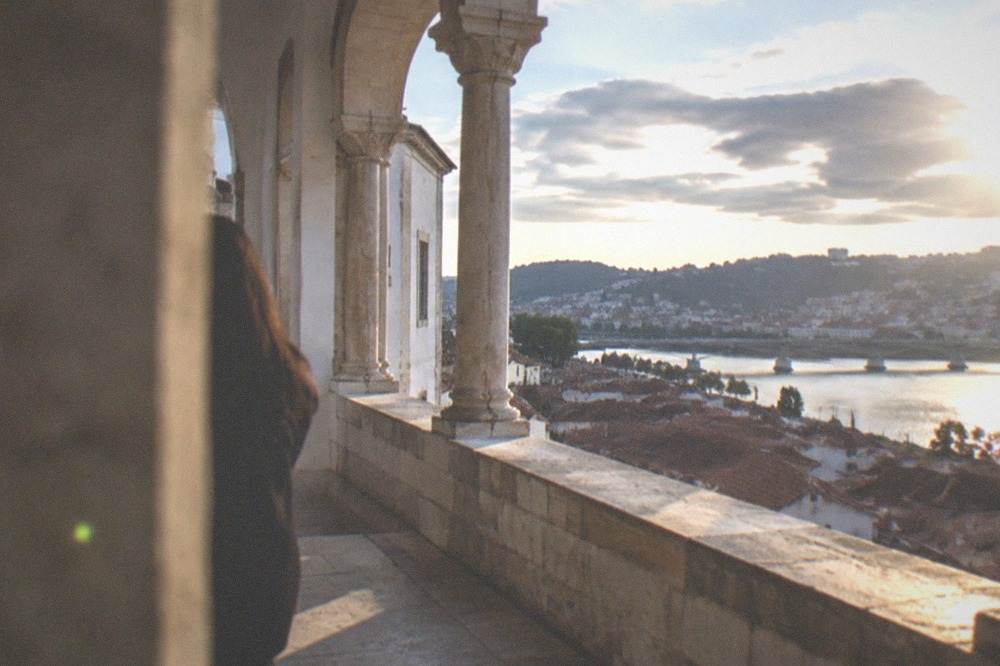
The same honesty applies to Mosteiro de Santa Clara-a-Velha, the sunken Gothic monastery across the river. It has been closed for requalification works since October 2025, and this site's research could not confirm a reopening date or a current price on an official page, so the only advice that can be printed is to check before planning around it. The Santa Clara-a-Velha page tracks what is verified.
| Sights closed or restricted right now | Status | What you can still do |
|---|---|---|
| Museu Nacional de Machado de Castro | Closed for conservation work, no reopening date published | See the building's exterior and terrace approach; check the museum's own page |
| Torre da Universidade | Closed, per the University's own information page | Photograph the tower from the Paço das Escolas |
| Mosteiro de Santa Clara-a-Velha | Closed for works since October 2025, unsourced reopening | View the exterior from the riverbank |
| University visitor circuit on 24 May and 4 October | Circuit closed for academic events | Plan the university visit on another day |
What Can Families See at Portugal dos Pequenitos?
Portugal dos Pequenitos, in the Santa Clara district across the river, is a miniature village of Portugal's monuments and regions, built to a child's scale and opened in 1940 to a design by the architect Cassiano Branco. Its published hours run 10:00 to 19:00 from 1 March to 15 October and 10:00 to 17:00 for the rest of the year, closed only on Christmas Day, and its ticket prices are sold through the venue's own ticketing page.
The park is the work of the Fundação Bissaya Barreto, and it is the one big Coimbra sight that is unambiguously for families. Children walk through miniature versions of Portuguese regional houses, monuments and even a few foreign pavilions, and the scale is the point: everything is built small so a child is the normal-sized one. The hours above are published on the venue's own schedule page, and they hold across the year with the two seasonal blocks.
The prices are deliberately not printed here. The venue's own price page renders its table in the browser rather than serving it, and this site's research could not read a euro amount from the served page, so the honest instruction is to use the venue's own ticket page, which is linked from the Portugal dos Pequenitos page. What can be said: the park opened in 1940, its architect was Cassiano Branco, and a family visit fits comfortably in half a day.
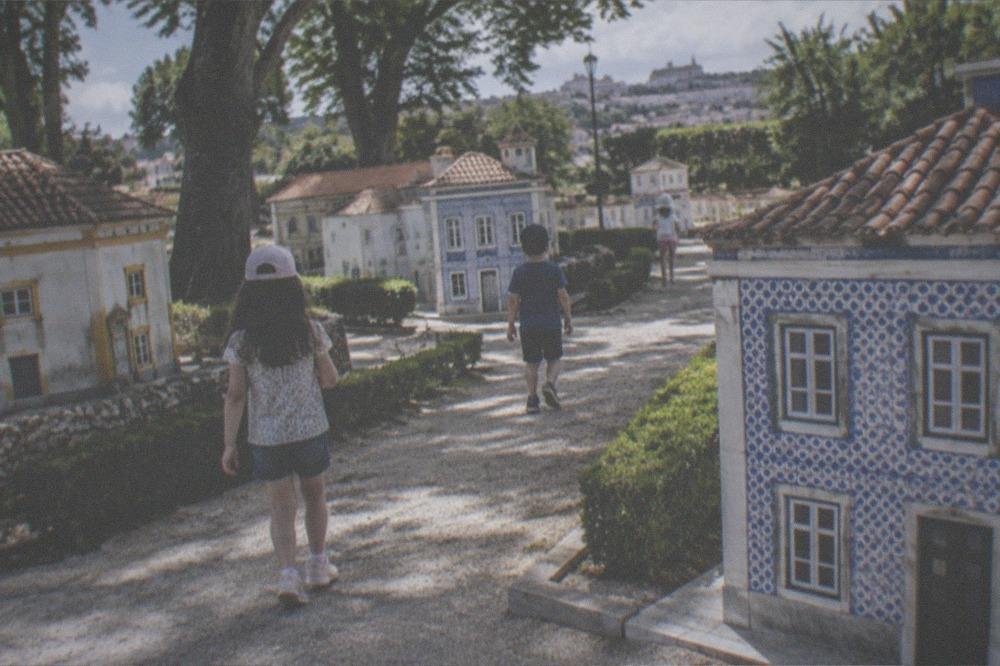
Pair it with the riverside. The Parque Verde do Mondego runs along the river opposite the old town, and its park page covers the walking and cycling routes. A boat trip on the Mondego is the other family-friendly option on the water, with traditional barca serrana trips running about 50 minutes.
Is Conímbriga Worth the Trip from Coimbra?
Conímbriga is worth the trip for anyone with a spare half-day: it is one of the largest excavated Roman towns in Portugal, about 16 km south of Coimbra in the parish of Condeixa-a-Velha, in the municipality of Condeixa-a-Nova, and a single 10.00 EUR adult ticket covers both the museum and the ruins. It is open seven days a week, 10:00 to 18:00, which makes it the reliable Monday option when other monuments close.
The geography sentence matters, because guides get it wrong in both directions: Conímbriga is not in Coimbra, and it is not in Coimbra district's coastal half. It is in Condeixa-a-Nova municipality, roughly 16 km south of the city. The site holds substantial domestic ruins with some of the best Roman mosaics in the country, bath complexes, an aqueduct segment and a defended late-Roman wall, and the national museum on site interprets all of it.
The ticket is a single combined one, 10.00 EUR for an adult, covering museum and ruins together, with the ticket office closing at 17:15. Closures are 1 January, Easter Sunday, 1 May, 24 July and 25 December. The seven-day opening is the quiet advantage: the DGPC monuments in Coimbra close on Mondays, so Conímbriga is the sight that saves a Monday. The full practical detail is on the Conímbriga Roman ruins page.
| Day trip from Coimbra | Distance and location | Entry cost | Hours |
|---|---|---|---|
| Conímbriga ruins and museum | about 16 km south, Condeixa-a-Velha, Condeixa-a-Nova | 10.00 EUR combined adult | daily 10:00 to 18:00, ticket office to 17:15 |
| Schist villages of the Lousã mountain | Serra da Lousã, east of the city | tours from the operator's listing | half-day and full-day tours |
| Forest and palace of Buçaco | north of the city | tours from the operator's listing | half-day tours |
A private tour with a guide and transport takes the logistics off the table, which matters for Conímbriga more than for the in-city sights, since the ruins are not on a direct walking route from anywhere. The Conímbriga Roman Ruins and Museum private tour runs about three hours with hotel-area pickup.
Where Can You Slow Down in Coimbra: Gardens, Riversides and Viewpoints?
Coimbra's quiet sights are the University's Botanical Garden, the Parque Verde do Mondego along the river, the Choupal forest on the far bank and the Penedo da Saudade garden, and all of them are free to walk. The Botanical Garden is the oldest of them, run by the University, with a guided tour option at 10.00 EUR published on the University's own programme list.
The Botanical Garden sits on the slope below the university, and its terraces, greenhouse and great trees make it the best free hour in the city. The University runs guided visits of it at 10.00 EUR for an hour and a half, meeting at the side entrance next to the Garden Arches, and the botanical garden page covers both options. The Parque Verde do Mondego and the Choupal forest across the water are flat, riverside and popular with runners and families, a genuine contrast to the hills of the Alta.
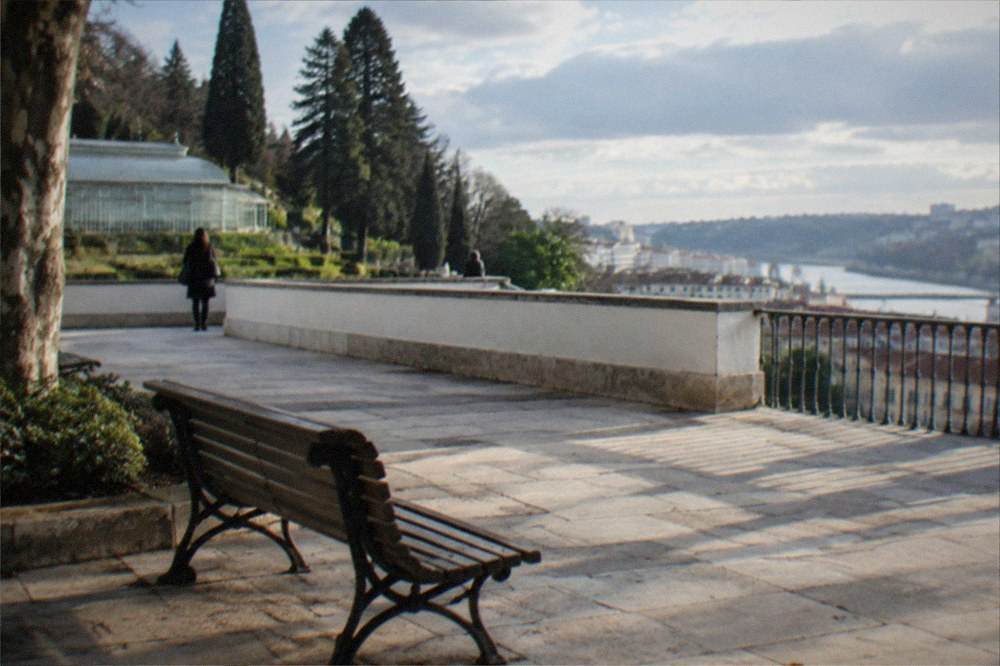
The viewpoints are the other free category. The Penedo da Saudade garden looks over the river and the Santa Clara district, and the terrace approach to the Machado de Castro museum, reachable even while the museum itself is shut, gives one of the widest roof-level views of the old town. The Penedo da Saudade page lists what can be seen from each.
For the evening, fado is Coimbra's own tradition, distinct from Lisbon's, sung historically by men in black capes, and a live show with a glass of port wine runs about 50 minutes at a modest per-person price. The fado in Coimbra context is wrong for that, so use the fado pages instead: the tradition is covered in the guides section alongside where to hear it.
When Is the Best Time to See Coimbra?
September is the best-kept secret for seeing Coimbra: IPMA's 1991 to 2020 normals for the Coimbra / Bencanta station show a September mean maximum of 27.4 C, higher than June's 26.3 C, with only 49.9 mm of rain, and the student crowds have not yet returned. July is effectively dry at 8.9 mm, August is the hottest month at a 29.1 C mean maximum, and the heavy rain holds off until October, when the monthly total jumps to 114.5 mm.
The climate table below is the city's own station, Coimbra / Bencanta, station 707, at 40.2134N 8.4552W, not a coastal proxy, and this matters because the district of Coimbra reaches the Atlantic and the city does not. Read it before believing any "September is cooler and drier" line in an older guide: September is both hotter and wetter than June, and the real shift comes in October.
| Month | Mean max C | Rain mm | Days with 1 mm+ rain | What it means for sightseeing |
|---|---|---|---|---|
| May | 23.3 | 64.7 | 8.5 | Queima das Fitas month; university circuit closes 24 May |
| June | 26.3 | 26.0 | 3.7 | Warm, mostly dry, students thinning out |
| July | 28.5 | 8.9 | 1.7 | Effectively dry, hot afternoons on the hills |
| August | 29.1 | 14.8 | 2.2 | Hottest month, 10.9 days above 30 C on average |
| September | 27.4 | 49.9 | 5.2 | Hotter than June, crowds gone, still visitable |
| October | 23.2 | 114.5 | 10.3 | The autumn rain arrives; university circuit closes 4 October |
May deserves a double warning. It is a pleasant month on paper, but the Queima das Fitas student festival falls in it, and while this site's research could not verify exact festival dates on an official page, two closures are official: the University shuts its visitor circuit on 24 May, and Santa Cruz suspends visits on the Cortejo parade day, a moveable Sunday. Book the Joanina slot early in that month, or come in September instead.
How Many Days do You Need to See Everything in Coimbra?
Two full days cover the core things to see in Coimbra: the university hill and Joanina Library on day one, the old town churches, the Baixa and a fado evening on day two, with Portugal dos Pequenitos or the riverside slotting into either. Add a third day for Conímbriga or the schist villages, because the worthwhile trips outside the city each need half a day of their own.
The reason the Joanina slot shapes day one is the 50 people per 20 minutes ceiling: book the library time first and build the rest of the day around it, using the two-day validity of the other ticket spaces to spread the university visit if needed. Day two is flatter and slower: Sé Velha, Santa Cruz, the Arco de Almedina, the viewpoints and an evening fado show, which runs about 50 minutes with a glass of port wine included.
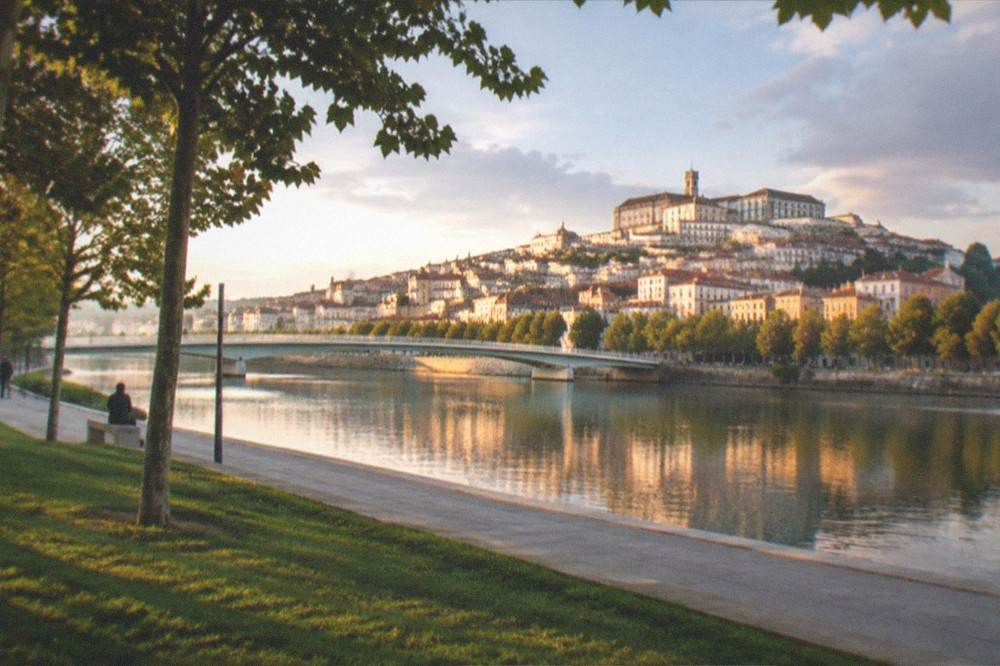
Budget-wise, the sightseeing costs are modest and knowable in advance. The 16.50 EUR university ticket, the 3.00 EUR cathedral and the 5.00 EUR monastery come to less than 25 EUR per adult for the three headline monuments, and the tourist tax adds 1.00 EUR per night, capped at three nights, from age 16, paid to the accommodation. Where to eat between them is covered on the Coimbra restaurants page.
Common Questions About Things to See in Coimbra
What is the number one thing to see in Coimbra?
The University of Coimbra's Paço das Escolas with the Joanina Library, on the hill above the old town. The 2013 UNESCO inscription, list reference 1387, covers the university hill and Rua da Sofia, and the Joanina Library is its most famous interior, admitting 50 people every 20 minutes on a timed slot.
Is Coimbra a UNESCO World Heritage city?
No, and this is the most common error in guides to the city. The UNESCO inscription of 2013 is "University of Coimbra, Alta and Sofia": two components inside the old town, the university hill and the college street. The city as a whole is not inscribed.
What is closed in Coimbra right now?
The Museu Nacional de Machado de Castro is closed for conservation work with no published reopening date, the university clock tower is closed per the University's own page, and Mosteiro de Santa Clara-a-Velha has been closed for requalification works since October 2025. Check each venue's own page before planning around them.
Can you see Coimbra in one day?
Yes, one day covers the university hill with a Joanina slot, Sé Velha or Santa Cruz, and a walk down through the Arco de Almedina to the Baixa. Two days is the comfortable fit, and a third is needed for Conímbriga, about 16 km south, or the schist villages of the Lousã mountain.
What can you see in Coimbra for free?
The Botanical Garden, the Parque Verde do Mondego, the Choupal forest, the Penedo da Saudade garden and the viewpoints over the river are all free to walk. The free GuruWalk walking tours, including the Coimbra tour covering downtown, the historic centre, the university and the botanic garden, are tip-based and run about three hours.
Is Conímbriga worth seeing?
Yes. It is one of the largest Roman towns excavated in Portugal, about 16 km south in Condeixa-a-Velha, with a 10.00 EUR combined adult ticket for museum and ruins, open daily 10:00 to 18:00, which makes it the one major sight that works on a Monday.