Coimbra at Night: What to Do After Dark in Coimbra, Portugal
Coimbra, Portugal, the university city on the River Mondego, changes character after sunset: the day-trippers leave, the students come out, and the hillside above the river lights up. This guide covers what is actually open, where the fado happens and how to plan an evening.
Short answer
The best things to do in Coimbra at night are hearing Coimbra-style fado, watching the illuminated university hill from the River Mondego side, walking the lit lanes of the old town, and joining the student quarter around Praça da República, where the evening runs late because the city's roughly 31,000 students keep it running.
Coimbra, Portugal, is a university city on the River Mondego, and it is one of the few mid-sized Portuguese cities whose evening is genuinely shaped by the people who live in it. The University of Coimbra publishes a figure of about 31,000 students on its own homepage, and when the day-trip coaches leave in the late afternoon, those students are what remains. The result is a night that is quieter than Lisbon's and cheaper than Porto's, but not empty: fado sung in the local male-voiced style, a hillside of floodlit monuments, and a student quarter around Praça da República that stays busy until well past midnight. This page walks through what is actually verifiable about an evening in Coimbra, what opens late, what closes early, and how to build a night around the things the sources confirm rather than the things other guides invent.
What Can You Actually Do in Coimbra at Night?
An evening in Coimbra can be built around four verified pillars: a fado performance in the Coimbra style, a walk through the lit lanes of the Alta and Baixa, the view of the floodlit university hill from the riverside, and the student nightlife around Praça da República. Monuments mostly close by late afternoon or early evening, so the night belongs to music, streets and bars rather than to museums.
The first thing to understand is what Coimbra is not at night. It is not a late-museum city. The university of Coimbra's own visitor pages list a summer schedule of 09:00 to 20:00 for the Paço das Escolas, with the last Joanina Library entry at 19:00, but that is the outer edge: Mosteiro de Santa Cruz publishes visiting hours of 09:30 to 16:30, and Sé Velha's summer hours run to 18:30 on weekdays and Saturdays. By nine in the evening, the monuments are done and the streets have taken over.
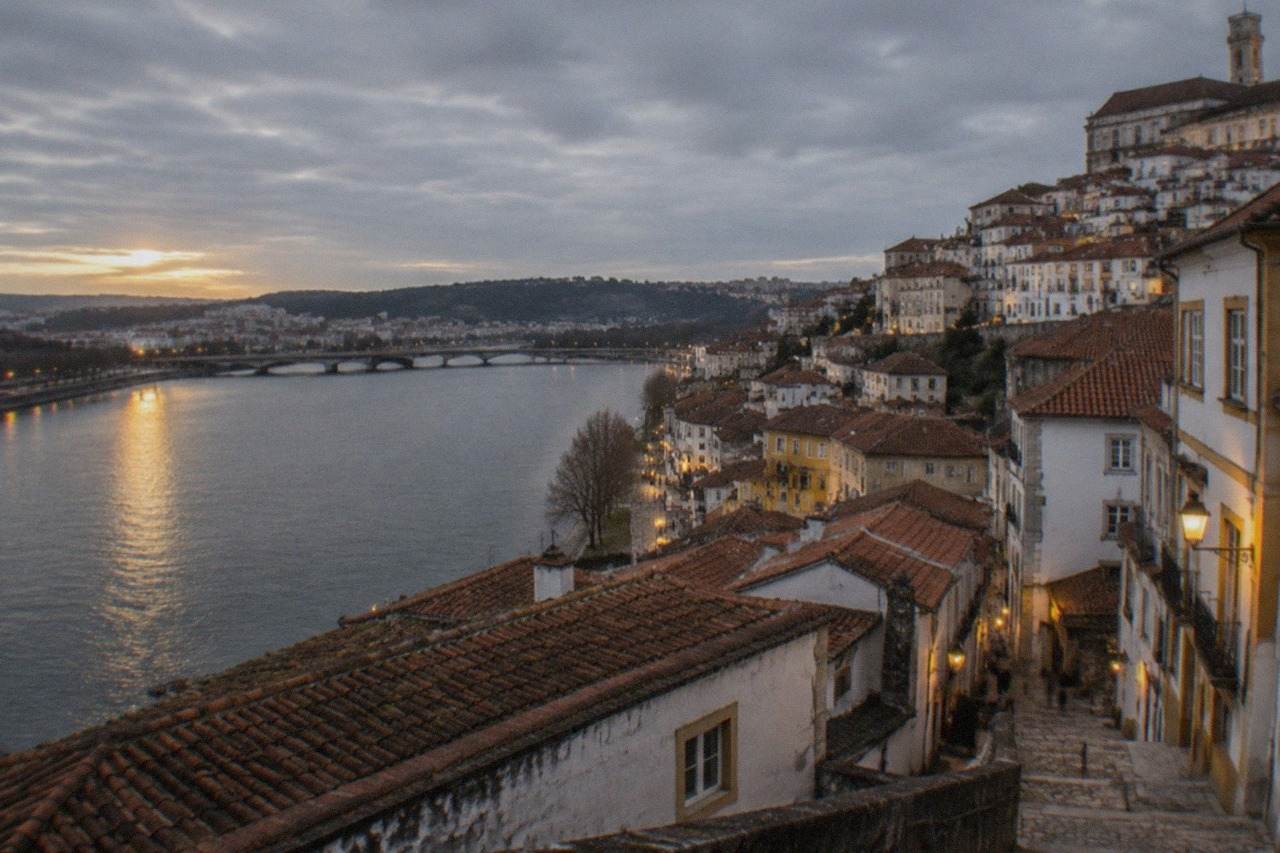
What replaces them is real. The city sits on a hill above the River Mondego, and the view of the lit hillside from the Santa Clara side of the river is the single most reliable free evening activity in Coimbra. The old town's lanes between the Arco de Almedina and the Sé Velha stay walkable and lit. And the student tradition, which this city has in a way almost nowhere else in Portugal does, spills into the streets in the form of serenades and cape-wearing students heading between bars.
For anyone planning the daylight hours too, the main attractions guide covers the full sightseeing list, and the weather guide explains which months give you the warm evenings that make all of this pleasant rather than endurance.
Where Can You Hear Fado in Coimbra at Night?
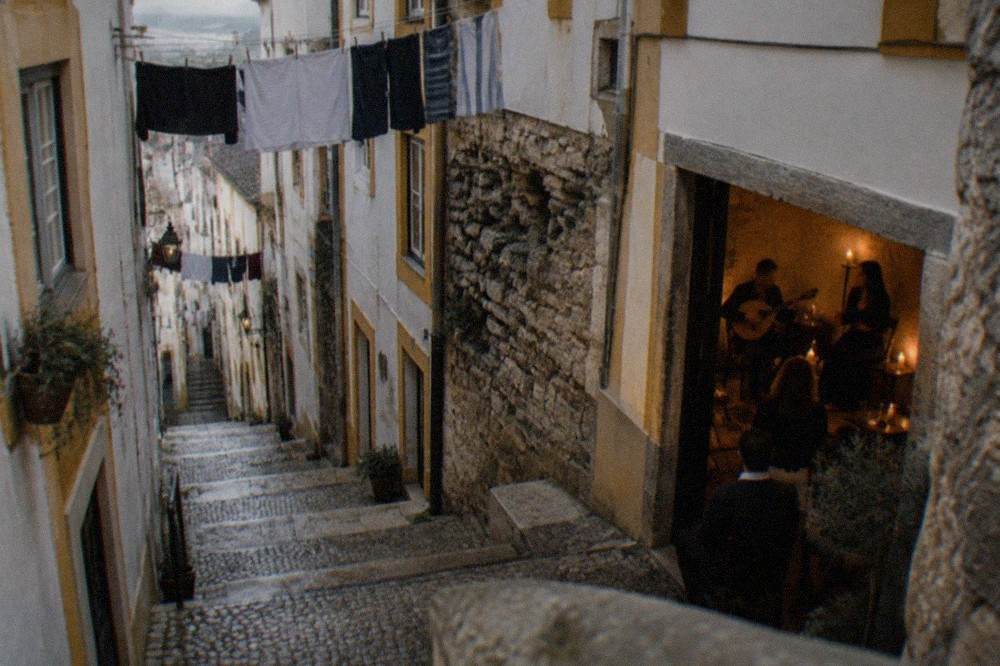
Coimbra fado is a distinct tradition, sung mainly by men, grown out of the university's student culture and associated with the black academic cape, and it is performed both in dedicated venues and as street serenades. It differs from Lisbon fado in voice, posture and repertoire, and a live performance is the one evening activity in Coimbra that is genuinely unique to the city rather than merely pleasant.
The form matters more than any single venue. Where Lisbon fado is sung by men and women seated, in a tradition tied to the Alfama and Mouraria neighbourhoods, Coimbra fado grew out of the serenades that students in academic dress performed under windows and in stairways. The singing is male, the posture upright, the guitar accompaniment uses the distinctive Coimbra guitarra, and the cape is part of the iconography. The fado de Coimbra guide covers the history and the differences in detail, and the where to hear fado guide covers the practical side.
No specific venue's show times, ticket prices or addresses were verified for this site, so none appear here. What can be said with confidence is that performances happen both inside venues and as outdoor serenades, and that the tradition is tied to the academic calendar: it swells around student festivals and quiets in the summer holidays when the students leave. The Queima das Fitas guide explains the May festival period, when the city's musical life is at its loudest.
The reliable way to guarantee fado on the specific night you are in the city is a ticketed show. The live fado show with a glass of port wine runs 50 minutes, is rated 4.7 from 1,234 reviews, and starts from $18 per person, with the port included. Check availability
Is Coimbra Safe and Walkable at Night?
Coimbra is a compact, steep city where the main evening areas, the Baixa, the riverside and the route up to the university hill, are all walkable and lit, and the usual Portuguese-city precautions apply. The real obstacle is not safety but gradient: the climb from the river to the Paço das Escolas is steep and cobbled, and footwear matters more after dark than any other planning decision.
The city's night geography is simple. The Baixa, the commercial low town around the Rua Ferreira Borges and the Praça do Comércio, is flat and busy. The Alta, the upper town around the university, sits above it and is reached by stairs and steep lanes. The riverside parks on the Mondego, including the Parque Verde do Mondego, give the best views back up at the hill. Each of these zones works on foot in the evening, and the distances between them are short, though the vertical gain is not.
On transport: the 2026 SMTUC tariff lists a driver-bought single at 2.00 EUR and pre-purchased trips at 0.90 EUR each when bought in packs of three or more, with one trip valid 90 minutes on the urban network including transfers. The same tariff states that SMTUC titles are valid on the Metro Mondego network as well. No standalone fare for the Elevador do Mercado was verified, so none is printed here. The getting around coverage in the map guide helps with orientation.
| Getting around at night | What the 2026 SMTUC tariff says | Planning note |
|---|---|---|
| Single ticket bought on board | 2.00 EUR | Simplest option for one late trip |
| Pre-purchased, 3+ trips | 0.90 EUR per trip | Better value if staying several nights |
| Validity of one trip | 90 minutes on the urban network | Transfers included within the window |
| Metro Mondego | SMTUC titles are valid on it | A new BRT network opening in stages |
| Elevador do Mercado | No standalone fare verified | Check the operator's current tariff |
The is Coimbra worth visiting guide addresses the broader question of whether the city justifies the trip, and the answer for night purposes is that a city with a resident student population in the tens of thousands keeps its central streets populated late, which is itself a safety feature.
What Is Coimbra's Student Nightlife Like?
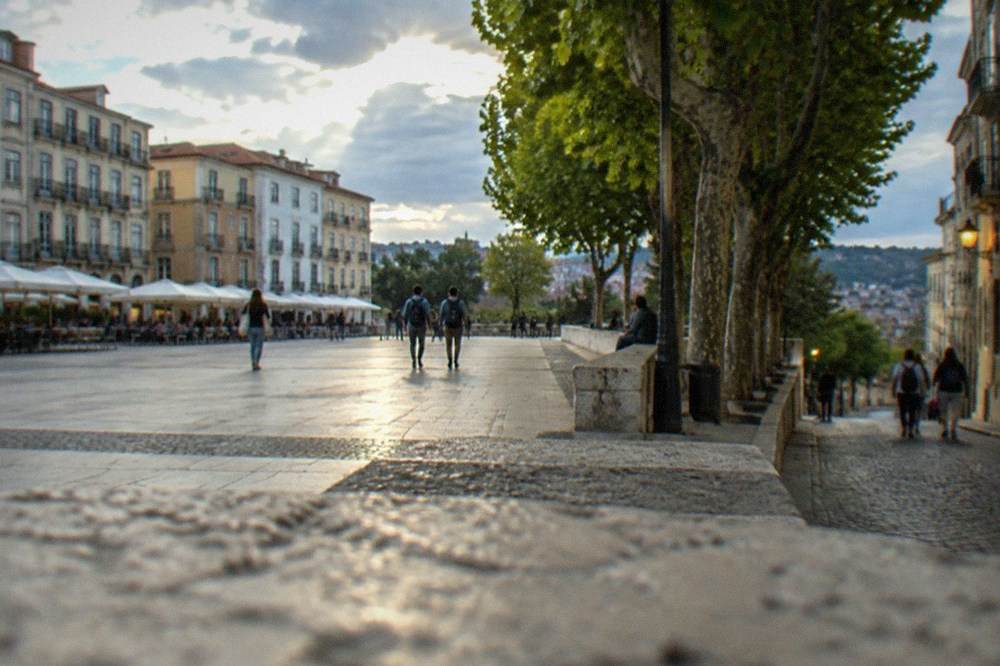
Coimbra's nightlife is a student nightlife, centred on the Praça da República area and the Repúblicas, the centuries-old shared student houses that give the city its social character, and it runs later and cheaper than the city's size would suggest. The bars and gatherings are fuelled by the University's roughly 31,000 students, and the academic calendar, not the tourist calendar, decides when it is loud.
The Repúblicas are the institution that makes Coimbra's night different. These are student communal houses with a long history in the city, and the student traditions guide covers them properly. Around Praça da República, the streets fill after dark with students, many in the black academic cape at festival times, moving between bars that exist largely for them. Prices in this quarter are set for student budgets, which is why an evening here costs less than the equivalent in Lisbon or Porto.
The rhythm follows the academic year. Term time means full streets; the summer holidays thin them out. The two great festival moments are Queima das Fitas in May, when the University closes its visitor circuit on 24 May and Mosteiro de Santa Cruz suspends visits on the day of the Cortejo parade, and the Latada in autumn. No exact festival dates are published on an official page this site could verify, so none are printed. What is verifiable is the effect: during the Cortejo, one of the city's main monuments is closed to visitors for the day.
No individual bar, café or club's hours, address or prices were verified on this build, so this page does not list any. The honest planning advice is to start in the Baixa, eat early by Portuguese standards, and drift uphill toward Praça da República as the evening goes on.
Which Monuments and Spaces Stay Open Latest in Coimbra?
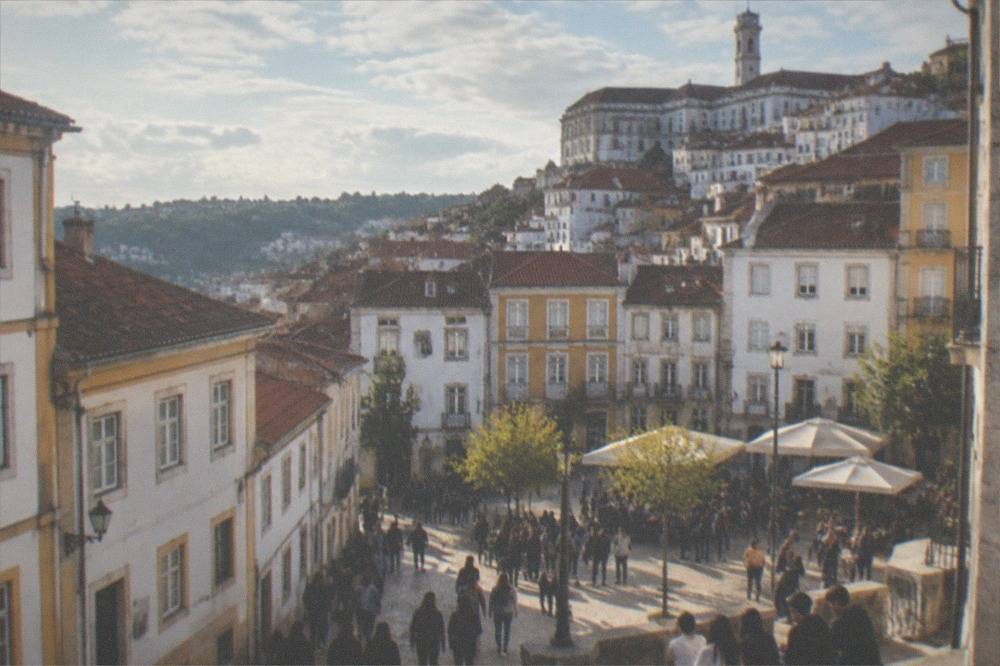
The latest-closing verified space in Coimbra is the Paço das Escolas, the university's palace precinct, which keeps summer hours of 09:00 to 20:00 from 1 April to 30 September, with the last Biblioteca Joanina entry at 19:00. Everything else closes earlier: Sé Velha runs to 18:30 in summer, and Mosteiro de Santa Cruz stops at 16:30, so the university hill is the only monument where an evening visit is possible at all.
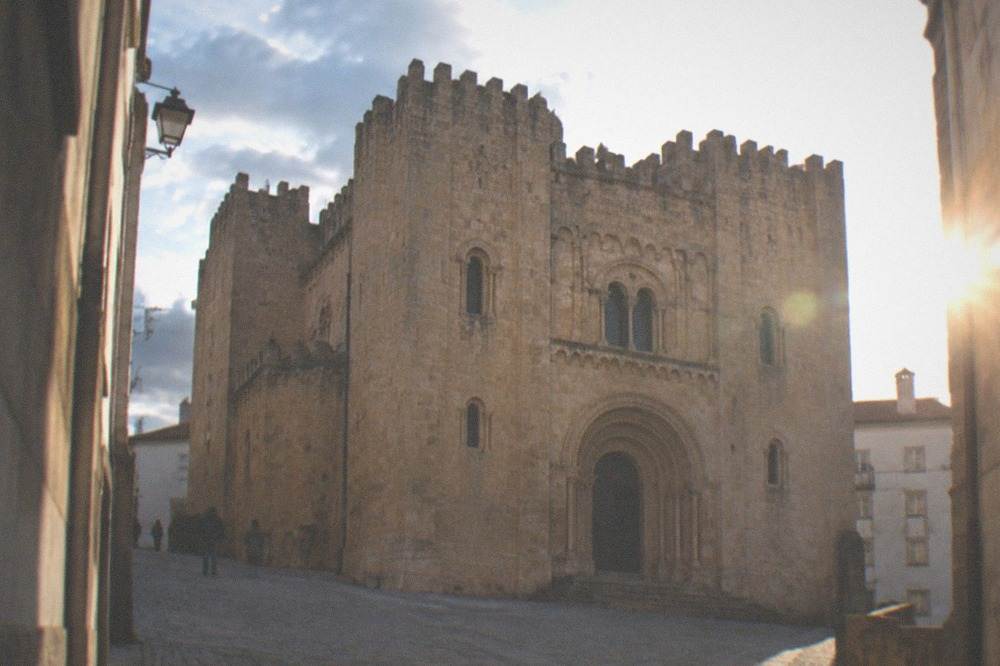
The practical consequence is that an evening itinerary should put the university hill first, if you want a monument interior, and treat everything else as exterior viewing. The lit façades of the Sé Velha, the Mosteiro de Santa Cruz and the university tower are all visible and photogenic after closing time; the interiors are not. The wider set of guides lives on Coimbra Travel Guide.
| Space | Verified hours | Evening feasibility |
|---|---|---|
| Paço das Escolas (summer, 1 Apr to 30 Sep) | 09:00 to 20:00 | Yes, latest monument visit |
| Biblioteca Joanina last entry | 19:00 | Book the timed slot in advance |
| Sé Velha (summer, Mon to Sat) | 09:30 to 18:30 | Exterior only after |
| Sé Velha (Sundays) | 11:00 to 17:30 | Exterior only after |
| Mosteiro de Santa Cruz | 09:30 to 16:30 | Exterior only after |
| Portugal dos Pequenitos (1 Mar to 15 Oct) | 10:00 to 19:00 | Early evening, family option |
Two warnings from the University's own information page. First, the tourist circuit is interrupted by religious, official and academic ceremonies, so a summer evening visit can be cut short without notice. Second, the Cabinet of Curiosities and the Physics Cabinet close for two days every three months for disinfestation. The university tickets guide and the Joanina Library tickets guide carry the full ticket detail, including the 16.50 EUR combined ticket and the rule that the Joanina admits 50 people every 20 minutes and cannot be bought on its own.
For a structured way to see the hill before the light goes, the Coimbra Top Attractions Walking Tour is a budget option at from $5.85 per person, rated 5 from 151 reviews over 2 hours 30 minutes, and it ends you in the old town with the evening ahead of you.
Where Are the Best Night Views of Coimbra?
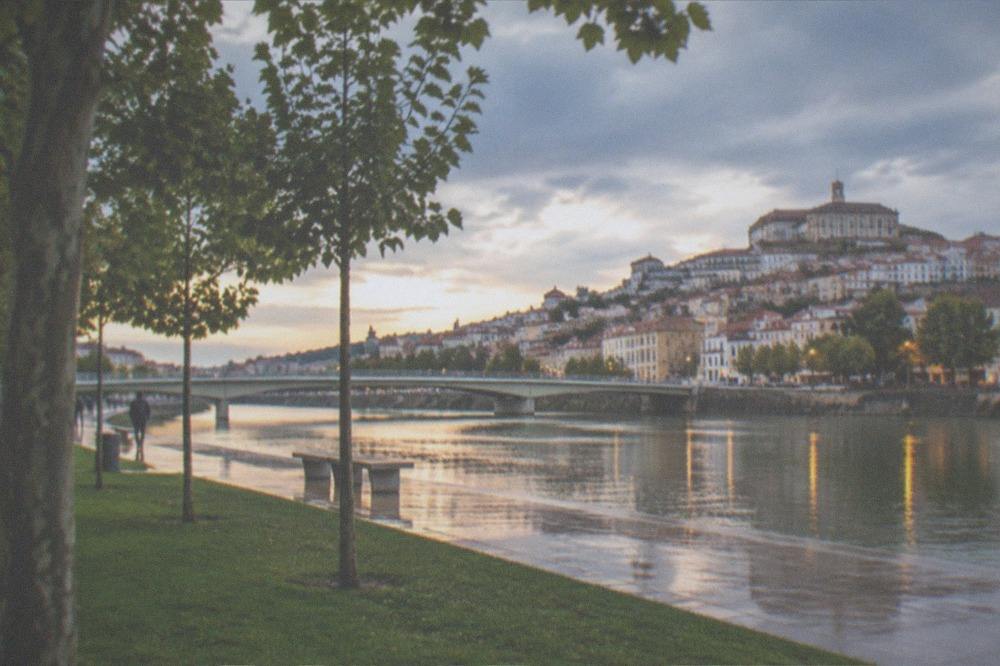
The best verified night views of Coimbra are from the east bank of the River Mondego looking up at the lit university hill, from the riverside parkland of the Parque Verde do Mondego, and from the terraces of the Alta looking down over the Baixa's roofline, and all three are free and need nothing but the energy for the climb.
The classic view is the one from across the river. The old city stacks up the hillside, with the university and its tower at the top, and after dark the whole slope is lit. The Parque Verde do Mondego guide covers the riverside park that gives you the foreground, and the best views and photo spots and photography guide pages carry the full list of angles, including which work after sunset.
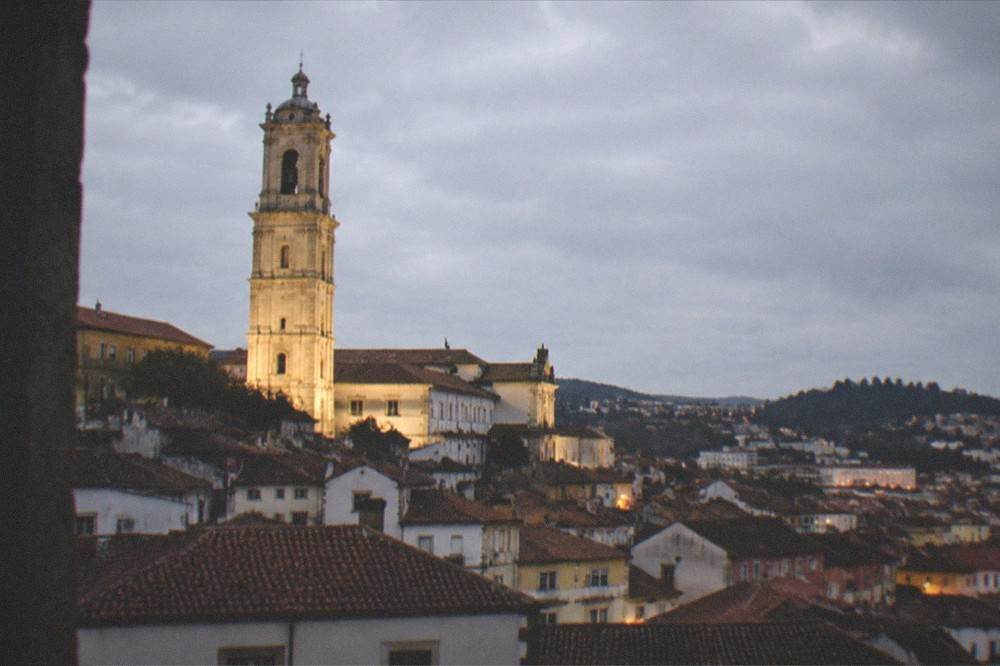
Inside the old town, the terraces around the Alta give the downward view: the Baixa's roofline, the two cathedrals, and the river beyond. The old town guide and the university hill guide map the walk between them. The climb is steep, and the accessibility and hills guide is honest about what that means for anyone with mobility limits.
One way to earn the evening view is to spend the late afternoon in the hills above the city entirely. The schist villages adventure at Lousã is a private half-day tour, from $87.81 per person, rated 5 from 105 reviews over 3 to 4 hours, with a coffee stop included, and it returns you to Coimbra with the evening intact.
What Should You Know About Evening Weather in Coimbra?
Coimbra's evenings are warmest and driest from June through August, when IPMA's 1991 to 2020 normals for the Coimbra / Bencanta station show July at 8.9 mm of rain and August at 14.8 mm, with August the hottest month at a 29.1 C mean maximum, and September is a strong shoulder-season choice because its 27.4 C mean maximum is actually higher than June's 26.3 C while the crowds have gone.
The table is the planning tool. These are the city's own station figures, not a coastal proxy: the district of Coimbra reaches the Atlantic, but the city does not, so a seaside climate table would describe a different place.
| Month | Mean max C | Mean min C | Rain mm | Days with 1 mm+ rain | Verdict for evenings |
|---|---|---|---|---|---|
| May | 23.3 | 11.8 | 64.7 | 8.5 | Pleasant, occasional showers |
| Jun | 26.3 | 14.2 | 26.0 | 3.7 | Warm, mostly dry |
| Jul | 28.5 | 15.6 | 8.9 | 1.7 | Hot, effectively dry |
| Aug | 29.1 | 15.7 | 14.8 | 2.2 | Hottest month, 10.9 days over 30 C |
| Sep | 27.4 | 14.1 | 49.9 | 5.2 | Warmer than June, fewer crowds |
| Oct | 23.2 | 11.9 | 114.5 | 10.3 | Mild, rain jumps sharply |
Two details most guides get wrong. September is not the start of the cool-down people assume: its mean maximum beats June's, and the real rain does not arrive until October, when the monthly total jumps from 49.9 mm to 114.5 mm. And August, not July, is the hottest month on both measures, averaging 10.9 days above 30 C, which matters if you plan to climb the hill at night rather than in the afternoon. The best time to visit guide and the weather by month guide extend this table across the year.
How Much Does a Night in Coimbra Cost?
A night out in Coimbra is inexpensive by Portuguese-city standards: the municipal tourist tax is 1.00 EUR per guest per overnight stay, capped at three consecutive nights and charged from age 16 at the accommodation, a ticketed fado show starts from $18 per person, and a pre-booked bus trip costs 0.90 EUR, so the fixed costs of an evening are low and the variable costs, food and drink, are student-priced.
The tax is the figure most visitors have never heard of and most guides get wrong. It is 1.00 EUR, not 2.00: a two-euro rate was approved as a proposal by the municipality's executive on 21 July 2026, but the published rate remains one euro until the municipality's own tax pages say otherwise. The municipality's own worked example is a couple staying seven nights paying 3.00 EUR each, because of the three-night cap.
| Evening cost item | Verified figure | Source basis |
|---|---|---|
| Tourist tax | 1.00 EUR per guest per night, max 3 nights, from age 16 | Municipal tax page |
| Ticketed fado show | From $18 per person, port wine included | Operator listing |
| Budget walking tour | From $5.85 per person | Operator listing |
| Pre-booked SMTUC trip | 0.90 EUR per trip, 3+ trips | 2026 tariff |
| On-board SMTUC single | 2.00 EUR | 2026 tariff |
| Sé Velha admission (if visiting before close) | 3.00 EUR individual | Parish visitor page |
The context for the tax is worth knowing. The municipality's own economic study, published in July 2026, reports 698,151 overnight stays in Coimbra in 2025 and estimates its annual cost associated with tourism at 2.44 million EUR, which works out to 3.49 EUR per overnight stay, well above what the tax collects. For the full budget picture, the trip costs guide and budget guide break down a whole visit, and the restaurants guide and best restaurants guide cover where the evening meal goes.
Should You Stay the Night in Coimbra or Day-Tip Out?
Staying the night is the better choice if fado and the student quarter matter to you, because both are evening activities that day-trippers structurally miss, and the city's accommodation base covers everything from hostels to the Quinta das Lágrimas hotel. A day trip from Porto or Lisbon sees the monuments but not the night, which is the half of Coimbra that makes it distinctive.
The argument is simple. Everything that makes Coimbra unusual after dark, the fado tradition, the Repúblicas, the lit hillside, the late student streets, happens in the evening. A visitor who arrives at ten and leaves at five sees a pleasant hill town. A visitor who stays hears a musical form that exists in this shape nowhere else in the country. The is it worth staying a night in Coimbra answer page covers the decision directly, and the where to stay guide, best hotels guide and hostels and budget stays guide cover the beds.
If you are coming from the north or south, the Porto to Coimbra guide and Lisbon to Coimbra guide cover the journeys. One transport fact worth repeating: Coimbra has two railway stations with confusingly similar names, in different places, and CP, Comboios de Portugal, is where to check which trains call where. This site publishes no stopping pattern or shuttle fare for them because no official source confirmed one. The train stations A and B guide explains the trap fully.
Common Questions About Coimbra at Night
Is Coimbra good at night?
Yes. Coimbra, Portugal, is a university city of about 31,000 students, and its evenings run on that population: fado in the local male-voiced style, lit streets in the old town, the floodlit university hill seen from across the River Mondego, and student bars around Praça da República. The monuments close early, but the streets do not.
Is Coimbra safe to walk around at night?
The main evening areas, the Baixa, the riverside and the old town lanes, are lit, compact and busy. The real difficulty is the gradient: the climb from the river to the university hill is steep and cobbled, so footwear and route choice matter more after dark than any other decision.
Where can I hear fado in Coimbra at night?
Coimbra fado is performed both in dedicated venues and as street serenades, and it is sung mainly by men in a tradition tied to the university's student culture and the black academic cape. This site has verified no individual venue's show times or prices, so the reliable way to guarantee a performance on a specific night is a ticketed show such as the live fado performance with a glass of port wine, from $18 per person.
What time do things close in Coimbra?
The latest verified monument closing is the Paço das Escolas at 20:00 in the summer schedule, 1 April to 30 September, with the last Biblioteca Joanina entry at 19:00. Sé Velha closes at 18:30 in summer and Mosteiro de Santa Cruz at 16:30. Bars and student life around Praça da República run much later, but no individual venue's hours were verified for this site.
How much is the tourist tax in Coimbra?
The current rate is 1.00 EUR per guest per overnight stay, capped at three consecutive nights, charged from age 16 and paid to the accommodation, not to a booking platform. A two-euro rate was approved as a proposal in July 2026 but is not the published current rate. The municipality's own study puts its tourism cost at 3.49 EUR per overnight stay, above what the tax collects.
Is one evening enough to see Coimbra at night?
One evening covers the essentials: the view from across the River Mondego, a walk through the lit old town, and either a fado show or the student quarter. Two evenings let you do both the music and the streets without rushing, and the warm, comparatively dry months of June through September, with September warmer on average than June, are when all of it is comfortable.
An evening in Coimbra, Portugal, is not a scaled-down version of Lisbon's; it is its own thing, built on a student tradition several centuries old, a hillside that photographs beautifully after dark, and a musical form you cannot hear in this shape anywhere else. Plan around the early monument closings, put the fado first, and the city's night takes care of the rest.