Coimbra Photo Spots: Where to Point Your Camera in Portugal's University City
Coimbra, Portugal, the university city on the River Mondego, is one of the most photogenic small cities in the country, and this guide maps the frames that matter: the Alta from the water, the water from the Alta, and the tiled detail in between.
Short answer
The best Coimbra photo spots are the university hill and its terrace views over the Mondego, the riverbank parks on the far shore, the Sé Velha and the old cathedral quarter, the tiled facades and ironwork of the Baixa, and the Mondego bridges at dusk. September is the strongest month for light and thin crowds, because the autumn rain holds off until October.
Coimbra, Portugal, the university city on the River Mondego, is built for photography in a way few cities of its size manage: a hill stacked with monuments, a river running straight through the middle of the frame, and a lower town of tiled facades and steep lanes that rewards walking with a picture roughly every hundred metres. The city is compact enough to shoot on foot in two days and varied enough to fill a week. This guide lays out the frames in the order a photographer would actually work them, with the official climate numbers that decide when the light is right.
Which Coimbra Photo Spots Give the Classic City View?
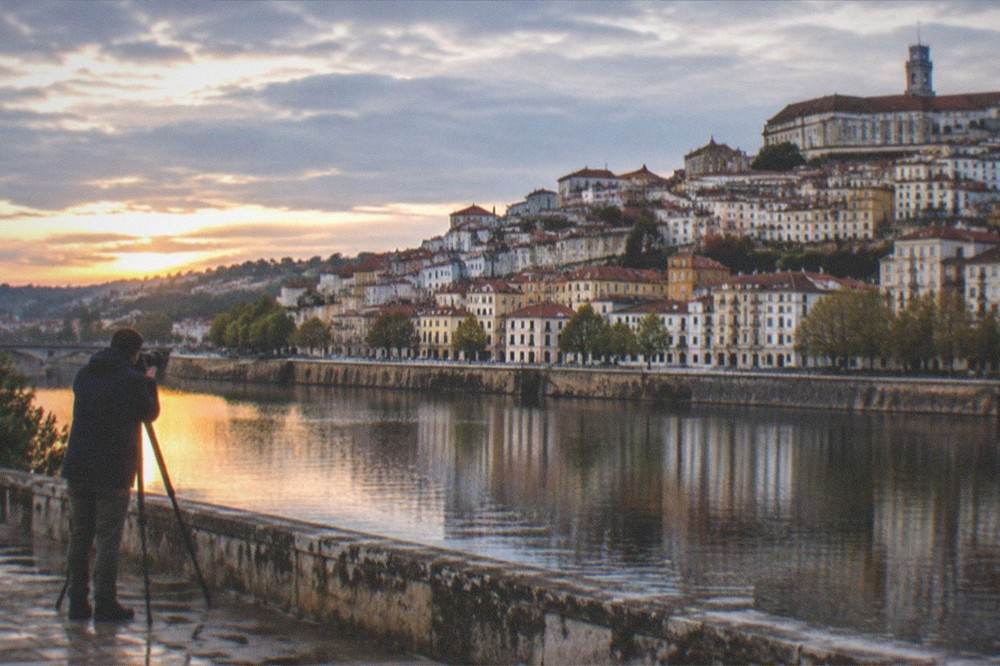
The classic Coimbra photograph is taken from the south bank of the River Mondego, looking north across the water at the university hill, and the two dependable places to stand are the Parque Verde do Mondego riverbank and the Santa Clara side of the river near the old bridge. The frame stacks the water in the foreground, the old town climbing in the middle, and the Paço das Escolas and the university buildings along the skyline.
Everything about this shot works because of geography. The university hill, the Alta, faces south over the river, so the low sun of late afternoon lights the facade stone directly while the Baixa below is already falling into shadow. That contrast is what makes the postcard: a lit hill above a darkening town above a reflecting river. Late afternoon into sunset is when the hill's south-facing stone turns gold.
Work the bank from west to east as the sun drops. The composition changes every few dozen steps because the bridge upstream and the river bend downstream each give a different foreground. A tripod helps at dusk, but the bank is also where the city's evening walkers are, so expect people in frame and decide whether they are the subject or the problem.
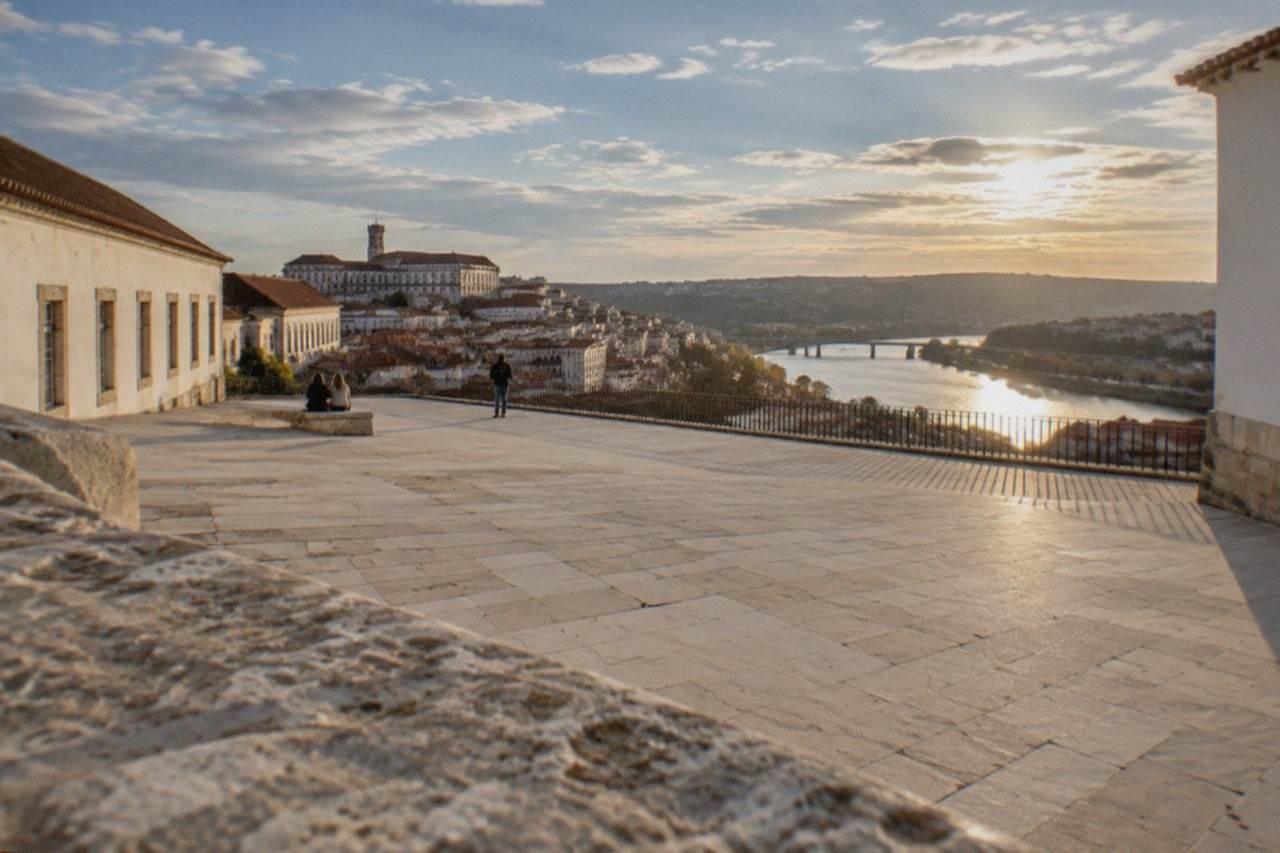
The reverse frame matters too. From the terrace outside the university buildings, the city drops away to the south and the river cuts the view in half. Shoot it wide, then shoot it long: a telephoto from the same spot compresses the rooftops of the Baixa into a texture that reads as pure Coimbra. The Coimbra Travel Guide map page plots how these two viewpoints face each other across the water.
Where do You Shoot the University Itself?
You photograph the University of Coimbra from three positions: the terrace and courtyard of the Paço das Escolas for the architecture and the city view, the iron gates and the Escadas de Minerva for the approach with students in frame, and the Rua da Sofia side for the college facades that carry the UNESCO inscription. The university's own visit pages state the site opens 09:00 to 20:00 in summer and 09:00 to 17:30 in winter.
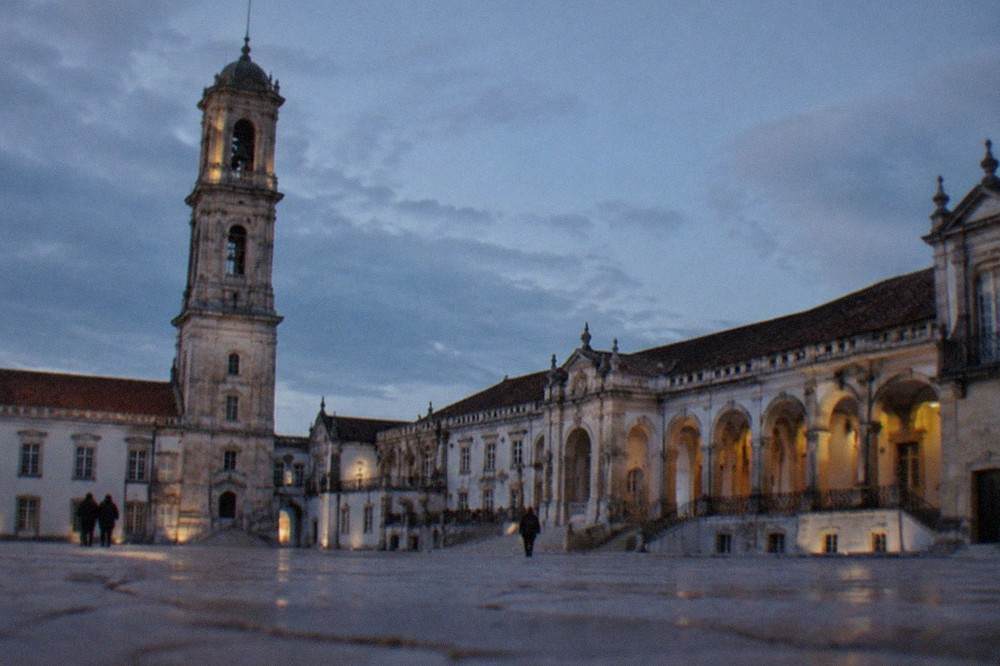
The university is not one building but a hill of them, and the UNESCO World Heritage inscription of 2013, "University of Coimbra - Alta and Sofia", covers exactly two components: the Alta, the university hill, and Sofia, the college street below. That scope is worth knowing as a photographer, because it tells you the two zones that have been judged globally significant, and those are the two zones worth giving your best hours to. Morning light inside the courtyard is shootable in both seasons.
Inside the courtyard, the Capela de São Miguel is the detail shot: azulejo tiles, carved portals and a facade that changes character completely as the sun crosses it. The Royal Palace spaces are interiors, and the practical rule is that the Biblioteca Joanina admits 50 people every 20 minutes on a timed slot, with the time printed on your ticket being the library slot specifically. The listing for the guided university tours notes that photography rules inside the library are strict; the noble floor is a no-photo space, so plan your interior work around the chapel and the palace rooms instead and treat the library as something to see with your eyes.
A guided visit changes the photography in one specific way: access. The University of Coimbra guided tours without queue listing describes a group of eight with tickets included, which removes the slot anxiety from the one building in the city where slots genuinely sell out. Ticketing detail for independent visitors is on the university tickets page.
What Does the River Add to Coimbra Photography?
The River Mondego gives Coimbra its second great set of photo spots: the bridges, the riverbank parks on both shores, and the water-level view of the hill that no land position can match. A 50-minute river cruise runs from the city and is listed from $11 per person, rated 4.2 from 43 reviews, and it exists precisely to put the whole Alta skyline in one frame from the middle of the river. Sunset departures turn the hill silhouette into the strongest single image the city offers.
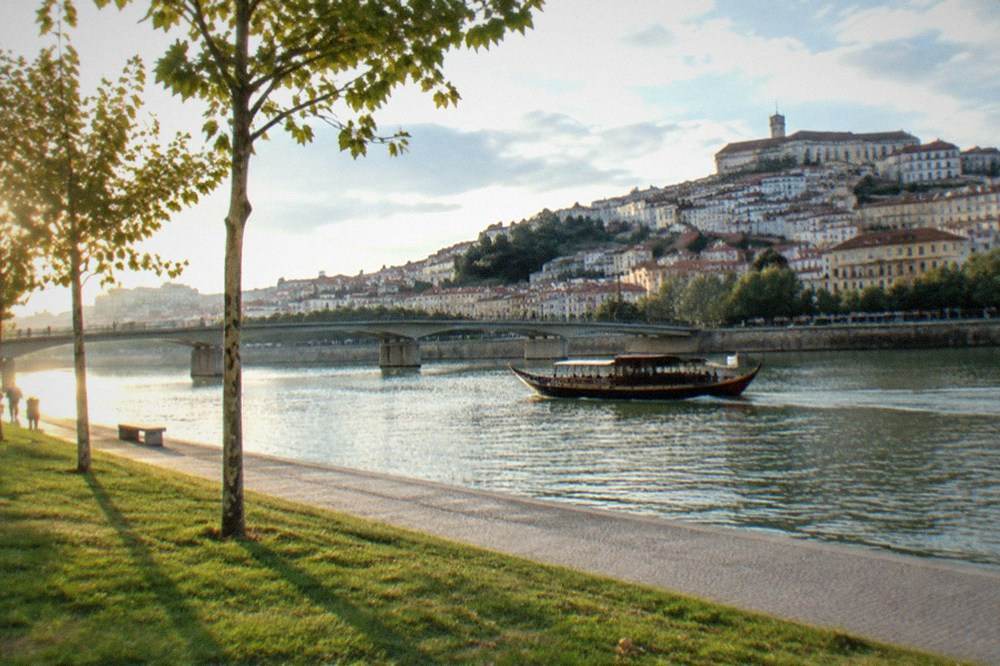
From the bank you photograph the river. From the river you photograph the city. The difference is foreground: on the water, the reflection runs unbroken from your lens to the hill, and the bridges frame either side of the frame depending on which stretch you are on. The listing for the Mondego river cruise with city views describes exactly this, 50 minutes of city views from the water.
There is also a traditional option: the Barca Serrana boat trip, a flat river craft listed from $15 per person and rated 4.6 from 171 reviews. A traditional hull gives a different picture, low to the water, with the boat itself available as a foreground element for shots taken from the bank.
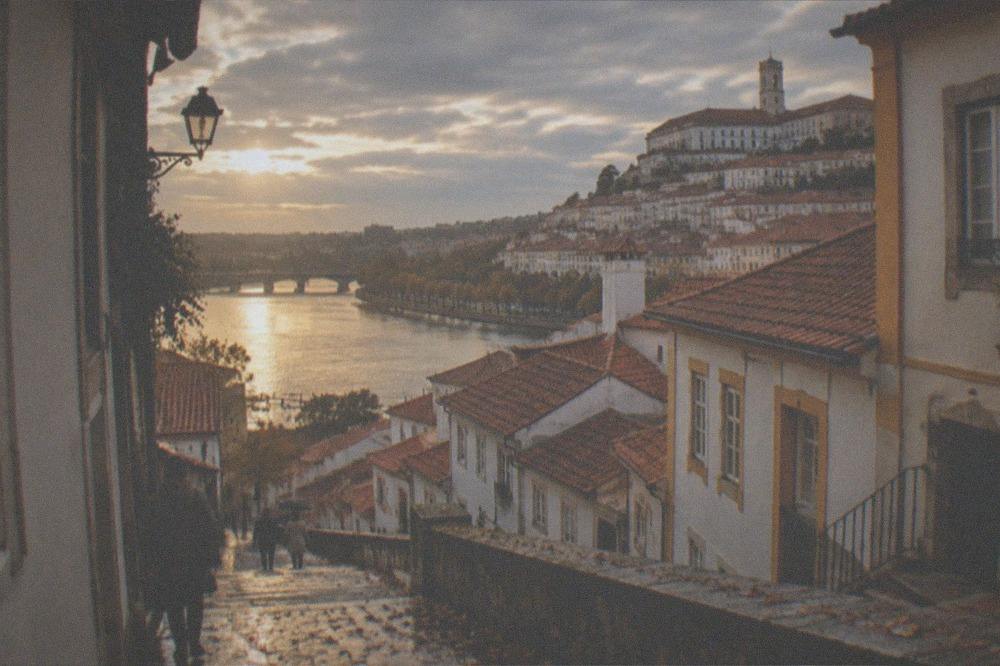
Back on land, the Parque Verde do Mondego on the south bank is the city's easiest green foreground: lawns, paths and the river wall, all aimed at the hill. Shoot it in the blue hour for the lit bridge reflections, and again at dawn when the bank is empty and the light comes from the east, side-lighting the hill instead of front-lighting it.
Which Old Town Streets and Details Should You Shoot in the Baixa?
The Baixa, Coimbra's lower town, is the detail-photography district: the Praça do Comércio and the streets running down from the Arco de Almedina to the river, the tiled facades and iron balconies along Rua Ferreira Borges and Rua da Sofia, and the vertical lanes of the Escadas do Quebra-Costas, where the old town climbs the hill in steps. The material is azulejo tile, iron, painted plaster and worn stone, and the best light is the low, raking sun of early morning or late afternoon.
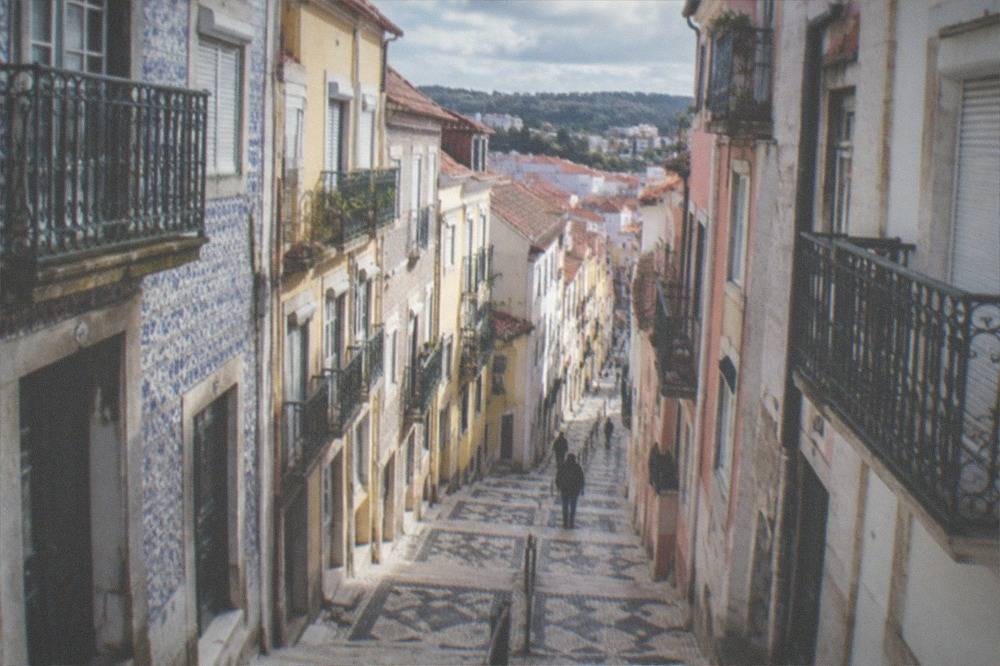
The Baixa is where the walking-tour photography happens, and the difference between a flat record shot and a good one is almost always the hour. Midday sun in a narrow lane produces harsh top light and black shadows; the same lane at 09:00 or after 17:00 in summer gets a shaft of warm light down one wall and is transformed. The IPMA normals for the Coimbra / Bencanta station show the city averages 123.3 days per year with a maximum above 25 C, concentrated between May and October, so in the warm half of the year the raking-light window is generous.
Two specific structures anchor the district. The Arco de Almedina is the medieval gate into the old town and works as both a subject and a frame: shoot through it, with the lane beyond as the picture. The Escadas do Quebra-Costas, the stair-lanes that climb from the Baixa toward the Alta, are the vertical compositions, and the Fado houses and student graffiti along them add the human layer. The fado connection is real and shootable in the evening; the fado in Coimbra and where to hear fado pages cover the venues, and the rule for photographing inside them is the universal one: ask first, and during the song, put the camera down.
The Coimbra Top Attractions Walking Tour is the budget option for photographers who want the route solved for them: listed from $5.85 per person, rated 5 from 151 reviews, 2 hours 30 minutes covering the top attractions on foot. It is cheap enough to do once for reconnaissance and then reshoot alone the next morning.
How do You Photograph the Sé Velha and the Cathedral Quarter?
The Sé Velha, Coimbra's Romanesque old cathedral, is shot from three positions: the terrace on its west side for the fortress-like facade against the sky, the narrow lanes below for the building in context, and the interior, where a ticket costs 3.00 EUR per person, for the Romanesque capitals and the cloister. The Sé Nova, the newer cathedral a short walk away, gives a contrasting baroque facade.
The Unidade Pastoral Aeminium publishes summer hours of 09:30 to 18:30 and winter hours of 09:30 to 17:30.
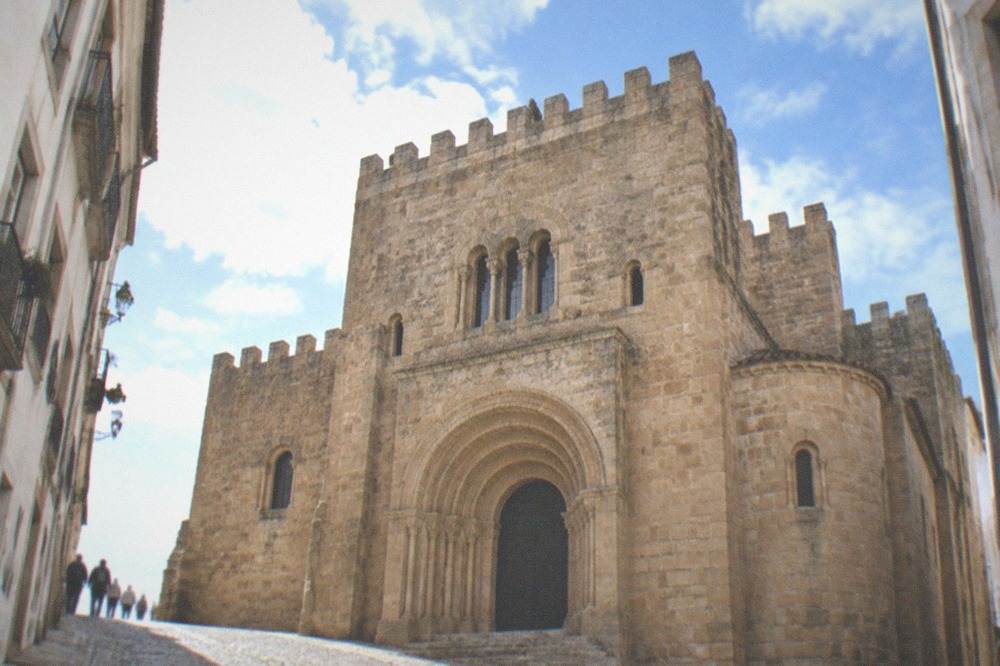
The Sé Velha is one of the best-preserved Romanesque cathedrals in Portugal and it photographs like what it is: a fortified church, with battlements and a squat, crenellated silhouette. The best light on the facade comes in the morning, when the sun clears the ridge to the east. The interior is dark and the stone is pale, which is the classic high-contrast problem: brace for long exposures, or accept the darkness and shoot the capitals as near-silhouettes.
The cloister is the quiet frame. It is small, enclosed and green at the centre, and it rewards a slow approach: one wide establishing shot from a corner, then details of the capitals, which are carved with figures and animals and are among the oldest sculpture in the city. Interior photography is permitted on a standard visit ticket, but a service stops all of it, and the parish's published hours note Sunday visiting starts at 11:00, so Sunday morning is the time to avoid.
The Sé Nova, up the slope toward the university, is the counterpoint: a Mannerist and baroque building with a grand stair facade that photographs well from below with a wide lens. Between the two cathedrals, the lanes of the old cathedral quarter are among the densest photo material in the city, stone walls, small squares and sudden gaps that open onto the river far below.
When Is the Best Month for Photographing Coimbra?
September is the best month for photographing Coimbra, and the official numbers say so: IPMA's 1991 to 2020 normals for the Coimbra / Bencanta station show September with a mean maximum of 27.4 C, higher than June's 26.3 C, and only 49.9 mm of rain against October's 114.5 mm, while the summer crowds have gone. July is the driest month at 8.9 mm, and November is the wettest at 121.5 mm. August, not July, is the hottest month, averaging 10.9 days above 30 C.
The table below is the planning tool. It is drawn directly from the IPMA normals for station 707, Coimbra / Bencanta, the city's own station 3 km from the centre, and it answers the photographer's real question for each month: how hot, how wet, and how much usable light.
| Month | Mean max C | Rain mm | Days with 1 mm+ rain | Days max 25 C+ |
|---|---|---|---|---|
| Jan | 15.0 | 113.5 | 11.3 | 0.0 |
| Feb | 16.4 | 81.0 | 8.6 | 0.2 |
| Mar | 19.1 | 75.4 | 9.4 | 3.2 |
| Apr | 20.5 | 84.6 | 10.6 | 5.6 |
| May | 23.3 | 64.7 | 8.5 | 9.9 |
| Jun | 26.3 | 26.0 | 3.7 | 17.8 |
| Jul | 28.5 | 8.9 | 1.7 | 26.1 |
| Aug | 29.1 | 14.8 | 2.2 | 28.0 |
| Sep | 27.4 | 49.9 | 5.2 | 21.9 |
| Oct | 23.2 | 114.5 | 10.3 | 9.9 |
| Nov | 18.0 | 121.5 | 11.5 | 0.7 |
| Dec | 15.6 | 111.3 | 11.1 | 0.0 |
Read the September row carefully, because it is the one that surprises people. September is both hotter and wetter than June on these normals, 27.4 C against 26.3 C and 49.9 mm against 26.0 mm, so it is not a drier June. What it is, is the last month before the autumn rain arrives in force: October's total jumps to 114.5 mm, more than double September's, and November goes higher still. September is the quiet recommendation because the weather holds and the crowds have left, not because it is dry.
| Photographer's goal | Best months | Why, from the normals |
|---|---|---|
| Warm raking light, thin crowds | May, September | 23.3 C and 27.4 C mean max, rain moderate, outside peak season |
| Blue-sky architecture days | July, August | 8.9 mm and 14.8 mm rain, but 26.1 and 28.0 days max 25 C+ mean harsh midday light |
| Moody street and rain work | October to January | 111.3 to 121.5 mm per month, 11 or more rain days |
| Empty streets at dawn | Any month outside May | The student calendar, not the weather, drives the crowds |
One calendar fact matters more to photographers than any weather row: the Queima das Fitas, the student festival, falls in May, and it is both the best and the worst time to shoot. Best, because the Cortejo parade fills the streets with black-caped students and it is the most photogenic event of the Coimbra year. Worst, because the University closes its visitor circuit on 24 May and Mosteiro de Santa Cruz suspends visits on the Cortejo day, a moveable Sunday. The Queima das Fitas page covers what is verified about dates, and the best time to visit page weighs the whole calendar.
What Are the Rules and Practicalities for Photographing Coimbra's Monuments?
The rules that matter are these: the Biblioteca Joanina's noble floor is a no-photo space on a timed slot, the Torre da Universidade is closed to the public entirely, the University's own information page states this plainly, the Sé Velha charges 3.00 EUR and Mosteiro de Santa Cruz 5.00 EUR for the visitable parts, and the Museu Nacional de Machado de Castro is closed for conservation work. The University's combined ticket at 16.50 EUR is valid for two days except the fixed Joanina slot.
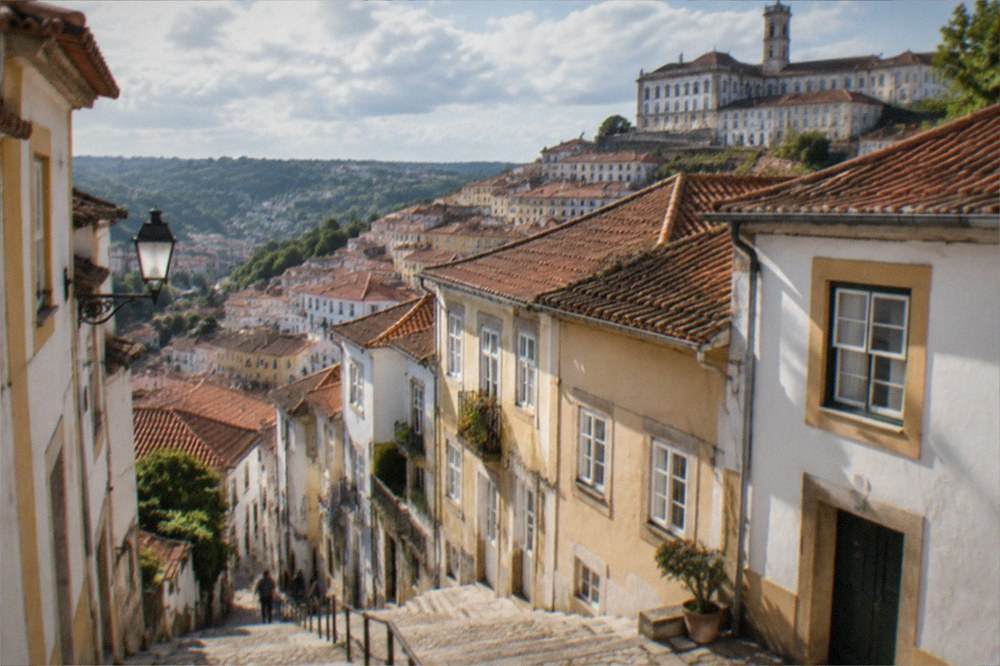
The tower closure is the one that catches visiting photographers. The Torre da Universidade, the clock tower that dominates every skyline shot of the city, cannot be climbed: the University's own page states "We regret to inform you that this facility is closed", and the same page mentions the tower's 184 steps and narrow passage as the physical reasons reopening is hard. Photograph the tower from outside, from the courtyard and from across the river, but do not plan a climb, and treat any guide that offers one as out of date. The two-day ticket validity effectively gives photographers a two-day window for every university space except the library.
| Site | Adult entry | Photo situation | What to plan around |
|---|---|---|---|
| Paço das Escolas circuit (with Joanina) | 16.50 EUR | Exterior and palace spaces freely shootable | Joanina slot is fixed, 50 people per 20 minutes, noble floor no photos |
| University + Science Museum ticket | 12.50 EUR | Same spaces minus the library | Valid two days |
| Sé Velha | 3.00 EUR | Interior permitted on ticket | Closed during services; Sunday opens 11:00 |
| Mosteiro de Santa Cruz | 5.00 EUR | Church and tombs, restrained light | Visits suspended on the Queima Cortejo Sunday |
| Museu Nacional de Machado de Castro | Closed for works | Cryptoporticus is the long-term interior subject | Reopening phased; no current price published |
| Portugal dos Pequenitos | Hours 10:00 to 19:00, Mar 1 to Oct 15 | Miniature village, strong family frames | Prices are on the venue's own ticket page |
Two more planning notes from the verified record. The Mosteiro de Santa Clara-a-Velha, the flooded convent on the south bank, has been closed for requalification works since 20 October 2025, so its ruins are currently an exterior-only subject, shot from the riverbank. And the Santa Cruz cloister is the burial church of Portugal's first two kings, which makes it a working monument as well as a photographic one: the light through its arches is at its best in the morning, and the 5.00 EUR ticket covers the sacristy and chapter rooms that most visitors skip and most photographers should not.
What Gear and Settings Work for Coimbra's Light?
A two-lens kit covers Coimbra: a wide zoom for the lanes, courtyards and river frames, and a short telephoto in the 70 to 200 mm range for compressing the hill from the south bank and pulling architectural detail out of facades you cannot reach. The city's summer light is harsh from late morning through mid-afternoon, when the Coimbra / Bencanta normals show 28 days in August reaching 25 C or more, so the working hours are the first three after sunrise and the last three before sunset.
The practical pattern for a two-day shoot is a simple alternation. Day one: dawn and morning on the Alta, the university courtyard, the Sé Velha and the cathedral lanes, while the light is eastern and low; midday in interiors, the Santa Cruz cloister, the chapel, the museums that permit it; late afternoon on the south bank for the classic hill frame into sunset. Day two: repeat the strongest frames from day one in better light, then give the afternoon to the Baixa details and the evening to fado and night work, when the Arco de Almedina and the river bridges are lit. Interiors and detail work fill the middle of the day.
| Situation | Recommended approach | Common failure |
|---|---|---|
| Hill from the south bank, sunset | Telephoto, tripod, bracket the reflection | Shooting too wide and losing the skyline detail |
| University courtyard, morning | Wide lens, arrive at opening time | Midday top light on the arcade |
| Baixa lanes | Early morning, raking sun, patience for empty frames | Midday, when contrast kills the tile colour |
| Interiors (Sé Velha, Santa Cruz) | High ISO, brace, shoot the capitals and tombs | Flash, which flattens carved stone and is unwelcome |
| Night, bridges and old town | Tripod, blue hour into full dark | Arriving after the blue hour is gone |
One honest note on crowds, from the numbers rather than from memory: the municipality's own figures put 698,151 overnight stays in the city in 2025, spread across the year, and the Joanina's 50-per-20-minutes ceiling is the one place where that pressure becomes a hard constraint on a photographer's schedule. Everything else in Coimbra is queueless by the standards of larger cities, especially outside May and the summer peak.
Should You Shoot Coimbra from the Water or from the Hill?
Both, and in that order: the river cruise gives the single strongest skyline frame, the middle of the Mondego with the whole Alta in one composition, while the hill gives the layered city-and-river frames that no water position can reach. The cruise is a 50-minute commitment listed from $11 per person, and the hill's terrace views are included in the standard university ticket. Photographers with only one evening should take the hill at sunset and the bank at blue hour, which requires no ticket at all.
The choice is really about foreground. From the water, the foreground is the river itself, unbroken, reflective, and it is the only place the city reads as a single silhouette. From the hill, the foreground is the city, rooftops and church towers stacked in layers, and it is the only place Coimbra reads as a lived-in place rather than a monument. A portfolio of the city needs both readings.
The cruise listing describes 50 minutes of city views from the middle of the Mondego, rated 4.2 from 43 reviews, and it pairs naturally with the walking and university options above: a morning on the hill, an afternoon in the lanes, and a sunset hour on the water is a complete photographic day in this city.
For photographers extending the work beyond the city, two day trips carry the camera well. Conímbriga, the Roman town about 16 km south in the parish of Condeixa-a-Velha, in the municipality of Condeixa-a-Nova, is the strongest archaeological subject in the region: mosaics in situ, a 10.00 EUR combined ticket for museum and ruins, and opening hours of 10:00 to 18:00 seven days a week, which makes it the reliable Monday option when other monuments close. The schist villages of the Lousã mountain, slate-walled and forested, are the landscape counterweight, and the schist villages and day trips pages map both.
Common Questions About Coimbra Photo Spots
Where is the best view of Coimbra?
The best view of Coimbra is from the south bank of the River Mondego, looking north at the university hill, with the Parque Verde do Mondego riverbank and the Santa Clara side of the river giving the strongest positions. Late afternoon into sunset lights the south-facing hill stone directly, and the frame stacks river, old town and the Paço das Escolas skyline in one composition.
Can you photograph inside the Biblioteca Joanina?
No, not on the noble floor. The library admits 50 people every 20 minutes on a timed slot, the time printed on the 16.50 EUR combined ticket is that slot, and the noble floor is a no-photo space. The library also cannot be visited on its own: it exists only inside the combined ticket, and entry outside the printed slot is refused.
Can you climb the university tower in Coimbra for photos?
No. The Torre da Universidade is closed to the public, and the University's own visitor information page states this plainly. The same page mentions the tower's 184 steps and narrow passage. Photograph the tower from the courtyard, from the lanes below, or from across the river, but no climb exists to book.
What is the best month for photography in Coimbra?
September. IPMA's 1991 to 2020 normals for the Coimbra / Bencanta station show a September mean maximum of 27.4 C with only 49.9 mm of rain, and the autumn rain does not arrive in force until October, when the monthly total jumps to 114.5 mm. The summer crowds are gone by then and the light is still warm and long.
Is Coimbra a UNESCO World Heritage city?
No, and this is the most common error in guides to the city. The UNESCO inscription, from 2013, is "University of Coimbra - Alta and Sofia", and it covers two components in the old town: the university hill and the college street. The city as a whole is not inscribed.
Do you need a tripod in Coimbra?
For the blue-hour river frames, yes, or a solid wall and a steady brace. The city is walkable and compact, the lanes are steep, and the classic dusk shot from the south bank needs a long exposure once the light drops. Tripods are unremarkable on the riverbank and a nuisance in the narrow stair-lanes, so carry it only for the river sessions.
Coimbra rewards a photographer who plans around two facts: the hill faces south over the water, and the crowds follow a student calendar rather than the weather. Shoot the hill from the river at sunset, the river from the hill in the morning, the Baixa in raking light, and go in September, when the numbers say the light is still summer and the streets are not.