Coimbra in Spring: Weather, Events and What to Do
Spring is the season when Coimbra, Portugal's university city on the River Mondego, is at its most photogenic and its most complicated: warm, showery, and interrupted by the biggest student festival of the year.

Short answer
Coimbra in spring means daytime highs rising from 19.1 C in March to 23.3 C in May, rain that fades from 75.4 mm in March to 64.7 mm in May, and a late-May student festival that closes the university's visitor circuit on 24 May and suspends visits at Mosteiro de Santa Cruz on the parade Sunday.
Coimbra, the university city on the River Mondego in central Portugal, changes character completely between March and May: the winter rain thins out, the Botanical Garden comes back to life, and the student calendar takes over the old town in a way no other Portuguese city experiences. This guide sets out what spring in Coimbra actually involves, using the city's own published figures rather than folklore: IPMA's 1991 to 2020 climate normals for the Coimbra / Bencanta station, the University's own visitor information, and the municipality's tariff and tax pages. The short version is that spring is the best compromise in Coimbra between weather, crowds and price, but the second half of May belongs to the students, and one date in it closes the university's tourist circuit entirely.
What Is Spring Weather Like in Coimbra, Portugal?
Spring in Coimbra runs from roughly 19.1 C daytime highs in March to 23.3 C in May, with nights climbing from 7.8 C to 11.8 C, and the rain easing from 75.4 mm in March to 64.7 mm in May, still spread over about eight or nine days with at least 1 mm per month. April is the wettest of the three spring months at 84.6 mm, so the season is not a straight line towards dryness: March and April each carry roughly ten wet days, and it is May that finally breaks the pattern. These are IPMA's 1991 to 2020 normals for the Coimbra / Bencanta station, the city's own station 3 km from the centre, not a coastal or district figure.

The numbers deserve a closer look, because they correct two things people assume about central Portugal. First, spring here is genuinely mild rather than hot: not a single day reaches a 30 C maximum in an average March, and May averages only 3.5 of them. Second, the rain does not vanish, it just becomes less frequent. A spring visitor should plan for a shower on roughly one day in three in March and April, and one day in four by May.
| Month | Mean max C | Mean C | Mean min C | Rain mm | Days 1 mm+ rain | Days max 25 C+ |
|---|---|---|---|---|---|---|
| March | 19.1 | 13.5 | 7.8 | 75.4 | 9.4 | 3.2 |
| April | 20.5 | 14.9 | 9.4 | 84.6 | 10.6 | 5.6 |
| May | 23.3 | 17.6 | 11.8 | 64.7 | 8.5 | 9.9 |
For comparison with the rest of the year, and for the full argument about which month wins, see the site's season-by-season breakdown in Coimbra's best time to visit and the month-by-month figures in Coimbra weather. One counterintuitive fact worth carrying into any spring-versus-autumn decision: September's mean maximum, 27.4 C, is actually higher than June's 26.3 C, and September is also wetter than June, 49.9 mm against 26.0 mm. What makes early autumn attractive is that the serious rain holds off until October, when the monthly total jumps to 114.5 mm. Spring's advantage over autumn is the green season itself: the hills around the Mondego and the Botanical Garden are at their best now, not in September.
What Should You Pack for Coimbra in Spring?
Pack layers for Coimbra in spring: a light jacket or jumper for evenings that still fall to 7.8 C in March and 9.4 C in April, short sleeves for afternoons that reach 19 to 23 C, and a compact umbrella or rain shell for the eight to ten days per month with measurable rain. Footwear matters more than most visitors expect, because the old town is built on a hill and much of it is cobbled or stepped; the climb from the Baixa up to the Paço das Escolas is the single most repeated walk of any Coimbra visit. Nothing in the spring normals calls for serious cold-weather gear: the record low at this station is -4.3 C, but that was set on 20 January 2017, in winter, not spring.

A practical way to think about it is by what the day asks of you, not by month:
| Spring situation | What the averages say | What to carry |
|---|---|---|
| Morning on the university hill | 7.8 to 11.8 C at night means cool starts | Jumper or light jacket |
| Mid-afternoon in the Baixa | 19.1 to 23.3 C mean maximum | Shirt sleeves, sun cream |
| A wet March or April day | 9.4 to 10.6 rain days per month | Umbrella, water-resistant shoes |
| Evening fado or riverside walk | Lows still under 12 C in May | The layer you shed at lunch |
| The Queima parade Sunday in May | A full day outdoors, on foot | Comfortable shoes, water, patience |
One item that earns its place in spring specifically: the umbrella doubles as sun protection on the Praça da República side of the hill, where shade is scarce. If the forecast turns against you, the site's rainy-day suggestions are covered in things to do in Coimbra, several of which are indoor and spring-proof.
What Are the Best Things to Do in Coimbra in Spring?
The best spring activities in Coimbra are the ones the season unlocks: the Botanical Garden in first leaf, the Mondego riverside walk in mild air, an afternoon on the Paço das Escolas terrace before the summer crowds, and an evening fado performance, all of which are walkable from the old town and none of which depend on a car. Spring is also the last stretch of the year when the visitor circuit runs on its full schedule before the academic ceremonies of late May interrupt it, so the standard sightseeing circuit, the Sé Velha, Mosteiro de Santa Cruz and the university, is best done early in the season rather than late.

A guided walk is the most efficient first morning, and the Top Attractions Walking Tour, from $5.85 per person and rated 5 from 151 reviews over 2 hours 30 minutes, is the budget-friendly way to get the city's geography sorted on day one.
For visitors who prefer to plan around a paid structure, the University of Coimbra guided tours without queue option, from $70.24 per person and rated 4.9 from 576 reviews, includes tickets and runs in small groups, which matters in spring because of the Joanina Library's slot system described below.
Whichever of those three you lean towards, the same spring logic applies to all of them: book the morning slot, keep the afternoon free for the riverside, and leave a spare day in case a shower lands on your first choice. The river deserves an hour of any spring day too. A Mondego river cruise with city views, from $11 per person for 50 minutes, gives you the one perspective of Coimbra the hillside walks cannot: the old town stacked above the water with the trees in leaf. Book through the operator's live listing for current times.
Evenings belong to fado. Coimbra's fado tradition is distinct from Lisbon's, sung only by men and tied to the student cap and gown, and spring is a comfortable time of year to sit for a performance. The site's guide to fado in Coimbra and its companion piece on where to hear fado cover the venues and the etiquette, including what to wear and how tipping works at a show.
How Does Spring Affect University and Joanina Library Tickets?
The University of Coimbra's spring visitor season runs on the summer opening schedule from 1 April, 09:00 to 20:00, with the Biblioteca Joanina available only inside the 16.50 EUR combined ticket, admitting 50 people every 20 minutes in fixed slots, and the whole tourist circuit closing on 24 May for the academic ceremonies. Those three facts, all from the University's own visit pages, shape every spring itinerary: book the Joanina slot ahead, use the two-day validity of the ticket for the other spaces, and do not plan a university visit for the last week of May without checking the closure list.

The ticket structure the University publishes for the 2026 season:
| University ticket | Adult price | Duration | Includes |
|---|---|---|---|
| Joanina Library + University + Science Museum | 16.50 EUR | 3h | Joanina, Royal Palace, St Michael's Chapel, Chemistry Lab, Academic Museum, Cabinet of Curiosities, Mineral Gallery |
| University + Science Museum | 12.50 EUR | 2h30 | Same spaces, without the Joanina |
| Guided tour, Palace of Schools | 25.00 EUR | 1h30 | Guide-led, Science Museum spaces not included |
Two spring-specific warnings from the University's own information page. The time printed on your ticket is the Joanina slot specifically, entry outside it is refused, and online purchase closes 20 minutes before the visit time. And the tower, the Torre da Universidade, is closed: the University's page states plainly that the facility is closed, so no ticket, tour or price buys a climb. The full ticketing detail, including the guided options and the two-day validity rule, is in University of Coimbra tickets and Joanina Library tickets.
A guided option solves the slot problem neatly for anyone who would rather not manage it alone. The Joanina Library and Coimbra University expert-guide tour, from $90.06 per person and rated 4.8 from 168 reviews over 1 hour 30 minutes, is built around the library visit. Everything else covered here is indexed on Coimbra Travel Guide.
What Spring Events Change Your Visit to Coimbra?
The event that changes a Coimbra spring is the Queima das Fitas, the student festival held in May, and its two hard, verified effects are that the University closes its visitor circuit on 24 May and Mosteiro de Santa Cruz suspends visits on the Cortejo parade, a moveable Sunday. The festival fills the last third of May with serenades, a parade of decorated floats down from the university hill, and concerts, and it is the single biggest thing on the city's calendar. Precise future dates are published by the Associação Académica, and this site does not print a date it cannot source; what can be stated with certainty is the festival falls in May and the two closures above are real and published.

The practical consequences, and a couple of quieter ones:
| Spring date or period | What happens | Effect on a visitor |
|---|---|---|
| March | Low season, mild days | Cheapest rooms, quietest monuments |
| April | Easter period, 84.6 mm rain | Santa Cruz closes Easter Sunday; book ahead around the holiday |
| Early to mid May | Warm, 23.3 C mean max | Best sightseeing window of the spring |
| 24 May | University closes the visitor circuit | No Paço das Escolas or Joanina visits that day |
| Cortejo Sunday (moveable) | Santa Cruz suspends visits | Plan the monastery for another day |
If your dates collide with the festival, treat it as content rather than an obstacle: the Serenata and the Cortejo are among the most photographed traditions in Portugal, and the atmosphere on the hill is unlike anything else in the country. The full picture, including what is official and what is not, is in the site's Queima das Fitas guide. Outside the festival fortnight, spring Coimbra is calm, and the student presence that defines the city, about 31,000 students according to the University's own published figure, is visible everywhere in the caped figures crossing the Praça da República.
Is Spring a Good Time for Day Trips from Coimbra?
Spring is the best season for Coimbra's day trips: Conímbriga's Roman ruins are open seven days a week from 10:00 to 18:00 at 10.00 EUR for the museum and ruins together, the schist villages of the Lousã mountain are at their greenest in April and May, and the mild temperatures make walking sites comfortable in a way July and August do not. Conímbriga, a Roman town about 16 km south in Condeixa-a-Velha, in the municipality of Condeixa-a-Nova, is the reliable Monday option, because the national monuments that close on Mondays do not catch it: it opens Monday to Sunday.

The two classic spring day trips, compared:
| Day trip | Distance and status | Spring notes |
|---|---|---|
| Conímbriga | About 16 km south, in Condeixa-a-Nova | Open daily 10:00 to 18:00, 10.00 EUR adult, museum and ruins on one ticket |
| Schist villages of the Lousã | Mountain villages south of the city | April and May greenery, walking trails at their best before summer heat |
Guided versions remove the need for a car entirely, which matters because spring bus frequencies into the mountain are not something this site can verify. The Schist Villages at Lousa Mountain tour, from $105.37 per person and rated 4.9 from 133 reviews over 4 hours, and the Conimbriga and The Roman Tour, from $105.37 per person and rated 4.8 from 136 reviews, both run from Coimbra and are bookable through the operator's live listing. The site's wider Coimbra travel guide covers the car-free options in more depth, and Coimbra car rental covers the case for driving yourself.
What Does a Spring Trip to Coimbra Cost?
A spring trip to Coimbra carries a 1.00 EUR per person per night tourist tax, capped at three consecutive nights and charged from age 16 at the accommodation, a 2.00 EUR bus fare if bought from the driver or 0.90 EUR per trip if pre-purchased in batches of three or more, and 16.50 EUR for the full university ticket, making it one of Portugal's cheaper city breaks outside the Easter and Queima weeks. The tax has been in force since 5 April 2023 and is charged all year with no low-season exemption, so it applies to a March visit exactly as to a July one. The municipality's own worked example: a couple staying seven nights pays 3.00 EUR each.
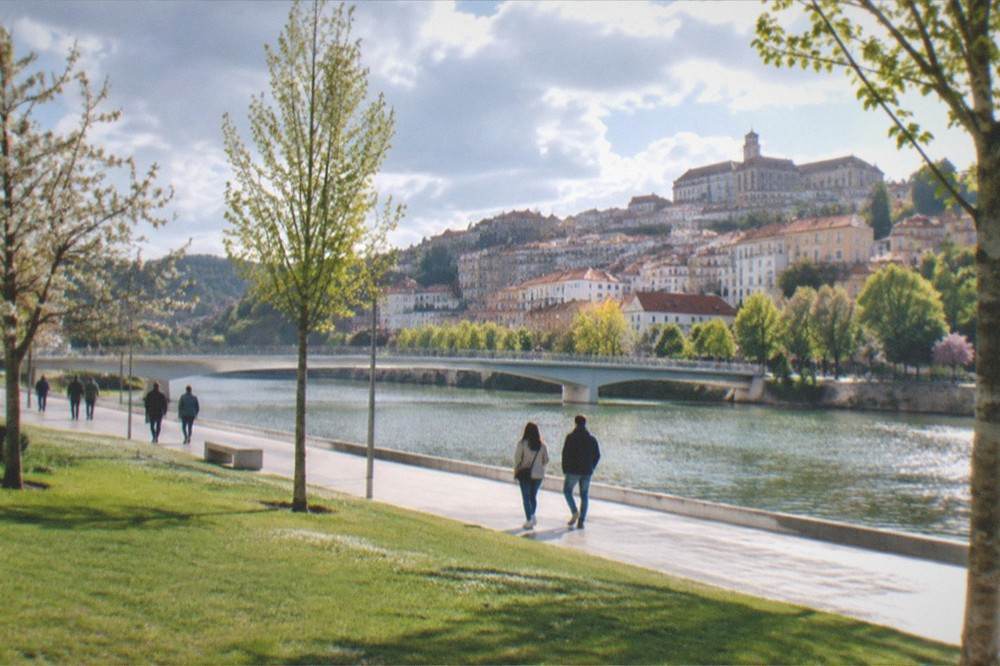
The transport picture has one genuinely useful new fact: SMTUC tickets are valid on the Metro Mondego network too, the intermodal titles in the 2026 tariff are explicitly marked valid on both networks, so a city bus ticket is not stranded when the new BRT system is the faster option. The day-pass grid in the operator's tariff PDF is laid out across three columns whose row mapping this site has not confirmed, so the figures below stick to what is certain.
| Spring cost item | Figure | Source note |
|---|---|---|
| Tourist tax | 1.00 EUR per guest per night, max 3 nights | Municipal tax page; a 2.00 EUR rise is a proposal, not the rate |
| SMTUC bus, bought on board | 2.00 EUR | 2026 tariff, in force from 01/04/2026 |
| SMTUC bus, pre-purchased, 3+ trips | 0.90 EUR per trip | 2026 tariff |
| University combined ticket | 16.50 EUR | University visit pages, 2026 season |
| Sé Velha individual ticket | 3.00 EUR | Unidade Pastoral Aeminium |
| Mosteiro de Santa Cruz individual ticket | 5.00 EUR | Unidade Pastoral Aeminium |
Two closures to price into a spring plan rather than a budget line: the Museu Nacional de Machado de Castro is closed for conservation work, its own page says so, and the Mosteiro de Santa Clara-a-Velha has been closed for requalification works since October 2025, so neither should appear on a spring itinerary without a fresh check. Neither has a current published price, and this site does not print one. For where to base yourself while spending all of the above, see where to stay in Coimbra and the best hotels; for getting there in the first place, the rail options are covered in Porto to Coimbra, Lisbon to Coimbra and the two-stations explainer at Coimbra train stations A and B.
Spring is the season this site recommends most often to first-time visitors, and the reason is arithmetic rather than sentiment: the weather is close to summer's without the 10.9 days above 30 C that August averages, the crowds are close to winter's without the rain, and the one thing that can close a monument on you, the student calendar in late May, is published months in advance. Plan around 24 May, book a Joanina slot before you leave home, and the rest of the season is yours.
Common Questions About Coimbra in Spring
What is the weather like in Coimbra in spring?
Daytime highs average 19.1 C in March, 20.5 C in April and 23.3 C in May, with nights between 7.8 C and 11.8 C. Rain falls on roughly eight to ten days per month, from 75.4 mm in March to 64.7 mm in May, with April the wettest spring month at 84.6 mm. These are IPMA's 1991 to 2020 normals for the city's own Coimbra / Bencanta station.
When does it rain in Coimbra in spring?
March averages 9.4 days with at least 1 mm of rain, April 10.6 days and May 8.5 days. The showers are typically spring showers rather than the sustained autumn rain that pushes October to 114.5 mm and November, the wettest month, to 121.5 mm.
Is spring a good time to visit Coimbra, Portugal?
Yes. Temperatures are mild, the Botanical Garden and the Mondego valley are at their greenest, and visitor numbers are below summer's. The one caveat is late May, when the Queima das Fitas student festival closes the University's visitor circuit on 24 May and suspends visits at Mosteiro de Santa Cruz on the parade Sunday.
Can you visit the Biblioteca Joanina in spring?
Yes, but only inside the 16.50 EUR combined university ticket, and only in a fixed 20-minute slot: the library admits 50 people every 20 minutes, and the time printed on the ticket is the library slot itself. Entry outside the slot is refused, so book before you travel, especially in May.
What should I pack for Coimbra in March and April?
Layers: a jacket for evenings that still drop below 10 C, short sleeves for afternoons near 20 C, and an umbrella for the roughly one-in-three days with measurable rain. Comfortable shoes matter most, because the old town climbs a hill and much of it is cobbled.
Is Coimbra's tourist tax charged in spring?
Yes. It is 1.00 EUR per guest per overnight stay, capped at three consecutive nights, charged from age 16, and payable at the accommodation. It applies all year, with no low-season exemption, and has been in force since 5 April 2023.