Coimbra Pastries: Arrufadas and Pastelarias
Coimbra, Portugal, the university city on the River Mondego, runs on sugar as much as it runs on students, and its arrufada, a saffron-tinted sweet bun, is the pastry that defines the city's café counters.
Short answer
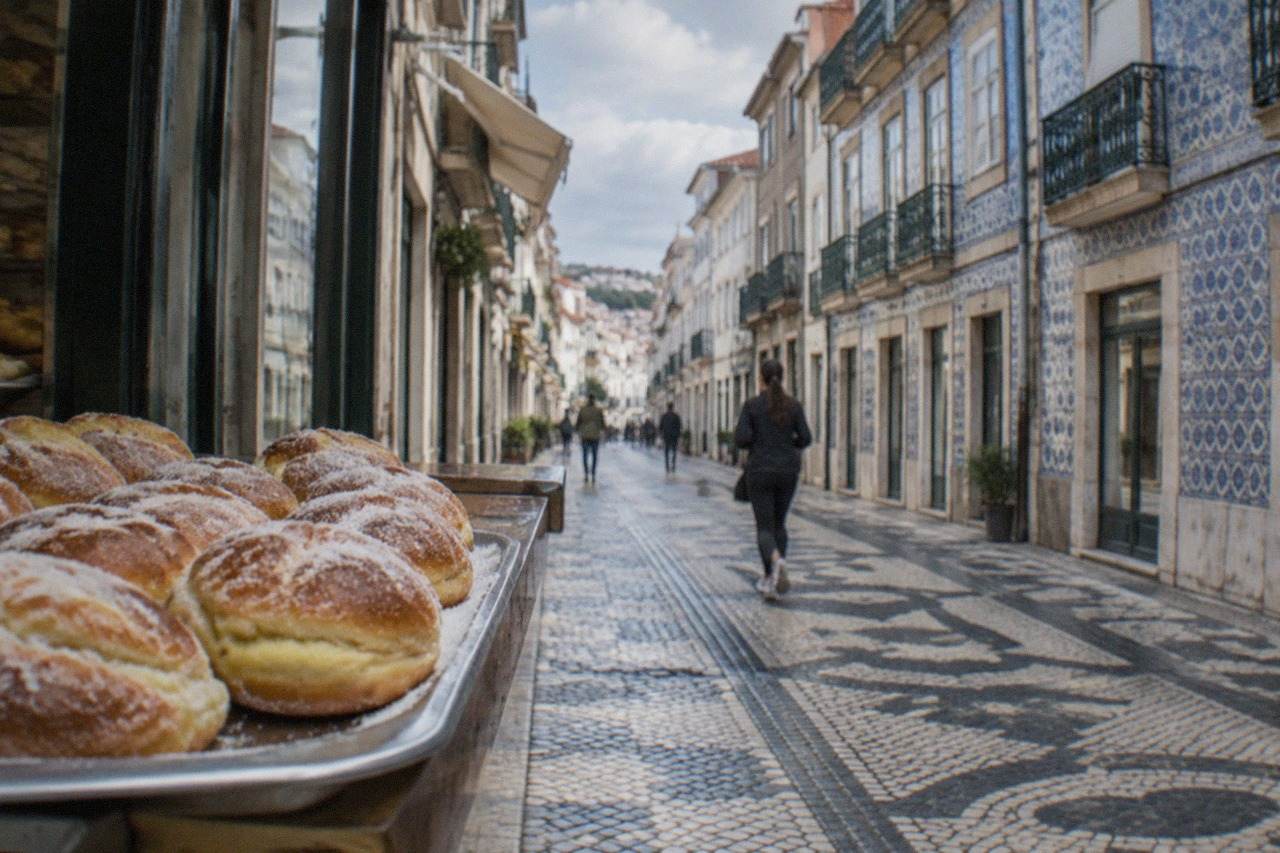
An arrufada is Coimbra's signature sweet bun: a soft, round, saffron-tinged brioche, sometimes filled or dusted with sugar, eaten at breakfast or as an afternoon merenda with coffee. This guide explains what it is, what else a Coimbra pastelaria sells, and how to build a day around the city's cafés.
Coimbra, Portugal, the university city on the River Mondego, is a place where café counters matter. The city's pastelarias, its pastry shops and coffee houses, are not a sideshow to the monuments: they are where the day is structured, where students from the University's published total of about 31,000 take their mid-morning break, and where the arrufada, the city's own sweet bun, has been a fixture for generations. This guide explains what an arrufada actually is, what else you will find on a Coimbra pastelaria counter, and how to plan a visit around the city's café culture without relying on invented opening hours or prices, because no individual café in Coimbra had its hours or prices verified for this site.
What Is an Arrufada and Why Is It Coimbra's Signature Sweet?
An arrufada is a soft, round, slightly domed sweet bun from Coimbra, Portugal, made from an enriched, egg-heavy dough traditionally coloured and scented with saffron, baked until golden and often finished with a dusting of sugar or a simple syrup glaze. It is eaten at breakfast or as an afternoon merenda, split and buttered or plain alongside a coffee, and it belongs to Coimbra the way the pastel de nata belongs to Lisbon, as the local pastry other cities do not quite make the same way.
The saffron is the detail that separates a true arrufada from a generic sweet roll. Saffron reached the Coimbra region centuries ago and the bun's warm yellow crumb is its fingerprint. The texture is closer to brioche than to bread: rich, tender, a little sweet but not dessert-sweet, which is why it works at eight in the morning. Some versions are left plain, some are given a hollow filled with a sweet egg cream, and bakers disagree, cheerfully and permanently, about which is the real one.
The word itself is local. Ask for an arrufada in Porto or Lisbon and you may get a blank look or something different, because the bun is a Coimbra specialty rather than a national one. Inside the city it needs no explanation: every pastelaria has it, and the question is simply whether today's batch is still warm.
What Pastries Is Coimbra, Portugal Famous For?
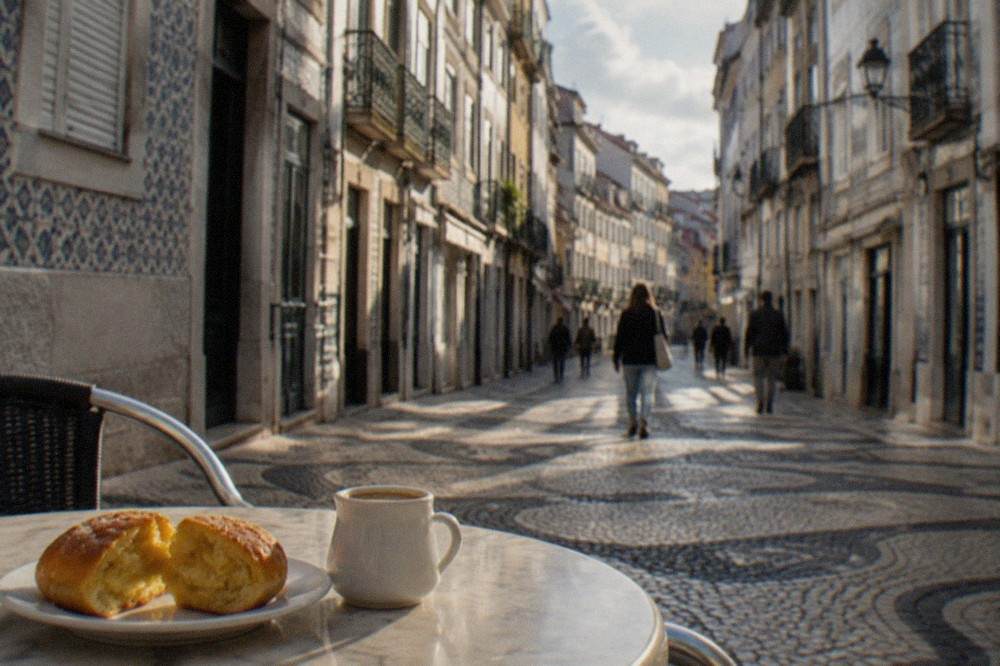
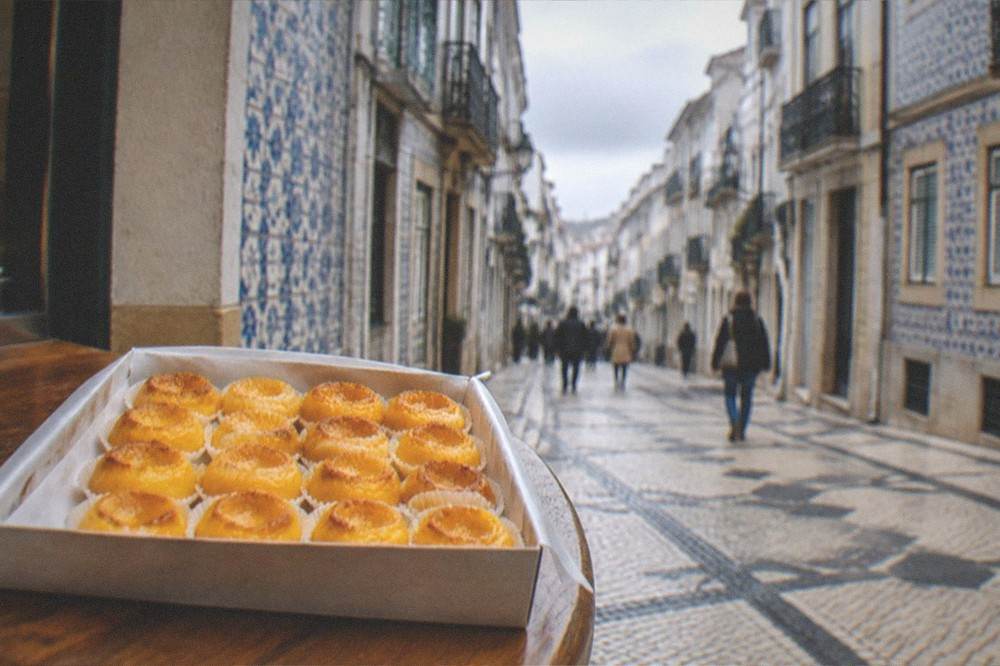
Coimbra's pastry identity rests on three things: the arrufada, the pastelaria tradition itself, with the city's historic cafés doubling as student institutions near the university hill, and the wider Portuguese conventual sweets, egg-yolk and sugar confections originally developed in monasteries, which appear on every serious counter in the city. Beyond the arrufada, expect pastéis de nata, ovos moles, and the almond and egg-yolk sweets of the surrounding Bairrada and central region rather than a single rival signature pastry.
The conventual inheritance matters here. Portugal's monastic kitchens, faced with surplus egg whites used for starching habits and clarifying wine, built an entire cuisine around yolks and sugar, and Coimbra's religious houses were part of that world. Mosteiro de Santa Cruz, the burial church of Portugal's first two kings, sits in the middle of the modern city, and the sweet-making tradition that grew up around Portuguese monasteries still shapes what a pastelaria counter looks like: small, dense, very sweet, yolk-heavy things, often named after saints or nuns.
A modern Coimbra counter is therefore a mix. The national classics, the custard tart above all, sit next to the regional egg sweets, and next to the arrufada in its basket. Coffee is not an accessory to any of this; it is the point. A pastelaria visit is a coffee stop, and the pastry is what makes the stop legitimate.
For a first visit, a guided walk is one of the efficient ways to find the café streets and the food stories at the same time, since the historic cafés cluster in the Baixa, the downtown between the river and the university hill, and a guide who knows the traditions can explain what you are looking at.
Which Kind of Pastelaria Should You Look for in Coimbra?
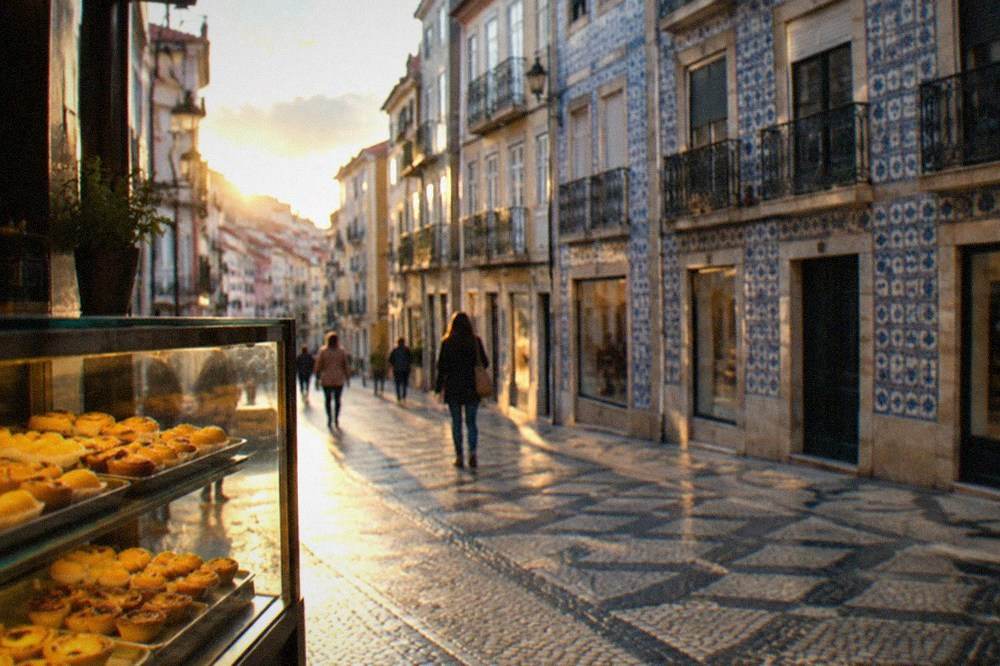
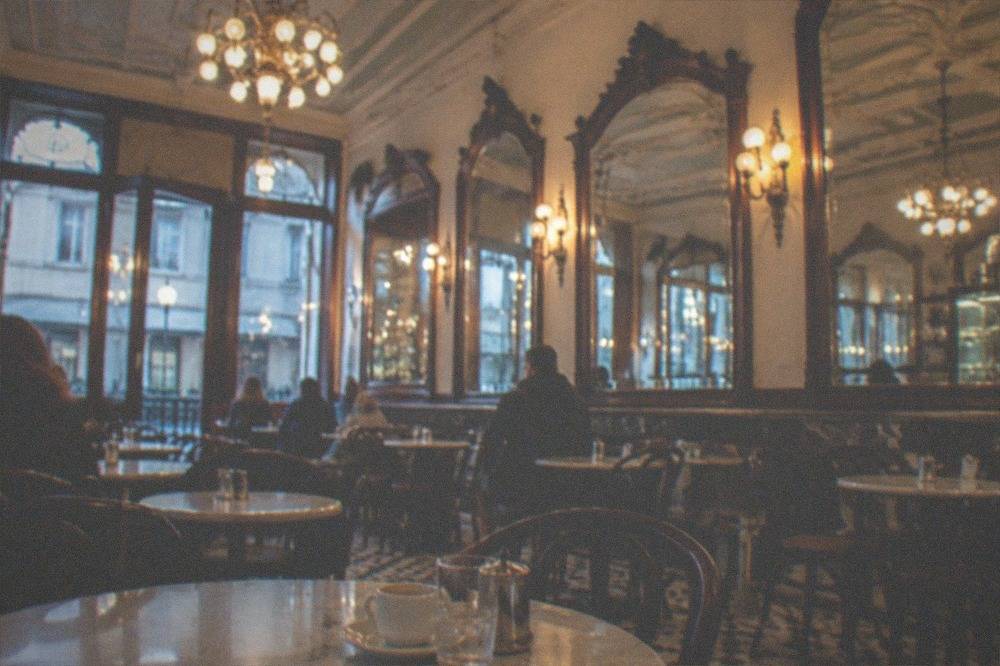
Look for one of three kinds of place: the historic café-pastelaria, a large, ornate room with mirrored walls and a student clientele, found in the Baixa downtown; the neighbourhood pastelaria de bairro, a smaller counter serving regulars at the bar; and the modern specialty coffee and pastry shop, which has begun appearing in the city alongside the older institutions. What distinguishes each is the room and the rhythm, not a verified price list, since no individual Coimbra café had its hours or prices confirmed for this site.
The historic café is a Coimbra category worth understanding before you choose. These are not quick-stop bakeries; they are rooms with marble tables, waiters, and a habit of being where students have argued, celebrated and mourned for over a century. The University of Coimbra has been here since long before any of them, and the city's published figure of about 31,000 students keeps every one of them supplied with a clientele. You sit, you order, you stay as long as you like.
The neighbourhood pastelaria works differently. You stand at the counter, you point, you pay, you drink your coffee in three minutes, and you leave. The arrufada is often best here, because turnover is fast and the batch is more likely to be warm. The rule of thumb is unglamorous and reliable: a busy counter means fresh pastry, and an empty one at mid-morning means you should keep walking.
What this site will not do is name a specific café and attach an opening hour, a price or a booking instruction to it, because none was verified on this build. Choose by kind and by crowd, and treat any specific café recommendation you read elsewhere, including one with confident hours, as something to check rather than something to plan around.
For travellers who would rather have the food-and-city context explained while walking, a small-group guided option covers both, and the tour below includes the learning-with-a-local angle that suits a food-focused visit.
How do Arrufadas Compare to Other Portuguese Sweet Breads?
An arrufada is distinguished from other Portuguese sweet breads by its saffron, its round bun shape and its place as an everyday breakfast pastry rather than a seasonal or festive loaf. Northern Portugal's folar and the transmontano sweet breads are richer, larger, often egg-glazed and tied to Easter, while the arrufada is a small, daily, single-serving bun sold year-round in Coimbra's pastelarias, closer in spirit to a brioche roll than to a celebration loaf.
The comparison is easiest to see in a table, and the differences below are about what each thing is and when it is eaten, not about any named bakery's version.
| Pastry or bread | Region | Defining feature | When it is eaten |
|---|---|---|---|
| Arrufada | Coimbra | Saffron-tinted round bun, soft brioche crumb | Breakfast, afternoon merenda, year-round |
| Pastel de nata | National, Lisbon origin | Custard tart in puff pastry, blistered top | Any time, year-round |
| Folar de Páscoa | Northern Portugal | Sweet bread with whole eggs baked into the top | Easter season |
| Ovos moles | Aveiro region | Candied egg-yolk in rice-paper or wafer shells | Festive, souvenir |
| Bolo-rei | National | Ring-shaped fruited crown cake | Christmas to January |
The everyday nature of the arrufada is the thing to hold onto. Folar belongs to spring; bolo-rei belongs to December. The arrufada has no calendar, which is exactly why Coimbra's café counters never run out of it, and why a visitor can order one on any morning without having timed a seasonal special.
How Does a Pastry Day Fit Around Coimbra's Monuments and Timetables?
A pastry-driven day in Coimbra works because the sights and the cafés sit close together: the university hill, the Sé Velha and the Baixa's café streets are all within a short walk of each other, and the main timed constraint is the Biblioteca Joanina, which admits 50 people every 20 minutes and only inside the 16.50 EUR combined University ticket, so you book a slot and build the pastry stops around it rather than the other way round.
The Joanina constraint is the one genuinely scarce thing in Coimbra tourism, and it is worth planning around. The University's own visit page states the 50-people-per-20-minutes ceiling, that the ticket time printed is the library slot specifically, and that entry outside the slot is refused. The rest of the combined ticket, the Royal Palace, the Capela de São Miguel and the science spaces, is valid for two days. So the shape of the day is: coffee and an arrufada in the Baixa, up the hill for the university visit in your booked window, back down for a mid-morning second stop, and the afternoon for the older churches. Everything else covered here is indexed on Coimbra Travel Guide.
The table below sets out the verified entrance figures for the main sights, so a pastry budget can be planned against a sightseeing budget. These come from the venues' own published pages, and the one thing to note is what is missing: Museu Nacional de Machado de Castro is closed for conservation work and publishes no current price, and Santa Clara-a-Velha has been closed for requalification works since October 2025, so neither appears.
| Sight | Verified adult price | Notes from the venue's own page |
|---|---|---|
| University combined ticket with Biblioteca Joanina | 16.50 EUR | Timed Joanina slot, 50 people per 20 minutes, other spaces valid 2 days |
| University ticket without the Joanina | 12.50 EUR | Same spaces minus the library |
| Sé Velha de Coimbra | 3.00 EUR | Group rate 2.50 EUR for more than 10 |
| Mosteiro de Santa Cruz | 5.00 EUR | Visits suspended on the Cortejo da Queima das Fitas |
| Museu Nacional de Conímbriga | 10.00 EUR | Museum and ruins on one ticket, open daily 10:00 to 18:00 |
Pairing the pastry stops with the monuments also solves the timing question that catches visitors out: the University closes its visitor circuit on 24 May and on 4 October for academic events, and Mosteiro de Santa Cruz suspends visits on the Cortejo, a moveable Sunday in the Queima das Fitas period. A café, by contrast, is open when it is open, and a warm arrufada forgives almost any itinerary.
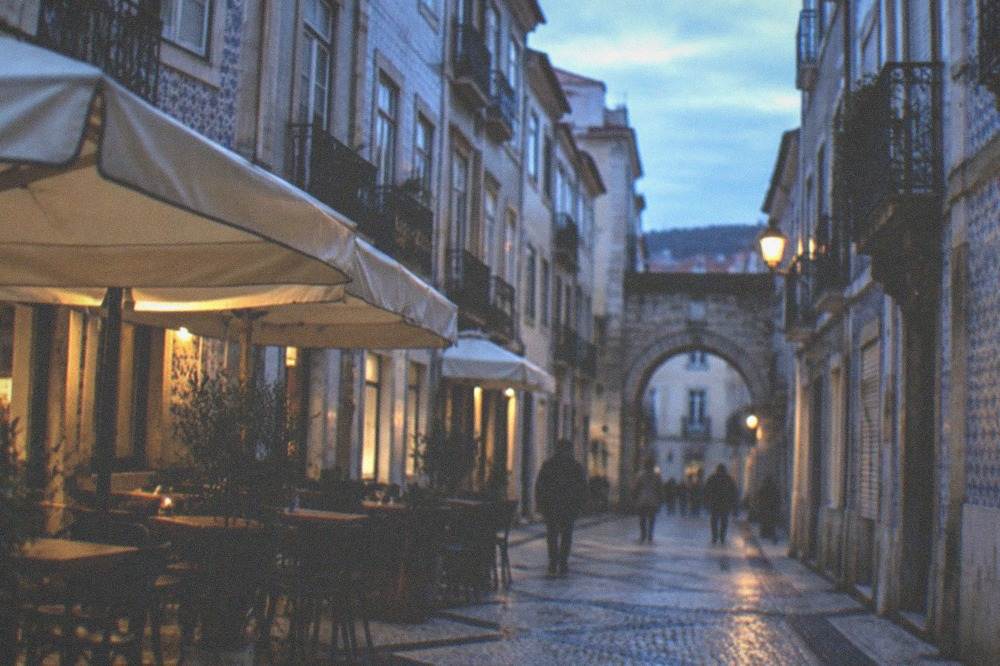
For the walking part of that day, the budget-friendly highlights walk below is a good fit, since it covers the top attractions in about two and a half hours and leaves the afternoon free for a slower café circuit.
When Is the Best Time of Year for Pastries in Coimbra?
The best pastry weather in Coimbra is the stretch from June through September, when IPMA's 1991 to 2020 normals for the Coimbra / Bencanta station show mean maximum temperatures of 26.3 to 29.1 C and rainfall collapsing to between 8.9 and 49.9 mm per month, with September the standout: its mean maximum of 27.4 C is actually higher than June's, and the big autumn rain does not arrive until October, when the monthly total jumps to 114.5 mm.
The climate table is worth reading properly, because the obvious assumption about September is backwards. September is both hotter and wetter than June in Coimbra, but only marginally wetter, at 49.9 mm against 26.0 mm, and the real turn comes in October. July, at 8.9 mm, is effectively dry. August is the hottest month, not July, averaging 10.9 days above 30 C, which is a reason to plan pastry stops as the morning's cool interval rather than as a midday expedition.
| Month | Mean max C | Rain mm | Days with 1 mm+ rain | What it means for café stops |
|---|---|---|---|---|
| May | 23.3 | 64.7 | 8.5 | Pleasant, student festival season, busy counters |
| June | 26.3 | 26.0 | 3.7 | Dry and warm, morning stops comfortable |
| July | 28.5 | 8.9 | 1.7 | Effectively dry, hottest part of the day indoors |
| August | 29.1 | 14.8 | 2.2 | Hottest month, 10.9 days above 30 C, go early |
| September | 27.4 | 49.9 | 5.2 | Hotter than June, crowds gone, still fine |
| October | 23.2 | 114.5 | 10.3 | The rain arrives, indoor café weather |
There is a seasonal rhythm on the counter too, even if the arrufada itself never leaves it. Bolo-rei appears from late November into the Christmas period, and the spring brings the Queima das Fitas, the student festival that falls in May. The festival's exact dates are not published on an official page this site could verify, but two facts are: the University closes its visitor circuit on 24 May, and Santa Cruz suspends visits on the Cortejo, so a May visitor should expect crowds, noise, and cafés doing brisk business with students in black capas. For more on the weather picture across the year, see the site's Coimbra weather guide, and the wider seasonal argument is laid out in the best time to visit Coimbra guide.
Where do Arrufadas Fit in a Day of Eating in Coimbra?
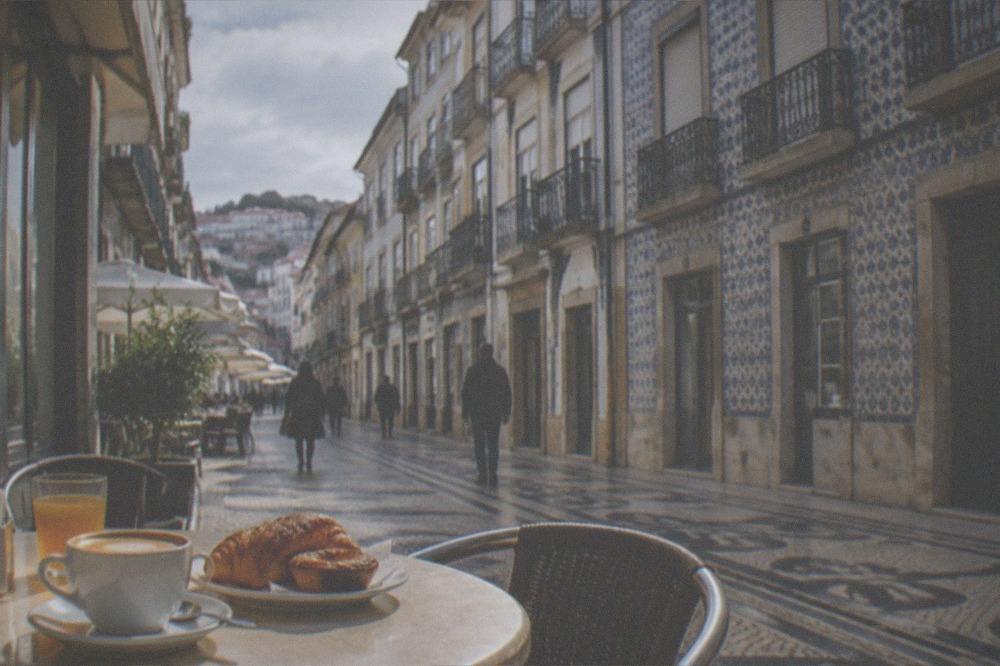
An arrufada fits at breakfast and at the afternoon merenda, the two coffee moments that structure a Portuguese day, and it pairs naturally with the city's savoury and heavier traditions, which is why a full eating day in Coimbra runs sweet in the morning, savoury at lunch, and sweet again at four or five in the afternoon, with the region's leitão da Bairrada, roast suckling pig, as the lunchtime counterweight to all the sugar.
The merenda deserves explaining, because it is the meal most visitors skip. Mid-afternoon, pastelarias refill with people taking a coffee and something sweet, and the arrufada is a natural merenda item precisely because it is not too rich. The rhythm is the point: a small sweet at four means dinner at eight or nine fits the local clock, and joining the rhythm is one of the easiest ways to feel less like a visitor.
For the savoury side of the day, the site's guide to leitão and the Bairrada tradition covers the region's most famous dish, and the Coimbra restaurants guide covers where the eating day goes after the cafés close. The Bairrada, a wine and pig-farming region immediately north and west of the city, also supplies the sparkling wines that turn up on Coimbra café and restaurant tables, and the Bairrada wine route guide sets that out properly.
One budgeting note that applies to the whole eating day: Coimbra charges a municipal tourist tax of 1.00 EUR per guest per overnight stay, capped at three consecutive nights, from age 16, paid to the accommodation at check-in or check-out. The municipality's own figures recorded 698,151 overnight stays in 2025 and estimated its tourism-related cost at 3.49 EUR per overnight stay, which is the context for a proposed rise to two euros that was still only a proposal as of July 2026. It is a small line on the bill, but it is a real one, and it is charged all year with no low-season exclusion.
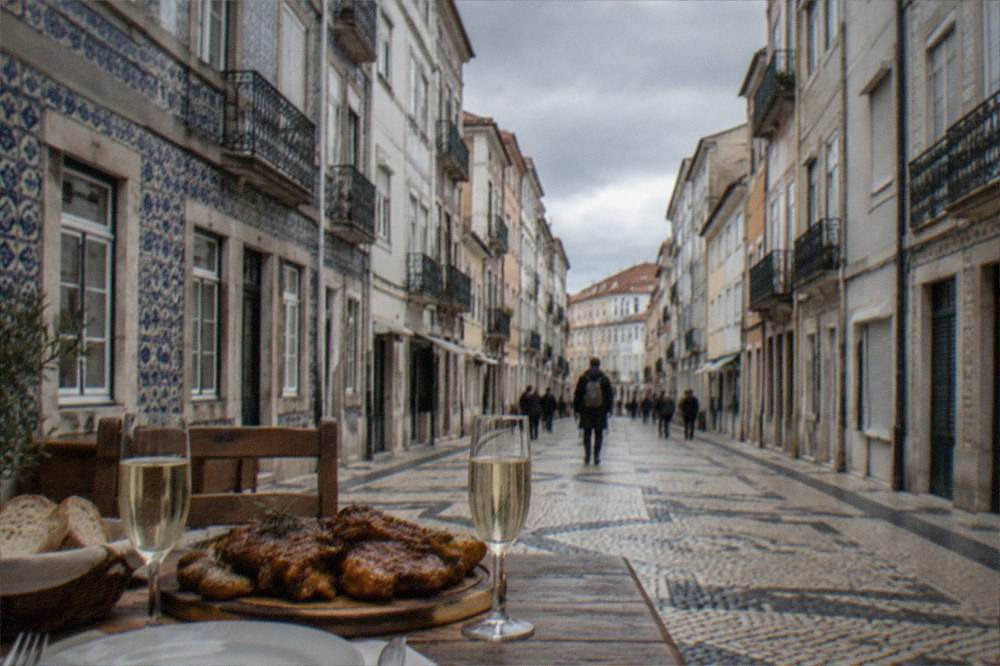
For travellers pairing the city's food with a look at the countryside around it, a half-day schist-villages tour with a swim stop makes a good contrast to a day of café-hopping, and it is one of the options below.
What Should You Bring Home from a Coimbra Pastelaria?
Bring home the durable conventual sweets, the egg-yolk and almond confections sold boxed and meant to travel, rather than an arrufada, which is a same-day pastry and stales within hours. The boxed sweets, along with tinned and candied specialities of the central region, are the pastelaria's souvenir tier, and they sit alongside the city's other craft traditions, such as the ceramics covered in the site's Coimbra pottery guide, as the things that carry a place home.
The distinction is practical. A pastel de nata is a fifteen-minute pastry; even a good one survives a morning. An arrufada is a same-morning pastry. The conventual sweets, by contrast, were engineered in an era before refrigeration to keep: dense, sugar-heavy, often packed in paper cases or wooden boxes, and sold by weight or by the box. They are what a pastelaria will wrap for you without being asked twice.
If the souvenir instinct runs wider than food, Coimbra's ceramic tradition is the city's other portable heritage, and the Coimbra pottery and ceramics guide covers it. For planning the rest of the visit around the pastry stops, the site's Coimbra map guide and the full Coimbra travel guide pull the city together, and the practicalities of arriving by train are in the train stations A and B guide, since Coimbra's two stations confuse visitors more than its cafés do.
Common Questions About Coimbra Pastries
What is an arrufada in Coimbra, Portugal?
An arrufada is Coimbra's signature sweet bun: a round, saffron-tinted brioche-like pastry eaten at breakfast or as an afternoon snack. It is a Coimbra specialty rather than a national one, and it is sold year-round in the city's pastelarias.
Where can I buy arrufadas in Coimbra?
Arrufadas are sold in pastelarias across the city, with the historic café quarter in the Baixa downtown the natural place to start looking. This site does not publish opening hours or prices for individual cafés because none were verified, so choose by the kind of place and by how busy the counter is: a busy counter means fresh pastry.
What is the difference between an arrufada and a pastel de nata?
An arrufada is a soft, saffron-tinted sweet bun the size of a bread roll, while a pastel de nata is a small custard tart in crisp puff pastry. The arrufada is Coimbra's own everyday breakfast pastry; the pastel de nata is the national classic found everywhere in Portugal.
What are conventual sweets?
Conventual sweets are the egg-yolk and sugar confections originally developed in Portuguese monasteries, where surplus yolks from starching and winemaking were turned into dense, very sweet little pastries. They appear on Coimbra pastelaria counters alongside the arrufada and are the sweets that travel well as souvenirs.
When do Portuguese people eat pastries during the day?
The two pastry moments are breakfast and the mid-afternoon merenda, a coffee-and-sweet break that bridges the long gap between lunch and a late dinner. The merenda is the meal most visitors skip, and joining it is one of the easiest ways to fall into the city's rhythm.
Is Coimbra good for food besides pastries?
Yes. The city sits next to the Bairrada region, famous for leitão, roast suckling pig, and for its sparkling wines, and the surrounding schist-village hills offer full-day food and landscape combinations. The site's restaurants and leitão guides cover the savoury side of the city in detail.
The arrufada is a small thing, a saffron-yellow bun on a marble counter, but it is the edible signature of a city that has run on students, coffee and long conversations for centuries, and a morning spent chasing a warm one will take you past more of Coimbra, Portugal than most itineraries manage.