Coimbra to Spain by Train: Planning the Cross-Border Journey from Central Portugal
Coimbra, Portugal sits on the country's main north-south rail corridor, which makes Spain a realistic onward destination by train, but the cross-border leg needs planning: two stations with similar names, an operator whose stopping patterns must be checked at the source, and a border crossing that is not a simple hop.
Short answer
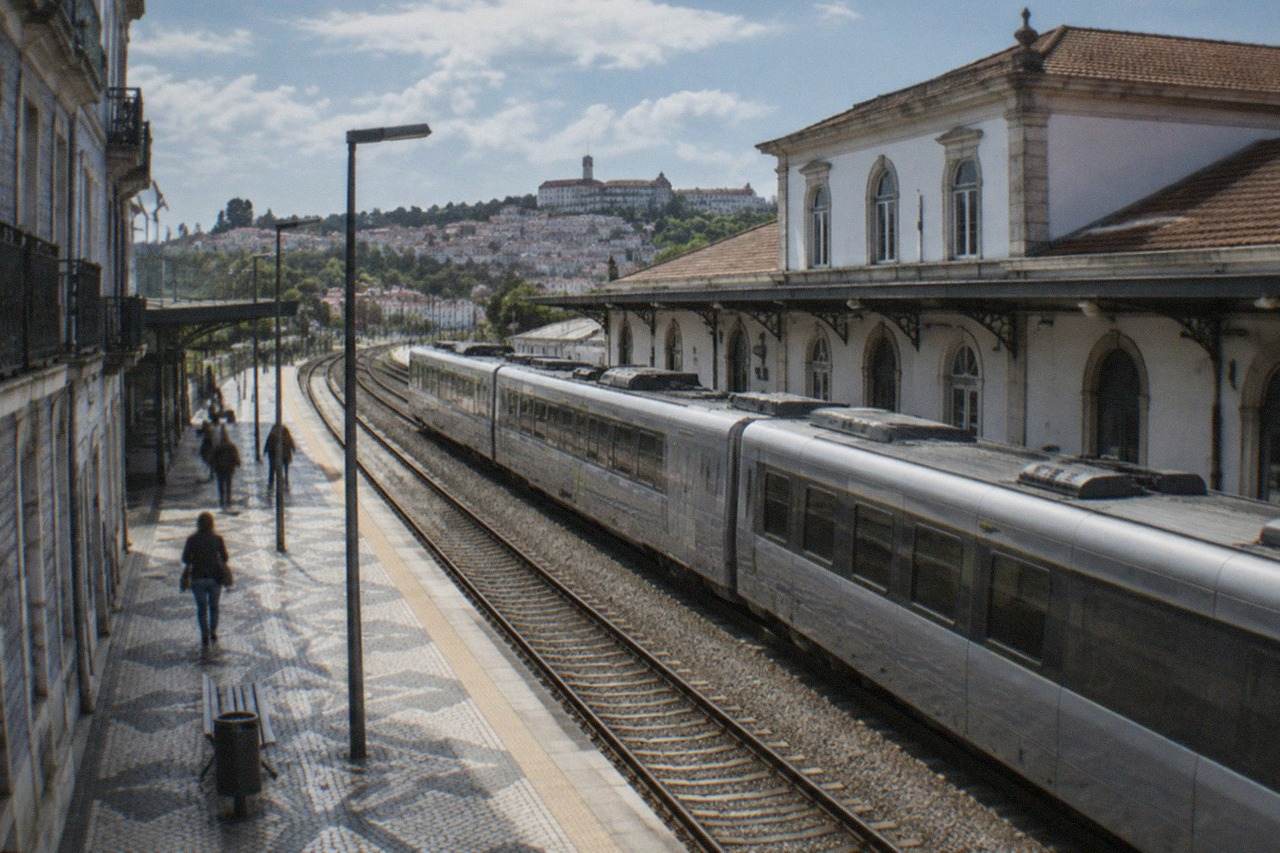
Yes, you can travel from Coimbra, Portugal to Spain by train, but no direct cross-border service calls at Coimbra itself. The practical route runs through Portugal's main line toward either Porto in the north or Lisbon in the south, where international connections toward Galicia and Madrid are made. The two Coimbra stations have confusingly similar names and sit in different places, so the stopping pattern and any shuttle between them must be confirmed with CP, the Portuguese operator, before booking.
Coimbra, the university city on the River Mondego in central Portugal, sits on the Linha do Norte, the country's busiest rail spine, which makes Spain a genuinely reachable onward destination by train rather than a distant ambition. The catch is the border itself. Portugal and Spain share a land frontier, yet the cross-border rail links are thin, and none of them starts in Coimbra. Every Spain-bound rail journey from this city involves at least one connection, usually at Porto in the north for Galicia or at Lisbon in the south for the Madrid line, and the details of which train stops where must be checked with the operator rather than assumed. This Coimbra Travel Guide article sets out what is verified about leaving Coimbra by rail, what must be confirmed at the source, and how to build the final days in the city around the departure.
Can You Get from Coimbra, Portugal to Spain by Train?
Yes, Spain is reachable by train from Coimbra, Portugal, but not directly. No cross-border service calls at either Coimbra station. The realistic plan is a domestic CP train north toward Porto or south toward Lisbon, then an international connection from there: the Galicia routes from Porto toward Vigo, and the long-distance services toward Madrid from the capital. Every leg, connection and fare must be confirmed with CP and the Spanish operator Renfe at booking time.
That answer surprises people who look at a map. Portugal and Spain share a frontier of well over a thousand kilometres, and Coimbra sits closer to the Spanish border than Lisbon does, yet the two countries' rail networks meet at only a handful of points. The densest cross-border service is in the north, between Porto and Galicia, where regional and international trains cross near Valença and Tui. That is the natural direction for a traveller leaving Coimbra: north first, then across.
The southern option, changing in Lisbon for the overnight or daytime services toward Madrid, suits travellers whose Iberian itinerary runs through the Spanish capital. Both routes share the same first requirement, a domestic ticket out of Coimbra on the Linha do Norte, and both share the same planning discipline: confirm the connection times with the operators before committing to a non-refundable international fare.

A word on what this page will not do. It will not print a journey time to Vigo, Madrid or Salamanca, because the verified research behind this site does not contain a sourced figure for any of those journeys, and a number typed without a source is a number invented. It will also not state which trains call at which Coimbra station, for the same reason. What follows is the structure of the trip, the things that are officially confirmed, and the exact questions to ask CP before booking.
Which Coimbra Station do You Leave from, and Why Does It Matter?
Coimbra has two mainline stations with confusingly similar names, Coimbra-B and Coimbra-A, and they are in different places. Which one your train uses depends on the service, and the stopping pattern must be checked with CP, Comboios de Portugal, whose passenger site publishes the current timetables. Do not assume the station from the name alone, and do not assume a shuttle between them is included in your ticket: that specific rule is one of the most frequently misstated facts about Coimbra rail travel.
This is the single most important planning point on the page, and it deserves plain language. The two stations are not two entrances to one facility. A traveller who arrives at the wrong one, or who books accommodation near the wrong one, can add a meaningful detour on departure morning with luggage in tow. The site's own guide to Coimbra's two train stations covers the geography of both in detail, and the plain-language answer to the difference between Coimbra and Coimbra-B exists as its own page because the question is asked that often.
What the verified sources do establish: the stations exist, they are separate, and CP is the operator whose timetable settles every question about which services call where. What they do not establish, and what this site will not print: the distance between the two stations, the journey time of any shuttle between them, and above all whether that shuttle is free for holders of long-distance tickets. That last point circulates confidently in dozens of guides, sometimes stated as fact, and it has never been confirmed on this build from a primary CP source. Treat any page that states it flatly, in either direction, with suspicion.
The practical discipline is therefore simple. Before booking anything, open CP's passenger site and read the timetable for your specific date and service. Note which Coimbra station appears on it. Only then book accommodation for the final night, and only then plan the walk or the city bus to the platform.
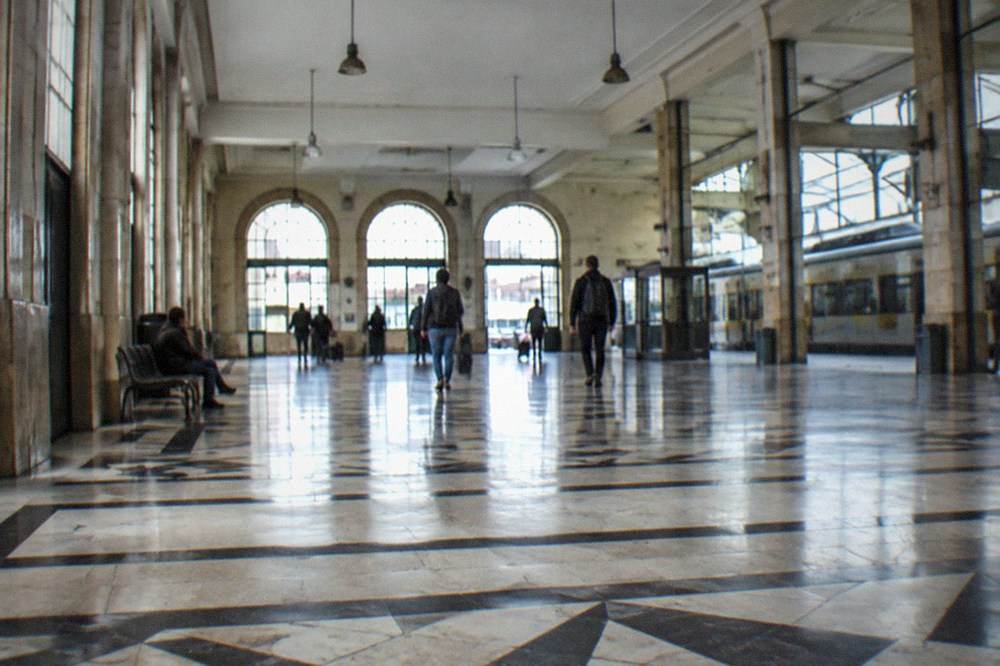
Getting to the station on the morning itself is a SMTUC question, and the 2026 tariff is published and clear. A ticket bought from the driver costs 2.00 EUR. Pre-purchased tickets, in packs of three or more trips, cost 0.90 EUR per trip, and a single journey is valid for 90 minutes on the urban network with transfers included within that window from first validation. The same tariff also sells titles marked valid on both the SMTUC and Metro Mondego networks, so a bus ticket works on the new Metrobus system that has been opening in stages since 2025.
| SMTUC ticket type (2026 tariff) | Price | Notes |
|---|---|---|
| Bought on board from the driver | 2.00 EUR | Single journey |
| Pre-purchased, pack of 3+ trips | 0.90 EUR per trip | Loaded on a support card |
| Single journey validity | 90 minutes | Transfers included within the window |
| MOVE-C support card | 3.00 EUR youth / 6.00 EUR others | One-off card cost |
| Viagem ConVIDA support card | 0.50 EUR | For occasional and pre-purchased tickets |
| Large-family 1-day ticket | 1.00 EUR | Covers 7 trips |
What Should You Do with Your Final Days in Coimbra Before Crossing Into Spain?
The highest-value use of the days before departure is the University of Coimbra's hill, because the combined ticket at 16.50 EUR includes the Biblioteca Joanina on a fixed 20-minute slot, and the Joanina admits only 50 people per slot, so it sells out. Book the slot first, plan the rest of the two-day ticket validity around it, and leave the riverside and the Baixa for the flexible hours in between. The tower, note, is closed, and the Machado de Castro museum is closed for conservation work.
The University's own visit pages state the structure plainly. The 16.50 EUR adult ticket covers the Joanina Library, the Royal Palace, St Michael's Chapel, the Chemistry Laboratory, the Academic Museum, the Cabinet of Curiosities and the Mineral Gallery, and it is valid for two days, with one exception: the Joanina slot is fixed to the date and time printed on the ticket, and entry outside that slot is refused. Online purchase closes 20 minutes before the visit time. A cheaper 12.50 EUR ticket covers the same spaces without the Joanina.
The scarcity is real and official. The University's own wording limits entries to 50 people every 20 minutes, which is why a summer visitor turning up without a pre-booked slot can be turned away. This is the one place in Coimbra where booking ahead is not advice, it is close to a requirement. The site's detailed guide to Joanina Library tickets and the broader University tickets page carry the full breakdown.
Two closures matter for itinerary planning. The clock tower, the Torre da Universidade, is closed: the University's own information page says so, and no climb, price or hours should be planned around it. And the Museu Nacional de Machado de Castro is closed for conservation work, with no reopening date published, so it belongs on a "next time" list, not on a walking route. The museum's building above a mid-1st-century Roman cryptoporticus is worth returning for when it reopens.
The rest of the old town is flexible and needs no booking discipline. The Sé Velha, the old cathedral, charges 3.00 EUR per person, and the Mosteiro de Santa Cruz, burial church of Portugal's first two kings, charges 5.00 EUR, with visits suspended on the Queima das Fitas parade Sunday. Both are covered in the site's attractions overview. For the evening, where to hear fado in Coimbra matters more here than in most Portuguese cities, because Coimbra's fado tradition is a student one, sung in the academic cape, and it differs from the Lisbon style in a way a listener notices within a verse.
How Much Should a Coimbra Send-Off Cost Before the Train to Spain?
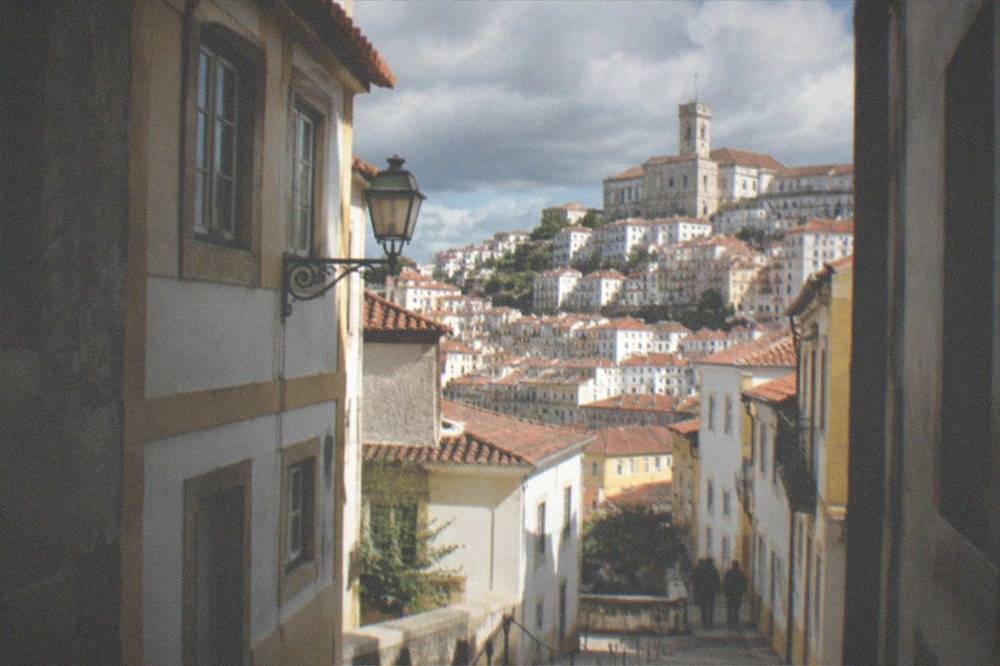
Budget roughly 16.50 EUR for the full University ticket with the Joanina slot, 3.00 EUR for the Sé Velha and 5.00 EUR for Santa Cruz, plus 1.00 EUR per night in tourist tax, capped at three nights and applying from age 16. City transport runs at 2.00 EUR for a driver-bought single or 0.90 EUR pre-purchased. A modest two-day send-off, excluding food and lodging, lands around 30 to 45 EUR per person.
The tourist tax deserves its own line because it is frequently misquoted. The current published rate is 1.00 EUR per guest per overnight stay, capped at three consecutive nights per person, charged from age 16, and paid directly to the accommodation at check-in or check-out, not to the municipality and not through a booking platform. The municipality's own worked example: a couple staying seven nights pays 3.00 EUR each. A rise to 2.00 EUR was approved as a proposal by the municipal executive in July 2026, but until the municipality's own tax pages state the new figure, the published rate remains 1.00 EUR.
| Coimbra cost item | Verified price | Source note |
|---|---|---|
| University combined ticket, with Joanina | 16.50 EUR adult | Includes fixed 20-minute Joanina slot, valid 2 days |
| University ticket, without Joanina | 12.50 EUR adult | Same spaces, no library |
| Guided Palace of Schools tour | 25.00 EUR | Guide-led, 1h30 |
| Sé Velha individual ticket | 3.00 EUR | Group rate 2.50 EUR for 10+ |
| Mosteiro de Santa Cruz individual ticket | 5.00 EUR | Burial church of the first two kings |
| Conímbriga museum and ruins | 10.00 EUR | Open daily, 10:00 to 18:00 |
| Municipal tourist tax | 1.00 EUR per night | Max 3 nights, from age 16, paid at accommodation |
Food is the variable. The restaurants guide and the page on leitão da Bairrada cover the regional speciality, the roast suckling pig of the Bairrada district just north of the city. What no page on this site will do is print a price for a specific restaurant, because none was verified on this build, and a plausible-sounding menu figure is still an invented one.

When Is the Best Time of Year to Leave Coimbra for Spain by Train?
The best months for the rail journey out of Coimbra are May, June and September, on the city's own climate record. September is the quiet recommendation: its mean maximum of 27.4 C is actually higher than June's 26.3 C, and its 49.9 mm of rain is nearly twice June's 26.0 mm, but the autumn rains proper hold off until October, when the monthly total jumps to 114.5 mm. July, at 8.9 mm, is effectively dry but the busiest.
Those figures are not a travel writer's impression. They are IPMA's official 1991 to 2020 climate normals for the Coimbra / Bencanta station, the city's own station three kilometres from the centre, and they upend the usual assumptions. August, not July, is the hottest month, on both the mean and the mean maximum, and it averages 10.9 days above 30 C. November is the wettest month at 121.5 mm, marginally ahead of October and January. The record extremes at the same station: 41.2 C on 7 August 2016, and -4.3 C on 20 January 2017.
| Month | Mean max C | Mean min C | Rain mm | Days 1mm+ rain | Days max 30C+ |
|---|---|---|---|---|---|
| April | 20.5 | 9.4 | 84.6 | 10.6 | 0.7 |
| May | 23.3 | 11.8 | 64.7 | 8.5 | 3.5 |
| June | 26.3 | 14.2 | 26.0 | 3.7 | 6.2 |
| July | 28.5 | 15.6 | 8.9 | 1.7 | 8.9 |
| August | 29.1 | 15.7 | 14.8 | 2.2 | 10.9 |
| September | 27.4 | 14.1 | 49.9 | 5.2 | 7.8 |
| October | 23.2 | 11.9 | 114.5 | 10.3 | 2.0 |
The month to avoid for a comfortable departure is not the one most guides would name. October looks autumnal on the calendar but is already deep into the rain season, at 114.5 mm, while September, which a northern European instinct writes off as "back to school", is still summer-warm with the student crowds gone. For a city whose rhythm is set by about 31,000 students, the University's own published figure, the difference between a September and an October arrival is the difference between a city in full session and one settling into its rainy season.
One calendar trap applies whatever the month. The University closes its visitor circuit on 24 May, and Santa Cruz suspends visits on the Queima das Fitas parade, a moveable Sunday in May, so a late-May visit can collide with both. The best time to visit guide carries the full seasonal picture.
Those four items are the moving parts of a Coimbra departure in 2026, and each one is checkable on a primary page rather than taken on trust. The tours below are the ones this site recommends for the days before the border, chosen for short durations that fit around a booked Joanina slot and a confirmed train time.
What Are the Alternatives to the Train from Coimbra to Spain?
The realistic alternatives are the long-distance bus, a rental car driven across the border, or flying from Porto or Lisbon, and each trades cost against simplicity. The bus network reaches Spanish cities directly from Portuguese hubs in a way the train does not. The car gives border-crossing freedom but adds one-way rental fees. Flying is fastest to Madrid or Barcelona but means reaching an airport first, and the site's research does not carry a verified driving time from either Porto or Lisbon airport to Coimbra.
The bus deserves more respect than rail enthusiasts give it. Portugal's intercity coach operators run cross-border services to Spanish cities, and for destinations like Salamanca or Madrid a direct coach from a northern hub can beat a two-leg train journey on both price and simplicity. As with the trains, the specific routes, times and fares are operator information that changes with the season, so they belong to the booking stage, not to a guide written months ahead.
The car option has one hard constraint worth stating: cross-border one-way rentals between Portugal and Spain carry substantial drop fees with most companies, and the car rental guide covers what to check in the contract. The parking guide matters for the Coimbra end, because the old town's hills and one-way system punish improvised parking.
Flying is the option with the least to say. The nearest airport guide covers the access question, and the honest summary is that Coimbra has no airport of its own, so every flight starts with a ground transfer to Porto or Lisbon. For a Spain itinerary that begins in Galicia, the northern route by rail or coach is usually the more coherent plan than backtracking south to fly.
How Should You Plan the Final 48 Hours Before a Spain-Bound Train?
Build the last 48 hours around three fixed points: the Joanina slot, the station, and the tax. Book the Joanina slot first because it is the only genuinely scarce ticket in the city. Confirm with CP which Coimbra station your departure uses, and plan the final night's accommodation within reach of it. Set aside 1.00 EUR per person per night, capped at three, for the tourist tax payable at the accommodation, and keep cash or a card ready at check-out.
The order matters. The Joanina slot is fixed to a printed time and refused outside it, so it anchors the calendar. The station question determines where the last night's hotel should be, so it anchors the map. The tax is small but payable at the desk, and a traveller who has spent it on the last morning's coffee will be doing arithmetic in the lobby.
Fill the gaps with the things that need no booking. The self-guided walking tour route runs down the university hill through the Arco de Almedina into the Baixa, and it can be walked in fragments between fixed appointments. The old town guide covers the geography, and the one-day itinerary on this site compresses the essentials if the final stay turns out shorter than planned.

For luggage, the practical question is whether to keep the bags after check-out on departure day, and the luggage storage guide addresses it. The general rule on this site is that no specific operator's hours or prices were verified for that service, so the page explains the options rather than quoting a desk.
A half-day trip fits the morning before an afternoon or evening departure, and the Bussaco forest is the natural one: close, contained, and returnable within four hours. The tour below covers the forest and the palace, and the operator's live listing carries the current price and availability.

What Should You Check with CP and Renfe Before Booking Anything?
Check five things, in order: which Coimbra station your first train calls at, the connection time at Porto or Lisbon, the cross-border service's days of operation, the ticket's refund conditions, and the baggage rules on the international leg. All five live on the operators' own sites, CP for the Portuguese legs and Renfe for the Spanish ones, and none of them can be safely copied from a guide written in advance, because timetables and conditions change with the season.
The reason this page keeps deferring to the operators is not caution for its own sake. It is that the highest-value practical facts about Coimbra rail travel, which trains call at which station, and whether the shuttle between the two is included in a long-distance ticket, are precisely the facts most often stated wrongly in print. A guide that guesses them confidently is worse than one that admits the answer lives somewhere checkable.
| What to check | Where to check it | Why it matters |
|---|---|---|
| Stopping pattern at Coimbra | CP passenger site, timetable for your date | Two stations, different places, wrong guess costs the morning |
| Shuttle between Coimbra-B and Coimbra-A | CP directly, at booking or on the day | Whether it is included in a long-distance ticket is unconfirmed and often misstated |
| Connection time at Porto or Lisbon | Both operators' timetables | A missed cross-border connection can mean a night in a hub city |
| Days of operation, cross-border service | Renfe and CP international pages | Some international services do not run daily |
| Refund and change conditions | The fare rules at booking | International fares vary widely in flexibility |
| Baggage allowance, international leg | The operating operator's conditions | Rules can differ from the domestic legs |
The connection is the fragile point. A domestic delay in Portugal can break an international departure from Porto or Lisbon, so the fare's change conditions matter more on the cross-border leg than anywhere else in the itinerary. Booking the two legs as one international journey, where the operators sell it that way, transfers that risk from the traveller to the railway, and it is the first question worth asking at booking.

Common Questions About Coimbra to Spain by Train
Can you get from Coimbra to Spain by train?
Yes, but not directly. No cross-border service calls at Coimbra. The realistic routes run north to Porto for the Galicia connections or south to Lisbon for the Madrid services, with the domestic leg out of Coimbra on CP and the international leg confirmed with the operators at booking time.
Which Coimbra station do trains to Spain leave from?
That depends on the service, and it must be checked with CP for the specific date. Coimbra has two stations with confusingly similar names, Coimbra-B and Coimbra-A, in different places, and this site does not print which trains call at which because the verified research does not confirm it. CP's passenger site is the source.
Is the shuttle between Coimbra-B and Coimbra-A free with a long-distance ticket?
That is exactly the question this site will not answer from memory, because it is the most frequently misstated fact about Coimbra rail travel and it was never confirmed from a primary CP source on this build. Ask CP at booking or check its passenger site before relying on it in either direction.
How much does the University of Coimbra ticket cost before departure?
The combined adult ticket including the Biblioteca Joanina is 16.50 EUR, valid two days, with the Joanina fixed to a 20-minute slot limited to 50 people. The version without the Joanina is 12.50 EUR. The Joanina cannot be bought on its own, and entry outside the printed slot is refused.
What is Coimbra's tourist tax?
1.00 EUR per guest per overnight stay, capped at three consecutive nights, charged from age 16, and paid directly to the accommodation. A rise to 2.00 EUR was approved as a proposal by the municipal executive in July 2026, but the published rate remains 1.00 EUR until the municipality's own tax pages change.
When is the best month to travel from Coimbra toward Spain?
September, on the city's own IPMA climate record: a mean maximum of 27.4 C, higher than June's 26.3 C, with the autumn rain holding off until October, when the monthly total jumps to 114.5 mm. July is effectively dry at 8.9 mm but busiest, and November is the wettest month at 121.5 mm.
The journey from Coimbra, Portugal to Spain by train is a real, workable plan built on one domestic leg, one connection at Porto or Lisbon, and one cross-border service, and the discipline that makes it smooth is checking the stopping pattern and the connection with CP and Renfe before anything is paid for. Spend the days before departure on the things Coimbra does best, a booked Joanina slot, the old town on foot, and a fado evening in the academic cape, and the border becomes a formality rather than a scramble.