Parking in Coimbra, Portugal: Where to Leave the Car and How to Manage the Hill
Coimbra, Portugal, the university city on the River Mondego, is one of the worst places in Centro to bring a car into the old town and one of the easiest to manage once you leave it. This guide sets out what is actually verified: the hill, the two rail stations, the 2026 bus tariff, and where to check the rest.
Short answer
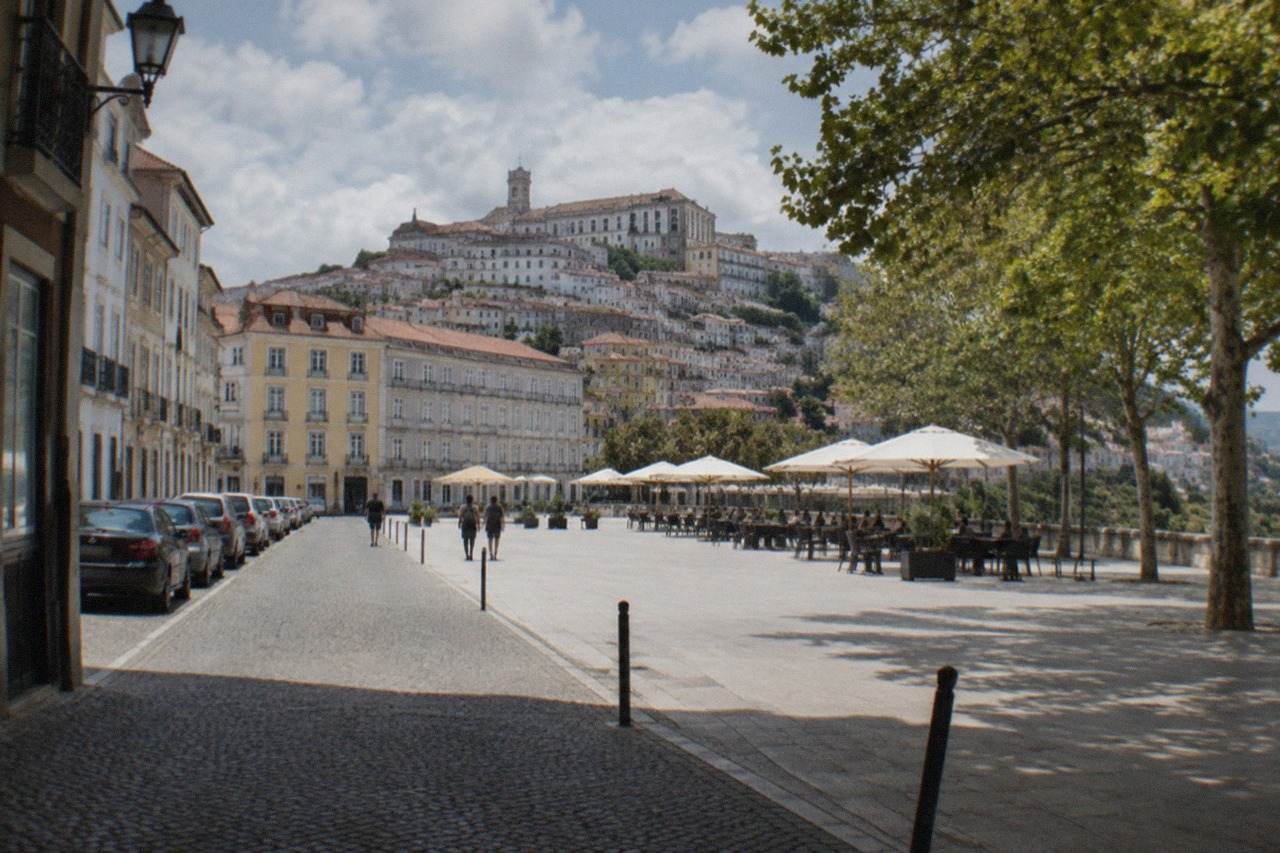
Coimbra's old town is a steep UNESCO-buffered hill with narrow medieval streets, so the practical move is to park at the edge of the Baixa or by a station and finish on foot or by SMTUC bus, whose 2026 tariff lists a 2.00 EUR driver ticket and 0.90 EUR pre-purchased trips valid on both the bus network and the Metro Mondego.
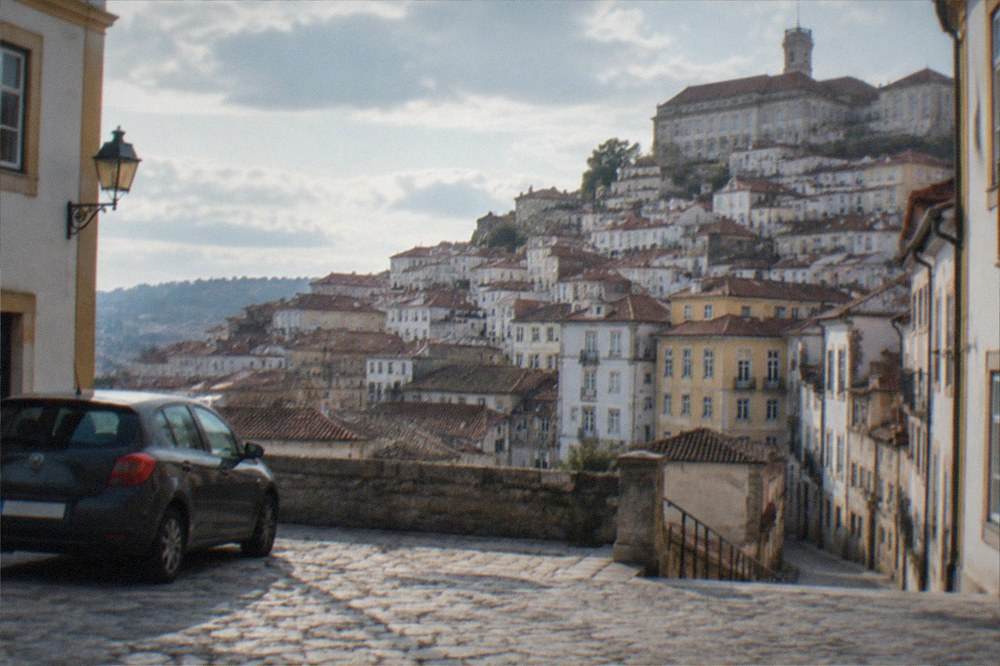
Coimbra, Portugal, the university city on the River Mondego, was built on a hill long before anyone imagined a car in it, and the street plan has not changed its mind since. The old town splits into the Alta, the university hill at the top, and the Baixa, the commercial quarter below, joined by steep lanes that predate any road standard a visitor would recognise. That geography, more than any rule or tariff, is the whole parking question in this city: the closer a vehicle gets to the monuments, the less the streets want it there.
This page is honest about what is and is not verified. No car park, garage or on-street zone in Coimbra had its address, price, hours or capacity checked for this site, so none appears here as fact. What is verified, from the operator's own 2026 tariff and the University's and municipality's own pages, is everything around the car: the bus and metrobus fares you will actually pay, the monuments that close whole streets on certain days, and the hill itself. A visitor who plans around those four things does not need a numbered list of garages, and the Coimbra Travel Guide map page shows how the pieces fit together.
Why Is Parking in Coimbra Difficult?
The old town is a steep hill of narrow medieval lanes between the River Mondego and the university plateau, so driving into it saves almost no walking and costs real friction: tight streets, limited kerb space, and event-day closures around the Paço das Escolas. The University closes its visitor circuit entirely on 24 May and 4 October, and warns that ceremonies interrupt the normal circuit at other times. A car parked at the bottom reaches the same monuments a bus or a pair of legs reach.
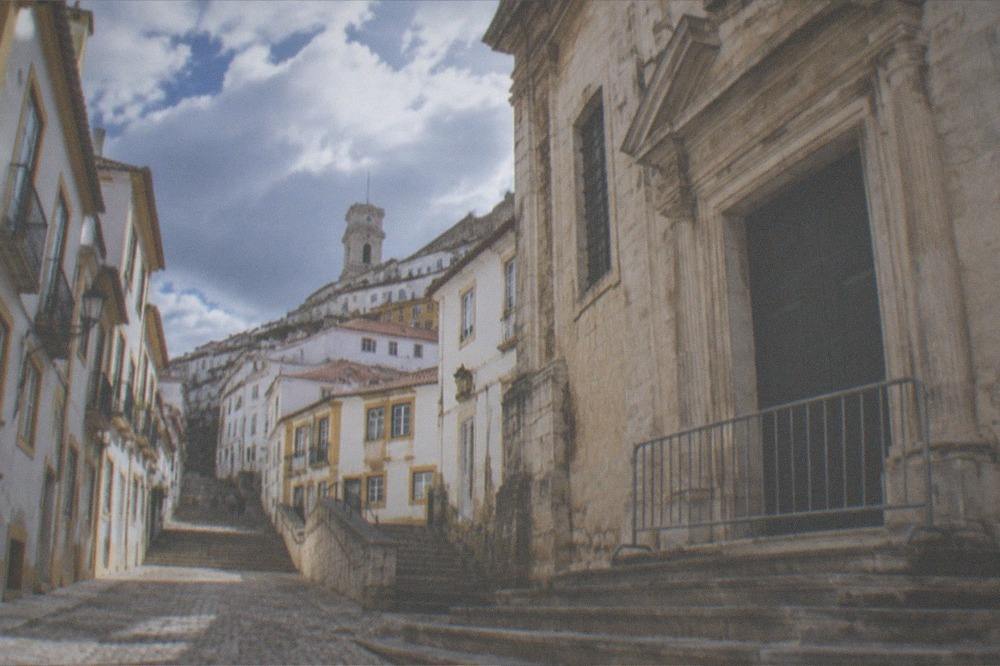
The Alta is the part of the city UNESCO actually inscribed. The listing, "University of Coimbra – Alta and Sofia", reference 1387, inscribed in 2013, covers two components inside the old town: the university hill and the college street below. It does not cover the whole city, and it certainly was never designed around a parking bay. The streets on that hill are the streets of a settlement that has been continuously occupied for centuries, which means width was decided by buildings, not by traffic engineers.
Below the hill, the Baixa is the flat commercial quarter, and this is where most of the city's practical driving happens. The two zones are joined by steep lanes and a couple of longer routes that switchback up the slope. Anyone who has read the getting around guide will recognise the pattern: the flat part is easy for cars, the interesting part is not.
There is a second, quieter reason the car is the wrong tool for the top of the hill. The University of Coimbra publishes a student body of about 31,000 people on its own homepage, and a large share of them move through the same few streets a visitor wants to photograph. The arithmetic of the hill does not favour adding a rental car to that crowd.
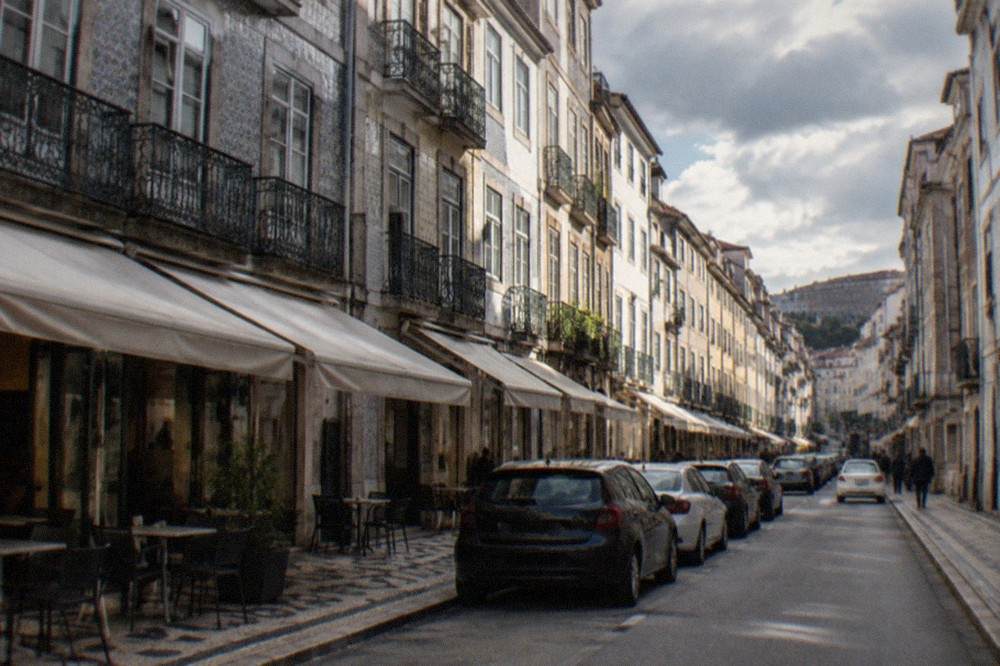
The honest summary of the whole page fits in a sentence: park low, walk or ride up, and let the SMTUC network do the climbing. The rest of this guide fills in the verified numbers that make that plan concrete, starting with the bus tariff that is the alternative to driving the hill at all.
How Much Does the Bus Cost Instead of Driving?
The 2026 SMTUC tariff, in force since 1 April 2026, lists a driver-bought single at 2.00 EUR and pre-purchased trips at 0.90 EUR each when bought in packs of three or more, with one trip valid 90 minutes on the urban network including transfers. The same tariff is explicitly valid on both the SMTUC and Metro Mondego networks, so a bus ticket also covers the new metrobus. For a family or a multi-day stay, the arithmetic beats circling the hill in a car.
Those figures come from the operator's own published tariff document, and they are the only transport prices in Coimbra this site can state as verified fact. The tariff also lists a Viagem ConVIDA support card at 0.50 EUR for occasional and pre-purchased tickets, a MOVE-C support card at 3.00 EUR for youth and 6.00 EUR for others, and a large-family one-day ticket at 1.00 EUR covering seven trips.
| Ticket type | Price | Notes from the 2026 tariff |
|---|---|---|
| Single, bought from the driver | 2.00 EUR | Bought on board the vehicle |
| Pre-purchased trips, pack of 3 or more | 0.90 EUR per trip | Loaded on a card in advance |
| Validity of one trip | 90 minutes | Urban network, transfers included within the window |
| Viagem ConVIDA support card | 0.50 EUR | Needed for occasional and pre-purchased tickets |
| MOVE-C support card | 3.00 EUR youth / 6.00 EUR others | Support card price |
| Large-family 1-day ticket | 1.00 EUR | Covers seven trips |
Two warnings about what that tariff does not say. It lists occasional passes for one, three and seven days, but the day-pass prices sit in a grid whose row mapping this site could not confirm, so no day-pass figure is published here; check the operator's own tariff document at smtuc.pt before assuming one. And the Elevador do Mercado, the funicular that links the Baixa to the upper town, appears in the tariff only under a combined pass line, so its standalone single-ride price is unverified and should be checked with the operator.
The Metro Mondego point deserves its own sentence because it is genuinely useful and almost nobody outside Coimbra knows it yet. The tariff's intermodal section is headed "Títulos de Transporte Intermodais - Utilização SMTUC e Metro Mondego" and repeatedly marks titles as valid on both networks. A new BRT metrobus network has been opening in stages, and dated Portuguese press describes extensions reaching Coimbra-B station and Praça da República in late summer 2026, but the route-by-route detail is unverified here, so treat the network as "opening in stages" and check the operator's site for the current line map.
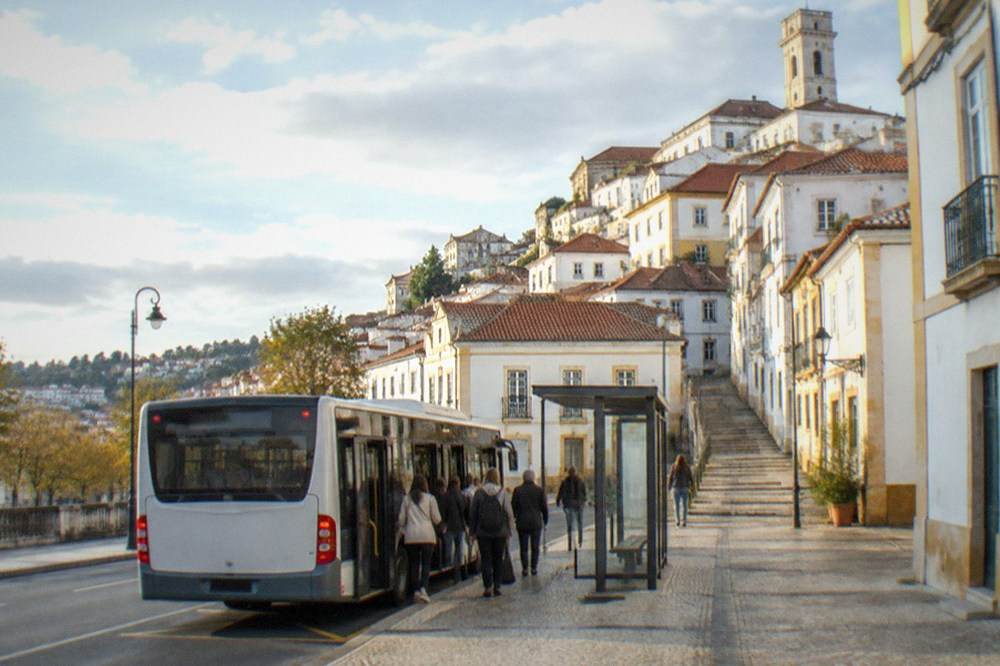
For a visitor arriving by car and parking at the edge of the flat quarter, this tariff is the entire alternative plan. Two pre-purchased trips cost less than a single driver-bought one, and the 90-minute window is enough to reach the university hill, see it, and come back down.
Which Days Close the Streets You Want to Park Near?
The University of Coimbra's own information page closes its visitor circuit completely on 24 May and 4 October 2026, plus 24 and 25 December and 31 December to 1 January, and Mosteiro de Santa Cruz suspends visits on the Cortejo da Queima das Fitas, a moveable Sunday in May. On those days the area around the Paço das Escolas is given over to ceremonies, and any parking plan near the hill should assume disruption.
The May date is the one that matters most to a driver. The Queima das Fitas, the student festival, falls in May, and while this site does not publish festival dates because the Associação Académica's own pages could not be verified, the two corroborating facts are solid: the University closes the visitor circuit on 24 May, and Santa Cruz closes for the Cortejo parade, a moveable Sunday. A parade through the old town means closed streets, and closed streets mean a car parked near them stays parked. The Queima das Fitas guide covers the festival itself.
| Date or period | What closes | Source of the closure |
|---|---|---|
| 24 May | University visitor circuit | The University's own info page |
| 4 October | University visitor circuit | The University's own info page |
| 24 and 25 December 2026 | University visitor circuit | The University's own info page |
| 31 December 2026 to 1 January 2027 | University visitor circuit | The University's own info page |
| Cortejo da Queima das Fitas (moveable Sunday) | Mosteiro de Santa Cruz visits | The parish's own Santa Cruz page |
| Every three months, two days | Cabinet of Curiosities and Physics Cabinet | The University's own info page |
There is a smaller, stranger closure worth knowing: the University's Cabinet of Curiosities and Physics Cabinet close for two days every three months for disinfestation. It is on the University's own information page, it is the kind of detail a first page of search results never has, and it means a science-museum visit can occasionally be partially unavailable on an otherwise normal day.
The practical reading for a driver is simple. On ceremony days, the hill is not a parking problem, it is a no-go area, and the flat Baixa is where both the car and the visitor should stay. The old town guide explains the two zones in more depth.
A guided walk solves the ceremony-day problem neatly, because a local guide knows which streets are open before any visitor does. The Discovering the charms and places of Coimbra walk, rated 5 from 79 reviews and running three to four hours at from $52.68 per person, covers the city with someone who handles the route; Check availability if that sounds like the right fit.
Should You Drive Into Coimbra at All, or Arrive by Train?
Coimbra has two rail stations with confusingly similar names, Coimbra-B and Coimbra-A, in different parts of the city, and which trains call at which station is a question CP's own site is where to check, because this build could not verify the stopping pattern. What is verified is that the two stations exist and that the SMTUC and Metro Mondego networks carry the onward journey. For anyone starting in Porto or Lisbon, the train removes the car from the equation entirely.
The station question is the highest-value practical fact in Coimbra that remains unverified, and this site says so plainly rather than guessing. The two stations are real, they are in different places, and CP, the national operator, is where the stopping pattern and any shuttle arrangement must be confirmed. The train stations guide carries the full discussion, and the Porto to Coimbra and Lisbon to Coimbra pages cover the two main arrival corridors.
For the parking question, the station matters in one specific way: arriving by train and finishing by bus means the car never enters the old town at all. The 2026 tariff makes that finish cheap, and the Metro Mondego extensions reported in dated Portuguese press as reaching Coimbra-B in late summer 2026, if confirmed on the operator's own pages, would make it seamless.
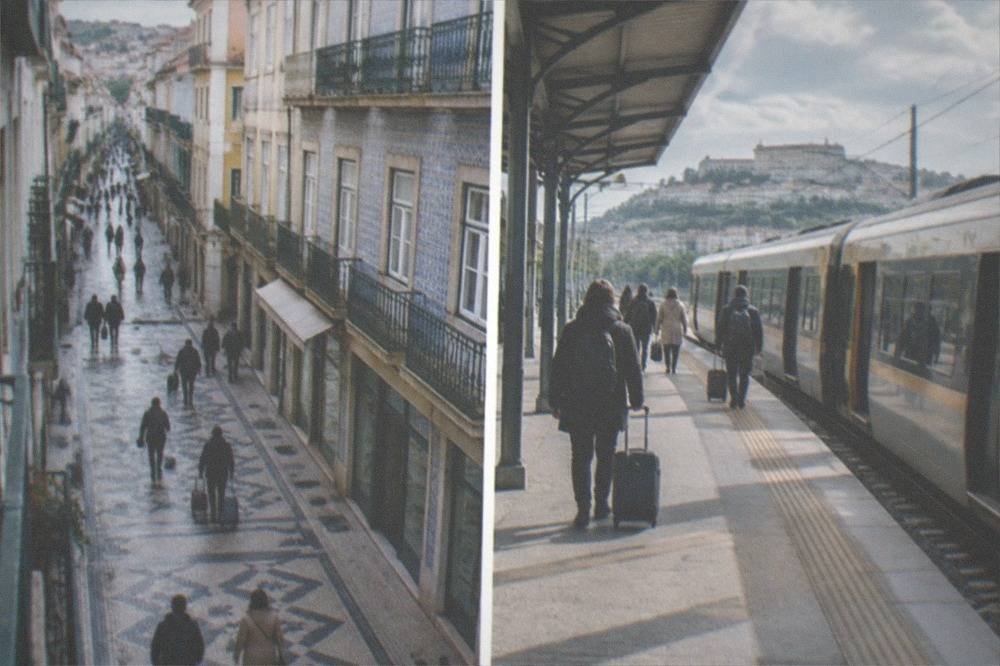
For visitors who do arrive by car, the planning logic is the mirror image. Park at the edge of the flat quarter or by a station, buy a pre-purchased bus pack, and treat the hill as pedestrian territory. The car rental guide covers the driving side, including where a rental makes sense and where it does not.
What Does the Hill Actually Demand on Foot?
The Alta, the upper town, is reached on foot up a steep hill from the Baixa, and the University's own visit pages give the hours that frame the walk: 09:00 to 20:00 in summer, 1 April to 30 September, and 09:00 to 17:30 in winter, 1 October to 31 March. The climb is the reason to park low.
Every verified fact about the old town, from the 50-people-per-20-minutes Joanina ceiling to the closed clock tower, is a fact about a place a car cannot usefully reach.
The Biblioteca Joanina deserves its own paragraph in a parking guide, because it is the one genuinely scarce ticket in the city and scarcity punishes bad planning. The University's own programme page states entries are limited to 50 people every 20 minutes, the library cannot be bought on its own and exists only inside the 16.50 EUR combined ticket, the time printed on the ticket is the fixed library slot, and entry outside that slot is refused. Online purchase closes 20 minutes before the visit time. A visitor who has spent the morning circling the hill for a kerb has already lost the slot they wanted. The Joanina Library tickets guide covers the full booking mechanics.
| University ticket | Adult price | What it includes | Validity |
|---|---|---|---|
| Joanina Library + University + Science Museum | 16.50 EUR | Joanina, Royal Palace, St Michael's Chapel, Chemistry Laboratory, Academic Museum, Cabinet of Curiosities, Mineral Gallery | Two days, fixed Joanina slot |
| University + Science Museum | 12.50 EUR | Same list without the Joanina | Two days |
| Guided tour, Palace of Schools | 25.00 EUR | Guide-led, 1h30 | Fixed session |
| Science Museum + UC Exploratório | 16.00 EUR | Science spaces only, no Palace of Schools | Two days |
Prices are the University's own, stamped valid for 2026. The tower, for the record, is closed: the University's own page states the facility is closed, so no climb, no price, no view from the top. The university tickets guide has the full breakdown.
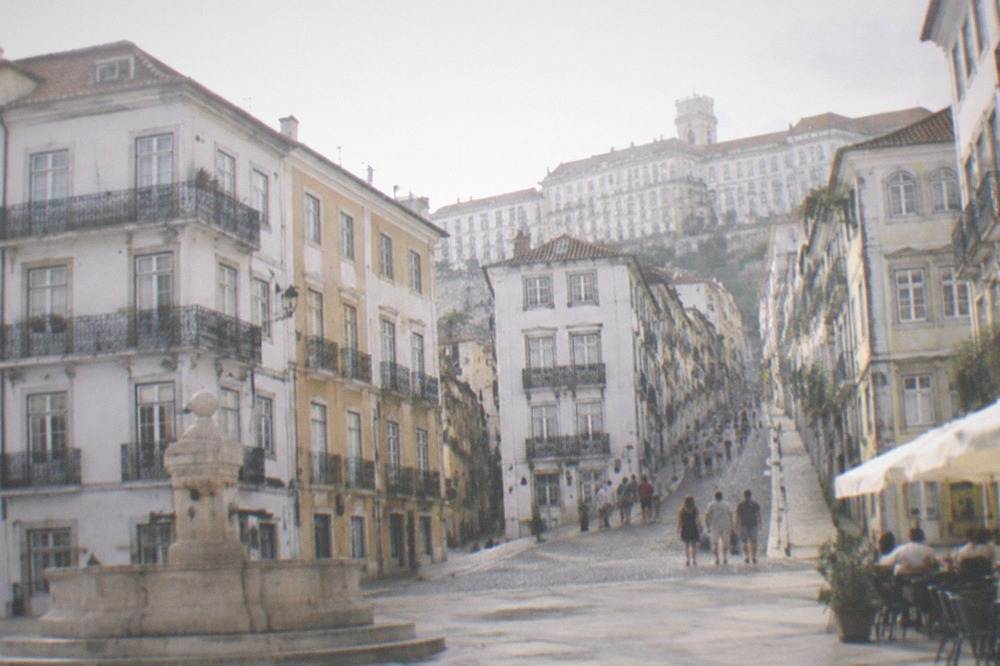
The walk itself is the reward. The lanes from the Baixa to the Paço das Escolas are the most photographed part of the city, and the self-guided walking tour guide routes them step by step. A car would only shorten the part of Coimbra that is worth the trip.
Which Monuments Are Closed in 2026, and Why Does That Matter for the Car?
Two major monuments are closed for works as of late 2026: Museu Nacional de Machado de Castro is closed for conservation work, its own page says so twice, and Mosteiro de Santa Clara-a-Velha has no page at all on the national museums portal, consistent with closure for requalification since 20 October 2025. Neither should appear in a driving itinerary, and the Torre da Universidade is closed too. A parking plan built around a closed monument wastes the parking.
The Machado de Castro closure is the one that catches visitors out, because the museum's own page prints a normal-looking opening table below the closure notice. The closure line is the fact; the table is what hours will look like when it reopens, and no reopening price is published on an official page, so this site prints none. The museum's building over the mid-1st-century Roman cryptoporticus is real and part of the visit route when open.
| Monument | Status in late 2026 | What the official page says |
|---|---|---|
| Museu Nacional de Machado de Castro | Closed for conservation work | "Closed for conservation work", stated twice |
| Mosteiro de Santa Clara-a-Velha | No listing on the national portal | Consistent with closure for works since 20 October 2025 |
| Torre da Universidade | Closed | "We regret to inform you that this facility is closed" |
| Sé Velha de Coimbra | Open | 3.00 EUR individual ticket, parish-published hours |
| Mosteiro de Santa Cruz | Open | 5.00 EUR individual, closed on the Cortejo Sunday |
| Portugal dos Pequenitos | Open | Hours published; prices render client-side and are unverified |
The Sé Velha and Santa Cruz figures come from the parish that manages both, and they are the reliable open options on the hill's flanks. Portugal dos Pequenitos publishes its hours, 10:00 to 17:00 in the winter season and 10:00 to 19:00 from 1 March to 15 October, but its price page renders client-side with no euro amount in the served HTML, so this site links the venue's own ticket page rather than printing a number. The Portugal dos Pequenitos guide covers the family visit in full.
For a driver, the closures reshape the day. The open cluster, the university hill, the Sé Velha, Santa Cruz and the riverside, is compact and walkable, and the closed ones, Machado de Castro and Santa Clara-a-Velha, are exactly the kind of destinations that would otherwise pull a car across the city.
What Should a Day-Tripper by Car Plan Instead?
A day-tripper arriving by car should plan three fixed costs before arriving: a pre-purchased SMTUC pack at 0.90 EUR per trip, the 16.50 EUR combined university ticket with its fixed Joanina slot, and an afternoon spent entirely on foot. The tourist tax does not apply to a day trip. The municipality's own figures for 2025, 698,151 overnight stays in the concelho, show how busy the accommodation layer is, but a car-based day visitor skips that layer entirely.
The tourist tax is worth understanding even for the day-tripper who will not pay it, because it explains the city's tourism economics. The rate is 1.00 EUR per guest per overnight stay, capped at three consecutive nights, from age 16, paid to the accommodation at check-in or check-out, in force since 5 April 2023. A couple staying seven nights pays 3.00 EUR each, 6.00 EUR total, in the municipality's own worked example. The municipality's own study puts its cost per overnight stay at 3.49 EUR, against 698,151 overnight stays recorded in 2025, which is why a two-euro rise was proposed on 21 July 2026, but the published rate today remains one euro.
| Cost item | Amount | Who pays it |
|---|---|---|
| Tourist tax | 1.00 EUR per guest per night, max 3 nights | Overnight guests aged 16+, paid at the accommodation |
| SMTUC pre-purchased trips | 0.90 EUR per trip, packs of 3+ | Any bus user with a card |
| SMTUC driver ticket | 2.00 EUR | Anyone boarding without a pre-purchased trip |
| University combined ticket | 16.50 EUR adult | Anyone wanting the Joanina Library slot |
| Sé Velha individual ticket | 3.00 EUR | Visitors to the old cathedral |
| Santa Cruz individual ticket | 5.00 EUR | Visitors to the monastery's visitable parts |
Every figure in that table is attached to the exact subject it belongs to, from the operator's or venue's own page. None of the car-park costs a visitor might expect to see in it is there, because none was verified, and a guide that invented a garage price would be worse than one that says to check the operator.
For the day itself, the sequence that works is: arrive at the edge of the flat quarter, park, walk or ride up to the Paço das Escolas for the pre-booked Joanina slot, descend through the Sé Velha and Santa Cruz, and finish on the riverside. The one day itinerary and two day itinerary pages build exactly that day with timings.
A walking tour is the natural companion to a park-at-the-edge plan, and the city has several. The Coimbra Top Attractions Walking Tour runs two and a half hours from $5.85 per person and is rated 5 from 151 reviews, and the Discovering the charms and places of Coimbra walk covers more ground over three to four hours. There is also a free layer: Coimbra tour: downtown, historic center, university and botanic garden, a GuruWalk free tour led by a local guru, rated 4.91 from 662 reviews over three hours, tip-based, with no price to print because there is none.
When Is the Worst Season to Bring a Car?
The worst months combine heat with the university's own calendar: August is the hottest month at the city's own station, with a mean maximum of 29.1 C and 10.9 days above 30 C, and May carries the ceremony closures around 24 May. IPMA's 1991 to 2020 normals for the Coimbra / Bencanta station show July is effectively dry at 8.9 mm of rain, while November is the wettest month at 121.5 mm, which affects the walk, not the car.
Those climate figures are the city's own station, number 707 at Bencanta, 3 km from the centre, not a coastal proxy, and they overturn a piece of common advice. September is often described as shoulder-season cool, but its mean maximum of 27.4 C is higher than June's 26.3 C, and September is also wetter than June, 49.9 mm against 26.0 mm. What is true is that the real rain holds off until October, when the monthly total jumps to 114.5 mm.
| Month | Mean max (C) | Rain (mm) | Days 30 C+ | Parking-and-walking verdict |
|---|---|---|---|---|
| May | 23.3 | 64.7 | 3.5 | Mild, but ceremony closures around 24 May |
| June | 26.3 | 26.0 | 6.2 | Warm, dry, walkable |
| July | 28.5 | 8.9 | 8.9 | Effectively dry, hot afternoons |
| August | 29.1 | 14.8 | 10.9 | Hottest month, walk early |
| September | 27.4 | 49.9 | 7.8 | Hotter than June, crowds gone |
| October | 23.2 | 114.5 | 2.0 | The rain arrives, hill lanes get slick |
The record extremes at the same station, 41.2 C on 7 August 2016 and -4.3 C on 20 January 2017, frame the range. For a parking plan, the climate mostly argues the same thing every month: the hill walk is the city, so pick the hours when the walk is pleasant, and the car is the tool that gets you to the flat part and no further. The best time to visit guide and the weather guide carry the month-by-month detail.
Common Questions About Parking in Coimbra
Is parking in Coimbra difficult?
Yes, in the old town specifically. The Alta is a steep hill of narrow medieval lanes and the Baixa below it is the flat quarter where a car is workable. No car park or on-street zone in the city had its price or capacity verified for this site, so the honest plan is to park at the edge of the flat quarter and finish on foot or by SMTUC bus, whose 2026 tariff lists a 2.00 EUR driver ticket and 0.90 EUR pre-purchased trips.
Can you drive to the University of Coimbra?
The streets around the Paço das Escolas are narrow and the University closes its visitor circuit entirely on 24 May and 4 October for ceremonies, so a car is the wrong tool for the top of the hill. The University's own hours frame any visit: 09:00 to 20:00 in summer, 09:00 to 17:30 in winter. The Biblioteca Joanina admits 50 people every 20 minutes on a fixed slot, so pre-booking matters more than driving.
How much is the bus in Coimbra?
The 2026 SMTUC tariff, in force since 1 April 2026, lists 2.00 EUR for a single bought from the driver and 0.90 EUR per trip when pre-purchased in packs of three or more, with one trip valid 90 minutes including transfers. The same tickets are valid on the Metro Mondego network as well, because the tariff is explicitly an intermodal one.
Should I rent a car to visit Coimbra?
Not for the city itself. The two rail stations, Coimbra-B and Coimbra-A, bring most long-distance arrivals in, and the bus and metrobus network covers the onward journey cheaply. A car earns its keep for the day trips, Conímbriga about 16 km south in Condeixa-a-Velha, or the schist villages of the Lousã, which are covered on the day trips pages of this site.
Is there a tourist tax in Coimbra?
Yes, 1.00 EUR per guest per overnight stay, capped at three consecutive nights, from age 16, paid directly to the accommodation, in force since 5 April 2023. A two-euro rise was proposed on 21 July 2026 but the published rate remains one euro. Day visitors arriving by car do not pay it at all.
What is closed in Coimbra in 2026?
Museu Nacional de Machado de Castro is closed for conservation work, the Torre da Universidade is closed, and Mosteiro de Santa Clara-a-Velha has no listing on the national museums portal, consistent with closure for requalification works. Sé Velha at 3.00 EUR and Mosteiro de Santa Cruz at 5.00 EUR are the verified open monuments, and Portugal dos Pequenitos is open with its hours published but its prices unverified.
The whole answer, in the end, is a shape rather than a list. Coimbra, Portugal, is a city that begins where the car stops being useful, and every verified number on this page, the 0.90 EUR bus trip, the 50-person Joanina slots, the 24 May closures, points the same way: leave the vehicle in the flat quarter, check the operator or venue's own page for anything this site could not verify, and spend the day on the hill that made the city worth the drive.