Coimbra vs Aveiro: Which City Should You Visit in Portugal?
Coimbra, Portugal, the university city on the River Mondego, and Aveiro, the lagoon city on the Atlantic coast of the Centro region, sit close enough that many travellers try to see both. This comparison works from what is actually verified, which for this site means Coimbra's own published figures, and tells you honestly where the data ends.
Short answer
Choose Coimbra for the University hill, the Biblioteca Joanina and the oldest university atmosphere in Portugal, and choose Aveiro for canals, boats and a flatter, slower seaside town. If you have one full day from Porto, a combined tour covering both exists and is the only way to see each properly without rushing.
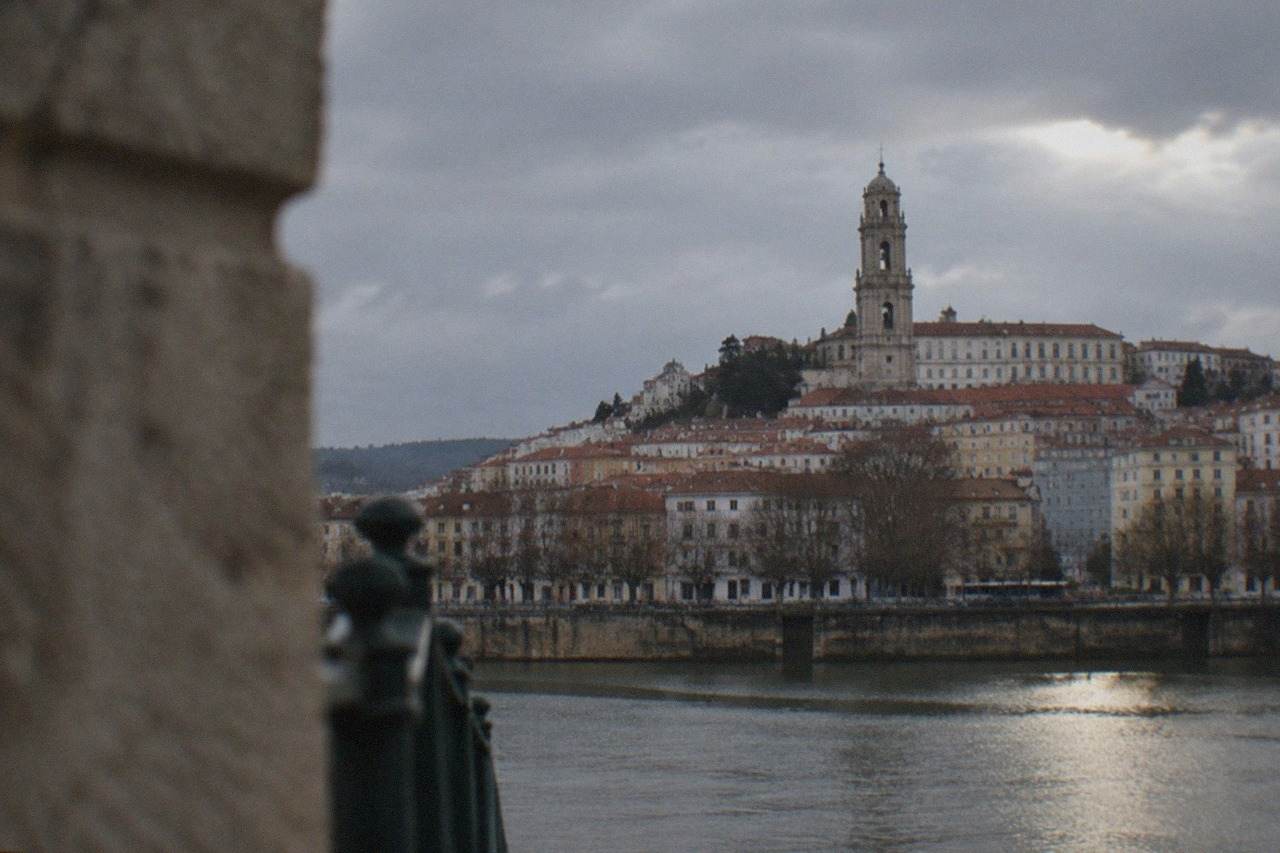
Coimbra, Portugal, the university city on the River Mondego, gets compared with Aveiro more often than with anywhere else in the Centro region, because the two are close enough that most itineraries treat them as either-or or both-in-one-day. The comparison is real and worth doing properly. Coimbra is a hill city built around a university of about 31,000 students, with a World Heritage inscription that covers the university hill and the college street, not the whole city. Aveiro is a low-lying lagoon city on the Atlantic coast, known for its canals, its moliceiro boats and its Art Nouveau shopfronts. One is vertical and scholastic, the other horizontal and maritime, and the choice between them is really a choice about what kind of day you want.
This page compares the two on what can actually be supported. Every Coimbra figure below comes from an official source: the University's own visit pages, the 2026 SMTUC tariff, the municipality's tax pages and IPMA's 1991 to 2020 climate normals for the Coimbra / Bencanta station. For Aveiro, this build verified no prices, no visitor numbers and no climate station data, so Aveiro is described by what it is, not by numbers a competing guide would invent. That asymmetry is deliberate, and it makes the comparison more useful, not less.
Which Is Better, Coimbra or Aveiro?
Neither city is objectively better, and the honest answer is that Coimbra rewards a longer stay while Aveiro rewards a shorter one. Coimbra holds the densest concentration of monuments in the region, the University of Coimbra's Paço das Escolas, the Biblioteca Joanina, the Sé Velha and the Mosteiro de Santa Cruz, and needs at least a full day. Aveiro is a smaller, flatter place built around its lagoon and canals, and most of what it offers can be walked in a few hours.
The reason is structural. Coimbra's core sights sit on a hill you have to climb, and its headline attraction, the Biblioteca Joanina, runs on a strict timed-entry system that admits 50 people every 20 minutes, according to the University's own visit pages. That ceiling means the library alone can consume an hour of waiting and visiting even in a quiet week, and in summer a visitor who arrives without a pre-booked slot can be turned away entirely. Aveiro imposes no such constraint. It is a city you stroll rather than schedule, and a traveller who plans it loosely loses very little.
The trade runs the other way for atmosphere. Coimbra in term time is a working student city, with the fado de Coimbra tradition, the black-caped students and the Repúblicas student houses giving it an edge that a purely pretty town cannot manufacture. Aveiro's appeal is quieter: water, salt pans, boats and pastel façades. If your trip already includes Lisbon and Porto, two intense, hilly, monumental cities, Aveiro's flat calm can feel like relief, and that is a legitimate reason to pick it.
What Kind of City Is Each One?
Coimbra is an inland hill city on the River Mondego built around one of the oldest universities in continuous operation in Europe, a place of stone staircases, cloisters and student ritual, while Aveiro is a coastal lagoon city at the mouth of the Vouga, built on flat ground, threaded by canals and tied to salt, seaweed and fishing rather than learning. The two share a region and almost nothing else. Coimbra's identity is academic, Aveiro's is maritime, and every practical difference between them flows from that.
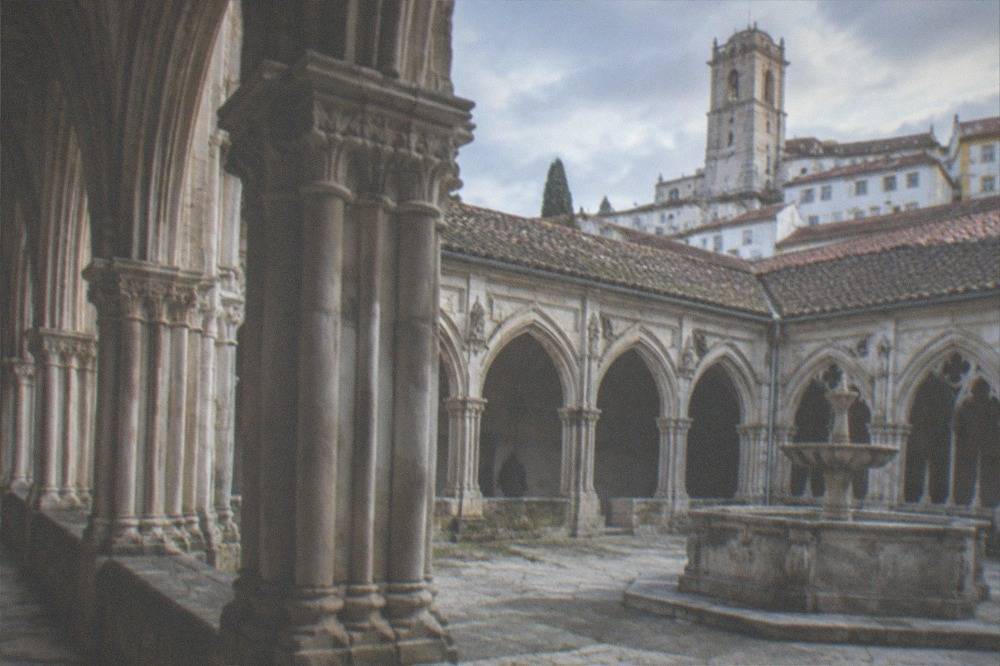
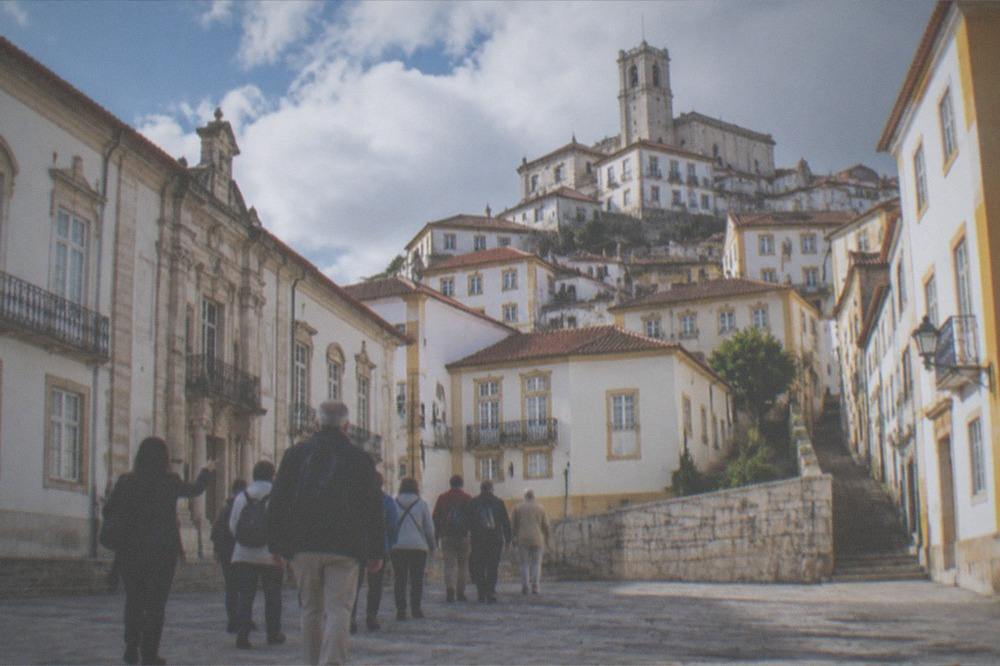
Coimbra's geography shapes the visit physically. The old town splits into the Alta, the upper town around the Paço das Escolas, and the Baixa, the commercial riverside quarter, and moving between them means stairs and slopes. The University publishes its own visitor programme for the Paço das Escolas, the Royal Palace, the Capela de São Miguel and the Joanina, and the inscription on UNESCO's list, reference 1387 from 2013, covers the university hill and the Rua da Sofia college street specifically. It does not cover the whole city, and guides that say "Coimbra is a UNESCO World Heritage city" are stating something false.
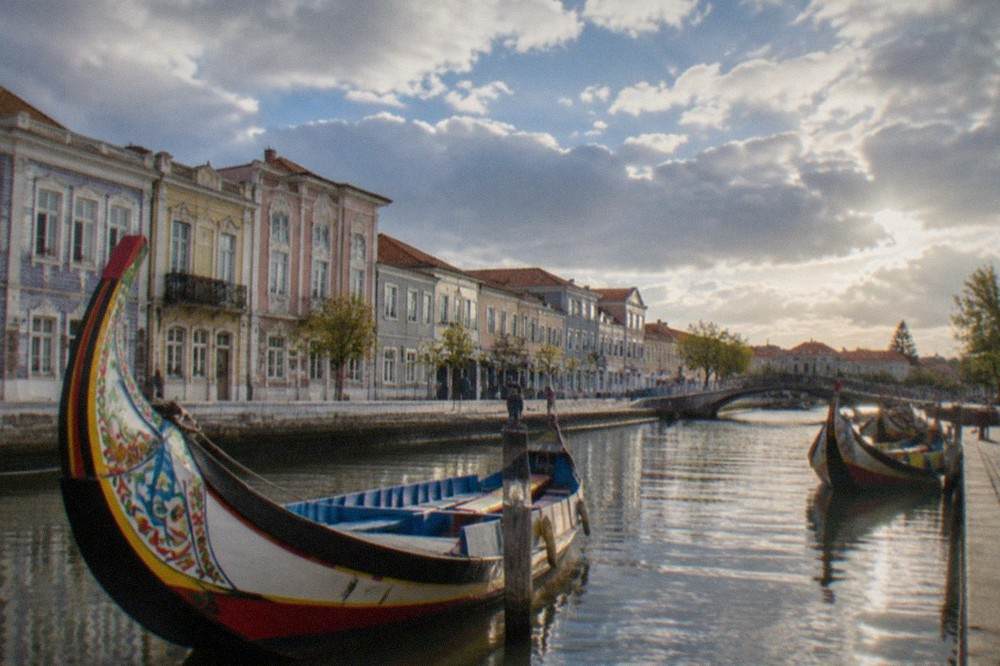
Aveiro inverts every one of those conditions. The city sits at sea level around a lagoon, its central canals carry the painted moliceiro boats that were once working seaweed-harvesting craft, and its architectural signature is the Art Nouveau façades of its merchant quarter rather than a college chapel. Aveiro is also, unlike Coimbra, genuinely coastal: the district of Coimbra reaches the Atlantic, but the city of Coimbra does not touch the sea and has no beach of its own. If salt air and flat walking are the priority, that settles the comparison on its own.

How Do the Main Sights Compare?
Coimbra's sights are monument-dense and ticketed: the University's combined ticket at 16.50 EUR covers the Biblioteca Joanina, the Royal Palace, the Capela de São Miguel and the Science Museum spaces, the Sé Velha charges 3.00 EUR and the Mosteiro de Santa Cruz charges 5.00 EUR. Aveiro's sightseeing is mostly outdoors and free to wander, centred on the canals, the boats and the streets themselves, with a boat trip as its one signature paid activity.
The Coimbra side of that sentence is fully priced and checkable. The University's own visit pages list the 16.50 EUR combined adult ticket, valid for two days except the fixed Joanina slot, and a 12.50 EUR ticket without the Joanina. The Sé Velha, the Romanesque old cathedral managed by the Unidade Pastoral Aeminium, charges 3.00 EUR individual admission, and the Mosteiro de Santa Cruz, the burial church of Portugal's first two kings, charges 5.00 EUR for its visitable parts. One warning this site will always give: the Museu Nacional de Machado de Castro is closed for conservation work, so do not plan around it, and the Torre da Universidade is likewise closed to public access, per the University's own information page.
Aveiro's side cannot be priced here honestly, because this build verified no Aveiro admission figures, and inventing them is what a lazy comparison does. What can be said is what the city offers: the central canal loop, the moliceiro boats, the fish market quarter and the nearby salt pans, plus the beach strip at the edge of the lagoon. A boat trip on the canals is the standard paid activity, and prices should be checked on the operator's live listing rather than taken from a guide.
| Sight | Coimbra | Aveiro |
|---|---|---|
| Headline attraction | Biblioteca Joanina, timed entry, 50 people per 20 minutes | Moliceiro boat trip on the central canals |
| Second sight | Paço das Escolas and Capela de São Miguel | Art Nouveau merchant quarter |
| Religious monument | Sé Velha de Coimbra, 3.00 EUR individual | Aveiro's cathedral, city centre |
| Historic institution | University of Coimbra, about 31,000 students | Salt and seaweed harvesting heritage |
| Setting | Hill above the River Mondego | Flat lagoon city at sea level |
| Time needed | A full day minimum | A half day to a day |
For a deeper look at the Coimbra side, the things to do in Coimbra rundown covers the full monument list, and the Joanina Library tickets guide explains the timed-slot system in detail.
How Much Does a Day in Each City Cost?
A sightseeing day in Coimbra costs a known amount: 16.50 EUR for the University combined ticket, 3.00 EUR at the Sé Velha and 5.00 EUR at the Mosteiro de Santa Cruz, plus a 1.00 EUR per-night municipal tourist tax capped at three nights. Aveiro's costs are mostly boat-trip and food costs that this site has not verified and will not guess. Budget Coimbra on published figures and Aveiro on the operator's live listings.
The Coimbra numbers deserve a second look because they stack differently than most visitors expect. The 16.50 EUR University ticket is the only way into the Biblioteca Joanina, which cannot be bought on its own, and its other spaces stay valid for two days, so a two-day visitor effectively halves the daily cost of the University sights. The one-euro tourist tax, in force since 5 April 2023, applies per guest per overnight stay from age 16, capped at three consecutive nights, and is paid to the accommodation, not to a booking platform. The municipality's own worked example: a couple staying seven nights pays 3.00 EUR each. A two-euro rise was approved as a proposal in July 2026, but the municipal tax pages still list 1.00 EUR, so one euro is the figure to budget.
| Coimbra cost item | Verified figure | Source basis |
|---|---|---|
| University combined ticket, adult | 16.50 EUR | University visit pages, valid through 2026 |
| University ticket without Joanina | 12.50 EUR | University visit pages |
| Guided Palace of Schools tour | 25.00 EUR | University visit pages |
| Sé Velha, individual | 3.00 EUR | Unidade Pastoral Aeminium |
| Mosteiro de Santa Cruz, individual | 5.00 EUR | Unidade Pastoral Aeminium |
| Tourist tax | 1.00 EUR per night, max 3 nights | Municipal tax pages |
| SMTUC bus ticket bought on board | 2.00 EUR | 2026 SMTUC tariff |
| SMTUC pre-purchased ticket, 3+ trips | 0.90 EUR per trip | 2026 SMTUC tariff |
Aveiro's day budget is a different animal. The city's core experience, walking the canals, costs nothing, and the paid items are the boat trip, food and any museum entry, none of which this build verified. The honest planning advice is to treat Aveiro as a low-fixed-cost day with one variable cost, the boat trip, and check its price on the spot. For Coimbra's food costs, the restaurants guide and the leitão da Bairrada guide cover what and where to eat, and the trip-costs comparison in the is Coimbra worth visiting guide puts the whole city budget in context.
What About Weather and the Best Time to Visit?
Coimbra's climate is documented station by station, and IPMA's 1991 to 2020 normals for the Coimbra / Bencanta station show a hot, dry summer with August the hottest month at a 29.1 C mean maximum and July nearly dry at 8.9 mm of rain, a September that stays warmer than June, and an autumn that turns wet in October when rainfall jumps to 114.5 mm.
Aveiro runs no verified numbers here, but a coastal lagoon city is the place to be in summer heat and the worse bet in Atlantic rain.
The Coimbra table rewards close reading, because it contradicts two things people assume. September's mean maximum of 27.4 C is higher than June's 26.3 C, and September is also wetter than June, 49.9 mm against 26.0 mm, so the "September is drier than June" line that circulates in guides is inverted and false. What is true is that the real rain holds off until October, when the monthly total leaps to 114.5 mm, and November is the wettest month of all at 121.5 mm. August, not July, is the hottest month, averaging 10.9 days above 30 C. The rest of the planning pages sit on Coimbra Travel Guide.
| Month | Mean max C | Rain mm | Days 1mm+ rain |
|---|---|---|---|
| April | 20.5 | 84.6 | 10.6 |
| May | 23.3 | 64.7 | 8.5 |
| June | 26.3 | 26.0 | 3.7 |
| July | 28.5 | 8.9 | 1.7 |
| August | 29.1 | 14.8 | 2.2 |
| September | 27.4 | 49.9 | 5.2 |
| October | 23.2 | 114.5 | 10.3 |
For the comparison itself, the practical reading is this: Coimbra in July and August is a hill city in 30-degree heat, with the climb to the Paço das Escolas at its steepest and the Joanina slots at their most contested, while Aveiro's canals and sea breeze absorb the same months more comfortably. In October through March the logic flips, because Coimbra's monuments are indoors and its fado houses run all winter, while a lagoon city in Atlantic rain loses most of what it is for. The weather guide expands the full monthly picture.

Can You Visit Both Coimbra and Aveiro in One Day?
Yes, and the realistic way to do it is a combined tour from Porto, because the one verified product covering both cities, a full-day trip rated 4.7 from 106 reviews at from 114 dollars per person, includes a boat ride in Aveiro and a stop in Coimbra. Doing it independently in one day means choosing two or three Coimbra sights at most, since the Joanina slot alone can eat an hour. Two cities in one day works only if one of them is compressed.
The combined tour exists precisely because the pairing is popular: from Porto, a full day covers Aveiro's canals with a boat ride and then Coimbra, and at 4.7 from 106 reviews it is the most-reviewed way to see both without planning the rail connections yourself. The trade-off is honest and should be stated: a one-day combo gives you Aveiro's canals and Coimbra's skyline, but it cannot give you the Biblioteca Joanina at leisure, because the 50-people-per-20-minutes ceiling and the fixed slot time make the library hostile to a tight schedule.
Doing it independently is possible but needs the discipline of a fixed plan. Book the Joanina slot first and build the day backwards from it, because the time printed on the ticket is the library slot specifically and entry outside it is refused. The University's other spaces stay valid for two days, so a smarter independent plan is one night in Coimbra: see the University hill on arrival day, the Joanina at the booked slot the next morning, then drop down to the Baixa, and save Aveiro for a separate, unhurried half day. The Coimbra to Aveiro guide and the Aveiro day trip page cover the connections, and the one day itinerary shows what a Coimbra-only day can actually hold.
Which City Should You Choose for Your Trip?
Choose Coimbra if monuments, history, fado and a real university atmosphere rank above comfort, if you can give the city at least one full day, and if you are happy climbing; choose Aveiro if your trip is short, flat and water-oriented, if you are travelling with small children or anyone who struggles with hills, or if your itinerary already has two monumental cities in it and needs air. The two are not substitutes, and the strongest trips use Coimbra as the main course and Aveiro as the day trip.
The traveller-type table below is the short version of everything above. It compares on what each city is, which is the only basis this site will rank on, because no visitor numbers, hotel rates or satisfaction surveys were verified for either city and a "top 5 Portuguese cities" ordering presented as measurement would be invented.
| Traveller type | Better fit | Why |
|---|---|---|
| First-time Portugal visitor | Coimbra | The University hill, the Joanina and the Sé Velha are signature sights of the country |
| Short coastal break | Aveiro | Flat, compact, canals and sea air |
| History and architecture lover | Coimbra | Romanesque cathedral, royal burial church, baroque library |
| Family with young children | Aveiro | Boats and flat walking beat stairs and timed slots |
| Fado and nightlife seeker | Coimbra | The fado de Coimbra tradition and the student city run year-round |
| Traveller with two spare days | Both | Coimbra for the full day and night, Aveiro as the half-day trip |
Two honest caveats belong here. First, Coimbra's accessibility is a real consideration: the city is built on a hill and the Alta demands stairs, so anyone with mobility limits will find Aveiro's flat ground far easier going. Second, Aveiro in high summer is the more forgiving of the two, but Coimbra's indoor sights make it the better rainy-day city, and there is plenty to do there when the October rain arrives. If the pairing still does not resolve the decision, the sibling comparisons against Braga, Tomar and Évora cover other either-or scenarios.

Where Should You Stay, and How do You Get There?
Stay in Coimbra if you are staying at all, because the city's own accommodation base serves both the Alta and the Baixa and the tourist tax is a known 1.00 EUR per night capped at three, while Aveiro's hotel rates were not verified for this comparison and are checked best on the listing. Rail is the way both cities are reached, and Coimbra has two stations with confusingly similar names, Coimbra-B and Coimbra-A, in different places, with CP the authoritative source for which trains call where.
The two-station trap deserves its own paragraph because it catches visitors arriving in Coimbra from Porto or Lisbon. Coimbra-B and Coimbra-A exist, they are in different parts of the city, and the specifics of which long-distance services stop at which, and the connection between them, must be checked on CP's own site rather than taken from a guide, because this build could not verify them from official pages. The train stations A and B guide explains the distinction as far as it can honestly be explained, and the Porto to Coimbra and Lisbon to Coimbra pages cover the two main arrival corridors.
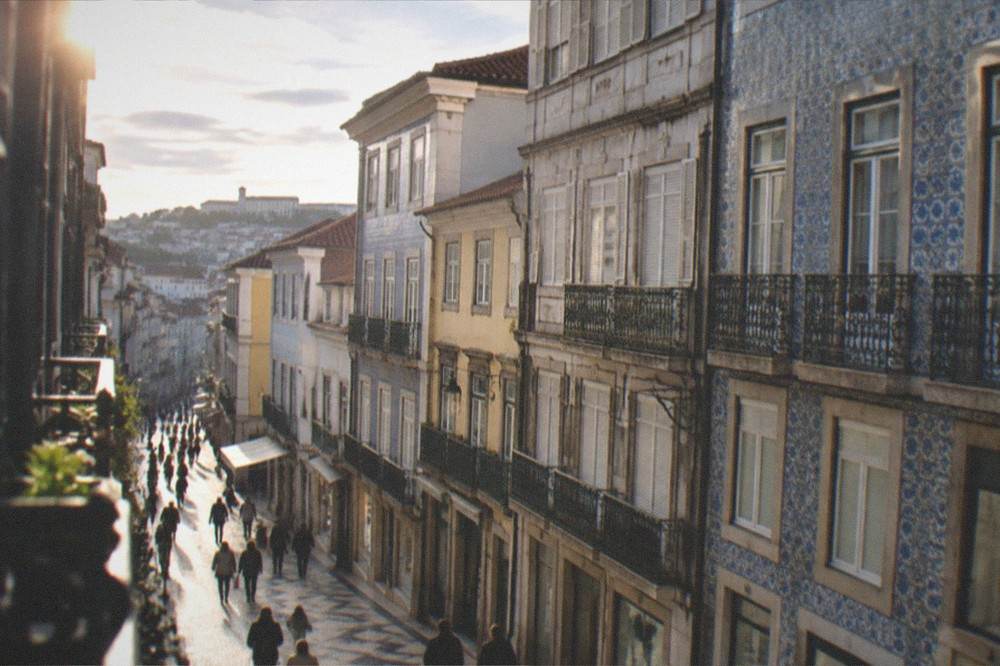
For sleeping, the choice follows the same logic as the day-trip choice. Coimbra rewards the overnight stay: the fado houses, the floodlit Sé Velha and the evening atmosphere of the old town are the parts of the city a day-tripper never sees, and the where to stay and best hotels guides map the neighbourhoods. Aveiro as a base makes sense mainly for a coastal itinerary built around the lagoon and the beach strip. A practical middle path, and the one the Aveiro and Coimbra day trip itinerary lays out, is to sleep in Coimbra and give Aveiro the half day it genuinely needs.
Common Questions About Coimbra vs Aveiro
Is Coimbra or Aveiro better for a day trip from Porto?
Both work from Porto, but they suit different days. Coimbra needs the fuller day because its headline sights are ticketed, hilly and timed, with the Biblioteca Joanina admitting 50 people every 20 minutes on a fixed slot. Aveiro works as a shorter stop centred on the canals and a boat ride. A combined full-day tour from Porto covering both cities, with a boat ride in Aveiro, is the verified way to see each in one outing.
Can you see Coimbra and Aveiro on the same day?
Yes, with a fixed plan. The realistic version is a combined tour from Porto rated 4.7 from 106 reviews, which includes a boat ride in Aveiro and a stop in Coimbra. Independently, it means booking the Joanina library slot first and building the day around it, because the time printed on the University ticket is the library slot specifically and entry outside it is refused.
Is Coimbra a UNESCO World Heritage city?
No, and this is the most common error in guides to the city. UNESCO's list reference 1387, inscribed in 2013, covers "University of Coimbra, Alta and Sofia", two components inside the old town: the university hill and the Rua da Sofia college street. The city as a whole is not inscribed, and neither is Aveiro.
Which city is cheaper, Coimbra or Aveiro?
Coimbra's costs are published and easy to budget: 16.50 EUR for the University combined ticket, 3.00 EUR at the Sé Velha, 5.00 EUR at the Mosteiro de Santa Cruz, a 1.00 EUR per-night tourist tax capped at three nights, and 2.00 EUR for a bus ticket bought on board. Aveiro's costs were not verified for this comparison, so check boat-trip and food prices on the operator's live listing rather than trusting a guide's numbers.
Which city is better in summer?
Aveiro, on the whole. IPMA's 1991 to 2020 normals for the Coimbra / Bencanta station show August as Coimbra's hottest month at a 29.1 C mean maximum with 10.9 days above 30 C, and the climb to the university hill is at its least pleasant. Aveiro's canals and sea air absorb the same heat more comfortably, though this site has no verified coastal station data to quote for it.
Do you need a car to visit Coimbra or Aveiro?
No for Coimbra, which is walkable with effort and served by SMTUC buses at 2.00 EUR on board or 0.90 EUR pre-purchased, with tickets also valid on the Metro Mondego network under the 2026 tariff. For Aveiro, the central canals are flat and compact. Rail connects the region, and CP is the authoritative source for services between the two cities.
The comparison resolves cleanly once the honest data is on the table. Coimbra is the city you schedule around, with verified prices, a timed library slot that punishes improvisation and an atmosphere no other city in the region can copy, and Aveiro is the city you stroll through, best used as the flat, maritime half day that balances a Coimbra-centred trip. Give Coimbra the overnight stay, book the Joanina slot before anything else, and let Aveiro be the easy half of your Centro region itinerary.