What Is Coimbra, Portugal Famous For?
Coimbra, Portugal is famous for its 700-year-old university, the baroque Joanina Library, Coimbra fado and the student traditions of the old town on the River Mondego. Here is what the city is known for, with verified prices and facts.
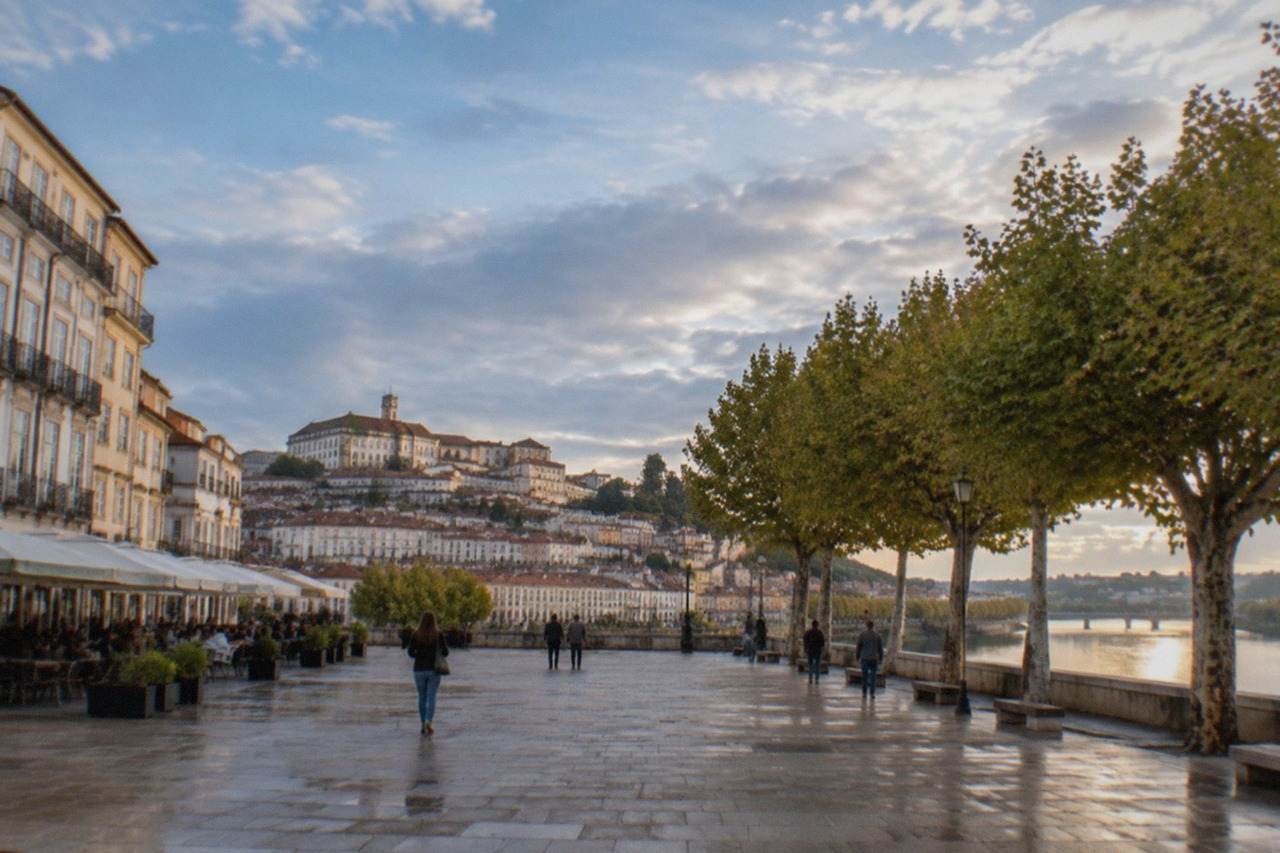
Coimbra, Portugal, the university city on the River Mondego in the country's Centro region, is famous above all for one institution: the University of Coimbra, whose hilltop core, the Paço das Escolas, and the college street below it were inscribed by UNESCO in 2013 as "University of Coimbra – Alta and Sofia", list reference 1387. Around that university grew everything else the city is known for: the baroque Biblioteca Joanina with its bat colony, the distinct Coimbra style of fado sung by students in black capes, the Repúblicas student houses, the Mondego riverside, and, about 16 km south, the Roman town of Conímbriga. The University publishes a figure of about 31,000 students on its own homepage, and that student mass is the engine behind nearly everything a visitor recognises here.
What Is Coimbra, Portugal Famous For?
Coimbra is famous for the University of Coimbra, founded centuries ago and now a UNESCO World Heritage Site covering the university hill and Rua da Sofia, for the Biblioteca Joanina, a baroque library that admits 50 people every 20 minutes, for Coimbra fado, a student tradition sung in black capes, and for the Roman ruins of Conímbriga about 16 km south. The municipality recorded 698,151 overnight stays in 2025, so plenty of visitors come for exactly these things.
That is the short answer. The longer one is that Coimbra's fame is unusually concentrated: one institution shaped the food, the music, the dress, the calendar and even the closures of the monuments. Mosteiro de Santa Cruz, the burial church of Portugal's first two kings, suspends visits on the Cortejo da Queima das Fitas, a moveable Sunday in May, because the student parade takes over the streets. The University closes its whole visitor circuit on 24 May for the same reason. The city's fame and the academic calendar are the same story, and a reader who understands that understands Coimbra.
It is worth being precise about the UNESCO point, because most guides get it wrong. The inscription is not the whole city. The property is two components inside the old town: the Alta, the university hill with the Royal Palace of Alcáçova, the Capela de São Miguel and the Joanine Library, and Sofia, the Rua da Sofia colleges. The Baixa below, the riverside and the Santa Clara district across the river are not inscribed. For more on the city's reputation generally, see why Coimbra is famous.
The University of Coimbra and the Joanina Library
The University of Coimbra is the city's single most famous thing, and the Biblioteca Joanina is its most famous room. The University's own ticket programme prices the Joanina Library with the Royal Palace, Capela de São Miguel, Chemistry Laboratory, Academic Museum, Cabinet of Curiosities and Mineral Gallery at 16.50 EUR adult, valid two days except the fixed Joanina slot, which admits 50 people every 20 minutes. The Joanina cannot be bought on its own, and entry outside the printed slot is refused.
Those two constraints, the combined ticket and the 50-per-20-minutes ceiling, are the most useful practical facts in the whole city, and the University states both on its own visit pages. The library keeps a colony of bats that eat the insects which would otherwise damage the books, a detail the University itself confirms. The clock tower, the Torre da Universidade, is closed: the University's information page states plainly that the facility is closed, so no tour sells a climb and no itinerary should promise one. The wider set of guides lives on Coimbra Travel Guide.
The other university spaces are real and visitable. The 12.50 EUR ticket covers the same list without the Joanina, and guided programmes exist for the Paço das Escolas and the Botanical Garden. Opening hours run 09:00 to 20:00 in summer, 1 April to 30 September, and 09:00 to 17:30 in winter. Whether the university is the world's oldest is a separate question with a separate answer on is Coimbra the oldest university in the world, and the library's reputation has its own page at the most famous library in Coimbra.
Because the Joanina slot is fixed and scarce, a guided tour that includes tickets is often the calmest way in. A local's tour of the university with skip-the-line entry runs about an hour and a half with a guide from the city, and the two other options below, a budget walking tour of the top attractions and a schist villages adventure, cover the rest of a first visit:
The skip-the-line university tour deserves a closer look on its own, because it is the one most visitors book first and the one most affected by the Joanina's timed entry.
Fado de Coimbra and the Student Traditions
Coimbra is famous for its own style of fado, sung by male students in the black academic cape, with a guarded, formal repertoire tied to student life rather than the Lisbon tavern tradition. The city is equally famous for its student rituals: the Queima das Fitas in May, the burning of the ribbons, and the Repúblicas, the centuries-old shared student houses of the old town. The University closes its visitor circuit on 24 May, and Santa Cruz suspends visits on the parade Sunday.
Coimbra fado is a recognised distinct tradition, not a branch office of Lisbon's, and it is one of the two things people ask about most after the library. The singing happens in the old town's fado houses and in the streets after the Serenata, and there is a full page on the repertoire at the most famous fado song. The student traditions extend to the costume itself, the capa e batina, and to the praxe, the initiation customs that give the city its calendar. The exact Queima dates move each year and the official source is the Associação Académica, but the two fixed, verified facts are the University's 24 May closure and Santa Cruz's parade-Sunday suspension.
Conímbriga and the Roman Past
Coimbra is famous, less loudly but just as officially, for Conímbriga, a Roman town about 16 km south in the parish of Condeixa-a-Velha, in the municipality of Condeixa-a-Nova. The Museu Nacional de Conímbriga charges 10.00 EUR adult for one combined ticket covering the museum and the ruins, open daily 10:00 to 18:00, and the site is a reliable Monday option because it opens seven days a week.
The ruins include substantial mosaic floors and domestic architecture, and the museum's own pages give the hours and the single-ticket rule. Back in the city, the Museu Nacional de Machado de Castro, built over a mid-1st-century Roman cryptoporticus, is closed for conservation work, so the Roman thread in town is currently thinner than it will be; the cryptoporticus is the verified fact worth keeping. Whether the trip out is worthwhile has its own discussion at is Conímbriga worth visiting.
Schist Villages, the Serra da Lousã and the Wider Region
Coimbra is famous as a gateway to the schist villages of the Serra da Lousã, the stone settlements of Talasnal, Gondramaz and their neighbours, which sit within an hour of the city and anchor most of its day-trip tourism. The district of Coimbra reaches the Atlantic at Figueira da Foz, but the city itself does not touch the sea, so the mountains and the river, not a beach, are the countryside visitors actually reach from here.
That geography warning matters. Writers regularly promote a district fact to a city one. The city of Coimbra is inland, on the Mondego, and its famous surroundings are the Lousã schist villages, the Buçaco forest, and the Roman site at Conímbriga. The food reputation belongs to the region too: leitão da Bairrada, the roast suckling pig of the Bairrada wine country to the west, is the plate most visitors associate with a Coimbra stop, and the city's own pastries and arrufadas have their own following. The food question has a dedicated answer at what food is Coimbra famous for.
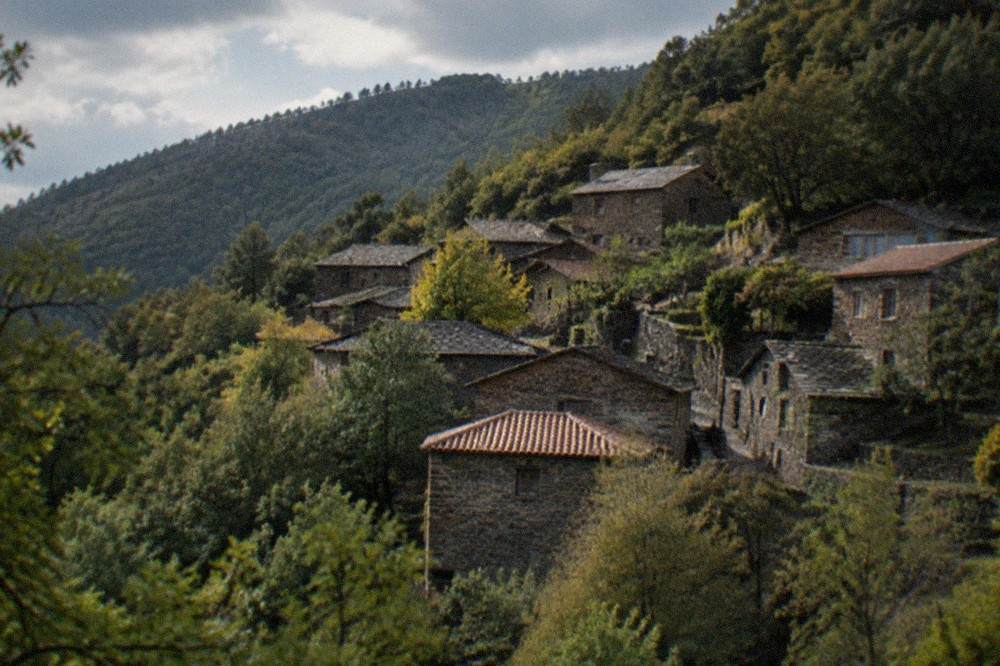
The day-trip layer of Coimbra's fame is real enough that the city's tour roster is dominated by it, from four-hour schist village loops to the Convent of Christ at Tomar and the sanctuary at Fátima. For a sense of what fits in one visit, how many days you need in Coimbra covers the split between the city itself and its surroundings.
If the mountains appeal more than another church, the schist village tours are the strongest-reviewed day trips out of the city:
What Coimbra Is Famous for, in One Table
The table below lists the eight claims a reader can actually check, each with the figure its official source publishes and the body that publishes it. The headline numbers are the 16.50 EUR combined university ticket with its 50 people every 20 minutes Joanina ceiling, the 10.00 EUR Conímbriga ticket, the 1.00 EUR tourist tax capped at three nights, and the municipality's 698,151 overnight stays in 2025.
| What Coimbra is famous for | The verified figure | Who publishes it |
|---|---|---|
| University of Coimbra, UNESCO "Alta and Sofia" | Inscribed 2013, list reference 1387, criteria (ii)(iv)(vi) | UNESCO World Heritage Centre |
| Biblioteca Joanina | 16.50 EUR combined ticket only, 50 people every 20 minutes | University's visit pages |
| University student body | 31,256 students | University's own homepage |
| Sé Velha de Coimbra | 3.00 EUR individual ticket | Unidade Pastoral Aeminium |
| Mosteiro de Santa Cruz | 5.00 EUR individual ticket | Unidade Pastoral Aeminium |
| Conímbriga Roman ruins | 10.00 EUR, museum and ruins on one ticket | Museu Nacional de Conímbriga |
| Municipal tourist tax | 1.00 EUR per night, max 3 nights, from age 16 | Câmara Municipal de Coimbra |
| 2025 overnight stays | 698,151 in the municipality | Câmara Municipal de Coimbra |
Two cautions sit behind that table. The Museu Nacional de Machado de Castro is closed for conservation work, so it appears nowhere above despite being one of the city's headline monuments, and the Torre da Universidade is closed with no published reopening. The tourist tax is 1.00 EUR, not 2.00 EUR: a two-euro rise was approved as a proposal in July 2026, but the municipality's own tax pages still state one euro, and the rate is what the accommodation collects at check-in, not something paid in advance.
Common Questions About Coimbra
What Is Coimbra, Portugal Famous For?
Coimbra, Portugal is famous for the University of Coimbra and its Joanina Library, for the student fado tradition sung in black capes, for the Queima das Fitas festival in May, for the Roman ruins at Conímbriga nearby, and as the gateway to the schist villages of the Serra da Lousã. The UNESCO inscription of 2013 covers the university hill and Rua da Sofia, not the whole city.
Is Coimbra Worth Visiting?
Yes, for most travellers doing a Lisbon to Porto route it earns at least a full day, mainly for the Paço das Escolas, the Joanina Library and the old town. The verified closings to plan around are the Machado de Castro museum and the university clock tower, both shut for works.
What Is the Most Famous Thing to See in Coimbra?
The Biblioteca Joanina, inside the University of Coimbra's 16.50 EUR combined ticket. Its entry is capped at 50 people every 20 minutes and the time printed on the ticket is the library slot, so booking ahead is the practical advice.
Is Coimbra Famous for Fado?
Yes, for a distinct Coimbra style of fado sung by students in the academic cape, tied to student life and the Queima das Fitas, separate from the Lisbon tradition.
What Food Is Coimbra Famous For?
The city's table is famous for the wider region's signature dish, leitão da Bairrada, roast suckling pig, plus its own pastries and arrufadas, and the student cafés of the old town.
How Many Days do You Need in Coimbra?
One day covers the university hill, the old town and the Joanina; two or three allow the Mondego riverside, Santa Cruz and a day trip to Conímbriga or the Lousã schist villages.
Whatever brings you here, the library, the fado or the mountains, book the Joanina slot first and build the rest of the visit around it, because that 50-person, 20-minute ceiling is the one scarcity in Coimbra that never moves.