Is Coimbra the Oldest University in the World?
Is Coimbra the oldest university in the world? No, but the University of Coimbra in Portugal has one of the longest histories in Europe, and here is what the official record actually says.

The University of Coimbra, in the city of Coimbra, Portugal, sits on the university hill above the River Mondego, and its name gets attached to one of the most repeated superlatives in European travel writing: that it is the oldest university in the world. It is not. Several universities elsewhere in Europe were teaching students long before Coimbra's institution existed in anything like its present form, and no serious source disputes that. What is true, and what the official record supports, is narrower and more interesting: the University of Coimbra is commonly described as the oldest university in Portugal, it is one of the oldest continuously operating universities in Europe, and UNESCO considered its campus significant enough to inscribe "University of Coimbra, Alta and Sofia" on the World Heritage List in 2013, under criteria (ii), (iv) and (vi), list reference 1387.
That distinction, between "oldest in the world" and "oldest in Portugal, and old by any standard," matters, because a lot of guidebook copy quietly upgrades one into the other. This page separates the claim from the record, using what the University itself publishes and what the UNESCO inscription actually says, and nothing else. The full sightseeing picture, for readers planning around the campus, is in things to do in Coimbra, and the visiting practicalities are covered in do you need tickets for the University of Coimbra.
Is Coimbra the Oldest University in the World?
No, the University of Coimbra is not the oldest university in the world. Older institutions of higher learning existed elsewhere in Europe well before it, and several of them still operate today. What Coimbra can legitimately claim is a place among Europe's oldest continuously operating universities, and the status of Portugal's oldest, a title it holds by common scholarly description rather than by any single official registry of founding dates.
The reason the superlative circulates anyway is partly compression. Portugal's university history is unusual in that the institution moved: it operated in more than one Portuguese city before settling permanently in Coimbra, and shorthand accounts of that movement often collapse into a simple "oldest" story that travels better than it verifies. That history also explains why pinning a single foundation year to the campus you stand on today is harder than it sounds. The University itself, on its own published pages, does not lead with a founding date as its headline claim; it leads with what it is now, and that is the safer thing for a visitor to quote.
There is a second, subtler reason the claim survives: people want it to be true. A university old enough to be "oldest in the world" is a reason to travel, and Coimbra benefits from that framing every summer. But the city's actual, checkable superlatives are strong enough without borrowing one. The UNESCO inscription of 2013 covers the university hill, the Alta, and Rua da Sofia, the college street below, two components inside the old town, and it was awarded for the university's role in the formation of Portuguese-language learning and institutional culture, not for a world record in age. Note the wording carefully: "University of Coimbra, Alta and Sofia" is the inscribed property. Coimbra is not a UNESCO World Heritage city, and any guide that says so has made the single most common factual error about this destination.
So the honest answer to the question in the heading is a no with a generous footnote. If the question behind your question is "is this campus worth visiting because of its age," then yes, emphatically, and you do not need the world record to justify the train fare.
What Do the Official Numbers Say About the University of Coimbra Today?
The University of Coimbra currently publishes a figure of about 31,000 students, 31,256 exactly, alongside 434 courses, 1,935 professors, 378 researchers, 4 campuses, 22 libraries, 2 museums, 1 botanic garden and 13 residences. Those are the University's own numbers from its homepage, and they describe an institution that is very much alive, not a museum piece. The page does not state the academic year, so the figure should be read as current rather than pinned to one.
A university that has been teaching for as long as Coimbra's is not a ruin with a gift shop. It is a working city institution, and the working numbers are the best evidence. About 31,000 students live, study and celebrate in and around the old town, which is why the academic calendar visibly reshapes the whole city: the Queima das Fitas festival in May, the black-caped students in the streets, the fado sung in the student tradition rather than the Lisbon one. The scale of the student body relative to a city of Coimbra's size is the reason the place feels like a campus with a city attached, rather than the reverse.
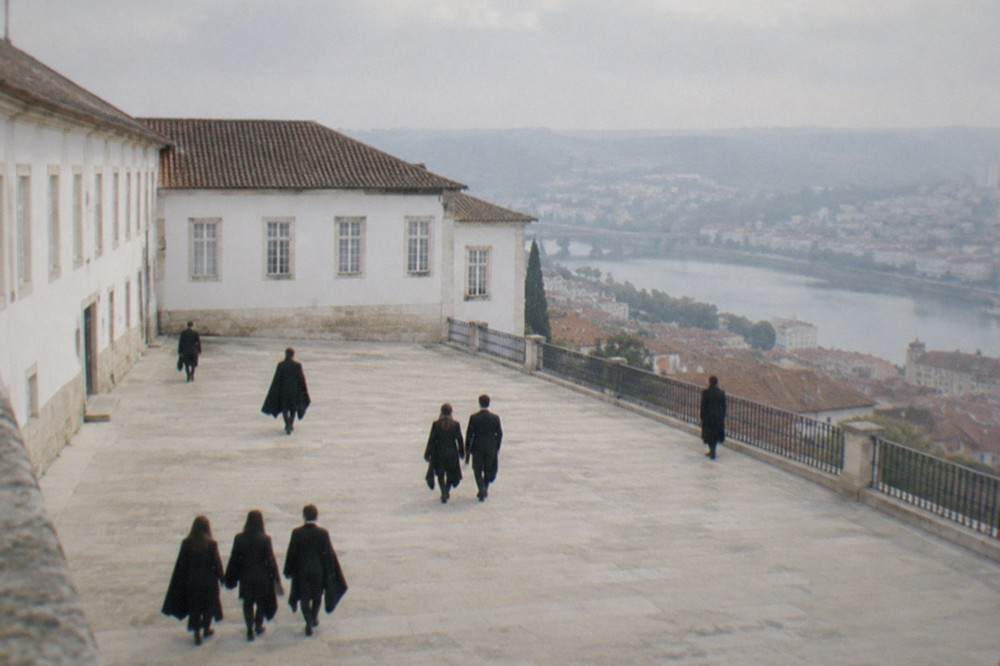
The University's numbers also explain why its campus sprawls well beyond the original hill. Four campuses, twenty-two libraries and a botanic garden are not the footprint of a medieval college; they are the footprint of an institution that kept growing across the centuries. The 1940s "University City" construction, which is part of the UNESCO-inscribed property, is itself a chapter of that growth. If you want the full breakdown of how the institution ranks and performs today, the companion pages on is the University of Coimbra a good university and is Coimbra a prestigious university take that question head on.
Which Parts of the University Can You Actually Visit?
The Palace of Schools, the Royal Palace, St Michael's Chapel, the Chemistry Laboratory, the Academic Museum, the Cabinet of Curiosities and the Mineral Gallery are all visitable, with a combined ticket at 16.50 EUR for adults that also includes the Joanina Library and the Science Museum spaces, valid for two days. The Joanina Library admits only 50 people every 20 minutes, in fixed timed slots, and the time printed on your ticket is the library slot specifically.
That 50-per-20-minutes ceiling is the single most important practical fact on the whole campus, and the University states it on its own ticketing pages. Entry outside the printed slot is refused, online purchase closes twenty minutes before the visit time, and the library cannot be bought as a standalone ticket at all: it exists only inside the combined ticket. A visitor who arrives in summer without a pre-booked slot can genuinely be turned away, which is a scarcity fact most guides underplay. The rest of the ticket is more forgiving, since every space except the Joanina slot can be visited across two days.
One thing you cannot visit at all, and should not plan around: the Torre da Universidade, the university clock tower, is closed. The University's own visitor information page states, in its own words, "We regret to inform you that this facility is closed," and mentions the 184 steps and narrow passage on the same page, as reasons the facility is difficult to reopen rather than an experience on offer. Any itinerary that schedules a tower climb, or prints a price or an opening time for one, is out of date. The guided alternatives are the better route anyway, since a guide-led visit at 25.00 EUR covers the Palace of Schools in ninety minutes, and the tours listed above bundle tickets so the Joanina slot is handled for you.
| University visit element | Adult price | What you get |
|---|---|---|
| Joanina Library + University + Science Museum | 16.50 EUR | Royal Palace, St Michael's Chapel, Chemistry Laboratory, Academic Museum, Cabinet of Curiosities, Mineral Gallery, timed Joanina slot, valid two days |
| University + Science Museum | 12.50 EUR | The same list without the Joanina Library, valid two days |
| Guided tour, Palace of Schools | 25.00 EUR | Guide-led visit, 1 hour 30, Science Museum spaces not included |
| Torre da Universidade | Closed | No public access; the University's own page states the facility is closed |
For everything else on the hill, the practical detail is gathered in how to visit the Coimbra University Library, and the wider campus context, including the Joanina Library itself, is covered in dedicated pages across this Coimbra Travel Guide.
Does Age Alone Make the University Worth Visiting?
Yes, but not because of a world record it does not hold. The University of Coimbra is worth visiting because the campus is a layered, working monument: a baroque library that admits 50 people every 20 minutes, a UNESCO-inscribed hill awarded for its role in the history of Portuguese-language learning, and about 31,000 students who still fill the same streets their predecessors did. Age is the context, not the attraction.
The comparison worth making is with the other institutions people visit for age alone. Plenty of old European universities are effectively closed campuses with a famous quadrangle; Coimbra's is the opposite, an institution whose ceremonial life, from the black capes to the fado tradition sung only by current or former male students, is performed in public, in bars and squares and on the steps of the old cathedral. The festival calendar has real effects on visits: the University closes its visitor circuit on 24 May, and the Mosteiro de Santa Cruz suspends visits on the Cortejo da Queima das Fitas, a moveable Sunday, so the student tradition literally shuts monuments for a day. That is what a living old university looks like from the street.
There is also the city-level economics nobody publishes but this one. The municipality's own figures, released in its 21 July 2026 justification for the tourist tax, record 698,151 overnight stays in Coimbra in 2025, municipal tourism spending of 1.94 million EUR in direct costs, an estimated annual cost of 2.44 million EUR, and a cost per overnight stay of 3.49 EUR against a one-euro tax. Almost no competing guide carries those numbers, and they explain both why the city invests in its university-facing tourism and why the visitor tax exists at all: it is charged at 1.00 EUR per guest per night, capped at three consecutive nights, from age 16, paid at the accommodation, and a rise to two euros was approved as a proposal in July 2026 without yet being the published rate.
The library itself deserves the last word on the age question, because it is the clearest example of old and alive at once. The Joanina houses a colony of bats, confirmed on the University's own space listing for the building, that emerges at night to eat the insects which would otherwise damage the books. Preservation by bat is not a museum's solution, it is a working library's solution, and it has been the working solution for a very long time. For the visiting practicalities, see is there an entrance fee for Coimbra University and is Coimbra University worth visiting.
The former-student-led option, the University of Coimbra Guided Tour with Tickets, runs from $67 per person, is rated 4.9 from 193 reviews, and takes about ninety minutes with a group of ten, with a former student as guide and admission included, so the timed Joanina logistics are the operator's problem rather than yours. Check availability if that trade suits your dates.
Common Questions About the University of Coimbra
Is Coimbra the oldest university in the world?
No. Several European universities are older. Coimbra's institution is commonly described as Portugal's oldest and ranks among Europe's oldest in continuous operation, which is the claim worth repeating.
Is Coimbra a UNESCO World Heritage city?
No, and this is the most common error about the city. The UNESCO property is "University of Coimbra, Alta and Sofia", inscribed in 2013, covering the university hill and the Rua da Sofia colleges, two components inside the old town.
Can I visit the Joanina Library on its own?
No. The library exists only inside the 16.50 EUR combined ticket, admits 50 people every 20 minutes, and the time printed on the ticket is the fixed library slot, which cannot be missed without losing the entry.
Can I climb the university clock tower?
No. The Torre da Universidade is closed, and the University's own visitor information page states the facility is closed. No price or hours should be published for it, and no itinerary should include a climb.
How many students does the University of Coimbra have?
About 31,000, published by the University itself as 31,256 on its homepage, alongside 434 courses, 1,935 professors and 22 libraries. The page does not state the academic year.
Is the old university worth visiting if it is not the world's oldest?
Yes. The Royal Palace, St Michael's Chapel, the Joanina Library and the student traditions are the attraction, and the UNESCO inscription was awarded for the university's role in the history of learning, not for holding an age record.
Whichever way you settle the age question in your own head, book the Joanina slot before anything else: 50 people every 20 minutes is a hard ceiling, the 16.50 EUR ticket is the only way in, and everything else on the hill will still be there if the library is not.