What Food Is Coimbra Famous For?
Coimbra, Portugal is famous for leitão da Bairrada roast suckling pig, chanfana goat stew, and a student café culture of arrufadas and pastries. Here is what to eat and how to choose where.
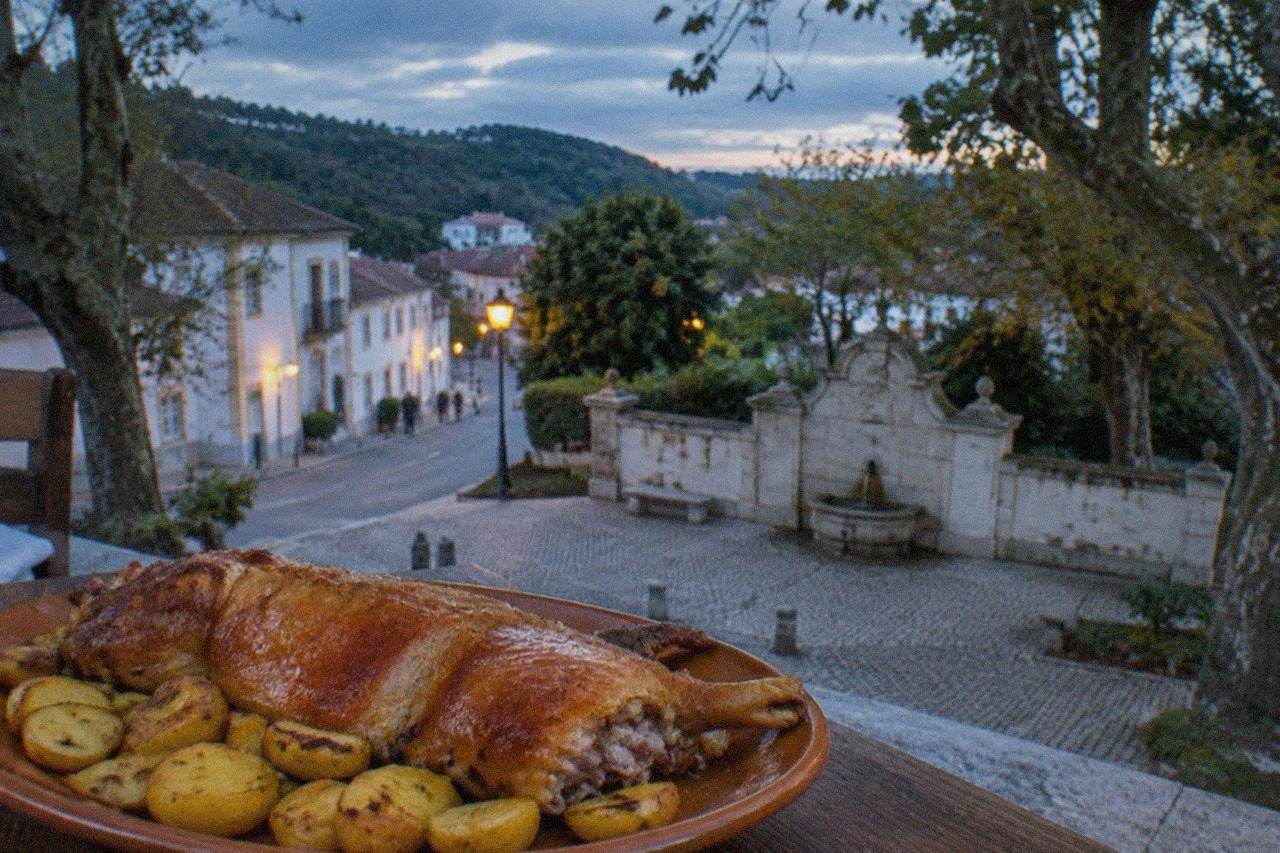
Coimbra, Portugal, the university city on the River Mondego, eats differently from Lisbon and Porto, and the difference is mostly a matter of geography. The city sits between the Bairrada wine region to the west, where suckling pig has been the celebratory roast for generations, and the inland hills of the Beiras, where goat stew was what you made when the land gave you a goat and a bottle of red. Add eight centuries of student tradition, with about 31,000 students published by the University as its current figure, and you get a food culture of cheap, filling, ceremonial eating: whole animals roasted or braised, bread sweets made by nuns, and cafés that function as living rooms for people who have an exam tomorrow. This page answers the question directly, dish by dish, and then explains how to choose the kind of place that serves each one well, because no individual restaurant, café or bakery in Coimbra had its prices, hours or address verified for this site, and a wrong opening time helps nobody. For the wider picture of the city, the Coimbra Travel Guide covers the monuments and the practical planning.
What Food Is Coimbra Famous For?
Coimbra, Portugal is most famous for leitão da Bairrada, roast suckling pig seasoned with garlic, bay and coarse salt and cooked until the skin shatters, and for chanfana, a slow-braised goat stew made with red wine, garlic and paprika. Around those two anchors sit arrufadas, the spiral student buns of the city's cafés, dried cod dishes, and the egg-and-sugar convent sweets of central Portugal. The food identity is roast meat, wine and pastry rather than fish, despite the district reaching the Atlantic.
That last point trips up a lot of visitors. The district of Coimbra runs west to the coast and contains Figueira da Foz, but the city itself does not touch the sea, and its cooking behaves accordingly. What reaches the table fresh here is pig, goat and lamb, not the sardines and barnacles of the Atlantic ports. Fish arrives salted, and bacalhau, dried salted cod, is treated as a pantry ingredient with dozens of regional preparations rather than a fresh catch. The student population, which the University's own published figures put at about 31,000, keeps prices honest and portions large, because a restaurant that cannot feed a student will not survive a student city.
The dishes below are the ones that actually carry the city's name, in the order a visitor is likely to meet them.
| Dish | What it is | Where the tradition comes from |
|---|---|---|
| Leitão da Bairrada | Whole suckling pig roasted with garlic, bay, pepper and coarse salt until the skin blisters and cracks | The Bairrada wine region west of Coimbra, the classic feast dish of that area |
| Chanfana | Goat, on the bone, braised slowly in red wine with garlic, onion, paprika and bay | The Beiras inland hills, historically a way of cooking older animals tender |
| Arrufadas | Soft spiral buns, often with a sugar glaze, sold in student cafés and bakeries | Coimbra's academic café culture, tied to student life for generations |
| Bacalhau dishes | Dried salted cod, soaked and then roasted, braised or fried in dozens of preparations | A national Portuguese pantry tradition, adapted locally with olive oil and potatoes |
| Convent sweets | Egg yolk and sugar pastries, often named after nuns and monasteries | The convents of central Portugal, whose recipes survived the monasteries themselves |
Leitão da Bairrada, the Roast Suckling Pig of the Region
Leitão da Bairrada is a whole suckling pig roasted over several hours with garlic, bay leaf, black pepper and coarse salt, until the skin is glass-crisp and the meat underneath falls apart, and it is the single dish most associated with eating out around Coimbra. It is eaten with thick fried or roasted potatoes, orange slices and the red or sparkling wines of the Bairrada region. The pig is small, young and milk-fed, which is what makes the skin behave the way it does.
The Bairrada, the wine region west of the city, is the home of this dish, and Coimbra sits close enough to it that leitão has become the default celebration meal for everyone from families on a Sunday to businesses marking an anniversary. The proper leitão is cooked whole, seasoned only with the handful of ingredients above, and judged almost entirely on the skin: it should crack audibly under the knife and shatter rather than chew. The orange slices on the platter are not decoration, they cut the fat, and most people who grew up with the dish will not eat it any other way.
What distinguishes a good leitão house from an indifferent one is throughput and commitment. A place that roasts pigs all day, every day, does it better than a place that roasts one on Sundays, because the oven, the hand and the timing all stay sharp. Look for a menu built around the pig rather than a long list of everything, and for the pig arriving in pieces that clearly came from a whole animal rather than a pre-portioned tray. The meat should be moist and plainly seasoned; a leitão that needs sauce has usually been dried out.
The dish also travels well as a day trip. Many visitors eat leitão in Coimbra itself, but the Bairrada towns between the city and the coast are where the specialist houses are, and the Bairrada wine route covers how to combine the pig with the region's reds and sparkling whites. If you are planning the eating around the sightseeing rather than the other way round, the guide to what to eat in Coimbra puts the dishes against the neighbourhoods.
Chanfana and the Goat Stews of the Beiras
Chanfana is goat cooked slowly on the bone in red wine, garlic, onion, bay and paprika, often for hours in a low oven or a clay pot, and it is the other pillar of Coimbra's regional cooking. The wine tenderises the older, tougher animals the hills produced, and the result is dark, rich and unapologetically heavy. It is a dish of the inland Beiras rather than the coast, and it appears on Coimbra menus as a local classic rather than a novelty.
Where leitão is festive, chanfana is resourceful. The tradition comes from a landscape where goats were what the land supported, and where cooking an animal slowly in wine was the way to make it worth eating. The paprika gives the sauce its brick colour, the wine gives it depth, and the long cooking time means a kitchen has to start in the morning to serve it at lunch, which is itself a useful signal: a restaurant serving good chanfana is a restaurant that planned its day around it.
The practical advice is the same as for leitão, and it is about reading the menu rather than naming a venue, because no kitchen in this city had its hours or prices verified for this site. A short menu with chanfana on it daily is a kitchen cooking the regional repertoire properly. A hundred-item menu with chanfana at position forty is a kitchen reheating a gesture. Order it with rice or boiled potatoes and bread, because the sauce is the best part of the dish and it needs something to be carried on.
Where to Eat These Dishes in Coimbra, Portugal
The reliable way to eat well in Coimbra is to match the dish to the kind of place: leitão and chanfana from small restaurants in the Baixa and along the roads out toward the Bairrada, arrufadas and pastries from student cafés and bakeries near the university hill, and convent sweets from the pastry shops of the old town. No individual venue's hours or prices are published on this site, so the choice is made by type and by what the menu signals, not by name.
The Baixa, the low town between the river and the university hill, holds most of the city's everyday eating, and it is where the two roasts are most likely to be done well. The student cafés cluster uphill and around the older shopping streets, and they are the home of the arrufada, the soft glazed spiral bun that has been tied to academic life for as long as anyone in the city can say. The pastry shops selling convent sweets are scattered through the old town, and their window displays do most of the advertising.
| Kind of place | What it does best | What the menu should signal |
|---|---|---|
| Small regional restaurant in the Baixa | Leitão, chanfana, roasted meats | A short list of dishes, the pig carved from whole animals |
| Roadside leitão house toward the Bairrada | Suckling pig and Bairrada wines | The pig as the centrepiece, not one option among many |
| Student café near the university hill | Arrufadas, coffee, toast, cheap student meals | Baked on site, busy with students, simple prices on the board |
| Old-town pastry shop | Convent sweets, egg yolk pastries, arrufadas | A window full of the sweets, sold by weight or by the piece |
| Tasca, the small neighbourhood tavern | Simple daily dishes, whatever the kitchen does that day | One or two specials, chalkboard or verbal, bread and olives to start |
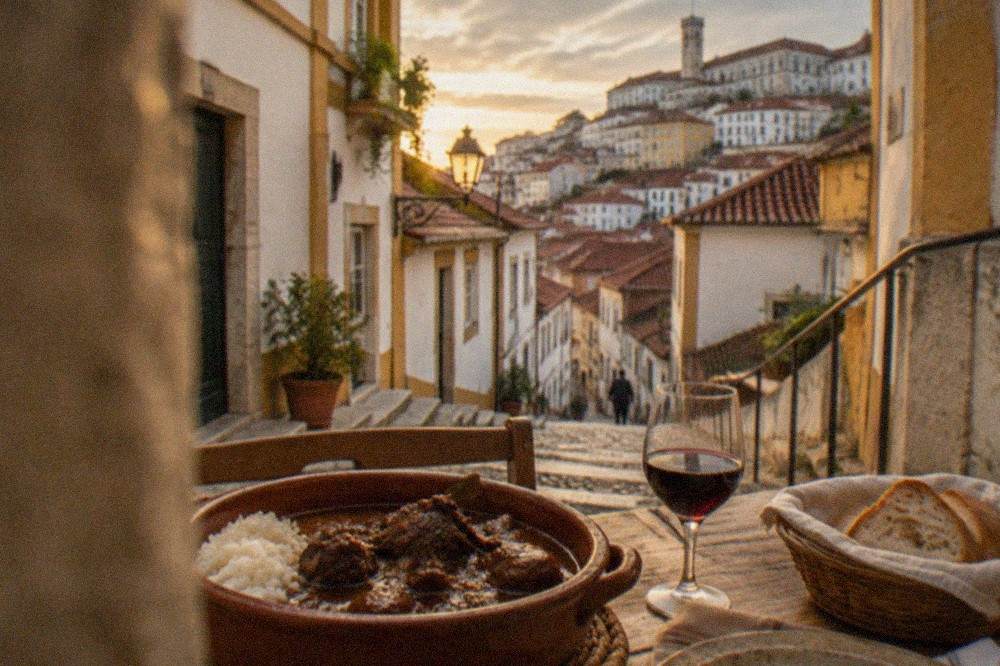
A walking tour is a decent way to triangulate the eating, because the geography of the food follows the geography of the city: the university hill for the cafés, the Baixa for the restaurants, the riverside for the views. The guided visit with a certified local guide, admission included, runs three hours and ends in the part of town where you will want to be at dinner time, and a guide who lives here will tell you which kitchens are doing the regional dishes seriously, which is exactly the question this site cannot answer with a verified opening hour. Check availability. For the narrower question of choosing one dinner, where to eat dinner in Coimbra and traditional Coimbra restaurants go deeper on the types of place.
Sweets, Arrufadas and the Café Culture of a Student City
Coimbra's sweet food identity runs through arrufadas, the soft glazed spiral buns of the student cafés, and the egg-yolk convent sweets of central Portugal, whose recipes came out of monasteries and survive in the city's pastry shops. The café is the institution that binds it together: in a city whose university publishes a figure of about 31,000 students, the café functions as a study, a meeting room and a kitchen, and the pastries are priced and portioned for exactly that life.
The arrufada deserves its own paragraph because visitors keep mistaking it for a tourist gimmick. It is a plain, slightly sweet, glazed bun, often served toasted with butter, and its point is cheapness and comfort rather than refinement. It belongs to the academic calendar the way the black cape belongs to it. The convent sweets are the opposite: elaborate, egg-heavy, sugar-dense, and named after the religious houses that invented them, they are the dessert tradition of central Portugal generally, and Coimbra's pastry shops carry the local versions alongside them.
The café culture also explains the city's rhythm. Coffee is drunk standing at the counter or sitting for an hour, and the same room serves the student with one arrufada and the retired professor with a newspaper. Vegetarian visitors are not shut out of any of this: the bean, cabbage and potato dishes of the region and the pastry tradition both work without meat, and the vegetarian and vegan guide to Coimbra covers what the city's kitchens can actually do.
Common Questions About Food in Coimbra
What food is Coimbra famous for?
Coimbra, Portugal is famous for leitão da Bairrada, roast suckling pig with crackling skin, and chanfana, a slow goat stew braised in red wine and garlic. Around them sit arrufadas, the glazed spiral buns of the student cafés, dried cod dishes, and the egg-yolk convent sweets of central Portugal.
Is Coimbra a good food city compared with the rest of Portugal?
For roast meats and rustic regional cooking, yes, and it is one of the best places in the country for both suckling pig and goat stew because of where it sits between the Bairrada and the Beiras. It is not a fresh-fish city, since the city itself does not touch the Atlantic, even though the district does.
What is the difference between leitão and chanfana?
Leitão is a young milk-fed pig roasted whole with garlic, bay and salt until the skin cracks. Chanfana is goat cooked slowly on the bone in red wine, garlic, onion and paprika. One is a festive roast, the other a slow braise, and both are the standard-bearers of the region around Coimbra.
What should a visitor eat for a quick breakfast in Coimbra?
An arrufada with coffee is the local answer: a soft, slightly sweet glazed spiral bun, often served toasted with butter, from any busy student café or bakery near the university hill or in the Baixa. A convent sweet pastry with coffee is the other quick option.
Do restaurants in Coimbra need to be booked ahead?
This site publishes no booking instruction for any named venue, because no restaurant's hours or capacity were verified. What can be said generally: the small regional restaurants doing leitão and chanfana have limited kitchens and limited tables, so arriving early or asking about a table is sensible in a city with about 31,000 students, and the cafés and pastry shops never need a booking at all.
The honest summary is that Coimbra's food fame rests on two animals and one bun: the pig of the Bairrada, the goat of the hills, and the arrufada of the student café, all held together by a city that has been feeding students for centuries and has got very good at doing it cheaply and seriously.