Coimbra in Winter: Weather, What's Open and Why the Low Season Works
Coimbra, the university city on the River Mondego in central Portugal, keeps most of its monuments open all winter, and the city's own weather station shows the season is milder and drier than most visitors expect.
Short answer
Winter in Coimbra runs mild by northern European standards, with IPMA's 1991 to 2020 normals showing mean maxima of 15.0 C in January and 16.4 C in February, and the University, Sé Velha and Santa Cruz all staying open on regular schedules. Rain is real, 111 to 121 mm per month from November to January, but the crowds are gone and the Joanina Library's 50-people-per-20-minute slots are far easier to book.
Coimbra, Portugal, the university city on the River Mondego, is at its quietest between November and February, and that is precisely the argument for going then. The University of Coimbra publishes a figure of about 31,000 students on its own homepage, and the academic calendar shapes everything here: in winter the students are in classes rather than in the streets, the Queima das Fitas festivals are months away, and the one bottleneck that matters in high summer, the Biblioteca Joanina's limit of 50 people every 20 minutes, becomes dramatically easier to clear. The municipality's own figures recorded 698,151 overnight stays in Coimbra in 2025, and most of those fall outside the winter months, which is why hotel rates drop and tables at the city's restaurants are easier to find.
This guide lays out what the official climate record actually says about a Coimbra winter, what stays open, what closes, and how to build days around the short daylight. The numbers come from IPMA's 1991 to 2020 climate normals for the Coimbra / Bencanta station, the city's own station 3 km from the centre, and the prices and hours come from the University, the parish authority that runs the cathedrals and monasteries, and the national museums portal.
What Is Winter Weather Like in Coimbra, Portugal?
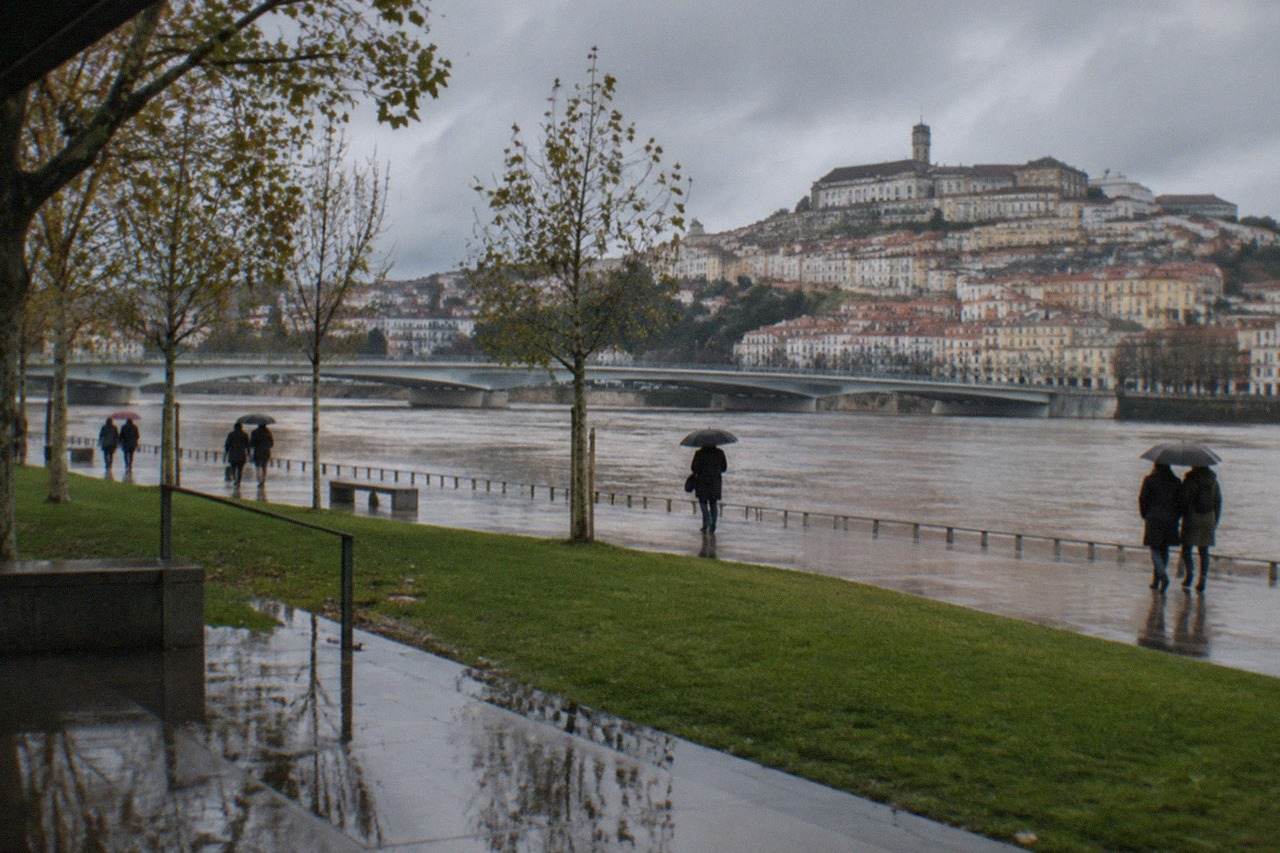
Winter in Coimbra is mild and wet rather than cold, with IPMA's 1991 to 2020 normals for the city's own Coimbra / Bencanta station showing mean maxima of 15.0 C in January, 16.4 C in February and 18.0 C in November, against mean minima of 5.2 C, 5.5 C and 8.3 C. November is the wettest month at 121.5 mm, with January at 113.5 mm and December at 111.3 mm, each averaging roughly 11 days with 1 mm or more of rain.
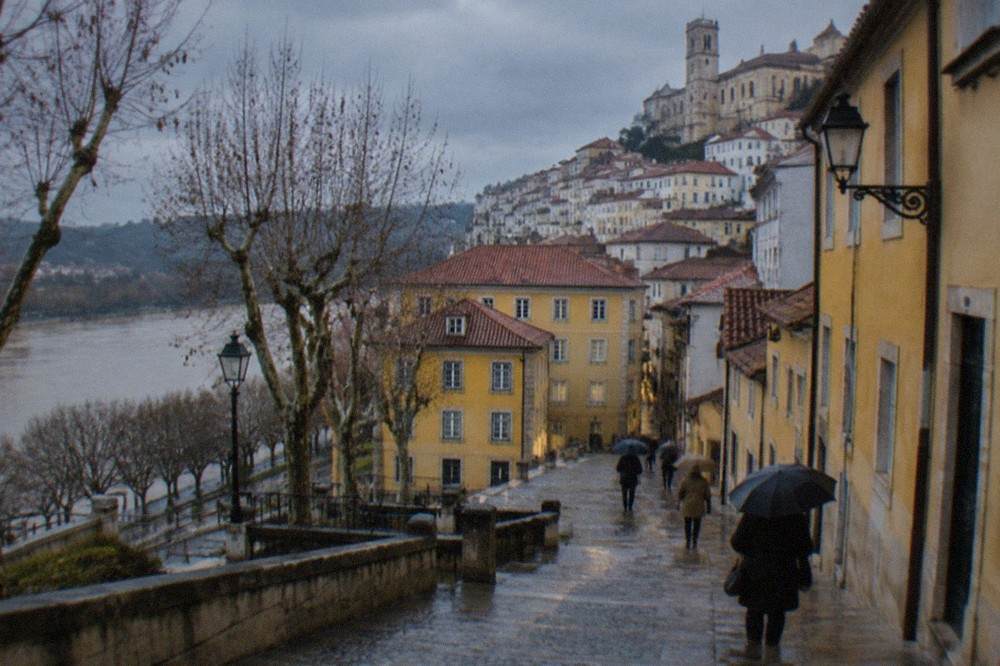
Those are the city's own numbers, not a coastal proxy, and the distinction matters. The district of Coimbra reaches the Atlantic and contains Figueira da Foz, but the city itself does not touch the sea and has no beach, so a coastal weather figure describes a different place. The Bencanta station sits at 26.6 m altitude, 40.2134N 8.4552W, and its normals are the version 1.0 release of 2024. The record low at this station is -4.3 C, recorded on 20 January 2017, but such freezes are rare.
What the table means in practice: days reach the mid-teens, which makes walking the steep lanes of the Alta comfortable in a light jacket, while evenings drop to around 5 or 6 C, cold enough that you want a proper coat for the fado houses and the riverside. Frost is possible but uncommon, and snow in the city is effectively unheard of in the normals period. The hills around Coimbra, including the Serra da Lousã to the south-east, sit higher and get genuinely cold, which is worth knowing if a schist-village day trip is on your list.
| Month | Mean max C | Mean C | Mean min C | Rain mm | Days with 1 mm+ rain |
|---|---|---|---|---|---|
| November | 18.0 | 13.2 | 8.3 | 121.5 | 11.5 |
| December | 15.6 | 10.9 | 6.2 | 111.3 | 11.1 |
| January | 15.0 | 10.1 | 5.2 | 113.5 | 11.3 |
| February | 16.4 | 11.0 | 5.5 | 81.0 | 8.6 |
For comparison with the shoulder seasons, and for anyone weighing winter against an autumn visit, the monthly detail is in the site's full Coimbra weather guide, and the trade-offs against spring are set out in the best time to visit Coimbra.
Is Coimbra Worth Visiting in Winter?
Yes, and for measurable reasons: every major monument in the city stays open through winter, the University's own published hours simply switch to a winter schedule of 09:00 to 17:30 from 1 October to 31 March, and the Biblioteca Joanina's hard ceiling of 50 people every 20 minutes is far less likely to sell out than in July and August. The trade is rain, roughly 11 rainy days a month, and shorter daylight, against lower hotel prices and empty cloisters.
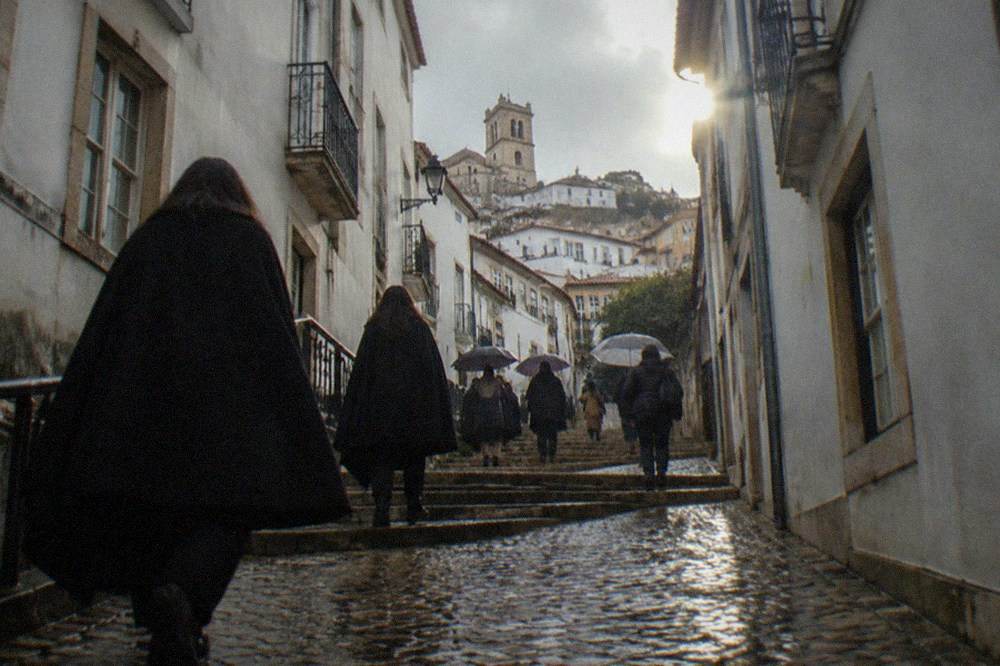
The honest framing is that winter is not the prettiest season here, that title goes to late spring, but it is the season where the city belongs to itself. The students are present in their black capes between classes, the fado houses of the Baixa run their normal schedules, and the views from the university hill over the Mondego valley take on a low, soft light that photographers specifically come for.
Two closures you should plan around, both confirmed on official pages. The Torre da Universidade, the clock tower, is closed: the University's own information page states "We regret to inform you that this facility is closed", so no tower climb exists to buy in any season. And the Museu Nacional de Machado de Castro is closed for conservation work, per its own entry on the national Museus e Monumentos portal, though the Roman cryptoporticus beneath it has been accessible during the works and the museum's reopening is phased after summer 2026. Neither closure is winter-specific, but a winter itinerary built around either one will disappoint.
A guided walk is the efficient answer to short winter days, because a local guide compresses the Alta's steep geography into a fixed window and knows which covered shortcuts beat the rain. The budget option in the roster is the Coimbra Top Attractions Walking Tour, from $5.85 per person, rated 5 from 151 reviews, 2 hours 30 minutes, and it covers the main monuments in one loop. You can see the full write-up on the Coimbra Top Attractions Walking Tour page, or Check availability for your dates.
What Are the Best Things to Do in Coimbra in Winter?
The winter core is the University of Coimbra's Paço das Escolas circuit, the Biblioteca Joanina, Sé Velha, Mosteiro de Santa Cruz and the Botanical Garden, all of which run winter hours, plus indoor anchors like the Science Museum spaces and the fado houses of the Baixa. The Joanina Library costs 16.50 EUR only inside the combined ticket, Sé Velha is 3.00 EUR and Santa Cruz 5.00 EUR, so a full monument day costs under 25 EUR per adult before food.
The University is the anchor, and winter changes its rhythm rather than closing it. The combined ticket at 16.50 EUR covers the Joanina Library, the Royal Palace, the Capela de São Miguel, the Chemistry Laboratory, the Academic Museum, the Cabinet of Curiosities and the Mineral Gallery, and it is valid for two days except the Joanina slot, which is fixed. The winter schedule, 1 October to 31 March, runs 09:00 to 17:30. The 50-people-per-20-minutes rule still applies, but demand is lower, so booking a same-day or next-day slot is realistic in a way it rarely is in August.

Booking mechanics are covered in detail in how to get Joanina Library tickets and the wider University of Coimbra tickets guide. One winter-specific note: the University closes its visitor circuit on 24 May and 4 October for academic events, and on 24 and 25 December and over New Year, so check those dates against your trip.
Sé Velha de Coimbra, the Romanesque old cathedral, charges 3.00 EUR per person and in winter runs 09:30 to 17:30, Sundays 11:00 to 17:30. Mosteiro de Santa Cruz, the burial church of Portugal's first two kings, charges 5.00 EUR and visits run 09:30 to 16:30, with a separate Sunday schedule. Both are compact, both are indoors, and both are within a ten-minute walk of the university hill, which makes them the natural spine of a wet afternoon. The Sé Velha guide and the Santa Cruz Monastery guide carry the full hours and closure lists.
For the evenings, fado is the winter activity par excellence, and Coimbra's fado is its own tradition, sung by men in black capes, distinct from the Lisbon style. The Coimbra fado guide explains the tradition and the where to hear fado guide lists the rooms.
If a fixed group walk feels rushed, the private alternative is the Best of Coimbra Private Walking Tour with University Late Visit, from $81.95 per person, rated 4.8 from 72 reviews, 2 to 3 hours, which pairs the city loop with a late-afternoon university visit, a useful shape in December when the light goes early. Details are on the private walking tour page.
Does It Rain All the Time in Coimbra in Winter?
No, but rain is frequent: IPMA's normals give November 121.5 mm over 11.5 days with 1 mm or more, December 111.3 mm over 11.1 days and January 113.5 mm over 11.3 days, which means roughly a third of winter days see measurable rain, not all of them. February drops to 81.0 mm over 8.6 days. The wettest single month of the whole year is November, and July averages just 8.9 mm.
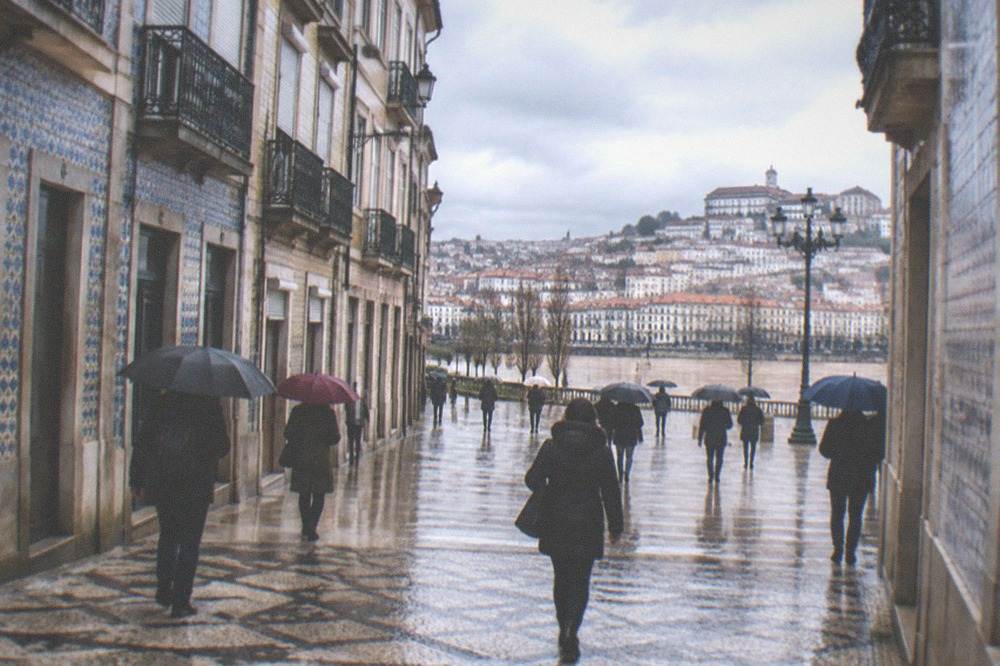
The practical reading of those numbers: plan one indoor anchor per day and treat anything outdoors as a bonus. The rain in Coimbra tends to come in frontal systems off the Atlantic, so a wet morning often clears into a bright, cold afternoon, and the flip side of winter rain is winter light, low and clean, which is when the Mondego views from the university hill are at their best. Everything else covered here is indexed on Coimbra Travel Guide.
Two real climate facts from the same IPMA table that most guides get wrong. September is not the start of the rains: its mean maximum of 27.4 C is actually higher than June's 26.3 C, and its 49.9 mm is nearly twice June's 26.0 mm, but the real autumn shift waits until October, when the monthly total jumps from 49.9 mm to 114.5 mm. And August, not July, is the hottest month at this station, on both mean and mean maximum, averaging 10.9 days above 30 C. Winter visitors are not trading away a gentle Mediterranean summer; they are trading away the hottest, most crowded month of the year.
| Coimbra climate fact | Figure | Source basis |
|---|---|---|
| Wettest month | November, 121.5 mm | IPMA normals 1991 to 2020 |
| Driest month | July, 8.9 mm | IPMA normals 1991 to 2020 |
| Coldest mean maximum | January, 15.0 C | IPMA normals 1991 to 2020 |
| Record low | -4.3 C, 20 January 2017 | IPMA station records |
| Record high | 41.2 C, 7 August 2016 | IPMA station records |
| Rainy days per winter month | 8.6 to 11.5 days | IPMA normals 1991 to 2020 |
For rainy-day planning the site has a dedicated rainy day in Coimbra piece, and the Christmas and winter events guide covers the December programme, which is the one stretch of winter when the city is deliberately busy.
What Are Winter Opening Hours and Prices at Coimbra's Monuments?
The University of Coimbra runs a winter schedule of 09:00 to 17:30 from 1 October to 31 March with its 16.50 EUR combined ticket unchanged, Sé Velha is open 09:30 to 17:30 for 3.00 EUR, Santa Cruz runs 09:30 to 16:30 for 5.00 EUR, and Conímbriga is open daily 10:00 to 18:00 for 10.00 EUR.
The Museu Nacional de Machado de Castro and the Torre da Universidade are closed entirely, and Santa Clara-a-Velha has been closed for requalification works since October 2025.
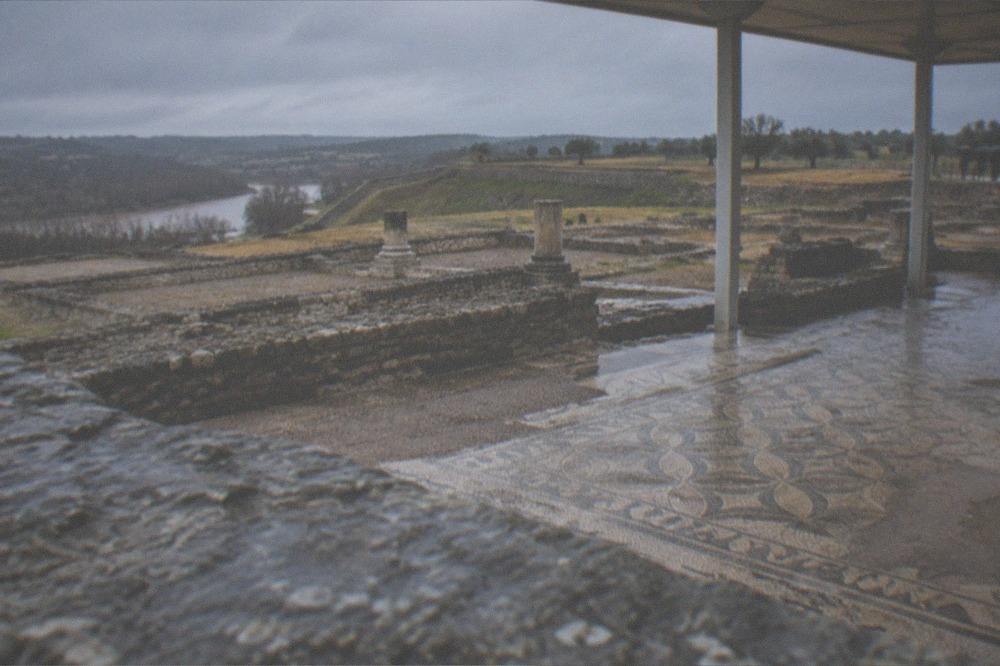
The winter pattern to internalise: the national-portal monuments close on Mondays, but Conímbriga, the Roman ruins about 16 km south in Condeixa-a-Velha in the municipality of Condeixa-a-Nova, is open seven days a week, 10:00 to 18:00 with the ticket office closing at 17:15. That makes it the reliable Monday option, a genuinely useful fact for itinerary planning, and its single 10.00 EUR ticket covers both museum and ruins.
| Monument | Winter hours | Adult price | Status |
|---|---|---|---|
| University of Coimbra (Paço das Escolas) | 09:00 to 17:30, 1 Oct to 31 Mar | 16.50 EUR combined | Open |
| Biblioteca Joanina | Timed slot, 50 people per 20 min | Only inside combined ticket | Open |
| Sé Velha de Coimbra | 09:30 to 17:30, Sun 11:00 | 3.00 EUR | Open |
| Mosteiro de Santa Cruz | 09:30 to 16:30 | 5.00 EUR | Open |
| Conímbriga (museum and ruins) | Daily 10:00 to 18:00 | 10.00 EUR | Open |
| Portugal dos Pequenitos | 10:00 to 17:00, winter period | On the venue's ticket page | Open |
| Museu Nacional de Machado de Castro | Closed for conservation work | None published | Closed |
| Torre da Universidade | Closed | None | Closed |
| Mosteiro de Santa Clara-a-Velha | Closed for works since Oct 2025 | None published | Closed |
Portugal dos Pequenitos, the miniature village designed by Cassiano Branco and opened in 1940, publishes its hours on its own page, 10:00 to 17:00 from 1 January to the end of February and from 16 October to 31 December, but its price table renders client-side, so check the venue's own ticket page for current amounts rather than any figure quoted second-hand. The Portugal dos Pequenitos guide keeps the verified details.
One more winter-specific closure: Mosteiro de Santa Cruz suspends visits on the Cortejo da Queima das Fitas, a moveable Sunday in May, and on Easter Sunday, so winter visits are unaffected. The Queima das Fitas guide explains the festival calendar if you are planning further ahead.
Which Winter Day Trips Work from Coimbra?
The winter day trips that work are Conímbriga, open daily and mostly outdoors under pale skies, the schist villages of the Serra da Lousã, which sit higher and get properly cold, and the Bussaco forest, while the river trips on the Mondego keep running in the city with a traditional Barca Serrana option from $15 per person rated 4.6 from 171 reviews. Fátima and Tomar are indoor-heavy and weatherproof, but check the Convent of Christ's hours before committing.
The schist villages deserve the winter caveat: the Serra da Lousã climbs well above the city, and the same Atlantic systems that bring Coimbra its 113.5 mm of January rain bring the mountain sleet and fog. The villages themselves, stone-built and largely depopulated, are atmospheric in winter precisely because of that, but the walking trails between them are muddy and the natural-pool swims of summer tours are off the menu. The Lousã day trip guide and the schist villages guide cover the options, and the day trips overview ranks them all.
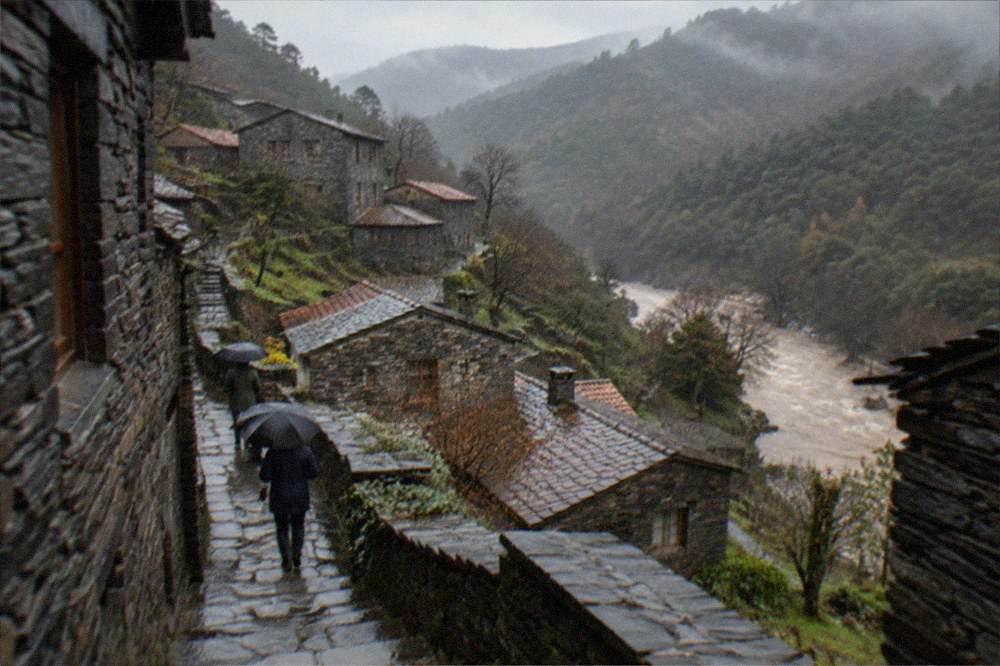
Closer to home, the Mondego river trips are a winter-friendly hour because they are short, 50 minutes, and the Barca Serrana is a covered traditional boat rather than an open excursion launch. The full details are on the traditional boat trip page, from $15 per person, rated 4.6 from 171 reviews.
For eating on a cold day, the regional answer is leitão da Bairrada, the roast suckling pig from the Bairrada region to the west, and the leitão guide maps the places that serve it in the city, while the Bairrada wine route guide covers the sparkling wines of the same region, a winter cellar visit being one of the more weatherproof pleasures in central Portugal.
What Should You Pack for a Coimbra Winter?
Pack for mild days around 15 C, cold evenings around 5 C and roughly 11 rainy days a month: a proper waterproof rather than a compact umbrella, layered clothing that works from outdoors to heated interiors, and shoes with real grip for wet cobblestones. IPMA's normals put January's mean minimum at 5.2 C and February's at 5.5 C, so a warm coat is genuinely needed at night even though midday can feel spring-like.
The single biggest packing error for Coimbra is dressing for the mean maximum and forgetting the mean minimum. A 15 C afternoon in the sun on the university terrace feels like spring; the same evening walking down to the Baixa for dinner, with the wind coming up the Mondego valley, is a winter night everywhere else in Europe. Layers solve this, and a hood or hat matters more than an umbrella, which the Atlantic wind will fight you for.
| Condition | IPMA figure (winter) | What to pack |
|---|---|---|
| Afternoon highs | 15.0 to 18.0 C mean max | Light fleece or midlayer, removable |
| Night lows | 5.2 to 8.3 C mean min | Warm coat, hat, scarf |
| Rain | 81.0 to 121.5 mm per month | Waterproof jacket, water-resistant shoes |
| Rainy days | 8.6 to 11.5 days per month | Quick-dry clothes, spare socks |
| Wet cobblestones | Steep lanes in the Alta and Baixa | Shoes with real tread |
| Frost risk | Rare, record low -4.3 C | Normal winter shoes suffice |
One logistical item worth booking ahead rather than packing: luggage. Winter's short days make an early start valuable, and the train stations guide explains Coimbra's two-station arrangement, Coimbra-B and Coimbra-A, which are in different places, with CP's own site the place to confirm which trains call where. If you are arriving from the north, the Porto to Coimbra guide and Lisbon to Coimbra guide cover the routes, and the where to stay guide and best hotels guide cover the low-season accommodation picture, which is where winter's savings are largest.
A note on the tourist tax, because it applies in winter exactly as in summer: Coimbra charges 1.00 EUR per guest per overnight stay, capped at three consecutive nights, from age 16, paid to the accommodation at check-in or check-out, and in force since 5 April 2023. The municipality's own study put its tourism-related cost at 3.49 EUR per overnight stay against that one-euro tax, and a two-euro rise was approved as a proposal in July 2026 but is not the current published rate. Budget one euro per person for up to three nights and it is covered.
Common Questions About Coimbra in Winter
Does It Snow in Coimbra, Portugal?
No, snow in the city is effectively unknown in the 1991 to 2020 normals period. The record low at the Coimbra / Bencanta station is -4.3 C, set on 20 January 2017, and frost is possible on clear nights, but the city's altitude of 26.6 m at the station and its position 3 km from the centre keep winter as a mild, wet season. The Serra da Lousã to the south-east is a different matter and can see sleet and cold fog in winter.
Is the Biblioteca Joanina Open in Winter?
Yes, on the University's winter schedule of 09:00 to 17:30, running from 1 October to 31 March. The timed-entry rule applies year-round: 50 people every 20 minutes, the ticket cannot be bought standalone, it exists only inside the 16.50 EUR combined ticket, and the time printed on the ticket is the Joanina slot specifically, with entry refused outside it. Winter demand is lower, so slots are easier to book.
What Is the Coldest Month in Coimbra?
January, with a mean temperature of 10.1 C, a mean maximum of 15.0 C and a mean minimum of 5.2 C, according to IPMA's 1991 to 2020 normals for the city's own station. December and February sit within about a degree of it. None of the three is cold by continental European standards.
Are Coimbra's Restaurants and Fado Houses Open in Winter?
Yes, the city's restaurants run normal schedules through winter, and the fado houses of the Baixa are at their most atmospheric in the cold months, when the student population is in residence and the rooms are full. Coimbra's fado is its own tradition, sung in the caped style of the university rather than the Lisbon style, and the December programme adds seasonal events covered in the Christmas and winter events guide.
Is December a Good Time to Visit Coimbra?
December is the busiest part of the Coimbra winter, because of the seasonal programme around Christmas, and it carries the trade-offs of both: atmosphere and lights against 111.3 mm of rain over 11.1 days in the normals. The monuments stay open except for 24 and 25 December, when the University closes its visitor circuit, and hotel rates sit well below the summer peak. Late November and January are the quietest, cheapest weeks of the whole year.
Winter in Coimbra, Portugal is a trade of warmth and daylight for space, price and access, and on the city's own official numbers the trade is better than most visitors assume: every headline monument is open, the Joanina's 50-per-20-minute ceiling is the only real bottleneck and it eases in the cold months, and the rain, while frequent, arrives on roughly a third of days rather than all of them. Plan each day around one indoor anchor, keep a waterproof close, and the low season delivers the university city at its most authentic.