What to Pack for Coimbra, Portugal: A Season-by-Season Packing List
Coimbra, Portugal, the university city on the River Mondego, is a hill town with hot dry summers, wet winters and cobbled streets, and this packing list is built on the city's own official climate record rather than guesswork.

Short answer
Pack for hills and weather swings: broken-in walking shoes with grip, a light rain layer for October to April, sun protection for June to September, and layers for evenings that drop 10 degrees below the daytime high in every season.
Coimbra, Portugal, the university city on the River Mondego, is built on a hill above the river, and that single geographic fact shapes almost every packing decision. The city is not the district of the same name, which reaches the Atlantic 37 km further west: this Coimbra has no beach, and its weather is measured at the city's own station. The climate figures throughout this packing list come from IPMA's 1991 to 2020 normals for the Coimbra / Bencanta station, station number 707, which sits 3 km from the centre. They are the city's real numbers, not a regional average, and they overturn several packing assumptions that generic Portugal guides encourage.
The short version: bring shoes you have already broken in, a rain layer if you are coming between October and April, serious sun protection if you are coming between June and September, and layers for evenings in every season. The long version, with the numbers behind each recommendation, is the rest of this page. For the broader climate picture, the companion Coimbra weather guide expands on the same station data, and the best time to visit Coimbra page weighs those numbers against the academic calendar.
What Kind of City Is Coimbra, and Why Does It Change What You Pack?
Coimbra is a compact hill city of roughly 123.3 days a year above 25 C and 94 days a year with at least 1 mm of rain, spread across a vertical old town where the university sits on top of the hill and the shopping streets sit at the bottom, so the two items that matter most are footwear with grip and a layer system you can shed on the climb. The city's annual mean temperature is 16.2 C, which sounds mild, but the range is wide: January averages a mean minimum of 5.2 C while August averages a mean maximum of 29.1 C, and the record extremes at the same station run from -4.3 C on 20 January 2017 to 41.2 C on 7 August 2016. A single packing strategy does not survive that range.
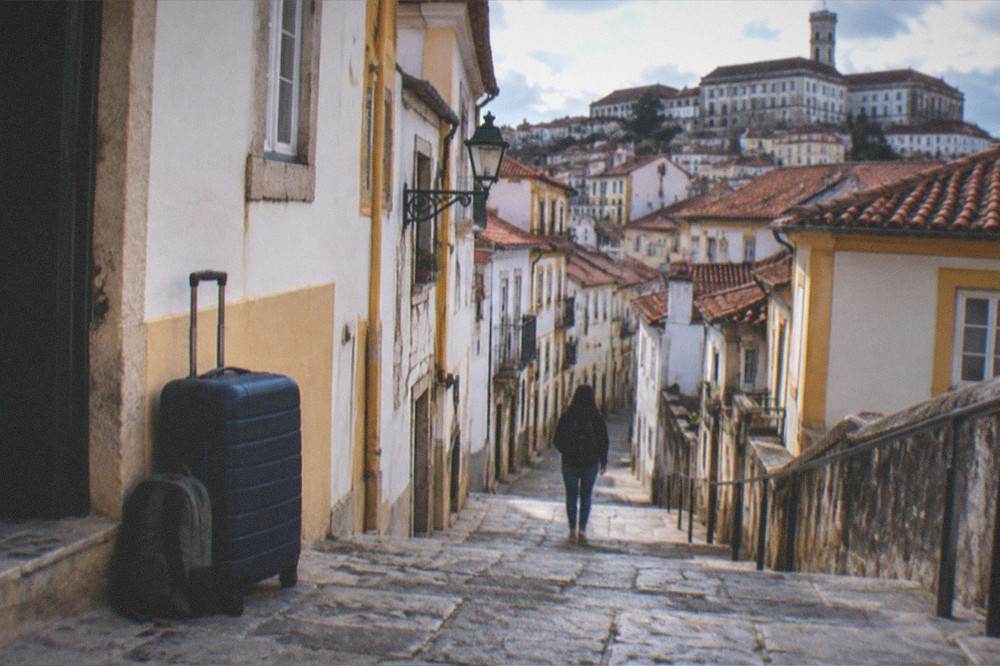
The vertical geography deserves emphasis. The walk from the Baixa, the low downtown by the river, up to the Paço das Escolas, the university's palace courtyard, is a sustained uphill on stone paving and steps. Calçada, the polished stone paving pattern found across Portugal, is beautiful and slick when wet. The municipality's own tourism figures recorded 698,151 overnight stays in 2025, and the city is busy in ways that put real wear on shoes.

What this means in practice is that the classic Portugal packing advice, light clothes and sandals, only half applies here. Sandals will survive the riverside and the shopping streets. They will not be kind to you on the wet stone of the Alta, the upper town, in November, when the city averages 11.5 days with at least 1 mm of rain and a mean maximum of just 18 C.
| Packing factor | What Coimbra is actually like | What it means for your bag |
|---|---|---|
| Terrain | Vertical old town, stone steps, polished calçada | Shoes with grip, already broken in |
| Hottest month | August, 29.1 C mean max, 10.9 days above 30 C | Sun hat, high-SPF sunscreen, refillable bottle |
| Wettest month | November, 121.5 mm of rain | Real rain jacket, not a fashion one |
| Driest stretch | July, 8.9 mm of rain | No rain layer needed in a normal July |
| Evening drop | Mean minimum 15.6 C in July against 28.5 C mean max | A layer for evenings, even midsummer |
| Winter cold | January mean minimum 5.2 C, record low -4.3 C | A proper coat, hat and gloves for evenings |
What Does Coimbra's Weather do Month by Month?
The IPMA 1991 to 2020 normals for Coimbra / Bencanta show a hot dry summer and a wet mild winter: July averages just 8.9 mm of rain and a 28.5 C mean maximum, while November averages 121.5 mm and an 18 C mean maximum, and the rain arrives sharply in October when the monthly total jumps from 49.9 mm to 114.5 mm. That October jump is the single most useful packing fact on this page. September still behaves like a warm month, with a mean maximum of 27.4 C, and then the autumn rain arrives almost all at once the following month.
The table below is the full station record, and it is worth reading closely because it overturns two common assumptions. September is hotter than June, 27.4 C against 26.3 C on the mean maximum, and it is also wetter, 49.9 mm against 26.0 mm. A packing list built on the idea that September is a drier, cooler version of June would be wrong on both counts. What makes September the quiet recommendation is not the weather, it is that the autumn rain genuinely holds off until October and the summer crowds have gone.
| Month | Mean max C | Mean min C | Rain mm | Rain days 1mm+ | Days above 30 C |
|---|---|---|---|---|---|
| Jan | 15.0 | 5.2 | 113.5 | 11.3 | 0 |
| Feb | 16.4 | 5.5 | 81.0 | 8.6 | 0 |
| Mar | 19.1 | 7.8 | 75.4 | 9.4 | 0 |
| Apr | 20.5 | 9.4 | 84.6 | 10.6 | 0.7 |
| May | 23.3 | 11.8 | 64.7 | 8.5 | 3.5 |
| Jun | 26.3 | 14.2 | 26.0 | 3.7 | 6.2 |
| Jul | 28.5 | 15.6 | 8.9 | 1.7 | 8.9 |
| Aug | 29.1 | 15.7 | 14.8 | 2.2 | 10.9 |
| Sep | 27.4 | 14.1 | 49.9 | 5.2 | 7.8 |
| Oct | 23.2 | 11.9 | 114.5 | 10.3 | 2.0 |
| Nov | 18.0 | 8.3 | 121.5 | 11.5 | 0 |
| Dec | 15.6 | 6.2 | 111.3 | 11.1 | 0 |
August, not July, is the hottest month on both the mean and the mean maximum, and it averages 10.9 days above 30 C. November is the wettest month at 121.5 mm, marginally ahead of October and January. If your packing question is really a when-to-go question, the best time to visit Coimbra page works through the same table against prices and the academic calendar.
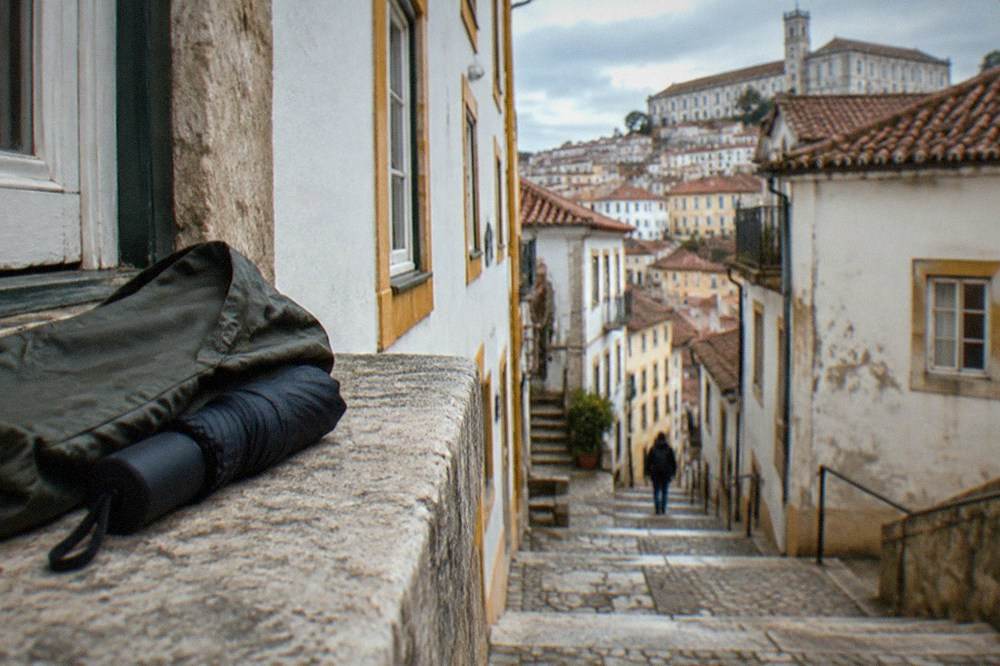
One practical note that belongs in a packing discussion: whatever you carry, you will carry it up and down the hill. A small daypack beats a heavy shoulder bag within an hour of arriving, and a cross-body strap survives the student-quarter crowds better than a handheld bag.
What Should You Pack for a Coimbra Summer?
For June to September, pack for real heat and strong sun: breathable shirts, a sun hat, high-SPF sunscreen, sunglasses and a refillable water bottle, plus one light layer for evenings that average 14 to 16 C, and you can leave the rain jacket at home in July, which averages just 8.9 mm of rain across the whole month. August is the month that punishes under-packers, with a 29.1 C mean maximum and 10.9 days above 30 C, and the climb to the university is exposed for most of its length.
The sun protection point is not a formality. The station records 123.3 days a year with a maximum above 25 C, and 39.9 of those go above 30 C. Almost all of the 30 C-plus days fall between May and October, with the peak in August. The university courtyard, the Paço das Escolas, is a wide open terrace with limited shade, and the queue-free walking tours that cover the top attractions run for two and a half hours in whatever the day gives.
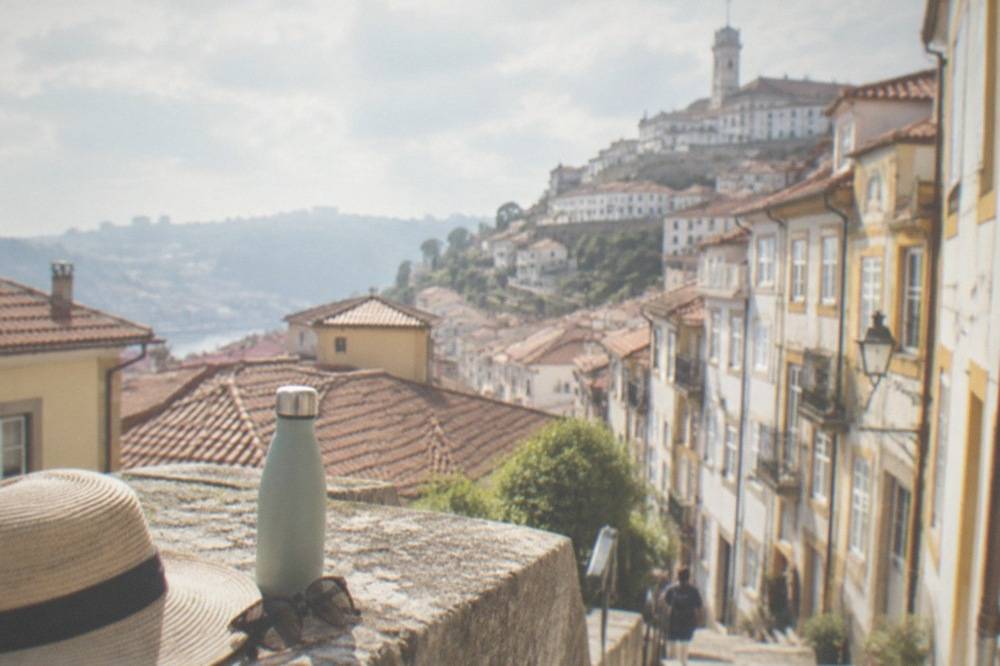
Footwear in summer is a genuine decision point. The stone paving holds heat, and the steps are steep enough that flat sandals with no ankle support earn their reputation by the second day. A pair of broken-in trainers or trail-style shoes with grip handles both the heat and the polished stone, and a pair of sandals covers the riverside and evenings.
The Coimbra Top Attractions Walking Tour covers the city's essential sights in one two-and-a-half-hour walk, and it is priced from $5.85 per person with a 5 rating from 151 reviews. If you would rather see the hill with a guide than navigate it alone on a hot afternoon, Check availability before you finalise what goes in the bag, because knowing you have a guided morning changes how much you need to carry through the day.
| Summer item | Why, from the station record | Priority |
|---|---|---|
| Sun hat and sunscreen | 10.9 days above 30 C in August alone | Essential |
| Refillable water bottle | Long exposed climbs, hot stone | Essential |
| Breathable shirts | Mean max 29.1 C in August | Essential |
| Light evening layer | Mean min 15.7 C in August | High |
| Broken-in trainers | Steep stone steps, polished calçada | Essential |
| Compact rain layer | 49.9 mm in September, 14.8 mm in August | June to September only |
| Sandals | Riverside and evenings only | Optional |
What Should You Pack for a Coimbra Winter?
For November to March, pack a proper waterproof rain jacket, an umbrella, a warm coat for evenings that average 5 to 8 C, and the same grippy footwear, because November averages 121.5 mm of rain over 11.5 rain days and January's mean minimum is 5.2 C, cold enough that the station once recorded -4.3 C. Winter in Coimbra is wet rather than Arctic, but the damp amplifies the cold, and the stone streets hold surface water long after rain stops.
The distinction between a rain jacket and a shower jacket matters here. October, November, December and January all average more than 110 mm of rain, and the city averages 11 or more rain days a month across that stretch. A packable windbreaker that resists a brief shower will not survive a Coimbra November afternoon, and an umbrella that cannot handle wind will fold on the exposed upper terraces.
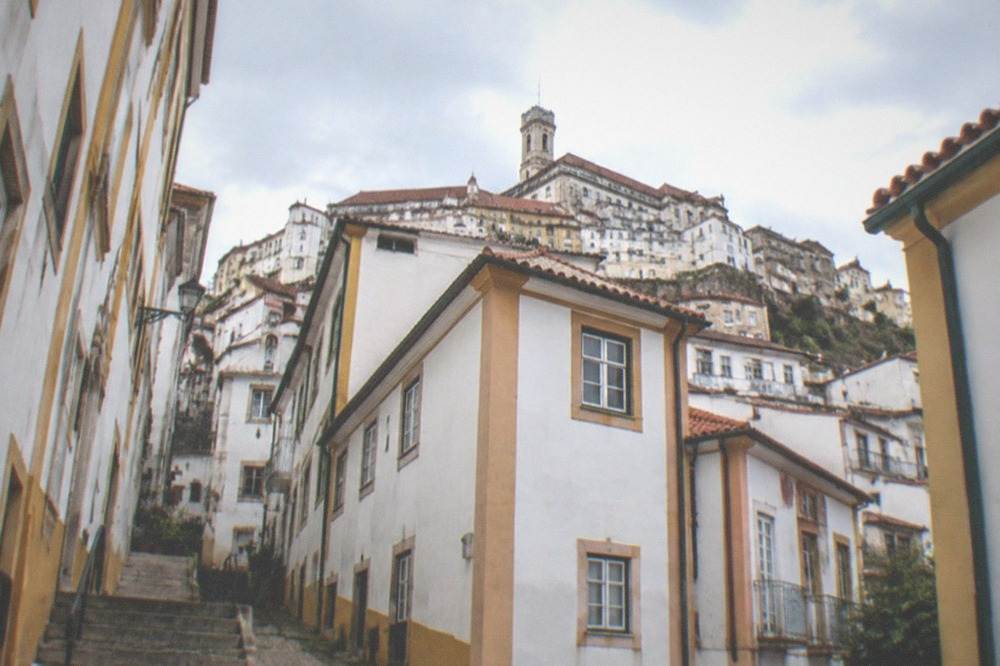
Layers are the right strategy because winter days still reach a mean maximum of 15 to 19 C between November and March. A morning that starts at 6 C can be a mild afternoon, and a heavy single coat that cannot be opened or removed turns a pleasant visit into a sauna by lunchtime. A thermal base layer under a waterproof shell, with a mid-layer you can shed, covers the whole range.
| Winter item | Why, from the station record | Priority |
|---|---|---|
| Waterproof rain jacket | 121.5 mm rain in November, 114.5 mm in October | Essential |
| Wind-resistant umbrella | 11.5 rain days a month in November | High |
| Waterproof shoes with grip | Wet polished calçada on the hills | Essential |
| Warm coat for evenings | Mean min 5.2 C in January | Essential |
| Mid-layer you can shed | Mean max 15.0 C in January afternoons | High |
| Hat and gloves | Record low -4.3 C, evenings under 6 C | High |
| Quick-dry fabrics | Damp conditions across four months | High |
What Should You Pack for the University, the Joanina Library and Other Ticketed Sights?
Pack a small daypack, your passport or ID, and a phone with your pre-booked University of Coimbra ticket on it, because the Biblioteca Joanina admits only 50 people every 20 minutes, the time printed on your 16.50 EUR combined ticket is the fixed library slot, and entry outside that slot is refused. The ticket covers the Joanina Library, the Royal Palace, St Michael's Chapel, the Chemistry Laboratory, the Academic Museum, the Cabinet of Curiosities and the Mineral Gallery, and it is valid for two days except for the library slot, which is fixed.
This is the one genuinely scarcity-driven packing and planning fact in the city, and it is real rather than manufactured urgency. The University's own visit page states the 50-people-per-20-minutes limit in so many words, and online purchase closes 20 minutes before the visit time. A visitor who arrives without a pre-booked slot in summer can be turned away, which is why the Joanina Library tickets page and the wider University of Coimbra tickets guide exist.
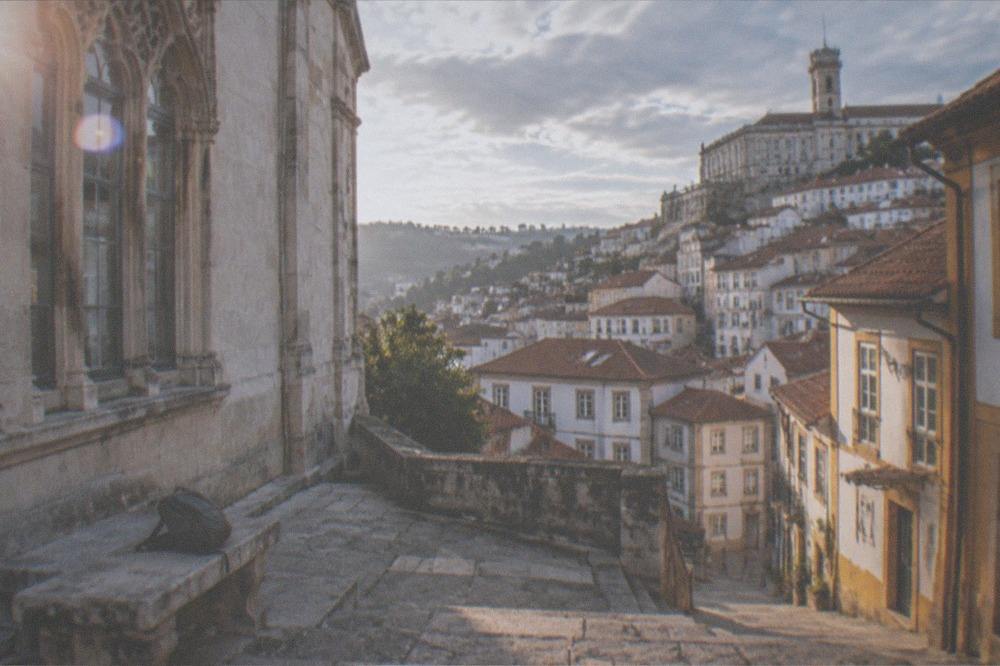
The daypack point follows from the two-day ticket. Because the non-library spaces can be visited before or after the Joanina slot, a light bag that carries a water bottle, a layer and your documents lets you split the visit across two days without dragging luggage up the hill. The Paço das Escolas runs on a summer schedule of 09:00 to 20:00 from April to September and a winter schedule of 09:00 to 17:30 from October to March, so a morning slot in winter needs warmer layers than the same slot in July.
For travellers who want the library explained rather than just entered, the Joanina Library & Coimbra University tour with an expert guide runs an hour and a half from $90.06 per person, rated 4.8 from 168 reviews. If you are deciding between a self-guided ticket and a guided visit, the timing rule applies to both: the slot is the slot.
What Should You Pack for Day Trips from Coimbra?
Pack one sturdy day-trip kit that works for all the standard trips: the same grippy shoes, sun protection, a refillable bottle, a compact rain layer and a small bag, because the destinations differ but the demand is constant, whether that is Conímbriga, the Roman town roughly 16 km south in Condeixa-a-Velha, the schist villages of the Lousã mountain, or the Bussaco forest. Conímbriga's museum and ruins are open seven days a week, 10:00 to 18:00, with a 10.00 EUR adult ticket covering both, which makes it the reliable Monday option when other monuments close.
The day-trip packing list is really a footwear and water list. The Roman ruins at Conímbriga are walked outdoors on exposed ground, the schist villages sit on mountain terrain, and the Bussaco forest is woodland walking. None of it is technical, but all of it is longer underfoot than a city morning, and the day trips overview collection shows how much of the region's appeal is on foot.

| Day trip | Terrain and demand | What to add to the daypack |
|---|---|---|
| Conímbriga Roman ruins | Outdoor ruins, exposed ground, roughly 16 km south | Sun hat, water, sunscreen |
| Schist villages, Lousã mountain | Mountain village streets and trails | Grippy shoes, layer, water |
| Bussaco forest | Woodland paths | Shoes with grip, light layer |
| Fátima | Shrine complex, mostly paved | Modest layers for church interiors |
| Tomar, Convent of Christ | Large monument, long interior walking | Comfortable shoes, layer for cool interiors |
The mountain trips deserve the grippiest shoes you own. The schist villages are stone-built on slopes, and the tours that reach them run four hours or more, so the shoes that barely survived the city hill will not survive Talasnal. The four-hour Schist Villages at Lousa Mountain tour runs from $105.37 per person, rated 4.9 from 133 reviews, and it is a walk, not a bus ride.
What Should You Not Pack for Coimbra?
Do not pack beach gear, heavy luggage, a single-season wardrobe, or shoes that cannot grip wet stone, because Coimbra is not on the coast, the district's beaches are 37 km west in a different place, the city's weather swings 10 degrees between afternoon and evening in most months, and the old town's polished calçada is slick whenever it rains. Every item on this list is a thing travellers actually bring, and every one of them is dead weight here.
Beach equipment is the most common mistake, and it comes from the district confusion. The district of Coimbra reaches the Atlantic and contains Figueira da Foz, but the city does not touch the sea and has no beach. A swimsuit is still worth packing for hotel pools and the region's river beaches on summer day trips, but a beach towel, flip-flops and a snorkel set are luggage you will carry up the hill and never use.
The single-season wardrobe fails because of the evening drop. In July the mean maximum is 28.5 C but the mean minimum is 15.6 C, and in April the range runs from 9.4 C to 20.5 C. A bag packed only for the afternoon numbers leaves you cold every evening, and Coimbra's evenings are a real part of the visit: the fado tradition here is distinct from Lisbon's, and shows run late. The where to hear fado guide covers the venues, and a light layer is standard equipment for all of them.
| Leave at home | Why it fails in Coimbra |
|---|---|
| Beach towel and snorkel | The city has no beach, the coast is 37 km west in the district |
| Brand-new shoes | The hills break them in painfully, on your feet |
| Smooth-soled sandals | Polished calçada is slick in rain |
| Summer-only wardrobe | Mean minimums run 5 to 16 C across the year |
| One heavy coat | Afternoons still reach 15 to 19 C in winter |
| Full-size umbrella stand luggage | Small daypack is the working bag here |
| Dress-only packing | Cobbled lanes, steps and hills want trousers or shorts too |
A lighter bag also changes what you can do on arrival. The Mondego river cruise with city views runs 50 minutes from $11 per person, rated 4.2 from 43 reviews, and it is the kind of short, spontaneous add-on that a manageable bag makes easy. The Coimbra Travel Guide homepage collects the practical pages, from getting between the train stations to the Queima das Fitas festival, which closes Santa Cruz to visitors on the parade Sunday each May.
Common Questions About Packing for Coimbra
Do I need an umbrella in Coimbra?
Between October and April, yes. Those months average 75 to 122 mm of rain each on the city's own station record, and November alone averages 11.5 days with at least 1 mm. In July, which averages 8.9 mm across the whole month, you can leave it behind.
What shoes should I bring to Coimbra?
Broken-in walking shoes with real grip. The old town climbs from the river to the university on stone steps and polished calçada, which is slick whenever it rains. Sandals work for the riverside and evenings, but not for the hill.
Is Coimbra hot enough for summer clothes in September?
Yes. September's mean maximum of 27.4 C is actually higher than June's 26.3 C, so pack as if for high summer, but add a compact rain layer, because September averages 49.9 mm of rain against June's 26.0 mm.
Do I need warm clothes for winter in Coimbra?
Yes, mainly for evenings. January's mean minimum is 5.2 C and the station's record low is -4.3 C, but afternoons still average a 15.0 C mean maximum, so layers beat one heavy coat.
Should I pack for the beach in Coimbra?
No. The city has no beach. The district of Coimbra reaches the Atlantic, but that is a different geography, and the coast at Figueira da Foz is 37 km west of the city itself.
Does the packing list change if I am visiting the Joanina Library?
Only in that you should carry your ID and your pre-booked ticket. The library admits 50 people every 20 minutes, the slot printed on your ticket is fixed, and entry outside it is refused, so the document matters more than any clothing item.
The final word on packing for Coimbra, Portugal is that the city rewards travellers who pack for two things at once: heat and hills in summer, rain and hills in winter, and a layer for the evening in every season, because the station record shows a city whose afternoons and nights rarely agree.