Coimbra City Centre, Portugal: What to See, Do and Pay in the Old Town
The Coimbra city centre in Portugal splits into a university-crowned upper town and a commercial riverside lower town, and almost everything a visitor wants sits inside that one steep square kilometre.
Short answer
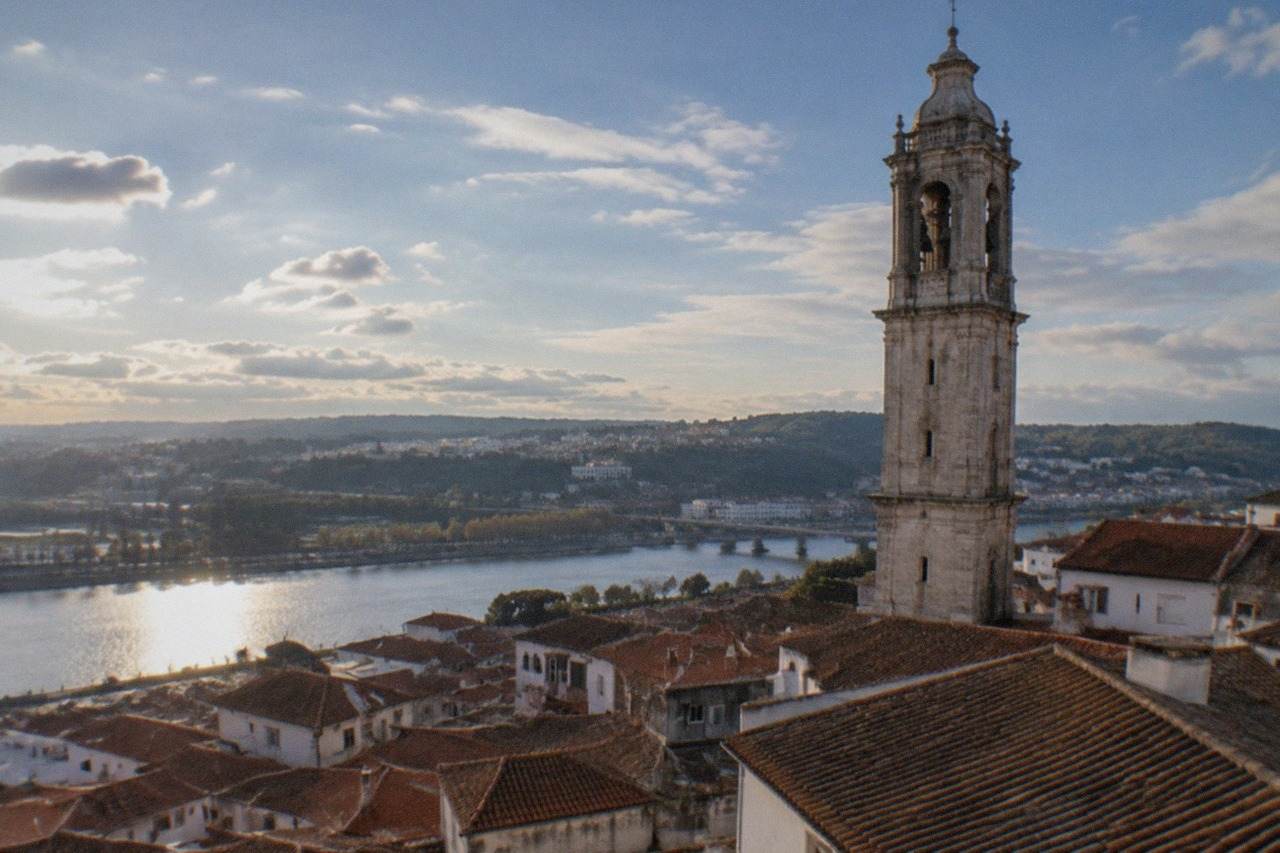
The Coimbra city centre is the old town of Coimbra, Portugal, on the hill above the River Mondego: the Alta with the University and Joanina Library at the top, the Baixa with the commercial streets and Mosteiro de Santa Cruz below, and the two linked by stairways and the Quebra-Costas lane.
Coimbra, Portugal, the university city on the River Mondego, keeps almost everything a visitor needs inside one steep square kilometre of old town. The Coimbra city centre is that square kilometre: a hill crowned by the University of Coimbra, a riverside grid of shop streets below it, and a tangle of lanes and stairways holding the two together. UNESCO inscribed "University of Coimbra, Alta and Sofia" in 2013, list reference 1387, and that inscription covers two components inside this old town, the university hill and the college street of Rua da Sofia, not the city as a whole, which is a distinction worth getting right before anything else. This page walks the centre street by street, with verified prices, the three sights that are currently closed, and the practical numbers that decide whether a day here runs smoothly or falls apart at the ticket kiosk.
How Is the Coimbra City Centre Laid Out?
The Coimbra city centre divides into three stacked levels: the Alta, the university hill at the top; the Baixa, the flat commercial grid at the bottom; and the steep lanes and stairways, above all the Quebra-Costas, that connect them, with the River Mondego closing the whole quarter on its northern side. The Alta holds the Paço das Escolas, the Joanina Library and the Sé Velha. The Baixa holds the shop streets around Rua Ferreira Borges and Praça do Comércio, plus Mosteiro de Santa Cruz, the burial church of Portugal's first two kings. Santa Clara sits across the river, and is covered separately in the guide to the Santa Clara district.
The verticality is the single fact that shapes every visit. The University of Coimbra publishes its own visitor hours for the Paço das Escolas, 09:00 to 20:00 in summer and 09:00 to 17:30 in winter, and the climb from the Baixa to the gate is real work in July heat. IPMA's 1991 to 2020 normals for the Coimbra / Bencanta station show August, not July, as the hottest month, with a mean maximum of 29.1 C and 10.9 days above 30 C, so the sensible order is the hill in the morning, the Baixa after lunch, and the riverside in the evening.
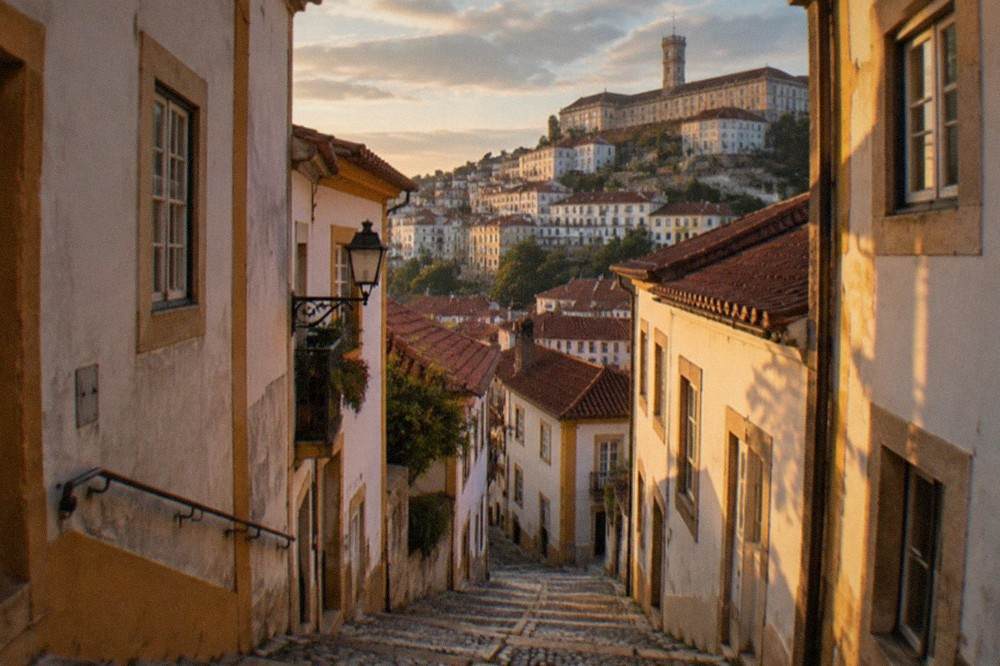
The three levels, and what sits on each:
| Level | Where it is | What anchors it | Character |
|---|---|---|---|
| Alta (upper town) | Top of the hill | Paço das Escolas, Joanina Library, Sé Velha, Capela de São Miguel | Monumental, student-dominated, the postcard views |
| Baixa (lower town) | Flat grid by the river | Praça do Comércio, Mosteiro de Santa Cruz, the shop streets | Commercial, café-lined, where daily life happens |
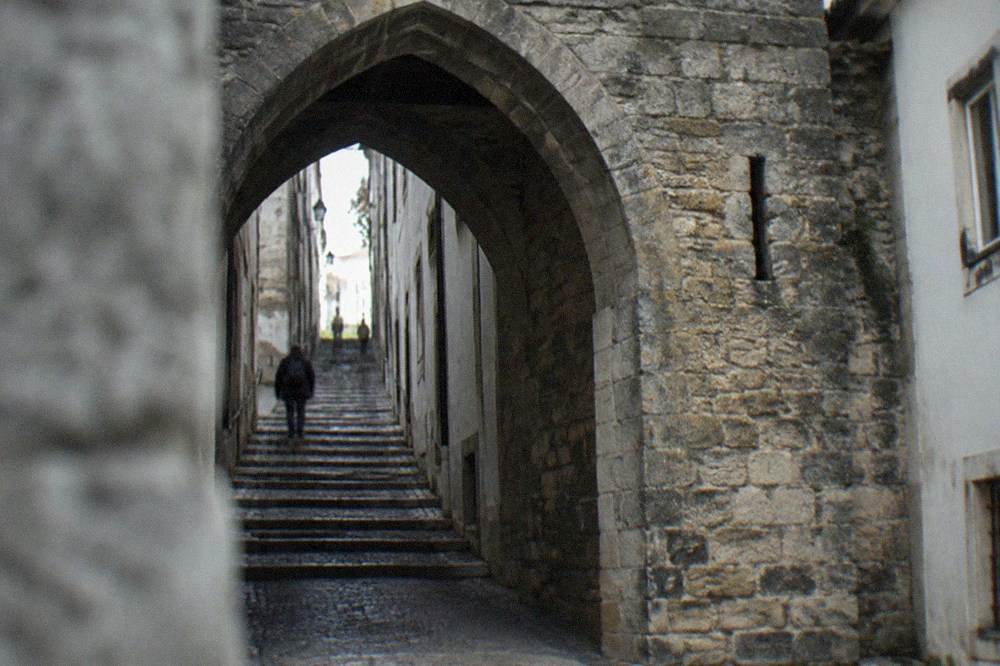
| The connecting lanes | The steep slopes between | Quebra-Costas, Arco de Almedina, the Escadas do Quebra-Costas stairways | Photographic, exhausting, unavoidable |
The old town guide covers the lanes in more depth, and the Alta upper town and Baixa downtown pages each take one level alone. For a first visit, the honest advice is that the centre is compact enough to see on foot and steep enough that you will feel it.
What Should You See First in the Coimbra City Centre?
Start at the top, at the Paço das Escolas, before the crowds build, because the Joanina Library's 50-people-every-20-minutes entry ceiling is the one genuinely scarce resource in the centre; then descend through the Arco de Almedina into the Baixa for Mosteiro de Santa Cruz, and end on the riverside at the Parque Verde do Mondego. The University's own visit page states the library cannot be bought on its own: it exists only inside the 16.50 EUR combined ticket, and the time printed on that ticket is the library slot, with entry outside the slot refused. Booking the earliest slot you can is therefore the first practical decision of any day in the centre, not a detail.
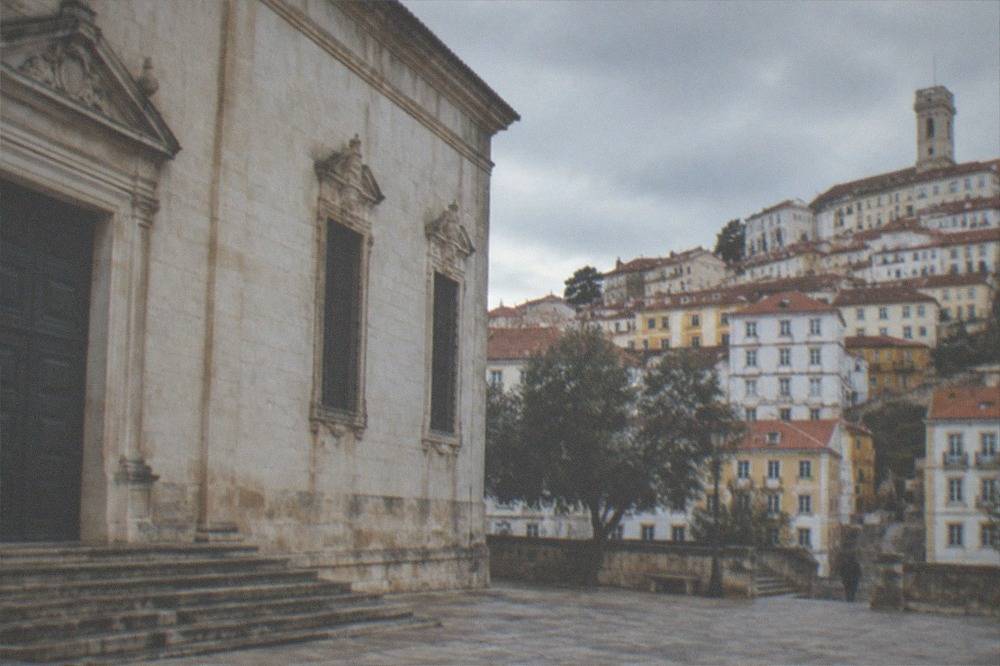
The Sé Velha, the Romanesque old cathedral, sits just below the university gate on the way down. The parish site lists an individual ticket at 3.00 EUR, groups of more than ten at 2.50 EUR, summer hours of 09:30 to 18:30 and Sunday hours from 11:00. Further down, Mosteiro de Santa Cruz charges 5.00 EUR individual, 3.50 EUR for groups of twelve or more, and opens 09:30 to 16:30, with visits suspended on Easter Sunday and on the Cortejo da Queima das Fitas, a moveable Sunday in May. The full detail is on the Santa Cruz Monastery and Sé Velha pages.
A walking tour is the efficient way to absorb the layout, because the centre's story is one of layers rather than single monuments. The Coimbra Top Attractions Walking Tour runs two and a half hours from 5.85 per person, rated 5 from 151 reviews, and covers the university hill and the Baixa in one loop. There is also a GuruWalk free tour, Coimbra Highlights, History and Traditions by a certified guide, tip-based and rated 4.95 from 226 reviews, for anyone who prefers to pay what they choose at the end.
The sights in descending order, with the verified entry numbers:
| Sight | Level | Adult price | Hours as published |
|---|---|---|---|
| Paço das Escolas circuit (with Joanina) | Alta | 16.50 EUR | 09:00-20:00 summer, 09:00-17:30 winter |
| Paço das Escolas circuit (without Joanina) | Alta | 12.50 EUR | Same circuit, 2 days valid |
| Sé Velha | Alta | 3.00 EUR | 09:30-18:30 summer, Sundays from 11:00 |
| Mosteiro de Santa Cruz | Baixa | 5.00 EUR | 09:30-16:30, Sundays separate |
| Parque Verde do Mondego | Riverside | Free | Open public park |
Which Famous Coimbra Sights Are Closed Right Now?
Three major sights in or beside the centre are closed and must be planned around: the Museu Nacional de Machado de Castro is closed for conservation work, the Torre da Universidade is closed with the University's own page stating the facility is shut, and Mosteiro de Santa Clara-a-Velha has no page at all on the national museums portal, consistent with closure for requalification works since October 2025. None of the three should be given hours, a price or a slot in an itinerary. The Machado de Castro trap is the cruellest one, because the museum's own page prints a normal-looking opening-hours table directly beneath its closure notice, and a careless guide will quote the table without the line above it.
The tower deserves a special warning, because it is the building on every postcard of Coimbra. The University's information page states plainly that the facility is closed; there is no price, no hours and no climb, and the same page notes the 184 steps and narrow passage for context only. Photograph it from outside, and put the view from the Paço das Escolas terrace in its place, which costs nothing and needs no ticket.
What is open, closed and conditional in and around the centre:
| Sight | Status | What you can still do |
|---|---|---|
| Museu Nacional de Machado de Castro | Closed for conservation work | Check the museum portal before travelling; no reopening date published |
| Torre da Universidade | Closed, per the University's own page | View and photograph the tower from the Paço das Escolas |
| Mosteiro de Santa Clara-a-Velha | No listing on the national portal; closed for works | See the riverside exterior from the Santa Clara bank |
| Joanina Library | Open, timed entry | Book the 16.50 EUR combined ticket with a fixed slot |
| Sé Velha, Santa Cruz, Portugal dos Pequenitos | Open | Visit normally; hours on each venue's own page |
The Machado de Castro closure matters more than it looks, because the museum sits above a mid-1st-century Roman cryptoporticus that is normally part of the visit route, one of the few Roman structures visible inside the centre. With it shut, the Roman story moves out of town: Conímbriga, a Roman town about 16 km south in the parish of Condeixa-a-Velha, in the municipality of Condeixa-a-Nova, is open seven days a week, 10:00 to 18:00, at 10.00 EUR for museum and ruins together, which also makes it the reliable Monday option when other monuments close. The Conímbriga Roman ruins page has the detail.
Do You Need Tickets for the University in the City Centre?
Yes: the Paço das Escolas circuit is ticketed, at 16.50 EUR adult with the Joanina Library included or 12.50 EUR without it, both valid two days, with the Joanina slot fixed to the time printed on the ticket and online purchase closing 20 minutes before that slot. The library admits 50 people every 20 minutes, in the University's own published wording, and entry outside the printed slot is refused outright. This is the one place in the centre where turning up without a plan can genuinely end in not getting in, especially between April and September when the circuit runs to 20:00.
The 16.50 EUR ticket covers the Joanina Library, the Royal Palace, the Capela de São Miguel, the Chemistry Laboratory, the Academic Museum, the Cabinet of Curiosities and the Mineral Gallery. The 12.50 EUR version covers everything except the Joanina. A guided Palace of Schools tour exists at 25.00 EUR for 90 minutes, and guided Botanical Garden tours at 10.00 EUR. The closing dates in the current cycle are 24 and 25 December, 31 December and 1 January, 24 May and 4 October, and the University warns that academic ceremonies interrupt the circuit at other times too.
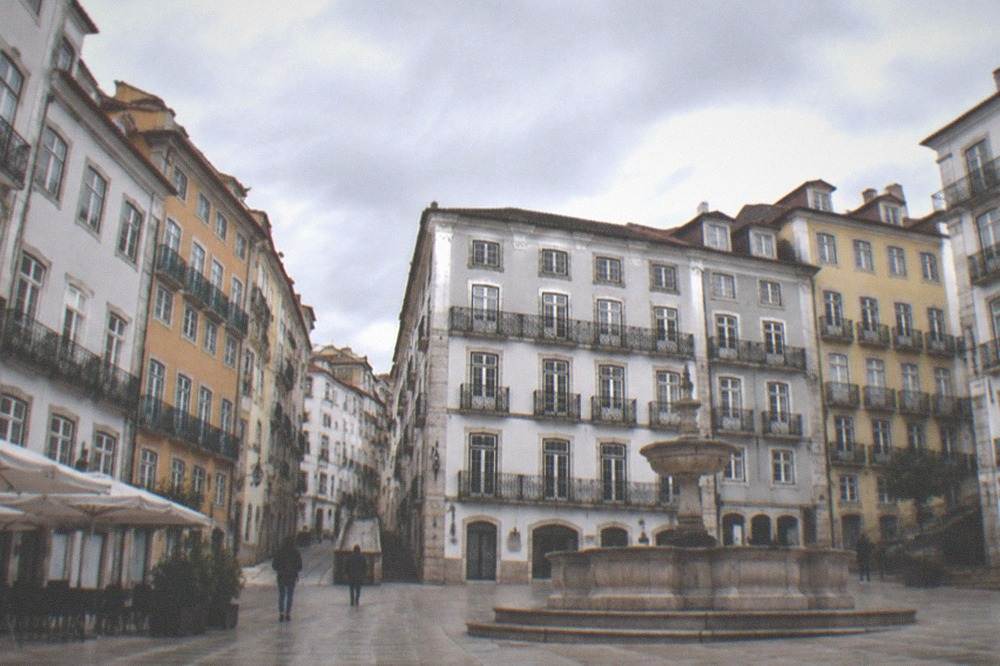
A guided visit removes most of this friction, because the operator handles the ticket and the slot. The Best of Coimbra Private Walking Tour with University Late Visit runs two to three hours from 81.95 per person, rated 4.8 from 72 reviews, and pairs the centre walk with a late university visit, which suits anyone arriving midday. The University of Coimbra guided tours without queue option, from 70.24 per person and rated 4.9 from 576 reviews, includes the tickets for a group of eight.
The choice between guided and independent comes down to how much of the ticketing you want to handle yourself. Independent visitors buy the 16.50 EUR ticket directly and pick their own Joanina slot; guided visitors let the operator book it and gain a guide's context on the palace, the chapel and the student traditions that fill the hill. Either way, the slot is the thing: once it is fixed, the rest of the day arranges itself around it.
The full ticket breakdown, including the science-only options, is on the university tickets and Joanina Library tickets pages, and the library itself has its own Joanina Library guide.
Where do You Eat in the Coimbra City Centre?
The Baixa is where the city centre eats: the streets around Praça do Comércio and the lanes running down from the Quebra-Costas carry the concentration of restaurants, historic cafés and pastry shops, while the Alta is thin on food beyond a few student-scale places near the university gate. No restaurant, café or bar in the centre had its hours, prices or address verified for this site, so this section deliberately names streets and patterns rather than specific venues; the restaurants guide and the historic cafés and what to eat pages carry the food detail.
Two food facts about Coimbra are verified and worth travelling for. The city is the gateway to the Bairrada region to the west, whose signature dish is leitão da Bairrada, suckling pig, covered on the leitão and Bairrada page. And the centre is the home of two old pastries with monastic origins, the arrufada and the Santa Cruz cake, both tied to the monastery's confectionery tradition; the pastries and arrufadas page explains them.
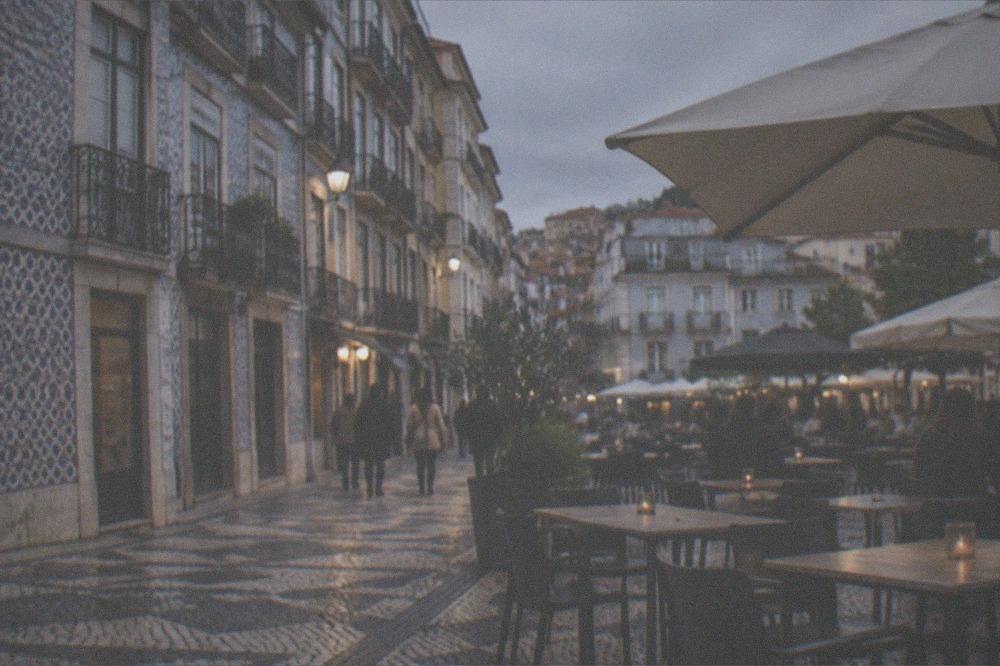
The evening in the centre ends, for many visitors, with fado. Coimbra's fado is a distinct tradition from Lisbon's, tied to the student cape and the male voice, and the where to hear fado page covers where it is sung. The one bookable option in the centre is the Coimbra: Live Fado Show with Glass of Port Wine, 50 minutes from 18 per person and rated 4.7 from 1,234 reviews, which includes the port wine in the price.
How Much Does a Day in the Coimbra City Centre Cost?
The three main paid sights in the Coimbra city centre cost 16.50 EUR for the university circuit with the Joanina Library, 3.00 EUR for the Sé Velha and 5.00 EUR for Mosteiro de Santa Cruz, and on top of any entries the municipal tourist tax adds 1.00 EUR per night, capped at three consecutive nights and applying from age 16, paid at your accommodation. The tax figure matters because it is routinely misquoted: the rate in force is one euro per overnight stay, paid to the accommodation at check-in or check-out, and the two-euro figure in circulation is an approved proposal from July 2026, not the current rate.
The municipality's own figures, published in its July 2026 report on the tax, give the scale of tourism here: 698,151 overnight stays recorded in Coimbra in 2025, at the municipality level, with an estimated municipal cost per overnight stay of 3.49 EUR against the one-euro tax. The University publishes about 31,000 students on its own numbers page, which explains both the cheap eating in the Baixa and the fact that the centre empties of students in summer.
The verified cost of the centre's main components:
| Item | Adult cost | Notes |
|---|---|---|
| University circuit with Joanina Library | 16.50 EUR | Timed slot, valid 2 days except the library |
| University circuit without Joanina | 12.50 EUR | Same spaces, no library slot |
| Sé Velha | 3.00 EUR | Groups over 10 pay 2.50 EUR each |
| Mosteiro de Santa Cruz | 5.00 EUR | Groups of 12+ pay 3.50 EUR each |
| Municipal tourist tax | 1.00 EUR per night | Max 3 nights, from age 16, paid at accommodation |
| SMTUC bus, ticket from driver | 2.00 EUR | Pre-purchased trips 0.90 EUR each |
Cut the budget by dropping the Joanina from the ticket and the university circuit falls to 12.50 EUR, which still includes the palace, the chapel and the science spaces. The budget guide and free things to do pages list what costs nothing, and the terrace views, the riverside park and the Quebra-Costas lanes are all in that category.
How do You Get Around the Centre Without a Car?
You walk: the Coimbra city centre is compact, steep and largely pedestrian, and the only transport most visitors need is the SMTUC bus network at 2.00 EUR for a ticket bought from the driver or 0.90 EUR per trip pre-purchased in packs of three or more, with each journey valid 90 minutes on the urban network including transfers. The 2026 SMTUC tariff also sells titles marked valid on both the SMTUC and Metro Mondego networks, so a bus ticket works on the new Metrobus system that is opening in stages across the city; the route-by-route detail of Metro Mondego is not yet published in a form this site can verify, so treat it as a bonus on your ticket rather than a plan.
The tariff PDF does not give a standalone single-ride price for the Elevador do Mercado, the funicular that links the Baixa to the upper town, so this site publishes none; the lift is the shortcut worth knowing about even without a verified fare. For arriving by train, the two stations, Coimbra-B and Coimbra-A, exist and are in different places, and which services call where must be checked with CP itself before you plan a connection.
Practical movement facts for the centre, all from the 2026 tariff and the venue pages:
| Movement | Cost or rule | Source basis |
|---|---|---|
| Walking the centre | Free; steep between levels | Geography of the old town |
| SMTUC single, bought on board | 2.00 EUR | 2026 SMTUC tariff |
| SMTUC pre-purchased trips | 0.90 EUR each, packs of 3+ | 2026 SMTUC tariff |
| Journey validity | 90 minutes urban, transfers included | 2026 SMTUC tariff |
| Metro Mondego | SMTUC tickets valid on the network | 2026 SMTUC tariff heading |
| Fare evasion fine | 120.00 to 350.00 EUR | 2026 SMTUC tariff |
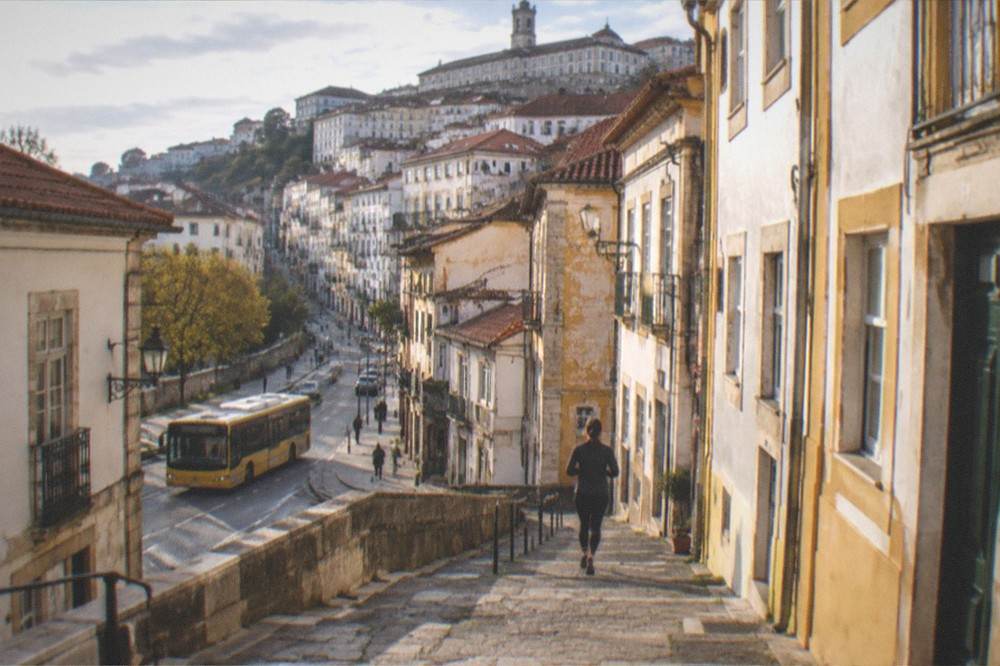
The centre's steepness is the reason the bus network matters even to fit walkers: the number 34 route and its neighbours climb to the university gate from the Baixa, sparing the knees on the way up, though the exact stop locations should be confirmed on the SMTUC site when planning. Coming from farther afield, the Porto to Coimbra and Lisbon to Coimbra pages cover the two main arrival corridors.
When Is the Best Time of Day and Year for the City Centre?
The best months for the Coimbra city centre are June and September, when the IPMA 1991-2020 normals for the Coimbra / Bencanta station show mean maxima of 26.3 C and 27.4 C with only 26.0 mm and 49.9 mm of rain respectively, and the best hours are the morning for the university hill and the evening for the Baixa and the riverside. September is the better of the two and the least advertised: its mean maximum is higher than June's, the students are back, and the autumn rain does not arrive in earnest until October, when the monthly total jumps to 114.5 mm. November is the wettest month at 121.5 mm.
Within the day, the centre runs on a rhythm set by the university's hours and the Joanina's slots. The Paço das Escolas opens at 09:00 year-round, so the earliest library slots are the quiet ones, and the last Joanina entry in summer is 19:00 with the other spaces to 19:15. The Baixa fills from lunch onward and empties in the August heat, when the mean maximum is 29.1 C and there are 10.9 days above 30 C in an average month. The weather and best time to visit pages expand on this with the full monthly table.
May deserves one warning. The Queima das Fitas falls in that month, and while this site will not publish festival dates that the Associação Académica has not confirmed, two verified closures mark it: the University shuts its visitor circuit on 24 May, and Mosteiro de Santa Cruz suspends visits on the Cortejo, a moveable Sunday. Anyone planning a May visit should check both venues' own pages for the exact affected dates before locking an itinerary.
Common Questions About the Coimbra City Centre
Is the Coimbra city centre walkable?
Yes, entirely: the centre is a compact old town where every major sight is reachable on foot, but it is steep, with the Alta sitting well above the Baixa, so expect stairways and slopes between the two levels.
Can you see the Coimbra city centre in one day?
Yes. The Paço das Escolas circuit, the Sé Velha, the walk down through the Arco de Almedina, Mosteiro de Santa Cruz and the riverside all fit in one full day, provided the Joanina Library slot is booked in advance, since the library admits only 50 people every 20 minutes.
Is Coimbra a UNESCO World Heritage city?
No. UNESCO inscribed "University of Coimbra, Alta and Sofia" in 2013, list reference 1387, which covers two components inside the old town, the university hill and the Rua da Sofia college street, not the city as a whole.
What is closed in the Coimbra city centre right now?
The Museu Nacional de Machado de Castro is closed for conservation work, the Torre da Universidade is closed according to the University's own page, and Mosteiro de Santa Clara-a-Velha has no listing on the national museums portal, consistent with closure for works since October 2025.
How much is the tourist tax in Coimbra?
1.00 EUR per guest per overnight stay, capped at three consecutive nights, applying from age 16 and paid to the accommodation at check-in or check-out. A two-euro rate has been proposed but is not in force.
Do you need to book the Joanina Library in advance?
Yes. The library exists only inside the 16.50 EUR combined university ticket, admits 50 people every 20 minutes, and refuses entry outside the time printed on the ticket, so booking a slot before you travel is the safe course, especially from April to September.
The Coimbra city centre rewards exactly the kind of planning this page describes: one booked library slot, one early climb, the closed sights struck off the list, and the rest of the day left to the lanes, the cafés and the river. For the full picture of the city and its region, from the university hill to the day trips beyond it, start again at Coimbra Travel Guide.