What Is Coimbra Best Known For?
Coimbra, Portugal is best known for its university, the Biblioteca Joanina, fado and student traditions. A fact-checked answer to the question, with verified prices and figures.
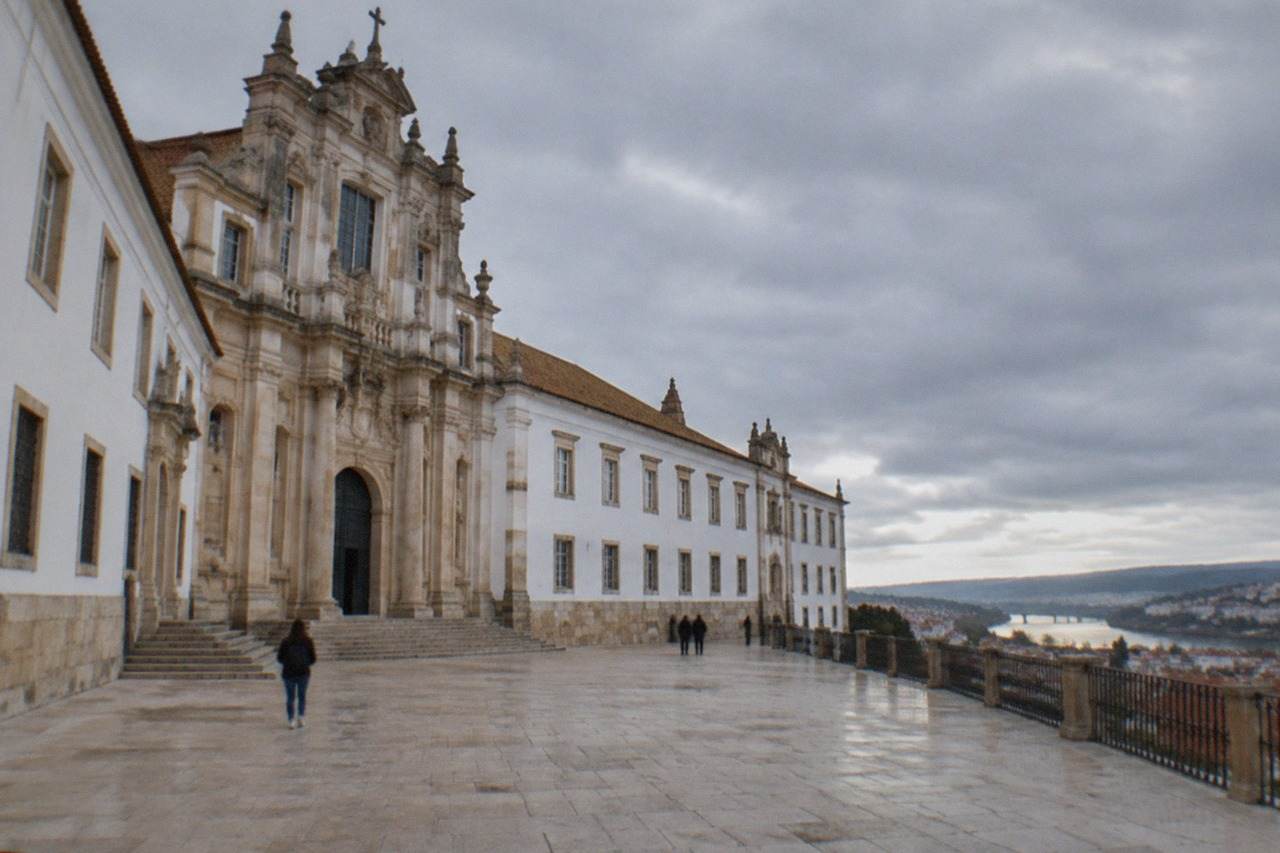
Coimbra, Portugal, the university city on the River Mondego, is best known for one institution above everything else: the University of Coimbra, one of the oldest continuously operating universities in the world, whose hilltop core was inscribed by UNESCO in 2013 as "University of Coimbra – Alta and Sofia". Around that university cluster the city's other claims to fame: the baroque Biblioteca Joanina with its colony of insect-eating bats, the melancholy fado sung only by students in black capes, the medieval Sé Velha, and a student culture of Repúblicas and parades that reshapes the city every May. The University publishes a figure of about 31,000 students on its own homepage, and that number explains almost everything about how the place feels.
What Is Coimbra Best Known For?
Coimbra, Portugal, is best known for the University of Coimbra and the hill it sits on. UNESCO inscribed "University of Coimbra – Alta and Sofia" in 2013 under criteria (ii), (iv) and (vi), covering the university hill and the college street of Rua da Sofia, not the whole city. The University publishes a figure of about 31,000 students, and the municipality recorded 698,151 overnight stays in 2025, which makes tourism a measured, official part of the city's economy rather than a guess.
The common shorthand "Coimbra is a UNESCO World Heritage city" is wrong, and it is the single most repeated error in guides to this city. The inscription, list reference 1387, covers two components inside the old town: the Alta, the university hill with the Royal Palace of Alcáçova, the Capela de São Miguel and the Joanine Library, and the Sofia, the street of Renaissance colleges built when the Jesuits and other orders moved teaching down towards the river. The Baixa, the riverside and the rest of the city carry no World Heritage status at all.
That precision matters because the university is not a campus in the modern sense. It is a working set of 18th-century palace buildings, chapels, laboratories and libraries that about 31,000 students use daily, and the visitor ticket and the student timetable overlap constantly. The University's own information page warns that religious, official and academic ceremonies interrupt the normal tourist circuit, and it closes the circuit entirely on 24 May, which is the day of the Queima das Fitas Cortejo.
For a fuller answer to the fame question, the why is Coimbra famous page covers the legend side, and what not to miss in Coimbra turns the list into an itinerary.
Why Is the University of Coimbra So Famous?
The University of Coimbra is famous as one of the oldest continuously operating universities in the world and as the institution that defined Portuguese academic life, from the black student cape to the fado sung only by its male students. Its visitor ticket, priced at 16.50 EUR for adults including the Biblioteca Joanina, sells a timed library slot capped at 50 people every 20 minutes, a scarcity rule that shapes every visit to the hill.
The University's own visit pages state the ticket structure plainly. The 16.50 EUR combined ticket covers the Joanina Library, the Royal Palace, St Michael's Chapel, the Chemistry Laboratory, the Academic Museum, the Cabinet of Curiosities and the Mineral Gallery, and it is valid for two days except for the library slot, which is fixed to the time printed on the ticket. A 12.50 EUR version drops the library. The Joanina cannot be bought on its own at all, and entry outside the printed slot is refused, in the University's own published wording.
The clock tower, the Torre da Universidade, is closed: the University's own page states the facility is closed, so no tour on this site sells a climb. The two-day ticket validity is the practical detail most visitors miss, because it means the Paço das Escolas can be split across two days rather than rushed into one.
| University of Coimbra ticket | Adult price | What it includes |
|---|---|---|
| Joanina Library + University + Science Museum | 16.50 EUR | Baroque Library (timed slot), Royal Palace, St Michael's Chapel, Chemistry Laboratory, Academic Museum, Cabinet of Curiosities, Mineral Gallery |
| University + Science Museum | 12.50 EUR | The same spaces without the Joanina Library |
| Guided tour, Palace of Schools | 25.00 EUR | Guide-led visit of the palace spaces, 1h30 |
A guided visit is the way most first-time visitors handle the hill, and the related tour on this page, the Guided tour of the University and city of Coimbra, pairs the Paço das Escolas with the streets below. It runs 2 to 3 hours, from $84.29 per person, rated 4.9 from 399 reviews, and Check availability covers the current dates. The question of whether the university is the oldest in the world has its own answer on the oldest university page.
What Is the Biblioteca Joanina and Why Does Everyone Photograph It?
The Biblioteca Joanina is the University's baroque library, completed in the 18th century, and it is the most photographed interior in Coimbra because of its gilded bookshelves, its painted ceilings and its colony of bats, which the University itself credits with eating the insects that would otherwise damage the books. Admission exists only inside the 16.50 EUR combined ticket, in timed slots of 50 people every 20 minutes.
The bats are not a folk tale. The University's own page for the Joanina confirms the colony of insectivorous bats, which leave their roosts behind the bookshelves at night and are one reason the library's wooden structure has survived so well. Visitors will not see them, because the noble floor is shown in daytime in groups of 50 for roughly 20 minutes, with no lingering and no photography permitted on the noble floor. The rest of the planning pages sit on Coimbra Travel Guide.
The scarcity is genuine and it is the one honest urgency on this site. Online purchase closes 20 minutes before the visit time, and counter purchase is subject to slot availability, so a summer visitor arriving without a pre-booked slot can be turned away. The library's digital future is also official news: the Joanina Digital project, with pilot results reported in October 2025 and a massive phase announced in April 2026, aims to put around 30,000 volumes online by 2030, though it changes nothing about a physical visit.
What Else Is Coimbra, Portugal, Famous For?
Beyond the university, Coimbra is famous for fado de Coimbra, a distinct male student tradition sung in black capes rather than the Lisbon style; the Sé Velha, one of Portugal's best-preserved Romanesque cathedrals, at 3.00 EUR to visit; Mosteiro de Santa Cruz, the burial church of Portugal's first two kings, at 5.00 EUR; and Conímbriga, the Roman ruins about 16 km south, whose combined museum and ruins ticket is 10.00 EUR.
Fado de Coimbra is a separate genre, not a regional accent of Lisbon fado. It is historically sung by men in the student cape, in a more formal, harmony-driven style, and it is tied to the academic calendar and to farewells. The city's fado houses, and the question of where to hear it, have their own coverage, and the food the city is known for, including leitão da Bairrada from the neighbouring region, is answered in full on the what food is Coimbra known for page.
The monuments are compact and walkable, which is the practical reason Coimbra rewards a short stay. The Sé Velha charges 3.00 EUR per person, published by the Unidade Pastoral Aeminium, which manages it. Santa Cruz, the same body's other site, charges 5.00 EUR and suspends visits on Easter Sunday and on the Cortejo da Queima das Fitas, a moveable Sunday in May. Conímbriga, in the parish of Condeixa-a-Velha in the municipality of Condeixa-a-Nova, is open daily 10:00 to 18:00, which makes it the reliable Monday option when the national monuments that close on Mondays are shut.
Two closures matter in 2026. The Museu Nacional de Machado de Castro, built above a mid-1st-century Roman cryptoporticus, is closed for conservation work, and its reopening price is not published on an official page. Mosteiro de Santa Clara-a-Velha has been closed for requalification works since 20 October 2025, and neither a price nor an opening time should be trusted for it until it reopens.
| What Coimbra is known for | The verified figure | Where it comes from |
|---|---|---|
| University of Coimbra | About 31,000 students | The University's own published figures |
| UNESCO inscription | 2013, "University of Coimbra – Alta and Sofia" | UNESCO World Heritage list, reference 1387 |
| Biblioteca Joanina | 50 people every 20 minutes, 16.50 EUR combined ticket | The University's visit pages |
| Municipal tourist tax | 1.00 EUR per guest per night, max 3 nights, from age 16 | The municipality's own tax pages |
| Tourism scale | 698,151 overnight stays in 2025 | The municipality's 2026 tax report |
The tourist tax is worth knowing because it is paid to the accommodation at check-in or check-out, not to a platform, and it has been in force since 5 April 2023. A two-euro rise was approved as a proposal by the municipal executive in July 2026, but the published rate remains 1.00 EUR until the municipality's own tax pages say otherwise.
When Should You Visit, and Does the Weather Shape the Fame?
Coimbra's fame is easiest to enjoy from late spring to September, because IPMA's 1991 to 2020 normals for the Coimbra / Bencanta station show July at 8.9 mm of rain and effectively dry, while August is the hottest month at a 29.1 C mean maximum with 10.9 days above 30 C. September is the quiet-season secret: its mean maximum of 27.4 C is higher than June's 26.3 C, with only 49.9 mm of rain.
The rain holds off until October, when the monthly total jumps to 114.5 mm, and November is the wettest month at 121.5 mm. Coimbra's rain is autumn and winter rain, and the record extremes at the same station, 41.2 C on 7 August 2016 and -4.3 C on 20 January 2017, frame the range.
May brings the other reason the city is famous: the Queima das Fitas, the student festival that fills the last weeks of the academic term. The exact dates are not published on an official page this site could verify, but the festival's footprint is official in two ways: the University closes its visitor circuit on 24 May, and Santa Cruz suspends visits on the Cortejo Sunday. Anyone planning a May visit should book the Joanina slot early and expect the old town to be loud, full and genuinely student-run.
Common Questions About What Coimbra Is Best Known For
What is Coimbra best known for?
Coimbra, Portugal is best known for the University of Coimbra, UNESCO-inscribed in 2013 as "University of Coimbra – Alta and Sofia", for the baroque Biblioteca Joanina, for the student fado sung in black capes, and for the medieval old town on the hill above the River Mondego.
Is the whole city of Coimbra a UNESCO World Heritage site?
No. Only the "University of Coimbra – Alta and Sofia" is inscribed, list reference 1387, since 2013. The inscription covers the university hill and the college street of Rua da Sofia, not the Baixa, the riverside or the city as a whole.
Can you visit the Biblioteca Joanina on its own?
No. The library exists only inside the University's 16.50 EUR combined ticket, in timed slots capped at 50 people every 20 minutes. The time printed on the ticket is the library slot, entry outside it is refused, and online purchase closes 20 minutes before the visit time.
What food is Coimbra famous for?
The city is known for its student-cafe pastries and for the wider Bairrada region's leitão, spit-roasted suckling pig, served in the city's traditional restaurants. The full answer, with the city's historic cafe culture, is on the what food is Coimbra known for page.
Is Coimbra worth visiting for more than a day?
Yes. The two-day validity of the University ticket, the fado evenings, the old town's two levels and the day trips to Conímbriga, Buçaco and the schist villages of the Lousã all reward a second day, and the how many days do you need in Coimbra page breaks the choice down.
What is the old town of Coimbra known for?
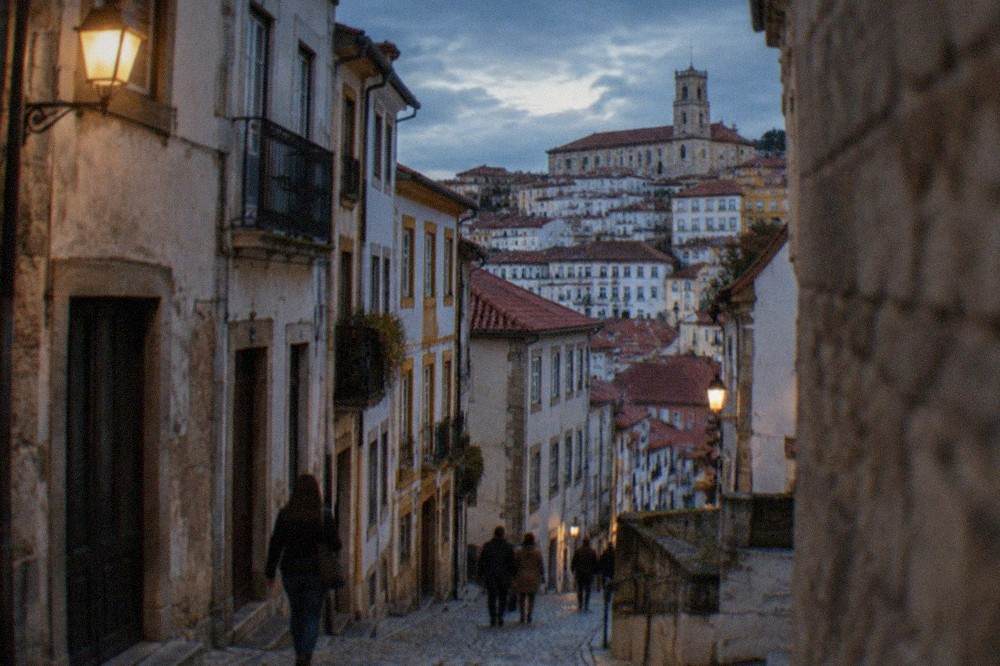
The old town is known for the steep medieval lanes between the university hill and the river, the Sé Velha, the Arco de Almedina gate and the Baixa's commercial streets, a layout described in detail on the what is the old town of Coimbra known for page.
The short answer to the fame question is the one the city has earned over eight centuries: Coimbra, Portugal is the university, the library, the fado and the hill, and every verified figure above, from the 31,000 students to the 50 people per 20-minute library slot, comes from the institutions that run the place rather than from hearsay.