What Does Fado Mean in Portugal?
Fado is Portugal's mournful, guitar-backed singing tradition, and Coimbra, the university city on the River Mondego, has its own distinct male-voiced version. What the word means, how the two styles differ, and how to hear it.
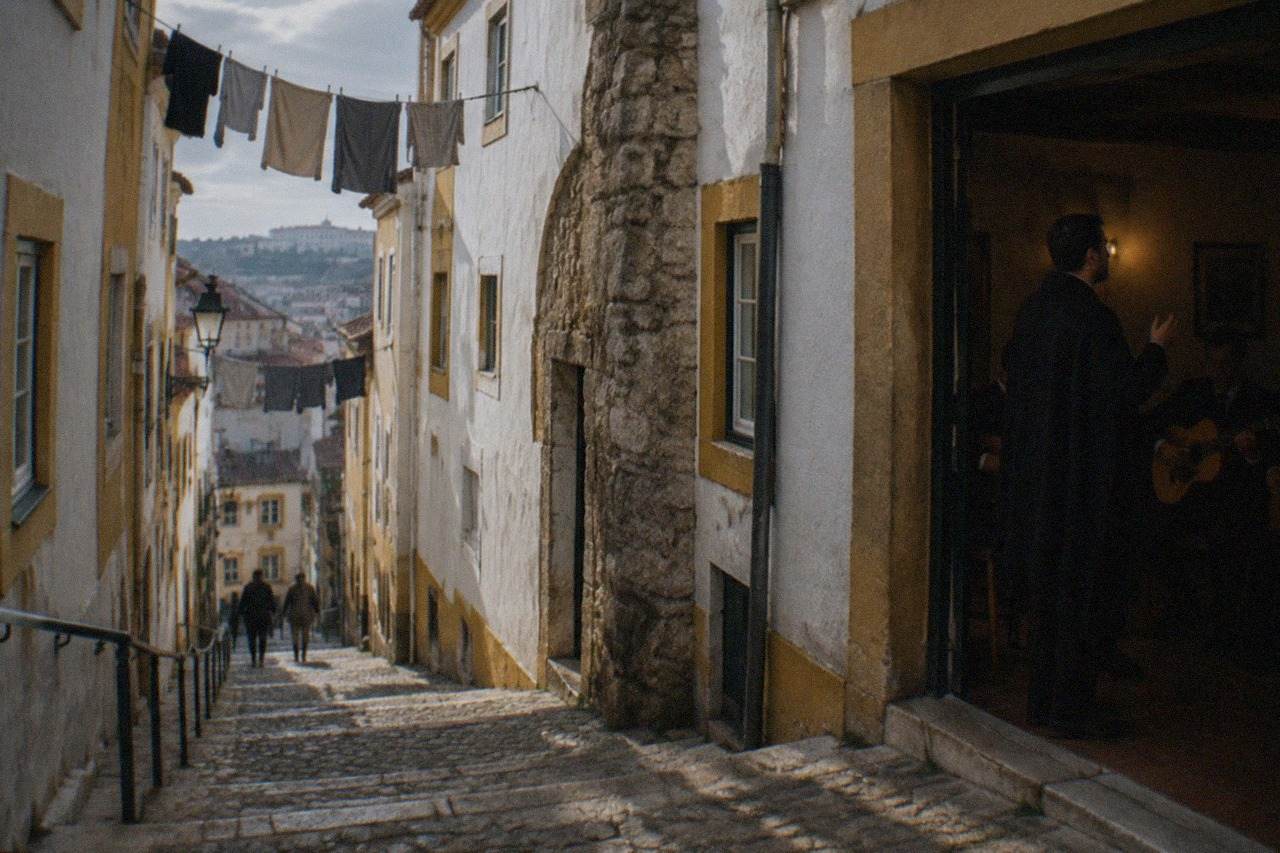
Fado is the sung heart of Portugal, and nowhere is that clearer than in Coimbra, the university city on the River Mondego, where the tradition took a form all of its own. Ask what fado means in Portugal and you get two answers: a literal one about a word, and a deeper one about a national mood the Portuguese call saudade. This page gives you both, and then explains why Coimbra's version, sung by men in black academic capes, is a different animal from the fado you hear in Lisbon, an hour and a half down the line by train.
What Does Fado Mean in Portugal?
In Portugal, fado is a traditional style of song about longing, loss and the sea, performed by a solo singer backed by the Portuguese guitar and the classical guitar, and the word itself comes from the Latin fatum, meaning fate. A fado song is a fate you cannot escape, sung anyway. The music was shaped in the working-class districts of Lisbon in the early 19th century and is now treated as the national song form, recognised worldwide as Portugal's defining musical heritage.
That etymology matters more than it first appears. Fado is not sad music in a simple sense; it is music about accepting what fate has dealt, whether that is a lover who sailed away, a neighbourhood demolished, or a life that turned out differently from the plan. The singer does not fight the fate. The singer names it.
The form is deliberately austere. One voice, two guitars, no percussion, no amplification beyond the room itself. Traditional performance etiquette asks for silence while the song runs: no talking, no clinking glasses, no applause until the last note has died. That hush is part of the meaning. A fado house goes quiet because the song is treated as a confession, not as entertainment between courses.
If the word and the form are new to you, the companion page on what a Portuguese fado actually is unpacks the structure of a performance, the instruments and the etiquette in more detail.
How Is Coimbra Fado Different from Lisbon Fado?
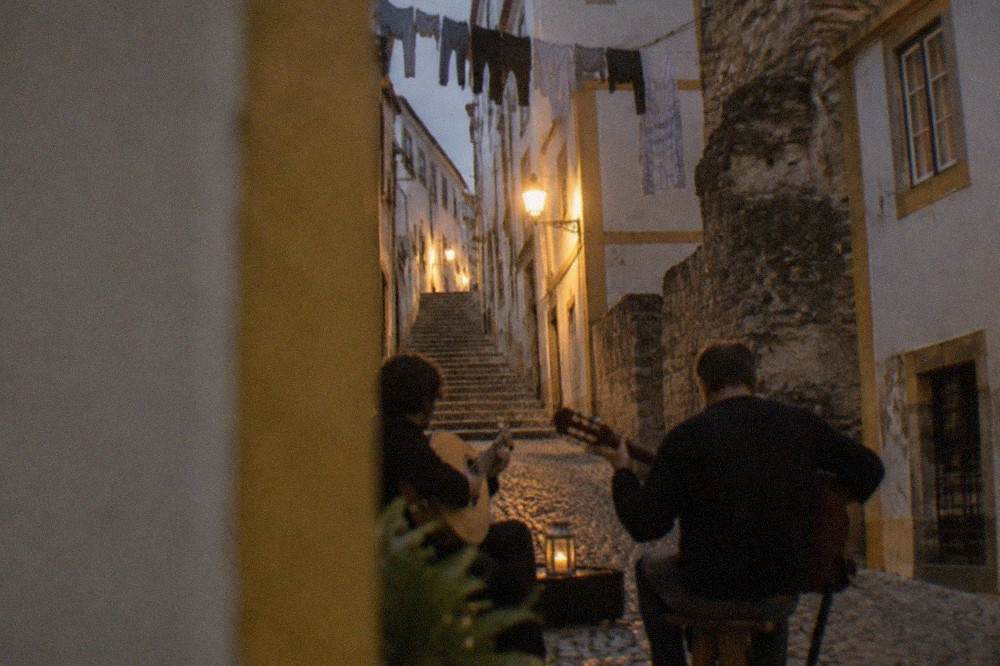
Coimbra fado differs from Lisbon fado in voice, subject and costume: it is sung almost exclusively by men, it grew out of the University of Coimbra's student tradition rather than Lisbon's dockside districts, and it is tied to the black academic cape students still wear. The Coimbra style is also more openly romantic and ceremonial, and it lives both in venues and as street serenades sung under windows at night.
The student tradition is the core of it. Coimbra's fado was shaped by the city's male student culture, by serenades sung beneath the windows of the women being courted, and by the rituals of academic life at one of Europe's oldest universities. The University of Coimbra publishes a current figure of about 31,000 students, and the black capa e batina, the cape and gown those students wear, remains the visual signature of the city's fado in a way Lisbon's fado never adopted.
The sound differs too. Coimbra's tuning and repertoire are distinct, the voice is trained differently, and the themes lean toward student life, the city itself, love and farewell rather than the sailor and tavern subjects of the Lisbon canon. The most famous Coimbra fado of all is a goodbye: the farewell serenade sung by graduating students, cape folded and thrown over the shoulder, on the steps of the university at the end of their studies.
| Lisbon fado | Coimbra fado | |
|---|---|---|
| Typical voice | Women and men | Men, from the student tradition |
| Origin | 19th-century working-class Lisbon districts | University of Coimbra student culture and serenades |
| Costume | Traditional shawl for female singers | Black academic cape, worn over the shoulder |
| Signature themes | The sea, fate, taverns, loss | Student life, the city, courtship, farewell |
| Signature moment | The fado house hush | The graduating students' farewell serenade on the university steps |
| Where it lives | Dedicated fado houses | Venues and street serenades at night |
The distinction is not a tourist's invention; the two cities themselves treat their traditions as separate schools, and Coimbra's is inseparable from its academic calendar. The guide to fado de Coimbra covers the city's own tradition in depth, and the question of whether fado is Portuguese or Spanish is answered elsewhere on this site, because the confusion is common.
Where Can You Hear Fado in Coimbra?
You can hear fado in Coimbra at dedicated shows, at student serenades in the old town's streets, and at performances connected to the university's academic festivals, and the most practical option for a visitor is a ticketed show, where a live performance runs around 50 minutes. What this site cannot tell you is any specific venue's schedule, address or nightly price, because none of that was verified for this build; each venue's own listing is the source for its own operations.
That last sentence is deliberate. Coimbra has fado venues and it has street serenades, but nothing operational about a particular house, a show time or a door price was confirmed from an official source when this site was researched. Where a competing guide will print a schedule from memory, this one will not. The full index of guides sits on Coimbra Travel Guide.
What is verifiable is the shape of the offer. A live fado show with a glass of port wine included is listed from $18 per person, rated 4.7 from 1,234 reviews, running 50 minutes, and it exists as a bookable product with its own page on this site. A ticketed show is also the friendliest format for a first-time visitor: a fixed start, a short run time, and a room arranged for listening rather than for drinking through.
Should You Book a Fado Show Before You Arrive?
Booking ahead is the sensible default in a city of roughly 31,000 students, where the audience for a fado show overlaps with the population most likely to fill one. A pre-booked seat removes the walk-in gamble on any given night, and the operator's live listing carries the current times and availability. Cancellation terms sit on the listing, so check them when you book rather than assuming.
What Does Saudade Have to Do with Fado?
Saudade is the Portuguese word for a longing for something absent that may never return, and it is the emotional engine of fado: the songs exist to give that feeling a voice. It has no exact English equivalent. It is not simple sadness and not simple nostalgia; it is the ache of something gone, missing or unattainable, held without the expectation that holding it will fix anything. Fado without saudade is just singing.
Portuguese speakers argue about the precise boundaries of the word the way other cultures argue about their own untranslatables, but the core is stable. Saudade can attach to a person, a place, a time of life or a version of yourself. In Coimbra, where students spend years in the city and then leave it, saudade has an obvious habitat: the farewell is a whole genre here, and the graduating student singing on the university steps is performing saudade in its most concentrated form.
This is why the hush in a fado room is not preciousness. The audience is being asked to hold the feeling with the singer for the length of the song. If you arrive expecting dinner-and-a-show, you will misread the room; the etiquette page on what to wear to a fado show and the practicalities of tipping at a fado show cover the rest of the visitor side.
How Should You Experience a Fado Show in Coimbra?
Go expecting a short, concentrated performance rather than a night out: the ticketed show runs about 50 minutes, the port wine is included in the listed price of $18 per person, and the room's etiquette asks for silence while each song runs. Arrive a little before the start, keep phones away, and let the applause wait until the song has finished. Book ahead, because a student city fills rooms.
Fifty minutes is the right length to understand the form without fatigue. You will hear the Portuguese guitar, the pear-shaped twelve-string instrument whose bright, chiming attack is the sound most people remember, alongside the classical guitar that carries the harmony underneath. The singer will hold the room with almost nothing: a voice, two instruments and the discipline of the silence around them.
For a first visit, pairing the show with a walk through the old town earlier in the day works well, since the fado tradition is rooted in the streets and the university hill you will have just climbed. The page on the best place to see fado in Portugal compares the options across cities, and Coimbra Travel Guide's own guide to where to hear fado collects the city's listening options.
| Experience | Format | Listed from | Rating | Run time |
|---|---|---|---|---|
| Live fado show with glass of port wine | Ticketed show, port included | $18 per person | 4.7 from 1,234 reviews | 50 minutes |
| Coimbra Top Attractions Walking Tour | Guided walk of the old town | $5.85 per person | 5 from 151 reviews | 2 hours 30 minutes |
| Schist Villages of Lousã Mountain, half-day | Day trip from Coimbra | $99.51 per person | 4.8 from 45 reviews | 4 hours |
The two companion options in that table are not fado products; they are the day-time and day-trip pairings this site rates alongside the show. The walking tour covers the streets and university hill the songs are about, and the schist villages trip shows the mountain country west of the city that the region's own ballads come from.
Common Questions About Fado in Portugal
What does fado mean in Portugal?
Fado is Portugal's traditional song of longing, sung by a solo voice with Portuguese and classical guitars. The word comes from the Latin fatum, fate, and the songs are about the fates people cannot escape: lost love, the sea, the past. It is recognised worldwide as Portugal's defining musical heritage.
Is Coimbra fado the same as Lisbon fado?
No. Coimbra fado is sung almost exclusively by men, grew out of the University of Coimbra's student tradition, and is tied to the black academic cape. Lisbon fado is older in its urban form, sung by women and men, and rooted in the city's working-class districts. The two cities treat them as distinct schools.
What is saudade?
Saudade is the Portuguese word for longing for something absent that may never return. It is the emotional core of fado: not plain sadness, but an ache held without expectation of repair. It has no exact English translation.
Can you hear fado for free in Coimbra?
Street serenades are part of the Coimbra tradition and do happen in the old town, but no schedule for any specific serenade was verified for this site, so treat them as luck rather than a plan. A ticketed show, listed from $18 with a glass of port wine included, is the reliable way to guarantee hearing the form.
What should you wear to a fado show?
Smart-casual clothing fits the room, and the real requirement is behavioural: silence while each song runs, phones away, applause only after the last note. This site has a dedicated page on what to wear to a fado show.
Fado is the one Portuguese tradition that asks you to sit still and feel something on purpose, and Coimbra's student-voiced version, sung under capes and windows in a city built around its university, is the form at its most romantic. Hear it once and the word stops being a genre and becomes a mood you will recognise for the rest of the trip.