What City in Portugal Has the Best Food?
Coimbra, Portugal has a strong claim to the country's best food city: student traditions, Bairrada roast pig, Mondego river fish and a century-old café culture, all walkable in one old town.
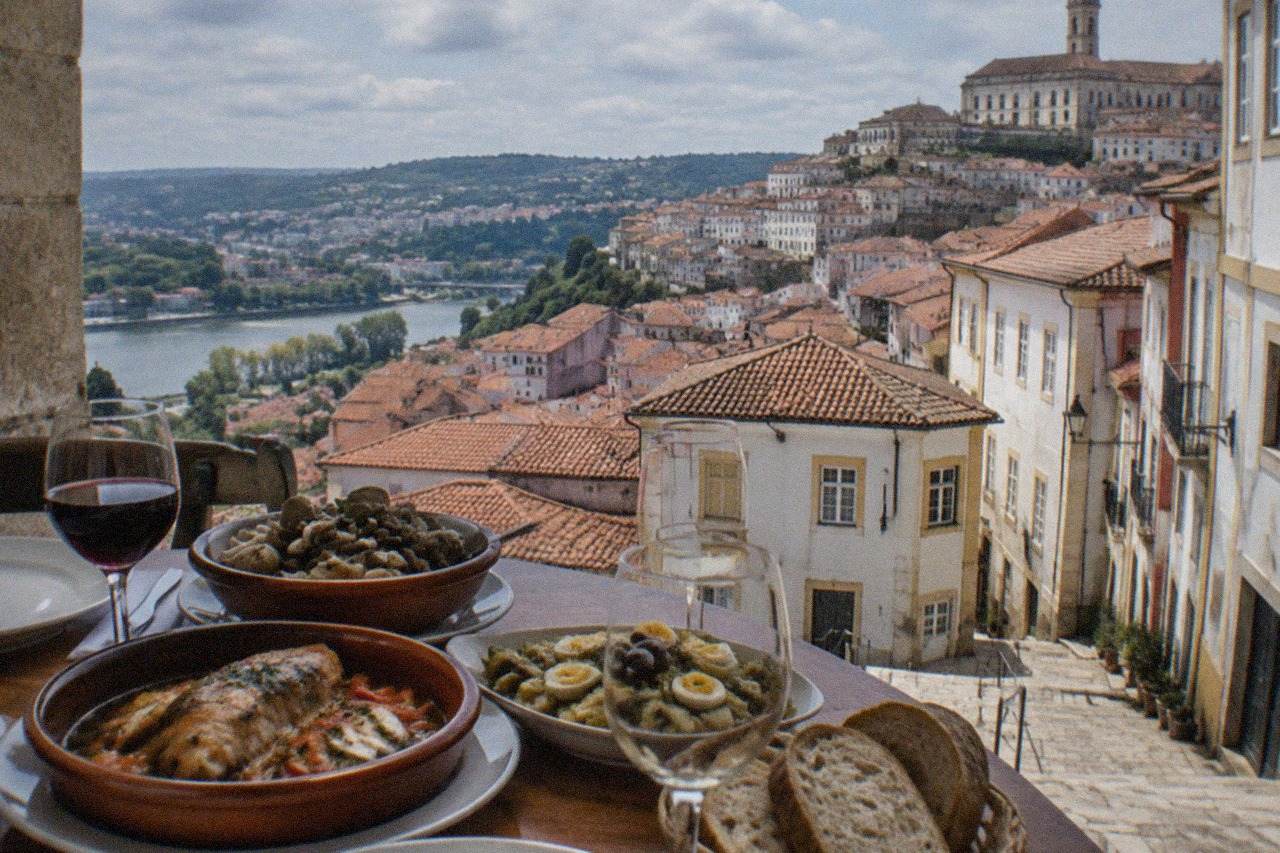
Coimbra, Portugal, the university city on the River Mondego, is the answer this site argues for when a traveller asks which Portuguese city eats best, and the argument rests on three things: a student population of about 31,000 people published by the University itself that has kept cheap, serious eating alive for centuries, a position between the Bairrada wine country and the Mondego river, and an old town small enough that a food day needs no car and no plan beyond appetite. Lisbon and Porto have more restaurants in absolute terms. Coimbra has density, tradition and price working in its favour, and the paragraphs below set out what to eat, where the traditions come from and how to plan the day.
What City in Portugal Has the Best Food?
No single Portuguese city holds an official food title, because none has been awarded one, but Coimbra, Portugal has one of the strongest claims in the country: it sits between the Bairrada wine region and the River Mondego, it has fed a university of about 31,000 students for centuries, and its old town packs cafés, taverns and student eating houses into a space a visitor can cross on foot in under half an hour.
The honest framing matters here. Portugal has no measured ranking of its cities by food, and any page that declares one city "the best" as though a survey had been run is inventing the survey. What can be said, and checked, is what a city's food culture is built on. Coimbra's is built on three pillars.
First, geography. The city sits inland on the Mondego, close to the Bairrada region to the west, which is where the country's most celebrated roast pig, leitão da Bairrada, comes from, and near the schist hills of the Lousã where slow-cooked goat and lamb dishes belong to the village kitchens. Second, the University of Coimbra, one of the oldest in the world, whose published figures list about 31,000 students, 434 courses and 13 residences. A student city of that size, running continuously for centuries, produces an unusually deep layer of cheap, honest, traditional eating: the tasca, the student canteen, the old café. Third, the walkability. The Baixa downtown, the Alta upper town and the riverside sit within a compact, steep rectangle, so a food day in Coimbra is a walking day, not a commute.
For a fuller picture of what the city is known for beyond the table, the companion page on what Coimbra is famous for covers the university, the fado and the festivals.
Why Does Coimbra, Portugal Belong in That Conversation?
Coimbra belongs in any best-food-city conversation because its eating culture is not a tourist product: it is a student culture that predates tourism by centuries, fed by the surrounding Bairrada wine country and the River Mondego, and it survives in the form of roasted pig, river fish, slow goat stews, convent sweets and black-coffee cafés that are still priced for the roughly 31,000 students the University says it teaches.
Consider what actually distinguishes one Portuguese food city from another. Lisbon has scale and international dining. Porto has tripe dishes and the francesinha, a sandwich built like a heart attack. The Algarve has grilled fish and tourism prices. Coimbra's distinction is that its food traditions grew around a permanent population of students and academics rather than around visitors, which changes the economics of every kitchen in the city.
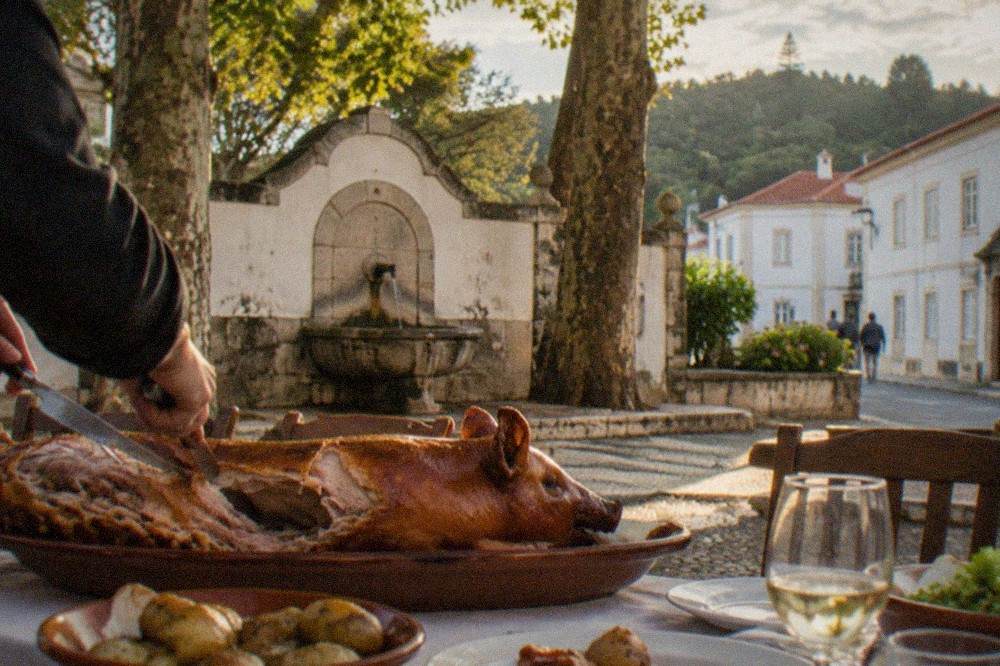
The Bairrada connection is the strongest single card. The region west of Coimbra is the home of leitão da Bairrada, suckling pig roasted whole, and Bairrada reds made from the Baga grape, a tannic, food-friendly variety that the region's producers have spent recent decades learning to tame. The roast pig travels the short distance to Coimbra's tables as a matter of course. Then there is the river: the Mondego has historically supplied eel, lamprey in season, and river fish to the city's kitchens, a tradition the coastal cities do not share.
The sweet side belongs to the convents. Portugal's egg-and-sugar convent sweets, the pastéis de natal family of custard tarts and syrup-soaked pastries, were developed in monastic kitchens, and Coimbra's religious houses contributed their own versions. The old cafés of the Baixa, some of them institutions in their own right, serve these alongside the city's coffee culture.
A guided walk is a sensible first move in a city this steep, because the food streets of the Baixa and the university hill above them are best understood with the history attached. The tours above cover the city's charms, its top attractions and the University itself.
What Are the Signature Dishes of the Coimbra Region?
The signature foods of Coimbra, Portugal are leitão da Bairrada, the whole-roasted suckling pig of the nearby Bairrada region, slow-cooked goat and lamb dishes from the schist hills of the Lousã, river fish from the Mondego including eel and lamprey in season, the egg-and-sugar convent sweets developed in the city's monastic kitchens, and the arrufada, a sweet roll tied to the city's café culture.
None of these is invented for visitors, and each has a documented regional home. The roast pig comes from the Bairrada, west of the city, where it is served with orange, garlic, Bairrada wine and crisp skin. The goat and lamb stews, including the slow braised chanfana tradition of the inland hills, come from villages in the Lousã area, where the schist villages still cook in stone. The river fish belong to the Mondego, which runs through the city. The sweets belong to the convents. The wider set of guides lives on Coimbra Travel Guide.
| Dish or drink | What it is | Where the tradition comes from |
|---|---|---|
| Leitão da Bairrada | Whole roasted suckling pig with crisp skin, served with orange, garlic and regional wine | The Bairrada region, west of Coimbra |
| Chanfana and slow goat stews | Goat or lamb braised slowly, traditionally in wine, a village kitchen dish | The schist hills and villages of the Lousã |
| Mondego river fish | Eel and lamprey dishes in season, plus freshwater fish traditions | The River Mondego, which runs through the city |
| Convent sweets | Egg custard and syrup pastries developed in monastic kitchens, including local arrufadas | Coimbra's convents and old cafés |
| Bairrada reds | Tannic Baga-grape wines built for roasted and braised meat | The Bairrada wine country near the city |
For deeper dives, the site has dedicated pages on what food Coimbra is famous for and on traditional Coimbra restaurants, and the national picture is covered in must-try foods in Portugal.
How do You Build a Food-Focused Day Around Coimbra's Old Town?
A food day in Coimbra works best as a downhill walk: start on the university hill in the Alta, where the Paço das Escolas opens at 09:00 in summer, descend through the old streets to the Baixa downtown for lunch and the historic cafés, and finish on the riverside, with the whole route walkable and the SMTUC bus network, where a driver-bought single costs 2.00 EUR, available for the climb back up.
The shape of the city does the planning for you. The University sits on top of the hill, the Baixa sits at the bottom, and the food is distributed along the slope between them. A morning at the university, which the University's own pages say opens its summer schedule at 09:00 and runs to 20:00 from 1 April to 30 September, ends with a natural descent through the old town, past the Sé Velha and down towards the commercial streets where the cafés and taverns are.
Two practical notes from the verified numbers. The city's tourist tax is 1.00 EUR per guest per night, capped at three consecutive nights, from age 16, paid to the accommodation, so budget a euro a head per night, not more. And if the Joanina Library is on the list, the University's own rules matter: it exists only inside the 16.50 EUR combined ticket, admits 50 people every 20 minutes, and the time printed on the ticket is the library slot, with entry outside the slot refused.
| Item | Verified figure | Source basis |
|---|---|---|
| SMTUC single ticket, bought from the driver | 2.00 EUR | The 2026 SMTUC tariff |
| SMTUC pre-purchased trips, packs of 3 or more | 0.90 EUR per trip | The 2026 SMTUC tariff |
| Tourist tax | 1.00 EUR per guest per night, max 3 nights, age 16 and up | The municipality's tax pages |
| University combined ticket with the Joanina Library | 16.50 EUR adult | The University's visit site, valid for 2026 |
| Joanina Library capacity | 50 people every 20 minutes | The University's own programme page |
A guided walk solves the logistics in one move. The Discovering the charms and places of Coimbra tour runs three to four hours with a local guide, is rated 5 from 79 reviews and starts from $52.68 per person, and it threads the old town's streets so the food stops can be slotted in around the sights. Check availability, or read more about where to eat dinner in Coimbra for the evening half of the day.
What Should Food-Lovers Know Before Arriving in Coimbra, Portugal?
Food-lovers should know three things before arriving in Coimbra: the city's eating culture is student-priced rather than tourist-priced, the best-known closures and crowd peaks cluster in May around the Queima das Fitas student festival when the University shuts its visitor circuit on 24 May, and September is the quiet month with summer weather, a mean maximum of 27.4 C against June's 26.3 C, and the crowds gone.
The timing point is worth taking seriously, because it is one of the few places where the city's own official sources speak plainly. The University closes its visitor circuit on 24 May, and Mosteiro de Santa Cruz suspends visits on the Cortejo da Queima das Fitas, a moveable Sunday, so a food trip that lands on the wrong weekend in May finds both the sights and the restaurants in festival mode. That is a feature if the festival is the point of the trip, and a nuisance if it is not.
The weather point comes from IPMA's 1991 to 2020 normals for the Coimbra / Bencanta station. September's mean maximum of 27.4 C is higher than June's 26.3 C, and its 49.9 mm of rain is more than June's 26.0 mm, but the real shift does not arrive until October, when the monthly total jumps to 114.5 mm. In other words, September delivers summer eating weather without the summer crowds, and the terrace tables are still out.
For travellers with specific needs, the site also covers vegetarian and vegan eating in Coimbra, which is easier in a student city than the roast-pig reputation suggests, and the wider case for the trip in is it worth going to Coimbra, Portugal.
Common Questions About Food in Coimbra, Portugal
What city in portugal has the best food?
There is no official ranking, but Coimbra, Portugal has one of the strongest claims: it combines Bairrada roast pig, river fish from the Mondego, convent sweets and a centuries-old student café culture, all inside a walkable old town.
What food is Coimbra most famous for?
Leitão da Bairrada, the whole-roasted suckling pig of the nearby Bairrada region, is the headline dish, alongside slow-cooked goat and lamb stews from the Lousã hills, Mondego river fish and the city's convent sweets and arrufadas.
Is Coimbra expensive for eating out?
Coimbra is a student city, and its eating culture is priced for the roughly 31,000 students the University publishes, which keeps traditional eating cheaper than in Lisbon or Porto. The tourist tax is 1.00 EUR per guest per night, capped at three nights.
When is the best month for a food trip to Coimbra?
September, on the IPMA 1991 to 2020 normals for the Coimbra / Bencanta station: a mean maximum of 27.4 C, higher than June's 26.3 C, with the autumn rain not arriving until October, when the monthly total jumps to 114.5 mm.
Does the Queima das Fitas festival affect restaurants?
It does. The University closes its visitor circuit on 24 May and Mosteiro de Santa Cruz suspends visits on the Cortejo da Queima das Fitas, a moveable Sunday, so the city is in festival mode for that weekend in May, with the crowds that follow.
The case for Coimbra as Portugal's best food city does not rest on any single dish. It rests on the combination: a university that has fed students for centuries, a wine and pig country on the doorstep, a river through the middle, and an old town where all of it is within walking distance. That is the argument this site makes, and the tables above give the numbers that hold it up.