Is It Worth Going to Coimbra, Portugal?
A straight answer to whether Coimbra, Portugal deserves a place on your trip, based on the university's own published prices, official climate data and verified opening status.
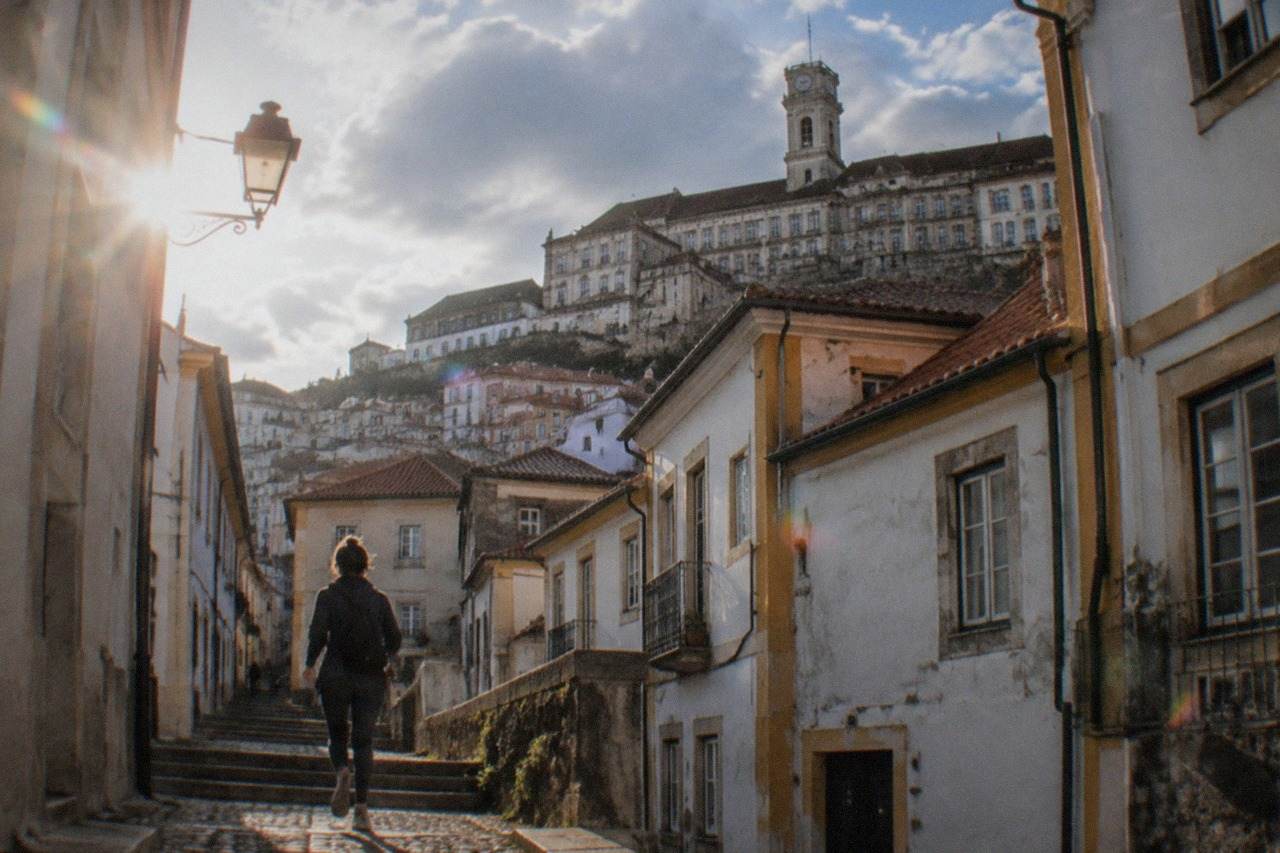
Coimbra, Portugal, the university city on the River Mondego, sits roughly halfway between Lisbon and Porto, and that position is both its best asset and the reason it gets shortchanged. Travelers treat it as a lunch stop on a longer itinerary, see the university hill from the bottom, and move on. The official record says that is a mistake. The University of Coimbra publishes a visitor programme with a baroque library that admits 50 people every 20 minutes, the municipality counted 698,151 overnight stays in 2025, and IPMA's 1991 to 2020 normals for the Coimbra / Bencanta station show a September that is warmer than June. This page answers the question directly, with the numbers a decision actually needs.
Is It Worth Going to Coimbra, Portugal?
Yes, for most travelers Coimbra is worth going to, and worth at least one full day, because it concentrates things that cannot be seen elsewhere: a working university on a hill above a river, the Biblioteca Joanina with its strict 50-person-per-20-minute entry slots, and the burial church of Portugal's first two kings. The University's own combined ticket costs 16.50 EUR, which prices a full day of sightseeing below almost any comparable European university city.
The honest qualification is that Coimbra rewards a certain kind of visitor. If the plan is beaches, the city itself has none; the district of Coimbra reaches the Atlantic, but the city does not touch the sea. If the plan is nightlife at Porto scale, Coimbra is quieter, though the student population of about 31,000, published by the University on its own "University in Numbers" block, keeps it lively in term time. What Coimbra offers densely and cheaply is history you can walk through in a day: the university hill, the old cathedral, the monasteries, and the Roman site of Conímbriga about 16 km south in the municipality of Condeixa-a-Nova.
The UNESCO inscription matters here and is almost always misstated. What was inscribed in 2013, under the name "University of Coimbra – Alta and Sofia", list reference 1387, is two components inside the old town: the university hill and the college street below. Coimbra is not a "UNESCO World Heritage city", and a guide that says so has not read the listing. The listing says the university and Rua da Sofia, and that precision is itself a reason to go, because the inscribed area is exactly the part a visitor walks anyway.
For a fuller argument on the same question from the sightseeing side, see what is special about Coimbra, Portugal, and for the practical verdict on an overnight, is it worth staying a night in Coimbra.
What Does a Day in Coimbra Actually Cost?
A full day of paid sightseeing in Coimbra costs about 26.50 EUR per adult at 2026 official prices: 16.50 EUR for the University of Coimbra combined ticket including the Biblioteca Joanina, 5.00 EUR for Mosteiro de Santa Cruz, 3.00 EUR for Sé Velha, plus a 2.00 EUR SMTUC bus ticket bought on board if the hills get the better of you. Add the 1.00 EUR per night municipal tourist tax, capped at three nights, payable at the accommodation.
Those figures come from the operating bodies themselves, and the details matter more than the totals. The University's 16.50 EUR ticket is the only way into the Biblioteca Joanina, which cannot be bought on its own; it covers the Royal Palace, St Michael's Chapel, the Chemistry Laboratory, the Academic Museum, the Cabinet of Curiosities and the Mineral Gallery, and it is valid for two days except the Joanina slot, which is fixed to the time printed on the ticket. The 12.50 EUR version drops the library. Mosteiro de Santa Cruz, the burial church of Portugal's first two kings, charges 5.00 EUR for its visitable parts, and Sé Velha charges 3.00 EUR, both figures published by the Unidade Pastoral Aeminium, which manages them.
| Site | Adult price (2026) | Source status |
|---|---|---|
| University of Coimbra combined ticket (with Joanina) | 16.50 EUR | Published by the University, valid 01.01.2026 to 31.12.2026 |
| University of Coimbra ticket (without Joanina) | 12.50 EUR | Published by the University |
| Mosteiro de Santa Cruz, visitable parts | 5.00 EUR | Published by the Unidade Pastoral Aeminium |
| Sé Velha de Coimbra | 3.00 EUR | Published by the Unidade Pastoral Aeminium |
| Museu Nacional de Conímbriga (museum and ruins, one ticket) | 10.00 EUR | Published by the national museums body |
| SMTUC bus ticket bought on board | 2.00 EUR | 2026 SMTUC tariff, in force from 01/04/2026 |
| Municipal tourist tax | 1.00 EUR per night, max 3 nights | Municipal tax page; a two-euro rise has been proposed, not yet published |
Two warnings belong next to that table. First, the Museu Nacional de Machado de Castro is closed for conservation work as of September 2026; its own page says so, and no reopening price is published, so budget nothing for it and check before relying on it. Second, the Torre da Universidade, the famous clock tower, is closed, and the University's own page states plainly that this facility is closed. Do not build an itinerary around a tower climb.
The tourist tax deserves one more line because guides keep getting it wrong. The rate is 1.00 EUR per guest per overnight stay, from age 16, capped at three consecutive nights, paid to the accommodation at check-in or check-out. The municipality's own worked example: a couple staying seven nights pays 3.00 EUR each. A two-euro rate was approved as a proposal in July 2026, but the municipal tax pages still publish one euro, so one euro is the figure to plan on.
When Is the Best Time to Go to Coimbra?
September is the standout month, and it is not a compromise: IPMA's 1991 to 2020 normals for the Coimbra / Bencanta station show September with a mean maximum of 27.4 C, higher than June's 26.3 C, and only 49.9 mm of rain, while the summer crowds have gone. July is effectively dry at 8.9 mm, August is the hottest month at a 29.1 C mean maximum, and the rain holds off until October, when the monthly total jumps to 114.5 mm.
That September point runs against most travel advice, which treats the month as shoulder season to be endured. The station data inverts it. September in Coimbra is warmer than June and only modestly wetter, and the academic year restarts, so the city has its students back, which in Coimbra is an attraction in itself: the fado sung here is the student fado, distinct from the Lisbon style, and the black capes of the final-year students are part of the street scene in term time. More of these guides are collected on Coimbra Travel Guide.
| Month | Mean max (C) | Rain (mm) | Days with 1 mm+ rain |
|---|---|---|---|
| May | 23.3 | 64.7 | 8.5 |
| June | 26.3 | 26.0 | 3.7 |
| July | 28.5 | 8.9 | 1.7 |
| August | 29.1 | 14.8 | 2.2 |
| September | 27.4 | 49.9 | 5.2 |
| October | 23.2 | 114.5 | 10.3 |
November is the wettest month at 121.5 mm, marginally ahead of October and January, so the rain in Coimbra is autumn and winter rain. One scheduling note cuts the other way: if the trip lands in May, the University closes its visitor circuit on 24 May, and Mosteiro de Santa Cruz suspends visits on the Cortejo da Queima das Fitas, a moveable Sunday, because the student festival takes over the centre. That is either a reason to avoid the week or a reason to choose it, but it is not a week for quiet sightseeing, and the exact festival dates should be confirmed with the Associação Académica before planning around them.
What Is Open, What Is Closed, and What Needs Booking?
The things that need advance booking in Coimbra are few and specific: the Biblioteca Joanina slot, which admits 50 people every 20 minutes and refuses entry outside the printed time, is the one genuine scarcity in the city, and a summer visitor who turns up without a pre-booked slot can be turned away. Everything else on the standard list, the Royal Palace, St Michael's Chapel, Sé Velha, Santa Cruz, Conímbriga, operates on ordinary opening hours that need no reservation.
The Joanina rule deserves its own paragraph because it shapes the whole day. The library is entered through the former Academic Prison in timed groups, the date and time on the ticket is the library slot specifically, online purchase closes 20 minutes before the visit, and the University's own page states that visits outside the stipulated time will not be admitted. The other spaces on the combined ticket can be visited before or after, across two days if wanted. A guided tour that includes the tickets removes the slot-hunting entirely, which is the practical case for one.
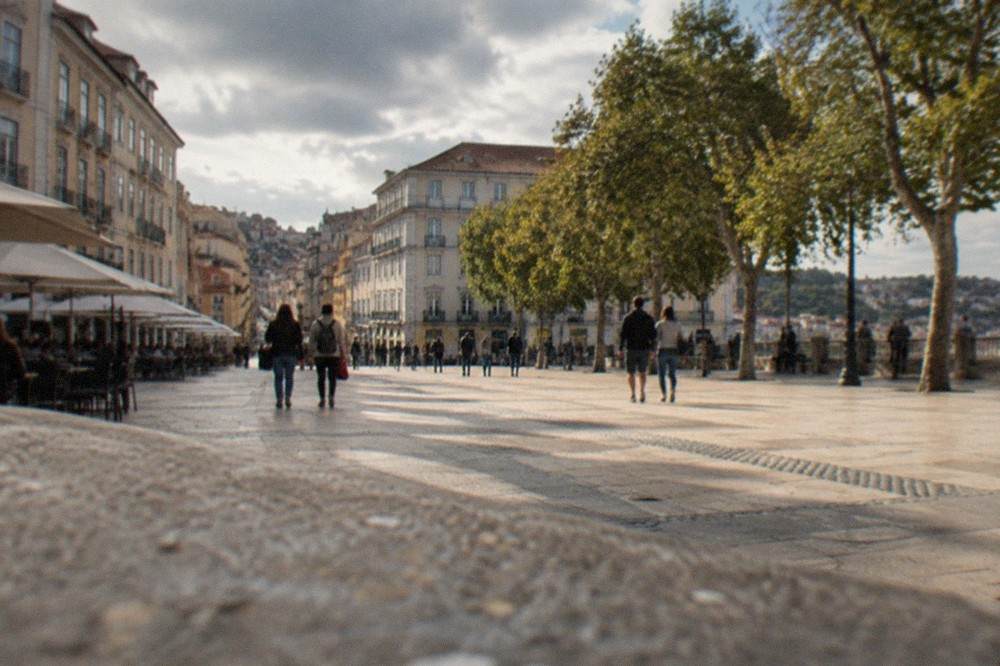
The closed list is short but needs stating, because a guide that schedules them is a guide written from memory. The clock tower is closed. The Machado de Castro museum is closed for conservation work, with a phased reopening targeted after summer 2026, though no reopening date is published as confirmed. Mosteiro de Santa Clara-a-Velha has been closed for requalification works since October 2025 and publishes no current price or hours, so it should be treated as closed until its own pages say otherwise. None of these three breaks a Coimbra itinerary, because the open list is long: the full university circuit, both cathedrals, Santa Cruz, the Botanical Garden, Portugal dos Pequenitos with its published hours of 10:00 to 19:00 from 1 March to 15 October, and Conímbriga, which is open seven days a week, 10:00 to 18:00, making it the reliable Monday option when other monuments shut.
For the deeper question of whether the university itself repays the ticket price, the dedicated verdict is at is Coimbra University worth visiting, and the case for the Roman ruins an hour round trip away is at is Conimbriga worth visiting.
Is Coimbra Worth a Detour Compared with Just Staying on the Coast?
Yes, Coimbra earns a detour on its own merits rather than on a ranking, because what it offers is structurally different from the coastal stops: a university still operating on its original hill, a baroque library with a bat colony that protects the books, and a student culture that predates the tourism. This build verified nothing about other Portuguese cities beyond Conímbriga, so no honest ranking of Coimbra against Porto, Braga or Óbidos can be offered here, and any guide offering one without sources should be read with suspicion.
What can be said with sources is what Coimbra is, and it is enough. The University publishes about 31,000 students on its own numbers page, which means the old town is not a museum district but a working campus, with all the noise, tradition and inconvenience that implies. The municipality's own economic reporting counted 698,151 overnight stays in 2025 and estimated its tourism-related cost at 3.49 EUR per overnight stay, against a one-euro tax, which is the city quietly saying it is popular and undercharging. The Joanina Library houses a colony of bats that emerge at night to eat the insects that would otherwise damage the books, a fact confirmed by the University's own space page and one that no other European library visit can match.
The comparison question is usually really a logistics question, and logistics this pack can answer in part. Coimbra has two mainline stations, Coimbra-B and Coimbra-A, in different places, and which trains call at which is a detail to confirm on CP's own site rather than on any guide, because the official station pages are unreliable to automated checks and the shuttle rule between the two stations is not published in a form this site could verify. What is verified is that the city is walkable once you are in it, with the one serious caveat that the climb from the Baixa to the university hill is steep, and the SMTUC 2026 tariff sells tickets valid on both the bus network and the new Metro Mondego BRT, so a 0.90 EUR pre-purchased trip covers more ground than its price suggests.
For the practical planning that follows a yes verdict, the walking question is answered at is Coimbra a walkable city, and the fuller sightseeing case is in the Coimbra worth visiting guide.
Common Questions About Visiting Coimbra
Common Questions About Whether Coimbra Is Worth Visiting
Is it worth going to Coimbra, Portugal?
Yes. The university circuit with the Biblioteca Joanina costs 16.50 EUR, the Joanina's 50-people-per-20-minute slots are the only genuine scarcity, and the city pairs a walkable historic core with a September that IPMA data shows is warmer than June. Plan a full day, not a lunch stop.
How many days does Coimbra need?
One full day covers the university circuit, Sé Velha and Santa Cruz. Two days add Conímbriga, about 16 km south in Condeixa-a-Nova, and the schist villages of the Lousã mountain, each of which is a half-day trip on its own.
Is Coimbra a UNESCO World Heritage site?
The city is not. What UNESCO inscribed in 2013 is "University of Coimbra – Alta and Sofia", list reference 1387: the university hill and the college street, two components inside the old town. Guides calling the whole city a World Heritage site are misreading the listing.
What is closed in Coimbra right now?
As of September 2026: the university clock tower, the Museu Nacional de Machado de Castro for conservation work, and Mosteiro de Santa Clara-a-Velha for requalification works. None is essential to a first visit, and the university circuit, both cathedrals, Santa Cruz and Conímbriga remain open.
Do I need to book the Biblioteca Joanina in advance?
Yes. The library admits 50 people every 20 minutes, cannot be bought as a standalone ticket, exists only inside the 16.50 EUR combined ticket, and refuses entry outside the printed slot. Online purchase closes 20 minutes before the visit time.
Is Coimbra expensive?
No by the standards of Western Europe. The core paid sights, the university combined ticket, Santa Cruz and Sé Velha, come to 24.50 EUR at official 2026 prices, the tourist tax is 1.00 EUR per night capped at three nights, and a pre-purchased SMTUC bus trip costs 0.90 EUR. Restaurant prices were not verified for this site, so check menus on the day.
The verdict, on the numbers the official sources actually publish: Coimbra is worth going to, worth a night rather than a stop, and at its best in September, on a day that starts with a pre-booked Joanina slot.