Is Fado Portuguese or Brazilian?
Fado is Portuguese, and Coimbra, Portugal has its own student tradition of the song. This page explains the difference from Lisbon fado and why Brazil has no fado of its own.
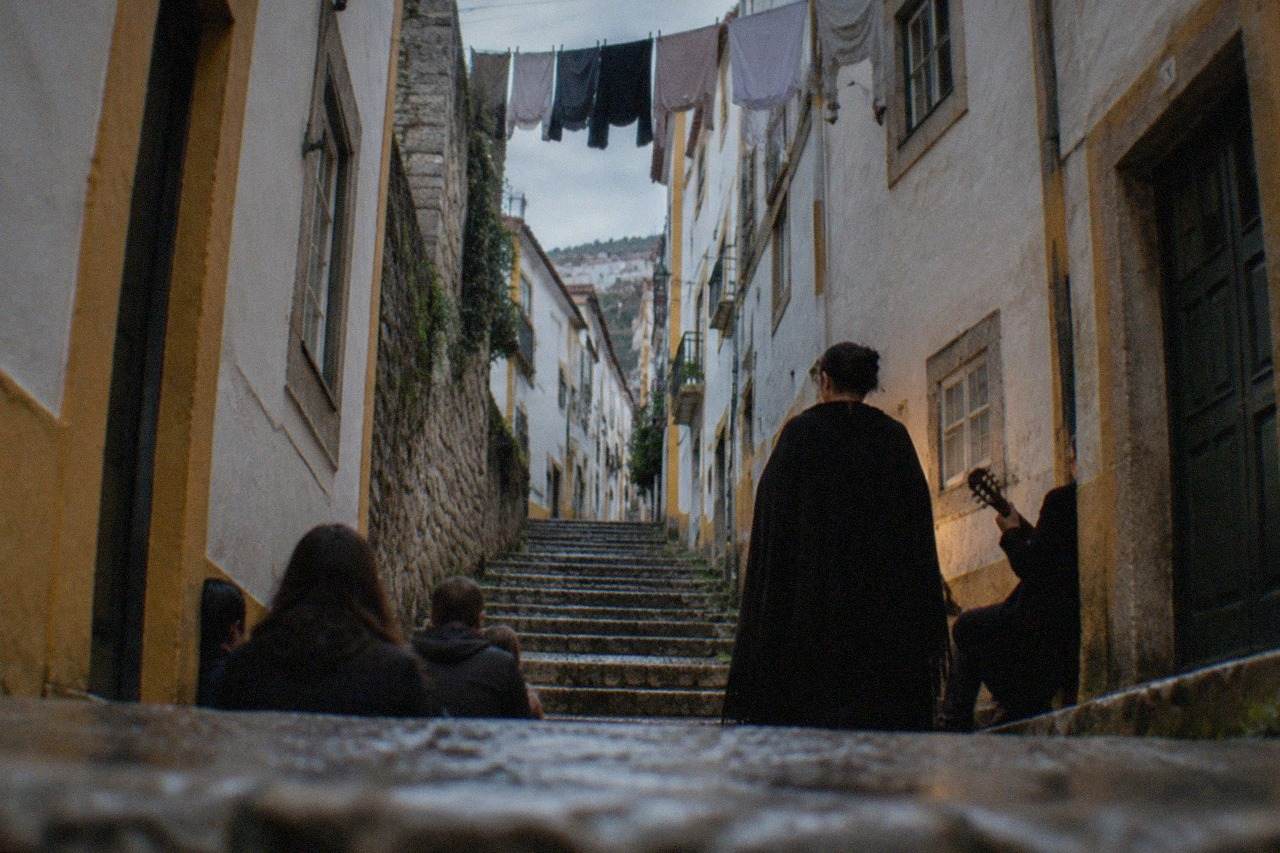
Fado is Portuguese, and Coimbra, the university city on the River Mondego in central Portugal, sings one of the country's two distinct versions of it. The question still comes up, and for an understandable reason: Portugal and Brazil share a language, and a lot of musical vocabulary has crossed the Atlantic in both directions. Fado is not one of the things that crossed. It is a Portuguese song form with two main traditions inside Portugal, one associated with Lisbon and one with Coimbra, and neither belongs to Brazil.
Is Fado Portuguese or Brazilian?
Fado is Portuguese. It is a song form that grew up in Portugal and has two recognised traditions inside the country, the Lisbon tradition and the Coimbra tradition, and Brazil has no fado tradition of its own. Brazil's musical identity was built on other forms, and while Portuguese emigrants carried fado abroad, the genre's home, its name and its UNESCO recognition all belong to Portugal. Coimbra's version is the one tied to the university and its students.
The confusion usually starts with the shared language. A Brazilian listener understands every word of a fado lyric, and Portuguese radio plays Brazilian music constantly, so the two cultures feel close to anyone looking in from outside. Feeling close is not being the same thing. Fado's characteristics, the melancholy, the restrained delivery, the tradition of silence in the room while a singer performs, are Portuguese conventions, and the Portuguese state has treated fado as part of its cultural heritage for a long time.
The word itself points the same way. Fado comes from the Latin for fate, the same root that gives the Portuguese word fado its sense of destiny and longing, and the genre is bound up with the Portuguese idea of saudade, a word with no clean translation into English or Portuguese's overseas cousins. A fuller unpacking of the word and the feeling behind it sits in what does fado mean in Portugal, and a plain-language primer on the genre is in what is a Portuguese fado.
There is a second reason the question survives, and it is a fair one. Musical genres do travel, and they do take root in new countries: the guitar reached Portugal from elsewhere, and Portugal's own folk forms absorbed influences from the wider Atlantic world over centuries. So a reader asking whether fado has a Brazilian branch is not being careless, they are applying a pattern that is usually correct. It just happens to fail here, because fado's history, its institutions and its two living traditions never left Portugal.
What Makes Coimbra Fado Different from Lisbon Fado?
Coimbra fado is sung by men, grew out of the University of Coimbra's student tradition, and is associated with the black academic cape students wear, while Lisbon fado is the other, older-seated tradition of the same genre with its own singers and its own audience. Coimbra fado is also performed both in venues and as street serenades, sung under windows in the old town, which Lisbon fado is not. The two styles share a genre and little else.
The student link is the whole key to the Coimbra style. The University of Coimbra publishes an enrolment figure of about 31,000 students, and the city's musical life has been shaped by them for generations. The black cape, the capa e batina, is the same garment that appears at student ceremonies and processions, and the fado sung by caped students is a direct offshoot of that world. This is why the Coimbra style is sometimes called simply "canção de Coimbra" rather than fado at all: its practitioners have always insisted it is a distinct tradition, not a regional accent of Lisbon's.
| Coimbra fado | Lisbon fado | |
|---|---|---|
| Who sings it | Traditionally men, from the student world | Its own tradition of singers, male and female |
| What it grew from | The University of Coimbra's student tradition | The Lisbon tradition of the genre |
| Signature garment | The black academic cape, capa e batina | The shawl, in the classic Lisbon image |
| Where it is performed | Venues and street serenades, sung under windows | Venues and dedicated fado houses |
| Its other name | Canção de Coimbra | Fado, simply |
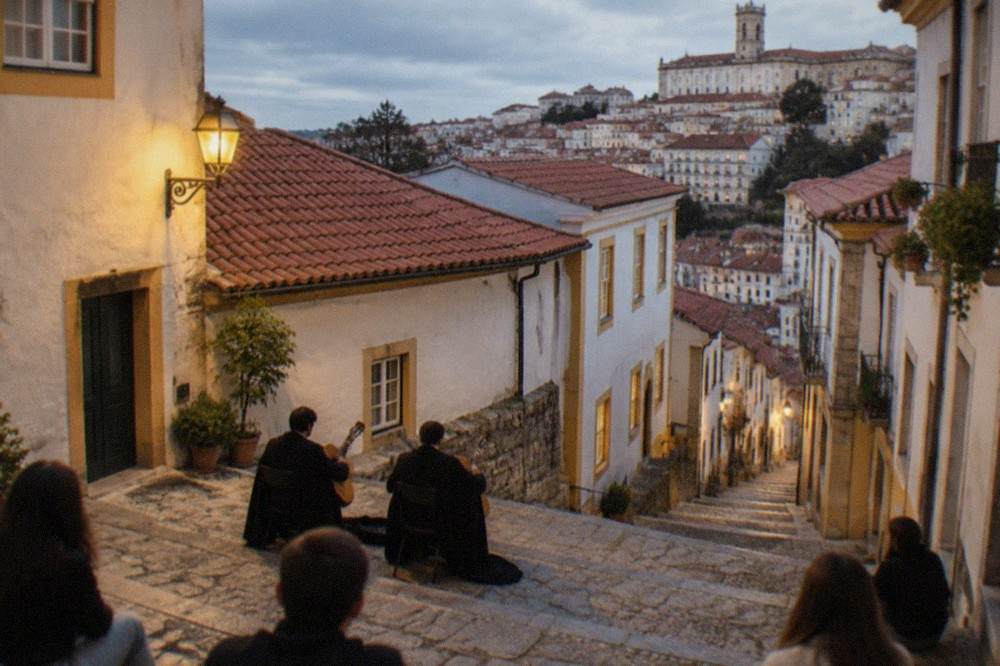
The street serenade matters more than a first-time visitor expects. In Coimbra, fado is not only something you buy a ticket for: it is something that happens on stairways and squares, at night, with the singers in their capes and an audience that keeps quiet. The tradition is covered in detail in the Coimbra fado guide, including how the student calendar shapes when and how it is sung.
The distinction is not academic trivia, it changes what an evening in the city sounds like. A Lisbon fado house runs on a professional circuit with a fixed room, a fixed repertoire and a paying audience that arrives and leaves. Coimbra's version lives half inside the university's ceremonial calendar and half out on the street, which means the same city can offer a ticketed show on one night and an unannounced serenade on the next, and a visitor who knows the difference plans for both instead of assuming one.
Where Can You Hear Fado in Coimbra?
The honest answer is that this site verified nothing operational about any individual fado house in Coimbra, no show times, no ticket prices, no addresses and no nightly schedules, so every operational detail has to come from the venue itself. What is safe to say is the shape of the offer: fado in Coimbra is performed in venues and as street serenades, and a booked live show with a glass of port wine is the most reviewed option at 4.7 from 1,234 reviews.
That 50-minute show, from 18 US dollars per person on the operator's live listing, is the single most reviewed fado experience in the city's roster, and its popularity says something about demand: more than twelve hundred people have rated it, which is an order of magnitude beyond any other fado product listed for Coimbra. It is a seated, indoor, ticketed evening rather than a street serenade, which makes it the reliable option for a visitor who wants a guaranteed performance on a specific night. The rest of the planning pages sit on Coimbra Travel Guide.
For the rest, the practical approach is to treat each venue as its own source of truth. A fado house's current schedule, price and address live on that house's own channels, and nothing on this page should be read as a schedule. What this page can add is context, and the deeper rundowns live in where to hear fado in Coimbra and in the wider list of things to do in Coimbra.
Is There a Brazilian Fado?
No. Brazil has no fado tradition of its own, and the Brazilian musical canon was built on other forms entirely, samba, bossa nova and the rest, none of which are fado. Portuguese emigrants took fado to communities abroad, including in Brazil, but an expatriate audience is not a second homeland of the genre. Fado's two traditions are both Portuguese, one in Lisbon and one in Coimbra, and that is the complete list.
It helps to state the comparison carefully rather than dismissively. Brazil's music is not a lesser version of anything: it is one of the most influential musical cultures in the world, and it simply developed along different lines. Fado's defining conventions, the hushed room, the fate-soaked lyric, the two-guitar accompaniment in the Portuguese manner, are specific to Portugal. When a Brazilian artist performs fado, which happens, it is an interpretation of a Portuguese form, the same way a Portuguese artist performing samba is interpreting a Brazilian one.
The direction of travel matters too. What usually generates the question is a search result that mixes fado with Brazilian genres because both are sung in Portuguese. A search engine does not know the difference between a language and a tradition. A listener who has heard both knows immediately: they are different musics, with different rhythms, different instruments and different emotional registers, sharing only the words.
What Should You Know Before a First Fado Show in Coimbra?
The rule that surprises newcomers is silence: a Coimbra fado audience goes quiet when the singer starts, and talking, clapping mid-song or photographing through a performance breaks the convention. The dress code is relaxed, and tipping is not the fixed obligation it is in some dining contexts. A first show runs short, often under an hour, so it slots easily into an evening rather than consuming one.
The silence rule deserves its own sentence because it is the one visitors most often break without meaning to. Fado rooms in Coimbra treat a performance as something you stop for, not background music, and the street serenade tradition comes from the same instinct: the city stops, the singer sings, then life resumes. Practical etiquette questions, including what to wear and whether to tip, are answered in detail in what to wear to a fado show and do you tip at a fado show.
For visitors building an evening around more than one thing, the pairing that works is a walk first and fado after. The city's budget walking tour, from 5.85 US dollars and rated 5 from 151 reviews over two and a half hours, covers the top attractions and ends you in the old town with the evening still ahead of you, which is exactly where the fado is.
That walk-and-listen shape is the way most evenings in Coimbra actually go. The old town is compact and steep, the university hill sits above the river, and the walk between the two burns an hour pleasantly while the light goes. By the time the street lamps come on, the serenade spots are within a few minutes of anywhere you happen to be standing, and a booked show gives the night a fixed point to build around. Neither half of the evening depends on the other, which is what makes the combination easy: miss the serenade and the show still happens, miss the show and the serenade tradition is still out there on the stairways.
Common Questions About Fado in Coimbra
Is Fado Portuguese Or Brazilian?
Fado is Portuguese. It has two recognised traditions, Lisbon's and Coimbra's, and Brazil has its own separate musical heritage rather than a fado of its own.
What is the most famous fado song?
The most famous names in fado belong to the Lisbon tradition, while Coimbra's repertoire is built around its student songs. The specific answer, with the songs, is in what is the most famous fado song.
Do men and women both sing Coimbra fado?
Coimbra fado is traditionally sung by men, growing out of the University of Coimbra's student tradition and associated with the black academic cape.
Can you hear fado in the street in Coimbra?
Yes. Coimbra fado is performed both in venues and as street serenades, sung under windows in the old town, in addition to ticketed shows.
Is a fado show in Coimbra expensive?
The most reviewed booked show in the city starts at 18 US dollars per person on the operator's live listing and runs about 50 minutes, with a glass of port wine included. Street serenades cost nothing to stand and listen to.
Fado is Portuguese, Coimbra sings its own student version of it, and Brazil's music, great as it is, is a different tradition entirely.