Where Should I Stay in Coimbra, Portugal?
Where to stay in Coimbra, Portugal: the best neighbourhoods for a first visit, what each area costs, the 1.00 EUR tourist tax, and how to pick between the Baixa, the Alta and Santa Clara.

Coimbra, Portugal, the university city on the River Mondego, splits cleanly into three places a visitor can sleep: the Baixa, the low-lying downtown of arcaded streets between the river and the hill; the Alta, the upper town around the Paço das Escolas where the university sits; and Santa Clara, across the Mondego on the flat south bank. Choosing between them is mostly a choice between convenience and atmosphere, because the city is compact enough that no base puts you far from the sights. The municipality recorded 698,151 overnight stays in 2025, its own published figure for the municipality, and the great majority of those visitors were absorbing the same trade-off this page works through.
Where Should I Stay in Coimbra, Portugal?
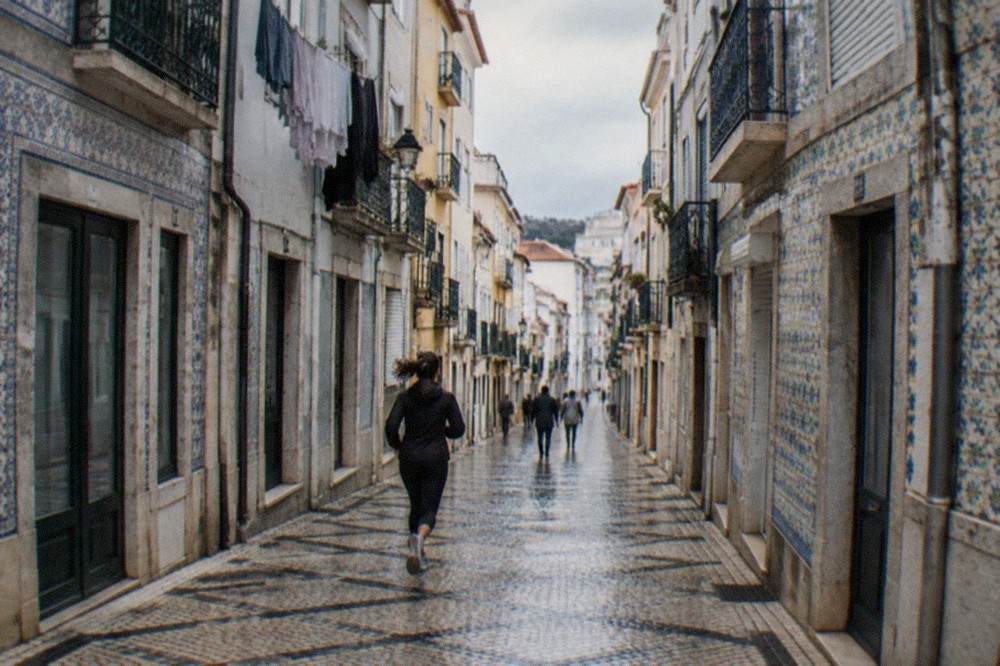
For a first visit, stay in the Baixa, the downtown between the river and the university hill: it is flat, it holds most of the restaurants and the historic cafés, and it is the part of the city that works without a climb. Stay in the Alta if a view over the rooftops matters more than easy luggage hauling, and stay across the river in Santa Clara if you want quiet, green space and the Portugal dos Pequenitos on your doorstep.
That is the short version, and it holds for almost every traveller. The Baixa is where the city's commercial life happens, along Rua Ferreira Borges and the streets around Praça do Comércio, and it is the natural landing zone for anyone arriving by train and walking in from the station area. The Alta above it is where UNESCO's inscribed property actually sits: the 2013 inscription, list reference 1387, covers "University of Coimbra - Alta and Sofia", two components inside the old town, the university hill and the college street below. It does not cover the whole city, a distinction that matters here because the Alta is the part most visitors come to see and the part that involves stairs.
The third option, Santa Clara, lies across the Mondego on the south bank. It is quieter, greener, and close to the Parque Verde do Mondego, and it suits families, anyone travelling by car, and visitors who would rather look at the skyline than live inside it. The trade-off is that every sight on the hill means crossing back over the river.
For help matching an area to a trip length, see how many days to stay in Coimbra, and for a fuller area-by-area breakdown, the site's where to stay guide goes deeper on individual streets.
Which Coimbra Neighbourhood Fits Your Trip?
The Baixa fits a first visit of one to three days, the Alta fits a short romantic stay built around the university and the views, and Santa Clara fits families, drivers and longer, quieter trips. The Baixa wins on walkability because it is flat and central; the Alta wins on atmosphere and sunsets; Santa Clara wins on space, parking and price. None of the three is a wrong answer, but only one of them is the best answer for a given trip.
That is the honest shape of the decision. Coimbra is a walkable, hilly city, and the question of where to sleep is really a question of how much climbing a visitor wants in the morning. This site's own page on Coimbra's walkability covers the slopes in detail; the summary is that the drop from the university hill to the river is steep enough that luggage, small children and summer heat all argue for sleeping low and climbing once, on purpose, rather than sleeping high and descending daily.
| Area | Best for | Terrain | Trade-off |
|---|---|---|---|
| Baixa (downtown) | First visits, one to three days, no car | Flat, between river and hill | Least scenic addresses, some street noise |
| Alta (upper town) | Views, sunsets, university-first trips | Steep, stairs and cobbled lanes | Luggage haul, quieter at night for dining |
| Santa Clara (south bank) | Families, drivers, longer stays | Flat, across the Mondego | Every hill sight needs a river crossing |
A stay in the Baixa also puts the visitor under the hill rather than on it, which matters for the Biblioteca Joanina. The University's own visit page states the library admits 50 people every 20 minutes, that it cannot be bought on its own, and that it exists only inside the 16.50 EUR combined ticket, where the time printed on the ticket is the library slot. Booking a morning slot and walking up from the Baixa is the standard pattern; sleeping in the Alta makes an early slot easier but changes little else about the day.
Is Staying in the Alta Worth the Climb?
The Alta is worth it for travellers who want to wake up inside the postcard: it is the layer of the city with the university, the Sé Velha at its edge, the views over the Mondego, and the evening light that makes Coimbra's skyline famous. It is not worth it for anyone with heavy luggage, limited mobility, or small children, because the streets are steep, cobbled and, in places, stepped, and taxis cannot reach every door.
The upper town's addresses command the city's best views, and the sunset over the river from the terraces near the Paço das Escolas is the single most photographed scene in Coimbra. The cost is vertical: the climb from the Baixa to the university gates is a genuine hill, and it is done, in summer heat, several times a day if a visitor sleeps low and sights high. Sleeping in the Alta inverts that, putting the climb at the end of the day rather than the start.
One practical note that belongs in any Alta discussion: the Torre da Universidade, the clock tower, is closed, and the University's own information page says so plainly. No hotel view, no itinerary and no tour on this site should promise a tower climb. The same applies to two other sights visitors often build an Alta stay around: the Museu Nacional de Machado de Castro is closed for conservation work, and Mosteiro de Santa Clara-a-Velha has been closed for requalification works since October 2025. Check status before booking a stay around any of them.
A walking tour is a good way to learn the hill's geography on day one, so the daily route back to the hotel is never a guess. The Coimbra Top Attractions Walking Tour covers the main sights in about two and a half hours, and Check availability if that first-day orientation appeals.
How Much Does a Night in Coimbra Cost?
Budget roughly 15 to 25 EUR a night for a hostel bed, 60 to 120 EUR for a mid-range double in the Baixa or Santa Clara, and 150 EUR and up for a hill-view or heritage property, with high season roughly June through September pushing the top of each range. On top of the room, every guest aged 16 and over pays the municipal tourist tax of 1.00 EUR per overnight stay, capped at three consecutive nights, paid to the accommodation at check-in or check-out.
Those room ranges are planning ranges, not promises: Coimbra's hotel prices move with the academic calendar and the summer, and the live price is on the operator's listing. The tourist tax, by contrast, is fixed and official. The municipality's own service page sets it at 1.00 EUR per guest per overnight stay, in all tourist developments and local accommodation, capped at three consecutive overnight stays per person, applying from age 16, charged all year with no low-season exclusion, and payable directly to the accommodation. The municipality's own worked example: a couple staying seven nights pays 3.00 EUR each, 6.00 EUR total. A rise to 2.00 EUR was approved as a proposal in July 2026, but the municipality's own tax pages still state one euro, so one euro is the number to budget. The rest of the planning pages sit on Coimbra Travel Guide.
The tax exists because tourism costs the municipality money: its 2025 study put municipal tourism-related spending at 1.94 million EUR and its annual associated cost at 2.44 million EUR, a cost of 3.49 EUR per overnight stay against which the one-euro tax sits below cost.
| Item | Figure | Source basis |
|---|---|---|
| Tourist tax, per guest per night | 1.00 EUR, max 3 nights, age 16+ | Municipal tax page, in force since 5 April 2023 |
| University combined ticket with Biblioteca Joanina | 16.50 EUR adult | University visit site, 2026 season |
| University ticket without the Joanina | 12.50 EUR adult | University visit site, 2026 season |
| Sé Velha de Coimbra individual entry | 3.00 EUR | Parish visitor page |
| Mosteiro de Santa Cruz individual entry | 5.00 EUR | Parish visitor page |
| SMTUC bus ticket bought on board | 2.00 EUR | 2026 SMTUC tariff |
| SMTUC pre-purchased ticket, 3+ trips | 0.90 EUR per trip | 2026 SMTUC tariff |
The bus line in that table matters for accommodation choice: a 2026 SMTUC ticket is valid on the Metro Mondego network too, so a stay in Santa Clara or further out is cheaper and simpler than it was a year ago. The tariff lists a driver ticket at 2.00 EUR and pre-purchased trips at 0.90 EUR each when bought in packs of three or more, with each journey valid 90 minutes on the urban network, transfers included.
When Is the Best Time of Year to Book a Stay?
Book for May, June, September or October: the University's own visitor hours run a summer schedule from 1 April to 30 September, and IPMA's 1991 to 2020 normals for the Coimbra / Bencanta station show September averaging a 27.4 C mean maximum with only 49.9 mm of rain, warmer and drier-feeling than most visitors expect, while the rain truly arrives in October at 114.5 mm and peaks in November at 121.5 mm.
September is the underbooked month. Its mean maximum is higher than June's 26.3 C, the student calendar has not yet filled the streets, and hotel demand in the Baixa eases once the summer holidays end. The catch is that the university's own calendar interrupts visits: the University closes its visitor circuit on 24 May and on 4 October, and warns that academic ceremonies overlap the tourist circuit through the year, so a stay built entirely around the Paço das Escolas should check those dates against the University's visit page before the room is booked.
July is effectively dry, at 8.9 mm for the month, but August, not July, is the hottest month at this station, averaging 10.9 days above 30 C, which argues for an air-conditioned room in any summer booking. Winter stays are cheap and quiet, with January averaging a 15 C mean maximum, but the same months average over 110 mm of rain each.
Where Should I Stay in Coimbra, Portugal, for a Day Trip Instead?
A day tripper should not stay anywhere in Coimbra at all, but should arrive early and base the day in the Baixa, because the flat downtown is where the hours go furthest: the Sé Velha, the Mosteiro de Santa Cruz and the riverfront are all on the level, and the single climb to the university can be timed for a pre-booked Joanina slot. Only a two-night stay justifies the Alta or Santa Clara.
The logic is arithmetic. With one day, the cost of checking in, climbing and checking out is time spent on logistics rather than the city, and the Baixa's concentration of sights makes it the efficient base even for lunch and a rest. Two nights change the calculation: the second evening is when the Alta's views and Santa Clara's riverside earn their keep. Travellers weighing Coimbra against an overnight stop should read is Coimbra worth staying in, and anyone arriving from the capital can check the practicalities on taking a day trip from Lisbon to Coimbra.
For a day trip built around the university, the skip-the-line university tour with a local guide removes the single biggest scheduling risk, the Joanina slot, though the library's own timed-entry rule still applies to every visitor.
Common Questions About Staying in Coimbra, Portugal
Where should I stay in Coimbra, Portugal?
The Baixa, the flat downtown between the river and the university hill, is the best base for most visitors: it holds the restaurants, the historic cafés and the railway-side approach, and nothing in it requires a climb. The Alta suits visitors who want views and will accept stairs, and Santa Clara, across the Mondego, suits families, drivers and quieter stays.
What neighborhood should I stay in Coimbra for a first visit?
The Baixa. It is the part of the city that works on foot without a hill, and every major sight is either on the level or one deliberate climb away. The site's dedicated page on which Coimbra neighborhood to stay in breaks the areas down street by street.
Is it better to stay in the Alta or the Baixa in Coimbra?
The Baixa for convenience and dining, the Alta for views and atmosphere. The Alta is the layer around the university and the UNESCO-inscribed hill, but its streets are steep and cobbled, so luggage and summer heat both favour the Baixa, with the climb made once a day on purpose.
How much is the tourist tax in Coimbra?
1.00 EUR per guest per overnight stay, capped at three consecutive nights, from age 16, paid to the accommodation. A couple staying seven nights pays 3.00 EUR each. A two-euro rate was approved as a proposal in July 2026 but the published rate remains one euro.
How many days should I stay in Coimbra?
Two nights is the sweet spot: one for the university hill and the Joanina Library, one for the Baixa, the monasteries and the riverside. The details are on the site's page on how many days to stay in Coimbra.
Is Coimbra walkable enough to stay without a car?
Yes. The city is compact and the sights cluster on the hill and in the flat downtown, so a car is a liability in the old town. SMTUC buses, at 2.00 EUR for a driver ticket or 0.90 EUR pre-purchased under the 2026 tariff, cover the rest, and those tickets are valid on the Metro Mondego network too.
Whatever the choice, book the room early enough to reserve a Biblioteca Joanina slot for the same trip, because the 50-people-per-20-minutes ceiling, not the hotel market, is the scarcity that actually shapes a stay in Coimbra, Portugal.