Was Coimbra Ever the Capital of Portugal?
Yes, Coimbra in Portugal served as a medieval seat of the Portuguese crown before Lisbon. Here is what that means, and where the royal past is still visible today.
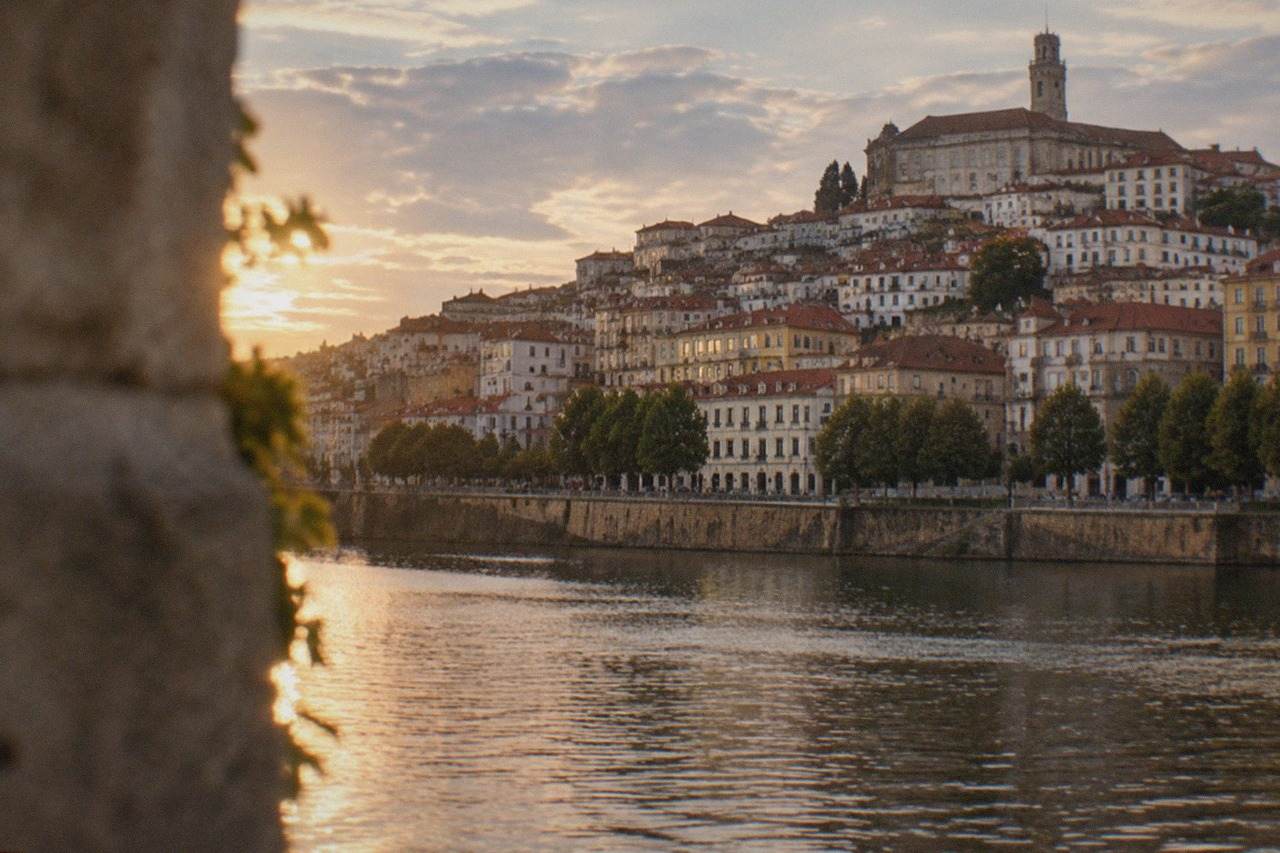
Coimbra, the university city on the River Mondego in central Portugal, asks a royal question of everyone who climbs to its hilltop old town: was this where Portugal was governed from before Lisbon took the crown for good? The answer matters, because it explains why a mid-sized city in the Centro region holds a king's burial church, a royal palace turned university, and one of the most famous libraries in Europe. This page sets out what the verified record supports, what is still standing to see, and what the standard practical facts are for visiting those places now.
Was Coimbra Ever the Capital of Portugal?
Yes. Coimbra served as a seat of Portugal's medieval crown before the court settled permanently in Lisbon, and for stretches of the Middle Ages the city functioned as the kingdom's capital in everything except the modern word. The strongest surviving proof is Mosteiro de Santa Cruz, the burial church of Portugal's first two kings, which no ordinary provincial town would have been given.
That needs unpacking, because "capital" meant something different in medieval Portugal than it means now. The Portuguese crown was itinerant: the court moved with the king, and the city that housed the court, the treasury and the principal religious institutions was, in practice, the seat of the kingdom. Coimbra held that role in the medieval period, and the physical evidence of it survived later centuries better than in most Portuguese cities.
The most concrete piece of evidence is Santa Cruz. The monastery's church holds the tombs of Portugal's first two kings, a fact the parish's own visitor pages confirm, and royal burial is a deliberate act of political geography. Kings are buried where the kingdom's power lives. A city chosen to hold the founding monarchs' remains is a city the crown treated as its own.
The second piece is the hill itself. The Paço das Escolas, today the ceremonial heart of the University of Coimbra, occupies the site of the former Royal Palace of Alcáçova, and the palace's very name, Alcáçova, marks it as a fortified high seat of power. When the university took over the palace, it inherited the best-defended and most prestigious position in the city, which is why the UNESCO inscription of 2013, list reference 1387, names the "University of Coimbra, Alta and Sofia" as a World Heritage property built around that royal hill. The inscription covers two components of the old town, the university hill and the college street of Rua da Sofia, and it is worth being precise: the inscription is for the university and its college street, not for the whole city.
What this site will not do is print the dates that usually accompany this story. A regnal date, a foundation year or a precise span of years for Coimbra's period as capital is a factual claim that has to come from a primary source, and the verified research behind this page does not carry one. The medieval record is summarised honestly as: Coimbra was a royal seat before Lisbon, and the city's monuments say so.
What Remains of Coimbra's Royal Past Today?
Four places carry the royal story in physical form: Mosteiro de Santa Cruz with the tombs of the first two kings, the Sé Velha de Coimbra, the former Royal Palace of Alcáçova on the university hill, and the Roman cryptoporticus under the closed Machado de Castro museum. Between them, a visitor can read the whole arc from Roman Aeminium to medieval royal seat to university city.
Mosteiro de Santa Cruz is the anchor. The Unidade Pastoral Aeminium, which manages the monument, publishes an individual ticket at 5.00 EUR, a group rate of 3.50 EUR per person for groups of twelve or more, and visiting hours of 09:30 to 16:30, with Sundays and religious holidays on a separate schedule. One practical warning comes straight from the parish's own page: visits are suspended on Easter Sunday and on the day of the Cortejo da Queima das Fitas, the moveable Sunday parade of the student festival. That closure is official, and it catches visitors out every May.
The Sé Velha de Coimbra, the old cathedral, is one of the most important Romanesque buildings in the country and stands a few minutes downhill from Santa Cruz. The parish publishes an individual ticket at 3.00 EUR, a group rate of 2.50 EUR per person for groups over ten, summer hours of 09:30 to 18:30 and winter hours of 09:30 to 17:30. A cathedral of this scale and age is itself evidence of a city that mattered: nobody builds a fortress-cathedral in a place they expect to lose.
The third site is the university hill itself. The Paço das Escolas circuit, including the Royal Palace spaces, the Capela de São Miguel and the Biblioteca Joanina, is visitable on the University's own combined ticket, and the palace architecture is the royal past made visible. The fourth is the most easily missed: the Museu Nacional de Machado de Castro is built over a Roman cryptoporticus of the mid-1st century, part of the visit route when the museum is open. The museum's own page on the national Museus e Monumentos portal currently states it is closed for conservation work, and this site publishes no reopening price, because no official page carries one.
| Site | Link to the royal past | Current visitor status | Published ticket |
|---|---|---|---|
| Mosteiro de Santa Cruz | Burial church of Portugal's first two kings | Open; visits suspended on the Cortejo da Queima das Fitas and Easter Sunday | 5.00 EUR individual |
| Sé Velha de Coimbra | Medieval fortress-cathedral of the royal city | Open; summer 09:30 to 18:30, winter 09:30 to 17:30 | 3.00 EUR individual |
| Paço das Escolas and Alcáçova | Former Royal Palace, now the University's ceremonial heart | Open daily on the combined ticket; closed 24 and 25 December 2026, 1 January 2027 and 24 May | 16.50 EUR adult with Joanina slot |
| Museu Nacional de Machado de Castro | Built over a mid-1st-century Roman cryptoporticus | Closed for conservation work per its own page | None published |
A walking tour ties these places together efficiently. The Coimbra Top Attractions Walking Tour covers the core sights in two and a half hours, and the University of Coimbra Guided Tour with Tickets handles the hill and its admissions, both of which appear in the selection below.
For anyone weighing the city's wider claim on a traveller's time, the companion pages on why Coimbra is famous and what is special about Coimbra, Portugal cover the student traditions, the fado and the food that grew out of this royal and academic inheritance.
How Did a Royal Seat Become a University City?
The transformation runs through the Paço das Escolas: the Royal Palace of Alcáçova passed to the University of Coimbra, which turned the seat of medieval power into the seat of Portuguese learning. The University's own published figures list about 31,000 students today, and the 2013 UNESCO inscription recognises the university hill and Rua da Sofia as a single World Heritage property, criteria (ii), (iv) and (vi).
The University's homepage states 31,256 students under "The University in Numbers", alongside 434 courses, 1,935 professors and 22 libraries, and this site reports it as the University's current published figure rather than pinning it to an academic year. The student body is the modern descendant of the court: the institution inherited the hill, the prestige and the political weight of the royal seat, and it still holds all three.
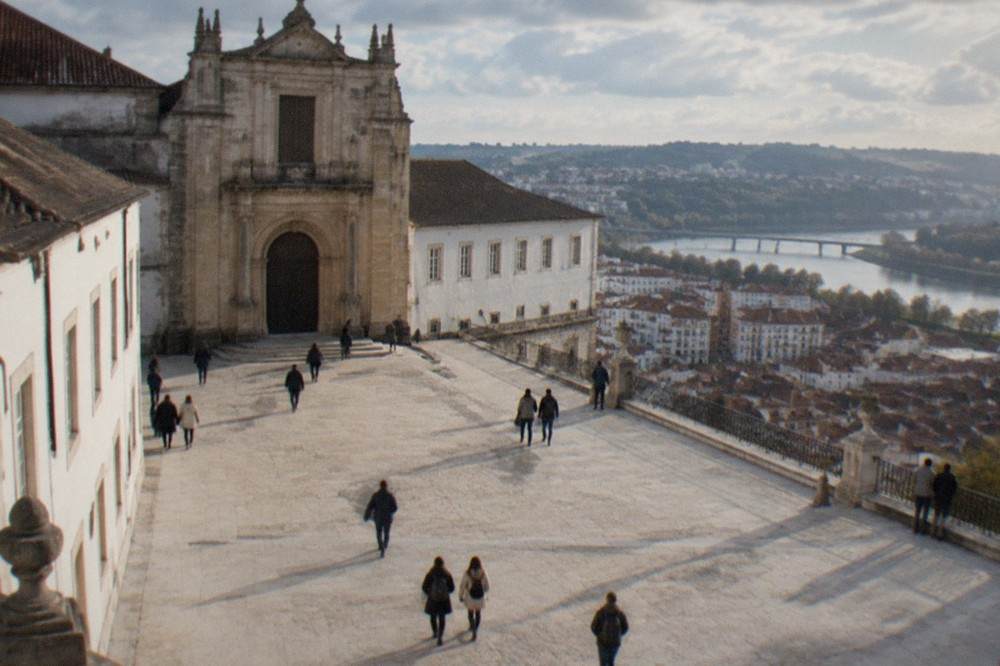
The Biblioteca Joanina is the practical centrepiece, and it has the strictest entry rule of any monument in the city. The University's own programme page states that entries are limited to 50 people every 20 minutes, that the library cannot be bought on its own and exists only inside the 16.50 EUR combined ticket, and that the time printed on the ticket is the Joanina slot specifically. Entry outside that slot is refused, online purchase closes 20 minutes before the visit time, and the rest of the ticket's spaces remain valid for two days. The library also houses a colony of bats that eat the insects which would otherwise damage the books, a detail the University's own space page confirms, and a genuine reason the collection has survived so well.
The full published ticket structure for the 2026 season, stamped valid from 1 January to 31 December 2026 on the University's visit pages, is worth knowing before booking anything:
| University ticket | Adult price | Duration | Includes |
|---|---|---|---|
| Joanina Library + University + Science Museum | 16.50 EUR | 3 hours | Baroque Library with timed slot, Royal Palace, Capela de São Miguel, Chemistry Laboratory, Academic Museum, Cabinet of Curiosities, Mineral Gallery |
| University + Science Museum | 12.50 EUR | 2 hours 30 minutes | The same spaces without the Joanina Library |
| Guided tour, Palace of Schools | 25.00 EUR | 1 hour 30 minutes | Guide-led palace circuit; Science Museum spaces not included |
| Guided tour, Botanical Garden | 10.00 EUR | 1 hour 30 minutes | Garden walk from the side entrance by the Garden Arches |
One closure to plan around: the Torre da Universidade, the clock tower, is shut. The University's own information page states plainly that the facility is closed, so no ticket, tour or itinerary on this site will ever describe a tower climb. The same page lists the current cycle's closing dates for the whole circuit, 24 and 25 December 2026, 31 December 2026 and 1 January 2027, plus 24 May, which is the day the circuit closes for the Queima das Fitas period.
The guided option above is the one this site points people at for the hill, because it bundles the admissions with a former student as guide in a group of ten, and the Joanina slot is exactly the kind of thing a guide handles well. The operator's live listing carries the current price and availability.
Do You Need a Guide for the Royal and University Sights?
No, every royal-era site in Coimbra can be visited independently on published tickets, but a guide earns its place on the university hill, where the Joanina's 50-people-per-20-minutes ceiling and fixed printed slot make timing the difference between seeing the library and being turned away. Independent visitors should book the combined ticket online and treat the Joanina slot as the anchor of the day.
The practical logic is simple. Santa Cruz and the Sé Velha are short, self-explanatory visits with cheap published tickets and no timed entry. The Paço das Escolas is different: the combined ticket's other spaces are valid for two days, but the Joanina slot is fixed, refused outside its printed time, and capped at 50 people every 20 minutes. In summer, with the circuit open from 09:00 to 20:00 under the University's summer schedule, the slots fill, and a visitor who arrives without a pre-booked time can lose the library entirely.
A certified guide also unlocks the story, which on this hill is the whole point. The Royal Palace of Alcáçova, the Capela de São Miguel and the Joanina are layered with the academic and royal history that the question on this page is really about, and the licensed tours on the hill are led largely by people who studied there. For a one-off visit, the trade between a 16.50 EUR self-guided ticket and a guided tour with admissions included is mostly about how much of that layer a visitor wants unpacked.
How Long Should You Spend in Former Royal Coimbra?
Two days is the comfortable answer for the royal and university core, with the first day given to the hill and the second to the Baixa, Santa Cruz and the Sé Velha, and a third day available for Conímbriga, the Roman town roughly 16 km south in Condeixa-a-Velha. The Joanina's two-day ticket validity is built for exactly this pace, since the combined ticket's non-library spaces stay valid for two days.
Day one: the Paço das Escolas circuit, anchored on the booked Joanina slot, with the Capela de São Miguel, the Academic Museum and the viewpoints over the River Mondego. Day two: downhill through the Arco de Almedina into the Baixa, then Santa Cruz, the Sé Velha and, when it reopens, the Machado de Castro with its Roman cryptoporticus. The Conímbriga extension is worth flagging for anyone interested in the deeper past: the Museu Nacional de Conímbriga publishes a combined museum-and-ruins ticket at 10.00 EUR, hours of 10:00 to 18:00 with the ticket office closing at 17:15, and, unusually for Portugal's national monuments, it opens seven days a week, which makes it the reliable Monday option when other monuments close.
For a fuller treatment of pacing, see how many days you need in Coimbra, and for the wider case for the city, is Coimbra in Portugal worth visiting.
The royal question, in the end, is also a tourism question. A city that once held the tombs of the first two kings now holds one of the most constrained visitor experiences in Portugal, a library that admits 50 people every 20 minutes and refuses everyone else. Book the slot, walk the hill, and the medieval capital is still legible in the stones.
Common Questions About Coimbra's Capital Past
Was Coimbra ever the capital of Portugal?
Yes. Coimbra served as a seat of the medieval Portuguese crown before the court settled permanently in Lisbon, and Mosteiro de Santa Cruz, the burial church of Portugal's first two kings, is the standing proof of that status.
Is Coimbra a UNESCO World Heritage city?
No, and this is the most common error in guides to the city. UNESCO inscribed "University of Coimbra, Alta and Sofia" in 2013, list reference 1387, covering the university hill and the Rua da Sofia college street, not the city as a whole.
Where are Portugal's first two kings buried?
In Mosteiro de Santa Cruz in Coimbra. The monastery is open to visitors, with an individual ticket published at 5.00 EUR and hours of 09:30 to 16:30, though visits are suspended on the Cortejo da Queima das Fitas, a moveable Sunday in May.
Can you climb the University of Coimbra tower?
No. The University's own information page states that the Torre da Universidade facility is closed, and no tour or ticket on this site offers a climb.
Can you visit the Biblioteca Joanina on its own?
No. The library exists only inside the 16.50 EUR combined University ticket, admits 50 people every 20 minutes, and the time printed on the ticket is the fixed entry slot. Arrival outside that slot is refused.
What is the best day trip from Coimbra for older history?
Conímbriga, the Roman town roughly 16 km south of Coimbra in the parish of Condeixa-a-Velha. The Museu Nacional de Conímbriga publishes a combined museum-and-ruins ticket at 10.00 EUR and opens seven days a week, 10:00 to 18:00.
The short version of the whole page: yes, Coimbra ruled Portugal before Lisbon did, the first two kings still lie in Santa Cruz, and the royal hill they left behind is now the country's most storied university, which Coimbra Travel Guide covers site by site across the rest of these pages.