The Aqueduct of São Sebastião in Coimbra, Portugal: What It Is and How to Visit
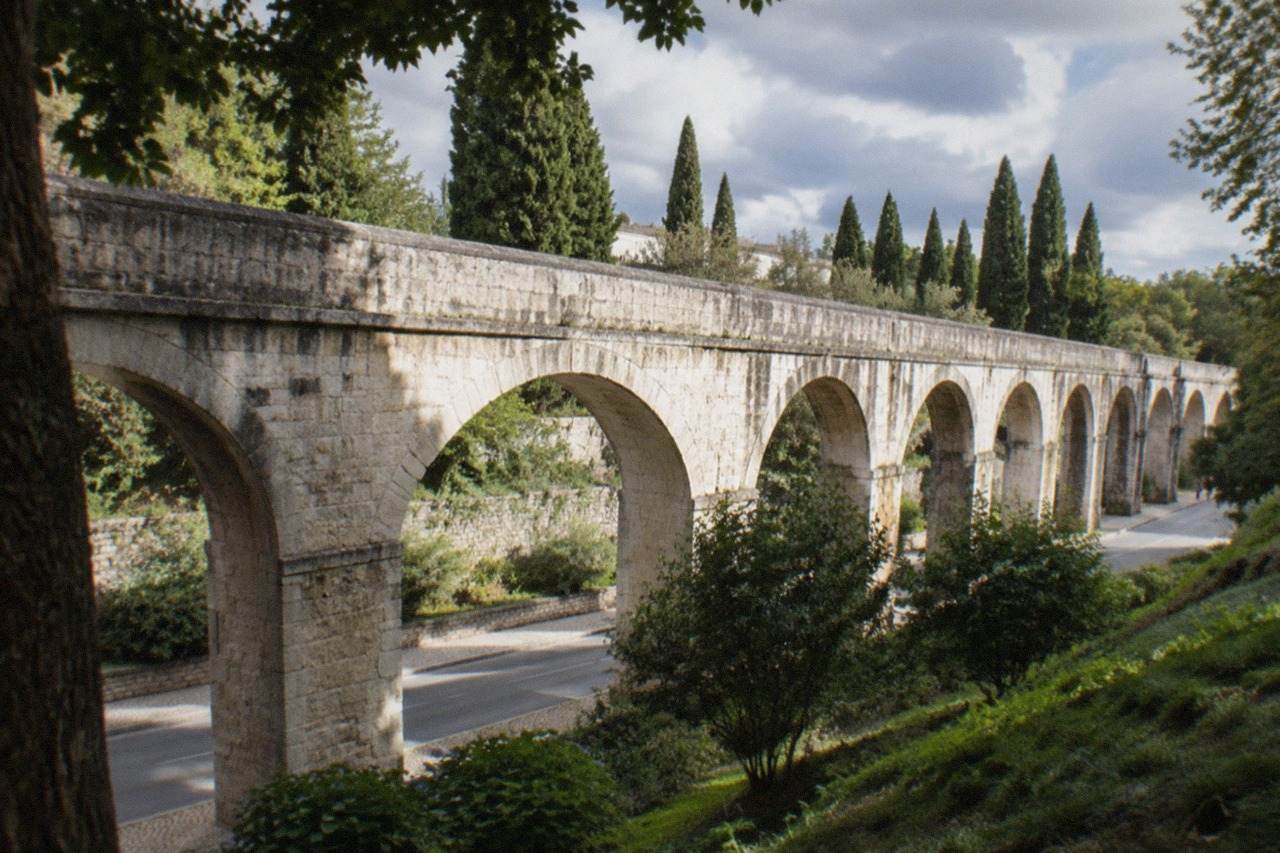
The Aqueduto de São Sebastião is one of the quietest sights in Coimbra, Portugal: a line of stone arches threading the hillside below the university, best visited as part of a walk rather than a destination on its own.
Short answer
The Aqueduto de São Sebastião is a stone arch aqueduct in Coimbra, Portugal, whose surviving arches run along the slope below the University of Coimbra's hill, close to the Botanical Garden. There is no ticket, no fence and no queue: it is a free, open piece of the cityscape, seen on foot in under an hour and best folded into a walk that also takes in the Botanical Garden, the university hill and the old town.
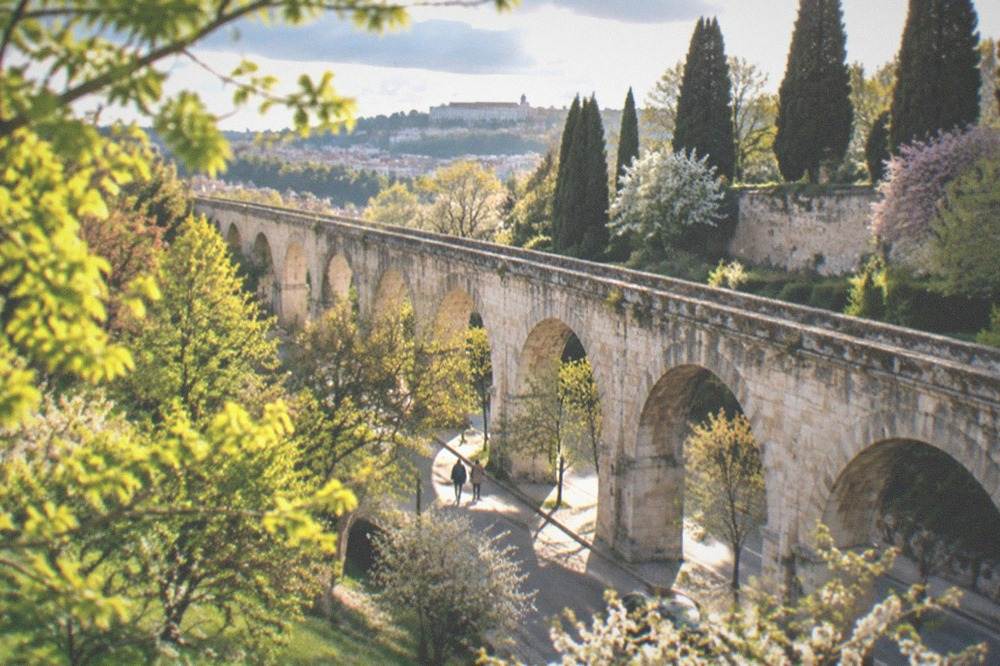
The Aqueduto de São Sebastião in Coimbra, Portugal, is the city's quietest monument: a run of stone arches threading the green slope below the university hill, visible from several points on the climb up from the Baixa and most striking where it crosses the grounds around the Botanical Garden. Coimbra, the university city on the River Mondego in Portugal's Centro region, is better known for its baroque library and its two cathedrals, and the aqueduct rarely makes a top-ten list. That is exactly why it rewards a visit. It costs nothing, it has no queue, and it turns a routine climb between the old town and the university into a walk with something to look at. This page explains what the arches are, where they run, how to build a day around them, and what the surrounding sights cost, using only figures verified from official sources.
What Is the Aqueduto de São Sebastião in Coimbra, Portugal?
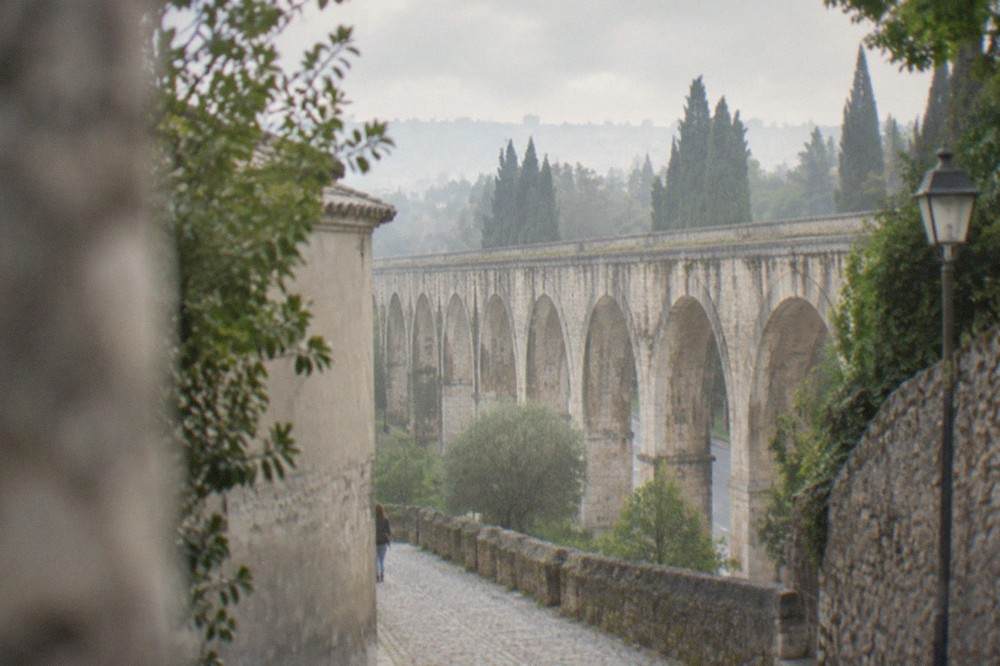
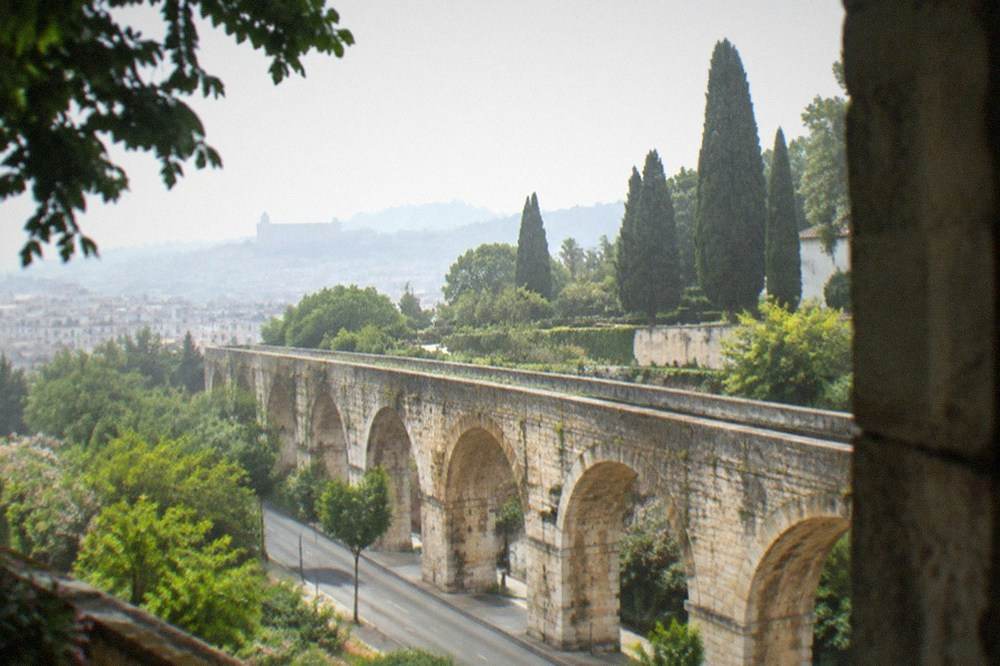
The Aqueduto de São Sebastião is a historic stone arch aqueduct in Coimbra, Portugal, built to carry water into the upper city, whose surviving arches still stride across the wooded slope below the University of Coimbra's hill. It is not a museum, it has no ticket desk, no published opening hours and no visitor circuit: the arches stand in the open as part of the city's fabric, and the way to see them is to walk the streets and gardens they cross. The aqueduct takes its name from the São Sebastião district it served, on the flank of the hill that the university crowns. Its arches are the reason many visitors first notice it at all: from the terraces and lanes around the Botanical Garden, the line of stone spans gaps between buildings and tree cover, and the eye follows it before the name is even known.
What makes it worth a paragraph rather than a passing glance is its position. Coimbra's old town is stacked on a hill above the River Mondego, with the UNESCO-inscribed University of Coimbra, Alta and Sofia, at the top, the Baixa at the bottom, and a steep lattice of lanes between. The aqueduct runs across that slope, so it naturally stitches together several of the city's best sights. A walk built around the arches will pass the Botanical Garden, brush the edge of the university hill, and finish with a descent into the medieval street pattern around the Sé Velha. Few free sights in the city organise a better half-day.
It is also a reminder that Coimbra's story is older and broader than the university alone. The city sits on Roman foundations: the Museu Nacional de Machado de Castro, currently closed for conservation work, is built above a Roman cryptoporticus of the mid-1st century, and the Roman town of Conímbriga lies roughly 16 km south, in the parish of Condeixa-a-Velha in the municipality of Condeixa-a-Nova. Water engineering runs through all of it. An aqueduct is a functional thing, and the arches you see today are the visible remnant of the same practical problem every era of this city had to solve: lifting water up a hill.
Where Exactly Does the Coimbra Aqueduct Run, and How do You Reach It on Foot?
The surviving arches of the Aqueduto de São Sebastião run along the slope below the University of Coimbra, with the most photogenic stretches in and around the Botanical Garden grounds and the lanes off the climb to the university hill. There is no dedicated station, entrance or car park: you reach the arches on foot from the city centre, up the hill through the old town, and the walk itself is the visit. The Botanical Garden, run by the University, is the most reliable anchor point, because the garden's published existence and its position on the hillside are both verified, and the arches appear on the routes around it. The University's own visitor information lists a Botanical Garden guided tour at 10.00 EUR per adult, meeting at the garden's side entrance next to the Garden Arches, which is a way to see the slope with a guide if you want one.
The practical advice is simple: treat the aqueduct as a hillside walk, not a monument visit. Start from the Baixa, Coimbra's low downtown, and climb. The old town's verticality is the single thing that shapes every visit to this city, and the aqueduct sits partway up, so it breaks the climb at exactly the right moment. Wear shoes that grip: the lanes are cobbled, steep in stretches, and polished by centuries of feet. The arches photograph best in the first half of the day, when the sun is on the eastern flank of the hill and the stone picks up warm light against the green.
Public transport covers the approach if the climb does not appeal. The SMTUC city bus network's 2026 tariff, in force since 1 April 2026, lists a driver ticket bought on board at 2.00 EUR, pre-purchased trips at 0.90 EUR each when bought in packs of three or more, and a single trip valid 90 minutes on the urban network with transfers included. The tariff also confirms that SMTUC tickets are valid on the Metro Mondego network, the new BRT system opening in stages across the city. That is the verified fare picture; for which specific bus line serves which specific stop near the garden, check the operator's own route information before you travel.
| SMTUC ticket type | Price | Notes (2026 tariff, in force 1 April 2026) |
|---|---|---|
| Driver ticket, bought on board | 2.00 EUR | Single trip |
| Pre-purchased, packs of 3+ trips | 0.90 EUR per trip | Rechargeable card |
| Trip validity | 90 minutes | Urban network, transfers included |
| MOVE-C support card | 3.00 EUR youth / 6.00 EUR others | One-off card cost |
| Fare evasion fine | 120.00 to 350.00 EUR | Enforced on the network |
The three tours above suit this walk in different ways. The Conímbriga private tour pairs the aqueduct with the region's Roman waterworks, the Joanina Library tour covers the university hill you climb past, and the Mondego river cruise gives the city back to you from the water after a day on the slopes.
How Much Does It Cost to Visit the Coimbra Aqueduct and the Sights Around It?
The Aqueduto de São Sebastião itself costs nothing: it is an unfenced, unticketed structure in the open city, with no published price, no hours and no booking. The costs that matter are the sights you combine it with: the University of Coimbra's combined ticket with the Joanina Library is 16.50 EUR, the ticket without the library is 12.50 EUR, the Sé Velha charges 3.00 EUR, Mosteiro de Santa Cruz charges 5.00 EUR, and Conímbriga's museum and ruins ticket is 10.00 EUR. A full day built around the arches therefore runs to roughly 25 to 30 EUR per adult in tickets, before food, using only official published prices.
The university ticket deserves its own sentence, because it is the one piece of Coimbra planning where the details genuinely matter. The 16.50 EUR combined ticket is the only way into the Biblioteca Joanina: the library cannot be bought on its own, the time printed on the ticket is the library slot specifically, entry outside that slot is refused, and the University's own program page caps entries at 50 people every 20 minutes. That ceiling is the one real scarcity fact in the city, and it is why booking the university visit in advance matters more than anything else on this page. The ticket is valid for two days for the other spaces, but the Joanina slot is fixed. The University's visitor site also publishes the closing dates in the current cycle: 24 and 25 December 2026, 31 December 2026 and 1 January 2027, 24 May and 4 October, alongside warnings that academic and religious ceremonies can interrupt the normal circuit.
| Sight near the aqueduct walk | Adult price | Source status |
|---|---|---|
| Aqueduto de São Sebastião | Free | Open structure, no ticket |
| University of Coimbra + Joanina Library + Science Museum | 16.50 EUR | University's own visitor site, valid for 2026 |
| University of Coimbra + Science Museum (no library) | 12.50 EUR | University's own visitor site |
| Sé Velha de Coimbra | 3.00 EUR | Parish visitor page |
| Mosteiro de Santa Cruz | 5.00 EUR | Parish visitor page |
| Botanical Garden guided tour | 10.00 EUR | University's own program list |
| Museu Nacional de Machado de Castro | Closed | Closed for conservation work, no price published |
One entry in that table needs a plain warning. The Museu Nacional de Machado de Castro, which sits on the same hill and would otherwise be the obvious rainy-day pairing for this walk, is closed for conservation work, as its own page on the national Museus e Monumentos portal states twice. No reopening date is published and no current admission price exists on an official page. Do not plan around walking into it. What is verified is that the museum building sits above a Roman cryptoporticus of the mid-1st century, at Largo Dr. José Rodrigues, and that its own page is the place to check before any future visit.
The Machado de Castro museum page on this site covers the closure in full, and the Joanina Library guide explains the timed-slot system in detail.
What Should a Day Built Around the Coimbra Aqueduct Look Like?
A sensible aqueduct day in Coimbra runs downhill, not up: start at the University of Coimbra's hill in the morning with a pre-booked Joanina Library slot, walk the Paço das Escolas and the Capela de São Miguel, then descend through the Botanical Garden, where the aqueduct's arches appear, and finish in the Baixa with the Sé Velha and Mosteiro de Santa Cruz before evening. The order matters because of the Joanina ceiling: 50 people every 20 minutes means summer slots sell, and the morning is when the library's light is at its best anyway. The University's summer schedule runs 09:00 to 20:00 from 1 April to 30 September, and the winter schedule 09:00 to 17:30 from 1 October to 31 March, so the hilltop circuit has generous hours in every season.
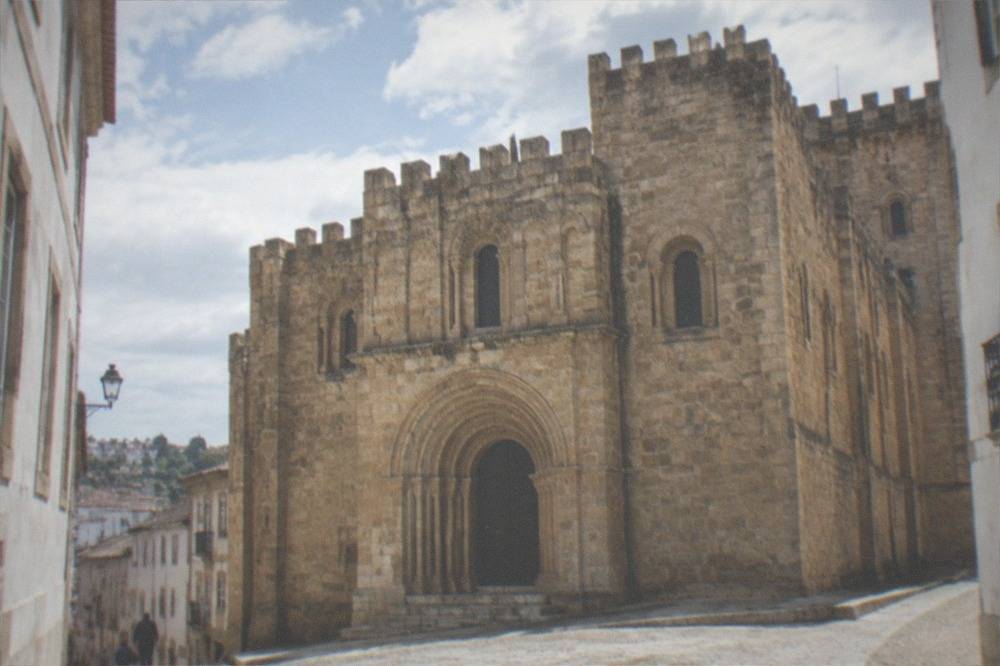
The descent is where the aqueduct earns its place. Coming down from the university hill toward the Botanical Garden, the arches cross the slope in stages, framed by trees and garden walls, and the walk through the garden's grounds delivers you back into the old town's upper lanes rather than dumping you at the bottom. From there the route to the Sé Velha is short. The Old Cathedral charges 3.00 EUR per person, with summer hours of 09:30 to 18:30 and Sundays 11:00 to 17:30, and winter hours of 09:30 to 17:30. Mosteiro de Santa Cruz, the burial church of Portugal's first two kings, charges 5.00 EUR, opens 09:30 to 16:30, and suspends visits on Easter Sunday and on the Cortejo da Queima das Fitas, a moveable Sunday in the festival calendar, so a May visit should check that closure.
| Time of day | Stop | What it costs | Verified hours or rule |
|---|---|---|---|
| Morning | Paço das Escolas, Capela de São Miguel, Joanina Library | 16.50 EUR combined | Summer 09:00 to 20:00; winter 09:00 to 17:30; Joanina slot fixed, 50 people per 20 minutes |
| Late morning | Descent through the Botanical Garden | Free, or 10.00 EUR guided | Guided tour 1h30, meeting at the garden's side entrance |
| Midday | Aqueduto de São Sebastião arches | Free | Open hillside, no hours |
| Afternoon | Sé Velha de Coimbra | 3.00 EUR | Summer 09:30 to 18:30, Sundays 11:00 to 17:30 |
| Late afternoon | Mosteiro de Santa Cruz | 5.00 EUR | 09:30 to 16:30; suspended on the Cortejo Sunday |
For a shorter version, the one day itinerary on this site trims the same route to a single compressed loop, and the São Miguel Chapel page covers the gilded interior that the combined university ticket includes.
When Is the Best Time of Year to Walk the Coimbra Aqueduct Route?
The best months for the aqueduct walk are May, June and September: IPMA's 1991 to 2020 normals for the Coimbra / Bencanta station show May averaging a 23.3 C mean maximum with 64.7 mm of rain, June at 26.3 C with just 26.0 mm, and September at 27.4 C with 49.9 mm, all three comfortably inside the walking-weather window and well clear of the 114.5 mm that October brings. September is the underused pick. Its mean maximum of 27.4 C is actually higher than June's 26.3 C, a fact most guides get backwards, but the crowds of the summer peak have gone and the autumn rain has not yet arrived: the monthly total does not jump to 114.5 mm until October.
The table below is the city's own station data, not a coastal or district proxy. The station, Coimbra / Bencanta, number 707, sits about 3 km from the centre, and the district of Coimbra reaches the Atlantic while the city does not, so a coastal figure would describe a different place entirely. The rest of the planning pages sit on Coimbra Travel Guide.
| Month | Mean max C | Mean min C | Rain mm | Days with 1 mm+ rain |
|---|---|---|---|---|
| Apr | 20.5 | 9.4 | 84.6 | 10.6 |
| May | 23.3 | 11.8 | 64.7 | 8.5 |
| Jun | 26.3 | 14.2 | 26.0 | 3.7 |
| Jul | 28.5 | 15.6 | 8.9 | 1.7 |
| Aug | 29.1 | 15.7 | 14.8 | 2.2 |
| Sep | 27.4 | 14.1 | 49.9 | 5.2 |
| Oct | 23.2 | 11.9 | 114.5 | 10.3 |
Two seasonal cautions follow straight from the verified record. August, not July, is the hottest month on both mean and mean maximum, averaging 10.9 days above 30 C, and the record maximum at this station is 41.2 C from 7 August 2016, so a midsummer aqueduct walk should start early and carry water. And November is the wettest month of the year at 121.5 mm, marginally ahead of October and January, so the late-autumn visitor should plan indoor alternatives. The trouble is that the obvious one, the Machado de Castro, is closed for works, which makes the rainy day guide and the university's covered spaces, the Joanina included, more valuable than usual in the wet months.
How Does the Coimbra Aqueduct Connect to the Region's Roman Water Story?
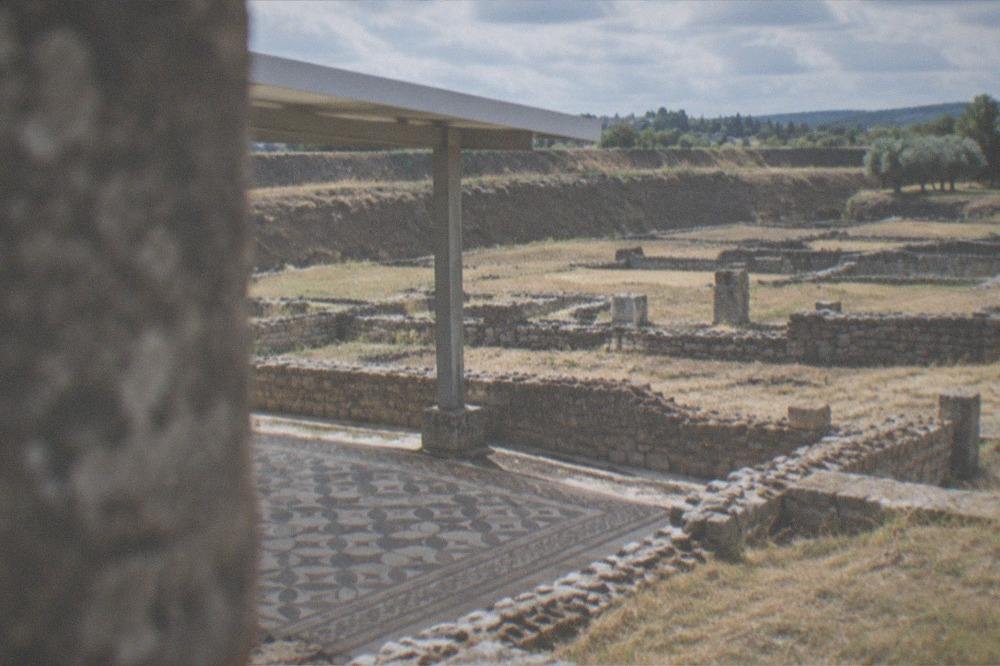
Coimbra's aqueduct belongs to a regional story of water engineering that runs from the Roman cryptoporticus under the closed Machado de Castro museum to the Roman town of Conímbriga, about 16 km south in Condeixa-a-Velha in the municipality of Condeixa-a-Nova, where a 10.00 EUR combined ticket covers both the national museum and the ruins, open daily 10:00 to 18:00. Conímbriga is the region's Roman headline, and it is the natural second day for anyone whose interest in the aqueduct is more than photographic. The site is open seven days a week, which makes it the reliable Monday option when the DGPC monuments that close on Mondays are shut, and the ticket office closes at 17:15, with closures on 1 January, Easter Sunday, 1 May, 24 July and 25 December.
The geography matters enough to state twice. Conímbriga is not in Coimbra, the city: it is in the municipality of Condeixa-a-Nova, in the parish of Condeixa-a-Velha, roughly 16 km south. Guides get this wrong in both directions, and a reader who plans a "Coimbra ruins" trip on the assumption the site is inside the city will misjudge their day. The Conímbriga Roman ruins guide on this site covers the site's mosaics and house remains in detail.
For visitors who want the Roman thread handled for them, the Conímbriga Roman Ruins and Museum private tour is the related pick on this page: a three-hour private visit rated 4.8 from 34 reviews, from 93.66 EUR per person, with the operator's live listing carrying current availability. A private format suits Conímbriga well because the ruins spread over a large site and a guide's pacing turns a hot open-air wander into a structured visit. You can also Check availability directly, and read the full tour page for how it fits a wider Centro itinerary.
What Should You Not Confuse the Coimbra Aqueduct With?
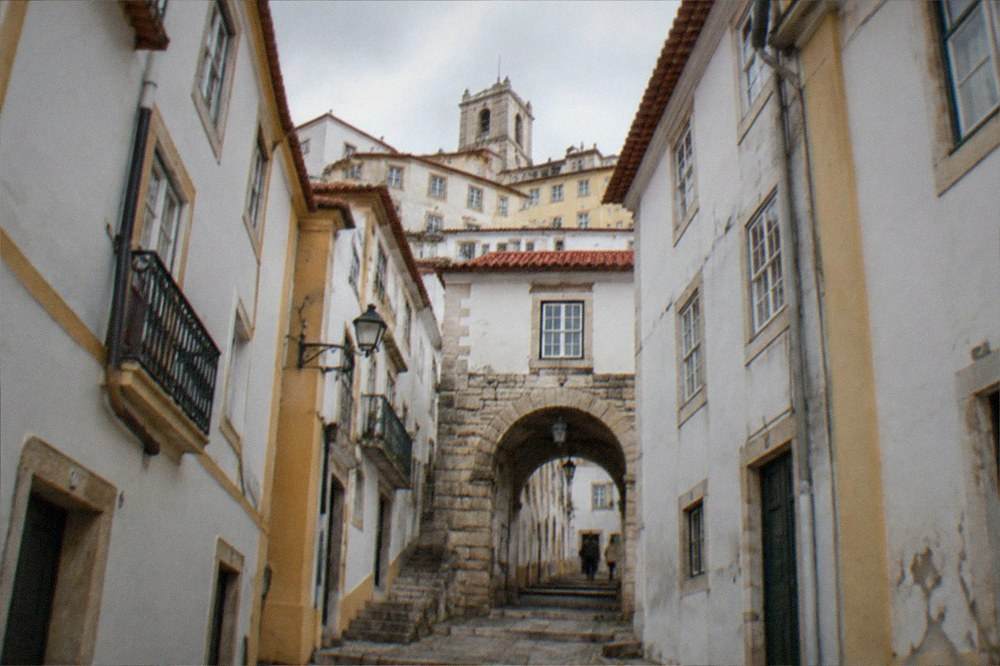
The Aqueduto de São Sebastião should not be confused with three other things in and around Coimbra: the Roman cryptoporticus under the closed Machado de Castro museum, the arches of the Arco de Almedina in the old town, and the elevated walkways of the university hill itself. Each is a different structure from a different era, and mixing them up produces itineraries that do not exist. The cryptoporticus is a substructure, part of Roman Aeminium's forum platform, and it is currently inaccessible because the museum above it is closed for conservation work. The Arco de Almedina is a medieval gate, the old main entrance through the city wall on the climb up to the university, not a water channel. And the university's terraces and staircases are simply architecture, however aqueduct-like their arches look in photographs.
The distinction matters for planning because each confusion costs time. A visitor who expects a "Roman aqueduct" inside Coimbra will be looking for something this city does not have on open display: the Roman water infrastructure of the region is at Conímbriga, outside the city. The arches on the hillside are the later structure, and their charm is precisely that they are not a ticketed monument. The Arco de Almedina page and the university hill page separate the three structures in full.
What do Visitors Ask About the Coimbra Aqueduct?
Most questions about the Aqueduto de São Sebastião come down to three practical points: it is free, it has no set hours because it stands in the open, and the best way to see it is a walk that links the Botanical Garden with the university hill and the old town. The answers below stick to what is verified. Where a figure exists on an official page, it is given; where it does not, the honest answer is that the structure is open cityscape and needs no planning beyond sensible shoes.
Common Questions About the Coimbra Aqueduct
Is the Coimbra aqueduct free to visit?
Yes. The Aqueduto de São Sebastião is an open, unticketed structure in the city fabric, with no published price, no desk and no fence. The only costs on a walk built around it are the sights you choose to enter, such as the university's 16.50 EUR combined ticket or the Sé Velha at 3.00 EUR.
Can you walk inside or along the Coimbra aqueduct?
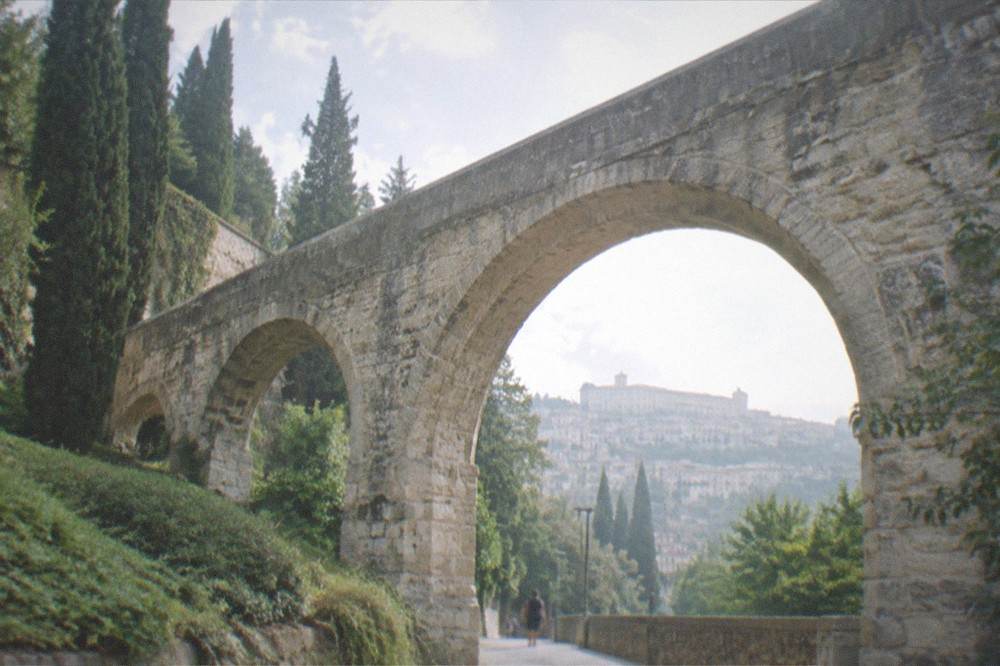
No visitor circuit runs along the channel itself. The arches are seen from the streets, lanes and garden grounds they cross, particularly around the Botanical Garden on the slope below the University of Coimbra. Treat it as scenery on a walk, not a climbable monument.
Is the Coimbra aqueduct Roman?
The arches on the hillside are the later city structure. The region's Roman water and engineering story is at Conímbriga, the Roman town about 16 km south in Condeixa-a-Velha, Condeixa-a-Nova, and in the Roman cryptoporticus of the mid-1st century beneath the Machado de Castro museum, which is currently closed for conservation work.
How long does seeing the Coimbra aqueduct take?
The arches themselves need however long you want to give them, typically well under an hour including photographs. The half-day version is the full walk: the university hill with a pre-booked Joanina Library slot, the descent through the Botanical Garden where the arches appear, and the old town monuments at the bottom.
When is the best time of day to photograph the Coimbra aqueduct?
Morning light suits the slope best, when the sun is on the hillside and the stone stands warm against the greenery. IPMA's normals for the city's own station show July and August averaging around 9 to 11 days above 30 C, so in high summer the early hours are also the comfortable ones for the climb.
Can you combine the Coimbra aqueduct with the Joanina Library?
Yes, and it is the natural pairing, since both sit on the same hill. The Joanina Library exists only inside the University's 16.50 EUR combined ticket, admits 50 people every 20 minutes, and the time printed on the ticket is the library slot, so book that first and let the aqueduct walk fill the rest of the day around it.
If the aqueduct walk has settled the hillside for you, the rest of the visit falls into place quickly, and three guided options cover the angles a self-guided walk cannot: the Roman story out at Conímbriga, the baroque interior of the Joanina Library with an expert who has been guiding it since 2012, and the city seen from the Mondego at water level.
Of those three, the library tour is the one most visitors book first, because the timed-slot ceiling makes the hilltop the hardest part of the day to leave to chance.
The Joanina Library expert tour runs 1 hour 30 minutes, is rated 4.8 from 168 reviews, and starts from 90.06 EUR per person, with the operator's live listing carrying current times. For the evening, the Mondego river cruise with city views, 50 minutes and from 11 EUR, shows the whole hillside, aqueduct included, from the water.
The Aqueduto de São Sebastião will never top a list of things to do in Coimbra, Portugal, and that is its value: a free piece of the hillside that turns the climb between the Baixa and the university into the best walk in the city, with the Botanical Garden, the Sé Velha and the Joanina Library strung along the same slope, and the region's Roman water story waiting 16 km south at Conímbriga for anyone whose curiosity the arches have properly woken.