What Kind of Food Is Coimbra Known For?
The food Coimbra, Portugal is known for: roast leitão da Bairrada, chanfana, river fish, monastery sweets and student café traditions, explained without restaurant guesswork.
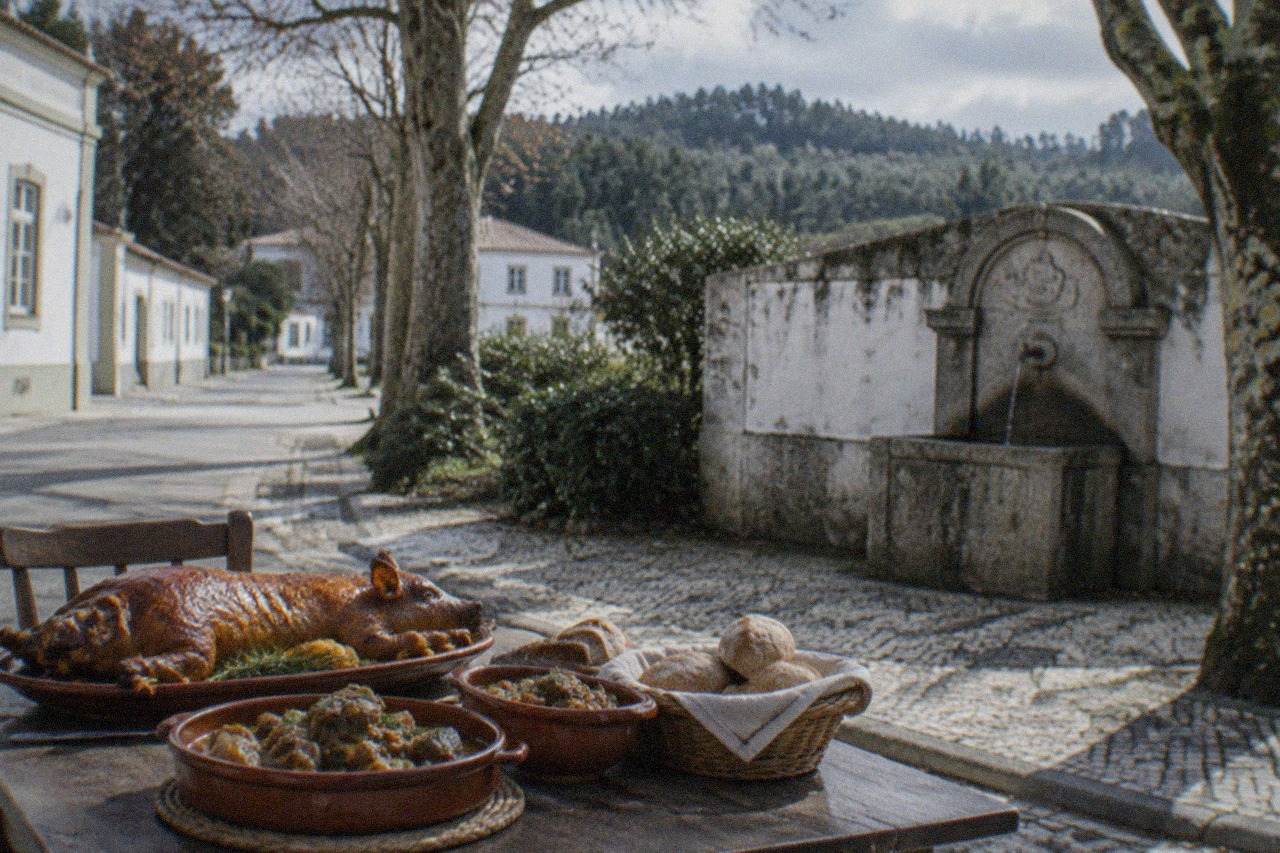
Coimbra, Portugal, the university city on the River Mondego, sits at a crossroads of regional kitchens rather than owning a single famous dish of its own. What the city is known for is a particular style of inland central-Portuguese cooking: roast suckling pig brought up from the Bairrada wine country to the west, slow-braised goat and lamb stews from the surrounding hills, eels and lampreys from the river that runs through the middle of town, and a bakery and pastry culture shaped by monasteries and by eight centuries of student life. This page, maintained by the Coimbra Travel Guide editorial desk, explains each of those traditions, what the dishes actually are, and how to recognise the kind of place that serves them well.
What Kind of Food Is Coimbra Known For?
Coimbra is known for four food traditions: leitão da Bairrada, the roast suckling pig that travels to the city from the Bairrada region west and south of it; chanfana, a slow-braised goat or lamb stew cooked in wine; river fish from the Mondego, historically eels, lampreys and shad; and a dense pastry culture of monastery origin, including the arrufada, the city's everyday bakery signature. Around all of it sits student eating: cheap, generous, and served in the Repúblicas and old cafés of the old town.
Those four threads are worth separating, because they come from different places and different centuries. The suckling pig is Bairrada food, not Coimbra food in the strict sense, but the city has absorbed it so completely that most visitors meet it here first. The chanfana belongs to the schist-village hills of the Lousã, the same landscape covered in the schist villages day trips around the city. The river fish is the most genuinely local of the lot and also the hardest to find, because the Mondego's eel and lamprey fisheries have shrunk. The pastry tradition is the one a visitor encounters without trying, because the arrufada is in every bakery window in the Baixa.
What Coimbra is not known for is seafood. The city does not touch the sea. The district of Coimbra reaches the Atlantic and contains Figueira da Foz, but the district is a different thing from the city, and a plate of percebes in Coimbra has travelled further than most visitors assume. Inland cooking is the city's register: pork, goat, lamb, river fish, olive oil, bread and wine.
Which Regional Dishes Define the Coimbra Table?
The defining dishes are leitão da Bairrada, roast suckling pig served with crisp skin, orange slices and chips; chanfana, goat or lamb braised for hours in red wine with garlic and laurel, traditionally in a clay pot sealed with dough; negalhos, a goat or lamb offal sausage from the same hills; and, on the sweet side, the arrufada bun and the crystallised-egg sweets of central Portugal's convents. None of these is a Coimbra invention except the arrufada, but the city is where most visitors taste them.
The leitão deserves the first explanation, because it is the dish most strongly attached to the city's name in Portuguese food writing. It is a suckling pig, split and marinaded, roasted until the skin shatters, and served with orange and fried potatoes. The Bairrada, the wine region between Coimbra and the coast, is its home, and the wine that goes with it is the local red and the sparkling Bairrada whites. The dish travels: Bairrada restaurants exist across the region, and the city's food culture treats the pig as a Sunday and celebration meal rather than an everyday one. Bacalhau, salt cod, and grilled sardines appear everywhere too, but they are national dishes rather than local ones.
Chanfana is the opposite kind of dish. It began as a way of preserving meat in the hills south of Coimbra, in the Lousã and Miranda do Corvo territory, before refrigeration: goat or lamb, wine, garlic and slow cooking in a sealed clay pot. The result is dark, wine-dark and falling apart, and it is the signature dish of the schist villages that sit on the same hillsides. Visitors who take a Lousã day trip will find it there; visitors who stay in the city will find it on traditional restaurant menus, usually flagged as regional.
The river tradition is the one that has faded most. The Mondego historically ran with lamprey, eel and shad, and older Coimbra cookery has recipes for all three, lamprey in particular cooked in its own blood with rice, a dish the north of Portugal still prizes. It is seasonal and increasingly scarce, so treat it as something you may find rather than something you should expect.
| Dish | What it is | Where it comes from | When to look for it |
|---|---|---|---|
| Leitão da Bairrada | Roast suckling pig with crisp skin, orange, chips | Bairrada region west and south of the city | Sundays and celebrations, year-round on traditional menus |
| Chanfana | Goat or lamb braised in red wine in a sealed clay pot | Lousã and Miranda do Corvo hills | Cold months especially, on regional menus |
| Negalhos | Goat or lamb offal sausage, often served with chanfana | The same schist-village hills | Traditional restaurants, festival food |
| Arrufada | Sweet bun with sugar crust, the city's everyday pastry | Coimbra's own bakery tradition | Every morning, in any bakery in the Baixa |
| Lampreia à moda do Mondego | Lamprey stewed in its own blood with rice | The River Mondego, historically | Seasonal and scarce, winter at best |
A walking tour is a genuinely good way to place the food, because Coimbra's kitchens are mapped onto its geography: the student Repúblicas and old cafés sit on the upper town and the streets below the university, the traditional restaurants cluster in the Baixa and along the river, and the market tradition belongs to the lower town. The traditional Coimbra restaurants question has its own page for choosing between them.
Where Does Coimbra's Food Come from, Geographically?
Coimbra's food comes from three overlapping sources: the Bairrada wine and pig country to the west and south, which supplies the city's most famous dish; the schist hills of the Lousã to the south, which supply the goat and lamb stews; and the River Mondego itself, which historically supplied eel, lamprey and shad. The city's own contribution is the bakery and pastry layer, plus the student eating culture that the University's about 31,000 published students keep alive.
This geography matters when reading a menu. A Coimbra restaurant that lists chanfana and leitão is drawing on the inland tradition. One that leans on fresh Atlantic fish is drawing on the district's coastal edge, and the fish will have travelled. The district reaches the Atlantic at Figueira da Foz, but the city does not, so seafood arrives on a road rather than a boat. The Bairrada is also a wine region, so the pig arrives with its own pairing culture: Bairrada reds, made largely from the Baga grape, and the region's sparkling whites. The Lousã hills bring not just chanfana but the chestnut and olive oil of the schist villages, and the honey and cheese of the same uplands.
The Discovering the charms and places of Coimbra walk runs three to four hours across exactly this terrain, from the university hill down through the old town, with a certified local guide who can point at a doorway and say what used to be sold inside it. Check availability if that framing appeals, and see also the vegetarian and vegan guide to Coimbra for the plant-based side of the city's tables, which is stronger than the pork-heavy reputation suggests.
What Are the Sweets and Bakery Traditions of Coimbra?
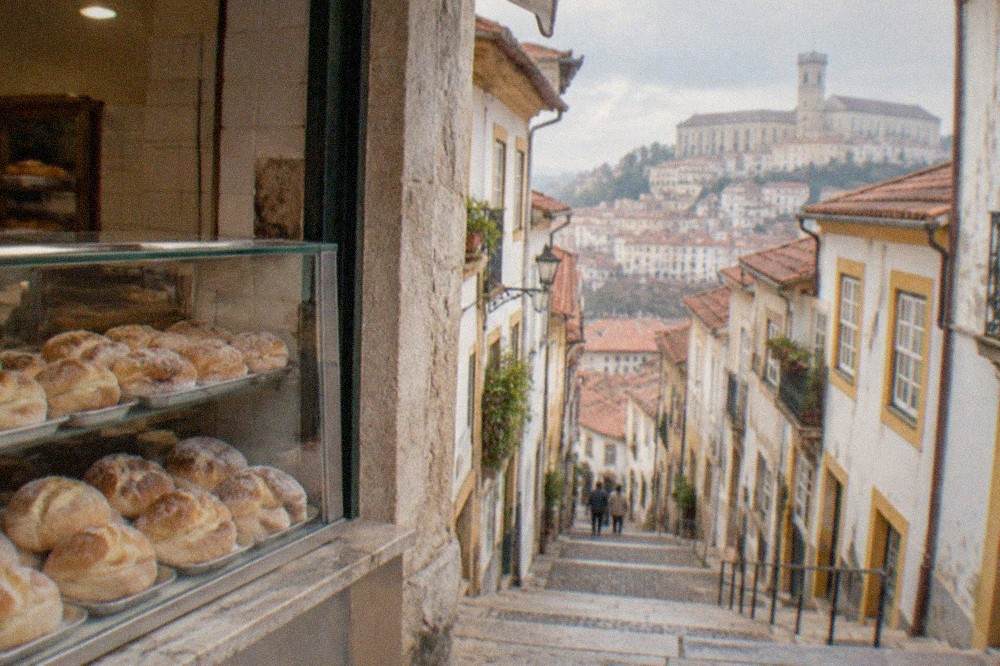
The signature sweet is the arrufada, a soft, sugar-crusted round bun that appears in essentially every bakery in the city and is eaten at breakfast with coffee. Behind it sits the wider central-Portuguese convent-sweet tradition: egg-yolk and sugar preparations of the kind that monasteries across the region developed when egg whites were needed for starching habits and the yolks had to go somewhere. Coimbra's monastic past is the direct ancestor of this pastry counter.
The arrufada is the one to know by name. It is not a showpiece pastry; it is the thing locals eat standing at a counter at eight in the morning, and its presence in every bakery window is the fastest way to tell the city's own tradition from the tourist-facing one. Beyond it, the egg-yolk sweets of central Portugal appear in Coimbra's pastry shops in their usual forms: small, dense, very sweet, often named after the convent that invented them.
The monastery connection is not decoration. Mosteiro de Santa Cruz, in the middle of the lower town, was one of the great Augustinian houses of medieval Portugal and is the burial church of Portugal's first two kings, and convent kitchens across the region were the laboratories where egg-yolk sweet-making was refined. The tradition survived the monasteries and moved into commercial pastry shops, which is why the same family of sweets appears from Coimbra down through the Bairrada and into the south of the country.
How do Student Traditions Shape Eating in Coimbra?
Student traditions shape Coimbra's eating in two ways: the Repúblicas, the shared student houses of the old town, historically cooked for themselves and for guests, giving the city a culture of large, cheap, communal meals; and the old cafés of the Baixa and the upper town became the institutions where students, professors and writers ate and argued.
With about 31,000 students published by the University, the cheap-and-generous register never goes away, and May's Queima das Fitas festivities turn the whole city's eating rhythm upside down for a week.
The República is the distinctive institution. These are the famous student communal houses, some centuries old, and their kitchens produced a tradition of big-batch, big-flavour cooking for dozens of people at a time. Visitors mostly meet the tradition indirectly, in the size and generosity of portions in student-quarter restaurants, and directly during the academic festivals, when some Repúblicas open their doors.
The café layer is the other half. Coimbra's historic cafés, several of them in the Baixa and the streets around it, were the setting for the city's literary and academic life, and they survive as the places where a coffee and an arrufada still cost what a student can pay. The historic cafés question overlaps with this one, and the old town page covers the streets where most of them stand.
One practical note on timing: the Queima das Fitas falls in May, and while this site does not publish the festival's exact dates because the Associação Académica's own pages could not be verified on this build, two official closures are certain: the University closes its visitor circuit on 24 May, and Mosteiro de Santa Cruz suspends visits on the Cortejo day, a moveable Sunday. In festival week the restaurants of the old town are full, loud and student-run in spirit, which is either the whole point of going or a reason to wait a week, depending on the traveller.
How do You Choose Where to Eat in Coimbra?
Choose by type rather than by name: a churrasqueira will roast meats, including leitão where offered, and is the reliable choice for the Bairrada tradition; a tasca or traditional restaurant is where chanfana, bacalhau and river dishes appear on longer regional menus; a pastelaria or café is for the arrufada and the egg-yolk sweets; and the Repúblicas and student-quarter eateries around the university hill are where portions are largest and prices lowest. No individual venue on this site had its prices or hours verified.
That last sentence is an honesty statement, not a hedge. Restaurant details change faster than any guide can track, and this build verified none of them, so the useful, durable advice is how to read a street. A place with chanfana handwritten on a card is drawing on the hill tradition. A place with a whole pig in a glass case is drawing on the Bairrada. A counter full of arrufadas at seven in the morning is doing the city's own thing, and the where to eat dinner in Coimbra page carries the dinner-specific version of this advice.
A guided walk with a local is the shortcut, because the guide eats in these places and will say which street has the bakeries and which has the tasca kitchens, and the three tours above cover the range from a budget two-and-a-half-hour walk to a certified-guide visit with admission included. For the fuller picture of what the city offers beyond the table, the what Coimbra is best known for page picks up where this one ends.
Common Questions About Coimbra Food
What kind of food is Coimbra known for?
Roast suckling pig from the Bairrada, slow-braised chanfana from the Lousã hills, historic river fish dishes from the Mondego, and the city's own arrufada pastry, all wrapped in a student eating culture of large, cheap, communal meals.
Is Coimbra food the same as Porto or Lisbon food?
No. Coimbra sits in the inland central-Portuguese register: pork, goat, lamb and river fish, with the Bairrada wine country at its doorstep. Porto leans on tripe and Atlantic fish, Lisbon on seafood and its own café classics. The egg-yolk convent sweets are the shared inheritance across all of them.
Can you get seafood in Coimbra?
Yes, but it is not the city's own tradition. The city does not touch the sea; the district of Coimbra does, at Figueira da Foz on the Atlantic. Fish on a Coimbra menu has travelled, and the city's genuine local tradition is the river and the hills, not the coast.
What sweet should you try first in Coimbra?
The arrufada, the sugar-crusted bun in every bakery window in the Baixa, eaten with coffee in the morning. It is the one pastry that is genuinely the city's own everyday signature rather than a regional import.
Is Coimbra good for vegetarian eaters?
The pork-heavy reputation undersells the city. The vegetable soups, the chestnut and olive oil traditions of the nearby hills, and the convent-sweet counter all work for vegetarians, and the site's vegetarian and vegan guide covers the specifics.
Does the student population change the food scene?
Yes, structurally. With about 31,000 students published by the University as its current figure, the city maintains a permanent layer of large-portion, low-price eating around the university hill and the old town, and the May Queima das Fitas festivities take it over entirely for a week.
Coimbra's food is the food of a river city with wine country on one side, schist hills on the other and eight centuries of students in the middle, and the best way to eat well in it is to know which of those three traditions a menu is drawing from before ordering.