What Are the Best 3 Cities to Visit in Portugal?
Coimbra, Portugal, the university city on the River Mondego, is the strongest third city on a Portugal route. Here is what verified sources say about pairing it with Lisbon and Porto.
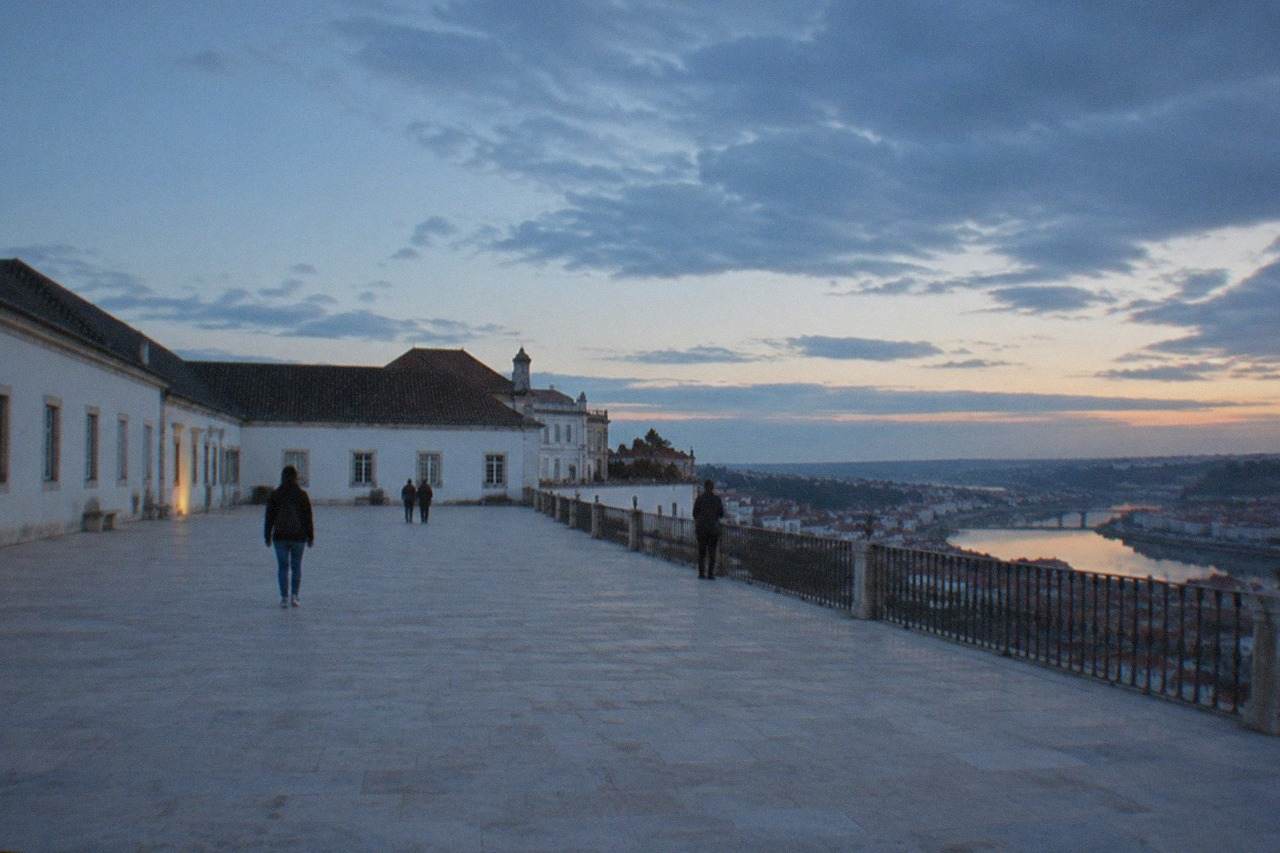
Any honest answer to the three-city question starts with Lisbon and Porto, the two metropolises almost every first-time visitor already has on the list. The real decision is the third slot, and the strongest candidate is Coimbra, Portugal: the university city on the River Mondego, halfway between the two, home to the country's oldest university and the baroque library that most visitors have never heard of until they see it. This page is written by an editorial desk, not a traveller, and every figure on it comes from an official source, which matters here because the usual "top three cities" answer is a ranking nobody measured. What can be said with evidence is below.
What Are the Best 3 Cities to Visit in Portugal?
The best three cities to visit in Portugal are Lisbon, Porto and Coimbra, and the first two need no argument: they are the country's two largest cities and the gateways most international flights use. The case for Coimbra as the third is a verified one. It holds the University of Coimbra, inscribed by UNESCO in 2013, a Joanina Library that admits only 50 people every 20 minutes, and a position on the main rail line between the other two, so it costs a traveller almost no extra time.
The reason this page exists on a Coimbra site is that the third-city slot is where guides go vague. Some push Braga, some push Évora, and the honest answer is that no official body ranks Portuguese cities for visitors, so any "top five" list is opinion dressed as measurement. What can be done instead is state what each candidate verifiably has, and Coimbra's list is unusually strong for a city of its size.
Consider what is officially documented. UNESCO's World Heritage List entry 1387, inscribed in 2013 under criteria (ii), (iv) and (vi), covers the "University of Coimbra, Alta and Sofia", two components of the old town: the university hill and the college street below it. The University publishes a figure of about 31,000 students on its own homepage. The Biblioteca Joanina, its baroque library, limits entries to 50 people every 20 minutes, a rule the University states verbatim, and the library cannot be visited on any ticket other than the 16.50 EUR combined one. Those are not marketing claims; they are the operating rules of the sites themselves.
For more on what makes this city distinctive, read why Coimbra is famous and what is special about Coimbra, Portugal.
Why Coimbra Belongs on Any Three-City Portugal Route
Coimbra belongs on a three-city Portugal route because it sits between Lisbon and Porto on the country's main north-south rail corridor, it concentrates a UNESCO-inscribed university quarter, a Roman ruin site 16 km south at Conímbriga, and a student tradition that shapes the city's calendar, and it delivers all of this at walkable scale. The city's own climate record supports the timing too: September's mean maximum of 27.4 C is higher than June's, with only 49.9 mm of rain.
The geography argument is the practical one. Coimbra is the natural midpoint of a Lisbon-to-Porto itinerary, and the city's two rail stations, Coimbra-B and Coimbra-A, exist in different places and serve different services; CP, the national operator, is where the current stopping patterns must be checked, because this site has not verified them. What is verified is the city's visitor weight: the municipality recorded 698,151 overnight stays in 2025, its own published figure, and estimated its municipal tourism cost at 3.49 EUR per overnight stay, against a tourist tax of 1.00 EUR per guest per night, capped at three nights, payable at the accommodation.
The content argument is the better one. A three-city route lives or dies on whether the third city is different from the first two, and Coimbra is different in kind. Lisbon and Porto are port capitals with big-city rhythms. Coimbra is a university town where the calendar bends around academic festivals: the University closes its whole visitor circuit on 24 May, and Mosteiro de Santa Cruz, the burial church of Portugal's first two kings, suspends visits on the Sunday of the Queima das Fitas parade. The student presence is not decoration. The University's own numbers list 434 courses, 1,935 professors and 22 libraries.
For a fuller plan, the three-day Coimbra itinerary shows how the days actually fit together.
The tours above cover the three things a first visit usually wants: the university and the Joanina Library, where the timed-slot rule makes a guided visit genuinely useful; a low-cost walk through the top attractions; and a half-day into the schist villages of the Lousã mountain, the landscape that most three-city itineraries miss entirely because it sits just outside the city.
How to Build a Three-City Itinerary Around Coimbra, Portugal
A workable three-city Portugal itinerary runs Lisbon first, Coimbra second and Porto last, giving each city two to three days, with Coimbra as the smallest and slowest stop. The order matters less than the anchor dates: the University of Coimbra closes its visitor circuit on 24 May, Mosteiro de Santa Cruz suspends visits on the Queima parade Sunday, and the Machado de Castro museum is closed for conservation work, so the city's single biggest museum is currently off the board.
The practical planning table below uses only figures this site has verified from official sources, and it deliberately omits anything for Lisbon and Porto, because this site has verified nothing for those cities and will not invent it. More of these guides are collected on Coimbra Travel Guide.
| Stop | Verified anchor | Official figure | Planning note |
|---|---|---|---|
| Coimbra: University and Joanina Library | visit.uc.pt | 16.50 EUR adult combined ticket | Library admits 50 people per 20-minute slot; ticket time is the library slot |
| Coimbra: Sé Velha de Coimbra | Parish operator | 3.00 EUR individual | Group rate 2.50 EUR for 10 or more |
| Coimbra: Mosteiro de Santa Cruz | Parish operator | 5.00 EUR individual | Visits suspended on the Queima Cortejo Sunday |
| Conímbriga, 16 km south | National museum | 10.00 EUR, museum plus ruins | Open daily 10:00 to 18:00, the reliable Monday option |
The one genuinely scarce resource in this itinerary is the Joanina Library slot, and the scarcity is real, not manufactured: the University's own page limits entries to 50 people every 20 minutes, refuses entry outside the printed slot, and closes online sales 20 minutes before the visit time. In summer a visitor arriving without a pre-booked slot can be turned away. The library also cannot be bought separately; it exists only inside the combined ticket, and the time printed on that ticket is the library time specifically, while the other spaces stay valid for two days.
That is the strongest argument for taking a guided option for the university portion of the trip, and this site's related tour does exactly that. Check availability if the Joanina is the reason Coimbra is on your list; the operator's live listing carries the current price and dates.
Whether the Joanina visit is guided or self-managed, it is the one booking on the whole three-city route that should be locked before the train tickets are, because the slot ceiling is fixed by the University and does not move for latecomers.
What the Verified Numbers Say About Coimbra, Portugal
The verified numbers say Coimbra is a small, heavily visited, officially measured city: 698,151 overnight stays in the municipality in 2025, a tourist tax of 1.00 EUR per guest per night capped at three nights and charged from age 16, about 31,000 students published by the University, and a climate that averages 21.9 C mean maximum across the year with July effectively dry at 8.9 mm of rain. Not one of these figures is an estimate by a guide writer.
The tourist tax detail is the one that surprises people, because it is paid at the accommodation, not to the municipality and not through a booking platform, and there is no low-season exemption. A couple staying seven nights pays 3.00 EUR each. The two-euro figure that circulates in some coverage is an approved proposal from July 2026, not the current rate; the municipality's own service pages still state one euro.
The climate record comes from IPMA's 1991 to 2020 normals for the Coimbra / Bencanta station, the city's own station 3 km from the centre, and it corrects two common assumptions. August, not July, is the hottest month, averaging 29.1 C mean maximum and 10.9 days above 30 C. And September is a better month than its reputation: hotter than June on mean maximum, 27.4 C against 26.3 C, only marginally wetter, and the real rain does not arrive until October, when the monthly total jumps to 114.5 mm and November peaks at 121.5 mm.
| Month | Mean max C | Rain mm | Read |
|---|---|---|---|
| June | 26.3 | 26.0 | Warm and dry, student calendar still busy |
| July | 28.5 | 8.9 | Effectively dry, peak heat building |
| August | 29.1 | 14.8 | Hottest month, 10.9 days above 30 C |
| September | 27.4 | 49.9 | Crowds thin, heat holds |
| October | 23.2 | 114.5 | The rain returns in earnest |
If the timing question is what you are really solving, the best time to visit Coimbra page works through the full year, and is Coimbra worth visiting for tourists tackles the narrower yes-or-no version.
Common Questions About the Best 3 Cities to Visit in Portugal
What are the best 3 cities to visit in Portugal?
Lisbon, Porto and Coimbra, with Coimbra as the verified third stop: it holds the 2013 UNESCO inscription for the University of Coimbra, Alta and Sofia, and it sits on the rail corridor between the other two, so it adds variety without adding much travel time.
Why pick Coimbra over Braga, Évora or Aveiro as the third city?
This site has verified no figures for Braga, Évora or Aveiro, so it will not rank them. What Coimbra verifiably offers is the country's oldest university, a baroque library capped at 50 visitors per 20-minute slot, and Conímbriga, a Roman town about 16 km south with a 10.00 EUR combined museum-and-ruins ticket.
How many days does Coimbra need on a three-city route?
Two days covers the university hill, the Joanina Library, Sé Velha de Coimbra and Mosteiro de Santa Cruz; a third day opens Conímbriga or the Lousã schist villages. The three-day itinerary lays it out day by day.
Is Coimbra a UNESCO World Heritage city?
No, and this is the most common error in guides to the city. UNESCO inscribed "University of Coimbra, Alta and Sofia" in 2013, list reference 1387: two components of the old town, the university hill and the college street. The city as a whole is not inscribed.
What is the one thing to book ahead in Coimbra?
The Joanina Library slot. The University limits entry to 50 people every 20 minutes, the library exists only inside the 16.50 EUR combined ticket, the time printed on the ticket is the library slot, and entry outside that slot is refused.
When should a three-city Portugal trip avoid Coimbra?
Avoid 24 May, when the University closes its visitor circuit, and the Queima das Fitas Cortejo Sunday, when Mosteiro de Santa Cruz suspends visits. The Machado de Castro museum is closed for conservation work until further notice, so plan around the University circuit, Sé Velha and Santa Cruz.
The three-city question has no official answer, but the evidence-backed one is stable: Lisbon for the capital, Porto for the north, and Coimbra, Portugal, in between, for the university, the library and the 2,000-year-old Roman site down the road, all of it documented by the institutions that run them.