How Much Time Is Needed in Coimbra?
How much time do you really need for Coimbra, Portugal? A practical breakdown of one day, two days and three days, built on verified ticket prices, opening rules and timed library slots.
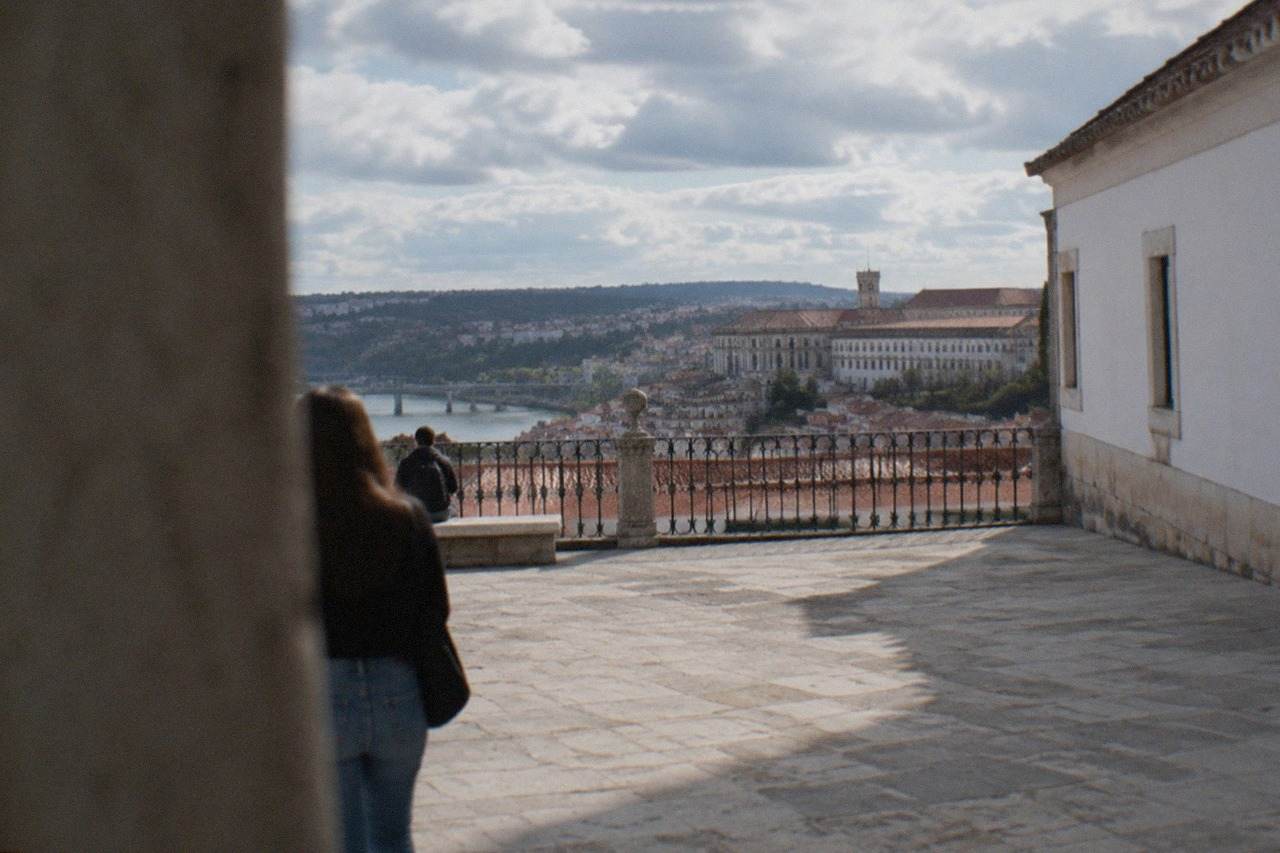
Coimbra, Portugal, the university city on the River Mondego, is compact enough that travellers routinely underestimate it, then discover that its single most famous interior, the Biblioteca Joanina, can only be entered inside a pre-booked 20-minute slot limited to 50 people. The University's own visitor pages state that rule in plain terms, and it shapes every honest answer to the timing question. The city is walkable, the hills are real, and two of the major monuments are currently closed for works, which paradoxically makes planning easier and tighter at the same time.
How Much Time Is Needed in Coimbra?
Two full days is the honest answer for most visitors: one day covers the university hill, the Sé Velha and the Baixa, and the second day absorbs the timed Joanina Library slot, Mosteiro de Santa Cruz and a riverside wander without rushing. A single very long day can work if you pre-book the library slot for the morning, but anything involving day trips to Conímbriga or the schist villages needs a third day. The deciding factor is not walking speed, it is the University's own entry system.
The 16.50 EUR combined University ticket, valid for two days except for the fixed library slot, is itself an argument for staying two days. The University sells it as a two-day product, and the way it is structured rewards the visitor who does not try to compress everything into one sprint up the hill. The ticket covers the Joanina Library, the Royal Palace, the Capela de São Miguel, the Chemistry Laboratory, the Academic Museum, the Cabinet of Curiosities and the Mineral Gallery, and the date and time printed on it are specifically the Joanina slot.
That detail matters more than most guides admit. The University's own programme page states that entries to the Joanina are limited to 50 people every 20 minutes, that online purchase closes 20 minutes before the visit time, and that entry outside the printed slot is refused. In summer, a visitor who arrives without a pre-booked slot can simply be turned away. Nobody writing this has been to Coimbra, but the University's own visit page says all of this, and it is checkable.
There is also a subtraction most lists miss: the Torre da Universidade, the clock tower, is closed. The University's information page states "We regret to inform you that this facility is closed", and mentions the 184 steps and narrow passage only by way of explaining the site. Do not budget time for a tower climb, because there isn't one.
| Time budget | What it realistically covers | What it misses |
|---|---|---|
| Half a day | Paço das Escolas, Sé Velha, one walk through the Baixa | Joanina Library without a pre-booked slot, Santa Cruz, both riverside districts |
| One full day | University hill with a morning Joanina slot, Sé Velha, Santa Cruz, lunch and the Baixa | Museu da Ciência spaces at leisure, Portugal dos Pequenitos, any day trip |
| Two full days | Everything above plus the Science Museum spaces, Botanical Garden, fado evening, riverside | Conímbriga, schist villages, Buçaco |
| Three or more days | Everything above plus one day trip (Conímbriga, Lousã or Buçaco) | Nothing major |
What Can You Realistically See in One Day in Coimbra?
A well-planned single day can cover the Paço das Escolas circuit with a pre-booked Joanina slot, the Sé Velha at 3.00 EUR, Mosteiro de Santa Cruz at 5.00 EUR, the Arco de Almedina and a walk down through the Baixa to the river, but only if the library slot is booked in advance and the day starts at the top of the hill. The order matters: start high, finish low, because Coimbra's slopes punish the reverse.
Book the earliest Joanina slot you can get, enter through the Paço das Escolas, and give the university circuit about three hours, which is the University's own stated duration for the combined ticket programme. Then descend through the old town. The Sé Velha's individual ticket is 3.00 EUR, published by the Unidade Pastoral Aeminium, which manages the building, with summer visiting hours from 09:30 to 18:30. Mosteiro de Santa Cruz, the burial church of Portugal's first two kings, charges 5.00 EUR for the visitable parts and opens 09:30 to 16:30, with visits suspended on Easter Sunday and on the Cortejo da Queima das Fitas, a moveable Sunday in May.
Two warnings for the one-day plan. First, the Museu Nacional de Machado de Castro is closed for conservation work; its own page on the national museums portal says so twice, so strike it from any itinerary and do not plan around a reopening date. Second, the tourist tax applies even to a single night: 1.00 EUR per guest per overnight stay, from age 16, paid to the accommodation, in force since 5 April 2023. A couple staying one night pays 2.00 EUR total, and the municipality's own worked example confirms how the cap works for longer stays.
For a compressed day, a guided walk is the most efficient use of the hours, because a guide compresses navigation time and the good ones time the university spaces around your slot.
The budget end of that list deserves a note. The Coimbra Top Attractions Walking Tour runs 2 hours 30 minutes from 5.85 per person, and the free GuruWalk options cost nothing up front, tip based, led by named gurus such as the certified guide behind the Coimbra Highlights, History and Traditions walk. If your day is short, a two-and-a-half-hour orientation walk in the morning plus a booked Joanina slot in the afternoon is a legitimate one-day Coimbra.
Is Two Days in Coimbra the Sweet Spot?
Yes, for most travellers two days is the sweet spot, because the 16.50 EUR University ticket is itself valid for two days, the Joanina slot is fixed while the other spaces are not, and the second day lets you add the Science Museum spaces, the Botanical Garden, a fado evening and the Santa Clara side of the river without cutting anything. The ticket structure and the geography both point at two days.
Use day one for the upper town and day two for depth. The University's summer schedule runs 09:00 to 20:00 from 1 April to 30 September, and 09:00 to 17:30 in winter, so late-evening visits to the Paço das Escolas spaces are possible in summer, except the fixed library slot. The University also warns that religious, official and academic ceremonies interrupt the normal tourist circuit, and it closes the circuit entirely on 24 May and 4 October in the current cycle, plus the Christmas and New Year dates. A two-day plan absorbs one such surprise; a one-day plan does not. Everything else covered here is indexed on Coimbra Travel Guide.
The second day is also when the city's atmosphere becomes legible. The University publishes a figure of about 31,000 students on its own homepage, and a city built around that population, its Repúblicas, its fado and its cafés, reveals itself at the pace of a second morning, not a first sprint. The municipality's own figures put 698,151 overnight stays in Coimbra in 2025, which tells you most visitors do stay the night rather than day-trip through.
If you would rather hand the timed-slot logistics to someone who deals with them daily, the skip-the-line university tour with a local guide is built exactly for the two-day visitor who wants the university handled in 90 minutes and the rest of the time free.
For the evening of day one or day two, the live fado show with a glass of port wine runs 50 minutes from 18 per person, and Coimbra's fado tradition is distinct from Lisbon's, sung in the academic capa e batina style. The best time to visit Coimbra shapes how much of this two-day plan survives intact: IPMA's 1991 to 2020 normals for the Coimbra / Bencanta station show July at just 8.9 mm of rain and effectively dry, while October jumps to 114.5 mm and November is the wettest month at 121.5 mm.
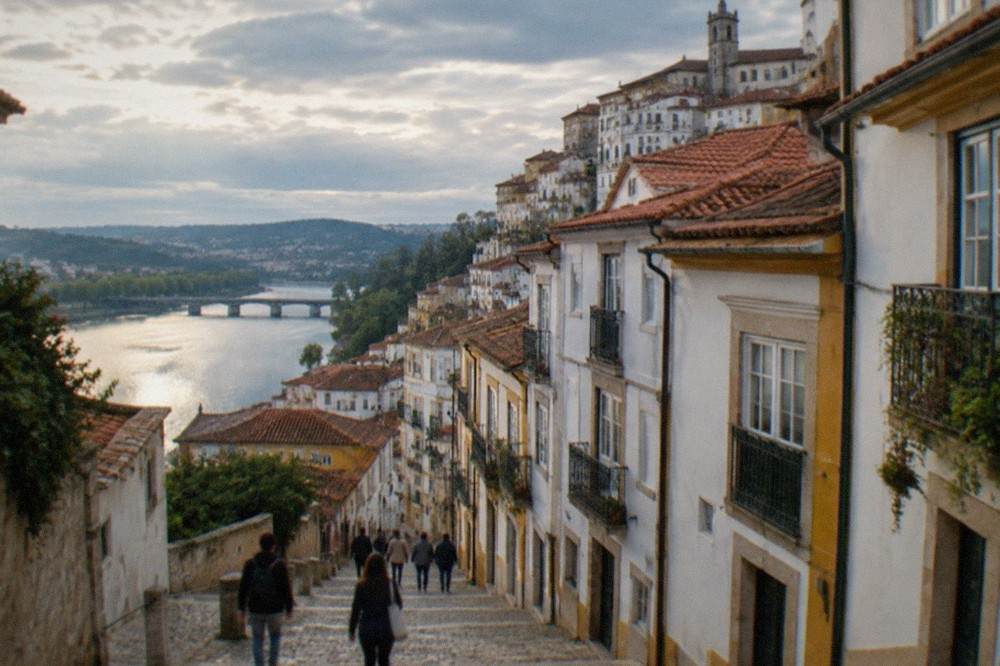
When Is Three Days or More Worth It in Coimbra?
Three days becomes worth it the moment you want a day trip, because the best of them are genuinely outside the city: Conímbriga's Roman ruins lie about 16 km south in Condeixa-a-Velha, in the municipality of Condeixa-a-Nova, and the schist villages sit up on the Lousã mountain, neither reachable as a casual add-on. Give the day trip its own full day.
Conímbriga is the strongest candidate. A 10.00 EUR adult ticket covers both the museum and the ruins, it opens seven days a week 10:00 to 18:00, and that Monday availability matters, because several national monuments close on Mondays. The site is a Roman town, and the case for visiting Conímbriga holds up even for travellers with only lukewarm interest in archaeology. Guided options from Coimbra run around four hours, which is why it cannot be squeezed into an evening.
The Lousã schist villages are the other classic third-day trip, with tours running around four hours and covering villages such as Talasnal. Buçaco's forest and Fátima are further options, each a half-day to full-day commitment. If you are weighing a third day against adding a second city instead, the how many days you need in Coimbra breakdown and the what not to miss in Coimbra checklist both help you decide whether your interests actually fill it.
Common Questions About Time Needed in Coimbra
How much time is needed in Coimbra?
Two full days for the city itself, with a pre-booked Biblioteca Joanina slot, and a third day if you want Conímbriga or the Lousã schist villages. One long day works only with advance booking and a strict route.
Is one day in Coimbra enough?
One day covers the university hill, the Sé Velha and the Baixa if the Joanina slot is booked in advance. It leaves no time for the Science Museum spaces, the Botanical Garden, a fado evening or any day trip.
Why does the Biblioteca Joanina slot dictate the schedule?
The University limits entries to 50 people every 20 minutes, the library cannot be bought on its own, the time on the ticket is the library slot specifically, and entry outside that time is refused. Online purchase closes 20 minutes before the slot.
Can you visit Coimbra without the university?
Yes, but you would be skipping the inscribed UNESCO property. The listing covers the University of Coimbra, Alta and Sofia, inscribed in 2013, and it is the hill and the college street, not the whole city.
Do the closures change how much time to allow?
They shorten a packed itinerary slightly: the Machado de Castro museum and the university clock tower are both closed, and Mosteiro de Santa Clara-a-Velha has been closed for requalification works since October 2025, so check its status before planning around it.
When should you add a third day?
Add a third day when a day trip is part of the plan. Conímbriga, the schist villages of the Lousã and the Buçaco forest each need most of a day, and none of them can be absorbed into a city itinerary without gutting it.
The short version: book the Joanina slot first, let it decide whether your trip is one day or two, and only add the third day when a day trip is genuinely on the list. Everything else in Coimbra bends around that one 20-minute window, and planning in that order is what a Coimbra Travel Guide is for.