How Hard Is It to Get Into Coimbra University?
Admission to the University of Coimbra in Portugal explained: what the University's own published numbers say, how competitive its programmes are, and how visiting the campus differs from studying there.
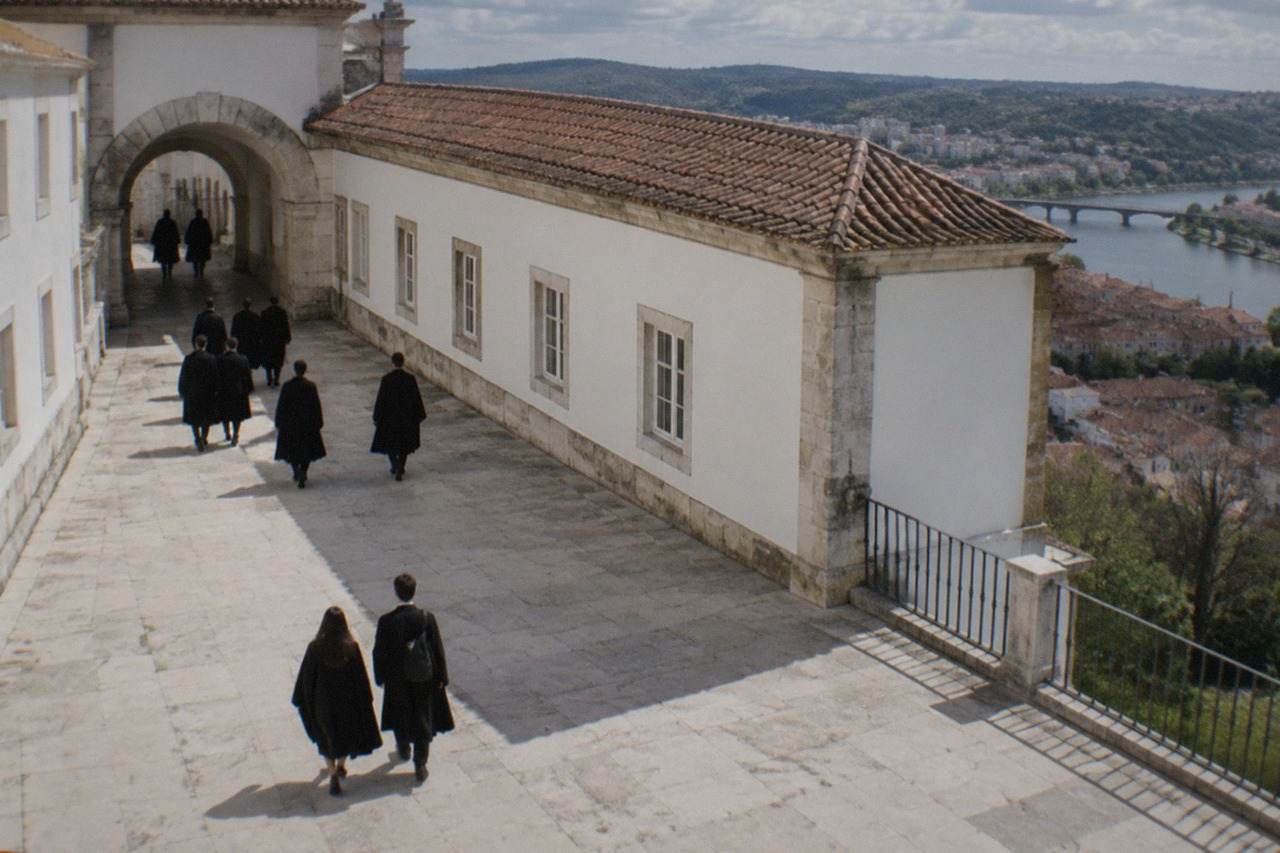
The University of Coimbra, in the city of Coimbra on the River Mondego in central Portugal, is one of the oldest universities in Europe and the institution that gives this small city its identity. Prospective students, and often their parents, ask one question more than any other: how hard is it to get into Coimbra University? The honest answer is that the University publishes no acceptance rate and no admission statistics that would let anyone calculate one, so this page works from what the University itself does publish, plus the structure of the Portuguese national admission system, which is where the real difficulty lives. What can be stated with certainty is that competition is set by faculty and programme, not by the University as a whole, and that visiting the campus as a tourist is a completely different process from winning a study place there.
How Hard Is It to Get Into Coimbra University?
Nobody can quote you an acceptance rate for the University of Coimbra, because the University publishes none, and any percentage you read on a rankings aggregator is an estimate rather than an official figure. What the University's own homepage does publish is about 31,000 students enrolled across 434 courses, taught by 1,935 professors, on four campuses.
Admission for Portuguese and EU applicants runs through the national sistema de acesso system, where places are allocated by competitive score, so the difficulty depends entirely on which faculty and programme an applicant targets.
That last point deserves expansion, because it is where most international guides to Portuguese universities go vague. Portugal does not admit students the way a United States college does, with an admissions office weighing essays and extracurriculars. Portuguese and EU candidates sit national secondary-school examinations, and their combined score is ranked against everyone else applying to the same programme in the same year. Medicine, law and psychology at Coimbra have historically required some of the highest scores in the country; a humanities or social sciences programme may sit much further down the same table. The University is not harder or easier than its peers in Lisbon or Porto as an institution: it is a set of dozens of separate competitions, each with its own threshold that moves annually with the applicant pool.
International students from outside the EU apply through a separate route, usually the University's own international student admission process, which typically weighs secondary-school results and, for some programmes, an interview or subject requirements. The University's international office publishes the procedures per faculty, and those pages are the only reliable source for what a given programme requires, because requirements differ between faculties and can change between cycles.
What the University of Coimbra's Own Published Numbers Say
The University of Coimbra's homepage states that the institution currently has about 31,000 students, 434 courses, 1,935 professors, 378 researchers, 1,537 technical staff, four campuses, 22 libraries, two museums and one botanic garden. The page does not state an academic year for these figures, so they should be read as the University's current published snapshot rather than a fixed annual count. The international student breakdown is not published in that block, and no official acceptance rate appears anywhere in it.
These numbers matter to an applicant in a practical way. A university of roughly 31,000 students spread over four campuses is large by Portuguese standards, which means the first-year experience varies enormously by faculty. A student in the Faculty of Medicine lives in a different world from a student in the Faculty of Arts, with different buildings, different timetables and a different social rhythm, even though both hold the same student card. The 13 student residences the University lists are also part of that picture: demand for rooms in the city is shaped by the student body's size relative to a city that is modest in physical terms.
| Published figure | What the University says | Why it matters to an applicant |
|---|---|---|
| About 31,000 students | Current figure on the University's homepage | Indicates scale of competition for housing and facilities, not for places |
| 434 courses | Current figure on the homepage | Difficulty varies course by course, not institution-wide |
| 1,935 professors | Current figure on the homepage | Roughly one professor per 16 students on paper, unevenly spread in practice |
| 4 campuses | Current figure on the homepage | Where you study depends on the faculty, not on a preference |
| 13 residences | Current figure on the homepage | Student housing is limited relative to the student body |
For context on the institution's standing, the question of whether it is a good university, and how it compares nationally, is covered in a separate piece on whether the University of Coimbra is a good university, and its age and history in is Coimbra the oldest university in the world?.
Do You Need Tickets to Get Into the Coimbra University Campus?
As a visitor you cannot simply walk into the University of Coimbra's monumental core: the Paço das Escolas circuit is ticketed, and the Biblioteca Joanina can only be seen on a timed slot inside the 16.50 EUR combined ticket, which admits 50 people every 20 minutes. The time printed on that ticket is the library slot specifically, entry outside it is refused, and the rest of the ticket is valid for two days.
This distinction trips up a surprising number of readers. The question "how hard is it to get into Coimbra University?" is asked by two entirely different groups: applicants who want to study there, and visitors who want to see it. For visitors, the answer is procedural rather than competitive. The University's own visit pages state the summer schedule runs 09:00 to 20:00 from 1 April to 30 September, and the winter schedule 09:00 to 17:30 from 1 October to 31 March, with the visitor circuit closed on listed dates including 24 and 25 December. The 50 people per 20 minutes ceiling on the Joanina is the one genuine scarcity fact on the whole campus: it is why a summer walk-up can be turned away, and it is the reason booking ahead matters more here than at almost any other Portuguese monument.
For applicants, by contrast, no ticket exists that can be bought. The full ticketing picture for visitors, including the 12.50 EUR option without the library, is set out in the site's University of Coimbra tickets guide, and the specifics of the library's timed entry in how do I visit the Coimbra University library?.
Which Programmes Are the Most Competitive at Coimbra?
The University of Coimbra publishes no faculty-level acceptance rates, so no honest ranking of its programmes by difficulty exists, and any list you encounter is reconstructed from national admission thresholds. What is structurally true is that Portuguese public universities allocate places by national score, and the programmes that require the highest scores nationwide are consistently medicine, dentistry and law, all of which Coimbra teaches. A programme in the humanities, social sciences or engineering at the same university sits on a materially lower threshold.
The practical implication for an applicant is to research the specific programme, not the brand. The national access system publishes the historical entry scores for every programme at every public university, and those tables, read across two or three years, show whether a programme's threshold is stable or drifting upward. Coimbra's Faculty of Medicine sits on the university hill's surroundings in the modern part of the city and is one of the most contested places in the country; a degree in, say, philosophy or anthropology at the same institution will look very different on paper. This is not a Coimbra peculiarity: the same spread exists at the universities of Lisbon and Porto, and choosing between Portuguese universities is covered in which is the most prestigious university in Portugal?.
For international applicants, the picture is a little more forgiving in most faculties, because the international route does not place candidates in the same national ranking pool. Requirements are set faculty by faculty and published on the University's own admission pages, which are the only source worth reading, since aggregator sites frequently paraphrase them badly or out of date. The wider set of guides lives on Coimbra Travel Guide.
What Studying at Coimbra University Is Actually Like
The University of Coimbra's student experience is defined by scale and tradition: about 31,000 students in a compact city on the River Mondego, a baroque hilltop campus inscribed by UNESCO as "University of Coimbra, Alta and Sofia" in 2013, and a set of student traditions, from the black capa to the Repúblicas houses, that shape daily life. The University lists 13 residences and 22 libraries, and its faculties are spread across four campuses, so where a student lives and studies depends heavily on the faculty they enter.
The UNESCO point is worth getting exactly right, because most guides get it wrong. The inscription, list reference 1387, covers two components of the old town: the Alta, the university hill with the Royal Palace of Alcáçova, St Michael's Chapel and the Joanina Library among its named parts, and Rua da Sofia, the college street below. The city of Coimbra as a whole is not a UNESCO World Heritage city, and neither is the Baixa or the riverside. The site is managed by an association called RUAS, founded by the University together with the City Hall and cultural bodies. For a visitor, the practical effect is that the hilltop campus is the protected core, and the student traditions wrapped around it, the capa e batina, the Queima das Fitas festival in May and the fado de Coimbra sung by students in that costume, are living parts of the institution rather than museum theatre.

Student life also has a documented economic footprint worth knowing. The municipality's own economic justification, published on its news pages in July 2026, records 698,151 overnight stays in Coimbra in 2025 and estimates its annual municipal cost of tourism at 2.44 million EUR, a cost of 3.49 EUR per overnight stay. A student population of about 31,000 in a city of this size is a large share of the economy a new applicant would be moving into, and it is why term-time Coimbra feels so different from August Coimbra. The broader visitor picture is covered in what is special about Coimbra, Portugal?.
How Hard Is It to Get Into Coimbra University as an International Student?
International applicants from outside the EU apply through the University of Coimbra's own international admission route rather than the Portuguese national ranking, and the difficulty therefore depends on the faculty's published requirements and the number of places it reserves for that route. The University publishes no international acceptance rate, and the international student share of its roughly 31,000 students is not stated on its homepage, so any percentage you read elsewhere is an estimate. Requirements are set per programme and published on the University's own admission pages.
The honest advice, from the structure of the system rather than from any claimed experience, is to read the faculty pages directly and to apply early in the cycle. Portuguese public universities run fixed calendars, and international cohorts are small in many programmes, so the practical constraint is often the number of reserved places rather than the standard of the applicant. English-taught degrees exist at Coimbra, mainly at master's level, and their entry requirements are published per programme. Where a competitive threshold genuinely exists, it is in the health sciences and law, exactly as it is for domestic applicants.
Visitors who fall for the campus without ever applying should know that seeing it properly takes planning: the Joanina's 50 people per 20 minutes rule means the library slot, not the day, is what you are really booking, as explained in do you need tickets for the University of Coimbra? and is there an entrance fee for Coimbra University?.
Common Questions About Getting Into Coimbra University
How hard is it to get into Coimbra university?
The University publishes no acceptance rate, so the difficulty cannot be stated as a percentage. For Portuguese and EU applicants it is set by the national score competition for each programme: medicine, dentistry and law require some of the highest scores in the country, while many humanities and social science programmes sit on much lower thresholds. International applicants apply through a separate University route with faculty-specific requirements.
Does the University of Coimbra have an acceptance rate?
No official one. The University's homepage publishes about 31,000 students and 434 courses but no admission statistics. Any acceptance rate you find on an aggregator site is an estimate, not a University figure, and should not be relied on for planning.
Is the University of Coimbra prestigious?
It is one of the oldest universities in Europe and a UNESCO-inscribed site, "University of Coimbra, Alta and Sofia", list reference 1387, inscribed in 2013. Prestige in Portugal is generally discussed as a comparison between Coimbra, Lisbon and Porto, which the site covers separately.
Can tourists visit the University of Coimbra?
Yes, but the monumental core is ticketed. The combined ticket including the Biblioteca Joanina is listed at 16.50 EUR for the 2026 season, with the library admitting 50 people every 20 minutes on a fixed timed slot printed on the ticket. The rest of the ticket is valid for two days.
How many students does the University of Coimbra have?
About 31,000, per the University's own current published figure, alongside 434 courses, 1,935 professors and four campuses. The page does not state an academic year, so the figure should be read as a current snapshot.
The short version: getting into Coimbra University as a student is as hard as the programme you choose, and getting in as a visitor is simply a matter of booking the right ticket before the Joanina's 50-per-20-minute slots fill.