Which Part of Coimbra Is Best?
Which part of Coimbra, Portugal is best to stay in and explore: the Alta university hill, the Baixa riverside downtown, or Santa Clara across the Mondego, compared with real prices and verified facts.
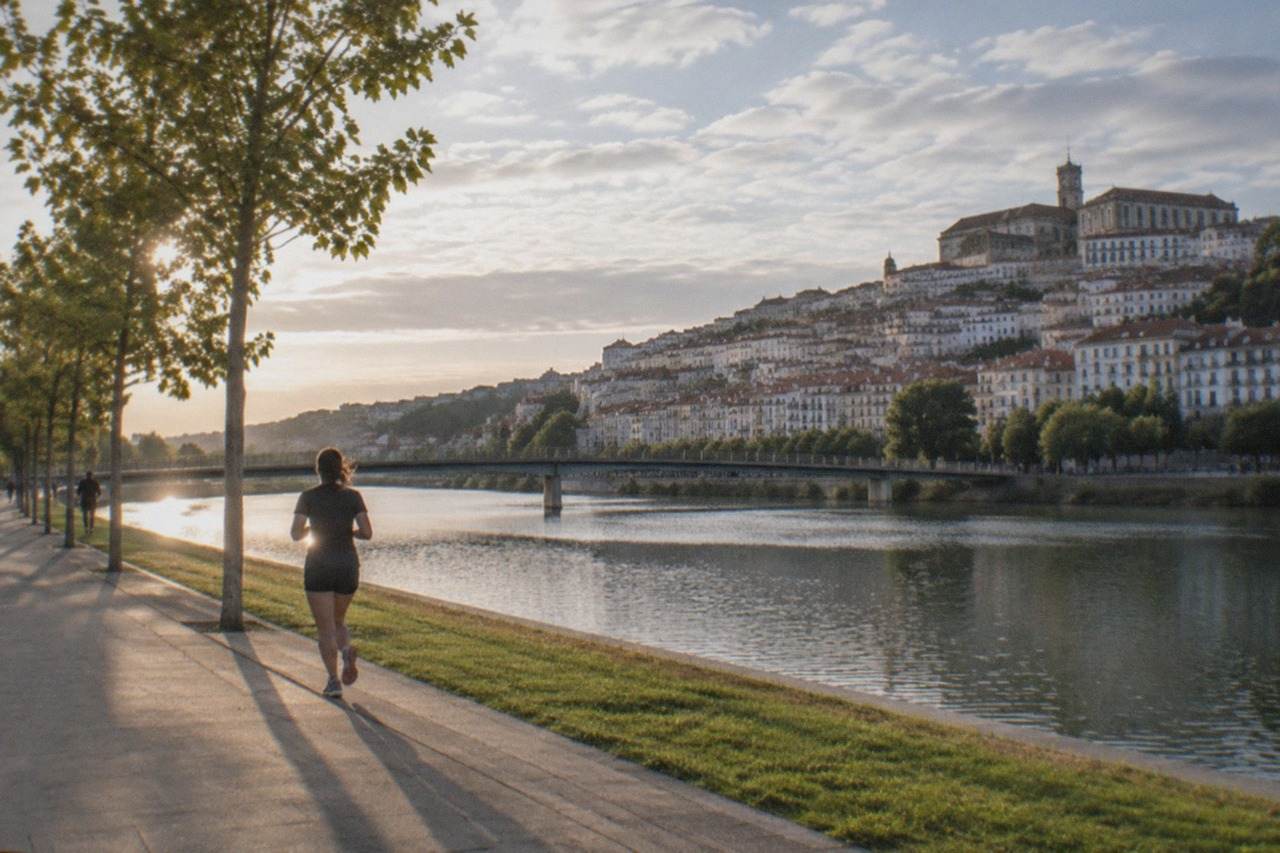
Coimbra, Portugal, the university city on the River Mondego, does not have one centre: it has three, stacked on top of each other and split by a river. The Alta is the hill crowned by the University of Coimbra, whose "University of Coimbra - Alta and Sofia" inscription on the UNESCO World Heritage list in 2013 covers the university hill and Rua da Sofia, not the whole city. The Baixa is the commercial downtown below, running down to the Mondego. Santa Clara sits on the far bank. Which part is best depends almost entirely on your legs, your budget and whether the Biblioteca Joanina is on your list, because that library admits only 50 people every 20 minutes and cannot be visited any other way than through the University's combined ticket.
Which Part of Coimbra Is Best?
For most first-time visitors the Alta is the best part of Coimbra, because it holds the University's Paço das Escolas, the Biblioteca Joanina, the Capela de São Miguel and the city's defining views, all within a five-minute walk of each other. Its drawback is equally simple: it is a steep hill, and the University's combined ticket with the Joanina Library costs 16.50 EUR per adult. If views and the baroque library matter more than nightlife, choose the Alta.
The Alta is what the photographs of Coimbra are photographs of. The University's own visit page lists the Royal Palace, St Michael's Chapel, the Chemistry Laboratory, the Academic Museum, the Cabinet of Curiosities and the Mineral Gallery as one programme, with the Joanina Library available only inside the 16.50 EUR combined ticket. That ticket is valid for two days, except the Joanina slot, which is fixed to the time printed on it. The University's page states entries are limited to 50 people every 20 minutes, and entry outside the printed slot is refused.
Two warnings belong here, because they catch out visitors who planned around closed sights. The Torre da Universidade, the clock tower, is closed: the University's own information page says "We regret to inform you that this facility is closed", and no climb, price or timetable exists. The Museu Nacional de Machado de Castro, downhill at the edge of the Alta, is closed for conservation work; its own page says so twice. Neither belongs in any itinerary this year.
A guided visit solves the logistics of the hill. The University of Coimbra guided tours without queue option includes tickets and runs in groups of eight, which matters when the Joanina's slot ceiling is the binding constraint on your day. Check availability if the timed library entry is the reason you are choosing the Alta.
Which Part of Coimbra Is Best for First-Time Visitors on Foot?
The Baixa, the downtown between the hill and the river, is the best base for a first visit, because almost every practical thing a visitor needs is there and the two biggest monuments on the flat, the Sé Velha at 3.00 EUR and Mosteiro de Santa Cruz at 5.00 EUR, are a short walk apart. The trade-off is that everything worth photographing is uphill. Coimbra is a walkable city with a serious slope, so staying low and climbing once is the sensible pattern.
The Baixa is where the city's working life happens: commerce, cafés, the municipal market, and the riverside park along the Mondego. It is also the part of the city that the UNESCO inscription does not cover, which is worth knowing before repeating the common claim that Coimbra is a World Heritage city. It is not. The 2013 inscription, list reference 1387, covers two components inside the old town: the university hill and Rua da Sofia, the college street. The Baixa is simply the pleasant, flat, convenient downtown below them.
The pricing pattern rewards a low base. The Sé Velha, the old cathedral on the shoulder of the hill, charges 3.00 EUR for an individual visit, per the parish's own visitor page, with groups of more than 10 at 2.50 EUR each. Mosteiro de Santa Cruz, the burial church of Portugal's first two kings, charges 5.00 EUR individual, with school groups at 2.00 EUR per student. Both are managed by the same pastoral unit and publish their hours on their own pages. Neither requires the University's ticket.
One seasonal note that most guides get backwards: IPMA's 1991 to 2020 normals for the Coimbra / Bencanta station show September is hotter than June, 27.4 C mean maximum against 26.3 C, and wetter, 49.9 mm against 26.0 mm. The real change comes in October, when rainfall jumps to 114.5 mm. If you are choosing between months for a walking-first visit, June and September are the comfortable shoulders, and November is the wettest month at 121.5 mm.
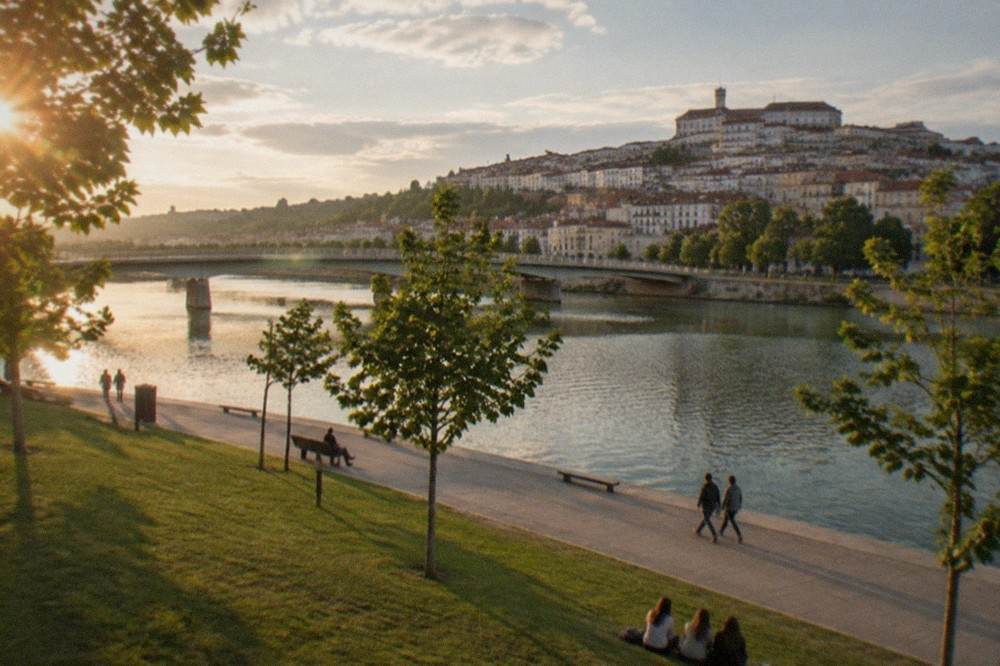
Where to Stay in Coimbra: Alta, Baixa or Santa Clara?
The Baixa is the best all-round place to stay in Coimbra for a one- to three-night visit, Santa Clara is the best value across the river, and the Alta suits only travellers who accept stairs for atmosphere. Santa Clara's practical caution is that its headline monument, Mosteiro de Santa Clara-a-Velha, has been closed for requalification works since 20 October 2025, so the district's main draw is currently the riverside itself.
Whichever bank you choose, the tourist tax is the same: 1.00 EUR per guest per overnight stay, capped at three consecutive nights, from age 16, paid to the accommodation at check-in or check-out. The municipality's own worked example: a couple staying seven nights pays 3.00 EUR each, 6.00 EUR total. A two-euro rate has been proposed and approved at Executive level in July 2026, but the published rate remains one euro until the municipality's own tax pages change it.
The municipality's justification for that rise is itself a useful gauge of how busy each part of the city gets: Coimbra recorded 698,151 overnight stays in 2025, a municipal figure, and estimates its tourism-related cost at 3.49 EUR per overnight stay against the one-euro tax. The demand is real, concentrated in the old town, and it is why Santa Clara's quieter, cheaper rooms across the bridge are worth the crossing.
Which Part of Coimbra Is Best for a Day Trip?
A day-tripper should not choose a part of Coimbra at all but walk one line: up through the Baixa's Arco de Almedina to the Paço das Escolas, then back down to the Sé Velha and Mosteiro de Santa Cruz. That single route takes in the UNESCO-inscribed hill, the two flat monuments and the river, and it fits inside the University's two-day ticket window comfortably. The Joanina slot is the one fixed appointment to book before you arrive.
The order matters. The University's visit page states the combined ticket is valid two days except the Joanina slot, so a day visitor books the library time first and arranges the rest around it. Online purchase closes 20 minutes before the visit time, and the University's page says plainly that visits outside the stipulated time will not be admitted. In the peak months, when the 50-per-20-minutes ceiling is the constraint, a pre-booked slot is the difference between seeing the library and standing at the kiosk.
The walkable-city question comes up constantly, and the honest answer is that Coimbra is compact but steep. The distance between the Baixa's riverfront and the university's main gate is short; the gradient is what people remember. For anyone who would rather have the route narrated, the Coimbra Top Attractions Walking Tour covers the same spine in about two and a half hours, and the schist-village day trips into the Serra da Lousã are for a second day, not this one. The walkability question is worth reading before booking anything on the hill.
Which Part of Coimbra Is Best for Families and Longer Stays?
For families and stays of three nights or more, the riverside strip between the Baixa and the Mondego is the best part of Coimbra: it is flat, it connects the downtown to the parkland along the river, and it is the side of the city closest to Portugal dos Pequenitos across the bridge. That attraction, the miniature village run by the Fundação Bissaya Barreto, is open 10:00 to 19:00 from 1 March to 15 October, per its own hours page.
Families should not plan around the three closed sights, whatever older listings say: the Machado de Castro museum, the university tower and Santa Clara-a-Velha are all shut for works, and no price or timetable for any of them should be trusted this year. Portugal dos Pequenitos publishes its hours but renders its price table client-side, so check the venue's own ticket page for current euro amounts rather than any figure quoted in a guide.
Longer stays open up the district question in the other direction: the municipality recorded those 698,151 overnight stays in 2025, and the old town's small stock fills first. Staying across the river and walking in over the bridge adds minutes, not money. For a second-day excursion, the schist villages of the Serra da Lousã, reached on a half-day tour from the city, are the standard answer, and the University's about 31,000 students mean the Alta's term-time energy is part of what you are choosing when you choose to stay near it.
| Part of Coimbra | Main sights | Verified prices | Best for | Main drawback |
|---|---|---|---|---|
| Alta (upper town) | Paço das Escolas, Biblioteca Joanina, Capela de São Miguel | 16.50 EUR combined ticket, 12.50 EUR without the library | First visit, views, the library | Steep hills, timed slots |
| Baixa (downtown) | Sé Velha, Mosteiro de Santa Cruz, riverside | Sé Velha 3.00 EUR, Santa Cruz 5.00 EUR | Walking, eating, staying | Everything scenic is uphill |
| Santa Clara | Riverside, Portugal dos Pequenitos nearby | Hours published; price on the venue's own page | Families, value, quiet | Santa Clara-a-Velha closed for works |
Common Questions About the Best Part of Coimbra
Which part of coimbra is best?
For most visitors the Alta, the university hill, is the best part of Coimbra: it holds the Biblioteca Joanina, the Paço das Escolas and the city's defining views. The Baixa below is the better place to sleep and eat, and Santa Clara across the river is the better value. This Coimbra Travel Guide page compares all three on price, gradient and closures.
Is Coimbra a UNESCO World Heritage city?
No. UNESCO inscribed "University of Coimbra - Alta and Sofia" in 2013, list reference 1387, covering two components inside the old town: the university hill and Rua da Sofia. The city as a whole, including the Baixa and the riverside, is not inscribed.
Is the Baixa or the Alta better for a first visit?
Stay in the Baixa, visit the Alta. The Baixa is flat and holds the Sé Velha at 3.00 EUR and Mosteiro de Santa Cruz at 5.00 EUR; the Alta holds the University's 16.50 EUR combined ticket and the Joanina's 50-people-per-20-minutes timed entry. Climbing once is easier than living on the hill.
Is Santa Clara worth staying in?
Yes, for value and quiet, with one caution: Mosteiro de Santa Clara-a-Velha has been closed for requalification works since 20 October 2025, so the district's headline monument is currently unavailable. The riverside itself and the walk over the bridge remain pleasant.
How much is the tourist tax in Coimbra?
1.00 EUR per guest per overnight stay, capped at three consecutive nights, from age 16, paid to the accommodation. A rise to 2.00 EUR was approved as a proposal in July 2026, but the published rate remains one euro.
Which part of Coimbra is best without a lot of walking?
The Baixa and the riverside. The Sé Velha, Mosteiro de Santa Cruz and the Mondego park are all reachable on gentle gradients, while the Alta is a genuine climb. The walkability question is worth reading before booking anything on the hill.
The short version: the Alta is the best part of Coimbra to visit, the Baixa is the best part to stay in, and Santa Clara is the best part to save money in, provided you check that its closed monument has reopened before you cross the bridge for it. Whatever you choose, book the Joanina slot before anything else, because 50 people every 20 minutes is the one number that decides how the rest of your visit falls into place.