What to Be Careful of in Portugal?
Practical cautions for visitors to Coimbra, Portugal: the tourist tax, the two train stations, timed library slots, closures, hills and autumn rain, all from official sources.
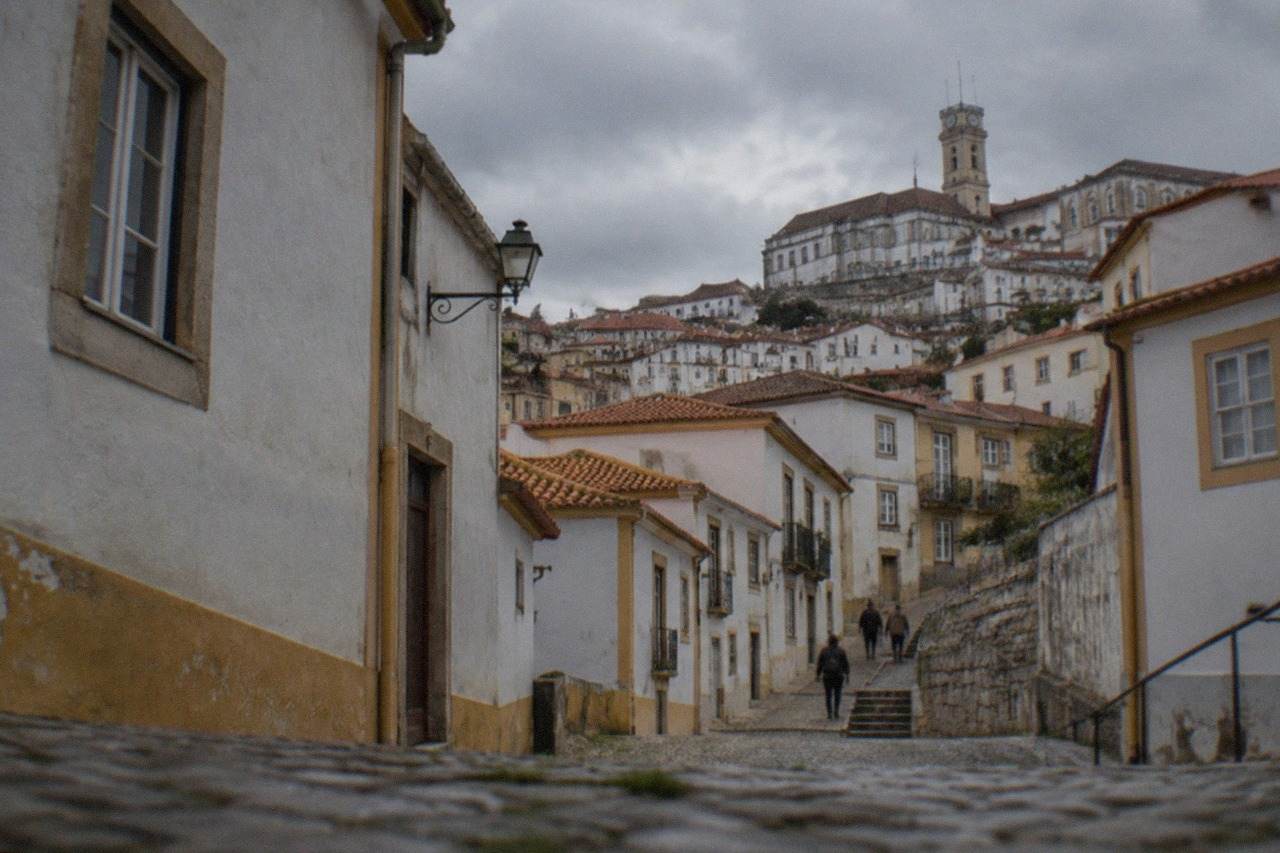
Coimbra, Portugal, the university city on the River Mondego, is a safe, compact and genuinely easy place to visit, and that is exactly why the few things that go wrong here go wrong in predictable, avoidable ways. Nobody writing this has been to the city, so every caution below comes from what official sources publish rather than from anecdote: the municipality's own tax page, the University's own visitor information, the 2026 SMTUC tariff and IPMA's climate normals for the Coimbra / Bencanta station. The result is a short list of specific, checkable traps rather than a list of vague worries.
What to Be Careful of in Portugal?
The things worth care in Coimbra, Portugal are practical rather than dangerous: a 1.00 EUR per night tourist tax capped at three nights and paid to your accommodation, two train stations with confusingly similar names, a baroque library that refuses entry outside a printed 20-minute slot, several major monuments currently closed for works, steep cobbled hills, and an autumn that turns wet in October rather than September. None of these is a scam, and none will ruin a trip. All of them cost money, time or access to people who arrive without knowing the rule exists.
Portugal consistently ranks among the safer countries in western Europe, and Coimbra is a small student city of about 31,000 University students rather than a metropolis. Violent crime against visitors is rare enough that the official cautions worth printing are about money and logistics, not personal safety. The municipality's own tourism figures show 698,151 overnight stays in 2025, which is a lot of visitors for a city this size, and the systems those visitors interact with, tickets, trains, taxes, have precise rules attached to them.
The rest of this page works through each of those rules in turn. If you read only one section, make it the one on the Biblioteca Joanina's timed slots, because that is the single rule that turns people away at the door.
Which Coimbra Closures and Ticket Rules Catch Visitors Out?
Three major sights are closed or restricted right now: the Torre da Universidade is closed with no public access, the Museu Nacional de Machado de Castro is closed for conservation work, and Mosteiro de Santa Clara-a-Velha has been closed for requalification works since 20 October 2025. The Biblioteca Joanina is open but cannot be bought on its own: it exists only inside the 16.50 EUR combined University ticket, admits 50 people every 20 minutes, and the time printed on your ticket is your fixed library slot, with entry refused outside it.
The University's own visitor information page states plainly of the clock tower: "We regret to inform you that this facility is closed." The same page mentions the tower's 184 steps and narrow passage as background, which explains why reopening it is not a quick job, but no price, no hours and no climb should appear in any plan you make. Any guide selling you a tower visit today is selling something that does not exist.
The museum situation is subtler and more dangerous for a planner. The Machado de Castro's own page on the national Museus e Monumentos portal carries a closure line at the top, then prints a normal-looking opening-hours table below it, which is exactly the kind of page that gets copied into itineraries by mistake. The museum sits above a Roman cryptoporticus of the mid-1st century, part of the visit route when it reopens, and a 10.00 EUR reopening price circulates in dated Portuguese press, but the official page publishes no price while the museum is shut, so treat the building as closed and check before building a day around it.
| Sight | Current status | Official rule to know |
|---|---|---|
| Torre da Universidade | Closed, no public access | University's own info page states the facility is closed |
| Museu Nacional de Machado de Castro | Closed for conservation work | Reopening price unsourced; do not plan around a 10.00 EUR figure |
| Mosteiro de Santa Clara-a-Velha | Closed for works since 20 October 2025 | No price or hours published; check status before travelling |
| Biblioteca Joanina | Open, timed entry | 50 people every 20 minutes; no standalone ticket; 16.50 EUR combined ticket only |
| Sé Velha de Coimbra | Open | 3.00 EUR individual ticket, published by the parish unit |
| Mosteiro de Santa Cruz | Open | 5.00 EUR individual; visits suspended on the Cortejo da Queima das Fitas, a moveable Sunday |
The Joanina rule deserves its own paragraph because it is the one with teeth. The University's program page states that entries are limited to 50 people every 20 minutes, that the date and time on the ticket are the library slot specifically, and that visits outside the stipulated time are not admitted. Online purchase closes 20 minutes before the visit time. The other spaces on the combined ticket stay valid for two days, but the library slot is fixed. A guided tour with tickets included removes most of this friction, and the listing for the University of Coimbra guided tour with tickets is one way to do that; you can also Check availability directly.
If you are planning a wider itinerary, the question of how many days you need in Coimbra matters here, because the timed Joanina slot effectively forces your university visit into a fixed window and the rest of the day arranges itself around it.
How Do the Two Train Stations Trip Travellers Up?
Coimbra has two stations, Coimbra-B and Coimbra-A, in different places, and confusing them is the classic arrival mistake in this city; the specifics of which trains call where, and whether the connecting shuttle is free with a long-distance ticket, are not published in a form this site could verify, so CP, the national operator, is the place to confirm before you travel. What is certain is that the two stations exist, that they are not interchangeable, and that arriving at the wrong one adds a leg to your journey.
This site deliberately does not print the stopping patterns, the distance between the stations, or the free-transfer rule, because the operator's own pages could not confirm them and a confidently wrong version of that rule is worse than none. The dedicated page on the difference between Coimbra and Coimbra-B train stations covers the question in full. The practical caution is simple: check your ticket for which station it names before you board, and check CP's own site for the connection arrangements on your travel date.
Inside the city, the 2026 SMTUC tariff gives the numbers that matter. A ticket bought from the driver costs 2.00 EUR, while pre-purchased tickets in packs of three or more trips work out at 0.90 EUR per trip, and a single trip is valid 90 minutes on the urban network with transfers included. The tariff also lists the fine for fare evasion at 120.00 to 350.00 EUR, which is the kind of number that makes validating your ticket worth the seconds it takes.
| SMTUC ticket type | Price (2026 tariff) | Rule attached |
|---|---|---|
| Driver ticket, bought on board | 2.00 EUR | Single trip, 90 minutes urban validity |
| Pre-purchased, 3 or more trips | 0.90 EUR per trip | Loaded on a rechargeable card |
| Large-family 1-day ticket, 7 trips | 1.00 EUR | Specific eligibility applies |
| Fare evasion fine | 120.00 to 350.00 EUR | Enforced across the network |
One more transport caution: a new Metro Mondego bus rapid transit network is opening in stages, and the SMTUC tariff is explicitly headed as valid on both the SMTUC and Metro Mondego networks. Your bus ticket works on it, but route-by-route detail is still settling, so treat any line map you see from a third party with suspicion.
Is the Tourist Tax a Scam?
No, and the amount is 1.00 EUR, not 2: Coimbra charges one euro per guest per overnight stay, capped at three consecutive nights per person, from age 16, paid directly to the accommodation at check-in or check-out, and a request for it at the desk is a legitimate municipal charge in force since 5 April 2023, not a trick. The municipality's own worked example is a couple staying seven nights who pay 3.00 EUR each, 6.00 EUR total.
The reason this needs spelling out is that the number two circulates. On 21 July 2026 the municipality's Executive approved a proposal to raise the tax from one euro to two euros per overnight stay, and news coverage followed. A proposal is not a rate. Until the municipality's own tax pages say 2.00 EUR, the published figure is 1.00 EUR, and a traveller who budgets on the current rule is budgeting correctly. The charge applies all year with no low-season exclusion, is not subject to VAT, and has exemptions only for stays tied to medical treatment, a travelling companion in those circumstances, and guests with a disability of 60% or more, each on production of a document.
There is no exemption for business travel, internships, students or research fellows, which matters in a university city where plenty of visitors assume student status protects them. It does not. The tax is also below the municipality's own estimated cost: the same municipal study that proposed the rise puts the annual cost associated with tourism at 2.44 million EUR against 698,151 overnight stays in 2025, a cost per overnight stay of 3.49 EUR.
What About Hills, Weather and the October Rain?
Coimbra is a steep city of cobbled lanes, and the weather caution is about timing rather than extremes: IPMA's 1991 to 2020 normals for the Coimbra / Bencanta station show that September stays warm and comparatively dry at 27.4 C mean maximum and 49.9 mm of rain, but October jumps to 114.5 mm, with November the wettest month at 121.5 mm. The rain arrives in autumn, not summer, and July at 8.9 mm is effectively dry.
Two inversions catch planners out. September is hotter than June, 27.4 C against 26.3 C mean maximum, and wetter too, 49.9 mm against 26.0 mm, which is the opposite of what most people assume about the shoulder season. And August, not July, is the hottest month, averaging 10.9 days above 30 C, with the station's record maximum of 41.2 C set on 7 August 2016. If you are choosing between July and August for heat avoidance, the normals say July.
| Month (IPMA normals, Coimbra / Bencanta) | Mean max C | Rain mm | Days with 1 mm+ rain |
|---|---|---|---|
| June | 26.3 | 26.0 | 3.7 |
| July | 28.5 | 8.9 | 1.7 |
| August | 29.1 | 14.8 | 2.2 |
| September | 27.4 | 49.9 | 5.2 |
| October | 23.2 | 114.5 | 10.3 |
| November | 18.0 | 121.5 | 11.5 |
The hills are the other physical caution. The old town climbs from the river to the university hill, and the question of whether Coimbra is a walkable city has a nuanced answer: it is walkable, but the vertical parts are genuinely vertical, and footwear matters more here than in flatter Portuguese cities. The same steepness is why the Elevador do Mercado exists, though its standalone fare is not published in the 2026 tariff, so check at the machine rather than trusting a figure quoted online.
Common Questions About Travelling Carefully in Coimbra
What to be careful of in Portugal?
In Coimbra specifically: pay the 1.00 EUR per night tourist tax at your accommodation, confirm which of the two train stations your ticket names, book a timed slot for the Biblioteca Joanina rather than turning up, check that the Machado de Castro museum and Santa Clara-a-Velha are still closed for works before planning around them, and expect steep cobbled hills plus a sharp rise in rain from October.
Is the tourist tax in Coimbra a scam?
No. It is a municipal charge of 1.00 EUR per guest per overnight stay, capped at three consecutive nights, from age 16, in force since 5 April 2023 and paid to the accommodation. A two-euro rise was proposed in July 2026 but is not yet the published rate.
Can you climb the university clock tower in Coimbra?
No. The University's own visitor page states the facility is closed, and no price or opening time exists for it. The 184 steps are mentioned on that page only as background.
Can you buy a Biblioteca Joanina ticket on its own?
No. The library is only available inside the 16.50 EUR combined University ticket, entry is capped at 50 people every 20 minutes, and the time printed on the ticket is the fixed library slot; entry outside it is refused.
When does the rain start in Coimbra?
According to IPMA's 1991 to 2020 normals for the Coimbra / Bencanta station, the jump comes in October, 114.5 mm, with November the wettest month at 121.5 mm. September, at 49.9 mm, is wetter than June but still comparatively dry.
What happens if you ride the Coimbra buses without a ticket?
The 2026 SMTUC tariff lists the fare evasion fine at 120.00 to 350.00 EUR. A driver-bought ticket costs 2.00 EUR, so validating is dramatically cheaper than being caught.
Whichever of these cautions applies to your trip, a guided option can absorb most of the risk in one booking: a university tour with tickets included handles the timed-slot problem, a walking tour handles the hills and the layout, and a guided nature excursion handles the planning around the weather windows.
The pattern across all of these cautions is the same: Coimbra's traps are printed rules, not hazards, and every one of them is published by the body that enforces it. Confirm the Joanina slot when you buy, carry a euro per night for the desk, read your train ticket's station name carefully, and the city repays the attention. For more on what makes the place worth that small effort, see what is special about Coimbra, Portugal, and plan the rest with Coimbra Travel Guide.